├── publications
├── PrADA
│ ├── models
│ │ ├── __init__.py
│ │ ├── model_utils.py
│ │ ├── classifier.py
│ │ └── test_interaction_feature.py
│ ├── data_process
│ │ ├── __init__.py
│ │ ├── census_process
│ │ │ ├── __init__.py
│ │ │ ├── utils.py
│ │ │ └── census_data_creation_config.py
│ │ ├── ppd_process
│ │ │ ├── __init__.py
│ │ │ ├── ppd_data_creation_config.py
│ │ │ └── ppd_prepare_data_train_test.py
│ │ └── data_process_utils.py
│ ├── datasets
│ │ ├── __init__.py
│ │ ├── census_dataset.py
│ │ ├── census_dataloader.py
│ │ └── ppd_dataloader.py
│ ├── experiments
│ │ ├── __init__.py
│ │ ├── ppd_loan
│ │ │ ├── __init__.py
│ │ │ ├── train_ppd_no_adaptation.py
│ │ │ ├── train_ppd_no_fg_target_finetune.py
│ │ │ ├── test_ppd_target.py
│ │ │ ├── train_ppd_fg_target_finetune.py
│ │ │ ├── train_config.py
│ │ │ ├── train_ppd_no_fg_adapt_pretrain.py
│ │ │ └── train_ppd_fg_adapt_pretrain.py
│ │ ├── income_census
│ │ │ ├── __init__.py
│ │ │ ├── tsne_config.py
│ │ │ ├── train_census_no_adaptation.py
│ │ │ ├── train_census_no_fg_target_finetune.py
│ │ │ ├── train_census_fg_target_finetune.py
│ │ │ ├── test_census_target.py
│ │ │ ├── train_config.py
│ │ │ ├── produce_census_tsne_data.py
│ │ │ └── draw_census_tsne_graph.py
│ │ └── test_utils.py
│ ├── figs
│ │ └── prada.png
│ └── statistics_utils.py
├── FedCG
│ ├── figs
│ │ ├── fedcg.png
│ │ ├── clip_image002.png
│ │ ├── clip_image006.jpg
│ │ ├── clip_image008.jpg
│ │ ├── clip_image010.jpg
│ │ ├── clip_image012.png
│ │ └── clip_image014.jpg
│ ├── record.py
│ ├── utils.py
│ ├── run.sh
│ ├── servers
│ │ ├── fedsplit.py
│ │ ├── fedavg.py
│ │ ├── fedprox.py
│ │ └── fedgen.py
│ ├── main.py
│ ├── config.py
│ └── README.md
├── FedIPR
│ └── figs
│ │ ├── fig1.png
│ │ ├── fig2.png
│ │ ├── fig3.png
│ │ ├── fig4.png
│ │ ├── fig5.png
│ │ └── fig6.png
├── ss_vfnas
│ ├── figs
│ │ ├── v2x.png
│ │ └── example.png
│ ├── visualize.py
│ ├── .gitignore
│ ├── models
│ │ ├── manual_k_party_chexpert.py
│ │ └── manual_k_party.py
│ ├── architects
│ │ ├── architect_two_party.py
│ │ ├── architect_k_party.py
│ │ ├── architect.py
│ │ ├── architect_k_party_milenas.py
│ │ └── architect_two_party_preg.py
│ ├── README.md
│ ├── dp_utils.py
│ ├── test.py
│ ├── operations.py
│ ├── utils.py
│ └── genotypes.py
└── No-Free-Lunch-Theorem-FL
│ └── figs
│ ├── tfl.png
│ ├── hist.png
│ ├── title.png
│ ├── diagram.jpg
│ └── framework.png
├── datasets
├── federated_object_detection_benchmark
│ ├── data
│ │ ├── __init__.py
│ │ ├── custom
│ │ │ ├── classes.names
│ │ │ └── train.txt
│ │ ├── data_utils.py
│ │ └── dataset.py
│ ├── utils
│ │ ├── __init__.py
│ │ ├── augmentations.py
│ │ ├── array_tool.py
│ │ ├── model_dump.py
│ │ ├── parse_config.py
│ │ ├── config.py
│ │ └── datasets.py
│ ├── model
│ │ ├── utils
│ │ │ ├── __init__.py
│ │ │ └── nms
│ │ │ │ ├── __init__.py
│ │ │ │ ├── build.py
│ │ │ │ ├── _nms_gpu_post_py.py
│ │ │ │ └── _nms_gpu_post.pyx
│ │ ├── __init__.py
│ │ └── roi_module.py
│ ├── weights
│ │ └── download_weights.sh
│ ├── config
│ │ ├── custom.data
│ │ ├── coco.data
│ │ └── yolov3-tiny.cfg
│ ├── requirements.txt
│ ├── stop.sh
│ ├── run.sh
│ ├── run_server.sh
│ ├── experiments
│ │ └── log_formatter.py
│ ├── README.md
│ └── Dataset_description.md
└── Fed_Multiview_Gen
│ ├── example.png
│ ├── phong.blend
│ └── README.md
├── fl_trend
├── figs
│ ├── gradsec
│ ├── Gradsec.png
│ ├── ResilientEI.png
│ ├── paper_count_table.png
│ ├── Security_conf_fl_topics.png
│ └── system_conf_fl_topics.png
├── top_conf_figs
│ ├── top_ai_conf_fl_paper_trend.png
│ ├── system_comm_conf_fl_paper_count.png
│ └── top_security_conf_fl_paper_trend.png
├── fl_paper_accepted_ins_system_and_security_conferences.pdf
└── README.md
├── DISCLAIMER
├── .gitignore
└── CONTRIBUTING.md
/publications/PrADA/models/__init__.py:
--------------------------------------------------------------------------------
1 |
--------------------------------------------------------------------------------
/publications/PrADA/data_process/__init__.py:
--------------------------------------------------------------------------------
1 |
--------------------------------------------------------------------------------
/publications/PrADA/datasets/__init__.py:
--------------------------------------------------------------------------------
1 |
--------------------------------------------------------------------------------
/publications/PrADA/experiments/__init__.py:
--------------------------------------------------------------------------------
1 |
--------------------------------------------------------------------------------
/publications/PrADA/experiments/ppd_loan/__init__.py:
--------------------------------------------------------------------------------
1 |
--------------------------------------------------------------------------------
/publications/PrADA/data_process/census_process/__init__.py:
--------------------------------------------------------------------------------
1 |
--------------------------------------------------------------------------------
/publications/PrADA/data_process/ppd_process/__init__.py:
--------------------------------------------------------------------------------
1 |
--------------------------------------------------------------------------------
/publications/PrADA/experiments/income_census/__init__.py:
--------------------------------------------------------------------------------
1 |
--------------------------------------------------------------------------------
/datasets/federated_object_detection_benchmark/data/__init__.py:
--------------------------------------------------------------------------------
1 |
--------------------------------------------------------------------------------
/datasets/federated_object_detection_benchmark/utils/__init__.py:
--------------------------------------------------------------------------------
1 |
--------------------------------------------------------------------------------
/datasets/federated_object_detection_benchmark/model/utils/__init__.py:
--------------------------------------------------------------------------------
1 |
--------------------------------------------------------------------------------
/fl_trend/figs/gradsec:
--------------------------------------------------------------------------------
https://raw.githubusercontent.com/FederatedAI/research/HEAD/fl_trend/figs/gradsec
--------------------------------------------------------------------------------
/fl_trend/figs/Gradsec.png:
--------------------------------------------------------------------------------
https://raw.githubusercontent.com/FederatedAI/research/HEAD/fl_trend/figs/Gradsec.png
--------------------------------------------------------------------------------
/fl_trend/figs/ResilientEI.png:
--------------------------------------------------------------------------------
https://raw.githubusercontent.com/FederatedAI/research/HEAD/fl_trend/figs/ResilientEI.png
--------------------------------------------------------------------------------
/datasets/federated_object_detection_benchmark/model/__init__.py:
--------------------------------------------------------------------------------
1 | from model.faster_rcnn_vgg16 import FasterRCNNVGG16
2 |
--------------------------------------------------------------------------------
/publications/FedCG/figs/fedcg.png:
--------------------------------------------------------------------------------
https://raw.githubusercontent.com/FederatedAI/research/HEAD/publications/FedCG/figs/fedcg.png
--------------------------------------------------------------------------------
/publications/FedIPR/figs/fig1.png:
--------------------------------------------------------------------------------
https://raw.githubusercontent.com/FederatedAI/research/HEAD/publications/FedIPR/figs/fig1.png
--------------------------------------------------------------------------------
/publications/FedIPR/figs/fig2.png:
--------------------------------------------------------------------------------
https://raw.githubusercontent.com/FederatedAI/research/HEAD/publications/FedIPR/figs/fig2.png
--------------------------------------------------------------------------------
/publications/FedIPR/figs/fig3.png:
--------------------------------------------------------------------------------
https://raw.githubusercontent.com/FederatedAI/research/HEAD/publications/FedIPR/figs/fig3.png
--------------------------------------------------------------------------------
/publications/FedIPR/figs/fig4.png:
--------------------------------------------------------------------------------
https://raw.githubusercontent.com/FederatedAI/research/HEAD/publications/FedIPR/figs/fig4.png
--------------------------------------------------------------------------------
/publications/FedIPR/figs/fig5.png:
--------------------------------------------------------------------------------
https://raw.githubusercontent.com/FederatedAI/research/HEAD/publications/FedIPR/figs/fig5.png
--------------------------------------------------------------------------------
/publications/FedIPR/figs/fig6.png:
--------------------------------------------------------------------------------
https://raw.githubusercontent.com/FederatedAI/research/HEAD/publications/FedIPR/figs/fig6.png
--------------------------------------------------------------------------------
/publications/PrADA/figs/prada.png:
--------------------------------------------------------------------------------
https://raw.githubusercontent.com/FederatedAI/research/HEAD/publications/PrADA/figs/prada.png
--------------------------------------------------------------------------------
/fl_trend/figs/paper_count_table.png:
--------------------------------------------------------------------------------
https://raw.githubusercontent.com/FederatedAI/research/HEAD/fl_trend/figs/paper_count_table.png
--------------------------------------------------------------------------------
/publications/ss_vfnas/figs/v2x.png:
--------------------------------------------------------------------------------
https://raw.githubusercontent.com/FederatedAI/research/HEAD/publications/ss_vfnas/figs/v2x.png
--------------------------------------------------------------------------------
/datasets/Fed_Multiview_Gen/example.png:
--------------------------------------------------------------------------------
https://raw.githubusercontent.com/FederatedAI/research/HEAD/datasets/Fed_Multiview_Gen/example.png
--------------------------------------------------------------------------------
/datasets/Fed_Multiview_Gen/phong.blend:
--------------------------------------------------------------------------------
https://raw.githubusercontent.com/FederatedAI/research/HEAD/datasets/Fed_Multiview_Gen/phong.blend
--------------------------------------------------------------------------------
/publications/ss_vfnas/figs/example.png:
--------------------------------------------------------------------------------
https://raw.githubusercontent.com/FederatedAI/research/HEAD/publications/ss_vfnas/figs/example.png
--------------------------------------------------------------------------------
/fl_trend/figs/Security_conf_fl_topics.png:
--------------------------------------------------------------------------------
https://raw.githubusercontent.com/FederatedAI/research/HEAD/fl_trend/figs/Security_conf_fl_topics.png
--------------------------------------------------------------------------------
/fl_trend/figs/system_conf_fl_topics.png:
--------------------------------------------------------------------------------
https://raw.githubusercontent.com/FederatedAI/research/HEAD/fl_trend/figs/system_conf_fl_topics.png
--------------------------------------------------------------------------------
/publications/FedCG/figs/clip_image002.png:
--------------------------------------------------------------------------------
https://raw.githubusercontent.com/FederatedAI/research/HEAD/publications/FedCG/figs/clip_image002.png
--------------------------------------------------------------------------------
/publications/FedCG/figs/clip_image006.jpg:
--------------------------------------------------------------------------------
https://raw.githubusercontent.com/FederatedAI/research/HEAD/publications/FedCG/figs/clip_image006.jpg
--------------------------------------------------------------------------------
/publications/FedCG/figs/clip_image008.jpg:
--------------------------------------------------------------------------------
https://raw.githubusercontent.com/FederatedAI/research/HEAD/publications/FedCG/figs/clip_image008.jpg
--------------------------------------------------------------------------------
/publications/FedCG/figs/clip_image010.jpg:
--------------------------------------------------------------------------------
https://raw.githubusercontent.com/FederatedAI/research/HEAD/publications/FedCG/figs/clip_image010.jpg
--------------------------------------------------------------------------------
/publications/FedCG/figs/clip_image012.png:
--------------------------------------------------------------------------------
https://raw.githubusercontent.com/FederatedAI/research/HEAD/publications/FedCG/figs/clip_image012.png
--------------------------------------------------------------------------------
/publications/FedCG/figs/clip_image014.jpg:
--------------------------------------------------------------------------------
https://raw.githubusercontent.com/FederatedAI/research/HEAD/publications/FedCG/figs/clip_image014.jpg
--------------------------------------------------------------------------------
/datasets/federated_object_detection_benchmark/model/utils/nms/__init__.py:
--------------------------------------------------------------------------------
1 | from model.utils.nms.non_maximum_suppression import non_maximum_suppression
--------------------------------------------------------------------------------
/datasets/federated_object_detection_benchmark/weights/download_weights.sh:
--------------------------------------------------------------------------------
1 | #!/bin/bash
2 | wget -c https://pjreddie.com/media/files/darknet53.conv.74
3 |
--------------------------------------------------------------------------------
/datasets/federated_object_detection_benchmark/data/custom/classes.names:
--------------------------------------------------------------------------------
1 | basket
2 | carton
3 | chair
4 | electrombile
5 | gastank
6 | sunshade
7 | table
8 |
--------------------------------------------------------------------------------
/publications/No-Free-Lunch-Theorem-FL/figs/tfl.png:
--------------------------------------------------------------------------------
https://raw.githubusercontent.com/FederatedAI/research/HEAD/publications/No-Free-Lunch-Theorem-FL/figs/tfl.png
--------------------------------------------------------------------------------
/fl_trend/top_conf_figs/top_ai_conf_fl_paper_trend.png:
--------------------------------------------------------------------------------
https://raw.githubusercontent.com/FederatedAI/research/HEAD/fl_trend/top_conf_figs/top_ai_conf_fl_paper_trend.png
--------------------------------------------------------------------------------
/publications/No-Free-Lunch-Theorem-FL/figs/hist.png:
--------------------------------------------------------------------------------
https://raw.githubusercontent.com/FederatedAI/research/HEAD/publications/No-Free-Lunch-Theorem-FL/figs/hist.png
--------------------------------------------------------------------------------
/publications/No-Free-Lunch-Theorem-FL/figs/title.png:
--------------------------------------------------------------------------------
https://raw.githubusercontent.com/FederatedAI/research/HEAD/publications/No-Free-Lunch-Theorem-FL/figs/title.png
--------------------------------------------------------------------------------
/publications/No-Free-Lunch-Theorem-FL/figs/diagram.jpg:
--------------------------------------------------------------------------------
https://raw.githubusercontent.com/FederatedAI/research/HEAD/publications/No-Free-Lunch-Theorem-FL/figs/diagram.jpg
--------------------------------------------------------------------------------
/fl_trend/top_conf_figs/system_comm_conf_fl_paper_count.png:
--------------------------------------------------------------------------------
https://raw.githubusercontent.com/FederatedAI/research/HEAD/fl_trend/top_conf_figs/system_comm_conf_fl_paper_count.png
--------------------------------------------------------------------------------
/publications/No-Free-Lunch-Theorem-FL/figs/framework.png:
--------------------------------------------------------------------------------
https://raw.githubusercontent.com/FederatedAI/research/HEAD/publications/No-Free-Lunch-Theorem-FL/figs/framework.png
--------------------------------------------------------------------------------
/fl_trend/top_conf_figs/top_security_conf_fl_paper_trend.png:
--------------------------------------------------------------------------------
https://raw.githubusercontent.com/FederatedAI/research/HEAD/fl_trend/top_conf_figs/top_security_conf_fl_paper_trend.png
--------------------------------------------------------------------------------
/datasets/federated_object_detection_benchmark/config/custom.data:
--------------------------------------------------------------------------------
1 | classes= 7
2 | train=data/custom/train.txt
3 | valid=data/custom/valid.txt
4 | names=data/custom/classes.names
5 |
--------------------------------------------------------------------------------
/fl_trend/fl_paper_accepted_ins_system_and_security_conferences.pdf:
--------------------------------------------------------------------------------
https://raw.githubusercontent.com/FederatedAI/research/HEAD/fl_trend/fl_paper_accepted_ins_system_and_security_conferences.pdf
--------------------------------------------------------------------------------
/datasets/federated_object_detection_benchmark/config/coco.data:
--------------------------------------------------------------------------------
1 | classes= 80
2 | train=data/coco/trainvalno5k.txt
3 | valid=data/coco/5k.txt
4 | names=data/coco.names
5 | backup=backup/
6 | eval=coco
7 |
--------------------------------------------------------------------------------
/datasets/federated_object_detection_benchmark/requirements.txt:
--------------------------------------------------------------------------------
1 | numpy
2 | torchvision
3 | matplotlib
4 | terminaltables
5 | pillow
6 | tqdm
7 | sklearn
8 | socketIO_client
9 | flask
10 | flask_socketio
11 | scikit_image
12 | torchnet
13 | scipy
14 | cupy
--------------------------------------------------------------------------------
/publications/PrADA/models/model_utils.py:
--------------------------------------------------------------------------------
1 | import torch.nn as nn
2 |
3 |
4 | def init_weights(m):
5 | if type(m) == nn.Linear:
6 | nn.init.kaiming_normal_(m.weight)
7 | # nn.init.xavier_uniform(m.weight)
8 | # m.bias.data.fill_(0.01)
9 |
--------------------------------------------------------------------------------
/publications/PrADA/data_process/census_process/utils.py:
--------------------------------------------------------------------------------
1 |
2 | def bucketized_age(age):
3 | age_threshold = [18, 25, 30, 35, 40, 45, 50, 55, 60, 65]
4 | index = 0
5 | for t in age_threshold:
6 | if age < t:
7 | return index
8 | index += 1
9 | return index
--------------------------------------------------------------------------------
/publications/PrADA/experiments/income_census/tsne_config.py:
--------------------------------------------------------------------------------
1 | tsne_embedding_creation = {
2 | "tsne_embedding_data_dir": "YOUR_ORIGINAL_DATA_DIR/tsne_emb/",
3 | "tsne_graph_output_dir": "YOUR_GRAPH_OUTPUT_DATA_DIR/output/",
4 | "apply_adaptation": True,
5 | "using_interaction": False
6 | }
7 |
--------------------------------------------------------------------------------
/datasets/federated_object_detection_benchmark/utils/augmentations.py:
--------------------------------------------------------------------------------
1 | import torch
2 | import torch.nn.functional as F
3 | import numpy as np
4 |
5 |
6 | def horisontal_flip(images, targets):
7 | images = torch.flip(images, [-1])
8 | targets[:, 2] = 1 - targets[:, 2]
9 | return images, targets
10 |
--------------------------------------------------------------------------------
/datasets/federated_object_detection_benchmark/stop.sh:
--------------------------------------------------------------------------------
1 | #!/bin/bash
2 | DATASET=$1
3 | MODEL=$2
4 | if [ ! -n "$DATASET" ];then
5 | echo "Please input dataset"
6 | exit
7 | fi
8 | if [ ! -n "$MODEL" ];then
9 | echo "Please input model"
10 | exit
11 | fi
12 | ps -ef | grep ${DATASET}/${MODEL} | grep -v grep | awk '{print $2}' | xargs kill -9
13 |
--------------------------------------------------------------------------------
/publications/PrADA/data_process/census_process/census_data_creation_config.py:
--------------------------------------------------------------------------------
1 | census_data_creation = {
2 | "original_data_dir": "YOUR_ORIGINAL_DATA_DIR/census/",
3 | "processed_data_dir": "YOUR_ORIGINAL_DATA_DIR/processed/",
4 | "train_data_file_name": "census-income.data",
5 | "test_data_file_name": "census-income.test",
6 | "positive_sample_ratio": 0.04,
7 | "number_target_samples": 4000,
8 | "data_tag": "all4000pos004"
9 | }
10 |
--------------------------------------------------------------------------------
/datasets/federated_object_detection_benchmark/model/utils/nms/build.py:
--------------------------------------------------------------------------------
1 | from distutils.core import setup
2 | from distutils.extension import Extension
3 | from Cython.Distutils import build_ext
4 | import numpy
5 |
6 | ext_modules = [Extension("_nms_gpu_post", ["_nms_gpu_post.pyx"],
7 | include_dirs=[numpy.get_include()])]
8 | setup(
9 | name="Hello pyx",
10 | cmdclass={'build_ext': build_ext},
11 | ext_modules=ext_modules
12 | )
13 |
--------------------------------------------------------------------------------
/publications/PrADA/data_process/data_process_utils.py:
--------------------------------------------------------------------------------
1 | import pandas as pd
2 | from sklearn.utils import shuffle
3 |
4 |
5 | def save_df_data(df_data, file_full_name):
6 | df_data.to_csv(file_full_name, index=False)
7 | print(f"[INFO] save data with shape {df_data.shape} to {file_full_name}")
8 |
9 |
10 | def combine_src_tgt_data(df_src_data, df_tgt_data):
11 | df_all_data = pd.concat((df_src_data, df_tgt_data), axis=0)
12 | df_all_data = shuffle(df_all_data)
13 | return df_all_data
14 |
--------------------------------------------------------------------------------
/publications/PrADA/data_process/ppd_process/ppd_data_creation_config.py:
--------------------------------------------------------------------------------
1 | ppd_data_creation = {
2 | "original_data_dir": "YOUR ORIGINAL DATA DIR",
3 | "processed_data_dir": "YOUR PROCESSED DATA DIR",
4 | # "original_ppd_data_file_name": "PPD_data_all.csv",
5 | # "original_ppd_datetime_file_name": "PPD_data_datetime.csv",
6 | "meta_data_full_name": "./PPD_meta_data.json",
7 | "number_train_samples": 55000,
8 | "number_target_samples": 4000,
9 | "positive_samples_ratio": 0.04,
10 | "data_tag": "all4000pos004"
11 | }
12 |
--------------------------------------------------------------------------------
/fl_trend/README.md:
--------------------------------------------------------------------------------
1 | ## FL Trend in Top AI Conferences
2 | 
3 |
4 |
5 |
6 |
7 |
8 | ## FL Trend in Top Security Conferences
9 |
10 | 
11 | (Most of accepted papers in 2019 and 2020 are about MPC)
12 |
13 |
14 |
15 |
16 |
17 |
18 |
19 | ## FL Accepted Paper Counts in Top System & Communication Conferences
20 |
21 | 
22 |
23 |
--------------------------------------------------------------------------------
/publications/PrADA/datasets/census_dataset.py:
--------------------------------------------------------------------------------
1 | import torch
2 | from torch.utils.data import Dataset
3 |
4 |
5 | class SimpleDataset(Dataset):
6 | """An abstract Dataset class wrapped around Pytorch Dataset class.
7 | """
8 |
9 | def __init__(self, data, labels):
10 | self.data = data
11 | self.labels = labels
12 |
13 | def __len__(self):
14 | return len(self.data)
15 |
16 | def __getitem__(self, item_idx):
17 | data_i, target_i = self.data[item_idx], self.labels[item_idx]
18 | return torch.tensor(data_i).float(), torch.tensor(target_i, dtype=torch.long)
19 |
20 |
--------------------------------------------------------------------------------
/publications/PrADA/experiments/test_utils.py:
--------------------------------------------------------------------------------
1 | from utils import test_classifier
2 |
3 |
4 | def test_model(task_id, init_model, trained_model_root_folder, target_test_loader):
5 | print("[INFO] load trained model")
6 | init_model.load_model(root=trained_model_root_folder,
7 | task_id=task_id,
8 | load_global_classifier=True,
9 | timestamp=None)
10 |
11 | init_model.print_parameters()
12 |
13 | print("[INFO] Run test")
14 | _, auc, ks = test_classifier(init_model, target_test_loader, "test")
15 | print(f"[INFO] test auc:{auc}, ks:{ks}")
16 |
--------------------------------------------------------------------------------
/datasets/federated_object_detection_benchmark/run.sh:
--------------------------------------------------------------------------------
1 | #!/bin/bash
2 | set -x
3 | set -e
4 |
5 | DATASET=$1
6 | NUM_CLIENT=$2
7 | MODEL=$3
8 | PORT=$4
9 |
10 | if [ ! -n "$DATASET" ];then
11 | echo "Please input dataset"
12 | exit
13 | fi
14 |
15 | if [ ! -n "$NUM_CLIENT" ];then
16 | echo "Please input num of client"
17 | exit
18 | fi
19 |
20 | if [ ! -n "$MODEL" ];then
21 | echo "please input model name"
22 | exit
23 | fi
24 |
25 | if [ ! -n "$PORT" ];then
26 | echo "please input server port"
27 | exit
28 | fi
29 |
30 | for i in $(seq 1 ${NUM_CLIENT}); do
31 | nohup python3 fl_client.py \
32 | --gpu $((($i % 8)))\
33 | --config_file data/task_configs/${MODEL}/${DATASET}/${MODEL}_task$i.json \
34 | --ignore_load True \
35 | --port ${PORT} &
36 | done
37 |
--------------------------------------------------------------------------------
/datasets/federated_object_detection_benchmark/utils/array_tool.py:
--------------------------------------------------------------------------------
1 | """
2 | tools to convert specified type
3 | """
4 | import torch as t
5 | import numpy as np
6 |
7 |
8 | def tonumpy(data):
9 | if isinstance(data, np.ndarray):
10 | return data
11 | if isinstance(data, t.Tensor):
12 | return data.detach().cpu().numpy()
13 |
14 |
15 | def totensor(data, cuda=True):
16 | if isinstance(data, np.ndarray):
17 | tensor = t.from_numpy(data)
18 | if isinstance(data, t.Tensor):
19 | tensor = data.detach()
20 | if cuda:
21 | tensor = tensor.cuda()
22 | return tensor
23 |
24 |
25 | def scalar(data):
26 | if isinstance(data, np.ndarray):
27 | return data.reshape(1)[0]
28 | if isinstance(data, t.Tensor):
29 | return data.item()
--------------------------------------------------------------------------------
/datasets/federated_object_detection_benchmark/run_server.sh:
--------------------------------------------------------------------------------
1 | #!/bin/bash
2 |
3 | set -x
4 | set -e
5 |
6 | DATASET=$1
7 | MODEL=$2
8 | PORT=$3
9 |
10 | if [ ! -n "$DATASET" ];then
11 | echo "Please input dataset"
12 | exit
13 | fi
14 |
15 | if [ ! -n "$MODEL" ];then
16 | echo "Please input model name"
17 | exit
18 | fi
19 |
20 | if [ ! -n "$PORT" ];then
21 | echo "please input server port"
22 | exit
23 | fi
24 |
25 | if [ ! -d "experiments/logs/`date +'%m%d'`/${MODEL}/${DATASET}" ];then
26 | mkdir -p "experiments/logs/`date +'%m%d'`/${MODEL}/${DATASET}"
27 | fi
28 |
29 | LOG="experiments/logs/`date +'%m%d'`/${MODEL}/${DATASET}/fl_server.log"
30 | echo Loggin output to "$LOG"
31 |
32 | nohup python3 fl_server.py --config_file data/task_configs/${MODEL}/${DATASET}/${MODEL}_task.json --port ${PORT} > ${LOG} &
33 |
--------------------------------------------------------------------------------
/datasets/federated_object_detection_benchmark/model/utils/nms/_nms_gpu_post_py.py:
--------------------------------------------------------------------------------
1 |
2 | import numpy as np
3 |
4 | def _nms_gpu_post( mask,
5 | n_bbox,
6 | threads_per_block,
7 | col_blocks
8 | ):
9 | n_selection = 0
10 | one_ull = np.array([1],dtype=np.uint64)
11 | selection = np.zeros((n_bbox,), dtype=np.int32)
12 | remv = np.zeros((col_blocks,), dtype=np.uint64)
13 |
14 | for i in range(n_bbox):
15 | nblock = i // threads_per_block
16 | inblock = i % threads_per_block
17 |
18 | if not (remv[nblock] & one_ull << inblock):
19 | selection[n_selection] = i
20 | n_selection += 1
21 |
22 | index = i * col_blocks
23 | for j in range(nblock, col_blocks):
24 | remv[j] |= mask[index + j]
25 | return selection, n_selection
26 |
--------------------------------------------------------------------------------
/datasets/federated_object_detection_benchmark/utils/model_dump.py:
--------------------------------------------------------------------------------
1 | import pickle
2 | import codecs
3 |
4 |
5 | def obj_to_pickle_string(x, file_path=None):
6 | if file_path is not None:
7 | print("save model to file")
8 | output = open(file_path, 'wb')
9 | pickle.dump(x, output)
10 | return file_path
11 | else:
12 | print("turn model to byte")
13 | x = codecs.encode(pickle.dumps(x), "base64").decode()
14 | print(len(x))
15 | return x
16 | # return msgpack.packb(x, default=msgpack_numpy.encode)
17 | # TODO: compare pickle vs msgpack vs json for serialization; tradeoff: computation vs network IO
18 |
19 |
20 | def pickle_string_to_obj(s):
21 | if ".pkl" in s:
22 | df = open(s, "rb")
23 | print("load model from file")
24 | return pickle.load(df)
25 | else:
26 | print("load model from byte")
27 | return pickle.loads(codecs.decode(s.encode(), "base64"))
28 |
--------------------------------------------------------------------------------
/datasets/federated_object_detection_benchmark/model/utils/nms/_nms_gpu_post.pyx:
--------------------------------------------------------------------------------
1 | cimport numpy as np
2 | from libc.stdint cimport uint64_t
3 |
4 | import numpy as np
5 |
6 | def _nms_gpu_post(np.ndarray[np.uint64_t, ndim=1] mask,
7 | int n_bbox,
8 | int threads_per_block,
9 | int col_blocks
10 | ):
11 | cdef:
12 | int i, j, nblock, index
13 | uint64_t inblock
14 | int n_selection = 0
15 | uint64_t one_ull = 1
16 | np.ndarray[np.int32_t, ndim=1] selection
17 | np.ndarray[np.uint64_t, ndim=1] remv
18 |
19 | selection = np.zeros((n_bbox,), dtype=np.int32)
20 | remv = np.zeros((col_blocks,), dtype=np.uint64)
21 |
22 | for i in range(n_bbox):
23 | nblock = i // threads_per_block
24 | inblock = i % threads_per_block
25 |
26 | if not (remv[nblock] & one_ull << inblock):
27 | selection[n_selection] = i
28 | n_selection += 1
29 |
30 | index = i * col_blocks
31 | for j in range(nblock, col_blocks):
32 | remv[j] |= mask[index + j]
33 | return selection, n_selection
34 |
--------------------------------------------------------------------------------
/datasets/Fed_Multiview_Gen/README.md:
--------------------------------------------------------------------------------
1 | # Fed_Multiview_Gen
2 | This repo contains code for generating multiview images from 3D CAD models for federated learning research.
3 |
4 | Main contributions of this repo:
5 | 1. Modified phong.blend for better image quality
6 | 2. Scripts for automating the process of the dataset generation
7 | 3. Scripts for post-processing images
8 |
9 |
10 |
11 | ## Requirements
12 | - CAD models can be found here: https://github.com/lmb-freiburg/orion
13 | - Convert CAD model to images, Windows version: https://github.com/zeaggler/ModelNet_Blender_OFF2Multiview
14 | - Convert CAD model to images, Linux version: https://github.com/WeiTang114/BlenderPhong
15 |
16 | Please refer to above github repos for the installation.
17 |
18 | ## Usage
19 | There are two steps for generating the dataset:
20 | 1. Generate png images from 3D CAD model using Blender;
21 | 2. Post-process images from step 1. to adjust object to image ratio.
22 |
23 | Firstly, specify the BLENDER_PATH in main.py:
24 |
25 | ```python
26 | BLENDER_PATH = "D:/Program Files/blender-2.79b-windows64/blender.exe"
27 | ```
28 |
29 | Then generate the dataset with command:
30 | ```bash
31 | python main.py --model_dir ./dataset_samples --target_dir ./dataset_images --action all
32 | ```
33 |
34 |
--------------------------------------------------------------------------------
/publications/FedCG/record.py:
--------------------------------------------------------------------------------
1 | import numpy as np
2 |
3 | client = 5
4 | experiments = 5
5 | bs = 16
6 | lr = 0.0003
7 | wd = 0.0001
8 | dataset = "domainnet"
9 | algs = ["local", "fedavg", "fedsplit", "fedprox", "fedgen", "fedcg_w", "feddf"]
10 |
11 | for alg in algs:
12 |
13 | print(alg)
14 |
15 | fdir = 'experiments/bs' + str(bs) + 'lr' + str(lr) + 'wd' + str(wd) + '/' + alg + '_' + dataset + str(
16 | client) + '_lenet5_'
17 | if alg == 'fedcg_w':
18 | fdir += "mse_"
19 | nums = [[] for _ in range(client)]
20 | avg_nums = []
21 |
22 | for i in range(1, experiments + 1):
23 | fname = fdir + str(i) + '/log.txt'
24 | with open(fname, 'r') as f:
25 | lines = f.readlines()[-client:]
26 | sum_num = 0
27 | for j in range(client):
28 | num = float(lines[j].split(" test acc:")[1][:8])
29 | nums[j].append(num)
30 | sum_num += num
31 | avg_nums.append(sum_num / client)
32 |
33 | for j in range(client):
34 | print("client:%2d, acc:%.4f(%.4f)" % (j + 1, np.mean(np.array(nums[j])), np.std(np.array(nums[j]))))
35 | print("total average")
36 | print("%.4f(%.4f)" % (np.mean(np.array(avg_nums)), np.std(np.array(avg_nums))))
37 |
--------------------------------------------------------------------------------
/publications/PrADA/experiments/ppd_loan/train_ppd_no_adaptation.py:
--------------------------------------------------------------------------------
1 | from experiments.ppd_loan.train_config import data_tag, data_hyperparameters, no_adaptation_hyperparameters
2 | from experiments.ppd_loan.train_ppd_fg_adapt_pretrain import create_fg_pdd_global_model
3 | from experiments.ppd_loan.train_ppd_no_fg_adapt_pretrain import create_no_fg_pdd_global_model
4 | from experiments.ppd_loan.train_ppd_utils import train_no_adaptation
5 |
6 |
7 | def get_model_meta():
8 | no_da_root_dir = data_hyperparameters["ppd_no-ad_model_dir"]
9 | apply_feature_group = no_adaptation_hyperparameters['apply_feature_group']
10 | if apply_feature_group:
11 | print("[INFO] feature grouping applied")
12 | model = create_fg_pdd_global_model(num_wide_feature=6)
13 | else:
14 | print("[INFO] no feature grouping applied")
15 | model = create_no_fg_pdd_global_model(aggregation_dim=5, num_wide_feature=6)
16 | return model, no_da_root_dir
17 |
18 |
19 | if __name__ == "__main__":
20 | init_model, ppd_no_ad_model_root_dir = get_model_meta()
21 | task_id_list = train_no_adaptation(data_tag,
22 | ppd_no_ad_model_root_dir,
23 | no_adaptation_hyperparameters,
24 | data_hyperparameters,
25 | model=init_model)
26 | print(f"[INFO] task id list:{task_id_list}")
27 |
--------------------------------------------------------------------------------
/datasets/federated_object_detection_benchmark/utils/parse_config.py:
--------------------------------------------------------------------------------
1 | def parse_model_config(path):
2 | """Parses the yolo-v3 layer configuration file and returns module definitions"""
3 | file = open(path, 'r')
4 | lines = file.read().split('\n')
5 | lines = [x for x in lines if x and not x.startswith('#')]
6 | lines = [x.rstrip().lstrip() for x in lines] # get rid of fringe whitespaces
7 | module_defs = []
8 | for line in lines:
9 | if line.startswith('['): # This marks the start of a new block
10 | module_defs.append({})
11 | module_defs[-1]['type'] = line[1:-1].rstrip()
12 | if module_defs[-1]['type'] == 'convolutional':
13 | module_defs[-1]['batch_normalize'] = 0
14 | else:
15 | key, value = line.split("=")
16 | value = value.strip()
17 | module_defs[-1][key.rstrip()] = value.strip()
18 |
19 | return module_defs
20 |
21 |
22 | def parse_data_config(path):
23 | """Parses the data configuration file"""
24 | options = dict()
25 | options['gpus'] = '0,1,2,3'
26 | options['num_workers'] = '10'
27 | with open(path, 'r') as fp:
28 | lines = fp.readlines()
29 | for line in lines:
30 | line = line.strip()
31 | if line == '' or line.startswith('#'):
32 | continue
33 | key, value = line.split('=')
34 | options[key.strip()] = value.strip()
35 | return options
36 |
--------------------------------------------------------------------------------
/publications/PrADA/experiments/income_census/train_census_no_adaptation.py:
--------------------------------------------------------------------------------
1 | from experiments.income_census.train_config import data_tag, no_adaptation_hyperparameters, data_hyperparameters
2 | from experiments.income_census.train_census_fg_adapt_pretrain import create_fg_census_global_model
3 | from experiments.income_census.train_census_no_fg_adapt_pretrain import create_no_fg_census_global_model
4 | from experiments.income_census.train_census_utils import train_no_adaptation
5 |
6 |
7 | def get_model_meta():
8 | no_da_root_dir = data_hyperparameters["census_no-ad_model_dir"]
9 | apply_feature_group = no_adaptation_hyperparameters['apply_feature_group']
10 | if apply_feature_group:
11 | print("[INFO] feature grouping applied")
12 | model = create_fg_census_global_model(num_wide_feature=5)
13 | else:
14 | print("[INFO] no feature grouping applied")
15 | model = create_no_fg_census_global_model(aggregation_dim=4, num_wide_feature=5)
16 | return model, no_da_root_dir
17 |
18 |
19 | if __name__ == "__main__":
20 | init_model, census_no_ad_root_dir = get_model_meta()
21 | task_id_list = train_no_adaptation(data_tag,
22 | census_no_ad_root_dir,
23 | no_adaptation_hyperparameters,
24 | data_hyperparameters,
25 | init_model)
26 | print(f"[INFO] task id list:{task_id_list}")
27 |
--------------------------------------------------------------------------------
/publications/PrADA/experiments/income_census/train_census_no_fg_target_finetune.py:
--------------------------------------------------------------------------------
1 | import argparse
2 |
3 | from experiments.income_census.train_config import fine_tune_hyperparameters, data_hyperparameters
4 | from experiments.income_census.train_census_no_fg_adapt_pretrain import create_no_fg_census_global_model
5 | from experiments.income_census.train_census_utils import finetune_census
6 |
7 |
8 | def get_finetune_model_meta():
9 | finetune_target_root_dir = data_hyperparameters['census_no-fg_ft_target_model_dir']
10 | model = create_no_fg_census_global_model()
11 | return model, finetune_target_root_dir
12 |
13 |
14 | if __name__ == "__main__":
15 |
16 | parser = argparse.ArgumentParser("census_no-fg_target_fine_tune")
17 | parser.add_argument('--pretrain_task_id', type=str)
18 | args = parser.parse_args()
19 | pretrain_task_id = args.pretrain_task_id
20 | print(f"[INFO] fine-tune pre-trained model with pretrain task id : {pretrain_task_id}")
21 |
22 | census_pretain_model_root_dir = data_hyperparameters['census_no-fg_pretrained_model_dir']
23 | init_model, census_finetune_target_model_root_dir = get_finetune_model_meta()
24 | task_id = finetune_census(pretrain_task_id,
25 | census_pretain_model_root_dir,
26 | census_finetune_target_model_root_dir,
27 | fine_tune_hyperparameters,
28 | data_hyperparameters,
29 | init_model)
30 | print(f"[INFO] finetune task id:{task_id}")
31 |
--------------------------------------------------------------------------------
/publications/PrADA/experiments/ppd_loan/train_ppd_no_fg_target_finetune.py:
--------------------------------------------------------------------------------
1 | import argparse
2 |
3 | from experiments.ppd_loan.train_config import data_hyperparameters, fine_tune_hyperparameters
4 | from experiments.ppd_loan.train_ppd_no_fg_adapt_pretrain import create_no_fg_pdd_global_model
5 | from experiments.ppd_loan.train_ppd_utils import finetune_ppd
6 |
7 |
8 | def get_finetune_model_meta():
9 | finetune_target_root_dir = data_hyperparameters['ppd_no-fg_ft_target_model_dir']
10 | pos_class_weight = fine_tune_hyperparameters['pos_class_weight']
11 | model = create_no_fg_pdd_global_model(pos_class_weight=pos_class_weight)
12 | return model, finetune_target_root_dir
13 |
14 |
15 | if __name__ == "__main__":
16 | parser = argparse.ArgumentParser("ppd_no-fg_target_fine_tune")
17 | parser.add_argument('--pretrain_task_id', type=str)
18 | args = parser.parse_args()
19 | pretrain_task_id = args.pretrain_task_id
20 | print(f"[INFO] fine-tune pre-trained model with pretrain task id : {pretrain_task_id}")
21 |
22 | ppd_pretain_model_root_dir = data_hyperparameters['ppd_no-fg_pretrained_model_dir']
23 | init_model, ppd_finetune_target_model_root_dir = get_finetune_model_meta()
24 |
25 | task_id = finetune_ppd(pretrain_task_id,
26 | ppd_pretain_model_root_dir,
27 | ppd_finetune_target_model_root_dir,
28 | fine_tune_hyperparameters,
29 | data_hyperparameters,
30 | model=init_model)
31 | print(f"[INFO] task id:{task_id}")
32 |
--------------------------------------------------------------------------------
/publications/PrADA/experiments/income_census/train_census_fg_target_finetune.py:
--------------------------------------------------------------------------------
1 | import argparse
2 |
3 | from experiments.income_census.train_config import fine_tune_hyperparameters, data_hyperparameters
4 | from experiments.income_census.train_census_fg_adapt_pretrain import create_fg_census_global_model
5 | from experiments.income_census.train_census_utils import finetune_census
6 |
7 |
8 | def get_finetune_model_meta():
9 | finetune_target_root_dir = data_hyperparameters['census_fg_ft_target_model_dir']
10 | using_interaction = fine_tune_hyperparameters['using_interaction']
11 | model = create_fg_census_global_model(using_interaction=using_interaction)
12 | return model, finetune_target_root_dir
13 |
14 |
15 | if __name__ == "__main__":
16 |
17 | parser = argparse.ArgumentParser("census_fg_target_fine_tune")
18 | parser.add_argument('--pretrain_task_id', type=str)
19 | args = parser.parse_args()
20 | pretrain_task_id = args.pretrain_task_id
21 | print(f"[INFO] fine-tune pre-trained model with pretrain task id : {pretrain_task_id}")
22 |
23 | census_pretain_model_root_dir = data_hyperparameters['census_fg_pretrained_model_dir']
24 | init_model, census_finetune_target_model_root_dir = get_finetune_model_meta()
25 | task_id = finetune_census(pretrain_task_id,
26 | census_pretain_model_root_dir,
27 | census_finetune_target_model_root_dir,
28 | fine_tune_hyperparameters,
29 | data_hyperparameters,
30 | init_model)
31 | print(f"[INFO] finetune task id:{task_id}")
32 |
--------------------------------------------------------------------------------
/publications/PrADA/experiments/ppd_loan/test_ppd_target.py:
--------------------------------------------------------------------------------
1 | import argparse
2 |
3 | from datasets.ppd_dataloader import get_pdd_dataloaders
4 | from experiments.ppd_loan import train_ppd_fg_target_finetune as fg_finetune
5 | from experiments.ppd_loan import train_ppd_no_adaptation as no_ad_finetune
6 | from experiments.ppd_loan import train_ppd_no_fg_target_finetune as no_fg_finetune
7 | from experiments.ppd_loan.train_config import data_hyperparameters
8 | from experiments.test_utils import test_model
9 |
10 | if __name__ == "__main__":
11 |
12 | parser = argparse.ArgumentParser("ppd_test_target")
13 | parser.add_argument('--task_id', type=str)
14 | parser.add_argument('--model_tag', type=str)
15 | args = parser.parse_args()
16 | task_id = args.task_id
17 | model_tag = args.model_tag
18 | print(f"[INFO] perform test task on : [{model_tag}] with id: {task_id}")
19 | test_models_dir = {"fg": fg_finetune.get_finetune_model_meta,
20 | "no_fg": no_fg_finetune.get_finetune_model_meta,
21 | "no_ad": no_ad_finetune.get_model_meta}
22 | init_model, model_root_dir = test_models_dir[model_tag]()
23 | target_test_file_name = data_hyperparameters['target_ft_test_file_name']
24 | print(f"[INFO] target_test_file_name: {target_test_file_name}.")
25 |
26 | print("[INFO] load test data")
27 | target_test_loader, _ = get_pdd_dataloaders(ds_file_name=target_test_file_name,
28 | batch_size=1024,
29 | split_ratio=1.0)
30 |
31 | test_model(task_id, init_model, model_root_dir, target_test_loader)
32 |
--------------------------------------------------------------------------------
/publications/ss_vfnas/visualize.py:
--------------------------------------------------------------------------------
1 | import sys
2 | import genotypes
3 | from graphviz import Digraph
4 |
5 |
6 | def plot(genotype, filename):
7 | g = Digraph(
8 | format='png',
9 | edge_attr=dict(fontsize='20', fontname="times"),
10 | node_attr=dict(style='filled', shape='rect', align='center', fontsize='20', height='0.5', width='0.5', penwidth='2', fontname="times"),
11 | engine='dot')
12 | g.body.extend(['rankdir=LR'])
13 |
14 | g.node("c_{k-2}", fillcolor='darkseagreen2')
15 | g.node("c_{k-1}", fillcolor='darkseagreen2')
16 | assert len(genotype) % 2 == 0
17 | steps = len(genotype) // 2
18 |
19 | for i in range(steps):
20 | g.node(str(i), fillcolor='lightblue')
21 |
22 | for i in range(steps):
23 | for k in [2*i, 2*i + 1]:
24 | op, j = genotype[k]
25 | if j == 0:
26 | u = "c_{k-2}"
27 | elif j == 1:
28 | u = "c_{k-1}"
29 | else:
30 | u = str(j-2)
31 | v = str(i)
32 | g.edge(u, v, label=op, fillcolor="gray")
33 |
34 | g.node("c_{k}", fillcolor='palegoldenrod')
35 | for i in range(steps):
36 | g.edge(str(i), "c_{k}", fillcolor="gray")
37 |
38 | g.render(filename, view=False)
39 |
40 |
41 | if __name__ == '__main__':
42 | if len(sys.argv) != 2:
43 | print("usage:\n python {} ARCH_NAME".format(sys.argv[0]))
44 | sys.exit(1)
45 |
46 | genotype_name = sys.argv[1]
47 | try:
48 | genotype = eval('genotypes.{}'.format(genotype_name))
49 | except AttributeError:
50 | print("{} is not specified in genotypes.py".format(genotype_name))
51 | sys.exit(1)
52 |
53 | plot(genotype.normal, "B_normal")
54 | plot(genotype.reduce, "B_reduction")
55 |
56 |
--------------------------------------------------------------------------------
/publications/FedCG/utils.py:
--------------------------------------------------------------------------------
1 | import random
2 |
3 | import numpy as np
4 | import torch
5 | import torch.nn as nn
6 |
7 |
8 | class AvgMeter():
9 |
10 | def __init__(self):
11 | self.reset()
12 |
13 | def reset(self):
14 | self.val = 0.
15 | self.n = 0
16 | self.avg = 0.
17 |
18 | def update(self, val, n=1):
19 | assert n > 0
20 | self.val += val
21 | self.n += n
22 | self.avg = self.val / self.n
23 |
24 | def get(self):
25 | return self.avg
26 |
27 |
28 | class BestMeter():
29 | def __init__(self):
30 | self.reset()
31 |
32 | def reset(self):
33 | self.val = 0.
34 | self.n = -1
35 |
36 | def update(self, val, n):
37 | assert n > self.n
38 | if val > self.val:
39 | self.val = val
40 | self.n = n
41 |
42 | def get(self):
43 | return self.val, self.n
44 |
45 |
46 | def weights_init(m):
47 | classname = m.__class__.__name__
48 | if classname.find('Conv') != -1:
49 | nn.init.normal_(m.weight.data, 0.0, 0.02)
50 | elif classname.find('BatchNorm') != -1:
51 | nn.init.normal_(m.weight.data, 1.0, 0.02)
52 | nn.init.constant_(m.bias.data, 0)
53 |
54 |
55 | def add_gaussian_noise(tensor, mean, std):
56 | return torch.randn(tensor.size()) * std + mean
57 |
58 |
59 | def set_seed(manual_seed):
60 | random.seed(manual_seed)
61 | np.random.seed(manual_seed)
62 | torch.manual_seed(manual_seed)
63 | if torch.cuda.is_available():
64 | torch.cuda.manual_seed_all(manual_seed)
65 | torch.backends.cudnn.benchmark = False
66 | torch.backends.cudnn.deterministic = True
67 |
--------------------------------------------------------------------------------
/publications/PrADA/experiments/income_census/test_census_target.py:
--------------------------------------------------------------------------------
1 | import argparse
2 |
3 | from datasets.census_dataloader import get_income_census_dataloaders
4 | from experiments.income_census import train_census_fg_target_finetune as fg_finetune
5 | from experiments.income_census import train_census_no_adaptation as no_ad_finetune
6 | from experiments.income_census import train_census_no_fg_target_finetune as no_fg_finetune
7 | from experiments.income_census.train_config import data_hyperparameters
8 | from experiments.test_utils import test_model
9 |
10 | if __name__ == "__main__":
11 |
12 | parser = argparse.ArgumentParser("census_test_target")
13 | parser.add_argument('--task_id', type=str)
14 | parser.add_argument('--model_tag', type=str)
15 | args = parser.parse_args()
16 | task_id = args.task_id
17 | model_tag = args.model_tag
18 | print(f"[INFO] perform test task on : [{model_tag}] with id: {task_id}")
19 | test_models_dir = {"fg": fg_finetune.get_finetune_model_meta,
20 | "no_fg": no_fg_finetune.get_finetune_model_meta,
21 | "no_ad": no_ad_finetune.get_model_meta}
22 | init_model, model_root_dir = test_models_dir[model_tag]()
23 | target_test_file_name = data_hyperparameters['target_ft_test_file_name']
24 | print(f"[INFO] target_test_file_name: {target_test_file_name}.")
25 |
26 | print("[INFO] load test data")
27 | target_test_loader, _ = get_income_census_dataloaders(ds_file_name=target_test_file_name,
28 | batch_size=1024,
29 | split_ratio=1.0)
30 |
31 | test_model(task_id, init_model, model_root_dir, target_test_loader)
32 |
--------------------------------------------------------------------------------
/publications/PrADA/experiments/ppd_loan/train_ppd_fg_target_finetune.py:
--------------------------------------------------------------------------------
1 | from experiments.ppd_loan.train_config import data_hyperparameters, fine_tune_hyperparameters
2 | from experiments.ppd_loan.train_ppd_fg_adapt_pretrain import create_fg_pdd_global_model
3 | from experiments.ppd_loan.train_ppd_utils import finetune_ppd
4 | import argparse
5 |
6 |
7 | def get_finetune_model_meta():
8 | finetune_target_root_dir = data_hyperparameters['ppd_fg_ft_target_model_dir']
9 | using_interaction = fine_tune_hyperparameters['using_interaction']
10 | pos_class_weight = fine_tune_hyperparameters['pos_class_weight']
11 | model = create_fg_pdd_global_model(pos_class_weight=pos_class_weight,
12 | using_interaction=using_interaction)
13 | return model, finetune_target_root_dir
14 |
15 |
16 | if __name__ == "__main__":
17 |
18 | # parser = argparse.ArgumentParser("ppd_fg_target_fine_tune")
19 | # parser.add_argument('--pretrain_task_id', type=str)
20 | # args = parser.parse_args()
21 | # pretrain_task_id = args.pretrain_task_id
22 | pretrain_task_id = "20210731_ppd_fg_adapt_all4000pos004_intrFalse_pw1.0_lr0.0005_bs64_me600_ts1627666700"
23 | print(f"[INFO] fine-tune pre-trained model with pretrain task id : {pretrain_task_id}")
24 |
25 | ppd_pretain_model_root_dir = data_hyperparameters['ppd_fg_pretrained_model_dir']
26 | init_model, ppd_finetune_target_model_root_dir = get_finetune_model_meta()
27 |
28 | task_id = finetune_ppd(pretrain_task_id,
29 | ppd_pretain_model_root_dir,
30 | ppd_finetune_target_model_root_dir,
31 | fine_tune_hyperparameters,
32 | data_hyperparameters,
33 | model=init_model)
34 | print(f"[INFO] task id:{task_id}")
35 |
--------------------------------------------------------------------------------
/DISCLAIMER:
--------------------------------------------------------------------------------
1 | DISCLAIMER
2 |
3 | The copyright owner and all the contributors (collectively, the "Licensors") of FATE/FederatedAI (the "Work") non-exclusively grant any individual or legal entity (the "Licensee") the license to use the Work on condition that the Licensee consents to and agrees to be bound by this Disclaimer.
4 |
5 | The Licensee acknowledges that the Licensors provide the Work on an "AS IS" basis and makes no warranties or conditions, express or implied, on the Work to the Licensee. The Licensors assume no obligations and responsibilities other than providing the Work.
6 |
7 | The Licensee agrees that the Licensee shall use the Work at its own risk. Any problems or consequences arising from the use of the Work by the Licensee shall not be attributed to the Licensors and shall be borne by the Licensee, including but not limited to system failure, security vulnerabilities, title defects, third-party claims, commercial loss, etc.
8 |
9 | The Licensee shall also acknowledge to abide by the rules on the use of the Work, not to infringe the rights and interests of the Licensors and the Work, and not to cause the Licensors to suffer any loss or assume any responsibility. Whether the Licensee is held accountable or not, the Licensors shall be exempted from any liability.
10 |
11 | An act of use of the Work by the Licensee shall be deemed as the consent to be bound by this Disclaimer.
12 |
13 |
14 |
15 | 免责条款
16 |
17 | FATE/FederatedAI(简称为“作品”)的著作权人及每一位贡献者(统称为“授权人”)开放地授予任何个人或法人实体(简称为“被授权人”)使用许可,但被授权人接受许可还应当同意本免责条款,并受到本免责条款的约束。
18 |
19 | 被授权人确认,授权人是以“原样”(AS IS)基础向被授权人提供作品,且不对作品向被授权人作出任何明示或暗示的保证或条件。除提供作品之外,授权人不承担任何义务与责任。
20 |
21 | 被授权人同意,被授权人应当自担使用作品的风险。被授权人使用作品过程中发生任何的问题或产生的任何后果与授权人无关,均由被授权人自行承担,包括但不限于系统故障、安全漏洞、权利瑕疵、第三人主张、商业损失等。
22 |
23 | 被授权人还应当承诺遵守作品的使用规则,不得作出任何侵害授权人以及作品权益的行为,不得使授权人遭受任何损失或承担任何责任。不论被授权人是否被追责均应使得授权人免于任何责任。
24 |
25 | 被授权人使用作品的行为即表示其受到本免责条款的约束,对被授权人具有法律约束力。
26 |
--------------------------------------------------------------------------------
/publications/ss_vfnas/.gitignore:
--------------------------------------------------------------------------------
1 | # Byte-compiled / optimized / DLL files
2 | __pycache__/
3 | *.py[cod]
4 | *$py.class
5 |
6 | # C extensions
7 | *.so
8 | # Log
9 | search/
10 | search*/
11 | eval*/
12 | self_train_*/
13 | # Data
14 | data/
15 | # Distribution / packaging
16 | .Python
17 | env/
18 | build/
19 | develop-eggs/
20 | dist/
21 | downloads/
22 | eggs/
23 | .eggs/
24 | lib/
25 | lib64/
26 | parts/
27 | sdist/
28 | var/
29 | wheels/
30 | *.egg-info/
31 | .installed.cfg
32 | *.egg
33 | .idea
34 | # PyInstaller
35 | # Usually these files are written by a python script from a template
36 | # before PyInstaller builds the exe, so as to inject date/other infos into it.
37 | *.manifest
38 | *.spec
39 |
40 | # Installer logs
41 | pip-log.txt
42 | pip-delete-this-directory.txt
43 |
44 | # Unit test / coverage reports
45 | htmlcov/
46 | .tox/
47 | .coverage
48 | .coverage.*
49 | .cache
50 | nosetests.xml
51 | coverage.xml
52 | *.cover
53 | .hypothesis/
54 |
55 | # Translations
56 | *.mo
57 | *.pot
58 |
59 | # Django stuff:
60 | *.log
61 | local_settings.py
62 |
63 | # Flask stuff:
64 | instance/
65 | .webassets-cache
66 |
67 | # Scrapy stuff:
68 | .scrapy
69 |
70 | # Sphinx documentation
71 | docs/_build/
72 |
73 | # PyBuilder
74 | target/
75 |
76 | # Jupyter Notebook
77 | .ipynb_checkpoints
78 |
79 | # pyenv
80 | .python-version
81 |
82 | # celery beat schedule file
83 | celerybeat-schedule
84 |
85 | # SageMath parsed files
86 | *.sage.py
87 |
88 | # dotenv
89 | .env
90 |
91 | # virtualenv
92 | .venv
93 | venv/
94 | ENV/
95 |
96 | # Spyder project settings
97 | .spyderproject
98 | .spyproject
99 |
100 | # Rope project settings
101 | .ropeproject
102 |
103 | # mkdocs documentation
104 | /site
105 |
106 | # mypy
107 | .mypy_cache/
108 | search-*/
109 | eval-*/
110 | runs/
111 |
112 | # Swap
113 | [._]*.s[a-v][a-z]
114 | [._]*.sw[a-p]
115 | [._]s[a-v][a-z]
116 | [._]sw[a-p]
117 |
118 | # Session
119 | Session.vim
120 |
121 | # Temporary
122 | .netrwhist
123 | *~
124 | # Auto-generated tag files
125 | tags
126 |
--------------------------------------------------------------------------------
/publications/ss_vfnas/models/manual_k_party_chexpert.py:
--------------------------------------------------------------------------------
1 | import torch.nn as nn
2 | from torchvision import models
3 | import torch
4 |
5 |
6 | class Manual_A(nn.Module):
7 |
8 | def __init__(self, num_classes, layers, u_dim=64, k=2):
9 | self.num_classes = num_classes
10 | super(Manual_A, self).__init__()
11 | if layers == 18:
12 | self.net = models.resnet18(pretrained=False, num_classes=u_dim)
13 | elif layers == 50:
14 | self.net = models.resnet50(pretrained=False, num_classes=u_dim)
15 | elif layers == 101:
16 | self.net = models.resnet101(pretrained=False, num_classes=u_dim)
17 | elif layers == 19:
18 | self.net = models.mobilenet_v2(pretrained=False, num_classes=u_dim)
19 | else:
20 | raise ValueError("Wrong number of layers for resnet")
21 | for i in range(1, num_classes + 1):
22 | setattr(self, "fc_" + str(i), nn.Linear(u_dim * k, 1))
23 |
24 | def forward(self, input, U_B):
25 | out = self.net(input)
26 | if U_B is not None:
27 | out = torch.cat([out] + [U for U in U_B], dim=1)
28 | logits = list()
29 | for i in range(1, self.num_classes + 1):
30 | classifier = getattr(self, "fc_" + str(i))
31 | logit = classifier(out)
32 | logits.append(logit)
33 | return logits
34 |
35 | class Manual_B(nn.Module):
36 |
37 | def __init__(self, layers, u_dim=64):
38 | super(Manual_B, self).__init__()
39 | if layers == 18:
40 | self.net = models.resnet18(pretrained=False, num_classes=u_dim)
41 | elif layers == 50:
42 | self.net = models.resnet50(pretrained=False, num_classes=u_dim)
43 | elif layers == 101:
44 | self.net = models.resnet101(pretrained=False, num_classes=u_dim)
45 | elif layers == 19:
46 | self.net = models.mobilenet_v2(pretrained=False, num_classes=u_dim)
47 | else:
48 | raise ValueError("Wrong number of layers for resnet")
49 |
50 | def forward(self, input):
51 | out = self.net(input)
52 | return out
53 |
--------------------------------------------------------------------------------
/datasets/federated_object_detection_benchmark/experiments/log_formatter.py:
--------------------------------------------------------------------------------
1 | import os
2 | import argparse
3 |
4 | if __name__ == '__main__':
5 | parser = argparse.ArgumentParser()
6 | parser.add_argument("--log", type=str, required=True, help="path to log file")
7 | parser.add_argument("--output_dir", type=str, default="formatted_logs", help="path to output file")
8 | opt = parser.parse_args()
9 | log_file_name = os.path.basename(opt.log)
10 | if not os.path.exists(opt.log):
11 | raise FileNotFoundError("wrong log file path")
12 | if not os.path.exists(opt.output_dir):
13 | os.mkdir(opt.output_dir)
14 | output = open(os.path.join(opt.output_dir, log_file_name.replace(".log", ".csv")), 'w')
15 | header = ["train_loss", "aggr_test_loss", "aggr_test_map", "aggr_test_recall", "server_test_loss",
16 | "server_test_map", "server_test_recall"]
17 | round_, train_loss, aggr_test_loss, aggr_test_map, aggr_test_recall, server_test_loss, server_test_map, server_test_recall = [
18 | list() for _ in range(8)]
19 | log_file = open(opt.log).readlines()
20 | for line in log_file:
21 | line = line.strip()
22 | if "Round" in line:
23 | round_.append(int(line.split(" ")[-2]))
24 | elif "aggr_train_loss" in line:
25 | train_loss.append(round(float(line.split(" ")[-1]), 4))
26 | elif "aggr_test_loss" in line:
27 | aggr_test_loss.append(round(float(line.split(" ")[-1]), 4))
28 | elif "aggr_test_map" in line:
29 | aggr_test_map.append(round(float(line.split(" ")[-1]), 4))
30 | elif "aggr_test_recall" in line:
31 | aggr_test_recall.append(round(float(line.split(" ")[-1]), 4))
32 | elif "server_test_loss" in line:
33 | server_test_loss.append(round(float(line.split(" ")[-1]), 4))
34 | elif "server_test_map" in line:
35 | server_test_map.append(round(float(line.split(" ")[-1]), 4))
36 | elif "server_test_recall" in line:
37 | server_test_recall.append(round(float(line.split(" ")[-1]), 4))
38 | output.write("round,train_loss,test_map,test_recall\n")
39 | for r, loss, mAP, recall in zip(round_, train_loss, server_test_map, server_test_recall):
40 | output.write("{},{},{},{}\n".format(r, loss, mAP, recall))
41 |
--------------------------------------------------------------------------------
/publications/PrADA/experiments/ppd_loan/train_config.py:
--------------------------------------------------------------------------------
1 | from data_process.ppd_process.ppd_data_creation_config import ppd_data_creation
2 |
3 | feature_extractor_architecture_list = [
4 | [15, 20, 15, 6],
5 | [85, 100, 60, 8],
6 | [30, 50, 30, 6],
7 | [18, 30, 18, 6],
8 | [55, 70, 30, 8]]
9 |
10 | no_fg_feature_extractor_architecture = [203, 210, 70, 20]
11 |
12 | pre_train_hyperparameters = {
13 | "using_interaction": False,
14 | "momentum": 0.99,
15 | "weight_decay": 0.00001,
16 | "lr": 5e-4,
17 | "batch_size": 64,
18 | "max_epochs": 600,
19 | "epoch_patience": 3,
20 | "pos_class_weight": 3.0,
21 | "valid_metric": ('ks', 'auc')
22 | }
23 |
24 | fine_tune_hyperparameters = {
25 | "using_interaction": False,
26 | "load_global_classifier": False,
27 | "momentum": 0.99,
28 | "weight_decay": 0.0,
29 | "lr": 6e-4,
30 | "batch_size": 64,
31 | "pos_class_weight": 1.0,
32 | "valid_metric": ('ks', 'auc')
33 | }
34 |
35 | no_adaptation_hyperparameters = {
36 | "apply_feature_group": False,
37 | "train_data_tag": 'all', # can be either 'all' or 'tgt'
38 | "momentum": 0.99,
39 | "weight_decay": 0.00001,
40 | "lr": 5e-4,
41 | "batch_size": 64,
42 | "max_epochs": 600,
43 | "epoch_patience": 3,
44 | "valid_metric": ('ks', 'auc'),
45 | "pos_class_weight": 3.0
46 | }
47 |
48 | data_dir = ppd_data_creation['processed_data_dir']
49 | data_tag = 'all4000pos004'
50 |
51 | data_hyperparameters = {
52 | "source_ad_train_file_name": data_dir + f"PPD_2014_src_1to9_ad_{data_tag}_train.csv",
53 | "source_ad_valid_file_name": data_dir + f'PPD_2014_src_1to9_ad_{data_tag}_valid.csv',
54 | "src_tgt_train_file_name": data_dir + f"PPD_2014_src_tgt_{data_tag}_train.csv",
55 |
56 | "target_ad_train_file_name": data_dir + f'PPD_2014_tgt_10to12_ad_{data_tag}_train.csv',
57 | "target_ft_train_file_name": data_dir + f'PPD_2014_tgt_10to12_ft_{data_tag}_train.csv',
58 | "target_ft_valid_file_name": data_dir + f'PPD_2014_tgt_10to12_ft_{data_tag}_valid.csv',
59 | "target_ft_test_file_name": data_dir + f'PPD_2014_tgt_10to12_ft_{data_tag}_test.csv',
60 |
61 | "ppd_fg_pretrained_model_dir": "ppd_fg_pretrained_model",
62 | "ppd_fg_ft_target_model_dir": "ppd_fg_ft_target_model",
63 | "ppd_no-fg_pretrained_model_dir": "ppd_no-fg_pretrained_model",
64 | "ppd_no-fg_ft_target_model_dir": "ppd_no-fg_ft_target_model",
65 | "ppd_no-ad_model_dir": "ppd_no-ad_model"
66 | }
67 |
--------------------------------------------------------------------------------
/publications/PrADA/datasets/census_dataloader.py:
--------------------------------------------------------------------------------
1 | import numpy as np
2 | import pandas as pd
3 | from torch.utils.data import DataLoader
4 |
5 | from data_process.census_process.mapping_resource import continuous_cols, categorical_cols, target_col_name
6 | from datasets.census_dataset import SimpleDataset
7 |
8 |
9 | def shuffle_data(data):
10 | len = data.shape[0]
11 | perm_idxs = np.random.permutation(len)
12 | return data[perm_idxs]
13 |
14 |
15 | def get_datasets(ds_file_name, shuffle=False, split_ratio=0.9):
16 | dataframe = pd.read_csv(ds_file_name, skipinitialspace=True)
17 |
18 | COLUMNS_TO_LOAD = continuous_cols + categorical_cols + [target_col_name]
19 | print("[INFO] COLUMNS_TO_LOAD:", COLUMNS_TO_LOAD)
20 | samples = dataframe[COLUMNS_TO_LOAD].values
21 | # print(samples)
22 | if shuffle:
23 | samples = shuffle_data(samples)
24 |
25 | if split_ratio == 1.0:
26 | print(f"samples shape: {samples.shape}, {samples.dtype}")
27 | train_dataset = SimpleDataset(samples[:, :-1], samples[:, -1])
28 | return train_dataset, None
29 | else:
30 | num_train = int(split_ratio * samples.shape[0])
31 | train_samples = samples[:num_train].astype(np.float)
32 | val_samples = samples[num_train:].astype(np.float)
33 | print(f"train samples shape: {train_samples.shape}, {train_samples.dtype}")
34 | print(f"valid samples shape: {val_samples.shape}, {train_samples.dtype}")
35 | train_dataset = SimpleDataset(train_samples[:, :-1], train_samples[:, -1])
36 | val_dataset = SimpleDataset(val_samples[:, :-1], val_samples[:, -1])
37 | return train_dataset, val_dataset
38 |
39 |
40 | def get_dataloaders(train_dataset: SimpleDataset, valid_dataset: SimpleDataset, batch_size=32, num_workers=1):
41 | mnist_train_loader = DataLoader(train_dataset, batch_size=batch_size, shuffle=True, num_workers=num_workers)
42 | mnist_valid_loader = None
43 | if valid_dataset is not None:
44 | mnist_valid_loader = DataLoader(valid_dataset, batch_size=batch_size * 2, shuffle=True, num_workers=num_workers)
45 | return mnist_train_loader, mnist_valid_loader
46 |
47 |
48 | def get_income_census_dataloaders(ds_file_name, split_ratio=0.9, batch_size=64, num_workers=2):
49 | train_dataset, valid_dataset = get_datasets(ds_file_name=ds_file_name, shuffle=True, split_ratio=split_ratio)
50 | return get_dataloaders(train_dataset, valid_dataset, batch_size=batch_size, num_workers=num_workers)
51 |
--------------------------------------------------------------------------------
/publications/PrADA/models/classifier.py:
--------------------------------------------------------------------------------
1 | import torch.nn as nn
2 | import torch.nn.functional as F
3 |
4 |
5 | class TransformMatrix(nn.Module):
6 | def __init__(self, input_dim, output_dim):
7 | super(TransformMatrix, self).__init__()
8 | self.fc = nn.Linear(in_features=input_dim, out_features=output_dim, bias=False)
9 | # self.fc.apply(init_weights)
10 |
11 | def transform(self, x):
12 | return self.fc(x)
13 |
14 | def transpose_transform(self, x):
15 | return F.linear(x, self.fc.weight.t())
16 |
17 |
18 | class Classifier(nn.Module):
19 | def __init__(self, input_dim):
20 | super(Classifier, self).__init__()
21 | self.classifier = nn.Sequential(
22 | nn.Linear(in_features=input_dim, out_features=100),
23 | nn.BatchNorm1d(100),
24 | nn.ReLU(),
25 | nn.Linear(in_features=100, out_features=100),
26 | nn.BatchNorm1d(100),
27 | nn.ReLU(),
28 | nn.Linear(in_features=100, out_features=10)
29 | )
30 |
31 | def forward(self, x):
32 | x = self.classifier(x)
33 | return F.softmax(x, dim=1)
34 |
35 |
36 | class RegionClassifier(nn.Module):
37 | def __init__(self, input_dim):
38 | super(RegionClassifier, self).__init__()
39 | self.classifier = nn.Sequential(
40 | nn.Linear(in_features=input_dim, out_features=3),
41 | )
42 |
43 | def forward(self, x):
44 | return self.classifier(x)
45 |
46 |
47 | activation_fn = nn.LeakyReLU()
48 |
49 |
50 | class CensusFeatureAggregator(nn.Module):
51 | def __init__(self, input_dim, output_dim=1):
52 | super(CensusFeatureAggregator, self).__init__()
53 | self.aggregator = nn.Sequential(
54 | nn.Linear(in_features=input_dim, out_features=output_dim),
55 | )
56 | # self.aggregator.apply(init_weights)
57 |
58 | def forward(self, x):
59 | return self.aggregator(x)
60 |
61 |
62 | class IdentityRegionAggregator(nn.Module):
63 | def __init__(self):
64 | super(IdentityRegionAggregator, self).__init__()
65 |
66 | def forward(self, x):
67 | return x
68 |
69 |
70 | class GlobalClassifier(nn.Module):
71 | def __init__(self, input_dim):
72 | super(GlobalClassifier, self).__init__()
73 | self.classifier = nn.Sequential(
74 | nn.Linear(in_features=input_dim, out_features=1),
75 | )
76 |
77 | def forward(self, x):
78 | return self.classifier(x)
79 |
--------------------------------------------------------------------------------
/publications/ss_vfnas/models/manual_k_party.py:
--------------------------------------------------------------------------------
1 | import torch.nn as nn
2 | from torchvision import models
3 | import torch
4 |
5 |
6 | class Manual_A(nn.Module):
7 |
8 | def __init__(self, num_classes, layers, u_dim=64, k=2):
9 | super(Manual_A, self).__init__()
10 | if layers == 18:
11 | self.net = models.resnet18(pretrained=False, num_classes=u_dim)
12 | elif layers == 34:
13 | self.net = models.resnet34(pretrained=False, num_classes=u_dim)
14 | elif layers == 50:
15 | self.net = models.resnet50(pretrained=False, num_classes=u_dim)
16 | elif layers == 101:
17 | self.net = models.resnet101(pretrained=False, num_classes=u_dim)
18 | elif layers == 19:
19 | self.net = models.mobilenet_v2(pretrained=False, num_classes=u_dim)
20 | elif layers == 51:
21 | self.net = models.shufflenet_v2_x1_0(pretrained=False, num_classes=u_dim)
22 | elif layers == 52:
23 | self.net = models.squeezenet1_0(pretrained=False, num_classes=u_dim)
24 | else:
25 | raise ValueError("Wrong number of layers for model")
26 | self.classifier = nn.Linear(u_dim * k, num_classes)
27 |
28 | def forward(self, input, U_B):
29 | out = self.net(input)
30 | if U_B is not None:
31 | out = torch.cat([out] + [U for U in U_B], dim=1)
32 | logits = self.classifier(out)
33 | return logits
34 |
35 |
36 | class Manual_B(nn.Module):
37 |
38 | def __init__(self, layers, u_dim=64):
39 | super(Manual_B, self).__init__()
40 | if layers == 18:
41 | self.net = models.resnet18(pretrained=False, num_classes=u_dim)
42 | elif layers == 34:
43 | self.net = models.resnet34(pretrained=False, num_classes=u_dim)
44 | elif layers == 50:
45 | self.net = models.resnet50(pretrained=False, num_classes=u_dim)
46 | elif layers == 101:
47 | self.net = models.resnet101(pretrained=False, num_classes=u_dim)
48 | elif layers == 19:
49 | self.net = models.mobilenet_v2(pretrained=False, num_classes=u_dim)
50 | elif layers == 51:
51 | self.net = models.shufflenet_v2_x1_0(pretrained=False, num_classes=u_dim)
52 | elif layers == 52:
53 | self.net = models.squeezenet1_0(pretrained=False, num_classes=u_dim)
54 | else:
55 | raise ValueError("Wrong number of layers for model")
56 |
57 | def forward(self, input):
58 | out = self.net(input)
59 | return out
60 |
--------------------------------------------------------------------------------
/datasets/federated_object_detection_benchmark/data/data_utils.py:
--------------------------------------------------------------------------------
1 | import os
2 | import os.path as osp
3 | import xml.etree.ElementTree as ET
4 |
5 |
6 | def show_dir():
7 | dir_list = [a for a in os.listdir("./") if os.path.isdir(a) and a != 'test']
8 | total = 0
9 | categories = {}
10 | for dire in dir_list:
11 | jpeg_path = osp.join(dire, 'Annotations')
12 | xml_list = os.listdir(jpeg_path)
13 | total += len(xml_list)
14 | categories[dire] = len(xml_list)
15 | list1 = sorted(categories.items(), key=lambda x: x[1], reverse=True)
16 | for i, (directory, num) in enumerate(list1):
17 | print(directory, num - 2680)
18 | print(total)
19 |
20 |
21 | def merge_test():
22 | dir_list = [a for a in os.listdir("./") if os.path.isdir(a) and a != 'test']
23 | for dir_name in dir_list:
24 | Anno_path = osp.join(dir_name, "Annotations")
25 | Jpeg_path = osp.join(dir_name, "JPEGImages")
26 | Imag_path = osp.join(dir_name, "ImageSets", "Main")
27 | if not osp.exists(Imag_path):
28 | os.makedirs(Imag_path)
29 | test_anno_path = osp.join("test", "Annotations")
30 | test_jpeg_path = osp.join("test", "JPEGImages")
31 | test_txt_path = osp.join("test", "ImageSets", "Main", "test.txt")
32 | train_txt = open(osp.join(Imag_path, "train.txt"), 'w')
33 | valid_txt = open(osp.join(Imag_path, "valid.txt"), 'w')
34 | test_txt = open(osp.join(Imag_path, "test.txt"), 'w')
35 | anno_list = os.listdir(Anno_path)
36 | for anno_name in anno_list:
37 | anno_name = anno_name.replace(".xml", "\n")
38 | train_txt.write(anno_name)
39 | os.system("cp {}/* {}".format(test_anno_path, Anno_path))
40 | os.system("cp {}/* {}".format(test_jpeg_path, Jpeg_path))
41 | os.system("cp {} {}".format(test_txt_path, Imag_path))
42 | os.system("cp {} {}".format(test_txt_path, osp.join(Imag_path, 'valid.txt')))
43 |
44 |
45 | def make_txt():
46 | dir_list = [a for a in os.listdir("./") if os.path.isdir(a) and a != 'test']
47 | for dir_name in dir_list:
48 | Anno_path = osp.join(dir_name, "Annotations")
49 | Imag_path = osp.join(dir_name, "ImageSets", "Main")
50 | ftest = open(osp.join(Imag_path, "test.txt"), 'r').readlines()
51 | ftrain = open(osp.join(Imag_path, "train.txt"), 'w')
52 | annos = os.listdir(Anno_path)
53 | for anno in annos:
54 | anno = anno.replace(".xml", "\n")
55 | if anno not in ftest:
56 | ftrain.write(anno)
57 |
--------------------------------------------------------------------------------
/publications/PrADA/models/test_interaction_feature.py:
--------------------------------------------------------------------------------
1 | from models.classifier import TransformMatrix
2 | from models.interaction_models import AttentiveFeatureInteractionComputer, compute_interactive_key
3 | import numpy as np
4 | import torch
5 |
6 |
7 | def initialize_transform_matrix(hidden_dim_a, hidden_dim_b):
8 | return TransformMatrix(hidden_dim_a, hidden_dim_b)
9 |
10 |
11 | def initialize_transform_matrix_dict(hidden_dim_list):
12 | trans_matrix_dict = dict()
13 | for idx_a, hidden_dim_a in enumerate(hidden_dim_list):
14 | for idx_b, hidden_dim_b in enumerate(hidden_dim_list):
15 | transform_matrix = initialize_transform_matrix(hidden_dim_a, hidden_dim_b)
16 | key_1 = compute_interactive_key(idx_a, idx_b)
17 | key_2 = compute_interactive_key(idx_b, idx_a)
18 | if trans_matrix_dict.get(key_1) is None and trans_matrix_dict.get(key_2) is None:
19 | trans_matrix_dict[key_1] = transform_matrix
20 | return trans_matrix_dict
21 |
22 |
23 | class TestInteractiveFeatureComputer(AttentiveFeatureInteractionComputer):
24 |
25 | def __init__(self, transform_matrix_dict):
26 | super(TestInteractiveFeatureComputer, self).__init__(transform_matrix_dict)
27 |
28 | def compute_score(self, feat_a, feat_b, idx_a, idx_b):
29 | return 1.0
30 |
31 |
32 | if __name__ == "__main__":
33 | # list_1 = []
34 | # list_2 = [2, 3, 4]
35 | # list_3 = [5, 6, 7]
36 | # list = list_1 + list_2 + list_3
37 | # print(list)
38 |
39 | feat_1 = np.array([[0.1, 0.2, 0.3],
40 | [0.4, 0.5, 0.6]])
41 | feat_2 = np.array([[0.4, 0.5, 0.6, 0.7, 0.8],
42 | [0.14, 0.15, 0.16, 0.17, 0.18]])
43 | feat_3 = np.array([[0.71, 0.8, 0.9, 0.10],
44 | [0.24, 0.25, 0.26, 0.27]])
45 | feat_list = [feat_1, feat_2, feat_3]
46 |
47 | print("feat_list:", feat_list)
48 |
49 | hidden_dim_list = [f.shape[-1] for f in feat_list]
50 | print("hidden_dim_list:", hidden_dim_list)
51 |
52 | transform_matrix_dict = initialize_transform_matrix_dict(hidden_dim_list)
53 | print("transform_matrix_dict: \n", transform_matrix_dict)
54 |
55 | computer = AttentiveFeatureInteractionComputer(transform_matrix_dict)
56 |
57 | feat_tensor_list = [torch.tensor(f, dtype=torch.float) for f in feat_list]
58 |
59 | score_map = computer.build(feat_tensor_list)
60 | print("score_map: \n", score_map)
61 |
62 | int_feat_list = computer.fit(feat_tensor_list)
63 | print("int_feat_list: \n")
64 | for int_feat in int_feat_list:
65 | print(int_feat)
66 |
67 | print()
68 | print("parameter: \n", computer.parameters())
69 |
--------------------------------------------------------------------------------
/publications/FedCG/run.sh:
--------------------------------------------------------------------------------
1 | OMP_NUM_THREADS=1 python main.py --algorithm="fedgen" --dataset="office" --model="lenet5" --seed=1 --gpu=1 &
2 | OMP_NUM_THREADS=1 python main.py --algorithm="fedgen" --dataset="office" --model="lenet5" --seed=2 --gpu=2 &
3 | OMP_NUM_THREADS=1 python main.py --algorithm="fedgen" --dataset="office" --model="lenet5" --seed=3 --gpu=3 &
4 | OMP_NUM_THREADS=1 python main.py --algorithm="fedgen" --dataset="office" --model="lenet5" --seed=4 --gpu=4 &
5 | OMP_NUM_THREADS=1 python main.py --algorithm="fedgen" --dataset="office" --model="lenet5" --seed=5 --gpu=5
6 |
7 | OMP_NUM_THREADS=1 python main.py --algorithm="fedavg" --dataset="office" --model="lenet5" --seed=1 --gpu=1 &
8 | OMP_NUM_THREADS=1 python main.py --algorithm="fedavg" --dataset="office" --model="lenet5" --seed=2 --gpu=2 &
9 | OMP_NUM_THREADS=1 python main.py --algorithm="fedavg" --dataset="office" --model="lenet5" --seed=3 --gpu=3 &
10 | OMP_NUM_THREADS=1 python main.py --algorithm="fedavg" --dataset="office" --model="lenet5" --seed=4 --gpu=4 &
11 | OMP_NUM_THREADS=1 python main.py --algorithm="fedavg" --dataset="office" --model="lenet5" --seed=5 --gpu=5
12 |
13 | OMP_NUM_THREADS=1 python main.py --algorithm="fedsplit" --dataset="office" --model="lenet5" --seed=1 --gpu=1 &
14 | OMP_NUM_THREADS=1 python main.py --algorithm="fedsplit" --dataset="office" --model="lenet5" --seed=2 --gpu=2 &
15 | OMP_NUM_THREADS=1 python main.py --algorithm="fedsplit" --dataset="office" --model="lenet5" --seed=3 --gpu=3 &
16 | OMP_NUM_THREADS=1 python main.py --algorithm="fedsplit" --dataset="office" --model="lenet5" --seed=4 --gpu=4 &
17 | OMP_NUM_THREADS=1 python main.py --algorithm="fedsplit" --dataset="office" --model="lenet5" --seed=5 --gpu=5
18 |
19 | OMP_NUM_THREADS=1 python main.py --algorithm="fedprox" --dataset="office" --model="lenet5" --seed=1 --gpu=1 &
20 | OMP_NUM_THREADS=1 python main.py --algorithm="fedprox" --dataset="office" --model="lenet5" --seed=2 --gpu=2 &
21 | OMP_NUM_THREADS=1 python main.py --algorithm="fedprox" --dataset="office" --model="lenet5" --seed=3 --gpu=3 &
22 | OMP_NUM_THREADS=1 python main.py --algorithm="fedprox" --dataset="office" --model="lenet5" --seed=4 --gpu=4 &
23 | OMP_NUM_THREADS=1 python main.py --algorithm="fedprox" --dataset="office" --model="lenet5" --seed=5 --gpu=5
24 |
25 | OMP_NUM_THREADS=1 python main.py --algorithm="local" --dataset="office" --model="lenet5" --seed=1 --gpu=1 &
26 | OMP_NUM_THREADS=1 python main.py --algorithm="local" --dataset="office" --model="lenet5" --seed=2 --gpu=2 &
27 | OMP_NUM_THREADS=1 python main.py --algorithm="local" --dataset="office" --model="lenet5" --seed=3 --gpu=3 &
28 | OMP_NUM_THREADS=1 python main.py --algorithm="local" --dataset="office" --model="lenet5" --seed=4 --gpu=4 &
29 | OMP_NUM_THREADS=1 python main.py --algorithm="local" --dataset="office" --model="lenet5" --seed=5 --gpu=5
30 |
31 |
32 |
33 |
34 |
35 |
--------------------------------------------------------------------------------
/datasets/federated_object_detection_benchmark/README.md:
--------------------------------------------------------------------------------
1 | # Federated-Benchmark: A Benchmark of Real-world Images Dataset for Federated Learning
2 |
3 | ## Overview
4 | We present a real-world image dataset, reflecting the characteristic real-world federated learning scenarios, and provide an extensive benchmark on model performance, efficiency, and communication in a federated learning setting.
5 |
6 | ## Resources
7 | * Dataset: [dataset.fedai.org](https://dataset.fedai.org)
8 | * Paper: ["Real-World Image Datasets for Federated Learning"](https://arxiv.org/abs/1910.11089)
9 |
10 | ### Street_Dataset
11 | * Overview: Image Dataset
12 | * Details: 7 different classes, 956 images with pixels of 704 by 576, 5 or 20 devices
13 | * Task: Object detection for federated learning
14 | * [Dataset_description.md](https://github.com/FederatedAI/FATE/blob/master/research/federated_object_detection_benchmark/README.md)
15 |
16 | ## Getting Started
17 | We implemented two mainstream object detection algorithms (YOLOv3 and Faster R-CNN). Code for YOLOv3 is borrowed from [PyTorch-YOLOv3](https://github.com/eriklindernoren/PyTorch-YOLOv3.git) and Faster R-CNN from [simple-faster-rcnn-pytorch](https://github.com/chenyuntc/simple-faster-rcnn-pytorch.git).
18 | ### Install dependencies
19 | * requires PyTorch with GPU (code are GPU only)
20 | * install cupy, you can install via `pip install cupy-cuda80` or (cupy-cuda90, cupy-cuda91, etc)
21 | * install other dependencies, `pip install -r requirements.txt`
22 | * Optional but strongly recommended: build cython code `nms_gpu_post`:
23 | ```bash
24 | cd model/utils/nms/
25 | python build.py build_ext --inplace
26 | cd -
27 | ```
28 | ### Prepare data
29 | 1. Download the dataset, refer to [dataset.fedai](https://dataset.fedai.org/)
30 | 2. It should have the basic structure for faster r-cnn
31 | ```bash
32 | Federated-Benchmark/data/street_5/$DEVICE_ID$/ImageSets
33 | Federated-Benchmark/data/street_5/$DEVICE_ID$/JPEGImages
34 | Federated-Benchmark/data/street_5/$DEVICE_ID$/Annotations
35 | ```
36 | 4. Generate config file for federated learning
37 | ```bash
38 | cd data
39 | python3 generate_task_json.py
40 | ```
41 | ### Train
42 | 1. Start server
43 | ```bash
44 | sh ./run_server.sh street_5 yolo 1234
45 | ```
46 | 2. Start clients
47 | ```bash
48 | sh ./run.sh street_5 5 yolo 1234
49 | ```
50 | 3. Stop training
51 | ```bash
52 | sh ./stop.sh street_5 yolo
53 | ```
54 | ### Citation
55 | * If you use this code or dataset for your research, please kindly cite our paper:
56 | ```bash
57 | @article{luo2019real,
58 | title={Real-World Image Datasets for Federated Learning},
59 | author={Luo, Jiahuan and Wu, Xueyang and Luo, Yun and Huang, Anbu and Huang, Yunfeng and Liu, Yang and Yang, Qiang},
60 | journal={arXiv preprint arXiv:1910.11089},
61 | year={2019}
62 | }
63 | ```
--------------------------------------------------------------------------------
/publications/PrADA/data_process/ppd_process/ppd_prepare_data_train_test.py:
--------------------------------------------------------------------------------
1 | import pandas as pd
2 | from sklearn.utils import shuffle
3 |
4 | from data_process.ppd_process.ppd_data_creation_config import ppd_data_creation
5 |
6 |
7 | def create_train_and_test(df_data, df_datetime, num_train, to_dir):
8 |
9 | year = 2014
10 | df_data_2014 = df_data[df_datetime['ListingInfo_Year'] == year]
11 | df_datetime_2014 = df_datetime[df_datetime['ListingInfo_Year'] == year]
12 |
13 | df_data_2014, df_datetime_2014 = shuffle(df_data_2014, df_datetime_2014)
14 |
15 | df_data_train = df_data_2014[:num_train]
16 | df_datetime_train = df_datetime_2014[:num_train]
17 |
18 | df_data_test = df_data_2014[num_train:]
19 | df_datetime_test = df_datetime_2014[num_train:]
20 |
21 | print(f"[INFO] df_data_train with shape: {df_data_train.shape}")
22 | print(f"[INFO] df_data_test with shape: {df_data_test.shape}")
23 | print(f"[INFO] df_datetime_train with shape: {df_datetime_train.shape}")
24 | print(f"[INFO] df_datetime_test with shape: {df_datetime_test.shape}")
25 |
26 | tag = str(year)
27 | df_data_train.to_csv("{}/PPD_data_{}_{}_train.csv".format(to_dir, tag, str(num_train)), index=False)
28 | df_data_test.to_csv("{}/PPD_data_{}_{}_test.csv".format(to_dir, tag, str(num_train)), index=False)
29 | df_datetime_train.to_csv("{}/PPD_datetime_{}_{}_train.csv".format(to_dir, tag, str(num_train)), index=False)
30 | df_datetime_test.to_csv("{}/PPD_datetime_{}_{}_test.csv".format(to_dir, tag, str(num_train)), index=False)
31 |
32 |
33 | def prepare_ppd_data():
34 | print(f"========================= prepare ppd data ============================ ")
35 |
36 | original_data_dir = ppd_data_creation['original_data_dir']
37 | to_dir = ppd_data_creation['processed_data_dir']
38 |
39 | data_all = original_data_dir + ppd_data_creation['original_ppd_data_file_name']
40 | data_datetime = original_data_dir + ppd_data_creation['original_ppd_datetime_file_name']
41 |
42 | df_data_all = pd.read_csv(data_all, skipinitialspace=True)
43 | df_data_datetime = pd.read_csv(data_datetime, skipinitialspace=True)
44 |
45 | print(f"[INFO] df_data_all: {df_data_all.shape}")
46 | print(f"[INFO] df_data_datetime: {df_data_datetime.shape}")
47 | # print(f"[INFO] 2015:{df_data_all[df_data_datetime['ListingInfo_Year'] == 2015].shape}")
48 | print(f"[INFO] 2014:{df_data_all[df_data_datetime['ListingInfo_Year'] == 2014].shape}")
49 | # print(f"[INFO] 2013:{df_data_all[df_data_datetime['ListingInfo_Year'] == 2013].shape}")
50 | # print(f"[INFO] 2012:{df_data_all[df_data_datetime['ListingInfo_Year'] == 2012].shape}")
51 |
52 | num_train = ppd_data_creation['number_train_samples']
53 | create_train_and_test(df_data_all, df_data_datetime, num_train, to_dir)
54 |
55 |
56 | if __name__ == "__main__":
57 | prepare_ppd_data()
58 |
--------------------------------------------------------------------------------
/publications/PrADA/experiments/income_census/train_config.py:
--------------------------------------------------------------------------------
1 | from data_process.census_process.census_data_creation_config import census_data_creation
2 |
3 | fg_feature_extractor_architecture_list = [[28, 56, 28, 14],
4 | [25, 50, 25, 12],
5 | [56, 86, 56, 18],
6 | [27, 54, 27, 13]]
7 |
8 | intr_fg_feature_extractor_for_architecture_list = [[53, 78, 53, 15],
9 | [84, 120, 84, 20],
10 | [55, 81, 55, 15],
11 | [81, 120, 81, 20],
12 | [52, 78, 52, 15],
13 | [83, 120, 83, 20]]
14 |
15 | no_fg_feature_extractor_architecture = [136, 150, 60, 20]
16 |
17 | pre_train_hyperparameters = {
18 | "using_interaction": False,
19 | "momentum": 0.99,
20 | "weight_decay": 0.00001,
21 | "lr": 5e-4,
22 | "batch_size": 128,
23 | "max_epochs": 600,
24 | "epoch_patience": 2,
25 | "valid_metric": ('ks', 'auc')
26 | }
27 |
28 | fine_tune_hyperparameters = {
29 | "using_interaction": False,
30 | "load_global_classifier": False,
31 | "momentum": 0.99,
32 | "weight_decay": 0.0,
33 | "lr": 8e-4,
34 | "batch_size": 128,
35 | "valid_metric": ('ks', 'auc')
36 | }
37 |
38 | no_adaptation_hyperparameters = {
39 | "apply_feature_group": False,
40 | "train_data_tag": 'all', # can be either 'all' or 'tgt'
41 | "momentum": 0.99,
42 | "weight_decay": 0.00001,
43 | "lr": 5e-4,
44 | "batch_size": 128,
45 | "max_epochs": 600,
46 | "epoch_patience": 2,
47 | "valid_metric": ('ks', 'auc')
48 | }
49 |
50 | data_dir = census_data_creation['processed_data_dir']
51 | data_tag = 'all4000pos004'
52 |
53 | data_hyperparameters = {
54 | "source_ad_train_file_name": data_dir + f'undergrad_census9495_ad_{data_tag}_train.csv',
55 | "source_ad_valid_file_name": data_dir + f'undergrad_census9495_ad_{data_tag}_valid.csv',
56 | "src_tgt_train_file_name": data_dir + f'degree_src_tgt_census9495_{data_tag}_train.csv',
57 |
58 | "target_ad_train_file_name": data_dir + f'grad_census9495_ad_{data_tag}_train.csv',
59 | "target_ft_train_file_name": data_dir + f'grad_census9495_ft_{data_tag}_train.csv',
60 | "target_ft_valid_file_name": data_dir + f'grad_census9495_ft_{data_tag}_valid.csv',
61 | "target_ft_test_file_name": data_dir + f'grad_census9495_ft_{data_tag}_test.csv',
62 |
63 | "census_fg_pretrained_model_dir": "census_fg_pretrained_model",
64 | "census_fg_ft_target_model_dir": "census_fg_ft_target_model",
65 | "census_no-fg_pretrained_model_dir": "census_no-fg_pretrained_model",
66 | "census_no-fg_ft_target_model_dir": "census_no-fg_ft_target_model",
67 | "census_no-ad_model_dir": "census_no-ad_model"
68 | }
69 |
--------------------------------------------------------------------------------
/publications/ss_vfnas/architects/architect_two_party.py:
--------------------------------------------------------------------------------
1 | import torch
2 | import numpy as np
3 | import torch.nn as nn
4 | from torch.autograd import Variable
5 |
6 |
7 | def _concat(xs):
8 | return torch.cat([x.view(-1) for x in xs])
9 |
10 |
11 | class Architect_A(object):
12 | def __init__(self, model, args):
13 | self.network_momentum = args.momentum
14 | self.network_weight_decay = args.weight_decay
15 | self.model = model
16 | self.optimizer = torch.optim.Adam(self.model.arch_parameters(),
17 | lr=args.arch_learning_rate, betas=(0.5, 0.999),
18 | weight_decay=args.arch_weight_decay)
19 |
20 | def update_alpha(self, input_valid, U_B_valid, target_valid):
21 | U_B_valid = torch.autograd.Variable(U_B_valid, requires_grad=True).cuda()
22 | self.optimizer.zero_grad()
23 | loss, _ = self.model._loss(input_valid, U_B_valid, target_valid)
24 | U_B_gradients = torch.autograd.grad(loss, U_B_valid, retain_graph=True)
25 | loss.backward()
26 | self.optimizer.step()
27 | return U_B_gradients
28 |
29 | def update_weights(self, input_train, U_B_train, target_train, weights_optim, grad_clip):
30 | U_B_train = torch.autograd.Variable(U_B_train, requires_grad=True).cuda()
31 | weights_optim.zero_grad()
32 | loss, logits = self.model._loss(input_train, U_B_train, target_train)
33 | U_B_gradients = torch.autograd.grad(loss, U_B_train, retain_graph=True)
34 | loss.backward()
35 | nn.utils.clip_grad_norm_(self.model.parameters(), grad_clip)
36 | weights_optim.step()
37 | return U_B_gradients, logits, loss
38 |
39 |
40 | class Architect_B(object):
41 | def __init__(self, model, args):
42 | self.network_momentum = args.momentum
43 | self.network_weight_decay = args.weight_decay
44 | self.model = model
45 | self.optimizer = torch.optim.Adam(self.model.arch_parameters(),
46 | lr=args.arch_learning_rate, betas=(0.5, 0.999),
47 | weight_decay=args.arch_weight_decay)
48 |
49 | def update_alpha(self, U_B_val, U_B_gradients):
50 | model_B_alpha_gradients = torch.autograd.grad(U_B_val, self.model.arch_parameters(), grad_outputs=U_B_gradients)
51 | self.optimizer.zero_grad()
52 | for w, g in zip(self.model.arch_parameters(), model_B_alpha_gradients):
53 | w.grad = g.detach()
54 | self.optimizer.step()
55 |
56 | def update_weights(self, U_B_train, U_B_gradients, weights_optim, grad_clip):
57 | model_B_weight_gradients = torch.autograd.grad(U_B_train, self.model.parameters(), grad_outputs=U_B_gradients)
58 | weights_optim.zero_grad()
59 | for w, g in zip(self.model.parameters(), model_B_weight_gradients):
60 | w.grad = g.detach()
61 | nn.utils.clip_grad_norm_(self.model.parameters(), grad_clip)
62 | weights_optim.step()
--------------------------------------------------------------------------------
/datasets/federated_object_detection_benchmark/utils/config.py:
--------------------------------------------------------------------------------
1 | from pprint import pprint
2 |
3 |
4 | # Default Configs for training
5 | # NOTE that, config items could be overwriten by passing argument through command line.
6 | # e.g. --voc-data-dir='./data/'
7 |
8 | class Config:
9 | model_name = ""
10 | # data
11 | voc_data_dir = 'data/VOC2007'
12 | min_size = 600 # image resize
13 | max_size = 1000 # image resize
14 | num_workers = 8
15 | test_num_workers = 8
16 |
17 | # sigma for l1_smooth_loss
18 | rpn_sigma = 3.
19 | roi_sigma = 1.
20 |
21 | # param for optimizer
22 | # 0.0005 in origin paper but 0.0001 in tf-faster-rcnn
23 | weight_decay = 0.0005
24 | lr_decay = 0.1 # 1e-4 -> 1e-5
25 | lr = 1e-4
26 |
27 |
28 | # visualization
29 | env = 'faster-rcnn' # visdom env
30 | port = 8097
31 | plot_every = 40 # vis every N iter
32 | log_filename = '/tmp/logfile'
33 |
34 | # preset
35 | data = 'voc'
36 | pretrained_model = 'vgg16'
37 | batch_size = 1
38 |
39 | # training
40 | epoch = 14
41 |
42 |
43 | use_adam = False # Use Adam optimizer
44 | use_chainer = False # try match everything as chainer
45 | use_drop = False # use dropout in RoIHead
46 | # debug
47 | debug_file = '/tmp/debugf'
48 |
49 | test_num = 10000
50 | # model
51 | load_path = None
52 |
53 | caffe_pretrain = True # use caffe pretrained model instead of torchvision
54 | caffe_pretrain_path = 'checkpoints/vgg16_caffe.pth'
55 |
56 | # dataset
57 | label_names = ['aeroplane',
58 | 'bicycle',
59 | 'bird',
60 | 'boat',
61 | 'bottle',
62 | 'bus',
63 | 'car',
64 | 'cat',
65 | 'chair',
66 | 'cow',
67 | 'diningtable',
68 | 'dog',
69 | 'horse',
70 | 'motorbike',
71 | 'person',
72 | 'pottedplant',
73 | 'sheep',
74 | 'sofa',
75 | 'train',
76 | 'tvmonitor']
77 | def _parse(self, kwargs):
78 | state_dict = self._state_dict()
79 | for k, v in kwargs.items():
80 | if k not in state_dict:
81 | raise ValueError('UnKnown Option: "--%s"' % k)
82 | if k == 'label_names':
83 | if isinstance(v, str):
84 | v = eval(v)
85 | setattr(self, k, v)
86 |
87 | print('======user config========')
88 | pprint(self._state_dict())
89 | print('==========end============')
90 |
91 | def _state_dict(self):
92 | return {k: getattr(self, k) for k, _ in Config.__dict__.items() \
93 | if not k.startswith('_')}
94 |
95 | opt = Config()
96 |
--------------------------------------------------------------------------------
/.gitignore:
--------------------------------------------------------------------------------
1 |
2 | # Byte-compiled / optimized / DLL files
3 | __pycache__/
4 | *.py[cod]
5 | *$py.class
6 |
7 | # C extensions
8 | *.so
9 |
10 | # Distribution / packaging
11 | .Python
12 | build/
13 | develop-eggs/
14 | dist/
15 | downloads/
16 | eggs/
17 | .eggs/
18 | lib/
19 | lib64/
20 | parts/
21 | sdist/
22 | var/
23 | wheels/
24 | pip-wheel-metadata/
25 | share/python-wheels/
26 | *.egg-info/
27 | .installed.cfg
28 | *.egg
29 | MANIFEST
30 |
31 | # PyInstaller
32 | # Usually these files are written by a python script from a template
33 | # before PyInstaller builds the exe, so as to inject date/other infos into it.
34 | *.manifest
35 | *.spec
36 |
37 | # Installer logs
38 | pip-log.txt
39 | pip-delete-this-directory.txt
40 |
41 | # Unit test / coverage reports
42 | htmlcov/
43 | .tox/
44 | .nox/
45 | .coverage
46 | .coverage.*
47 | .cache
48 | nosetests.xml
49 | coverage.xml
50 | *.cover
51 | *.py,cover
52 | .hypothesis/
53 | .pytest_cache/
54 |
55 | # Translations
56 | *.mo
57 | *.pot
58 |
59 | # Django stuff:
60 | *.log
61 | local_settings.py
62 | db.sqlite3
63 | db.sqlite3-journal
64 |
65 | # Flask stuff:
66 | instance/
67 | .webassets-cache
68 |
69 | # Scrapy stuff:
70 | .scrapy
71 |
72 | # Sphinx documentation
73 | docs/_build/
74 |
75 | # PyBuilder
76 | target/
77 |
78 | # Jupyter Notebook
79 | .ipynb_checkpoints
80 |
81 | # IPython
82 | profile_default/
83 | ipython_config.py
84 |
85 | # pyenv
86 | .python-version
87 |
88 | # pipenv
89 | # According to pypa/pipenv#598, it is recommended to include Pipfile.lock in version control.
90 | # However, in case of collaboration, if having platform-specific dependencies or dependencies
91 | # having no cross-platform support, pipenv may install dependencies that don't work, or not
92 | # install all needed dependencies.
93 | #Pipfile.lock
94 |
95 | # PEP 582; used by e.g. github.com/David-OConnor/pyflow
96 | __pypackages__/
97 |
98 | # Celery stuff
99 | celerybeat-schedule
100 | celerybeat.pid
101 |
102 | # SageMath parsed files
103 | *.sage.py
104 |
105 | # Environments
106 | .env
107 | .venv
108 | env/
109 | venv/
110 | ENV/
111 | env.bak/
112 | venv.bak/
113 |
114 | # Spyder project settings
115 | .spyderproject
116 | .spyproject
117 |
118 | # Rope project settings
119 | .ropeproject
120 |
121 | # mkdocs documentation
122 | /site
123 |
124 | # mypy
125 | .mypy_cache/
126 | .dmypy.json
127 | dmypy.json
128 |
129 | # Pyre type checker
130 | .pyre/
131 |
132 | LibriSpeech/
133 | trained_models
134 | .idea
135 | .ipynb_checkpoints/
136 | .DS_Store
137 | *.tar.gz
138 | *.pyc
139 | *.json
140 | *.csv
141 | *.pth
142 | chinese_data_features
143 | train_100_corpus
144 | data/
145 | result/
146 | federated_learning/__pycache__
147 | *.zip
148 | credit_g/
149 | experimental_results/
150 | spambase/
151 | multiple_region_dann/
152 | census_dann/
153 | census_target/
154 | cell_manage_dann/
155 | cell_manage_target/
156 | lending_dann/
157 | lending_target/
158 | resilient/
159 | data_process/cell_process/.ipynb_checkpoints/
160 | singleton_dann/
161 | datasets/census_original
162 | datasets/census_processed
163 | communication_efficient_experiment/
164 |
165 |
--------------------------------------------------------------------------------
/datasets/federated_object_detection_benchmark/config/yolov3-tiny.cfg:
--------------------------------------------------------------------------------
1 | [net]
2 | # Testing
3 | batch=1
4 | subdivisions=1
5 | # Training
6 | # batch=64
7 | # subdivisions=2
8 | width=416
9 | height=416
10 | channels=3
11 | momentum=0.9
12 | decay=0.0005
13 | angle=0
14 | saturation = 1.5
15 | exposure = 1.5
16 | hue=.1
17 |
18 | learning_rate=0.001
19 | burn_in=1000
20 | max_batches = 500200
21 | policy=steps
22 | steps=400000,450000
23 | scales=.1,.1
24 |
25 | # 0
26 | [convolutional]
27 | batch_normalize=1
28 | filters=16
29 | size=3
30 | stride=1
31 | pad=1
32 | activation=leaky
33 |
34 | # 1
35 | [maxpool]
36 | size=2
37 | stride=2
38 |
39 | # 2
40 | [convolutional]
41 | batch_normalize=1
42 | filters=32
43 | size=3
44 | stride=1
45 | pad=1
46 | activation=leaky
47 |
48 | # 3
49 | [maxpool]
50 | size=2
51 | stride=2
52 |
53 | # 4
54 | [convolutional]
55 | batch_normalize=1
56 | filters=64
57 | size=3
58 | stride=1
59 | pad=1
60 | activation=leaky
61 |
62 | # 5
63 | [maxpool]
64 | size=2
65 | stride=2
66 |
67 | # 6
68 | [convolutional]
69 | batch_normalize=1
70 | filters=128
71 | size=3
72 | stride=1
73 | pad=1
74 | activation=leaky
75 |
76 | # 7
77 | [maxpool]
78 | size=2
79 | stride=2
80 |
81 | # 8
82 | [convolutional]
83 | batch_normalize=1
84 | filters=256
85 | size=3
86 | stride=1
87 | pad=1
88 | activation=leaky
89 |
90 | # 9
91 | [maxpool]
92 | size=2
93 | stride=2
94 |
95 | # 10
96 | [convolutional]
97 | batch_normalize=1
98 | filters=512
99 | size=3
100 | stride=1
101 | pad=1
102 | activation=leaky
103 |
104 | # 11
105 | [maxpool]
106 | size=2
107 | stride=1
108 |
109 | # 12
110 | [convolutional]
111 | batch_normalize=1
112 | filters=1024
113 | size=3
114 | stride=1
115 | pad=1
116 | activation=leaky
117 |
118 | ###########
119 |
120 | # 13
121 | [convolutional]
122 | batch_normalize=1
123 | filters=256
124 | size=1
125 | stride=1
126 | pad=1
127 | activation=leaky
128 |
129 | # 14
130 | [convolutional]
131 | batch_normalize=1
132 | filters=512
133 | size=3
134 | stride=1
135 | pad=1
136 | activation=leaky
137 |
138 | # 15
139 | [convolutional]
140 | size=1
141 | stride=1
142 | pad=1
143 | filters=255
144 | activation=linear
145 |
146 |
147 |
148 | # 16
149 | [yolo]
150 | mask = 3,4,5
151 | anchors = 10,14, 23,27, 37,58, 81,82, 135,169, 344,319
152 | classes=80
153 | num=6
154 | jitter=.3
155 | ignore_thresh = .7
156 | truth_thresh = 1
157 | random=1
158 |
159 | # 17
160 | [route]
161 | layers = -4
162 |
163 | # 18
164 | [convolutional]
165 | batch_normalize=1
166 | filters=128
167 | size=1
168 | stride=1
169 | pad=1
170 | activation=leaky
171 |
172 | # 19
173 | [upsample]
174 | stride=2
175 |
176 | # 20
177 | [route]
178 | layers = -1, 8
179 |
180 | # 21
181 | [convolutional]
182 | batch_normalize=1
183 | filters=256
184 | size=3
185 | stride=1
186 | pad=1
187 | activation=leaky
188 |
189 | # 22
190 | [convolutional]
191 | size=1
192 | stride=1
193 | pad=1
194 | filters=255
195 | activation=linear
196 |
197 | # 23
198 | [yolo]
199 | mask = 1,2,3
200 | anchors = 10,14, 23,27, 37,58, 81,82, 135,169, 344,319
201 | classes=80
202 | num=6
203 | jitter=.3
204 | ignore_thresh = .7
205 | truth_thresh = 1
206 | random=1
207 |
--------------------------------------------------------------------------------
/publications/PrADA/experiments/income_census/produce_census_tsne_data.py:
--------------------------------------------------------------------------------
1 | import argparse
2 |
3 | from experiments.income_census.tsne_config import tsne_embedding_creation
4 | from datasets.census_dataloader import get_income_census_dataloaders
5 | from experiments.income_census import train_census_fg_adapt_pretrain as fg_dann
6 | from experiments.income_census import train_census_no_fg_adapt_pretrain as no_fg_dann
7 | from experiments.income_census.train_config import data_tag, data_dir, data_hyperparameters
8 | from utils import produce_data_for_distribution
9 |
10 | if __name__ == "__main__":
11 |
12 | parser = argparse.ArgumentParser("census_tsne_distribution")
13 | parser.add_argument('--task_id', type=str, required=True)
14 | args = parser.parse_args()
15 | task_id = args.task_id
16 | apply_adaptation = tsne_embedding_creation["apply_adaptation"]
17 | using_interaction = tsne_embedding_creation["using_interaction"]
18 |
19 | print(f"[INFO] task id : {task_id}")
20 | print(f"[INFO] apply adaptation : {apply_adaptation}")
21 | print(f"[INFO] using interaction : {using_interaction}")
22 |
23 | if apply_adaptation:
24 | tag = "ad"
25 | model_dir = data_hyperparameters["census_fg_pretrained_model_dir"]
26 | else:
27 | tag = "no-ad"
28 | model_dir = data_hyperparameters["census_no-ad_model_dir"]
29 |
30 | feature_group_name_list = ['employment', 'demographics', 'migration', 'household']
31 | if using_interaction:
32 | feature_grp_intr_name_list = ['emp-demo', 'emp-mig', 'emp-house', 'demo-mig', 'demo-house', 'mig-house']
33 | feature_group_name_list = feature_group_name_list + feature_grp_intr_name_list
34 |
35 | tsne_embedding_dir = tsne_embedding_creation["tsne_embedding_data_dir"]
36 |
37 | source_train_file_name = data_dir + f'undergrad_census9495_ad_{data_tag}_train.csv'
38 | target_train_file_name = data_dir + f'grad_census9495_ad_{data_tag}_train.csv'
39 |
40 | # load pre-trained model
41 | print("[INFO] load pre-trained model.")
42 | use_feature_group = True
43 | if use_feature_group:
44 | model = fg_dann.create_fg_census_global_model(using_interaction=using_interaction)
45 | else:
46 | model = no_fg_dann.create_no_fg_census_global_model()
47 |
48 | model.load_model(root=model_dir,
49 | task_id=task_id,
50 | load_global_classifier=True,
51 | timestamp=None)
52 |
53 | print("[INFO] load data.")
54 | batch_size = 4000
55 | target_train_loader, _ = get_income_census_dataloaders(
56 | ds_file_name=target_train_file_name, batch_size=batch_size, split_ratio=1.0)
57 | source_train_loader, _ = get_income_census_dataloaders(
58 | ds_file_name=source_train_file_name, batch_size=batch_size, split_ratio=1.0)
59 |
60 | print("[INFO] produce data for drawing TSNE feature distribution.")
61 | produce_data_for_distribution(model,
62 | source_train_loader,
63 | target_train_loader,
64 | feature_group_name_list,
65 | tsne_embedding_dir,
66 | tag + str(batch_size))
67 |
--------------------------------------------------------------------------------
/publications/FedCG/servers/fedsplit.py:
--------------------------------------------------------------------------------
1 | import numpy as np
2 | import torch
3 | import torch.nn as nn
4 |
5 | from config import args, logger, device
6 | from models import Classifier
7 | from utils import set_seed
8 |
9 |
10 | class Server():
11 |
12 | def __init__(self, clients):
13 | self.clients = clients
14 |
15 | self.weights = []
16 | for client in clients:
17 | self.weights.append(client.train_size)
18 | self.weights = np.array(self.weights) / np.sum(self.weights)
19 | logger.info("client weights: %s" % str(self.weights.tolist()))
20 |
21 | self.init_net()
22 |
23 | def get_params(self, models):
24 | params = []
25 | for model in models:
26 | params.append({"params": self.global_net[model].parameters()})
27 | return params
28 |
29 | def frozen_net(self, models, frozen):
30 | for model in models:
31 | for param in self.global_net[model].parameters():
32 | param.requires_grad = not frozen
33 | if frozen:
34 | self.global_net[model].eval()
35 | else:
36 | self.global_net[model].train()
37 |
38 | def init_net(self):
39 | ##############################################################
40 | # frozen all models' parameters, unfrozen when need to train #
41 | ##############################################################
42 | set_seed(args.seed)
43 | self.global_net = nn.ModuleDict()
44 |
45 | self.global_net["classifier"] = Classifier()
46 | self.frozen_net(["classifier"], True)
47 |
48 | self.global_net.to(device)
49 |
50 | self.KL_criterion = nn.KLDivLoss(reduction="batchmean").to(device)
51 | self.CE_criterion = nn.CrossEntropyLoss().to(device)
52 |
53 | def load_client(self):
54 | for i in range(len(self.clients)):
55 | checkpoint = torch.load(args.checkpoint_dir + "/client" + str(i) + ".pkl")
56 | self.clients[i].net.load_state_dict(checkpoint["net"])
57 | self.clients[i].EC_optimizer.load_state_dict(checkpoint["EC_optimizer"])
58 |
59 | def save_client(self):
60 | for i in range(len(self.clients)):
61 | optim_dict = {
62 | "net": self.clients[i].net.state_dict(),
63 | "EC_optimizer": self.clients[i].EC_optimizer.state_dict(),
64 | }
65 | torch.save(optim_dict, args.checkpoint_dir + "/client" + str(i) + ".pkl")
66 |
67 | def receive(self, models):
68 |
69 | for model in models:
70 | avg_param = {}
71 | params = []
72 | for client in self.clients:
73 | params.append(client.net[model].state_dict())
74 |
75 | for key in params[0].keys():
76 | avg_param[key] = params[0][key] * self.weights[0]
77 | for idx in range(1, len(self.clients)):
78 | avg_param[key] += params[idx][key] * self.weights[idx]
79 | self.global_net[model].load_state_dict(avg_param)
80 |
81 | def send(self, models):
82 | for model in models:
83 | global_param = self.global_net[model].state_dict()
84 | for client in self.clients:
85 | client.net[model].load_state_dict(global_param)
86 |
--------------------------------------------------------------------------------
/publications/PrADA/datasets/ppd_dataloader.py:
--------------------------------------------------------------------------------
1 | import numpy as np
2 | import pandas as pd
3 | from torch.utils.data import DataLoader
4 |
5 | from datasets.census_dataset import SimpleDataset
6 |
7 | # wide_columns = ['UserInfo_10', 'UserInfo_14', 'UserInfo_15', 'UserInfo_18', 'UserInfo_22', 'UserInfo_3',
8 | # 'UserInfo_16', 'UserInfo_1', 'UserInfo_23', 'UserInfo_9']
9 |
10 |
11 | wide_columns = ['UserInfo_10', 'UserInfo_14', 'UserInfo_15', 'UserInfo_18', 'UserInfo_22', 'UserInfo_23']
12 |
13 |
14 | def get_selected_columns(df, use_all_features=True):
15 | """
16 | select subset of all columns for training
17 | """
18 | all_columns = list(df.columns)
19 | if use_all_features:
20 | return all_columns
21 | deep_columns = all_columns[17:]
22 | select_columns = wide_columns + deep_columns
23 | return select_columns
24 |
25 |
26 | def shuffle_data(data):
27 | len = data.shape[0]
28 | perm_idxs = np.random.permutation(len)
29 | return data[perm_idxs]
30 |
31 |
32 | def get_datasets(ds_file_name, shuffle=False, split_ratio=0.9):
33 | dataframe = pd.read_csv(ds_file_name, skipinitialspace=True)
34 | samples = dataframe[get_selected_columns(dataframe, use_all_features=True)].values
35 | num_pos = np.sum(samples[:, -1])
36 | num_neg = len(samples) - num_pos
37 | print(f"[INFO] ---- number of positive sample:{num_pos}")
38 | print(f"[INFO] ---- number of negative sample:{num_neg}")
39 |
40 | # print(samples)
41 | if shuffle:
42 | samples = shuffle_data(samples)
43 |
44 | if split_ratio == 1.0:
45 | print(f"samples shape: {samples.shape}, {samples.dtype}")
46 | train_dataset = SimpleDataset(samples[:, :-1], samples[:, -1])
47 | return train_dataset, None
48 | else:
49 | num_train = int(split_ratio * samples.shape[0])
50 | train_samples = samples[:num_train].astype(np.float)
51 | val_samples = samples[num_train:].astype(np.float)
52 | print(f"train samples shape: {train_samples.shape}, {train_samples.dtype}")
53 | print(f"valid samples shape: {val_samples.shape}, {train_samples.dtype}")
54 | train_dataset = SimpleDataset(train_samples[:, :-1], train_samples[:, -1])
55 | val_dataset = SimpleDataset(val_samples[:, :-1], val_samples[:, -1])
56 | return train_dataset, val_dataset
57 |
58 |
59 | def get_dataloader(train_dataset, batch_size=32, num_workers=6):
60 | mnist_train_loader = DataLoader(train_dataset, batch_size=batch_size, shuffle=True, num_workers=num_workers)
61 | return mnist_train_loader
62 |
63 |
64 | def get_dataloaders(train_dataset, valid_dataset, batch_size=32, num_workers=6):
65 | mnist_train_loader = DataLoader(train_dataset, batch_size=batch_size, shuffle=True, num_workers=num_workers)
66 | mnist_valid_loader = None
67 | if valid_dataset is not None:
68 | mnist_valid_loader = DataLoader(valid_dataset, batch_size=batch_size * 2, shuffle=True, num_workers=num_workers)
69 | return mnist_train_loader, mnist_valid_loader
70 |
71 |
72 | def get_pdd_dataloaders(ds_file_name, split_ratio=0.9, batch_size=64, num_workers=6):
73 | train_dataset, valid_dataset = get_datasets(ds_file_name=ds_file_name, shuffle=True, split_ratio=split_ratio)
74 | return get_dataloaders(train_dataset, valid_dataset, batch_size=batch_size, num_workers=num_workers)
75 |
--------------------------------------------------------------------------------
/publications/FedCG/servers/fedavg.py:
--------------------------------------------------------------------------------
1 | import numpy as np
2 | import torch
3 | import torch.nn as nn
4 |
5 | from config import args, logger, device
6 | from models import Classifier, Extractor
7 | from utils import set_seed
8 |
9 |
10 | class Server():
11 |
12 | def __init__(self, clients):
13 | self.clients = clients
14 |
15 | self.weights = []
16 | for client in clients:
17 | self.weights.append(client.train_size)
18 | self.weights = np.array(self.weights) / np.sum(self.weights)
19 | logger.info("client weights: %s" % str(self.weights.tolist()))
20 |
21 | self.init_net()
22 |
23 | def get_params(self, models):
24 | params = []
25 | for model in models:
26 | params.append({"params": self.global_net[model].parameters()})
27 | return params
28 |
29 | def frozen_net(self, models, frozen):
30 | for model in models:
31 | for param in self.global_net[model].parameters():
32 | param.requires_grad = not frozen
33 | if frozen:
34 | self.global_net[model].eval()
35 | else:
36 | self.global_net[model].train()
37 |
38 | def init_net(self):
39 | ##############################################################
40 | # frozen all models' parameters, unfrozen when need to train #
41 | ##############################################################
42 | set_seed(args.seed)
43 | self.global_net = nn.ModuleDict()
44 |
45 | self.global_net["extractor"] = Extractor()
46 | self.global_net["classifier"] = Classifier()
47 | self.frozen_net(["extractor", "classifier"], True)
48 |
49 | self.global_net.to(device)
50 |
51 | self.KL_criterion = nn.KLDivLoss(reduction="batchmean").to(device)
52 | self.CE_criterion = nn.CrossEntropyLoss().to(device)
53 |
54 | def load_client(self):
55 | for i in range(len(self.clients)):
56 | checkpoint = torch.load(args.checkpoint_dir + "/client" + str(i) + ".pkl")
57 | self.clients[i].net.load_state_dict(checkpoint["net"])
58 | self.clients[i].EC_optimizer.load_state_dict(checkpoint["EC_optimizer"])
59 |
60 | def save_client(self):
61 | for i in range(len(self.clients)):
62 | optim_dict = {
63 | "net": self.clients[i].net.state_dict(),
64 | "EC_optimizer": self.clients[i].EC_optimizer.state_dict(),
65 | }
66 | torch.save(optim_dict, args.checkpoint_dir + "/client" + str(i) + ".pkl")
67 |
68 | def receive(self, models):
69 | for model in models:
70 | avg_param = {}
71 | params = []
72 | for client in self.clients:
73 | params.append(client.net[model].state_dict())
74 |
75 | for key in params[0].keys():
76 | avg_param[key] = params[0][key] * self.weights[0]
77 | for idx in range(1, len(self.clients)):
78 | avg_param[key] += params[idx][key] * self.weights[idx]
79 | self.global_net[model].load_state_dict(avg_param)
80 |
81 | def send(self, models):
82 | for model in models:
83 | global_param = self.global_net[model].state_dict()
84 | for client in self.clients:
85 | client.net[model].load_state_dict(global_param)
86 |
--------------------------------------------------------------------------------
/publications/FedCG/servers/fedprox.py:
--------------------------------------------------------------------------------
1 | import numpy as np
2 | import torch
3 | import torch.nn as nn
4 |
5 | from config import args, logger, device
6 | from models import Classifier, Extractor
7 | from utils import set_seed
8 |
9 |
10 | class Server():
11 |
12 | def __init__(self, clients):
13 | self.clients = clients
14 |
15 | self.weights = []
16 | for client in clients:
17 | self.weights.append(client.train_size)
18 | self.weights = np.array(self.weights) / np.sum(self.weights)
19 | logger.info("client weights: %s" % str(self.weights.tolist()))
20 |
21 | self.init_net()
22 |
23 | def get_params(self, models):
24 | params = []
25 | for model in models:
26 | params.append({"params": self.global_net[model].parameters()})
27 | return params
28 |
29 | def frozen_net(self, models, frozen):
30 | for model in models:
31 | for param in self.global_net[model].parameters():
32 | param.requires_grad = not frozen
33 | if frozen:
34 | self.global_net[model].eval()
35 | else:
36 | self.global_net[model].train()
37 |
38 | def init_net(self):
39 | ##############################################################
40 | # frozen all models' parameters, unfrozen when need to train #
41 | ##############################################################
42 | set_seed(args.seed)
43 | self.global_net = nn.ModuleDict()
44 |
45 | self.global_net["extractor"] = Extractor()
46 | self.global_net["classifier"] = Classifier()
47 | self.frozen_net(["extractor", "classifier"], True)
48 |
49 | self.global_net.to(device)
50 |
51 | self.KL_criterion = nn.KLDivLoss(reduction="batchmean").to(device)
52 | self.CE_criterion = nn.CrossEntropyLoss().to(device)
53 |
54 | def load_client(self):
55 | for i in range(len(self.clients)):
56 | checkpoint = torch.load(args.checkpoint_dir + "/client" + str(i) + ".pkl")
57 | self.clients[i].net.load_state_dict(checkpoint["net"])
58 | self.clients[i].EC_optimizer.load_state_dict(checkpoint["EC_optimizer"])
59 |
60 | def save_client(self):
61 | for i in range(len(self.clients)):
62 | optim_dict = {
63 | "net": self.clients[i].net.state_dict(),
64 | "EC_optimizer": self.clients[i].EC_optimizer.state_dict(),
65 | }
66 | torch.save(optim_dict, args.checkpoint_dir + "/client" + str(i) + ".pkl")
67 |
68 | def receive(self, models):
69 |
70 | for model in models:
71 | avg_param = {}
72 | params = []
73 | for client in self.clients:
74 | params.append(client.net[model].state_dict())
75 |
76 | for key in params[0].keys():
77 | avg_param[key] = params[0][key] * self.weights[0]
78 | for idx in range(1, len(self.clients)):
79 | avg_param[key] += params[idx][key] * self.weights[idx]
80 | self.global_net[model].load_state_dict(avg_param)
81 |
82 | def send(self, models):
83 | for model in models:
84 | global_param = self.global_net[model].state_dict()
85 | for client in self.clients:
86 | client.net[model].load_state_dict(global_param)
87 |
--------------------------------------------------------------------------------
/publications/ss_vfnas/README.md:
--------------------------------------------------------------------------------
1 | # Cross-silo Federated Neural Architecture Search for Heterogeneous and Cooperative Systems
2 |
3 |
4 |  5 |
5 |
6 |
7 | ## Overview
8 |
9 | In many cooperative systems (i.e. autonomous vehicles, robotics, hospital networks), data are privately and heterogeneously distributed among devices with various computational constraints, and no party has a global view of data or device distribution. Federated Neural Architecture Search (FedNAS) was previously proposed to adapt Neural Architecture Search (NAS) into Federated Learning (FL), in order to provide both privacy and automation to such uninspectable systems with resource and latency constraints. However, existing Federated NAS approaches learn an universal model across all parties therefore they do not address the data and device heterogeneity issue well. In this work, we present Self-supervised Vertical Fed- erated Neural Architecture Search (SS-VFNAS) for automating FL where participants hold heterogeneous data and devices, a common cross-silo scenario. SS-VFNAS simultaneously optimized all parties’ model architecture and parameters for the best global performance under a vertical FL (VFL) framework using only a small set of aligned and labeled data whereas preserving each party’s local optimal model architecture under a self-supervised NAS framework using unaligned and unlabeled local data. We demonstrate experimentally that our approach has superior per- formance, communication efficiency and privacy and is capable of generating high-performance and highly-transferable hetero- geneous architectures with only limited overlapping samples, providing practical solutions for designing collaborative systems with both limited data and resource constraints.
10 |
11 | ## Dataset
12 | * modelnet40v1png: [maxwell.cs.umass.edu/mvcnn-data](http://maxwell.cs.umass.edu/mvcnn-data/)
13 | * chexpert: [stanfordmlgroup.github.io](https://stanfordmlgroup.github.io/competitions/chexpert/)
14 |
15 | ## Getting Started
16 | ### Install dependencies
17 | ## Requirements
18 |
19 | - python3
20 | - pytorch
21 | - graphviz
22 | - First install using `apt install` and then `pip install`.
23 | - numpy
24 | - tensorboardX
25 |
26 | ## Run example
27 |
28 | Adjust the batch size if out of memory (OOM) occurs. It dependes on your gpu memory size and genotype.
29 |
30 | - Search
31 |
32 | ```shell
33 | python train_search_k_party.py --data data/modelnet40v1png --name test
34 | ```
35 |
36 | - Search with self-supervised
37 | ```shell
38 | python train_search_k_party_moco.py --data data/modelnet40v1png --name test
39 | ```
40 |
41 | - Augment
42 |
43 | ```shell
44 | python train_darts_k_party.py --data data/modelnet40v1png --name test --genotypes_file path_to_genotypes
45 | ```
46 |
47 | - Train manual network
48 | ```shell
49 | python train_manual_k_party.py --data data/modelnet40v1png --name test --layers 18
50 | ```
51 |
52 | ### Citation
53 | Accepted for publication in edited book titled "Federated and Transfer Learning", Springer, Cham
54 |
55 | Please kindly cite our paper if you find this code useful for your research.
56 |
57 | ```
58 | @article{liang2021self,
59 | title={Self-supervised cross-silo federated neural architecture search},
60 | author={Liang, Xinle and Liu, Yang and Luo, Jiahuan and He, Yuanqin and Chen, Tianjian and Yang, Qiang},
61 | journal={arXiv preprint arXiv:2101.11896},
62 | year={2021}
63 | }
64 | ```
65 |
--------------------------------------------------------------------------------
/publications/ss_vfnas/architects/architect_k_party.py:
--------------------------------------------------------------------------------
1 | import torch
2 | import numpy as np
3 | import torch.nn as nn
4 | from torch.autograd import Variable
5 |
6 |
7 | def _concat(xs):
8 | return torch.cat([x.view(-1) for x in xs])
9 |
10 |
11 | class Architect_A(object):
12 | def __init__(self, model, args):
13 | self.network_momentum = args.momentum
14 | self.network_weight_decay = args.weight_decay
15 | self.k = args.k
16 | self.model = model
17 | self.optimizer = torch.optim.Adam(self.model.arch_parameters(),
18 | lr=args.arch_learning_rate, betas=(0.5, 0.999),
19 | weight_decay=args.arch_weight_decay)
20 |
21 | def update_alpha(self, input_valid, U_B_val_list, target_valid):
22 | if U_B_val_list is not None:
23 | U_B_val_list = [torch.autograd.Variable(U_B_valid, requires_grad=True).cuda() for U_B_valid in U_B_val_list]
24 | self.optimizer.zero_grad()
25 | loss, _ = self.model._loss(input_valid, U_B_val_list, target_valid)
26 | U_B_gradients_list = None
27 | if U_B_val_list is not None:
28 | U_B_gradients_list = [torch.autograd.grad(loss, U_B_valid, retain_graph=True) for U_B_valid in U_B_val_list]
29 | loss.backward()
30 | self.optimizer.step()
31 | return U_B_gradients_list
32 |
33 | def update_weights(self, trn_X, U_B_train_list, target_train, weights_optim, grad_clip):
34 | if U_B_train_list is not None:
35 | U_B_train_list = [torch.autograd.Variable(U_B_train_list[i], requires_grad=True).cuda() for i in
36 | range(0, len(U_B_train_list))]
37 | weights_optim.zero_grad()
38 | loss, logits = self.model._loss(trn_X, U_B_train_list, target_train)
39 | U_B_gradients_list = None
40 | if U_B_train_list is not None:
41 | U_B_gradients_list = [torch.autograd.grad(loss, U_B_train, retain_graph=True) for U_B_train in
42 | U_B_train_list]
43 | loss.backward()
44 | nn.utils.clip_grad_norm_(self.model.parameters(), grad_clip)
45 | weights_optim.step()
46 | return U_B_gradients_list, logits, loss
47 |
48 |
49 | class Architect_B(object):
50 | def __init__(self, model, args):
51 | self.network_momentum = args.momentum
52 | self.network_weight_decay = args.weight_decay
53 | self.model = model
54 | self.optimizer = torch.optim.Adam(self.model.arch_parameters(),
55 | lr=args.arch_learning_rate, betas=(0.5, 0.999),
56 | weight_decay=args.arch_weight_decay)
57 |
58 | def update_alpha(self, U_B_val, U_B_gradients):
59 | model_B_alpha_gradients = torch.autograd.grad(U_B_val, self.model.arch_parameters(), grad_outputs=U_B_gradients)
60 | self.optimizer.zero_grad()
61 | for w, g in zip(self.model.arch_parameters(), model_B_alpha_gradients):
62 | w.grad = g.detach()
63 | self.optimizer.step()
64 |
65 | def update_weights(self, U_B_train, U_B_gradients, weights_optim, grad_clip):
66 | model_B_weight_gradients = torch.autograd.grad(U_B_train, self.model.parameters(), grad_outputs=U_B_gradients)
67 | weights_optim.zero_grad()
68 | for w, g in zip(self.model.parameters(), model_B_weight_gradients):
69 | w.grad = g.detach()
70 | nn.utils.clip_grad_norm_(self.model.parameters(), grad_clip)
71 | weights_optim.step()
72 |
--------------------------------------------------------------------------------
/publications/ss_vfnas/dp_utils.py:
--------------------------------------------------------------------------------
1 | """
2 | differential privacy utility functions
3 | author: hyq
4 | """
5 | import torch
6 |
7 |
8 | def add_dp_v1(input_tensor, clip_value=5.0, variance=1.0, device=torch.device('cpu')):
9 | """
10 | cpu version
11 | :param input_tensor:
12 | :param clip_value:
13 | :param variance:
14 | :param device:
15 | :return:
16 | """
17 | input_copy = input_tensor.detach().clone()
18 |
19 | with torch.no_grad():
20 | up_norm_factor = max(torch.max(torch.norm(input_copy, dim=1)).item()/clip_value, 1.0)
21 | input_noised = input_copy / up_norm_factor + torch.normal(0, variance, input_tensor.shape)
22 | input_with_dp = torch.autograd.Variable(input_noised, requires_grad=True).to(device)
23 | return input_with_dp
24 |
25 |
26 | def add_dp_v2(input_tensor, clip_value=5.0, variance=1.0, device=torch.device('cuda')):
27 | """
28 | gpu compatible version
29 | :param input_tensor: variable
30 | :param clip_value: clipping value of 2-norm
31 | :param variance: variance of gaussian noise
32 | :param device:
33 | :return: variable with dp applied
34 | """
35 | input_copy = input_tensor.detach().clone()
36 |
37 | with torch.no_grad():
38 | # clip 2-norm per sample
39 | norm_factor = torch.div(torch.max(torch.norm(input_copy, dim=1)), clip_value+1e-6).clamp(min=1.0)
40 | # add gaussian noise
41 | input_noised = torch.div(input_copy, norm_factor) + torch.normal(0, variance, input_tensor.shape, device=device)
42 | input_with_dp = torch.autograd.Variable(input_noised, requires_grad=True).to(device)
43 | return input_with_dp
44 |
45 |
46 | def add_dp_v3(input_tensor, clip_value=5.0, variance=1.0):
47 | """
48 | gpu compatible version
49 | :param input_tensor: variable
50 | :param clip_value: clipping value of 2-norm
51 | :param variance: variance of gaussian noise
52 | :param device:
53 | :return: variable with dp applied
54 | """
55 | input_copy = input_tensor.detach().clone()
56 |
57 | with torch.no_grad():
58 | # clip 2-norm per sample
59 | norm_factor = torch.div(torch.max(torch.norm(input_copy, dim=1)), clip_value+1e-6).clamp(min=1.0)
60 | # add gaussian noise
61 | input_noised = torch.div(input_copy, norm_factor) + torch.normal(0, variance, input_tensor.shape).cuda()
62 | input_with_dp = torch.autograd.Variable(input_noised, requires_grad=True).cuda()
63 | return input_with_dp
64 |
65 | def add_dp_to_list(input_tensor_list, clip_value=5.0, variance=1.0):
66 | """
67 | gpu compatible version
68 | :param input_tensor: variable
69 | :param clip_value: clipping value of 2-norm
70 | :param variance: variance of gaussian noise
71 | :param device:
72 | :return: variable with dp applied
73 | """
74 | output_list = []
75 | for input_tensor in input_tensor_list:
76 | if isinstance(input_tensor, tuple):
77 | input_copy = input_tensor[0].detach().clone()
78 | else:
79 | input_copy = input_tensor.detach().clone()
80 | with torch.no_grad():
81 | # clip 2-norm per sample
82 | norm_factor = torch.div(torch.max(torch.norm(input_copy, dim=1)), clip_value+1e-6).clamp(min=1.0)
83 | # add gaussian noise
84 | input_noised = torch.div(input_copy, norm_factor) + torch.normal(0, variance, input_copy.shape).cuda()
85 | input_with_dp = torch.autograd.Variable(input_noised, requires_grad=True).cuda()
86 | output_list.append(input_with_dp)
87 | return output_list
--------------------------------------------------------------------------------
/CONTRIBUTING.md:
--------------------------------------------------------------------------------
1 | # Contributing
2 |
3 | ## Welcome
4 | This guide provides guidelines for contributors on how to make new changes into this repository. **Please leave comments / suggestions if you find something is missing or incorrect.**
5 |
6 | ## Overall Workflow
7 |
8 | 1. Prepare a contribution proposal document and discuss with maintainers about your contribution.
9 | 2. After getting approval from maintainers, make changes to your own fork.
10 | 3. PR to `research` **main** branch.
11 |
12 | ### Contribution Proposal
13 | When contributing to this repository, please first discuss the change you wish to make via issue, email, or any other method with the maintainers of this repository before making a change. This is referred as a proposal, which should contain some basic description of your contribution.
14 |
15 | ### Fork, Clone and Branch
16 | Changes should be made on your own fork in a new branch. To start contributing, fork this repository and clone it to your local workspace. For more details, please refer to the github [official document](https://docs.github.com/en/pull-requests/collaborating-with-pull-requests/proposing-changes-to-your-work-with-pull-requests/creating-a-pull-request-from-a-fork).
17 |
18 | ### Making and Committing Changes
19 | New contributions should follow the file and folder organizing convention in the [README](README.md). New index items should be added in that README file. If new subdirectory needs to be created under one of the top folders, a separate README.md file should be created containing basic description and usage of this contribution.
20 |
21 | As this project has integrated the [DCO (Developer Certificate of Origin)](https://probot.github.io/apps/dco/) check tool, contributors are required to sign-off that they adhere to those requirements by adding a Signed-off-by line to the commit messages. Git has even provided a -s command line option to append that automatically to your commit messages, please use it when you commit your changes.
22 | ```
23 | $ git commit -s -m 'This is my commit message'
24 | ```
25 | The commit message should follow the convention on how to write a git commit message. Be sure to include any related GitHub issue references in the commit message.
26 |
27 |
28 | ### License
29 | This repository is applying Apache License. If your new contribution adds new subdirectory under the top folders, please include a License and Disclaimer section in your subdirectory README.md file as below:
30 | ```
31 | ## License and Disclaimer
32 | By downloading or using the work in this folder, you accept and agree to be bound by all of the terms and conditions of the [LICENSE](https://github.com/FederatedAI/research/blob/master/LICENSE) and [DISCLAIMER](https://github.com/FederatedAI/research/blob/master/DISCLAIMER).
33 | ```
34 |
35 | ### Push and Create PR
36 | When ready for review, push your branch to your fork repository on github.com.
37 | Then visit your fork at github.com and click the `Compare & Pull Request` button next to your branch to create a new pull request (PR). The description of PR should contain basic information in the proposal about the contribution.
38 |
39 | Once your pull request has been opened it will be assigned to one or more reviewers. Those reviewers will do a thorough code review, looking for correctness, bugs, opportunities for improvement, documentation and comments, and style.
40 |
41 | If there are review requiring further changes to the PR, you make new commits into the same branch and push again.
42 |
43 | ## Advocate
44 | We welcome any articles or blog posts or other forms to advocate the contributions in this repository. If you can let us know the links to the articles or blog posts, we can gather them to the Wiki and help promote them to the community. Additionally, if needed, maintainers in this project may contact and work with you to further promote your contributions.
--------------------------------------------------------------------------------
/publications/ss_vfnas/test.py:
--------------------------------------------------------------------------------
1 | import sys
2 | import numpy as np
3 | import torch
4 | import utils
5 | import logging
6 | import argparse
7 | import torch.nn as nn
8 | import torch.utils
9 | import torchvision.datasets as dset
10 | import torch.backends.cudnn as cudnn
11 |
12 | from torch.autograd import Variable
13 | from models.model import NetworkCIFAR as Network
14 |
15 |
16 | parser = argparse.ArgumentParser("cifar")
17 | parser.add_argument('--data', type=str, default='../data', help='location of the data corpus')
18 | parser.add_argument('--batch_size', type=int, default=96, help='batch size')
19 | parser.add_argument('--report_freq', type=float, default=50, help='report frequency')
20 | parser.add_argument('--gpu', type=int, default=0, help='gpu device id')
21 | parser.add_argument('--init_channels', type=int, default=36, help='num of init channels')
22 | parser.add_argument('--layers', type=int, default=20, help='total number of layers')
23 | parser.add_argument('--model_path', type=str, default='EXP/model.pt', help='path of pretrained model')
24 | parser.add_argument('--auxiliary', action='store_true', default=False, help='use auxiliary tower')
25 | parser.add_argument('--cutout', action='store_true', default=False, help='use cutout')
26 | parser.add_argument('--cutout_length', type=int, default=16, help='cutout length')
27 | parser.add_argument('--drop_path_prob', type=float, default=0.2, help='drop path probability')
28 | parser.add_argument('--seed', type=int, default=0, help='random seed')
29 | parser.add_argument('--arch', type=str, default='DARTS', help='which architecture to use')
30 | args = parser.parse_args()
31 |
32 | log_format = '%(asctime)s %(message)s'
33 | logging.basicConfig(stream=sys.stdout, level=logging.INFO,
34 | format=log_format, datefmt='%m/%d %I:%M:%S %p')
35 |
36 | CIFAR_CLASSES = 10
37 |
38 |
39 | def main():
40 | if not torch.cuda.is_available():
41 | logging.info('no gpu device available')
42 | sys.exit(1)
43 |
44 | np.random.seed(args.seed)
45 | torch.cuda.set_device(args.gpu)
46 | cudnn.benchmark = True
47 | torch.manual_seed(args.seed)
48 | cudnn.enabled=True
49 | torch.cuda.manual_seed(args.seed)
50 | logging.info('gpu device = %d' % args.gpu)
51 | logging.info("args = %s", args)
52 |
53 | genotype = eval("genotypes.%s" % args.arch)
54 | model = Network(args.init_channels, CIFAR_CLASSES, args.layers, args.auxiliary, genotype)
55 | model = model.cuda()
56 | utils.load(model, args.model_path)
57 |
58 | logging.info("param size = %fMB", utils.count_parameters_in_MB(model))
59 |
60 | criterion = nn.CrossEntropyLoss()
61 | criterion = criterion.cuda()
62 |
63 | _, test_transform = utils._data_transforms_cifar10(args)
64 | test_data = dset.CIFAR10(root=args.data, train=False, download=True, transform=test_transform)
65 |
66 | test_queue = torch.utils.data.DataLoader(
67 | test_data, batch_size=args.batch_size, shuffle=False, pin_memory=True, num_workers=2)
68 |
69 | model.drop_path_prob = args.drop_path_prob
70 | test_acc, test_obj = infer(test_queue, model, criterion)
71 | logging.info('test_acc %f', test_acc)
72 |
73 |
74 | def infer(test_queue, model, criterion):
75 | objs = utils.AvgrageMeter()
76 | top1 = utils.AvgrageMeter()
77 | top5 = utils.AvgrageMeter()
78 | model.eval()
79 |
80 | for step, (input, target) in enumerate(test_queue):
81 | input = Variable(input, volatile=True).cuda()
82 | target = Variable(target, volatile=True).cuda()
83 |
84 | logits, _ = model(input)
85 | loss = criterion(logits, target)
86 |
87 | prec1, prec5 = utils.accuracy(logits, target, topk=(1, 5))
88 | n = input.size(0)
89 | objs.update(loss.data[0], n)
90 | top1.update(prec1.data[0], n)
91 | top5.update(prec5.data[0], n)
92 |
93 | if step % args.report_freq == 0:
94 | logging.info('test %03d %e %f %f', step, objs.avg, top1.avg, top5.avg)
95 |
96 | return top1.avg, objs.avg
97 |
98 |
99 | if __name__ == '__main__':
100 | main()
101 |
102 |
--------------------------------------------------------------------------------
/publications/ss_vfnas/architects/architect.py:
--------------------------------------------------------------------------------
1 | import torch
2 | import numpy as np
3 | import torch.nn as nn
4 | from torch.autograd import Variable
5 |
6 |
7 | def _concat(xs):
8 | return torch.cat([x.view(-1) for x in xs])
9 |
10 |
11 | class Architect(object):
12 |
13 | def __init__(self, model, args):
14 | self.network_momentum = args.momentum
15 | self.network_weight_decay = args.weight_decay
16 | self.model = model
17 | self.optimizer = torch.optim.Adam(self.model.arch_parameters(),
18 | lr=args.arch_learning_rate, betas=(0.5, 0.999),
19 | weight_decay=args.arch_weight_decay)
20 |
21 | def _compute_unrolled_model(self, input, target, eta, network_optimizer):
22 | loss = self.model._loss(input, target)
23 | theta = _concat(self.model.parameters()).data
24 | try:
25 | moment = _concat(network_optimizer.state[v]['momentum_buffer'] for v in self.model.parameters()).mul_(
26 | self.network_momentum)
27 | except:
28 | moment = torch.zeros_like(theta)
29 | dtheta = _concat(torch.autograd.grad(loss, self.model.parameters())).data + self.network_weight_decay * theta
30 | unrolled_model = self._construct_model_from_theta(theta.sub(eta, moment + dtheta))
31 | return unrolled_model
32 |
33 | def step(self, input_train, target_train, input_valid, target_valid, eta, network_optimizer, unrolled):
34 | self.optimizer.zero_grad()
35 | if unrolled:
36 | self._backward_step_unrolled(input_train, target_train, input_valid, target_valid, eta, network_optimizer)
37 | else:
38 | self._backward_step(input_valid, target_valid)
39 | self.optimizer.step()
40 |
41 | def _backward_step(self, input_valid, target_valid):
42 | loss, _ = self.model._loss(input_valid, target_valid)
43 | loss.backward()
44 |
45 | def _backward_step_unrolled(self, input_train, target_train, input_valid, target_valid, eta, network_optimizer):
46 | unrolled_model = self._compute_unrolled_model(input_train, target_train, eta, network_optimizer)
47 | unrolled_loss = unrolled_model._loss(input_valid, target_valid)
48 |
49 | unrolled_loss.backward()
50 | dalpha = [v.grad for v in unrolled_model.arch_parameters()]
51 | vector = [v.grad.data for v in unrolled_model.parameters()]
52 | implicit_grads = self._hessian_vector_product(vector, input_train, target_train)
53 |
54 | for g, ig in zip(dalpha, implicit_grads):
55 | g.data.sub_(eta, ig.data)
56 |
57 | for v, g in zip(self.model.arch_parameters(), dalpha):
58 | if v.grad is None:
59 | v.grad = Variable(g.data)
60 | else:
61 | v.grad.data.copy_(g.data)
62 |
63 | def _construct_model_from_theta(self, theta):
64 | model_new = self.model.new()
65 | model_dict = self.model.state_dict()
66 |
67 | params, offset = {}, 0
68 | for k, v in self.model.named_parameters():
69 | v_length = np.prod(v.size())
70 | params[k] = theta[offset: offset + v_length].view(v.size())
71 | offset += v_length
72 |
73 | assert offset == len(theta)
74 | model_dict.update(params)
75 | model_new.load_state_dict(model_dict)
76 | return model_new.cuda()
77 |
78 | def _hessian_vector_product(self, vector, input, target, r=1e-2):
79 | R = r / _concat(vector).norm()
80 | for p, v in zip(self.model.parameters(), vector):
81 | p.data.add_(R, v)
82 | loss = self.model._loss(input, target)
83 | grads_p = torch.autograd.grad(loss, self.model.arch_parameters())
84 |
85 | for p, v in zip(self.model.parameters(), vector):
86 | p.data.sub_(2 * R, v)
87 | loss = self.model._loss(input, target)
88 | grads_n = torch.autograd.grad(loss, self.model.arch_parameters())
89 |
90 | for p, v in zip(self.model.parameters(), vector):
91 | p.data.add_(R, v)
92 |
93 | return [(x - y).div_(2 * R) for x, y in zip(grads_p, grads_n)]
94 |
--------------------------------------------------------------------------------
/publications/ss_vfnas/operations.py:
--------------------------------------------------------------------------------
1 | import torch
2 | import torch.nn as nn
3 |
4 | OPS = {
5 | 'none' : lambda C, stride, affine: Zero(stride),
6 | 'avg_pool_3x3' : lambda C, stride, affine: nn.AvgPool2d(3, stride=stride, padding=1, count_include_pad=False),
7 | 'max_pool_3x3' : lambda C, stride, affine: nn.MaxPool2d(3, stride=stride, padding=1),
8 | 'skip_connect' : lambda C, stride, affine: Identity() if stride == 1 else FactorizedReduce(C, C, affine=affine),
9 | 'sep_conv_3x3' : lambda C, stride, affine: SepConv(C, C, 3, stride, 1, affine=affine),
10 | 'sep_conv_5x5' : lambda C, stride, affine: SepConv(C, C, 5, stride, 2, affine=affine),
11 | 'sep_conv_7x7' : lambda C, stride, affine: SepConv(C, C, 7, stride, 3, affine=affine),
12 | 'dil_conv_3x3' : lambda C, stride, affine: DilConv(C, C, 3, stride, 2, 2, affine=affine),
13 | 'dil_conv_5x5' : lambda C, stride, affine: DilConv(C, C, 5, stride, 4, 2, affine=affine),
14 | 'conv_7x1_1x7' : lambda C, stride, affine: nn.Sequential(
15 | nn.ReLU(inplace=False),
16 | nn.Conv2d(C, C, (1,7), stride=(1, stride), padding=(0, 3), bias=False),
17 | nn.Conv2d(C, C, (7,1), stride=(stride, 1), padding=(3, 0), bias=False),
18 | nn.BatchNorm2d(C, affine=affine)
19 | ),
20 | }
21 |
22 | class ReLUConvBN(nn.Module):
23 |
24 | def __init__(self, C_in, C_out, kernel_size, stride, padding, affine=True):
25 | super(ReLUConvBN, self).__init__()
26 | self.op = nn.Sequential(
27 | nn.ReLU(inplace=False),
28 | nn.Conv2d(C_in, C_out, kernel_size, stride=stride, padding=padding, bias=False),
29 | nn.BatchNorm2d(C_out, affine=affine)
30 | )
31 |
32 | def forward(self, x):
33 | return self.op(x)
34 |
35 | class DilConv(nn.Module):
36 |
37 | def __init__(self, C_in, C_out, kernel_size, stride, padding, dilation, affine=True):
38 | super(DilConv, self).__init__()
39 | self.op = nn.Sequential(
40 | nn.ReLU(inplace=False),
41 | nn.Conv2d(C_in, C_in, kernel_size=kernel_size, stride=stride, padding=padding, dilation=dilation, groups=C_in, bias=False),
42 | nn.Conv2d(C_in, C_out, kernel_size=1, padding=0, bias=False),
43 | nn.BatchNorm2d(C_out, affine=affine),
44 | )
45 |
46 | def forward(self, x):
47 | return self.op(x)
48 |
49 |
50 | class SepConv(nn.Module):
51 |
52 | def __init__(self, C_in, C_out, kernel_size, stride, padding, affine=True):
53 | super(SepConv, self).__init__()
54 | self.op = nn.Sequential(
55 | nn.ReLU(inplace=False),
56 | nn.Conv2d(C_in, C_in, kernel_size=kernel_size, stride=stride, padding=padding, groups=C_in, bias=False),
57 | nn.Conv2d(C_in, C_in, kernel_size=1, padding=0, bias=False),
58 | nn.BatchNorm2d(C_in, affine=affine),
59 | nn.ReLU(inplace=False),
60 | nn.Conv2d(C_in, C_in, kernel_size=kernel_size, stride=1, padding=padding, groups=C_in, bias=False),
61 | nn.Conv2d(C_in, C_out, kernel_size=1, padding=0, bias=False),
62 | nn.BatchNorm2d(C_out, affine=affine),
63 | )
64 |
65 | def forward(self, x):
66 | return self.op(x)
67 |
68 |
69 | class Identity(nn.Module):
70 |
71 | def __init__(self):
72 | super(Identity, self).__init__()
73 |
74 | def forward(self, x):
75 | return x
76 |
77 |
78 | class Zero(nn.Module):
79 |
80 | def __init__(self, stride):
81 | super(Zero, self).__init__()
82 | self.stride = stride
83 |
84 | def forward(self, x):
85 | if self.stride == 1:
86 | return x.mul(0.)
87 | return x[:,:,::self.stride,::self.stride].mul(0.)
88 |
89 |
90 | class FactorizedReduce(nn.Module):
91 |
92 | def __init__(self, C_in, C_out, affine=True):
93 | super(FactorizedReduce, self).__init__()
94 | assert C_out % 2 == 0
95 | self.relu = nn.ReLU(inplace=False)
96 | self.conv_1 = nn.Conv2d(C_in, C_out // 2, 1, stride=2, padding=0, bias=False)
97 | self.conv_2 = nn.Conv2d(C_in, C_out // 2, 1, stride=2, padding=0, bias=False)
98 | self.bn = nn.BatchNorm2d(C_out, affine=affine)
99 |
100 | def forward(self, x):
101 | x = self.relu(x)
102 | out = torch.cat([self.conv_1(x), self.conv_2(x[:,:,1:,1:])], dim=1)
103 | out = self.bn(out)
104 | return out
105 |
106 |
--------------------------------------------------------------------------------
/publications/ss_vfnas/architects/architect_k_party_milenas.py:
--------------------------------------------------------------------------------
1 | import torch
2 | import numpy as np
3 | import torch.nn as nn
4 | from torch.autograd import Variable
5 |
6 |
7 | def _concat(xs):
8 | return torch.cat([x.view(-1) for x in xs])
9 |
10 |
11 | class Architect_A(object):
12 | def __init__(self, model, args):
13 | self.network_momentum = args.momentum
14 | self.network_weight_decay = args.weight_decay
15 | self.k = args.k
16 | self.model = model
17 | self.val_lambda = 1.0
18 | self.optimizer = torch.optim.Adam(self.model.arch_parameters(),
19 | lr=args.arch_learning_rate, betas=(0.5, 0.999),
20 | weight_decay=args.arch_weight_decay)
21 |
22 | def update(self, train_alpha_gradients, train_weights_gradients, val_alpha_gradients, w_optimizer, grad_clip):
23 | for alpha, val_gradient, trn_gradient in zip(self.model.arch_parameters(), val_alpha_gradients,
24 | train_alpha_gradients):
25 | alpha.grad = self.val_lambda * val_gradient.detach() + trn_gradient.detach()
26 | self.optimizer.step()
27 | w_optimizer.zero_grad()
28 | for w, trn_gradient in zip(self.model.parameters(), train_weights_gradients):
29 | if trn_gradient is not None:
30 | w.grad = trn_gradient.detach()
31 | nn.utils.clip_grad_norm_(self.model.parameters(), grad_clip)
32 | w_optimizer.step()
33 |
34 | def compute_grad(self, X, U_B_list, target, need_weight_grad):
35 | if U_B_list is not None:
36 | U_B_list = [torch.autograd.Variable(U_B_list[i], requires_grad=True).cuda() for i in
37 | range(0, len(U_B_list))]
38 | loss, logits = self.model._loss(X, U_B_list, target)
39 | U_B_gradients_list = None
40 | if U_B_list is not None:
41 | U_B_gradients_list = [torch.autograd.grad(loss, U_B, retain_graph=True) for U_B in
42 | U_B_list]
43 | alpha_gradients = torch.autograd.grad(loss, self.model.arch_parameters(), retain_graph=True)
44 | if need_weight_grad:
45 | weights_gradients = torch.autograd.grad(loss, self.model.parameters(), retain_graph=True, allow_unused=True)
46 | return U_B_gradients_list, alpha_gradients, weights_gradients, logits, loss
47 | else:
48 | return U_B_gradients_list, alpha_gradients
49 |
50 |
51 | class Architect_B(object):
52 | def __init__(self, model, args):
53 | self.network_momentum = args.momentum
54 | self.network_weight_decay = args.weight_decay
55 | self.model = model
56 | self.val_lambda = 1.0
57 | self.optimizer = torch.optim.Adam(self.model.arch_parameters(),
58 | lr=args.arch_learning_rate, betas=(0.5, 0.999),
59 | weight_decay=args.arch_weight_decay)
60 |
61 | def update_alpha(self, U_B_train, U_B_train_gradients, U_B_val, U_B_valid_gradients):
62 | self.optimizer.zero_grad()
63 | alpha_train_gradients = torch.autograd.grad(U_B_train, self.model.arch_parameters(),
64 | grad_outputs=U_B_train_gradients,
65 | retain_graph=True)
66 | alpha_valid_gradients = torch.autograd.grad(U_B_val, self.model.arch_parameters(),
67 | grad_outputs=U_B_valid_gradients,
68 | retain_graph=True)
69 | for alpha, val_gradient, trn_gradient in zip(self.model.arch_parameters(), alpha_valid_gradients,
70 | alpha_train_gradients):
71 | alpha.grad = self.val_lambda * val_gradient.detach() + trn_gradient.detach()
72 | self.optimizer.step()
73 |
74 | def update_weights(self, U_B_train, U_B_gradients, weights_optim, grad_clip):
75 | model_B_weight_gradients = torch.autograd.grad(U_B_train, self.model.parameters(), grad_outputs=U_B_gradients,
76 | retain_graph=True)
77 | weights_optim.zero_grad()
78 | for w, g in zip(self.model.parameters(), model_B_weight_gradients):
79 | w.grad = g.detach()
80 | nn.utils.clip_grad_norm_(self.model.parameters(), grad_clip)
81 | weights_optim.step()
82 |
--------------------------------------------------------------------------------
/publications/ss_vfnas/utils.py:
--------------------------------------------------------------------------------
1 | import os
2 | import numpy as np
3 | import torch
4 | import shutil
5 | import torchvision.transforms as transforms
6 | from torch.autograd import Variable
7 | from sklearn import metrics
8 |
9 | class AvgrageMeter(object):
10 |
11 | def __init__(self):
12 | self.reset()
13 |
14 | def reset(self):
15 | self.avg = 0
16 | self.sum = 0
17 | self.cnt = 0
18 |
19 | def update(self, val, n=1):
20 | self.sum += val * n
21 | self.cnt += n
22 | self.avg = self.sum / self.cnt
23 |
24 |
25 | def accuracy(output, target, topk=(1,)):
26 | maxk = max(topk)
27 | batch_size = target.size(0)
28 |
29 | _, pred = output.topk(maxk, 1, True, True)
30 | pred = pred.t()
31 | correct = pred.eq(target.view(1, -1).expand_as(pred))
32 |
33 | res = []
34 | for k in topk:
35 | correct_k = correct[:k].view(-1).float().sum(0)
36 | res.append(correct_k.mul_(100.0 / batch_size))
37 | return res
38 |
39 |
40 | class Cutout(object):
41 | def __init__(self, length):
42 | self.length = length
43 |
44 | def __call__(self, img):
45 | h, w = img.size(1), img.size(2)
46 | mask = np.ones((h, w), np.float32)
47 | y = np.random.randint(h)
48 | x = np.random.randint(w)
49 |
50 | y1 = np.clip(y - self.length // 2, 0, h)
51 | y2 = np.clip(y + self.length // 2, 0, h)
52 | x1 = np.clip(x - self.length // 2, 0, w)
53 | x2 = np.clip(x + self.length // 2, 0, w)
54 |
55 | mask[y1: y2, x1: x2] = 0.
56 | mask = torch.from_numpy(mask)
57 | mask = mask.expand_as(img)
58 | img *= mask
59 | return img
60 |
61 |
62 | def _data_transforms_cifar10(args):
63 | CIFAR_MEAN = [0.49139968, 0.48215827, 0.44653124]
64 | CIFAR_STD = [0.24703233, 0.24348505, 0.26158768]
65 |
66 | train_transform = transforms.Compose([
67 | # transforms.Resize((224, 224)),
68 | # transforms.RandomCrop(32, padding=4),
69 | # transforms.RandomHorizontalFlip(),
70 | transforms.ToTensor(),
71 | transforms.Normalize(CIFAR_MEAN, CIFAR_STD),
72 | ])
73 | # if args.cutout:
74 | # train_transform.transforms.append(Cutout(args.cutout_length))
75 |
76 | valid_transform = transforms.Compose([
77 | # transforms.Resize((224, 224)),
78 | transforms.ToTensor(),
79 | transforms.Normalize(CIFAR_MEAN, CIFAR_STD),
80 | ])
81 | return train_transform, valid_transform
82 |
83 |
84 | def count_parameters_in_MB(model):
85 | return np.sum(np.prod(v.size()) for name, v in model.named_parameters() if "auxiliary" not in name) / 1e6
86 |
87 |
88 | def save_checkpoint(state, is_best, save):
89 | filename = os.path.join(save, 'checkpoint.pth.tar')
90 | torch.save(state, filename)
91 | if is_best:
92 | best_filename = os.path.join(save, 'model_best.pth.tar')
93 | shutil.copyfile(filename, best_filename)
94 |
95 |
96 | def save(model, model_path):
97 | torch.save(model.state_dict(), model_path)
98 |
99 |
100 | def load(model, model_path):
101 | model.load_state_dict(torch.load(model_path))
102 |
103 |
104 | def drop_path(x, drop_prob):
105 | if drop_prob > 0.:
106 | keep_prob = 1. - drop_prob
107 | mask = Variable(torch.cuda.FloatTensor(x.size(0), 1, 1, 1).bernoulli_(keep_prob))
108 | x.div_(keep_prob)
109 | x.mul_(mask)
110 | return x
111 |
112 |
113 | def create_exp_dir(path, scripts_to_save=None):
114 | os.makedirs(path, exist_ok=True)
115 | print('Experiment dir : {}'.format(path))
116 |
117 | if scripts_to_save is not None:
118 | os.makedirs(os.path.join(path, 'scripts'), exist_ok=True)
119 | for script in scripts_to_save:
120 | dst_file = os.path.join(path, 'scripts', os.path.basename(script))
121 | shutil.copyfile(script, dst_file)
122 |
123 |
124 | def get_loss(output, target, index):
125 | target = target[:, index].view(-1)
126 | output = output[index].view(-1)
127 | if target.sum() == 0:
128 | loss = torch.tensor(0., requires_grad=True).cuda()
129 | else:
130 | weight = (target.size(0) - target.sum()) / target.sum()
131 | loss = torch.nn.functional.binary_cross_entropy_with_logits(output, target, weight=weight)
132 | label = torch.sigmoid(output).ge(0.5).float()
133 | acc = (target == label).float().sum() / len(label)
134 | return (loss, acc, label)
--------------------------------------------------------------------------------
/publications/ss_vfnas/genotypes.py:
--------------------------------------------------------------------------------
1 | from collections import namedtuple
2 |
3 | Genotype = namedtuple('Genotype', 'normal normal_concat reduce reduce_concat')
4 |
5 | PRIMITIVES = [
6 | 'none',
7 | 'max_pool_3x3',
8 | 'avg_pool_3x3',
9 | 'skip_connect',
10 | 'sep_conv_3x3',
11 | 'sep_conv_5x5',
12 | 'dil_conv_3x3',
13 | 'dil_conv_5x5'
14 | ]
15 |
16 | NASNet = Genotype(
17 | normal=[
18 | ('sep_conv_5x5', 1),
19 | ('sep_conv_3x3', 0),
20 | ('sep_conv_5x5', 0),
21 | ('sep_conv_3x3', 0),
22 | ('avg_pool_3x3', 1),
23 | ('skip_connect', 0),
24 | ('avg_pool_3x3', 0),
25 | ('avg_pool_3x3', 0),
26 | ('sep_conv_3x3', 1),
27 | ('skip_connect', 1),
28 | ],
29 | normal_concat=[2, 3, 4, 5, 6],
30 | reduce=[
31 | ('sep_conv_5x5', 1),
32 | ('sep_conv_7x7', 0),
33 | ('max_pool_3x3', 1),
34 | ('sep_conv_7x7', 0),
35 | ('avg_pool_3x3', 1),
36 | ('sep_conv_5x5', 0),
37 | ('skip_connect', 3),
38 | ('avg_pool_3x3', 2),
39 | ('sep_conv_3x3', 2),
40 | ('max_pool_3x3', 1),
41 | ],
42 | reduce_concat=[4, 5, 6],
43 | )
44 |
45 | AmoebaNet = Genotype(
46 | normal=[
47 | ('avg_pool_3x3', 0),
48 | ('max_pool_3x3', 1),
49 | ('sep_conv_3x3', 0),
50 | ('sep_conv_5x5', 2),
51 | ('sep_conv_3x3', 0),
52 | ('avg_pool_3x3', 3),
53 | ('sep_conv_3x3', 1),
54 | ('skip_connect', 1),
55 | ('skip_connect', 0),
56 | ('avg_pool_3x3', 1),
57 | ],
58 | normal_concat=[4, 5, 6],
59 | reduce=[
60 | ('avg_pool_3x3', 0),
61 | ('sep_conv_3x3', 1),
62 | ('max_pool_3x3', 0),
63 | ('sep_conv_7x7', 2),
64 | ('sep_conv_7x7', 0),
65 | ('avg_pool_3x3', 1),
66 | ('max_pool_3x3', 0),
67 | ('max_pool_3x3', 1),
68 | ('conv_7x1_1x7', 0),
69 | ('sep_conv_3x3', 5),
70 | ],
71 | reduce_concat=[3, 4, 6]
72 | )
73 |
74 | DARTS_V1 = Genotype(
75 | normal=[('sep_conv_3x3', 1), ('sep_conv_3x3', 0), ('skip_connect', 0), ('sep_conv_3x3', 1), ('skip_connect', 0),
76 | ('sep_conv_3x3', 1), ('sep_conv_3x3', 0), ('skip_connect', 2)], normal_concat=[2, 3, 4, 5],
77 | reduce=[('max_pool_3x3', 0), ('max_pool_3x3', 1), ('skip_connect', 2), ('max_pool_3x3', 0), ('max_pool_3x3', 0),
78 | ('skip_connect', 2), ('skip_connect', 2), ('avg_pool_3x3', 0)], reduce_concat=[2, 3, 4, 5])
79 | DARTS_V2 = Genotype(
80 | normal=[('sep_conv_3x3', 0), ('sep_conv_3x3', 1), ('sep_conv_3x3', 0), ('sep_conv_3x3', 1), ('sep_conv_3x3', 1),
81 | ('skip_connect', 0), ('skip_connect', 0), ('dil_conv_3x3', 2)], normal_concat=[2, 3, 4, 5],
82 | reduce=[('max_pool_3x3', 0), ('max_pool_3x3', 1), ('skip_connect', 2), ('max_pool_3x3', 1), ('max_pool_3x3', 0),
83 | ('skip_connect', 2), ('skip_connect', 2), ('max_pool_3x3', 1)], reduce_concat=[2, 3, 4, 5])
84 |
85 | A = Genotype(normal=[('skip_connect', 0), ('sep_conv_5x5', 1), ('skip_connect', 0), ('sep_conv_5x5', 2), ('dil_conv_5x5', 2), ('dil_conv_3x3', 3), ('dil_conv_3x3', 0), ('sep_conv_3x3', 4)], normal_concat=range(2, 6), reduce=[('avg_pool_3x3', 0), ('skip_connect', 1), ('avg_pool_3x3', 0), ('dil_conv_5x5', 2), ('avg_pool_3x3', 0), ('skip_connect', 2), ('avg_pool_3x3', 1), ('avg_pool_3x3', 0)], reduce_concat=range(2, 6))
86 | # A = Genotype(normal=[('skip_connect', 0), ('dil_conv_3x3', 1), ('skip_connect', 0), ('dil_conv_5x5', 2), ('dil_conv_3x3', 1), ('sep_conv_3x3', 2), ('dil_conv_3x3', 3), ('dil_conv_3x3', 4)], normal_concat=range(2, 6), reduce=[('avg_pool_3x3', 1), ('max_pool_3x3', 0), ('avg_pool_3x3', 1), ('dil_conv_3x3', 2), ('avg_pool_3x3', 1), ('skip_connect', 2), ('avg_pool_3x3', 1), ('dil_conv_5x5', 4)], reduce_concat=range(2, 6))
87 | B = Genotype(normal=[('sep_conv_3x3', 0), ('dil_conv_3x3', 1), ('dil_conv_5x5', 1), ('sep_conv_3x3', 0), ('dil_conv_5x5', 1), ('dil_conv_3x3', 0), ('dil_conv_3x3', 3), ('dil_conv_3x3', 4)], normal_concat=range(2, 6), reduce=[('max_pool_3x3', 0), ('max_pool_3x3', 1), ('avg_pool_3x3', 0), ('dil_conv_3x3', 2), ('avg_pool_3x3', 0), ('skip_connect', 2), ('avg_pool_3x3', 1), ('dil_conv_3x3', 2)], reduce_concat=range(2, 6))
88 | DARTS = DARTS_V2
89 |
90 |
91 | def parse_str(genotype_file):
92 | lines = open(genotype_file).readlines()[-12:]
93 | genotype_list = []
94 | for line in lines:
95 | if "Best Genotype" in line:
96 | genotype_str = line.strip().split(" = ")[-1]
97 | genotype_list.append(genotype_str)
98 | return genotype_list
--------------------------------------------------------------------------------
/publications/PrADA/experiments/ppd_loan/train_ppd_no_fg_adapt_pretrain.py:
--------------------------------------------------------------------------------
1 | from collections import OrderedDict
2 |
3 | import torch
4 |
5 | from experiments.ppd_loan.train_config import data_tag, \
6 | pre_train_hyperparameters, data_hyperparameters, no_fg_feature_extractor_architecture
7 | from experiments.ppd_loan.meta_data import column_name_list, group_ind_list, group_info
8 | from experiments.ppd_loan.train_ppd_fg_adapt_pretrain import parse_domain_data, create_embedding_dict
9 | from experiments.ppd_loan.train_ppd_utils import pretrain_ppd
10 | from models.classifier import GlobalClassifier, CensusFeatureAggregator
11 | from models.dann_models import GlobalModel, RegionalModel
12 | from models.discriminator import LendingRegionDiscriminator
13 | from models.feature_extractor import CensusRegionFeatureExtractorDense
14 |
15 |
16 | def store_domain_data(domain_data_dict, domain_data, domain_col_list, is_cat):
17 | if is_cat:
18 | emb_dict = OrderedDict()
19 | for col_index, col_name in enumerate(domain_col_list):
20 | emb_dict[col_name] = domain_data[:, col_index]
21 | domain_data_dict["embeddings"] = emb_dict
22 |
23 | else:
24 | domain_data_dict["non_embedding"] = {"tabular_data": domain_data}
25 |
26 |
27 | def aggregate_domains(domain_list):
28 | agg_domain = dict({'embeddings': None, 'non_embedding': dict()})
29 | agg_embed_dict = dict()
30 | non_embed_list = []
31 | for domain in domain_list:
32 | embed_dict = domain['embeddings']
33 | if embed_dict:
34 | agg_embed_dict.update(embed_dict)
35 | non_embed = domain['non_embedding']
36 | if non_embed:
37 | non_embed_list.append(non_embed['tabular_data'])
38 |
39 | agg_domain['embeddings'] = agg_embed_dict
40 | agg_domain['non_embedding']['tabular_data'] = torch.cat(non_embed_list, dim=1)
41 | return agg_domain
42 |
43 |
44 | def partition_data(data):
45 | wide_feat_list, domain_list = parse_domain_data(data,
46 | column_name_list,
47 | group_ind_list,
48 | group_info)
49 | agg_domain = aggregate_domains(domain_list)
50 | return wide_feat_list, [agg_domain]
51 |
52 |
53 | def create_region_model(extractor_input_dims_list, aggregation_dim):
54 | extractor = CensusRegionFeatureExtractorDense(input_dims=extractor_input_dims_list)
55 | aggregator = CensusFeatureAggregator(input_dim=extractor_input_dims_list[-1], output_dim=aggregation_dim)
56 | discriminator = LendingRegionDiscriminator(input_dim=extractor_input_dims_list[-1])
57 | return RegionalModel(extractor=extractor,
58 | aggregator=aggregator,
59 | discriminator=discriminator)
60 |
61 |
62 | def create_region_model_list(feature_extractor_arch_list, aggregation_dim):
63 | model_list = list()
64 | for feature_extractor_arch in feature_extractor_arch_list:
65 | model_list.append(create_region_model(feature_extractor_arch, aggregation_dim))
66 | return model_list
67 |
68 |
69 | def create_no_fg_pdd_global_model(aggregation_dim=5, num_wide_feature=6, pos_class_weight=1.0):
70 | embedding_dict = create_embedding_dict()
71 |
72 | feature_extractor_architecture = no_fg_feature_extractor_architecture
73 | print(f"[INFO] feature_extractor_architecture list:{[feature_extractor_architecture]}")
74 |
75 | region_wrapper_list = create_region_model_list([feature_extractor_architecture], aggregation_dim)
76 | global_input_dim = aggregation_dim + num_wide_feature
77 | print(f"[INFO] global_input_dim: {global_input_dim}")
78 | source_classifier = GlobalClassifier(input_dim=global_input_dim)
79 | wrapper = GlobalModel(source_classifier=source_classifier,
80 | regional_model_list=region_wrapper_list,
81 | embedding_dict=embedding_dict,
82 | partition_data_fn=partition_data,
83 | pos_class_weight=pos_class_weight,
84 | loss_name="BCE")
85 | return wrapper
86 |
87 |
88 | if __name__ == "__main__":
89 | pretrained_model_dir = data_hyperparameters["ppd_no-fg_pretrained_model_dir"]
90 | pos_class_weight = pre_train_hyperparameters['pos_class_weight']
91 | init_model = create_no_fg_pdd_global_model(pos_class_weight=pos_class_weight)
92 | task_id = pretrain_ppd(data_tag,
93 | pretrained_model_dir,
94 | pre_train_hyperparameters,
95 | data_hyperparameters,
96 | model=init_model,
97 | apply_feature_group=False)
98 |
99 |
--------------------------------------------------------------------------------
/publications/PrADA/experiments/income_census/draw_census_tsne_graph.py:
--------------------------------------------------------------------------------
1 | import pandas as pd
2 | from sklearn import manifold
3 |
4 | from utils import draw_distribution
5 | from experiments.income_census.tsne_config import tsne_embedding_creation
6 |
7 |
8 | def draw_distribution_for_each_group(dim_reducer,
9 | feature_group_name_list,
10 | tag,
11 | num_samples,
12 | print_num_points,
13 | data_dir,
14 | to_dir,
15 | version="0"):
16 |
17 | for name in feature_group_name_list:
18 | src_file_name = 'prada_{}{}_src_emb_{}_v{}.csv'.format(tag, num_samples, name, version)
19 | tgt_file_name = 'prada_{}{}_tgt_emb_{}_v{}.csv'.format(tag, num_samples, name, version)
20 | print(f"[INFO] tag:{tag}; feature_group_name:{name}")
21 |
22 | df_src_data = pd.read_csv(data_dir + src_file_name, header=None, skipinitialspace=True)
23 | df_tgt_data = pd.read_csv(data_dir + tgt_file_name, header=None, skipinitialspace=True)
24 | print(f"[INFO] df_src_data shape :{df_src_data.shape}")
25 | print(f"[INFO] df_tgt_data shape :{df_tgt_data.shape}")
26 |
27 | draw_distribution(df_src_data,
28 | df_tgt_data,
29 | num_points=print_num_points,
30 | dim_reducer=dim_reducer,
31 | tag=tag,
32 | feature_group_name=name,
33 | to_dir=to_dir,
34 | version=version)
35 |
36 |
37 | def draw_distribution_for_concat_feature(dim_reducer,
38 | feature_group_name_list,
39 | tag,
40 | num_samples,
41 | print_num_points,
42 | data_dir,
43 | to_dir):
44 | df_src_data_list = list()
45 | df_tgt_data_list = list()
46 | for name in feature_group_name_list:
47 | src_file_name = 'prada_{}{}_src_emb_{}.csv'.format(tag, num_samples, name)
48 | tgt_file_name = 'prada_{}{}_tgt_emb_{}.csv'.format(tag, num_samples, name)
49 |
50 | print(f"[INFO] tag:{tag}; feature_group_name:{name}")
51 |
52 | df_src_data = pd.read_csv(data_dir + src_file_name, header=None, skipinitialspace=True)
53 | df_tgt_data = pd.read_csv(data_dir + tgt_file_name, header=None, skipinitialspace=True)
54 |
55 | df_src_data_list.append(df_src_data)
56 | df_tgt_data_list.append(df_tgt_data)
57 | print(f"[INFO] df_src_data shape :{df_src_data.shape}")
58 | print(f"[INFO] df_tgt_data shape :{df_tgt_data.shape}")
59 |
60 | df_src_all_data = pd.concat(df_src_data_list, axis=1)
61 | df_tgt_all_data = pd.concat(df_tgt_data_list, axis=1)
62 |
63 | print(f"[INFO] df_src_all_data shape :{df_src_all_data.shape}")
64 | print(f"[INFO] df_tgt_all_data shape :{df_tgt_all_data.shape}")
65 |
66 | draw_distribution(df_src_all_data, df_tgt_all_data,
67 | num_points=print_num_points, dim_reducer=dim_reducer, tag=tag,
68 | feature_group_name='all_combined', to_dir=to_dir)
69 |
70 |
71 | if __name__ == "__main__":
72 |
73 | apply_adaptation = tsne_embedding_creation["apply_adaptation"]
74 | using_interaction = tsne_embedding_creation["using_interaction"]
75 |
76 | tsne_embedding_dir = tsne_embedding_creation["tsne_embedding_data_dir"]
77 | tsne_output_dir = tsne_embedding_creation["tsne_graph_output_dir"]
78 |
79 | tag = "ad" if apply_adaptation else "no-ad"
80 | feature_group_name_list = ['employment', 'demographics', 'migration', 'household']
81 | if using_interaction:
82 | feature_grp_intr_name_list = ['emp-demo', 'emp-mig', 'emp-house', 'demo-mig', 'demo-house', 'mig-house']
83 | feature_group_name_list = feature_group_name_list + feature_grp_intr_name_list
84 |
85 | dim_reducer = manifold.TSNE(n_components=2, init='random', perplexity=10, learning_rate=600, n_iter=1000,
86 | verbose=2, early_exaggeration=12, random_state=10)
87 | num_samples = 4000
88 | print_num_points = 4000
89 | draw_distribution_for_each_group(dim_reducer,
90 | feature_group_name_list,
91 | tag,
92 | num_samples,
93 | print_num_points,
94 | tsne_embedding_dir,
95 | tsne_output_dir)
96 |
--------------------------------------------------------------------------------
/datasets/federated_object_detection_benchmark/model/roi_module.py:
--------------------------------------------------------------------------------
1 | from collections import namedtuple
2 | from string import Template
3 |
4 | import cupy, torch
5 | import cupy as cp
6 | import torch as t
7 | from torch.autograd import Function
8 |
9 | from model.utils.roi_cupy import kernel_backward, kernel_forward
10 |
11 | Stream = namedtuple('Stream', ['ptr'])
12 |
13 |
14 | @cupy.util.memoize(for_each_device=True)
15 | def load_kernel(kernel_name, code, **kwargs):
16 | cp.cuda.runtime.free(0)
17 | code = Template(code).substitute(**kwargs)
18 | kernel_code = cupy.cuda.compile_with_cache(code)
19 | return kernel_code.get_function(kernel_name)
20 |
21 |
22 | CUDA_NUM_THREADS = 1024
23 |
24 |
25 | def GET_BLOCKS(N, K=CUDA_NUM_THREADS):
26 | return (N + K - 1) // K
27 |
28 |
29 | class RoI(Function):
30 | def __init__(self, outh, outw, spatial_scale):
31 | self.forward_fn = load_kernel('roi_forward', kernel_forward)
32 | self.backward_fn = load_kernel('roi_backward', kernel_backward)
33 | self.outh, self.outw, self.spatial_scale = outh, outw, spatial_scale
34 |
35 | def forward(self, x, rois):
36 | # NOTE: MAKE SURE input is contiguous too
37 | x = x.contiguous()
38 | rois = rois.contiguous()
39 | self.in_size = B, C, H, W = x.size()
40 | self.N = N = rois.size(0)
41 | output = t.zeros(N, C, self.outh, self.outw).cuda()
42 | self.argmax_data = t.zeros(N, C, self.outh, self.outw).int().cuda()
43 | self.rois = rois
44 | args = [x.data_ptr(), rois.data_ptr(),
45 | output.data_ptr(),
46 | self.argmax_data.data_ptr(),
47 | self.spatial_scale, C, H, W,
48 | self.outh, self.outw,
49 | output.numel()]
50 | stream = Stream(ptr=torch.cuda.current_stream().cuda_stream)
51 | self.forward_fn(args=args,
52 | block=(CUDA_NUM_THREADS, 1, 1),
53 | grid=(GET_BLOCKS(output.numel()), 1, 1),
54 | stream=stream)
55 | return output
56 |
57 | def backward(self, grad_output):
58 | ##NOTE: IMPORTANT CONTIGUOUS
59 | # TODO: input
60 | grad_output = grad_output.contiguous()
61 | B, C, H, W = self.in_size
62 | grad_input = t.zeros(self.in_size).cuda()
63 | stream = Stream(ptr=torch.cuda.current_stream().cuda_stream)
64 | args = [grad_output.data_ptr(),
65 | self.argmax_data.data_ptr(),
66 | self.rois.data_ptr(),
67 | grad_input.data_ptr(),
68 | self.N, self.spatial_scale, C, H, W, self.outh, self.outw,
69 | grad_input.numel()]
70 | self.backward_fn(args=args,
71 | block=(CUDA_NUM_THREADS, 1, 1),
72 | grid=(GET_BLOCKS(grad_input.numel()), 1, 1),
73 | stream=stream
74 | )
75 | return grad_input, None
76 |
77 |
78 | class RoIPooling2D(t.nn.Module):
79 |
80 | def __init__(self, outh, outw, spatial_scale):
81 | super(RoIPooling2D, self).__init__()
82 | self.RoI = RoI(outh, outw, spatial_scale)
83 |
84 | def forward(self, x, rois):
85 | return self.RoI(x, rois)
86 |
87 |
88 | def test_roi_module():
89 | ## fake data###
90 | B, N, C, H, W, PH, PW = 2, 8, 4, 32, 32, 7, 7
91 |
92 | bottom_data = t.randn(B, C, H, W).cuda()
93 | bottom_rois = t.randn(N, 5)
94 | bottom_rois[:int(N / 2), 0] = 0
95 | bottom_rois[int(N / 2):, 0] = 1
96 | bottom_rois[:, 1:] = (t.rand(N, 4) * 100).float()
97 | bottom_rois = bottom_rois.cuda()
98 | spatial_scale = 1. / 16
99 | outh, outw = PH, PW
100 |
101 | # pytorch version
102 | module = RoIPooling2D(outh, outw, spatial_scale)
103 | x = bottom_data.requires_grad_()
104 | rois = bottom_rois.detach()
105 |
106 | output = module(x, rois)
107 | output.sum().backward()
108 |
109 | def t2c(variable):
110 | npa = variable.data.cpu().numpy()
111 | return cp.array(npa)
112 |
113 | def test_eq(variable, array, info):
114 | cc = cp.asnumpy(array)
115 | neq = (cc != variable.data.cpu().numpy())
116 | assert neq.sum() == 0, 'test failed: %s' % info
117 |
118 | # chainer version,if you're going to run this
119 | # pip install chainer
120 | import chainer.functions as F
121 | from chainer import Variable
122 | x_cn = Variable(t2c(x))
123 |
124 | o_cn = F.roi_pooling_2d(x_cn, t2c(rois), outh, outw, spatial_scale)
125 | test_eq(output, o_cn.array, 'forward')
126 | F.sum(o_cn).backward()
127 | test_eq(x.grad, x_cn.grad, 'backward')
128 | print('test pass')
129 |
--------------------------------------------------------------------------------
/datasets/federated_object_detection_benchmark/data/dataset.py:
--------------------------------------------------------------------------------
1 | from __future__ import absolute_import
2 | from __future__ import division
3 | import torch as t
4 | from data.voc_dataset import VOCBboxDataset
5 | from skimage import transform as sktsf
6 | from torchvision import transforms as tvtsf
7 | from data import util
8 | import numpy as np
9 | from utils.config import opt
10 |
11 |
12 | def inverse_normalize(img):
13 | if opt.caffe_pretrain:
14 | img = img + (np.array([122.7717, 115.9465, 102.9801]).reshape(3, 1, 1))
15 | return img[::-1, :, :]
16 | # approximate un-normalize for visualize
17 | return (img * 0.225 + 0.45).clip(min=0, max=1) * 255
18 |
19 |
20 | def pytorch_normalze(img):
21 | """
22 | https://github.com/pytorch/vision/issues/223
23 | return appr -1~1 RGB
24 | """
25 | normalize = tvtsf.Normalize(mean=[0.485, 0.456, 0.406],
26 | std=[0.229, 0.224, 0.225])
27 | img = normalize(t.from_numpy(img))
28 | return img.numpy()
29 |
30 |
31 | def caffe_normalize(img):
32 | """
33 | return appr -125-125 BGR
34 | """
35 | img = img[[2, 1, 0], :, :] # RGB-BGR
36 | img = img * 255
37 | mean = np.array([122.7717, 115.9465, 102.9801]).reshape(3, 1, 1)
38 | img = (img - mean).astype(np.float32, copy=True)
39 | return img
40 |
41 |
42 | def preprocess(img, min_size=600, max_size=1000):
43 | """Preprocess an image for feature extraction.
44 |
45 | The length of the shorter edge is scaled to :obj:`self.min_size`.
46 | After the scaling, if the length of the longer edge is longer than
47 | :param min_size:
48 | :obj:`self.max_size`, the image is scaled to fit the longer edge
49 | to :obj:`self.max_size`.
50 |
51 | After resizing the image, the image is subtracted by a mean image value
52 | :obj:`self.mean`.
53 |
54 | Args:
55 | img (~numpy.ndarray): An image. This is in CHW and RGB format.
56 | The range of its value is :math:`[0, 255]`.
57 |
58 | Returns:
59 | ~numpy.ndarray: A preprocessed image.
60 |
61 | """
62 | C, H, W = img.shape
63 | scale1 = min_size / min(H, W)
64 | scale2 = max_size / max(H, W)
65 | scale = min(scale1, scale2)
66 | img = img / 255.
67 | img = sktsf.resize(img, (C, H * scale, W * scale), mode='reflect',anti_aliasing=False)
68 | # both the longer and shorter should be less than
69 | # max_size and min_size
70 | if opt.caffe_pretrain:
71 | normalize = caffe_normalize
72 | else:
73 | normalize = pytorch_normalze
74 | return normalize(img)
75 |
76 |
77 | class Transform(object):
78 |
79 | def __init__(self, min_size=600, max_size=1000):
80 | self.min_size = min_size
81 | self.max_size = max_size
82 |
83 | def __call__(self, in_data):
84 | img, bbox, label = in_data
85 | _, H, W = img.shape
86 | img = preprocess(img, self.min_size, self.max_size)
87 | _, o_H, o_W = img.shape
88 | scale = o_H / H
89 | bbox = util.resize_bbox(bbox, (H, W), (o_H, o_W))
90 |
91 | # horizontally flip
92 | img, params = util.random_flip(
93 | img, x_random=True, return_param=True)
94 | bbox = util.flip_bbox(
95 | bbox, (o_H, o_W), x_flip=params['x_flip'])
96 |
97 | return img, bbox, label, scale
98 |
99 |
100 | class Dataset:
101 | def __init__(self, opt):
102 | self.opt = opt
103 | self.db = VOCBboxDataset(opt.voc_data_dir, opt.label_names)
104 | self.tsf = Transform(opt.min_size, opt.max_size)
105 |
106 | def __getitem__(self, idx):
107 | ori_img, bbox, label, difficult = self.db.get_example(idx)
108 |
109 | img, bbox, label, scale = self.tsf((ori_img, bbox, label))
110 | # TODO: check whose stride is negative to fix this instead copy all
111 | # some of the strides of a given numpy array are negative.
112 | return img.copy(), ori_img.shape[1:], bbox.copy(), \
113 | label.copy(), scale, difficult
114 |
115 | def __len__(self):
116 | return len(self.db)
117 |
118 |
119 | class TestDataset:
120 | def __init__(self, opt, split='test', use_difficult=True):
121 | self.opt = opt
122 | self.db = VOCBboxDataset(opt.voc_data_dir, opt.label_names,
123 | split=split, use_difficult=use_difficult)
124 |
125 | def __getitem__(self, idx):
126 | ori_img, bbox, label, difficult = self.db.get_example(idx)
127 | img = preprocess(ori_img)
128 | scale = ori_img.shape[1] / img.shape[1]
129 | return img, ori_img.shape[1:], bbox, label, scale, difficult
130 |
131 | def __len__(self):
132 | return len(self.db)
133 |
--------------------------------------------------------------------------------
/datasets/federated_object_detection_benchmark/Dataset_description.md:
--------------------------------------------------------------------------------
1 | ## FedVision
2 | **FedVison dataset** is created jointly by WeBank and ExtremeVision to facilitate the advancement of academic research
3 | and industrial applications of federated learning.
4 |
5 | ### The FedVision project
6 |
7 | * Provides images data sets with standardized annotation for federated object detection.
8 | * Provides key statistics and systems metrics of the data sets.
9 | * Provides a set of implementations of baseline for further research.
10 |
11 | ### Datasets
12 | We introduce two realistic federated datasets.
13 |
14 | * **Federated Street**, a real-world object detection dataset that annotates images captured by a set of street cameras
15 | based on object present in them, including 7 classes. In this dataset, each or every few cameras serve as a device.
16 |
17 | | Dataset | Number of devices | Total samples | Number of class|
18 | |:---:|:---:|:---:|:---:|
19 | | Federated Street | 5, 20 | 956 | 7 |
20 |
21 | ### File descriptions
22 |
23 | * **Street_Dataset.tar** contains the image data and ground truth for the train and test set of the street data set.
24 | * **Images**: The directory which contains the train and test image data.
25 | * **train_label.json**: The annotations file is saved in json format. **train_label.json** is a `list`, which
26 | contains the annotation information of the Images set. The length of `list` is the same as the number of image and each value
27 | in the `list` represents one image_info. Each `image_info` is in format of `dictionary` with keys and values. The keys
28 | of `image_info` are `image_id`, `device1_id`, `device2_id` and `items`. We split the street data set in two ways. For the first, we
29 | split the data into 5 parts according to the geographic information. Besides, we turn 5 into 20. Therefore we have `device1_id` and
30 | `device2_id`. It means that we have 5 or 20 devices. `items` is a list, which may contain multiple objects.
31 | [
32 | {
33 | `"image_id"`: the id of the train image, for example 009579.
34 | `"device1_id"`: the id of device1 ,specifies which device the image is on.
35 | `"device2_id"`: the id of device2.
36 | `"items"`: [
37 | {
38 | `"class"`: the class of one object,
39 | `"bbox"`: ["xmin", "ymin", "xmax", "ymax"], the coordinates of a bounding box
40 | },
41 | ...
42 | ]
43 | },
44 | ...
45 | ]
46 | * **test_label.json**: The annotations of test data are almost the same as of the **train_label.json**. The only difference between them is that
47 | the `image_info` of test data does not have the key `device_id`.
48 |
49 | ### Evaluation
50 | We use he standard [PASCAL VOC 2010](http://host.robots.ox.ac.uk/pascal/VOC/voc2010/devkit_doc_08-May-2010.pdf) mean Average Precision (mAP) for evaluation (mean is taken over per-class APs).
51 | To be considered a correct detection, the overlap ratio  between the predicted bounding box  and ground truth bounding  by the formula
52 | }{area(B_p&space;\cup&space;B_{g_t})}$$ "$$a_o=\frac{area(B_p \cap B_{g_t})}{area(B_p \cup B_{g_t})}$$") 53 | when
53 | when  denotes the intersection of the predicted and ground truth bounding boxes and
  their union.
54 | Average Precision is calculated for each class respectively.
55 |
their union.
54 | Average Precision is calculated for each class respectively.
55 |  56 | where n is the number of total object in given class.
57 | For $k$ classes, mAP is the average of APs.
58 |
56 | where n is the number of total object in given class.
57 | For $k$ classes, mAP is the average of APs.
58 | 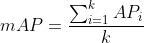 59 |
--------------------------------------------------------------------------------
/publications/FedCG/main.py:
--------------------------------------------------------------------------------
1 | from dataset import *
2 | from utils import set_seed
3 |
4 | if args.algorithm == 'local':
5 | from clients.local import Client
6 | elif args.algorithm == 'fedavg':
7 | from clients.fedavg import Client
8 | from servers.fedavg import Server
9 | elif args.algorithm == 'fedsplit':
10 | from clients.fedsplit import Client
11 | from servers.fedsplit import Server
12 | elif args.algorithm == 'fedprox':
13 | from clients.fedprox import Client
14 | from servers.fedprox import Server
15 | elif args.algorithm == 'feddf':
16 | from clients.feddf import Client
17 | from servers.feddf import Server
18 | elif args.algorithm == 'fedgen':
19 | from clients.fedgen import Client
20 | from servers.fedgen import Server
21 | elif args.algorithm == 'fedcg':
22 | from clients.fedcg import Client
23 | from servers.fedcg import Server
24 | elif args.algorithm == 'fedcg_w':
25 | from clients.fedcg_w import Client
26 | from servers.fedcg import Server
27 |
28 |
29 | def main():
30 | logger.info("#" * 100)
31 | logger.info(str(args))
32 | set_seed(args.seed)
33 |
34 | # create dataset
35 | logger.info("Clients' Data Partition")
36 | if args.dataset == "fmnist":
37 | dataset = FMNIST()
38 | elif args.dataset == "cifar":
39 | dataset = Cifar()
40 | elif args.dataset == "digit":
41 | dataset = Digit()
42 | elif args.dataset == "office":
43 | dataset = Office()
44 | elif args.dataset == "domainnet":
45 | dataset = Domainnet()
46 |
47 | # create clients and server
48 | if args.algorithm == 'feddf':
49 | trainsets, valsets, testsets, server_dataset = dataset.data_partition()
50 | clients = []
51 | for i in range(args.n_clients):
52 | client = Client(i, trainsets[i], valsets[i], testsets[i])
53 | clients.append(client)
54 | server = Server(clients, server_dataset)
55 |
56 | elif args.algorithm == 'local':
57 | trainsets, valsets, testsets = dataset.data_partition()
58 | clients = []
59 | for i in range(args.n_clients):
60 | client = Client(i, trainsets[i], valsets[i], testsets[i])
61 | clients.append(client)
62 |
63 | else:
64 | trainsets, valsets, testsets = dataset.data_partition()
65 | clients = []
66 | for i in range(args.n_clients):
67 | client = Client(i, trainsets[i], valsets[i], testsets[i])
68 | clients.append(client)
69 | server = Server(clients)
70 |
71 | # record best val acc
72 | best_val_accs = [0.] * args.n_clients
73 | test_accs = [0.] * args.n_clients
74 | best_rounds = [-1] * args.n_clients
75 |
76 | # federated learning process
77 | current_round = 0
78 | while True:
79 | logger.info("** Communication Round:[%2d] Start! **" % current_round)
80 |
81 | # client train
82 | for i in range(args.n_clients):
83 | clients[i].local_train(current_round)
84 |
85 | # client test
86 | for i in range(args.n_clients):
87 | val_acc = clients[i].local_val()
88 | if val_acc > best_val_accs[i]:
89 | best_val_accs[i] = val_acc
90 | test_accs[i] = clients[i].local_test()
91 | best_rounds[i] = current_round
92 |
93 | # round result
94 | logger.info("communication round:%2d, after local train result:" % current_round)
95 | for i in range(args.n_clients):
96 | logger.info("client:%2d, test acc:%2.6f, best epoch:%2d" % (i, test_accs[i], best_rounds[i]))
97 |
98 | # early stop
99 | early_stop = True
100 | for i in range(args.n_clients):
101 | if current_round <= best_rounds[i] + args.early_stop_rounds:
102 | early_stop = False
103 | break
104 | if early_stop:
105 | break
106 |
107 | # communication
108 | if args.algorithm == "local":
109 | pass
110 |
111 | elif args.algorithm == "fedsplit":
112 | server.receive(["classifier"])
113 | server.send(["classifier"])
114 |
115 | elif args.algorithm == "fedavg" or args.algorithm == "fedprox":
116 | server.receive(["extractor", "classifier"])
117 | server.send(["extractor", "classifier"])
118 |
119 | elif args.algorithm == "fedgen":
120 | server.receive(["generator", "classifier"])
121 | server.global_train()
122 | server.send(["generator", "classifier"])
123 |
124 | elif args.algorithm == "feddf":
125 | server.receive(["extractor", "classifier"])
126 | server.global_train()
127 | server.send(["extractor", "classifier"])
128 |
129 | elif args.algorithm == "fedcg" or args.algorithm == "fedcg_w":
130 | server.receive(["generator", "classifier"])
131 | server.global_train()
132 | server.send(["generator", "classifier"])
133 |
134 | current_round += 1
135 | if current_round >= 200:
136 | break
137 |
138 | # final result
139 | logger.info("** Federated Learning Finish! **")
140 | for i in range(args.n_clients):
141 | logger.info("client:%2d, test acc:%2.6f, best epoch:%2d" % (i, test_accs[i], best_rounds[i]))
142 |
143 |
144 | if __name__ == "__main__":
145 | main()
146 |
--------------------------------------------------------------------------------
/publications/FedCG/servers/fedgen.py:
--------------------------------------------------------------------------------
1 | import numpy as np
2 | import torch
3 | import torch.nn as nn
4 | import torch.optim as optim
5 |
6 | from config import args, logger, device
7 | from models import Classifier, Generator
8 | from utils import AvgMeter, set_seed
9 |
10 |
11 | class Server():
12 |
13 | def __init__(self, clients):
14 | self.clients = clients
15 |
16 | self.weights = []
17 | for client in clients:
18 | self.weights.append(client.train_size)
19 | self.weights = np.array(self.weights) / np.sum(self.weights)
20 | logger.info("client weights: %s" % str(self.weights.tolist()))
21 |
22 | self.init_net()
23 |
24 | def get_params(self, models):
25 | params = []
26 | for model in models:
27 | params.append({"params": self.global_net[model].parameters()})
28 | return params
29 |
30 | def frozen_net(self, models, frozen):
31 | for model in models:
32 | for param in self.global_net[model].parameters():
33 | param.requires_grad = not frozen
34 | if frozen:
35 | self.global_net[model].eval()
36 | else:
37 | self.global_net[model].train()
38 |
39 | def init_net(self):
40 | ##############################################################
41 | # frozen all models' parameters, unfrozen when need to train #
42 | ##############################################################
43 | set_seed(args.seed)
44 | self.global_net = nn.ModuleDict()
45 |
46 | self.global_net["generator"] = Generator()
47 | self.global_net["classifier"] = Classifier()
48 | self.frozen_net(["generator", "classifier"], True)
49 | self.G_optimizer = optim.Adam(self.get_params(["generator"]), lr=args.lr, weight_decay=args.weight_decay)
50 |
51 | self.global_net.to(device)
52 |
53 | self.KL_criterion = nn.KLDivLoss(reduction="batchmean").to(device)
54 | self.CE_criterion = nn.CrossEntropyLoss().to(device)
55 |
56 | def load_client(self):
57 | for i in range(len(self.clients)):
58 | checkpoint = torch.load(args.checkpoint_dir + "/client" + str(i) + ".pkl")
59 | self.clients[i].net.load_state_dict(checkpoint["net"])
60 | self.clients[i].EC_optimizer.load_state_dict(checkpoint["EC_optimizer"])
61 |
62 | def save_client(self):
63 | for i in range(len(self.clients)):
64 | optim_dict = {
65 | "net": self.clients[i].net.state_dict(),
66 | "EC_optimizer": self.clients[i].EC_optimizer.state_dict(),
67 | }
68 | torch.save(optim_dict, args.checkpoint_dir + "/client" + str(i) + ".pkl")
69 |
70 | def receive(self, models):
71 | for model in models:
72 | avg_param = {}
73 | params = []
74 | for client in self.clients:
75 | params.append(client.net[model].state_dict())
76 |
77 | for key in params[0].keys():
78 | avg_param[key] = params[0][key] * self.weights[0]
79 | for idx in range(1, len(self.clients)):
80 | avg_param[key] += params[idx][key] * self.weights[idx]
81 | self.global_net[model].load_state_dict(avg_param)
82 |
83 | def send(self, models):
84 | for model in models:
85 | global_param = self.global_net[model].state_dict()
86 | for client in self.clients:
87 | client.net[model].load_state_dict(global_param)
88 |
89 | def global_train(self):
90 | set_seed(args.seed)
91 |
92 | logger.info("Training Server's Network Start!")
93 | G_loss_meter = AvgMeter()
94 | G_div_meter = AvgMeter()
95 |
96 | self.frozen_net(["generator"], False)
97 |
98 | for epoch in range(args.global_epoch):
99 | G_loss_meter.reset()
100 | G_div_meter.reset()
101 |
102 | for batch in range(args.global_iter_per_epoch):
103 | y = torch.randint(0, args.num_classes, (args.batch_size,)).to(device)
104 | z = torch.randn(args.batch_size, args.noise_dim, 1, 1).to(device)
105 |
106 | self.G_optimizer.zero_grad()
107 |
108 | # gen loss
109 | pred = 0
110 | G = self.global_net["generator"](z, y)
111 | for i, client in enumerate(self.clients):
112 | GC = client.net["classifier"](G)
113 | pred += self.weights[i] * GC
114 | G_loss = self.CE_criterion(pred, y)
115 |
116 | # div loss
117 | split_size = int(args.batch_size / 2)
118 | z1, z2 = torch.split(z, split_size, dim=0)
119 | G1, G2 = torch.split(G, split_size, dim=0)
120 | lz = torch.mean(torch.abs(G1 - G2)) / torch.mean(torch.abs(z1 - z2))
121 | eps = 1 * 1e-5
122 | G_div = 1 / (lz + eps)
123 |
124 | (G_loss + G_div).backward()
125 | self.G_optimizer.step()
126 | G_loss_meter.update(G_loss.item())
127 | G_div_meter.update(G_div.item())
128 |
129 | G_loss = G_loss_meter.get()
130 | G_div_meter.update(G_div.item())
131 | logger.info("Server Epoch:[%2d], G_loss:%2.6f, G_div:%2.6f" % (epoch, G_loss, G_div))
132 |
133 | self.frozen_net(["generator"], True)
134 |
--------------------------------------------------------------------------------
/publications/ss_vfnas/architects/architect_two_party_preg.py:
--------------------------------------------------------------------------------
1 | import torch
2 | import numpy as np
3 | import torch.nn as nn
4 | from torch.autograd import Variable
5 | import copy
6 |
7 |
8 | def _concat(xs):
9 | return torch.cat([x.view(-1) for x in xs])
10 |
11 |
12 | class Architect_A(object):
13 | def __init__(self, model, args):
14 | self.network_momentum = args.momentum
15 | self.network_weight_decay = args.weight_decay
16 | self.model = model
17 | self.alpha_optimizer = torch.optim.Adam(self.model.arch_parameters(),
18 | lr=args.arch_learning_rate, betas=(0.5, 0.999),
19 | weight_decay=args.arch_weight_decay)
20 | self.n_local_update = args.n_local_update
21 | self.mu = 0.001
22 |
23 | def _mark_model(self):
24 | self.copy_model = copy.deepcopy(self.model)
25 |
26 | def compute_weights_proximal_regularization(self):
27 |
28 | weights_loss = 0
29 | for w, initial_w in zip(self.model.parameters(), self.copy_model.parameters()):
30 | weights_loss += torch.norm(w - initial_w.detach())
31 | return weights_loss
32 |
33 | def compute_alpha_proximal_regularization(self):
34 | alpha_loss = 0
35 | for alpha, initial_alpha in zip(self.model.arch_parameters(), self.copy_model.arch_parameters()):
36 | alpha_loss += torch.norm(alpha - initial_alpha.detach())
37 | return alpha_loss
38 |
39 | def update_alpha(self, input_valid, U_B_valid, target_valid):
40 | self._mark_model()
41 | U_B_valid = torch.autograd.Variable(U_B_valid, requires_grad=True).cuda()
42 | for _ in range(self.n_local_update):
43 | self.alpha_optimizer.zero_grad()
44 | model_loss, _ = self.model._loss(input_valid, U_B_valid, target_valid)
45 | preg_loss = self.compute_alpha_proximal_regularization()
46 | loss = model_loss + self.mu * preg_loss
47 | loss.backward(retain_graph=True)
48 | self.alpha_optimizer.step()
49 | U_B_gradients = torch.autograd.grad(model_loss, U_B_valid, retain_graph=True)
50 | return U_B_gradients
51 |
52 | def update_weights(self, input_train, U_B_train, target_train, weights_optim, grad_clip):
53 | self._mark_model()
54 | U_B_train = torch.autograd.Variable(U_B_train, requires_grad=True).cuda()
55 | for _ in range(self.n_local_update):
56 | weights_optim.zero_grad()
57 | model_loss, logits = self.model._loss(input_train, U_B_train, target_train)
58 | preg_loss = self.compute_weights_proximal_regularization()
59 | loss = model_loss + self.mu * preg_loss
60 | loss.backward(retain_graph=True)
61 | nn.utils.clip_grad_norm_(self.model.parameters(), grad_clip)
62 | weights_optim.step()
63 | U_B_gradients = torch.autograd.grad(model_loss, U_B_train, retain_graph=True)
64 | return U_B_gradients, logits, model_loss
65 |
66 |
67 | class Architect_B(object):
68 | def __init__(self, model, args):
69 | self.network_momentum = args.momentum
70 | self.network_weight_decay = args.weight_decay
71 | self.model = model
72 | self.alpha_optimizer = torch.optim.Adam(self.model.arch_parameters(),
73 | lr=args.arch_learning_rate, betas=(0.5, 0.999),
74 | weight_decay=args.arch_weight_decay)
75 | self.weight_optimizer = torch.optim.SGD(self.model.parameters(), args.learning_rate,
76 | momentum=args.momentum, weight_decay=args.weight_decay)
77 | self.n_local_update = args.n_local_update
78 | self.mu = 0.001
79 |
80 | def _mark_model(self):
81 | self.copy_model = copy.deepcopy(self.model)
82 |
83 | def compute_weights_proximal_regularization(self):
84 |
85 | weights_loss = 0
86 | for w, initial_w in zip(self.model.parameters(), self.copy_model.parameters()):
87 | weights_loss += torch.norm(w - initial_w.detach())
88 | return weights_loss
89 |
90 | def compute_alpha_proximal_regularization(self):
91 | alpha_loss = 0
92 | for alpha, initial_alpha in zip(self.model.arch_parameters(), self.copy_model.arch_parameters()):
93 | alpha_loss += torch.norm(alpha - initial_alpha.detach())
94 | return alpha_loss
95 |
96 | def update_alpha(self, U_B_val, U_B_gradients):
97 | self._mark_model()
98 | model_B_alpha_gradients = torch.autograd.grad(U_B_val, self.model.arch_parameters(),
99 | grad_outputs=U_B_gradients, retain_graph=True)
100 | self.alpha_optimizer.zero_grad()
101 | for w, g1 in zip(self.model.arch_parameters(), model_B_alpha_gradients):
102 | w.grad = g1
103 | self.alpha_optimizer.step()
104 |
105 | def update_weights(self, U_B_train, U_B_gradients, weights_optim, grad_clip):
106 | self._mark_model()
107 | model_B_weight_gradients = torch.autograd.grad(U_B_train, self.model.parameters(),
108 | grad_outputs=U_B_gradients, retain_graph=True)
109 | weights_optim.zero_grad()
110 | for w, g1 in zip(self.model.parameters(), model_B_weight_gradients):
111 | w.grad = g1.detach()
112 | nn.utils.clip_grad_norm_(self.model.parameters(), grad_clip)
113 | weights_optim.step()
114 |
--------------------------------------------------------------------------------
/publications/FedCG/config.py:
--------------------------------------------------------------------------------
1 | import argparse
2 | import datetime
3 | import logging
4 | import os
5 |
6 | import torch
7 |
8 | device = torch.device("cuda" if torch.cuda.is_available() else "cpu")
9 |
10 | parser = argparse.ArgumentParser()
11 | parser.add_argument('--algorithm', type=str, default="fedavg",
12 | choices=["local", "fedavg", "fedsplit", "fedprox", "fedgen", "feddf", "fedcg", "fedcg_w"])
13 | parser.add_argument('--dataset', type=str, default="fmnist",
14 | choices=["fmnist", "digit", "office", "cifar", "domainnet"])
15 | parser.add_argument('--model', type=str, default="lenet5", choices=["lenet5", "resnet18"])
16 | parser.add_argument('--distance', type=str, default="mse", choices=["none", "mse", "cos"])
17 |
18 | parser.add_argument('--seed', type=int, default=1, help='seed for initializing training (default: 1)')
19 | parser.add_argument('--batch_size', type=int, default=8, help='input batch size for training (default: 8)')
20 | parser.add_argument('--lr', type=float, default=3e-4, help="learning rate for optimizer (default: 3e-4)")
21 | parser.add_argument('--weight_decay', type=float, default=1e-4, help="weight decay for optimizer (default: 1e-4)")
22 |
23 | parser.add_argument('--noise_dim', type=int, default=100, help="the noise dim for the generator input (default: 100)")
24 | parser.add_argument('--mu', type=float, default=0.01, help="mu for fedprox (default: 0.01)")
25 | parser.add_argument('--n_clients', type=int, default=4, help="the number of clients")
26 |
27 | parser.add_argument('--num_classes', type=int, default=10, help='num for classes')
28 | parser.add_argument('--image_channel', type=int, default=3, help="channel for images")
29 | parser.add_argument('--image_size', type=int, default=32, help='size for images')
30 |
31 | parser.add_argument('--local_epoch', type=int, default=20,
32 | help="the epochs for clients' local task training (default: 20)")
33 | parser.add_argument('--gan_epoch', type=int, default=20,
34 | help="the epochs for clients' local gan training (default: 20)")
35 | parser.add_argument('--early_stop_rounds', type=int, default=20,
36 | help="the early stop rounds for federated learning communication (default: 20)")
37 | parser.add_argument('--global_epoch', type=int, default=20, help="the epochs for server's training (default: 20)")
38 | parser.add_argument('--global_iter_per_epoch', type=int, default=100,
39 | help="the number of iteration per epoch for server training (default: 100)")
40 | parser.add_argument('--add_noise', dest='add_noise', action='store_true', default=False,
41 | help="whether adding noise to image")
42 | parser.add_argument('--noise_std', type=float, default=1., help="std for gaussian noise added to image(default: 1.)")
43 | parser.add_argument('--gpu', type=int, default=0, help='gpu device id')
44 | parser.add_argument('--data_dir', type=str, default="./data/", help="Data directory path")
45 |
46 | # args = parser.parse_args()
47 | args = parser.parse_known_args()[0]
48 | current_time = datetime.datetime.now().strftime("%Y-%m-%d-%H:%M-%S")
49 | # args.name = args.name + '-%s' % current_time
50 |
51 | if args.dataset == "fmnist":
52 | args.image_channel = 1
53 | args.num_classes = 10
54 | elif args.dataset == "cifar":
55 | args.num_classes = 10
56 | elif args.dataset == "digit":
57 | args.n_clients = 4
58 | args.num_classes = 10
59 | elif args.dataset == "office":
60 | args.n_clients = 4
61 | args.num_classes = 10
62 | elif args.dataset == "domainnet":
63 | args.n_clients = 5
64 | args.num_classes = 10
65 |
66 | if args.model == "lenet5":
67 | # extractor input size [3*32*32]
68 | args.image_size = 32
69 | # extractor ouput size [16*5*5]
70 | args.feature_num = 16
71 | args.feature_size = 5
72 | elif args.model == "alexnet":
73 | # extractor input size [3*224*224]
74 | args.image_size = 224
75 | # extractor ouput size [192*13*13]
76 | args.feature_num = 192
77 | args.feature_size = 13
78 | elif args.model == "resnet18":
79 | # extractor input size [3*224*224]
80 | args.image_size = 224
81 | # extractor ouput size [128*28*28]
82 | args.feature_num = 128
83 | args.feature_size = 28
84 |
85 | if args.algorithm == "fedcg" or args.algorithm == "fedcg_w":
86 | args.name = args.algorithm + '_' + args.dataset + str(
87 | args.n_clients) + '_' + args.model + '_' + args.distance + '_' + str(args.seed)
88 | else:
89 | args.name = args.algorithm + '_' + args.dataset + str(args.n_clients) + '_' + args.model + '_' + str(args.seed)
90 | args.dir = 'experiments/' + 'bs' + str(args.batch_size) + 'lr' + str(args.lr) + 'wd' + str(args.weight_decay)
91 | args.checkpoint_dir = os.path.join(args.dir, args.name, 'checkpoint')
92 | os.makedirs(args.checkpoint_dir, exist_ok=True)
93 |
94 | for handler in logging.root.handlers[:]:
95 | logging.root.removeHandler(handler)
96 | logger = logging.getLogger()
97 | logger.setLevel(logging.DEBUG)
98 | fileHandler = logging.FileHandler(os.path.join(args.dir, args.name, 'log.txt'), mode='a')
99 | fileHandler.setLevel(logging.INFO)
100 | consoleHandler = logging.StreamHandler()
101 | consoleHandler.setLevel(logging.INFO)
102 | formatter = logging.Formatter('[%(asctime)s] {%(filename)s:%(lineno)d} %(levelname)s - %(message)s',
103 | datefmt='%Y-%m-%d %H:%M:%S')
104 | consoleHandler.setFormatter(formatter)
105 | fileHandler.setFormatter(formatter)
106 | logger.addHandler(fileHandler)
107 | logger.addHandler(consoleHandler)
108 | if torch.cuda.is_available():
109 | torch.cuda.set_device(args.gpu)
110 |
--------------------------------------------------------------------------------
/publications/PrADA/statistics_utils.py:
--------------------------------------------------------------------------------
1 | import numpy
2 | from scipy.stats import kde
3 |
4 |
5 | def ks_statistic(data1, data2):
6 | """Calculate the Kolmogorov-Smirnov statistic to compare two sets of data.
7 | The empirical cumulative distribution function for each set of
8 | set of 1-dimensional data points is calculated. The K-S statistic
9 | the maximum absolute distance between the two cumulative distribution
10 | functions.
11 | Parameters:
12 | data1, data2: 1-dimensional lists or arrays of data points to compare.
13 | """
14 | x1 = numpy.sort(data1)
15 | x2 = numpy.sort(data2)
16 | x = numpy.sort(numpy.concatenate([x1, x2]))
17 | y1 = numpy.linspace(0, 1, len(x1) + 1)[
18 | 1:] # empirical CDF for data1: curve going up by 1/len(data1) at each observed data-point
19 | y2 = numpy.linspace(0, 1, len(x2) + 1)[1:] # as above but for data2
20 | cdf1 = numpy.interp(x, x1, y1, left=0) # linearly interpolate both CDFs onto a common set of x-values.
21 | cdf2 = numpy.interp(x, x2, y2, left=0)
22 | return abs(cdf1 - cdf2).max()
23 |
24 |
25 | def ks_statistic_kde(data1, data2, num_points=None):
26 | """Calculate the Kolmogorov-Smirnov statistic to compare two sets of data.
27 | Kernel Density Estimation is used to estimate the distribution of each set
28 | set of 1-dimensional data points. From this, the K-S statistic is
29 | calculated: the maximum absolute distance between the two cumulative
30 | distribution functions.
31 | Parameters:
32 | data1, data2: 1-dimensional lists or arrays of data points to compare.
33 | num_points: number of points to evaluate the density along.
34 | """
35 | xs, kd1, kd2 = _get_estimators_and_xs(data1, data2, num_points)
36 | with numpy.errstate(under='ignore'):
37 | cdf1 = numpy.array([kd1.integrate_box_1d(-numpy.inf, x) for x in xs])
38 | cdf2 = numpy.array([kd2.integrate_box_1d(-numpy.inf, x) for x in xs])
39 | return abs(cdf1 - cdf2).max()
40 |
41 |
42 | def js_metric(data1, data2, num_points=None):
43 | """Calculate the Jensen-Shannon metric to compare two sets of data.
44 | Kernel Density Estimation is used to estimate the distribution of each set
45 | set of 1-dimensional data points. From this, the J-S metric (square root of
46 | J-S divergence) is calculated.
47 | Note: KDE will often underestimate the probability at the far tails of the
48 | distribution (outside of where supported by the data), which can lead to
49 | overestimates of K-L divergence (and hence J-S divergence) for highly
50 | non-overlapping datasets.
51 | Parameters:
52 | data1, data2: 1-dimensional lists or arrays of data points to compare.
53 | num_points: number of points to evaluate the density along.
54 | """
55 | xs, p1, p2 = _get_point_estimates(data1, data2, num_points)
56 | m = (p1 + p2) / 2
57 | return ((_kl_divergence(xs, p1, m) + _kl_divergence(xs, p2, m)) / 2) ** 0.5
58 |
59 |
60 | def kl_divergence(data1, data2, num_points=None):
61 | """Calculate the Kullback-Leibler divergence between two sets of data.
62 | Kernel Density Estimation is used to estimate the distribution of each set
63 | set of 1-dimensional data points. From this, the K-L divergence is
64 | calculated.
65 | Note: KDE will often underestimate the probability at the far tails of the
66 | distribution (outside of where supported by the data), which can lead to
67 | overestimates of K-L divergence for highly non-overlapping datasets.
68 | Parameters:
69 | data1, data2: 1-dimensional lists or arrays of data points to compare.
70 | num_points: number of points to evaluate the density along.
71 | """
72 | xs, p1, p2 = _get_point_estimates(data1, data2, num_points)
73 | return _kl_divergence(xs, p1, p2)
74 |
75 |
76 | def _get_kd_estimator_and_xs(data, num_points):
77 | """Get KDE estimator for a given dataset, and generate a good set of
78 | points to sample the density at."""
79 | data = numpy.asarray(data, dtype=numpy.float)
80 | kd_estimator = kde.gaussian_kde(data)
81 | data_samples = kd_estimator.resample(num_points // 2)[0]
82 | xs = numpy.sort(data_samples)
83 | return kd_estimator, xs
84 |
85 |
86 | def _get_estimators_and_xs(data1, data2, num_points):
87 | """Get KDE estimators for two different datasets and a set of points
88 | to evaluate both distributions on."""
89 | if num_points is None:
90 | num_points = min(5000, (len(data1) + len(data2)) // 2)
91 | kd1, xs1 = _get_kd_estimator_and_xs(data1, num_points // 2)
92 | kd2, xs2 = _get_kd_estimator_and_xs(data2, num_points // 2)
93 | xs = numpy.sort(numpy.concatenate([xs1, xs2]))
94 | return xs, kd1, kd2
95 |
96 |
97 | def _get_point_estimates(data1, data2, num_points):
98 | """Get point estimates for KDE distributions for two different datasets.
99 | """
100 | xs, kd1, kd2 = _get_estimators_and_xs(data1, data2, num_points)
101 | with numpy.errstate(under='ignore'):
102 | p1 = kd1(xs)
103 | p2 = kd2(xs)
104 | return xs, p1, p2
105 |
106 |
107 | def _kl_divergence(xs, p1, p2):
108 | """Calculate Kullback-Leibler divergence of p1 and p2, which are assumed to
109 | values of two different density functions at the given positions xs.
110 | Return divergence in nats."""
111 | with numpy.errstate(divide='ignore', invalid='ignore'):
112 | kl = p1 * (numpy.log(p1) - numpy.log(p2))
113 | kl[~numpy.isfinite(kl)] = 0 # small numbers in p1 or p2 can cause NaN/-inf, etc.
114 | return numpy.trapz(kl, x=xs) # integrate curve
115 |
--------------------------------------------------------------------------------
/datasets/federated_object_detection_benchmark/data/custom/train.txt:
--------------------------------------------------------------------------------
1 | data/custom/images/000001.jpg
2 | data/custom/images/000002.jpg
3 | data/custom/images/000003.jpg
4 | data/custom/images/000004.jpg
5 | data/custom/images/000005.jpg
6 | data/custom/images/000006.jpg
7 | data/custom/images/000008.jpg
8 | data/custom/images/000010.jpg
9 | data/custom/images/000013.jpg
10 | data/custom/images/000014.jpg
11 | data/custom/images/000016.jpg
12 | data/custom/images/000017.jpg
13 | data/custom/images/000018.jpg
14 | data/custom/images/000019.jpg
15 | data/custom/images/000020.jpg
16 | data/custom/images/000021.jpg
17 | data/custom/images/000022.jpg
18 | data/custom/images/000023.jpg
19 | data/custom/images/000024.jpg
20 | data/custom/images/000026.jpg
21 | data/custom/images/000027.jpg
22 | data/custom/images/000028.jpg
23 | data/custom/images/000029.jpg
24 | data/custom/images/000030.jpg
25 | data/custom/images/000031.jpg
26 | data/custom/images/000032.jpg
27 | data/custom/images/000033.jpg
28 | data/custom/images/000034.jpg
29 | data/custom/images/000035.jpg
30 | data/custom/images/000036.jpg
31 | data/custom/images/000037.jpg
32 | data/custom/images/000040.jpg
33 | data/custom/images/000041.jpg
34 | data/custom/images/000042.jpg
35 | data/custom/images/000043.jpg
36 | data/custom/images/000044.jpg
37 | data/custom/images/000045.jpg
38 | data/custom/images/000046.jpg
39 | data/custom/images/000047.jpg
40 | data/custom/images/000049.jpg
41 | data/custom/images/000050.jpg
42 | data/custom/images/000051.jpg
43 | data/custom/images/000053.jpg
44 | data/custom/images/000054.jpg
45 | data/custom/images/000055.jpg
46 | data/custom/images/000056.jpg
47 | data/custom/images/000057.jpg
48 | data/custom/images/000058.jpg
49 | data/custom/images/000060.jpg
50 | data/custom/images/000061.jpg
51 | data/custom/images/000062.jpg
52 | data/custom/images/000064.jpg
53 | data/custom/images/000065.jpg
54 | data/custom/images/000066.jpg
55 | data/custom/images/000067.jpg
56 | data/custom/images/000068.jpg
57 | data/custom/images/000069.jpg
58 | data/custom/images/000070.jpg
59 | data/custom/images/000071.jpg
60 | data/custom/images/000072.jpg
61 | data/custom/images/000074.jpg
62 | data/custom/images/000075.jpg
63 | data/custom/images/000076.jpg
64 | data/custom/images/000077.jpg
65 | data/custom/images/000078.jpg
66 | data/custom/images/000079.jpg
67 | data/custom/images/000080.jpg
68 | data/custom/images/000082.jpg
69 | data/custom/images/000083.jpg
70 | data/custom/images/000084.jpg
71 | data/custom/images/000085.jpg
72 | data/custom/images/000086.jpg
73 | data/custom/images/000087.jpg
74 | data/custom/images/000088.jpg
75 | data/custom/images/000089.jpg
76 | data/custom/images/000090.jpg
77 | data/custom/images/000092.jpg
78 | data/custom/images/000093.jpg
79 | data/custom/images/000094.jpg
80 | data/custom/images/000095.jpg
81 | data/custom/images/000096.jpg
82 | data/custom/images/000097.jpg
83 | data/custom/images/000098.jpg
84 | data/custom/images/000099.jpg
85 | data/custom/images/000100.jpg
86 | data/custom/images/000101.jpg
87 | data/custom/images/000102.jpg
88 | data/custom/images/000103.jpg
89 | data/custom/images/000105.jpg
90 | data/custom/images/000106.jpg
91 | data/custom/images/000108.jpg
92 | data/custom/images/000109.jpg
93 | data/custom/images/000110.jpg
94 | data/custom/images/000113.jpg
95 | data/custom/images/000114.jpg
96 | data/custom/images/000116.jpg
97 | data/custom/images/000117.jpg
98 | data/custom/images/000118.jpg
99 | data/custom/images/000119.jpg
100 | data/custom/images/000121.jpg
101 | data/custom/images/000122.jpg
102 | data/custom/images/000123.jpg
103 | data/custom/images/000124.jpg
104 | data/custom/images/000127.jpg
105 | data/custom/images/000129.jpg
106 | data/custom/images/000130.jpg
107 | data/custom/images/000131.jpg
108 | data/custom/images/000132.jpg
109 | data/custom/images/000133.jpg
110 | data/custom/images/000134.jpg
111 | data/custom/images/000135.jpg
112 | data/custom/images/000137.jpg
113 | data/custom/images/000139.jpg
114 | data/custom/images/000140.jpg
115 | data/custom/images/000141.jpg
116 | data/custom/images/000142.jpg
117 | data/custom/images/000144.jpg
118 | data/custom/images/000145.jpg
119 | data/custom/images/000146.jpg
120 | data/custom/images/000148.jpg
121 | data/custom/images/000149.jpg
122 | data/custom/images/000150.jpg
123 | data/custom/images/000151.jpg
124 | data/custom/images/000152.jpg
125 | data/custom/images/000153.jpg
126 | data/custom/images/000154.jpg
127 | data/custom/images/000155.jpg
128 | data/custom/images/000157.jpg
129 | data/custom/images/000158.jpg
130 | data/custom/images/000160.jpg
131 | data/custom/images/000162.jpg
132 | data/custom/images/000163.jpg
133 | data/custom/images/000164.jpg
134 | data/custom/images/000165.jpg
135 | data/custom/images/000166.jpg
136 | data/custom/images/000167.jpg
137 | data/custom/images/000168.jpg
138 | data/custom/images/000169.jpg
139 | data/custom/images/000170.jpg
140 | data/custom/images/000171.jpg
141 | data/custom/images/000172.jpg
142 | data/custom/images/000173.jpg
143 | data/custom/images/000174.jpg
144 | data/custom/images/000175.jpg
145 | data/custom/images/000177.jpg
146 | data/custom/images/000178.jpg
147 | data/custom/images/000179.jpg
148 | data/custom/images/000181.jpg
149 | data/custom/images/000182.jpg
150 | data/custom/images/000183.jpg
151 | data/custom/images/000184.jpg
152 | data/custom/images/000185.jpg
153 | data/custom/images/000186.jpg
154 | data/custom/images/000187.jpg
155 | data/custom/images/000188.jpg
156 | data/custom/images/000189.jpg
157 | data/custom/images/000191.jpg
158 | data/custom/images/000192.jpg
159 | data/custom/images/000195.jpg
160 | data/custom/images/000196.jpg
161 | data/custom/images/000198.jpg
162 | data/custom/images/000199.jpg
163 | data/custom/images/000200.jpg
164 |
--------------------------------------------------------------------------------
/publications/FedCG/README.md:
--------------------------------------------------------------------------------
1 | # FedCG: Leverage Conditional GAN for Protecting Privacy and Maintaining Competitive Performance in Federated Learning
2 |
3 | ## FedCG介绍
4 |
5 | 联邦学习(FL)旨在通过让客户端在不分享其私人数据、保护数据隐私的前提下协作建立机器学习模型。最近的一些研究证明了在联邦学习过程中交换的信息会受到基于梯度的隐私攻击,因此,各种隐私保护方法已被采用来阻止此类攻击,保护数据隐私。然而,这些防御性方法要么引入数量级更多的计算和通信开销(例如,同态加密),要么在预测准确性方面导致模型性能大幅下降(例如,使用差分隐私)。**FedCG**将条件生成对抗网络与分割学习相结合,实现对数据的有效隐私保护,同时保持有竞争力的模型性能。
6 |
7 | 更具体地说,FedCG将每个客户端的本地网络分解为私有特征提取器(extractor)和公共分类器(classifier),并将特征提取器保留在本地以保护隐私。每个客户端用一个生成器(generator)来拟合特征提取器的输出表征。FedCG的新颖之处在于它与服务器共享客户端的生成器而不是提取器,以聚合客户端的共享知识,提高模型性能 (如图1)。
8 |
9 |
59 |
--------------------------------------------------------------------------------
/publications/FedCG/main.py:
--------------------------------------------------------------------------------
1 | from dataset import *
2 | from utils import set_seed
3 |
4 | if args.algorithm == 'local':
5 | from clients.local import Client
6 | elif args.algorithm == 'fedavg':
7 | from clients.fedavg import Client
8 | from servers.fedavg import Server
9 | elif args.algorithm == 'fedsplit':
10 | from clients.fedsplit import Client
11 | from servers.fedsplit import Server
12 | elif args.algorithm == 'fedprox':
13 | from clients.fedprox import Client
14 | from servers.fedprox import Server
15 | elif args.algorithm == 'feddf':
16 | from clients.feddf import Client
17 | from servers.feddf import Server
18 | elif args.algorithm == 'fedgen':
19 | from clients.fedgen import Client
20 | from servers.fedgen import Server
21 | elif args.algorithm == 'fedcg':
22 | from clients.fedcg import Client
23 | from servers.fedcg import Server
24 | elif args.algorithm == 'fedcg_w':
25 | from clients.fedcg_w import Client
26 | from servers.fedcg import Server
27 |
28 |
29 | def main():
30 | logger.info("#" * 100)
31 | logger.info(str(args))
32 | set_seed(args.seed)
33 |
34 | # create dataset
35 | logger.info("Clients' Data Partition")
36 | if args.dataset == "fmnist":
37 | dataset = FMNIST()
38 | elif args.dataset == "cifar":
39 | dataset = Cifar()
40 | elif args.dataset == "digit":
41 | dataset = Digit()
42 | elif args.dataset == "office":
43 | dataset = Office()
44 | elif args.dataset == "domainnet":
45 | dataset = Domainnet()
46 |
47 | # create clients and server
48 | if args.algorithm == 'feddf':
49 | trainsets, valsets, testsets, server_dataset = dataset.data_partition()
50 | clients = []
51 | for i in range(args.n_clients):
52 | client = Client(i, trainsets[i], valsets[i], testsets[i])
53 | clients.append(client)
54 | server = Server(clients, server_dataset)
55 |
56 | elif args.algorithm == 'local':
57 | trainsets, valsets, testsets = dataset.data_partition()
58 | clients = []
59 | for i in range(args.n_clients):
60 | client = Client(i, trainsets[i], valsets[i], testsets[i])
61 | clients.append(client)
62 |
63 | else:
64 | trainsets, valsets, testsets = dataset.data_partition()
65 | clients = []
66 | for i in range(args.n_clients):
67 | client = Client(i, trainsets[i], valsets[i], testsets[i])
68 | clients.append(client)
69 | server = Server(clients)
70 |
71 | # record best val acc
72 | best_val_accs = [0.] * args.n_clients
73 | test_accs = [0.] * args.n_clients
74 | best_rounds = [-1] * args.n_clients
75 |
76 | # federated learning process
77 | current_round = 0
78 | while True:
79 | logger.info("** Communication Round:[%2d] Start! **" % current_round)
80 |
81 | # client train
82 | for i in range(args.n_clients):
83 | clients[i].local_train(current_round)
84 |
85 | # client test
86 | for i in range(args.n_clients):
87 | val_acc = clients[i].local_val()
88 | if val_acc > best_val_accs[i]:
89 | best_val_accs[i] = val_acc
90 | test_accs[i] = clients[i].local_test()
91 | best_rounds[i] = current_round
92 |
93 | # round result
94 | logger.info("communication round:%2d, after local train result:" % current_round)
95 | for i in range(args.n_clients):
96 | logger.info("client:%2d, test acc:%2.6f, best epoch:%2d" % (i, test_accs[i], best_rounds[i]))
97 |
98 | # early stop
99 | early_stop = True
100 | for i in range(args.n_clients):
101 | if current_round <= best_rounds[i] + args.early_stop_rounds:
102 | early_stop = False
103 | break
104 | if early_stop:
105 | break
106 |
107 | # communication
108 | if args.algorithm == "local":
109 | pass
110 |
111 | elif args.algorithm == "fedsplit":
112 | server.receive(["classifier"])
113 | server.send(["classifier"])
114 |
115 | elif args.algorithm == "fedavg" or args.algorithm == "fedprox":
116 | server.receive(["extractor", "classifier"])
117 | server.send(["extractor", "classifier"])
118 |
119 | elif args.algorithm == "fedgen":
120 | server.receive(["generator", "classifier"])
121 | server.global_train()
122 | server.send(["generator", "classifier"])
123 |
124 | elif args.algorithm == "feddf":
125 | server.receive(["extractor", "classifier"])
126 | server.global_train()
127 | server.send(["extractor", "classifier"])
128 |
129 | elif args.algorithm == "fedcg" or args.algorithm == "fedcg_w":
130 | server.receive(["generator", "classifier"])
131 | server.global_train()
132 | server.send(["generator", "classifier"])
133 |
134 | current_round += 1
135 | if current_round >= 200:
136 | break
137 |
138 | # final result
139 | logger.info("** Federated Learning Finish! **")
140 | for i in range(args.n_clients):
141 | logger.info("client:%2d, test acc:%2.6f, best epoch:%2d" % (i, test_accs[i], best_rounds[i]))
142 |
143 |
144 | if __name__ == "__main__":
145 | main()
146 |
--------------------------------------------------------------------------------
/publications/FedCG/servers/fedgen.py:
--------------------------------------------------------------------------------
1 | import numpy as np
2 | import torch
3 | import torch.nn as nn
4 | import torch.optim as optim
5 |
6 | from config import args, logger, device
7 | from models import Classifier, Generator
8 | from utils import AvgMeter, set_seed
9 |
10 |
11 | class Server():
12 |
13 | def __init__(self, clients):
14 | self.clients = clients
15 |
16 | self.weights = []
17 | for client in clients:
18 | self.weights.append(client.train_size)
19 | self.weights = np.array(self.weights) / np.sum(self.weights)
20 | logger.info("client weights: %s" % str(self.weights.tolist()))
21 |
22 | self.init_net()
23 |
24 | def get_params(self, models):
25 | params = []
26 | for model in models:
27 | params.append({"params": self.global_net[model].parameters()})
28 | return params
29 |
30 | def frozen_net(self, models, frozen):
31 | for model in models:
32 | for param in self.global_net[model].parameters():
33 | param.requires_grad = not frozen
34 | if frozen:
35 | self.global_net[model].eval()
36 | else:
37 | self.global_net[model].train()
38 |
39 | def init_net(self):
40 | ##############################################################
41 | # frozen all models' parameters, unfrozen when need to train #
42 | ##############################################################
43 | set_seed(args.seed)
44 | self.global_net = nn.ModuleDict()
45 |
46 | self.global_net["generator"] = Generator()
47 | self.global_net["classifier"] = Classifier()
48 | self.frozen_net(["generator", "classifier"], True)
49 | self.G_optimizer = optim.Adam(self.get_params(["generator"]), lr=args.lr, weight_decay=args.weight_decay)
50 |
51 | self.global_net.to(device)
52 |
53 | self.KL_criterion = nn.KLDivLoss(reduction="batchmean").to(device)
54 | self.CE_criterion = nn.CrossEntropyLoss().to(device)
55 |
56 | def load_client(self):
57 | for i in range(len(self.clients)):
58 | checkpoint = torch.load(args.checkpoint_dir + "/client" + str(i) + ".pkl")
59 | self.clients[i].net.load_state_dict(checkpoint["net"])
60 | self.clients[i].EC_optimizer.load_state_dict(checkpoint["EC_optimizer"])
61 |
62 | def save_client(self):
63 | for i in range(len(self.clients)):
64 | optim_dict = {
65 | "net": self.clients[i].net.state_dict(),
66 | "EC_optimizer": self.clients[i].EC_optimizer.state_dict(),
67 | }
68 | torch.save(optim_dict, args.checkpoint_dir + "/client" + str(i) + ".pkl")
69 |
70 | def receive(self, models):
71 | for model in models:
72 | avg_param = {}
73 | params = []
74 | for client in self.clients:
75 | params.append(client.net[model].state_dict())
76 |
77 | for key in params[0].keys():
78 | avg_param[key] = params[0][key] * self.weights[0]
79 | for idx in range(1, len(self.clients)):
80 | avg_param[key] += params[idx][key] * self.weights[idx]
81 | self.global_net[model].load_state_dict(avg_param)
82 |
83 | def send(self, models):
84 | for model in models:
85 | global_param = self.global_net[model].state_dict()
86 | for client in self.clients:
87 | client.net[model].load_state_dict(global_param)
88 |
89 | def global_train(self):
90 | set_seed(args.seed)
91 |
92 | logger.info("Training Server's Network Start!")
93 | G_loss_meter = AvgMeter()
94 | G_div_meter = AvgMeter()
95 |
96 | self.frozen_net(["generator"], False)
97 |
98 | for epoch in range(args.global_epoch):
99 | G_loss_meter.reset()
100 | G_div_meter.reset()
101 |
102 | for batch in range(args.global_iter_per_epoch):
103 | y = torch.randint(0, args.num_classes, (args.batch_size,)).to(device)
104 | z = torch.randn(args.batch_size, args.noise_dim, 1, 1).to(device)
105 |
106 | self.G_optimizer.zero_grad()
107 |
108 | # gen loss
109 | pred = 0
110 | G = self.global_net["generator"](z, y)
111 | for i, client in enumerate(self.clients):
112 | GC = client.net["classifier"](G)
113 | pred += self.weights[i] * GC
114 | G_loss = self.CE_criterion(pred, y)
115 |
116 | # div loss
117 | split_size = int(args.batch_size / 2)
118 | z1, z2 = torch.split(z, split_size, dim=0)
119 | G1, G2 = torch.split(G, split_size, dim=0)
120 | lz = torch.mean(torch.abs(G1 - G2)) / torch.mean(torch.abs(z1 - z2))
121 | eps = 1 * 1e-5
122 | G_div = 1 / (lz + eps)
123 |
124 | (G_loss + G_div).backward()
125 | self.G_optimizer.step()
126 | G_loss_meter.update(G_loss.item())
127 | G_div_meter.update(G_div.item())
128 |
129 | G_loss = G_loss_meter.get()
130 | G_div_meter.update(G_div.item())
131 | logger.info("Server Epoch:[%2d], G_loss:%2.6f, G_div:%2.6f" % (epoch, G_loss, G_div))
132 |
133 | self.frozen_net(["generator"], True)
134 |
--------------------------------------------------------------------------------
/publications/ss_vfnas/architects/architect_two_party_preg.py:
--------------------------------------------------------------------------------
1 | import torch
2 | import numpy as np
3 | import torch.nn as nn
4 | from torch.autograd import Variable
5 | import copy
6 |
7 |
8 | def _concat(xs):
9 | return torch.cat([x.view(-1) for x in xs])
10 |
11 |
12 | class Architect_A(object):
13 | def __init__(self, model, args):
14 | self.network_momentum = args.momentum
15 | self.network_weight_decay = args.weight_decay
16 | self.model = model
17 | self.alpha_optimizer = torch.optim.Adam(self.model.arch_parameters(),
18 | lr=args.arch_learning_rate, betas=(0.5, 0.999),
19 | weight_decay=args.arch_weight_decay)
20 | self.n_local_update = args.n_local_update
21 | self.mu = 0.001
22 |
23 | def _mark_model(self):
24 | self.copy_model = copy.deepcopy(self.model)
25 |
26 | def compute_weights_proximal_regularization(self):
27 |
28 | weights_loss = 0
29 | for w, initial_w in zip(self.model.parameters(), self.copy_model.parameters()):
30 | weights_loss += torch.norm(w - initial_w.detach())
31 | return weights_loss
32 |
33 | def compute_alpha_proximal_regularization(self):
34 | alpha_loss = 0
35 | for alpha, initial_alpha in zip(self.model.arch_parameters(), self.copy_model.arch_parameters()):
36 | alpha_loss += torch.norm(alpha - initial_alpha.detach())
37 | return alpha_loss
38 |
39 | def update_alpha(self, input_valid, U_B_valid, target_valid):
40 | self._mark_model()
41 | U_B_valid = torch.autograd.Variable(U_B_valid, requires_grad=True).cuda()
42 | for _ in range(self.n_local_update):
43 | self.alpha_optimizer.zero_grad()
44 | model_loss, _ = self.model._loss(input_valid, U_B_valid, target_valid)
45 | preg_loss = self.compute_alpha_proximal_regularization()
46 | loss = model_loss + self.mu * preg_loss
47 | loss.backward(retain_graph=True)
48 | self.alpha_optimizer.step()
49 | U_B_gradients = torch.autograd.grad(model_loss, U_B_valid, retain_graph=True)
50 | return U_B_gradients
51 |
52 | def update_weights(self, input_train, U_B_train, target_train, weights_optim, grad_clip):
53 | self._mark_model()
54 | U_B_train = torch.autograd.Variable(U_B_train, requires_grad=True).cuda()
55 | for _ in range(self.n_local_update):
56 | weights_optim.zero_grad()
57 | model_loss, logits = self.model._loss(input_train, U_B_train, target_train)
58 | preg_loss = self.compute_weights_proximal_regularization()
59 | loss = model_loss + self.mu * preg_loss
60 | loss.backward(retain_graph=True)
61 | nn.utils.clip_grad_norm_(self.model.parameters(), grad_clip)
62 | weights_optim.step()
63 | U_B_gradients = torch.autograd.grad(model_loss, U_B_train, retain_graph=True)
64 | return U_B_gradients, logits, model_loss
65 |
66 |
67 | class Architect_B(object):
68 | def __init__(self, model, args):
69 | self.network_momentum = args.momentum
70 | self.network_weight_decay = args.weight_decay
71 | self.model = model
72 | self.alpha_optimizer = torch.optim.Adam(self.model.arch_parameters(),
73 | lr=args.arch_learning_rate, betas=(0.5, 0.999),
74 | weight_decay=args.arch_weight_decay)
75 | self.weight_optimizer = torch.optim.SGD(self.model.parameters(), args.learning_rate,
76 | momentum=args.momentum, weight_decay=args.weight_decay)
77 | self.n_local_update = args.n_local_update
78 | self.mu = 0.001
79 |
80 | def _mark_model(self):
81 | self.copy_model = copy.deepcopy(self.model)
82 |
83 | def compute_weights_proximal_regularization(self):
84 |
85 | weights_loss = 0
86 | for w, initial_w in zip(self.model.parameters(), self.copy_model.parameters()):
87 | weights_loss += torch.norm(w - initial_w.detach())
88 | return weights_loss
89 |
90 | def compute_alpha_proximal_regularization(self):
91 | alpha_loss = 0
92 | for alpha, initial_alpha in zip(self.model.arch_parameters(), self.copy_model.arch_parameters()):
93 | alpha_loss += torch.norm(alpha - initial_alpha.detach())
94 | return alpha_loss
95 |
96 | def update_alpha(self, U_B_val, U_B_gradients):
97 | self._mark_model()
98 | model_B_alpha_gradients = torch.autograd.grad(U_B_val, self.model.arch_parameters(),
99 | grad_outputs=U_B_gradients, retain_graph=True)
100 | self.alpha_optimizer.zero_grad()
101 | for w, g1 in zip(self.model.arch_parameters(), model_B_alpha_gradients):
102 | w.grad = g1
103 | self.alpha_optimizer.step()
104 |
105 | def update_weights(self, U_B_train, U_B_gradients, weights_optim, grad_clip):
106 | self._mark_model()
107 | model_B_weight_gradients = torch.autograd.grad(U_B_train, self.model.parameters(),
108 | grad_outputs=U_B_gradients, retain_graph=True)
109 | weights_optim.zero_grad()
110 | for w, g1 in zip(self.model.parameters(), model_B_weight_gradients):
111 | w.grad = g1.detach()
112 | nn.utils.clip_grad_norm_(self.model.parameters(), grad_clip)
113 | weights_optim.step()
114 |
--------------------------------------------------------------------------------
/publications/FedCG/config.py:
--------------------------------------------------------------------------------
1 | import argparse
2 | import datetime
3 | import logging
4 | import os
5 |
6 | import torch
7 |
8 | device = torch.device("cuda" if torch.cuda.is_available() else "cpu")
9 |
10 | parser = argparse.ArgumentParser()
11 | parser.add_argument('--algorithm', type=str, default="fedavg",
12 | choices=["local", "fedavg", "fedsplit", "fedprox", "fedgen", "feddf", "fedcg", "fedcg_w"])
13 | parser.add_argument('--dataset', type=str, default="fmnist",
14 | choices=["fmnist", "digit", "office", "cifar", "domainnet"])
15 | parser.add_argument('--model', type=str, default="lenet5", choices=["lenet5", "resnet18"])
16 | parser.add_argument('--distance', type=str, default="mse", choices=["none", "mse", "cos"])
17 |
18 | parser.add_argument('--seed', type=int, default=1, help='seed for initializing training (default: 1)')
19 | parser.add_argument('--batch_size', type=int, default=8, help='input batch size for training (default: 8)')
20 | parser.add_argument('--lr', type=float, default=3e-4, help="learning rate for optimizer (default: 3e-4)")
21 | parser.add_argument('--weight_decay', type=float, default=1e-4, help="weight decay for optimizer (default: 1e-4)")
22 |
23 | parser.add_argument('--noise_dim', type=int, default=100, help="the noise dim for the generator input (default: 100)")
24 | parser.add_argument('--mu', type=float, default=0.01, help="mu for fedprox (default: 0.01)")
25 | parser.add_argument('--n_clients', type=int, default=4, help="the number of clients")
26 |
27 | parser.add_argument('--num_classes', type=int, default=10, help='num for classes')
28 | parser.add_argument('--image_channel', type=int, default=3, help="channel for images")
29 | parser.add_argument('--image_size', type=int, default=32, help='size for images')
30 |
31 | parser.add_argument('--local_epoch', type=int, default=20,
32 | help="the epochs for clients' local task training (default: 20)")
33 | parser.add_argument('--gan_epoch', type=int, default=20,
34 | help="the epochs for clients' local gan training (default: 20)")
35 | parser.add_argument('--early_stop_rounds', type=int, default=20,
36 | help="the early stop rounds for federated learning communication (default: 20)")
37 | parser.add_argument('--global_epoch', type=int, default=20, help="the epochs for server's training (default: 20)")
38 | parser.add_argument('--global_iter_per_epoch', type=int, default=100,
39 | help="the number of iteration per epoch for server training (default: 100)")
40 | parser.add_argument('--add_noise', dest='add_noise', action='store_true', default=False,
41 | help="whether adding noise to image")
42 | parser.add_argument('--noise_std', type=float, default=1., help="std for gaussian noise added to image(default: 1.)")
43 | parser.add_argument('--gpu', type=int, default=0, help='gpu device id')
44 | parser.add_argument('--data_dir', type=str, default="./data/", help="Data directory path")
45 |
46 | # args = parser.parse_args()
47 | args = parser.parse_known_args()[0]
48 | current_time = datetime.datetime.now().strftime("%Y-%m-%d-%H:%M-%S")
49 | # args.name = args.name + '-%s' % current_time
50 |
51 | if args.dataset == "fmnist":
52 | args.image_channel = 1
53 | args.num_classes = 10
54 | elif args.dataset == "cifar":
55 | args.num_classes = 10
56 | elif args.dataset == "digit":
57 | args.n_clients = 4
58 | args.num_classes = 10
59 | elif args.dataset == "office":
60 | args.n_clients = 4
61 | args.num_classes = 10
62 | elif args.dataset == "domainnet":
63 | args.n_clients = 5
64 | args.num_classes = 10
65 |
66 | if args.model == "lenet5":
67 | # extractor input size [3*32*32]
68 | args.image_size = 32
69 | # extractor ouput size [16*5*5]
70 | args.feature_num = 16
71 | args.feature_size = 5
72 | elif args.model == "alexnet":
73 | # extractor input size [3*224*224]
74 | args.image_size = 224
75 | # extractor ouput size [192*13*13]
76 | args.feature_num = 192
77 | args.feature_size = 13
78 | elif args.model == "resnet18":
79 | # extractor input size [3*224*224]
80 | args.image_size = 224
81 | # extractor ouput size [128*28*28]
82 | args.feature_num = 128
83 | args.feature_size = 28
84 |
85 | if args.algorithm == "fedcg" or args.algorithm == "fedcg_w":
86 | args.name = args.algorithm + '_' + args.dataset + str(
87 | args.n_clients) + '_' + args.model + '_' + args.distance + '_' + str(args.seed)
88 | else:
89 | args.name = args.algorithm + '_' + args.dataset + str(args.n_clients) + '_' + args.model + '_' + str(args.seed)
90 | args.dir = 'experiments/' + 'bs' + str(args.batch_size) + 'lr' + str(args.lr) + 'wd' + str(args.weight_decay)
91 | args.checkpoint_dir = os.path.join(args.dir, args.name, 'checkpoint')
92 | os.makedirs(args.checkpoint_dir, exist_ok=True)
93 |
94 | for handler in logging.root.handlers[:]:
95 | logging.root.removeHandler(handler)
96 | logger = logging.getLogger()
97 | logger.setLevel(logging.DEBUG)
98 | fileHandler = logging.FileHandler(os.path.join(args.dir, args.name, 'log.txt'), mode='a')
99 | fileHandler.setLevel(logging.INFO)
100 | consoleHandler = logging.StreamHandler()
101 | consoleHandler.setLevel(logging.INFO)
102 | formatter = logging.Formatter('[%(asctime)s] {%(filename)s:%(lineno)d} %(levelname)s - %(message)s',
103 | datefmt='%Y-%m-%d %H:%M:%S')
104 | consoleHandler.setFormatter(formatter)
105 | fileHandler.setFormatter(formatter)
106 | logger.addHandler(fileHandler)
107 | logger.addHandler(consoleHandler)
108 | if torch.cuda.is_available():
109 | torch.cuda.set_device(args.gpu)
110 |
--------------------------------------------------------------------------------
/publications/PrADA/statistics_utils.py:
--------------------------------------------------------------------------------
1 | import numpy
2 | from scipy.stats import kde
3 |
4 |
5 | def ks_statistic(data1, data2):
6 | """Calculate the Kolmogorov-Smirnov statistic to compare two sets of data.
7 | The empirical cumulative distribution function for each set of
8 | set of 1-dimensional data points is calculated. The K-S statistic
9 | the maximum absolute distance between the two cumulative distribution
10 | functions.
11 | Parameters:
12 | data1, data2: 1-dimensional lists or arrays of data points to compare.
13 | """
14 | x1 = numpy.sort(data1)
15 | x2 = numpy.sort(data2)
16 | x = numpy.sort(numpy.concatenate([x1, x2]))
17 | y1 = numpy.linspace(0, 1, len(x1) + 1)[
18 | 1:] # empirical CDF for data1: curve going up by 1/len(data1) at each observed data-point
19 | y2 = numpy.linspace(0, 1, len(x2) + 1)[1:] # as above but for data2
20 | cdf1 = numpy.interp(x, x1, y1, left=0) # linearly interpolate both CDFs onto a common set of x-values.
21 | cdf2 = numpy.interp(x, x2, y2, left=0)
22 | return abs(cdf1 - cdf2).max()
23 |
24 |
25 | def ks_statistic_kde(data1, data2, num_points=None):
26 | """Calculate the Kolmogorov-Smirnov statistic to compare two sets of data.
27 | Kernel Density Estimation is used to estimate the distribution of each set
28 | set of 1-dimensional data points. From this, the K-S statistic is
29 | calculated: the maximum absolute distance between the two cumulative
30 | distribution functions.
31 | Parameters:
32 | data1, data2: 1-dimensional lists or arrays of data points to compare.
33 | num_points: number of points to evaluate the density along.
34 | """
35 | xs, kd1, kd2 = _get_estimators_and_xs(data1, data2, num_points)
36 | with numpy.errstate(under='ignore'):
37 | cdf1 = numpy.array([kd1.integrate_box_1d(-numpy.inf, x) for x in xs])
38 | cdf2 = numpy.array([kd2.integrate_box_1d(-numpy.inf, x) for x in xs])
39 | return abs(cdf1 - cdf2).max()
40 |
41 |
42 | def js_metric(data1, data2, num_points=None):
43 | """Calculate the Jensen-Shannon metric to compare two sets of data.
44 | Kernel Density Estimation is used to estimate the distribution of each set
45 | set of 1-dimensional data points. From this, the J-S metric (square root of
46 | J-S divergence) is calculated.
47 | Note: KDE will often underestimate the probability at the far tails of the
48 | distribution (outside of where supported by the data), which can lead to
49 | overestimates of K-L divergence (and hence J-S divergence) for highly
50 | non-overlapping datasets.
51 | Parameters:
52 | data1, data2: 1-dimensional lists or arrays of data points to compare.
53 | num_points: number of points to evaluate the density along.
54 | """
55 | xs, p1, p2 = _get_point_estimates(data1, data2, num_points)
56 | m = (p1 + p2) / 2
57 | return ((_kl_divergence(xs, p1, m) + _kl_divergence(xs, p2, m)) / 2) ** 0.5
58 |
59 |
60 | def kl_divergence(data1, data2, num_points=None):
61 | """Calculate the Kullback-Leibler divergence between two sets of data.
62 | Kernel Density Estimation is used to estimate the distribution of each set
63 | set of 1-dimensional data points. From this, the K-L divergence is
64 | calculated.
65 | Note: KDE will often underestimate the probability at the far tails of the
66 | distribution (outside of where supported by the data), which can lead to
67 | overestimates of K-L divergence for highly non-overlapping datasets.
68 | Parameters:
69 | data1, data2: 1-dimensional lists or arrays of data points to compare.
70 | num_points: number of points to evaluate the density along.
71 | """
72 | xs, p1, p2 = _get_point_estimates(data1, data2, num_points)
73 | return _kl_divergence(xs, p1, p2)
74 |
75 |
76 | def _get_kd_estimator_and_xs(data, num_points):
77 | """Get KDE estimator for a given dataset, and generate a good set of
78 | points to sample the density at."""
79 | data = numpy.asarray(data, dtype=numpy.float)
80 | kd_estimator = kde.gaussian_kde(data)
81 | data_samples = kd_estimator.resample(num_points // 2)[0]
82 | xs = numpy.sort(data_samples)
83 | return kd_estimator, xs
84 |
85 |
86 | def _get_estimators_and_xs(data1, data2, num_points):
87 | """Get KDE estimators for two different datasets and a set of points
88 | to evaluate both distributions on."""
89 | if num_points is None:
90 | num_points = min(5000, (len(data1) + len(data2)) // 2)
91 | kd1, xs1 = _get_kd_estimator_and_xs(data1, num_points // 2)
92 | kd2, xs2 = _get_kd_estimator_and_xs(data2, num_points // 2)
93 | xs = numpy.sort(numpy.concatenate([xs1, xs2]))
94 | return xs, kd1, kd2
95 |
96 |
97 | def _get_point_estimates(data1, data2, num_points):
98 | """Get point estimates for KDE distributions for two different datasets.
99 | """
100 | xs, kd1, kd2 = _get_estimators_and_xs(data1, data2, num_points)
101 | with numpy.errstate(under='ignore'):
102 | p1 = kd1(xs)
103 | p2 = kd2(xs)
104 | return xs, p1, p2
105 |
106 |
107 | def _kl_divergence(xs, p1, p2):
108 | """Calculate Kullback-Leibler divergence of p1 and p2, which are assumed to
109 | values of two different density functions at the given positions xs.
110 | Return divergence in nats."""
111 | with numpy.errstate(divide='ignore', invalid='ignore'):
112 | kl = p1 * (numpy.log(p1) - numpy.log(p2))
113 | kl[~numpy.isfinite(kl)] = 0 # small numbers in p1 or p2 can cause NaN/-inf, etc.
114 | return numpy.trapz(kl, x=xs) # integrate curve
115 |
--------------------------------------------------------------------------------
/datasets/federated_object_detection_benchmark/data/custom/train.txt:
--------------------------------------------------------------------------------
1 | data/custom/images/000001.jpg
2 | data/custom/images/000002.jpg
3 | data/custom/images/000003.jpg
4 | data/custom/images/000004.jpg
5 | data/custom/images/000005.jpg
6 | data/custom/images/000006.jpg
7 | data/custom/images/000008.jpg
8 | data/custom/images/000010.jpg
9 | data/custom/images/000013.jpg
10 | data/custom/images/000014.jpg
11 | data/custom/images/000016.jpg
12 | data/custom/images/000017.jpg
13 | data/custom/images/000018.jpg
14 | data/custom/images/000019.jpg
15 | data/custom/images/000020.jpg
16 | data/custom/images/000021.jpg
17 | data/custom/images/000022.jpg
18 | data/custom/images/000023.jpg
19 | data/custom/images/000024.jpg
20 | data/custom/images/000026.jpg
21 | data/custom/images/000027.jpg
22 | data/custom/images/000028.jpg
23 | data/custom/images/000029.jpg
24 | data/custom/images/000030.jpg
25 | data/custom/images/000031.jpg
26 | data/custom/images/000032.jpg
27 | data/custom/images/000033.jpg
28 | data/custom/images/000034.jpg
29 | data/custom/images/000035.jpg
30 | data/custom/images/000036.jpg
31 | data/custom/images/000037.jpg
32 | data/custom/images/000040.jpg
33 | data/custom/images/000041.jpg
34 | data/custom/images/000042.jpg
35 | data/custom/images/000043.jpg
36 | data/custom/images/000044.jpg
37 | data/custom/images/000045.jpg
38 | data/custom/images/000046.jpg
39 | data/custom/images/000047.jpg
40 | data/custom/images/000049.jpg
41 | data/custom/images/000050.jpg
42 | data/custom/images/000051.jpg
43 | data/custom/images/000053.jpg
44 | data/custom/images/000054.jpg
45 | data/custom/images/000055.jpg
46 | data/custom/images/000056.jpg
47 | data/custom/images/000057.jpg
48 | data/custom/images/000058.jpg
49 | data/custom/images/000060.jpg
50 | data/custom/images/000061.jpg
51 | data/custom/images/000062.jpg
52 | data/custom/images/000064.jpg
53 | data/custom/images/000065.jpg
54 | data/custom/images/000066.jpg
55 | data/custom/images/000067.jpg
56 | data/custom/images/000068.jpg
57 | data/custom/images/000069.jpg
58 | data/custom/images/000070.jpg
59 | data/custom/images/000071.jpg
60 | data/custom/images/000072.jpg
61 | data/custom/images/000074.jpg
62 | data/custom/images/000075.jpg
63 | data/custom/images/000076.jpg
64 | data/custom/images/000077.jpg
65 | data/custom/images/000078.jpg
66 | data/custom/images/000079.jpg
67 | data/custom/images/000080.jpg
68 | data/custom/images/000082.jpg
69 | data/custom/images/000083.jpg
70 | data/custom/images/000084.jpg
71 | data/custom/images/000085.jpg
72 | data/custom/images/000086.jpg
73 | data/custom/images/000087.jpg
74 | data/custom/images/000088.jpg
75 | data/custom/images/000089.jpg
76 | data/custom/images/000090.jpg
77 | data/custom/images/000092.jpg
78 | data/custom/images/000093.jpg
79 | data/custom/images/000094.jpg
80 | data/custom/images/000095.jpg
81 | data/custom/images/000096.jpg
82 | data/custom/images/000097.jpg
83 | data/custom/images/000098.jpg
84 | data/custom/images/000099.jpg
85 | data/custom/images/000100.jpg
86 | data/custom/images/000101.jpg
87 | data/custom/images/000102.jpg
88 | data/custom/images/000103.jpg
89 | data/custom/images/000105.jpg
90 | data/custom/images/000106.jpg
91 | data/custom/images/000108.jpg
92 | data/custom/images/000109.jpg
93 | data/custom/images/000110.jpg
94 | data/custom/images/000113.jpg
95 | data/custom/images/000114.jpg
96 | data/custom/images/000116.jpg
97 | data/custom/images/000117.jpg
98 | data/custom/images/000118.jpg
99 | data/custom/images/000119.jpg
100 | data/custom/images/000121.jpg
101 | data/custom/images/000122.jpg
102 | data/custom/images/000123.jpg
103 | data/custom/images/000124.jpg
104 | data/custom/images/000127.jpg
105 | data/custom/images/000129.jpg
106 | data/custom/images/000130.jpg
107 | data/custom/images/000131.jpg
108 | data/custom/images/000132.jpg
109 | data/custom/images/000133.jpg
110 | data/custom/images/000134.jpg
111 | data/custom/images/000135.jpg
112 | data/custom/images/000137.jpg
113 | data/custom/images/000139.jpg
114 | data/custom/images/000140.jpg
115 | data/custom/images/000141.jpg
116 | data/custom/images/000142.jpg
117 | data/custom/images/000144.jpg
118 | data/custom/images/000145.jpg
119 | data/custom/images/000146.jpg
120 | data/custom/images/000148.jpg
121 | data/custom/images/000149.jpg
122 | data/custom/images/000150.jpg
123 | data/custom/images/000151.jpg
124 | data/custom/images/000152.jpg
125 | data/custom/images/000153.jpg
126 | data/custom/images/000154.jpg
127 | data/custom/images/000155.jpg
128 | data/custom/images/000157.jpg
129 | data/custom/images/000158.jpg
130 | data/custom/images/000160.jpg
131 | data/custom/images/000162.jpg
132 | data/custom/images/000163.jpg
133 | data/custom/images/000164.jpg
134 | data/custom/images/000165.jpg
135 | data/custom/images/000166.jpg
136 | data/custom/images/000167.jpg
137 | data/custom/images/000168.jpg
138 | data/custom/images/000169.jpg
139 | data/custom/images/000170.jpg
140 | data/custom/images/000171.jpg
141 | data/custom/images/000172.jpg
142 | data/custom/images/000173.jpg
143 | data/custom/images/000174.jpg
144 | data/custom/images/000175.jpg
145 | data/custom/images/000177.jpg
146 | data/custom/images/000178.jpg
147 | data/custom/images/000179.jpg
148 | data/custom/images/000181.jpg
149 | data/custom/images/000182.jpg
150 | data/custom/images/000183.jpg
151 | data/custom/images/000184.jpg
152 | data/custom/images/000185.jpg
153 | data/custom/images/000186.jpg
154 | data/custom/images/000187.jpg
155 | data/custom/images/000188.jpg
156 | data/custom/images/000189.jpg
157 | data/custom/images/000191.jpg
158 | data/custom/images/000192.jpg
159 | data/custom/images/000195.jpg
160 | data/custom/images/000196.jpg
161 | data/custom/images/000198.jpg
162 | data/custom/images/000199.jpg
163 | data/custom/images/000200.jpg
164 |
--------------------------------------------------------------------------------
/publications/FedCG/README.md:
--------------------------------------------------------------------------------
1 | # FedCG: Leverage Conditional GAN for Protecting Privacy and Maintaining Competitive Performance in Federated Learning
2 |
3 | ## FedCG介绍
4 |
5 | 联邦学习(FL)旨在通过让客户端在不分享其私人数据、保护数据隐私的前提下协作建立机器学习模型。最近的一些研究证明了在联邦学习过程中交换的信息会受到基于梯度的隐私攻击,因此,各种隐私保护方法已被采用来阻止此类攻击,保护数据隐私。然而,这些防御性方法要么引入数量级更多的计算和通信开销(例如,同态加密),要么在预测准确性方面导致模型性能大幅下降(例如,使用差分隐私)。**FedCG**将条件生成对抗网络与分割学习相结合,实现对数据的有效隐私保护,同时保持有竞争力的模型性能。
6 |
7 | 更具体地说,FedCG将每个客户端的本地网络分解为私有特征提取器(extractor)和公共分类器(classifier),并将特征提取器保留在本地以保护隐私。每个客户端用一个生成器(generator)来拟合特征提取器的输出表征。FedCG的新颖之处在于它与服务器共享客户端的生成器而不是提取器,以聚合客户端的共享知识,提高模型性能 (如图1)。
8 |
9 |
10 |  11 |
11 |
图1:FedCG 架构概览
12 |
13 |
14 |
15 |
16 | 这种策略有两个直接的优势:首先,与服务器可以得到完整的客户端模型的联邦学习方法(例如,FedAvg 和 FedProx)相比,FedCG没有暴露直接与原始数据接触的模型 (也即,extractor),因此客户端数据泄露的可能性显著降低。其次,服务器可以使用知识蒸馏(Hinton, Vinyals, and Dean 2015)聚合客户端的生成器和分类器,而无需访问任何公共数据。
17 |
18 |
19 |
20 | ### FedCG训练步骤
21 |
22 | FedCG的训练步骤分为两阶段客户端更新(如图2)和服务器端聚合(如图3)。在两阶段客户端更新中,我们首先利用从服务器下发的全局生成器来优化分类网络(包括特征提取器和分类器),然后再训练一个本地生成器来拟合特征提取器的输出表征 $G(z,y) \approx F(x|y)$ 我们用这个本地生成器来代替特征提取器, 在服务器端聚合所有客户端的知识同时保护数据隐私。
23 |
24 |
25 |  26 |
26 |
图2:FedCG 客户端训练示意图。
27 |
28 |
29 |
30 |
31 | 在服务器端聚合中,我们通过知识蒸馏的方式聚合一个公共分类器 $C_g$ 和一个公共生成器 $G_g$ 。然后,服务器下发公共分类器和公共生成器给每个客户端。
32 |
33 |
34 |  35 |
35 |
图3:FedCG服务器端训练示意图。
36 |
37 |
38 |
39 |
40 | ### FedCG实验结果
41 |
42 | 如表1所示,总体来说,FedCG 在4个数据集 (共6个数据集) 上取得最高准确率. 在IID 场景 : 在 FMNIST 上达到最高准确率。在Non-IID 场景: 在 3 个数据集上都达到最优,特别是在 Office 数据集上,FedCG比第二高准确率的 FedProx 高出 4.35% 。
43 |
44 |
45 |  46 |
46 |
表1:FedCG与基线在Top-1精度上的比较。粗体字表示最好的性能。*表示没有测量结果。括号内的数字表示客户端数量。
47 |
48 |
49 |
50 |
51 | IID 场景: 所有的FL方法在所有的客户端上都以较大的优势超过了本地模型。在FMNIST数据集上,FedCG在所有客户端的表现都是最好的(见图4(a))。FedCG的表现与那些共享所有本地模型的FL方法相差不大(见图4(b))。Non-IID 场景: 在所有3个Non-IID数据集中,没有一种FL方法能在每个客户上都击败本地模型(见图4(c),图4(d)和图4(e))。 FedCG在最多的客户端上取得了最好的效果。同时也是击败local最多的算法。
52 |
53 |  54 |
54 |
图4:在5个数据集上的实验中,在每个客户端上FEDAVG、FEDPROX、FEDDF、FEDSPLIT和FEDCG(红色)与LOCAL相比,都取得了精度提高。纵轴是准确性方面的性能差异(%)。正的(负的)收益意味着FL方法比LOCAL方法取得了 比LOCAL模型更好(更差)。
55 |
56 |
57 |
58 | 如表2所示,隐私分析的实验结果表明,使用FedAvg,随着 DP 噪声添加得越多,能更好的保护隐私,但会导致较大的准确率损失;使用FedSplit,能保护隐私, 但有较大的准确率损失;使用FedCG,能在保护隐私的条件下,取得一个较高的准确率。
59 |
60 |
61 |  62 |
62 |
表2: FedAVG,FedSPLIT和FedCG的模型性能与隐私保护效果对比
63 |
64 |
65 | ### 总结和后续工作
66 |
67 | 我们提出了FedCG,目的是保护数据隐私,同时保持有竞争力的模型性能。FedCG将每个客户的本地网络分解为一个私有特征提取器和一个公共分类器,并将特征提取器保持在本地以保护隐私。它与服务器共享客户端的生成器,以聚合共享知识,从而提高客户端本地分类网络的性能。实验表明 FedCG具有高水平的隐私保护能力,并且可以实现有竞争力的模型性能。
68 |
69 | 本篇论文的不足之处在于FedCG的隐私保护理论分析仍待研究。此外,本篇论文使用 LeNet 作为本地网络,模型较小。作者将研究更深层次的神经网络,以进一步检验 FedCG 方法的有效性。
70 |
71 |
72 |
73 |
74 | ## Usage
75 | - Train `FedAVG` `Lenet` on `FashionMNIST` dataset:
76 | ```bash
77 | python main.py --algorithm="fedavg" --dataset="fmnist" --model="lenet5" --seed=1 --gpu=1
78 | ```
79 | - Train `FedCG` `Lenet` on `Cifar` dataset:
80 | ```bash
81 | python main.py --algorithm="fedcg" --dataset="cifar" --model="lenet5" --seed=1 --gpu=1
82 | ```
83 |
84 |
85 | | Parameter | Description |
86 | | ----------------------------- | ---------------------------------------- |
87 | | `algorithm` | The training algorithm. Options: `local`, `fedavg`, `fedsplit`, `fedprox`, `fedcg`. Default = `fedavg`. |
88 | | `dataset` | Dataset to use. Options: `fmnist`, `digit`, `office`, `cifar`. Default = `digit`. |
89 | | `model` | The model architecture. Options: `lenet5`, `resnet18`. Default = `lenet5`. |
90 | | `distance` | The distance between extractor and generator. This parameter takes effect only when the algorithm is fedcg. Options: `none`, `mse`, `cos`. Default = `none`. |
91 | | `lr` | learning rate for clients' extractor and classifier optimzer and server's generator and classifier optimizer, default = 2e-4. |
92 | | `weight_decay` | weight decay for clients' extractor and classifier optimzer and server's generator and classifier optimizer, default = 1e-5. |
93 | | `add_noise` | Whether adding noise to train data, default = False. |
94 | | `batch_size` | Batch size, default = `8`. |
95 | | `local_epoch` | Number of local training epochs, default = `20`. |
96 | | `gan_epoch` | Number of local gan training epochs, default = `20`. |
97 | | `global_epoch` | Number of server training epochs, default = `20`. |
98 | | `global_iter_per_epoch` | Number of iteration per epoch for server training, default = `100`. |
99 | | `mu` | The proximal term parameter for FedProx, default = `0.01`. |
100 |
101 |
102 |
103 | ## Citation
104 |
105 | Please kindly cite our paper if you find this code useful for your research.
106 |
107 | ```
108 | @inproceedings{ijcai2022-324,
109 | title = {FedCG: Leverage Conditional GAN for Protecting Privacy and Maintaining Competitive Performance in Federated Learning},
110 | author = {Wu, Yuezhou and Kang, Yan and Luo, Jiahuan and He, Yuanqin and Fan, Lixin and Pan, Rong and Yang, Qiang},
111 | booktitle = {Proceedings of the Thirty-First International Joint Conference on
112 | Artificial Intelligence, {IJCAI-22}},
113 | publisher = {International Joint Conferences on Artificial Intelligence Organization},
114 | editor = {Lud De Raedt},
115 | pages = {2334--2340},
116 | year = {2022},
117 | month = {7},
118 | note = {Main Track}
119 | doi = {10.24963/ijcai.2022/324},
120 | url = {https://doi.org/10.24963/ijcai.2022/324},
121 | }
122 | ```
123 |
--------------------------------------------------------------------------------
/datasets/federated_object_detection_benchmark/utils/datasets.py:
--------------------------------------------------------------------------------
1 | import glob
2 | import random
3 | import os
4 | import sys
5 | import numpy as np
6 | from PIL import Image
7 | import torch
8 | import torch.nn.functional as F
9 |
10 | from utils.augmentations import horisontal_flip
11 | from torch.utils.data import Dataset
12 | import torchvision.transforms as transforms
13 |
14 |
15 | def pad_to_square(img, pad_value):
16 | c, h, w = img.shape
17 | dim_diff = np.abs(h - w)
18 | # (upper / left) padding and (lower / right) padding
19 | pad1, pad2 = dim_diff // 2, dim_diff - dim_diff // 2
20 | # Determine padding
21 | pad = (0, 0, pad1, pad2) if h <= w else (pad1, pad2, 0, 0)
22 | # Add padding
23 | img = F.pad(img, pad, "constant", value=pad_value)
24 |
25 | return img, pad
26 |
27 |
28 | def resize(image, size):
29 | image = F.interpolate(image.unsqueeze(0), size=size, mode="nearest").squeeze(0)
30 | return image
31 |
32 |
33 | def random_resize(images, min_size=288, max_size=448):
34 | new_size = random.sample(list(range(min_size, max_size + 1, 32)), 1)[0]
35 | images = F.interpolate(images, size=new_size, mode="nearest")
36 | return images
37 |
38 |
39 | class ImageFolder(Dataset):
40 | def __init__(self, folder_path, img_size=416):
41 | self.files = sorted(glob.glob("%s/*.*" % folder_path))
42 | self.img_size = img_size
43 |
44 | def __getitem__(self, index):
45 | img_path = self.files[index % len(self.files)]
46 | # Extract image as PyTorch tensor
47 | img = transforms.ToTensor()(Image.open(img_path))
48 | # Pad to square resolution
49 | img, _ = pad_to_square(img, 0)
50 | # Resize
51 | img = resize(img, self.img_size)
52 |
53 | return img_path, img
54 |
55 | def __len__(self):
56 | return len(self.files)
57 |
58 |
59 | class ListDataset(Dataset):
60 | def __init__(self, list_path, img_size=416, augment=True, multiscale=True, normalized_labels=True):
61 | with open(list_path, "r") as file:
62 | self.img_files = file.readlines()
63 |
64 | self.label_files = [
65 | path.replace("images", "labels").replace("JPEGImages", "labels").replace(".png", ".txt").replace(".jpg", ".txt")
66 | for path in self.img_files
67 | ]
68 | self.img_size = img_size
69 | self.max_objects = 100
70 | self.augment = augment
71 | self.multiscale = multiscale
72 | self.normalized_labels = normalized_labels
73 | self.min_size = self.img_size - 3 * 32
74 | self.max_size = self.img_size + 3 * 32
75 | self.batch_count = 0
76 |
77 | def __getitem__(self, index):
78 |
79 | # ---------
80 | # Image
81 | # ---------
82 |
83 | img_path = self.img_files[index % len(self.img_files)].rstrip()
84 |
85 | # Extract image as PyTorch tensor
86 | img = transforms.ToTensor()(Image.open(img_path).convert('RGB'))
87 |
88 | # Handle images with less than three channels
89 | if len(img.shape) != 3:
90 | img = img.unsqueeze(0)
91 | img = img.expand((3, img.shape[1:]))
92 |
93 | _, h, w = img.shape
94 | h_factor, w_factor = (h, w) if self.normalized_labels else (1, 1)
95 | # Pad to square resolution
96 | img, pad = pad_to_square(img, 0)
97 | _, padded_h, padded_w = img.shape
98 |
99 | # ---------
100 | # Label
101 | # ---------
102 |
103 | label_path = self.label_files[index % len(self.img_files)].rstrip()
104 |
105 | targets = None
106 | if os.path.exists(label_path):
107 | boxes = torch.from_numpy(np.loadtxt(label_path).reshape(-1, 5))
108 | # Extract coordinates for unpadded + unscaled image
109 | x1 = w_factor * (boxes[:, 1] - boxes[:, 3] / 2)
110 | y1 = h_factor * (boxes[:, 2] - boxes[:, 4] / 2)
111 | x2 = w_factor * (boxes[:, 1] + boxes[:, 3] / 2)
112 | y2 = h_factor * (boxes[:, 2] + boxes[:, 4] / 2)
113 | # Adjust for added padding
114 | x1 += pad[0]
115 | y1 += pad[2]
116 | x2 += pad[1]
117 | y2 += pad[3]
118 | # Returns (x, y, w, h)
119 | boxes[:, 1] = ((x1 + x2) / 2) / padded_w
120 | boxes[:, 2] = ((y1 + y2) / 2) / padded_h
121 | boxes[:, 3] *= w_factor / padded_w
122 | boxes[:, 4] *= h_factor / padded_h
123 |
124 | targets = torch.zeros((len(boxes), 6))
125 | targets[:, 1:] = boxes
126 |
127 | # Apply augmentations
128 | if self.augment:
129 | if np.random.random() < 0.5:
130 | img, targets = horisontal_flip(img, targets)
131 |
132 | return img_path, img, targets
133 |
134 | def collate_fn(self, batch):
135 | paths, imgs, targets = list(zip(*batch))
136 | # Remove empty placeholder targets
137 | targets = [boxes for boxes in targets if boxes is not None]
138 | # Add sample index to targets
139 | for i, boxes in enumerate(targets):
140 | boxes[:, 0] = i
141 | targets = torch.cat(targets, 0)
142 | # Selects new image size every tenth batch
143 | if self.multiscale and self.batch_count % 10 == 0:
144 | self.img_size = random.choice(range(self.min_size, self.max_size + 1, 32))
145 | # Resize images to input shape
146 | imgs = torch.stack([resize(img, self.img_size) for img in imgs])
147 | self.batch_count += 1
148 | return paths, imgs, targets
149 |
150 | def __len__(self):
151 | return len(self.img_files)
152 |
--------------------------------------------------------------------------------
/publications/PrADA/experiments/ppd_loan/train_ppd_fg_adapt_pretrain.py:
--------------------------------------------------------------------------------
1 | from collections import OrderedDict
2 |
3 | from experiments.ppd_loan.train_config import feature_extractor_architecture_list, data_tag, \
4 | pre_train_hyperparameters, data_hyperparameters
5 | from experiments.ppd_loan.meta_data import column_name_list, group_ind_list, group_info, embedding_shape_map
6 | from experiments.ppd_loan.train_ppd_utils import pretrain_ppd
7 | from models.classifier import CensusFeatureAggregator
8 | from models.dann_models import create_embeddings
9 | from models.discriminator import CensusRegionDiscriminator
10 | from models.feature_extractor import CensusRegionFeatureExtractorDense
11 | from models.model_config import wire_fg_dann_global_model
12 |
13 |
14 | def record_domain_data(domain_data_dict, domain_data, domain_col_list, is_categorical):
15 | if is_categorical:
16 | emb_dict = OrderedDict()
17 | for col_index, col_name in enumerate(domain_col_list):
18 | emb_dict[col_name] = domain_data[:, col_index]
19 | domain_data_dict["embeddings"] = emb_dict
20 |
21 | else:
22 | domain_data_dict["non_embedding"] = {"tabular_data": domain_data}
23 |
24 |
25 | def parse_domain_data(data, column_name_list, df_group_ind_list, df_group_info_list):
26 | wide_feat_list = []
27 | domain_list = []
28 | for group_ind, group_info in zip(df_group_ind_list, df_group_info_list):
29 | start_index = group_info[0]
30 | # 2 stands for wide features (i.e., features for active parties)
31 | if group_ind == 2:
32 | length, _ = group_info[1]
33 | wide_feat_list.append(data[:, start_index:start_index + length])
34 | # 1 stands for feature group (i.e., feature for passive party)
35 | elif group_ind == 1:
36 | new_domain = dict()
37 | new_domain["embeddings"] = None
38 | new_domain["non_embedding"] = None
39 | tuple_num = len(group_info)
40 | for i in range(1, tuple_num):
41 | length, is_cat = group_info[i]
42 | domain_data = data[:, start_index:start_index + length]
43 | domain_col_list = column_name_list[start_index:start_index + length]
44 | record_domain_data(new_domain, domain_data, domain_col_list, is_cat)
45 | start_index = start_index + length
46 | domain_list.append(new_domain)
47 | return wide_feat_list, domain_list
48 |
49 |
50 | def partition_data(data):
51 | """
52 | partition data into party C and party A(B). Data in party C is partitioned into group
53 | """
54 |
55 | wide_feat_list, domain_list = parse_domain_data(data,
56 | column_name_list,
57 | group_ind_list,
58 | group_info)
59 | return wide_feat_list, domain_list
60 |
61 |
62 | def create_model_group(extractor_input_dim):
63 | """
64 | create a group of models, namely feature extractor, aggregator and discriminator, for each feature group
65 | """
66 |
67 | extractor = CensusRegionFeatureExtractorDense(input_dims=extractor_input_dim)
68 | classifier = CensusFeatureAggregator(input_dim=extractor_input_dim[-1])
69 | discriminator = CensusRegionDiscriminator(input_dim=extractor_input_dim[-1])
70 | return extractor, classifier, discriminator
71 |
72 |
73 | def create_embedding_dict():
74 | """
75 | create embedding dictionary for categorical features/columns
76 | """
77 |
78 | embedding_meta_dict = dict()
79 | for feat_name, emb_shape in embedding_shape_map.items():
80 | embedding_meta_dict[feat_name] = emb_shape
81 | print(f"embedding_meta_dict: \n {embedding_meta_dict}")
82 | return create_embeddings(embedding_meta_dict)
83 |
84 |
85 | def create_fg_pdd_global_model(pos_class_weight=1.0, num_wide_feature=6, using_interaction=False):
86 | embedding_dict = create_embedding_dict()
87 |
88 | num_wide_feature = num_wide_feature
89 | using_feature_group = True
90 | global_model = wire_fg_dann_global_model(embedding_dict=embedding_dict,
91 | feat_extr_archit_list=feature_extractor_architecture_list,
92 | intr_feat_extr_archit_list=None,
93 | num_wide_feature=num_wide_feature,
94 | using_feature_group=using_feature_group,
95 | using_interaction=using_interaction,
96 | partition_data_fn=partition_data,
97 | create_model_group_fn=create_model_group,
98 | pos_class_weight=pos_class_weight)
99 |
100 | return global_model
101 |
102 |
103 | if __name__ == "__main__":
104 | ppd_dann_root_dir = data_hyperparameters['ppd_fg_pretrained_model_dir']
105 | using_interaction = pre_train_hyperparameters['using_interaction']
106 | pos_class_weight = pre_train_hyperparameters['pos_class_weight']
107 | init_model = create_fg_pdd_global_model(using_interaction=using_interaction,
108 | pos_class_weight=pos_class_weight)
109 |
110 | task_id = pretrain_ppd(data_tag,
111 | ppd_dann_root_dir,
112 | pre_train_hyperparameters,
113 | data_hyperparameters,
114 | model=init_model,
115 | apply_feature_group=True)
116 | print(f"[INFO] adaptation task id:{task_id}")
117 |
--------------------------------------------------------------------------------