├── src
├── __init__.py
├── bitcoin
│ ├── __init__.py
│ ├── descriptors.py
│ ├── musig.py
│ ├── address.py
│ ├── coverage.py
│ ├── segwit_addr.py
│ ├── authproxy.py
│ ├── util.py
│ ├── mininode.py
│ ├── key.py
│ ├── test_node.py
│ └── test_framework.py
├── signer
│ ├── __init__.py
│ ├── nsec.txt
│ ├── coordinator_pk.txt
│ ├── wallet.py
│ └── signer.py
├── utils
│ ├── __init__.py
│ ├── payload.py
│ └── nostr_utils.py
└── coordinator
│ ├── __init__.py
│ ├── nsec.txt
│ ├── signer_pks.txt
│ ├── db.template.json
│ ├── mempool_space_client.py
│ ├── db.py
│ ├── coordinator.py
│ └── wallet.py
├── requirements.txt
├── assets
├── images
│ ├── flow.png
│ ├── munstr-logo.png
│ ├── on_chain_tx.png
│ ├── frankenstein.png
│ └── xcf
│ │ └── munstr-logo.xcf
├── font
│ └── 1313MockingbirdLane.ttf
└── presentation
│ └── MIT2023-Munstr.pdf
├── start_coordinator.py
├── start_signer.py
├── .gitignore
└── README.md
/src/__init__.py:
--------------------------------------------------------------------------------
1 |
--------------------------------------------------------------------------------
/src/bitcoin/__init__.py:
--------------------------------------------------------------------------------
1 |
--------------------------------------------------------------------------------
/src/signer/__init__.py:
--------------------------------------------------------------------------------
1 |
--------------------------------------------------------------------------------
/src/utils/__init__.py:
--------------------------------------------------------------------------------
1 |
--------------------------------------------------------------------------------
/src/coordinator/__init__.py:
--------------------------------------------------------------------------------
1 |
--------------------------------------------------------------------------------
/requirements.txt:
--------------------------------------------------------------------------------
1 | bip32
2 | nostr
3 | colorama
4 | python-bitcoinlib
5 |
--------------------------------------------------------------------------------
/src/signer/nsec.txt:
--------------------------------------------------------------------------------
1 | nsec13kwzykv6tvranz0hj4ckc7mt8jh7x7s8us5j4m0xv2zd02esrz3qy6xq40
--------------------------------------------------------------------------------
/src/coordinator/nsec.txt:
--------------------------------------------------------------------------------
1 | nsec1fwfc64nlq4sefw3myz7sft7npvdh9666x330rtlhzh5uxl88l9gs59th9h
--------------------------------------------------------------------------------
/src/signer/coordinator_pk.txt:
--------------------------------------------------------------------------------
1 | 5b08cc2b5d5771243ad6fe108972411338ea04ed7fc4a499a904e1cf6895f471
--------------------------------------------------------------------------------
/src/coordinator/signer_pks.txt:
--------------------------------------------------------------------------------
1 | 939222991dc2c54918551ead7082bc0ef9fc52e3b705f5d9d48727b57e70b845
--------------------------------------------------------------------------------
/assets/images/flow.png:
--------------------------------------------------------------------------------
https://raw.githubusercontent.com/arminsabouri/munstr/HEAD/assets/images/flow.png
--------------------------------------------------------------------------------
/src/coordinator/db.template.json:
--------------------------------------------------------------------------------
1 | {"xpubs": [], "nonces": [], "wallets": [], "signatures": [], "spends": []}
--------------------------------------------------------------------------------
/assets/images/munstr-logo.png:
--------------------------------------------------------------------------------
https://raw.githubusercontent.com/arminsabouri/munstr/HEAD/assets/images/munstr-logo.png
--------------------------------------------------------------------------------
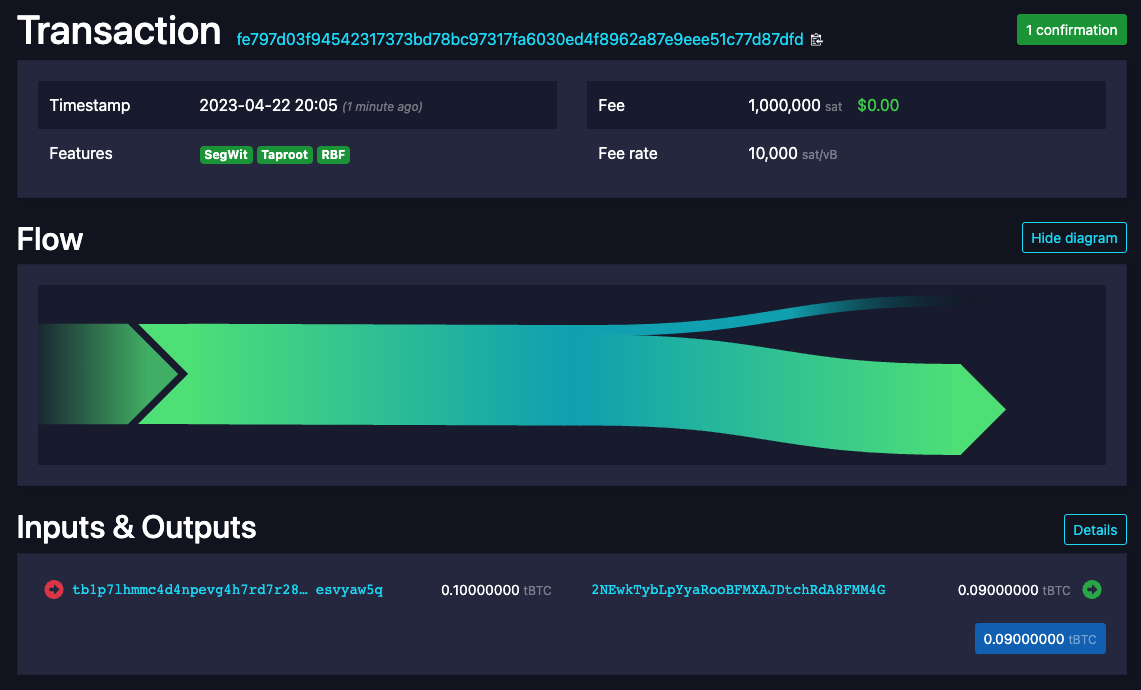
/assets/images/on_chain_tx.png:
--------------------------------------------------------------------------------
https://raw.githubusercontent.com/arminsabouri/munstr/HEAD/assets/images/on_chain_tx.png
--------------------------------------------------------------------------------
/assets/images/frankenstein.png:
--------------------------------------------------------------------------------
https://raw.githubusercontent.com/arminsabouri/munstr/HEAD/assets/images/frankenstein.png
--------------------------------------------------------------------------------
/assets/images/xcf/munstr-logo.xcf:
--------------------------------------------------------------------------------
https://raw.githubusercontent.com/arminsabouri/munstr/HEAD/assets/images/xcf/munstr-logo.xcf
--------------------------------------------------------------------------------
/assets/font/1313MockingbirdLane.ttf:
--------------------------------------------------------------------------------
https://raw.githubusercontent.com/arminsabouri/munstr/HEAD/assets/font/1313MockingbirdLane.ttf
--------------------------------------------------------------------------------
/assets/presentation/MIT2023-Munstr.pdf:
--------------------------------------------------------------------------------
https://raw.githubusercontent.com/arminsabouri/munstr/HEAD/assets/presentation/MIT2023-Munstr.pdf
--------------------------------------------------------------------------------
/start_coordinator.py:
--------------------------------------------------------------------------------
1 | #!/usr/bin/env python3
2 | from src.coordinator.coordinator import run
3 |
4 | def main():
5 | run()
6 |
7 | if __name__ == "__main__":
8 | main()
9 |
--------------------------------------------------------------------------------
/start_signer.py:
--------------------------------------------------------------------------------
1 | #!/usr/bin/env python3
2 | from src.signer.signer import run_signer
3 |
4 | import sys
5 | import argparse
6 |
7 |
8 | def main(wallet_id=None, key_pair_seed=None, nonce_seed=None):
9 | run_signer(wallet_id=wallet_id, key_pair_seed=key_pair_seed, nonce_seed=nonce_seed)
10 |
11 | if __name__ == "__main__":
12 | parser = argparse.ArgumentParser()
13 | parser.add_argument("--wallet_id", help="Wallet ID", default=None)
14 | parser.add_argument("--key_seed", help="Key seed")
15 | parser.add_argument("--nonce_seed", help="Nonce seed")
16 | args = parser.parse_args()
17 |
18 | # Call the main function with the command line arguments
19 | main(args.wallet_id, args.key_seed, args.nonce_seed)
20 |
21 |
--------------------------------------------------------------------------------
/src/utils/payload.py:
--------------------------------------------------------------------------------
1 | import json
2 | import logging
3 |
4 | from enum import Enum
5 |
6 | # ref_id is also valid but not required
7 | class PayloadKeys(Enum):
8 | REQUEST_ID = 'req_id' # the request ID
9 | COMMAND = 'command' # command to pass into the application
10 | PAYLOAD = 'payload' # payload for the command
11 | TIMESTAMP = 'ts' # timestamp
12 |
13 | def is_valid_json(json_str: str):
14 | try:
15 | json.loads(json_str)
16 | except ValueError as e:
17 | logging.error("Invalid JSON!")
18 | print(e)
19 | return False
20 | return True
21 |
22 | def is_valid_payload(payload: dict):
23 | required_keys = [payload_key.value for payload_key in PayloadKeys]
24 | for key in required_keys:
25 | if key not in list(payload.keys()):
26 | # logging.error("Key is missing from JSON payload: %s", key)
27 | return False
28 |
29 | return True
--------------------------------------------------------------------------------
/src/coordinator/mempool_space_client.py:
--------------------------------------------------------------------------------
1 | #
2 | # Use mempool.space's API for interfacing with the network. In the future we
3 | # would like users to be able to connect Munstr to their own node
4 | #
5 | import requests
6 | import logging
7 |
8 | API_ENDPOINT = "https://mempool.space/testnet/api"
9 |
10 | def broadcast_transaction(tx_hex):
11 | broadcast_transaction_path = f"/tx"
12 |
13 | payload = {"tx": tx_hex}
14 |
15 | # TODO should data be set to tx_hex?
16 | response = requests.post(API_ENDPOINT + broadcast_transaction_path, data=payload)
17 |
18 | if (response.status_code == 200):
19 | logging.info('[mempool.space client] Transaction broadcast success!')
20 | else:
21 | logging.error('[mempool.space.client] Transaction broadcast failed with error code %d', response.status_code)
22 | logging.error(response.content)
23 |
24 | def get_transaction(txid):
25 | get_transaction_path = f"/tx/{txid}"
26 |
27 | try:
28 | response = requests.get(API_ENDPOINT + get_transaction_path)
29 | response.raise_for_status()
30 | transaction = response.json()
31 |
32 | return transaction
33 | except requests.exceptions.RequestException as e:
34 | logging.error("[mempool.space client] Error retrieving transaction %s", txid)
35 | print(e)
36 | return None
--------------------------------------------------------------------------------
/src/bitcoin/descriptors.py:
--------------------------------------------------------------------------------
1 | #!/usr/bin/env python3
2 | # Copyright (c) 2019 Pieter Wuille
3 | # Distributed under the MIT software license, see the accompanying
4 | # file COPYING or http://www.opensource.org/licenses/mit-license.php.
5 | """Utility functions related to output descriptors"""
6 |
7 | INPUT_CHARSET = "0123456789()[],'/*abcdefgh@:$%{}IJKLMNOPQRSTUVWXYZ&+-.;<=>?!^_|~ijklmnopqrstuvwxyzABCDEFGH`#\"\\ "
8 | CHECKSUM_CHARSET = "qpzry9x8gf2tvdw0s3jn54khce6mua7l"
9 | GENERATOR = [0xf5dee51989, 0xa9fdca3312, 0x1bab10e32d, 0x3706b1677a, 0x644d626ffd]
10 |
11 | def descsum_polymod(symbols):
12 | """Internal function that computes the descriptor checksum."""
13 | chk = 1
14 | for value in symbols:
15 | top = chk >> 35
16 | chk = (chk & 0x7ffffffff) << 5 ^ value
17 | for i in range(5):
18 | chk ^= GENERATOR[i] if ((top >> i) & 1) else 0
19 | return chk
20 |
21 | def descsum_expand(s):
22 | """Internal function that does the character to symbol expansion"""
23 | groups = []
24 | symbols = []
25 | for c in s:
26 | if not c in INPUT_CHARSET:
27 | return None
28 | v = INPUT_CHARSET.find(c)
29 | symbols.append(v & 31)
30 | groups.append(v >> 5)
31 | if len(groups) == 3:
32 | symbols.append(groups[0] * 9 + groups[1] * 3 + groups[2])
33 | groups = []
34 | if len(groups) == 1:
35 | symbols.append(groups[0])
36 | elif len(groups) == 2:
37 | symbols.append(groups[0] * 3 + groups[1])
38 | return symbols
39 |
40 | def descsum_create(s):
41 | """Add a checksum to a descriptor without"""
42 | symbols = descsum_expand(s) + [0, 0, 0, 0, 0, 0, 0, 0]
43 | checksum = descsum_polymod(symbols) ^ 1
44 | return s + '#' + ''.join(CHECKSUM_CHARSET[(checksum >> (5 * (7 - i))) & 31] for i in range(8))
45 |
46 | def descsum_check(s, require=True):
47 | """Verify that the checksum is correct in a descriptor"""
48 | if not '#' in s:
49 | return not require
50 | if s[-9] != '#':
51 | return False
52 | if not all(x in CHECKSUM_CHARSET for x in s[-8:]):
53 | return False
54 | symbols = descsum_expand(s[:-9]) + [CHECKSUM_CHARSET.find(x) for x in s[-8:]]
55 | return descsum_polymod(symbols) == 1
56 |
--------------------------------------------------------------------------------
/.gitignore:
--------------------------------------------------------------------------------
1 | ## Python
2 |
3 | # Byte-compiled / optimized / DLL files
4 | __pycache__/
5 | *.py[cod]
6 | *$py.class
7 |
8 | # C extensions
9 | *.so
10 |
11 | # Distribution / packaging
12 | .Python
13 | build/
14 | develop-eggs/
15 | dist/
16 | downloads/
17 | eggs/
18 | .eggs/
19 | lib/
20 | lib64/
21 | parts/
22 | sdist/
23 | var/
24 | wheels/
25 | pip-wheel-metadata/
26 | share/python-wheels/
27 | *.egg-info/
28 | .installed.cfg
29 | *.egg
30 | MANIFEST
31 |
32 | # PyInstaller
33 | # Usually these files are written by a python script from a template
34 | # before PyInstaller builds the exe, so as to inject date/other infos into it.
35 | *.manifest
36 | *.spec
37 |
38 | # Installer logs
39 | pip-log.txt
40 | pip-delete-this-directory.txt
41 |
42 | # Unit test / coverage reports
43 | htmlcov/
44 | .tox/
45 | .nox/
46 | .coverage
47 | .coverage.*
48 | .cache
49 | nosetests.xml
50 | coverage.xml
51 | *.cover
52 | .hypothesis/
53 | .pytest_cache/
54 |
55 | # Translations
56 | *.mo
57 | *.pot
58 |
59 | # Django stuff:
60 | *.log
61 | local_settings.py
62 | db.sqlite3
63 | db.sqlite3-journal
64 |
65 | # Flask stuff:
66 | instance/
67 | .webassets-cache
68 |
69 | # Scrapy stuff:
70 | .scrapy
71 |
72 | # Sphinx documentation
73 | docs/_build/
74 |
75 | # PyBuilder
76 | target/
77 |
78 | # Jupyter Notebook
79 | .ipynb_checkpoints
80 |
81 | # IPython
82 | profile_default/
83 | ipython_config.py
84 |
85 | # pyenv
86 | .python-version
87 |
88 | # pipenv
89 | # According to pypa/pipenv#598, it is recommended to include Pipfile.lock in version control.
90 | # However, in case of collaboration, if having platform-specific dependencies or dependencies
91 | # having no cross-platform support, pipenv may install dependencies that don't work, or not
92 | # install all needed dependencies.
93 | #Pipfile.lock
94 |
95 | # celery beat schedule file
96 | celerybeat-schedule
97 |
98 | # SageMath parsed files
99 | *.sage.py
100 |
101 | # Environments
102 | .env
103 | .venv
104 | env/
105 | venv/
106 | ENV/
107 | env.bak/
108 | venv.bak/
109 |
110 | # Spyder project settings
111 | .spyderproject
112 | .spyproject
113 |
114 | # Rope project settings
115 | .ropeproject
116 |
117 | # mkdocs documentation
118 | /site
119 |
120 | # mypy
121 | .mypy_cache/
122 | .dmypy.json
123 | dmypy.json
124 |
125 | # Pyre type checker
126 | .pyre/
127 |
128 | ## VIM
129 |
130 | # Swap
131 | [._]*.s[a-v][a-z]
132 | [._]*.sw[a-p]
133 | [._]s[a-rt-v][a-z]
134 | [._]ss[a-gi-z]
135 | [._]sw[a-p]
136 |
137 | # Session
138 | Session.vim
139 | Sessionx.vim
140 |
141 | # Temporary
142 | .netrwhist
143 | *~
144 | # Auto-generated tag files
145 | tags
146 | # Persistent undo
147 | [._]*.un~
148 |
149 | # Custom stuff
150 | db.json
151 |
152 | # Lil' Stevie Jobs
153 | .DS_Store
154 |
--------------------------------------------------------------------------------
/src/bitcoin/musig.py:
--------------------------------------------------------------------------------
1 | # Copyright (c) 2019 The Bitcoin Core developers
2 | # Distributed under the MIT software license, see the accompanying
3 | # file COPYING or http://www.opensource.org/licenses/mit-license.php.
4 | """Preliminary MuSig implementation.
5 |
6 | WARNING: This code is slow, uses bad randomness, does not properly protect
7 | keys, and is trivially vulnerable to side channel attacks. Do not use for
8 | anything but tests.
9 |
10 | See https://eprint.iacr.org/2018/068.pdf for the MuSig signature scheme implemented here.
11 | """
12 |
13 | import hashlib
14 |
15 | from .key import (
16 | SECP256K1,
17 | SECP256K1_ORDER,
18 | TaggedHash,
19 | )
20 |
21 | def generate_musig_key(pubkey_list):
22 | """Aggregate individually generated public keys.
23 |
24 | Returns a MuSig public key as defined in the MuSig paper."""
25 | pubkey_list_sorted = sorted([int.from_bytes(key.get_bytes(), 'big') for key in pubkey_list])
26 |
27 | # Concatenate all the public keys together
28 | L = b''
29 | for px in pubkey_list_sorted:
30 | L += px.to_bytes(32, 'big')
31 |
32 | # hash of all the public keys concatenated
33 | Lh = hashlib.sha256(L).digest()
34 |
35 | # the MuSig coefficients. This prevents a key cancellation attack.
36 | musig_c = {}
37 |
38 | aggregate_key = 0
39 | for key in pubkey_list:
40 | musig_c[key] = hashlib.sha256(Lh + key.get_bytes()).digest()
41 | aggregate_key += key.mul(musig_c[key])
42 | return musig_c, aggregate_key
43 |
44 | def aggregate_schnorr_nonces(nonce_point_list):
45 | """Construct aggregated musig nonce from individually generated nonces."""
46 | R_agg = sum(nonce_point_list)
47 | R_agg_affine = SECP256K1.affine(R_agg.p)
48 | negated = False
49 | if R_agg_affine[1] % 2 != 0:
50 | negated = True
51 | R_agg_negated = SECP256K1.mul([(R_agg.p, SECP256K1_ORDER - 1)])
52 | R_agg.p = R_agg_negated
53 | return R_agg, negated
54 |
55 | def sign_musig(priv_key, k_key, R_musig, P_musig, msg):
56 | """Construct a MuSig partial signature and return the s value."""
57 | assert priv_key.valid
58 | assert priv_key.compressed
59 | assert P_musig.compressed
60 | assert len(msg) == 32
61 | assert k_key is not None and k_key.secret != 0
62 | assert R_musig.get_y() % 2 == 0
63 | e = musig_digest(R_musig, P_musig, msg)
64 | return (k_key.secret + e * priv_key.secret) % SECP256K1_ORDER
65 |
66 | def musig_digest(R_musig, P_musig, msg):
67 | """Get the digest to sign for musig"""
68 | return int.from_bytes(TaggedHash("BIP0340/challenge", R_musig.get_bytes() + P_musig.get_bytes() + msg), 'big') % SECP256K1_ORDER
69 |
70 | def aggregate_musig_signatures(s_list, R_musig):
71 | """Construct valid Schnorr signature from a list of partial MuSig signatures."""
72 | assert s_list is not None and all(isinstance(s, int) for s in s_list)
73 | s_agg = sum(s_list) % SECP256K1_ORDER
74 | return R_musig.get_x().to_bytes(32, 'big') + s_agg.to_bytes(32, 'big')
75 |
--------------------------------------------------------------------------------
/src/utils/nostr_utils.py:
--------------------------------------------------------------------------------
1 | import json
2 | import logging
3 | import ssl
4 | import time
5 | import uuid
6 |
7 | from nostr.event import Event, EventKind
8 | from nostr.filter import Filter, Filters
9 | from nostr.key import PrivateKey
10 | from nostr.message_type import ClientMessageType
11 | from nostr.relay_manager import RelayManager
12 |
13 | from src.utils.payload import PayloadKeys
14 |
15 | NOSTR_RELAYS = ["wss://nostr-pub.wellorder.net", "wss://relay.damus.io"]
16 |
17 | def add_relays():
18 | relay_manager = RelayManager()
19 | [relay_manager.add_relay(relay) for relay in NOSTR_RELAYS]
20 |
21 | logging.info("[nostr] Added the following relay(s): %s", NOSTR_RELAYS)
22 | return relay_manager
23 |
24 | def construct_and_publish_event(payload: dict, private_key: PrivateKey, relay_manager: RelayManager):
25 | public_key = private_key.public_key
26 | event = Event(content=json.dumps(payload), public_key=public_key.hex())
27 |
28 | private_key.sign_event(event)
29 | relay_manager.publish_event(event)
30 |
31 | logging.info('[nostr] Published event for the %s command', payload[PayloadKeys.COMMAND.value])
32 |
33 |
34 | # Used to generate both requests and responses
35 | def generate_nostr_message(command: str, req_id=str(uuid.uuid4()), ref_id=None, payload={}):
36 | message = {
37 | PayloadKeys.COMMAND.value: command,
38 | PayloadKeys.REQUEST_ID.value: req_id,
39 | PayloadKeys.PAYLOAD.value: payload,
40 | PayloadKeys.TIMESTAMP.value: int(time.time())
41 | }
42 |
43 | if (ref_id != None):
44 | message['ref_id'] = ref_id
45 |
46 | return message
47 |
48 | def init_relay_manager(relay_manager: RelayManager, author_pks: list[str]):
49 | # set up relay subscription
50 | subscription_id = "str"
51 | filters = Filters([Filter(authors=author_pks, kinds=[EventKind.TEXT_NOTE])])
52 | relay_manager.add_subscription(subscription_id, filters)
53 |
54 | # NOTE: This disables ssl certificate verification
55 | relay_manager.open_connections({"cert_reqs": ssl.CERT_NONE})
56 |
57 | # wait a moment for a connection to open to each relay
58 | time.sleep(1.5)
59 |
60 | request = [ClientMessageType.REQUEST, subscription_id]
61 | request.extend(filters.to_json_array())
62 | message = json.dumps(request)
63 |
64 | relay_manager.relays[NOSTR_RELAYS[0]].publish(message)
65 |
66 | # give the message a moment to send
67 | time.sleep(1)
68 |
69 | logging.info("[nostr] Relay manager started!")
70 |
71 | # read an nsec from a file, return both private and public keys
72 | def read_nsec(nsec_file_name):
73 | with open(nsec_file_name, 'r') as f:
74 | try:
75 | nsec = f.read()
76 | private_key = PrivateKey().from_nsec(nsec)
77 | public_key = private_key.public_key.hex()
78 | logging.info("[nostr] My public key: %s", public_key)
79 | return private_key, public_key
80 | except(error):
81 | logging.error("[nostr] Unexpected error reading nsec from %s", nsec_file_name)
82 | sys.exit(1)
83 |
84 | # read public keys from a file
85 | def read_public_keys(file_name):
86 | with open(file_name, 'r') as f:
87 | try:
88 | lines = f.readlines()
89 | return [line.strip() for line in lines]
90 | except(error):
91 | logging.error("[nostr] Unexpected error reading public keys from %s", file_name)
92 | sys.exit(1)
93 |
94 |
--------------------------------------------------------------------------------
/src/bitcoin/address.py:
--------------------------------------------------------------------------------
1 | #!/usr/bin/env python3
2 | # Copyright (c) 2016-2019 The Bitcoin Core developers
3 | # Distributed under the MIT software license, see the accompanying
4 | # file COPYING or http://www.opensource.org/licenses/mit-license.php.
5 | """Encode and decode BASE58, P2PKH and P2SH addresses."""
6 |
7 | import enum
8 |
9 | from .script import hash256, hash160, sha256, CScript, OP_0
10 | from .util import hex_str_to_bytes
11 |
12 | from . import segwit_addr
13 |
14 | ADDRESS_BCRT1_UNSPENDABLE = 'bcrt1qqqqqqqqqqqqqqqqqqqqqqqqqqqqqqqqqqqqqqqqqqqqqqqqqqqqq3xueyj'
15 |
16 |
17 | class AddressType(enum.Enum):
18 | bech32 = 'bech32'
19 | p2sh_segwit = 'p2sh-segwit'
20 | legacy = 'legacy' # P2PKH
21 |
22 |
23 | chars = '123456789ABCDEFGHJKLMNPQRSTUVWXYZabcdefghijkmnopqrstuvwxyz'
24 |
25 |
26 | def byte_to_base58(b, version):
27 | result = ''
28 | str = b.hex()
29 | str = chr(version).encode('latin-1').hex() + str
30 | checksum = hash256(hex_str_to_bytes(str)).hex()
31 | str += checksum[:8]
32 | value = int('0x'+str,0)
33 | while value > 0:
34 | result = chars[value % 58] + result
35 | value //= 58
36 | while (str[:2] == '00'):
37 | result = chars[0] + result
38 | str = str[2:]
39 | return result
40 |
41 | # TODO: def base58_decode
42 |
43 | def keyhash_to_p2pkh(hash, main = False):
44 | assert len(hash) == 20
45 | version = 0 if main else 111
46 | return byte_to_base58(hash, version)
47 |
48 | def scripthash_to_p2sh(hash, main = False):
49 | assert len(hash) == 20
50 | version = 5 if main else 196
51 | return byte_to_base58(hash, version)
52 |
53 | def key_to_p2pkh(key, main = False):
54 | key = check_key(key)
55 | return keyhash_to_p2pkh(hash160(key), main)
56 |
57 | def script_to_p2sh(script, main = False):
58 | script = check_script(script)
59 | return scripthash_to_p2sh(hash160(script), main)
60 |
61 | def key_to_p2sh_p2wpkh(key, main = False):
62 | key = check_key(key)
63 | p2shscript = CScript([OP_0, hash160(key)])
64 | return script_to_p2sh(p2shscript, main)
65 |
66 | ## TODO
67 | # def witness_v1_program_to_scriptpubkey(witness_program):
68 | # return CScript([OP_1, ])
69 |
70 | def program_to_witness(version, program, main=False):
71 | if (type(program) is str):
72 | program = hex_str_to_bytes(program)
73 | assert 0 <= version <= 16
74 | assert 2 <= len(program) <= 40
75 | assert version > 0 or len(program) in [20, 32]
76 | return segwit_addr.encode_segwit_address("bc" if main else "tb", version, program)
77 |
78 | def script_to_p2wsh(script, main = False):
79 | script = check_script(script)
80 | return program_to_witness(0, sha256(script), main)
81 |
82 | def key_to_p2wpkh(key, main = False):
83 | key = check_key(key)
84 | return program_to_witness(0, hash160(key), main)
85 |
86 | def script_to_p2sh_p2wsh(script, main = False):
87 | script = check_script(script)
88 | p2shscript = CScript([OP_0, sha256(script)])
89 | return script_to_p2sh(p2shscript, main)
90 |
91 | def check_key(key):
92 | if (type(key) is str):
93 | key = hex_str_to_bytes(key) # Assuming this is hex string
94 | if (type(key) is bytes and (len(key) == 33 or len(key) == 65)):
95 | return key
96 | assert False
97 |
98 | def check_script(script):
99 | if (type(script) is str):
100 | script = hex_str_to_bytes(script) # Assuming this is hex string
101 | if (type(script) is bytes or type(script) is CScript):
102 | return script
103 | assert False
104 |
--------------------------------------------------------------------------------
/src/bitcoin/coverage.py:
--------------------------------------------------------------------------------
1 | #!/usr/bin/env python3
2 | # Copyright (c) 2015-2018 The Bitcoin Core developers
3 | # Distributed under the MIT software license, see the accompanying
4 | # file COPYING or http://www.opensource.org/licenses/mit-license.php.
5 | """Utilities for doing coverage analysis on the RPC interface.
6 |
7 | Provides a way to track which RPC commands are exercised during
8 | testing.
9 | """
10 |
11 | import os
12 |
13 |
14 | REFERENCE_FILENAME = 'rpc_interface.txt'
15 |
16 |
17 | class AuthServiceProxyWrapper():
18 | """
19 | An object that wraps AuthServiceProxy to record specific RPC calls.
20 |
21 | """
22 | def __init__(self, auth_service_proxy_instance, coverage_logfile=None):
23 | """
24 | Kwargs:
25 | auth_service_proxy_instance (AuthServiceProxy): the instance
26 | being wrapped.
27 | coverage_logfile (str): if specified, write each service_name
28 | out to a file when called.
29 |
30 | """
31 | self.auth_service_proxy_instance = auth_service_proxy_instance
32 | self.coverage_logfile = coverage_logfile
33 |
34 | def __getattr__(self, name):
35 | return_val = getattr(self.auth_service_proxy_instance, name)
36 | if not isinstance(return_val, type(self.auth_service_proxy_instance)):
37 | # If proxy getattr returned an unwrapped value, do the same here.
38 | return return_val
39 | return AuthServiceProxyWrapper(return_val, self.coverage_logfile)
40 |
41 | def __call__(self, *args, **kwargs):
42 | """
43 | Delegates to AuthServiceProxy, then writes the particular RPC method
44 | called to a file.
45 |
46 | """
47 | return_val = self.auth_service_proxy_instance.__call__(*args, **kwargs)
48 | self._log_call()
49 | return return_val
50 |
51 | def _log_call(self):
52 | rpc_method = self.auth_service_proxy_instance._service_name
53 |
54 | if self.coverage_logfile:
55 | with open(self.coverage_logfile, 'a+', encoding='utf8') as f:
56 | f.write("%s\n" % rpc_method)
57 |
58 | def __truediv__(self, relative_uri):
59 | return AuthServiceProxyWrapper(self.auth_service_proxy_instance / relative_uri,
60 | self.coverage_logfile)
61 |
62 | def get_request(self, *args, **kwargs):
63 | self._log_call()
64 | return self.auth_service_proxy_instance.get_request(*args, **kwargs)
65 |
66 | def get_filename(dirname, n_node):
67 | """
68 | Get a filename unique to the test process ID and node.
69 |
70 | This file will contain a list of RPC commands covered.
71 | """
72 | pid = str(os.getpid())
73 | return os.path.join(
74 | dirname, "coverage.pid%s.node%s.txt" % (pid, str(n_node)))
75 |
76 |
77 | def write_all_rpc_commands(dirname, node):
78 | """
79 | Write out a list of all RPC functions available in `bitcoin-cli` for
80 | coverage comparison. This will only happen once per coverage
81 | directory.
82 |
83 | Args:
84 | dirname (str): temporary test dir
85 | node (AuthServiceProxy): client
86 |
87 | Returns:
88 | bool. if the RPC interface file was written.
89 |
90 | """
91 | filename = os.path.join(dirname, REFERENCE_FILENAME)
92 |
93 | if os.path.isfile(filename):
94 | return False
95 |
96 | help_output = node.help().split('\n')
97 | commands = set()
98 |
99 | for line in help_output:
100 | line = line.strip()
101 |
102 | # Ignore blanks and headers
103 | if line and not line.startswith('='):
104 | commands.add("%s\n" % line.split()[0])
105 |
106 | with open(filename, 'w', encoding='utf8') as f:
107 | f.writelines(list(commands))
108 |
109 | return True
110 |
--------------------------------------------------------------------------------
/src/signer/wallet.py:
--------------------------------------------------------------------------------
1 | from bip32 import BIP32
2 |
3 | from src.bitcoin.key import ECKey, ECPubKey, generate_key_pair
4 | from src.bitcoin.messages import sha256
5 | from src.bitcoin.musig import sign_musig
6 |
7 |
8 | class Wallet:
9 | def __init__(self, wallet_id, key_pair_seed, nonce_seed):
10 | self.wallet_id = wallet_id
11 | self.nonce_seed = int(nonce_seed)
12 |
13 | self.private_key = None
14 | self.public_key = None
15 | self.cmap = None
16 | self.pubkey_agg = None
17 | self.r_agg = None
18 | self.should_negate_nonce = None
19 |
20 | self.current_spend_request_id = None
21 | self.sig_hash = None
22 |
23 | # TODO should use ascii or utf-8?
24 | prv, pk = generate_key_pair(sha256(bytes(key_pair_seed, 'ascii')))
25 |
26 | self.private_key = prv
27 | self.public_key = pk
28 |
29 | def get_root_xpub(self):
30 | return self.get_root_hd_node().get_xpub()
31 |
32 | def get_root_hd_node(self):
33 | key_bytes = self.private_key.get_bytes()
34 | return BIP32.from_seed(key_bytes)
35 |
36 | def get_pubkey_at_index(self, index: int):
37 | root_xpub = self.get_root_xpub()
38 | bip32_node = BIP32.from_xpub(root_xpub)
39 | pk = bip32_node.get_pubkey_from_path(f"m/{index}")
40 |
41 | key = ECPubKey().set(pk)
42 | return key.get_bytes()
43 |
44 | def get_new_nonce(self):
45 | k = ECKey().set(self.nonce_seed)
46 | return k.get_pubkey()
47 |
48 | def get_wallet_id(self):
49 | return self.wallet_id
50 |
51 | def set_cmap(self, cmap):
52 | modified_cmap = {}
53 | # Both key and value should be hex encoded strings
54 | # Key is public key
55 | # value is the challenge
56 | for key, value in cmap.items():
57 | modified_cmap[key] = bytes.fromhex(value)
58 |
59 | self.cmap = modified_cmap
60 |
61 | def get_pubkey(self):
62 | return self.public_key.get_bytes().hex()
63 |
64 | def set_pubkey_agg(self, pubkey_agg):
65 | self.pubkey_agg = ECPubKey().set(bytes.fromhex(pubkey_agg))
66 |
67 | def set_r_agg(self, r_agg):
68 | self.r_agg = ECPubKey().set(bytes.fromhex(r_agg))
69 |
70 | def set_should_negate_nonce(self, value):
71 | self.should_negate_nonce = value
72 |
73 | def set_sig_hash(self, sig_hash):
74 | self.sig_hash = bytes.fromhex(sig_hash)
75 |
76 | def set_current_spend_request_id(self, current_spend_request_id):
77 | self.current_spend_request_id = current_spend_request_id
78 |
79 | def get_private_key_tweaked(self):
80 | if self.cmap != None:
81 | # TODO this is all bip32 stuff
82 | # TODO index is hardcoded at 1
83 | # index = 1
84 | # pk = self.get_pubkey_at_index(index).hex()
85 | # TODO hardcoded pk, get from class variable
86 | # prv = self.get_root_hd_node().get_privkey_from_path(f"m/{index}")
87 | # print("prv", prv)
88 | # private_key = ECKey().set(prv)
89 |
90 | pk = self.public_key.get_bytes().hex()
91 | private_key = self.private_key
92 | tweaked_key = private_key * self.cmap[pk]
93 |
94 | if self.pubkey_agg.get_y() % 2 != 0:
95 | tweaked_key.negate()
96 | self.pubkey_agg.negate()
97 |
98 | return tweaked_key
99 | return None
100 |
101 | def sign_with_current_context(self, nonce: str):
102 | if self.sig_hash == None or self.cmap == None or self.r_agg == None or self.pubkey_agg == None:
103 | # TODO should throw
104 | return None
105 |
106 | k1 = ECKey().set(self.nonce_seed)
107 | # negate here
108 | if self.should_negate_nonce:
109 | k1.negate()
110 | tweaked_private_key = self.get_private_key_tweaked()
111 | return sign_musig(tweaked_private_key, k1, self.r_agg, self.pubkey_agg, self.sig_hash)
112 |
--------------------------------------------------------------------------------
/src/bitcoin/segwit_addr.py:
--------------------------------------------------------------------------------
1 | #!/usr/bin/env python3
2 | # Copyright (c) 2017 Pieter Wuille
3 | # Distributed under the MIT software license, see the accompanying
4 | # file COPYING or http://www.opensource.org/licenses/mit-license.php.
5 | """Reference implementation for Bech32/Bech32m and segwit addresses."""
6 | from enum import Enum
7 |
8 | CHARSET = "qpzry9x8gf2tvdw0s3jn54khce6mua7l"
9 | BECH32_CONST = 1
10 | BECH32M_CONST = 0x2bc830a3
11 |
12 | class Encoding(Enum):
13 | """Enumeration type to list the various supported encodings."""
14 | BECH32 = 1
15 | BECH32M = 2
16 |
17 |
18 | def bech32_polymod(values):
19 | """Internal function that computes the Bech32 checksum."""
20 | generator = [0x3b6a57b2, 0x26508e6d, 0x1ea119fa, 0x3d4233dd, 0x2a1462b3]
21 | chk = 1
22 | for value in values:
23 | top = chk >> 25
24 | chk = (chk & 0x1ffffff) << 5 ^ value
25 | for i in range(5):
26 | chk ^= generator[i] if ((top >> i) & 1) else 0
27 | return chk
28 |
29 |
30 | def bech32_hrp_expand(hrp):
31 | """Expand the HRP into values for checksum computation."""
32 | return [ord(x) >> 5 for x in hrp] + [0] + [ord(x) & 31 for x in hrp]
33 |
34 |
35 | def bech32_verify_checksum(hrp, data):
36 | """Verify a checksum given HRP and converted data characters."""
37 | check = bech32_polymod(bech32_hrp_expand(hrp) + data)
38 | if check == BECH32_CONST:
39 | return Encoding.BECH32
40 | elif check == BECH32M_CONST:
41 | return Encoding.BECH32M
42 | else:
43 | return None
44 |
45 | def bech32_create_checksum(encoding, hrp, data):
46 | """Compute the checksum values given HRP and data."""
47 | values = bech32_hrp_expand(hrp) + data
48 | const = BECH32M_CONST if encoding == Encoding.BECH32M else BECH32_CONST
49 | polymod = bech32_polymod(values + [0, 0, 0, 0, 0, 0]) ^ const
50 | return [(polymod >> 5 * (5 - i)) & 31 for i in range(6)]
51 |
52 |
53 | def bech32_encode(encoding, hrp, data):
54 | """Compute a Bech32 or Bech32m string given HRP and data values."""
55 | combined = data + bech32_create_checksum(encoding, hrp, data)
56 | return hrp + '1' + ''.join([CHARSET[d] for d in combined])
57 |
58 |
59 | def bech32_decode(bech):
60 | """Validate a Bech32/Bech32m string, and determine HRP and data."""
61 | if ((any(ord(x) < 33 or ord(x) > 126 for x in bech)) or
62 | (bech.lower() != bech and bech.upper() != bech)):
63 | return (None, None, None)
64 | bech = bech.lower()
65 | pos = bech.rfind('1')
66 | if pos < 1 or pos + 7 > len(bech) or len(bech) > 90:
67 | return (None, None, None)
68 | if not all(x in CHARSET for x in bech[pos+1:]):
69 | return (None, None, None)
70 | hrp = bech[:pos]
71 | data = [CHARSET.find(x) for x in bech[pos+1:]]
72 | encoding = bech32_verify_checksum(hrp, data)
73 | if encoding is None:
74 | return (None, None, None)
75 | return (encoding, hrp, data[:-6])
76 |
77 |
78 | def convertbits(data, frombits, tobits, pad=True):
79 | """General power-of-2 base conversion."""
80 | acc = 0
81 | bits = 0
82 | ret = []
83 | maxv = (1 << tobits) - 1
84 | max_acc = (1 << (frombits + tobits - 1)) - 1
85 | for value in data:
86 | if value < 0 or (value >> frombits):
87 | return None
88 | acc = ((acc << frombits) | value) & max_acc
89 | bits += frombits
90 | while bits >= tobits:
91 | bits -= tobits
92 | ret.append((acc >> bits) & maxv)
93 | if pad:
94 | if bits:
95 | ret.append((acc << (tobits - bits)) & maxv)
96 | elif bits >= frombits or ((acc << (tobits - bits)) & maxv):
97 | return None
98 | return ret
99 |
100 |
101 | def decode_segwit_address(hrp, addr):
102 | """Decode a segwit address."""
103 | encoding, hrpgot, data = bech32_decode(addr)
104 | if hrpgot != hrp:
105 | return (None, None)
106 | decoded = convertbits(data[1:], 5, 8, False)
107 | if decoded is None or len(decoded) < 2 or len(decoded) > 40:
108 | return (None, None)
109 | if data[0] > 16:
110 | return (None, None)
111 | if data[0] == 0 and len(decoded) != 20 and len(decoded) != 32:
112 | return (None, None)
113 | if (data[0] == 0 and encoding != Encoding.BECH32) or (data[0] != 0 and encoding != Encoding.BECH32M):
114 | return (None, None)
115 | return (data[0], decoded)
116 |
117 |
118 | def encode_segwit_address(hrp, witver, witprog):
119 | """Encode a segwit address."""
120 | encoding = Encoding.BECH32 if witver == 0 else Encoding.BECH32M
121 | ret = bech32_encode(encoding, hrp, [witver] + convertbits(witprog, 8, 5))
122 | if decode_segwit_address(hrp, ret) == (None, None):
123 | return None
124 | return ret
125 |
--------------------------------------------------------------------------------
/src/coordinator/db.py:
--------------------------------------------------------------------------------
1 | import json
2 | import os
3 | import logging
4 |
5 | class UUIDEncoder(json.JSONEncoder):
6 | def default(self, obj):
7 | if isinstance(obj, uuid.UUID):
8 | # If obj is a UUID, serialize it to a string
9 | return str(obj)
10 | # For all other objects, use the default serialization method
11 | return super().default(obj)
12 |
13 | class DB:
14 | def __init__(self, json_file):
15 | if not os.path.isfile(json_file):
16 | raise FileNotFoundError(f"JSON file '{json_file}' not found")
17 | self.json_file = json_file
18 |
19 | def get_data(self):
20 | with open(self.json_file, "r") as f:
21 | return json.load(f)
22 |
23 | def set_data(self, new_data):
24 | with open(self.json_file, "w") as f:
25 | json.dump(new_data, f)
26 |
27 | def get_value(self, key):
28 | with open(self.json_file, "r") as f:
29 | data = json.load(f)
30 | return data.get(key)
31 |
32 | def set_value(self, key, value):
33 | with open(self.json_file, "r") as f:
34 | data = json.load(f)
35 | data[key] = value
36 | with open(self.json_file, "w") as f:
37 | json.dump(data, f)
38 |
39 | ## TODO these utility functions should reside in their own file
40 |
41 | def add_wallet(self, wallet_id, quorum):
42 | with open(self.json_file, "r") as f:
43 | data = json.load(f)
44 |
45 | filtered = [wallet for wallet in data['wallets'] if wallet['wallet_id'] == wallet_id]
46 | if len(filtered) > 0:
47 | return False
48 | data['wallets'].append({'wallet_id': wallet_id, 'quorum': quorum})
49 | with open(self.json_file, "w") as f:
50 | json.dump(data, f)
51 |
52 | return True
53 |
54 | def get_wallet(self, wallet_id):
55 | with open(self.json_file, "r") as f:
56 | data = json.load(f)
57 | filtered = [wallet for wallet in data['wallets'] if wallet['wallet_id'] == wallet_id]
58 | if len(filtered) > 0:
59 | return filtered[0]
60 | return None
61 |
62 | def get_xpubs(self, wallet_id):
63 | with open(self.json_file, "r") as f:
64 | data = json.load(f)
65 | filtered = [xpub for xpub in data['xpubs'] if xpub['wallet_id'] == wallet_id]
66 | if len(filtered) > 0:
67 | return filtered
68 | return None
69 |
70 | def add_xpub(self, wallet_id, xpub):
71 | with open(self.json_file, "r") as f:
72 | data = json.load(f)
73 | # TODO check wallet id exists
74 | filtered_xpubs = [xpub for xpub in data['xpubs'] if xpub['wallet_id'] == wallet_id and xpub['xpub'] == xpub]
75 | if len(filtered_xpubs) > 0:
76 | return False
77 |
78 | data['xpubs'].append({'wallet_id': wallet_id, 'xpub': xpub})
79 |
80 | with open(self.json_file, "w") as f:
81 | json.dump(data, f)
82 |
83 | return True
84 |
85 | def add_spend_request(self, txid, output_index, prev_script_pubkey, prev_value_sats, spend_request_id, new_address,
86 | value, wallet_id):
87 | with open(self.json_file, "r") as f:
88 | data = json.load(f)
89 | filtered = [spend for spend in data['spends'] if spend['spend_request_id'] == spend_request_id]
90 | if len(filtered) > 0:
91 | return False
92 | data['spends'].append({'spend_request_id': spend_request_id, 'txid': txid, 'output_index': output_index, 'prev_script_pubkey': prev_script_pubkey,
93 | 'prev_value_sats': prev_value_sats, 'new_address': new_address, 'value': value, 'wallet_id': wallet_id})
94 | with open(self.json_file, "w") as f:
95 | json.dump(data, f)
96 |
97 | return True
98 |
99 | def get_spend_request(self, spend_request_id):
100 | with open(self.json_file, "r") as f:
101 | data = json.load(f)
102 |
103 | filtered = [spend for spend in data['spends'] if spend['spend_request_id'] == spend_request_id]
104 |
105 | if (len(filtered) == 0):
106 | logging.error('[db] Unable to locate spend request %s', spend_request_id)
107 |
108 | # There should only be one
109 | return filtered[0]
110 |
111 | def add_nonce(self, nonce, spend_request_id):
112 | with open(self.json_file, "r") as f:
113 | data = json.load(f)
114 | # TODO should protect the same nonce being provided again
115 | data['nonces'].append({'spend_request_id': spend_request_id, 'nonce': nonce})
116 | with open(self.json_file, "w") as f:
117 | json.dump(data, f)
118 |
119 | return True
120 |
121 | def get_all_nonces(self, spend_request_id):
122 | with open(self.json_file, "r") as f:
123 | data = json.load(f)
124 |
125 | # TODO check that the wallet ID exists
126 | nonces = [nonce for nonce in data['nonces'] if nonce['spend_request_id'] == spend_request_id]
127 |
128 | return nonces
129 |
130 | def add_partial_signature(self, signature, spend_request_id):
131 | with open(self.json_file, "r") as f:
132 | data = json.load(f)
133 |
134 | # TODO should guard against providing the same signature again
135 | data['signatures'].append({'spend_request_id': spend_request_id, 'signature': signature})
136 |
137 | with open(self.json_file, "w") as f:
138 | json.dump(data, f)
139 |
140 | return True
141 |
142 | def get_all_signatures(self, spend_request_id):
143 | with open(self.json_file, "r") as f:
144 | data = json.load(f)
145 |
146 | # TODO check that the wallet ID exists
147 | signatures = [signature for signature in data['signatures'] if signature['spend_request_id'] == spend_request_id]
148 | return signatures
--------------------------------------------------------------------------------
/src/coordinator/coordinator.py:
--------------------------------------------------------------------------------
1 | import json
2 | import logging
3 | import time
4 |
5 | from colorama import Fore
6 |
7 | from src.utils.nostr_utils import add_relays, construct_and_publish_event, generate_nostr_message, init_relay_manager, read_nsec, read_public_keys
8 | from src.utils.payload import is_valid_json, is_valid_payload, PayloadKeys
9 | from src.coordinator.wallet import add_xpub, create_wallet, is_valid_command, get_address, save_nonce, start_spend, save_signature
10 | from src.coordinator.db import DB
11 |
12 | header = """
13 | ▄████▄ ▒█████ ▒█████ ██▀███ ▓█████▄ ██▓ ███▄ █ ▄▄▄ ▄▄▄█████▓ ▒█████ ██▀███
14 | ▒██▀ ▀█ ▒██▒ ██▒▒██▒ ██▒▓██ ▒ ██▒▒██▀ ██▌▓██▒ ██ ▀█ █ ▒████▄ ▓ ██▒ ▓▒▒██▒ ██▒▓██ ▒ ██▒
15 | ▒▓█ ▄ ▒██░ ██▒▒██░ ██▒▓██ ░▄█ ▒░██ █▌▒██▒▓██ ▀█ ██▒▒██ ▀█▄ ▒ ▓██░ ▒░▒██░ ██▒▓██ ░▄█ ▒
16 | ▒▓▓▄ ▄██▒▒██ ██░▒██ ██░▒██▀▀█▄ ░▓█▄ ▌░██░▓██▒ ▐▌██▒░██▄▄▄▄██░ ▓██▓ ░ ▒██ ██░▒██▀▀█▄
17 | ▒ ▓███▀ ░░ ████▓▒░░ ████▓▒░░██▓ ▒██▒░▒████▓ ░██░▒██░ ▓██░ ▓█ ▓██▒ ▒██▒ ░ ░ ████▓▒░░██▓ ▒██▒
18 | ░ ░▒ ▒ ░░ ▒░▒░▒░ ░ ▒░▒░▒░ ░ ▒▓ ░▒▓░ ▒▒▓ ▒ ░▓ ░ ▒░ ▒ ▒ ▒▒ ▓▒█░ ▒ ░░ ░ ▒░▒░▒░ ░ ▒▓ ░▒▓░
19 | ░ ▒ ░ ▒ ▒░ ░ ▒ ▒░ ░▒ ░ ▒░ ░ ▒ ▒ ▒ ░░ ░░ ░ ▒░ ▒ ▒▒ ░ ░ ░ ▒ ▒░ ░▒ ░ ▒░
20 | ░ ░ ░ ░ ▒ ░ ░ ░ ▒ ░░ ░ ░ ░ ░ ▒ ░ ░ ░ ░ ░ ▒ ░ ░ ░ ░ ▒ ░░ ░
21 | ░ ░ ░ ░ ░ ░ ░ ░ ░ ░ ░ ░ ░ ░ ░
22 | ░ ░
23 | """
24 |
25 | # Map application commands to the corresponding methods
26 | COMMAND_MAP = {
27 | 'address': get_address,
28 | 'nonce': save_nonce,
29 | 'spend': start_spend,
30 | 'sign': save_signature,
31 | 'wallet': create_wallet,
32 | 'xpub': add_xpub
33 | }
34 |
35 | def setup_logging():
36 | logging.basicConfig()
37 | logging.getLogger().setLevel(logging.INFO)
38 | logging.info(Fore.GREEN + header)
39 |
40 | def run():
41 | setup_logging()
42 |
43 | # start up the db
44 | db = DB('src/coordinator/db.json')
45 |
46 | relay_manager = add_relays()
47 | nostr_private_key, nostr_public_key = read_nsec('src/coordinator/nsec.txt')
48 |
49 | # get the public keys for the signers so we can subscribe to messages from them
50 | signer_pks = read_public_keys('src/coordinator/signer_pks.txt')
51 |
52 | init_relay_manager(relay_manager, signer_pks)
53 |
54 | # initialize a timestamp filter
55 | # this will be used to keep track of messages that we have already seen
56 | timestamp_filter = int(time.time())
57 |
58 | while 1:
59 | if (not relay_manager.message_pool.has_events()):
60 | logging.info('No messages! Sleeping ZzZzZzzz...')
61 | time.sleep(1)
62 | continue
63 |
64 | new_event = relay_manager.message_pool.get_event()
65 | event_content = new_event.event.content
66 | # print(f"Message content: {event_content}")
67 | # print(f"From Public key {new_event.event.public_key}")
68 |
69 | #
70 | # Event validation
71 | #
72 | if (not is_valid_json(event_content)):
73 | logging.info('Error with new event! Invalid JSON')
74 | continue
75 |
76 | json_payload = json.loads(event_content)
77 | if (not is_valid_payload(json_payload)):
78 | logging.info('Error with new event! Payload does not have the required keys')
79 | continue
80 |
81 | command = json_payload['command']
82 | if (not is_valid_command):
83 | logging.info('%s is not a valid command!', command)
84 | continue
85 |
86 | # skip if this event is old
87 | event_timestamp = json_payload[PayloadKeys.TIMESTAMP.value]
88 | if (event_timestamp < timestamp_filter):
89 | continue
90 |
91 | #
92 | # Handle the command that's in the event
93 | #
94 | try:
95 | logging.info('[coordinator] Handling command of type: %s', command)
96 | result = COMMAND_MAP[command](json_payload['payload'], db)
97 |
98 | # package the result into a response
99 | ref_id = json_payload[PayloadKeys.REQUEST_ID.value]
100 | response_payload = {}
101 |
102 | if command == "wallet":
103 | response_payload = {
104 | 'wallet_id': result
105 | }
106 | elif command == "address":
107 | response_payload = {
108 | 'address': result[0],
109 | 'cmap': result[1],
110 | 'pubkey_agg': result[2]
111 | }
112 | elif command == "spend":
113 | response_payload = {
114 | 'spend_request_id': result
115 | }
116 | elif command == "nonce":
117 | if result != None:
118 | response_payload = {
119 | 'r_agg': result[0],
120 | 'sig_hash': result[1],
121 | 'negated': result[2],
122 | 'spend_request_id': json_payload['payload']['spend_request_id']
123 | }
124 | elif command == "sign":
125 | if (result != None):
126 | response_payload = {
127 | 'raw_tx': result,
128 | 'spend_request_id': json_payload['payload']['spend_request_id']
129 | }
130 | if result != None:
131 | nostr_response = generate_nostr_message(command=command, ref_id=ref_id, payload=response_payload)
132 | construct_and_publish_event(nostr_response, nostr_private_key, relay_manager)
133 |
134 | except Exception as e:
135 | logging.error('Something went wrong!')
136 | print(e)
137 | pass
138 | # TODO better error handling
139 |
140 | # update the timestamp filter to keep track of messages we have already seen
141 | timestamp_filter = int(time.time())
142 |
--------------------------------------------------------------------------------
/README.md:
--------------------------------------------------------------------------------
1 |
2 |
3 |
4 |

5 |
6 |
7 |
Secure your Bitcoin with the Munstrous power of decentralized multi-signature technology
🕸🕯 An open source Musig privacy based wallet 🕯🕸
11 |
12 |
13 |
14 |
15 |
16 |
17 |
18 | [](https://bitcoin.org) [](https://www.python.org/)
19 |
20 | [](https://github.com/0xBEEFCAF3/munstr/releases/) [](#license) [](https://github.com/0xBEEFCAF3/munstr)
21 |
22 |
23 |
24 |
25 |
26 | ## What is Munstr?
27 | **Munstr** (MuSig + Nostr) is a combination of Schnorr signature based **MuSig** (multisignature) keys in a terminal based wallet using decentralized **Nostr** networks as a communication layer to facilitate a secure and encrypted method of transporting and digitally signing bitcoin transactions in a way that chain analysis cannot identify the nature and setup of the transaction data. To anyone observing the blockchain, Munstr transactions look like single key **Pay-to-Taproot** (P2TR) spends.
28 |
29 | This is facilitated through an interactive, multi-signature (n-of-n) Bitcoin wallet that is designed to enable a group of signers to coordinate an interactive signing session for taproot based outputs that belong to an aggregated public key.
30 |
31 |
32 |
33 |
34 |
35 |
36 |
37 |
68 |

69 |
70 |
71 |
 157 |
158 |
159 |
157 |
158 |
159 |  160 |
161 |
162 |
160 |
161 |
162 |  163 |
164 |
165 |
166 | ## License
167 |
168 | Licensed under the MIT License, Copyright © 2023-present TeamMunstr
169 |
--------------------------------------------------------------------------------
/src/bitcoin/authproxy.py:
--------------------------------------------------------------------------------
1 | # Copyright (c) 2011 Jeff Garzik
2 | #
3 | # Previous copyright, from python-jsonrpc/jsonrpc/proxy.py:
4 | #
5 | # Copyright (c) 2007 Jan-Klaas Kollhof
6 | #
7 | # This file is part of jsonrpc.
8 | #
9 | # jsonrpc is free software; you can redistribute it and/or modify
10 | # it under the terms of the GNU Lesser General Public License as published by
11 | # the Free Software Foundation; either version 2.1 of the License, or
12 | # (at your option) any later version.
13 | #
14 | # This software is distributed in the hope that it will be useful,
15 | # but WITHOUT ANY WARRANTY; without even the implied warranty of
16 | # MERCHANTABILITY or FITNESS FOR A PARTICULAR PURPOSE. See the
17 | # GNU Lesser General Public License for more details.
18 | #
19 | # You should have received a copy of the GNU Lesser General Public License
20 | # along with this software; if not, write to the Free Software
21 | # Foundation, Inc., 59 Temple Place, Suite 330, Boston, MA 02111-1307 USA
22 | """HTTP proxy for opening RPC connection to bitcoind.
23 |
24 | AuthServiceProxy has the following improvements over python-jsonrpc's
25 | ServiceProxy class:
26 |
27 | - HTTP connections persist for the life of the AuthServiceProxy object
28 | (if server supports HTTP/1.1)
29 | - sends protocol 'version', per JSON-RPC 1.1
30 | - sends proper, incrementing 'id'
31 | - sends Basic HTTP authentication headers
32 | - parses all JSON numbers that look like floats as Decimal
33 | - uses standard Python json lib
34 | """
35 |
36 | import base64
37 | import decimal
38 | from http import HTTPStatus
39 | import http.client
40 | import json
41 | import logging
42 | import os
43 | import socket
44 | import time
45 | import urllib.parse
46 |
47 | HTTP_TIMEOUT = 30
48 | USER_AGENT = "AuthServiceProxy/0.1"
49 |
50 | log = logging.getLogger("BitcoinRPC")
51 |
52 | class JSONRPCException(Exception):
53 | def __init__(self, rpc_error, http_status=None):
54 | try:
55 | errmsg = '%(message)s (%(code)i)' % rpc_error
56 | except (KeyError, TypeError):
57 | errmsg = ''
58 | super().__init__(errmsg)
59 | self.error = rpc_error
60 | self.http_status = http_status
61 |
62 |
63 | def EncodeDecimal(o):
64 | if isinstance(o, decimal.Decimal):
65 | return str(o)
66 | raise TypeError(repr(o) + " is not JSON serializable")
67 |
68 | class AuthServiceProxy():
69 | __id_count = 0
70 |
71 | # ensure_ascii: escape unicode as \uXXXX, passed to json.dumps
72 | def __init__(self, service_url, service_name=None, timeout=HTTP_TIMEOUT, connection=None, ensure_ascii=True):
73 | self.__service_url = service_url
74 | self._service_name = service_name
75 | self.ensure_ascii = ensure_ascii # can be toggled on the fly by tests
76 | self.__url = urllib.parse.urlparse(service_url)
77 | user = None if self.__url.username is None else self.__url.username.encode('utf8')
78 | passwd = None if self.__url.password is None else self.__url.password.encode('utf8')
79 | authpair = user + b':' + passwd
80 | self.__auth_header = b'Basic ' + base64.b64encode(authpair)
81 | self.timeout = timeout
82 | self._set_conn(connection)
83 |
84 | def __getattr__(self, name):
85 | if name.startswith('__') and name.endswith('__'):
86 | # Python internal stuff
87 | raise AttributeError
88 | if self._service_name is not None:
89 | name = "%s.%s" % (self._service_name, name)
90 | return AuthServiceProxy(self.__service_url, name, connection=self.__conn)
91 |
92 | def _request(self, method, path, postdata):
93 | '''
94 | Do a HTTP request, with retry if we get disconnected (e.g. due to a timeout).
95 | This is a workaround for https://bugs.python.org/issue3566 which is fixed in Python 3.5.
96 | '''
97 | headers = {'Host': self.__url.hostname,
98 | 'User-Agent': USER_AGENT,
99 | 'Authorization': self.__auth_header,
100 | 'Content-type': 'application/json'}
101 | if os.name == 'nt':
102 | # Windows somehow does not like to re-use connections
103 | # TODO: Find out why the connection would disconnect occasionally and make it reusable on Windows
104 | self._set_conn()
105 | try:
106 | self.__conn.request(method, path, postdata, headers)
107 | return self._get_response()
108 | except http.client.BadStatusLine as e:
109 | if e.line == "''": # if connection was closed, try again
110 | self.__conn.close()
111 | self.__conn.request(method, path, postdata, headers)
112 | return self._get_response()
113 | else:
114 | raise
115 | except (BrokenPipeError, ConnectionResetError):
116 | # Python 3.5+ raises BrokenPipeError instead of BadStatusLine when the connection was reset
117 | # ConnectionResetError happens on FreeBSD with Python 3.4
118 | self.__conn.close()
119 | self.__conn.request(method, path, postdata, headers)
120 | return self._get_response()
121 |
122 | def get_request(self, *args, **argsn):
123 | AuthServiceProxy.__id_count += 1
124 |
125 | log.debug("-{}-> {} {}".format(
126 | AuthServiceProxy.__id_count,
127 | self._service_name,
128 | json.dumps(args or argsn, default=EncodeDecimal, ensure_ascii=self.ensure_ascii),
129 | ))
130 | if args and argsn:
131 | raise ValueError('Cannot handle both named and positional arguments')
132 | return {'version': '1.1',
133 | 'method': self._service_name,
134 | 'params': args or argsn,
135 | 'id': AuthServiceProxy.__id_count}
136 |
137 | def __call__(self, *args, **argsn):
138 | postdata = json.dumps(self.get_request(*args, **argsn), default=EncodeDecimal, ensure_ascii=self.ensure_ascii)
139 | response, status = self._request('POST', self.__url.path, postdata.encode('utf-8'))
140 | if response['error'] is not None:
141 | raise JSONRPCException(response['error'], status)
142 | elif 'result' not in response:
143 | raise JSONRPCException({
144 | 'code': -343, 'message': 'missing JSON-RPC result'}, status)
145 | elif status != HTTPStatus.OK:
146 | raise JSONRPCException({
147 | 'code': -342, 'message': 'non-200 HTTP status code but no JSON-RPC error'}, status)
148 | else:
149 | return response['result']
150 |
151 | def batch(self, rpc_call_list):
152 | postdata = json.dumps(list(rpc_call_list), default=EncodeDecimal, ensure_ascii=self.ensure_ascii)
153 | log.debug("--> " + postdata)
154 | response, status = self._request('POST', self.__url.path, postdata.encode('utf-8'))
155 | if status != HTTPStatus.OK:
156 | raise JSONRPCException({
157 | 'code': -342, 'message': 'non-200 HTTP status code but no JSON-RPC error'}, status)
158 | return response
159 |
160 | def _get_response(self):
161 | req_start_time = time.time()
162 | try:
163 | http_response = self.__conn.getresponse()
164 | except socket.timeout:
165 | raise JSONRPCException({
166 | 'code': -344,
167 | 'message': '%r RPC took longer than %f seconds. Consider '
168 | 'using larger timeout for calls that take '
169 | 'longer to return.' % (self._service_name,
170 | self.__conn.timeout)})
171 | if http_response is None:
172 | raise JSONRPCException({
173 | 'code': -342, 'message': 'missing HTTP response from server'})
174 |
175 | content_type = http_response.getheader('Content-Type')
176 | if content_type != 'application/json':
177 | raise JSONRPCException(
178 | {'code': -342, 'message': 'non-JSON HTTP response with \'%i %s\' from server' % (http_response.status, http_response.reason)},
179 | http_response.status)
180 |
181 | responsedata = http_response.read().decode('utf8')
182 | response = json.loads(responsedata, parse_float=decimal.Decimal)
183 | elapsed = time.time() - req_start_time
184 | if "error" in response and response["error"] is None:
185 | log.debug("<-%s- [%.6f] %s" % (response["id"], elapsed, json.dumps(response["result"], default=EncodeDecimal, ensure_ascii=self.ensure_ascii)))
186 | else:
187 | log.debug("<-- [%.6f] %s" % (elapsed, responsedata))
188 | return response, http_response.status
189 |
190 | def __truediv__(self, relative_uri):
191 | return AuthServiceProxy("{}/{}".format(self.__service_url, relative_uri), self._service_name, connection=self.__conn)
192 |
193 | def _set_conn(self, connection=None):
194 | port = 80 if self.__url.port is None else self.__url.port
195 | if connection:
196 | self.__conn = connection
197 | self.timeout = connection.timeout
198 | elif self.__url.scheme == 'https':
199 | self.__conn = http.client.HTTPSConnection(self.__url.hostname, port, timeout=self.timeout)
200 | else:
201 | self.__conn = http.client.HTTPConnection(self.__url.hostname, port, timeout=self.timeout)
202 |
--------------------------------------------------------------------------------
/src/coordinator/wallet.py:
--------------------------------------------------------------------------------
1 | import logging
2 | import uuid
3 | from bip32 import BIP32
4 |
5 | from src.bitcoin.musig import generate_musig_key, aggregate_schnorr_nonces, aggregate_musig_signatures
6 | from src.bitcoin.address import program_to_witness
7 | from src.bitcoin.key import ECPubKey
8 | from src.bitcoin.messages import CTransaction, CTxIn, COutPoint, CTxOut, CScriptWitness, CTxInWitness
9 | from src.bitcoin.script import TaprootSignatureHash, SIGHASH_ALL_TAPROOT
10 | from src.coordinator.mempool_space_client import broadcast_transaction, get_transaction
11 |
12 | # Using Peter Todd's python-bitcoinlib (https://github.com/petertodd/python-bitcoinlib)
13 | from bitcoin.wallet import CBitcoinAddress
14 | import bitcoin
15 |
16 | # can abstract this network selection bit out to a properties/config file
17 | bitcoin.SelectParams('testnet')
18 |
19 | COMMANDS = ['address', 'nonce','spend', 'wallet', 'xpub']
20 |
21 | # in memory cache of transactions that are in the process of being spent
22 | # keys are aggregate nonces and values are spending transactions
23 | spending_txs = {}
24 |
25 | def is_valid_command(command: str):
26 | return command in COMMANDS
27 |
28 | def create_spending_transaction(txid, outputIndex, destination_addr, amount_sat, version=1, nSequence=0):
29 | """Construct a CTransaction object that spends the first ouput from txid."""
30 | # Construct transaction
31 | spending_tx = CTransaction()
32 | # Populate the transaction version
33 | spending_tx.nVersion = version
34 | # Populate the locktime
35 | spending_tx.nLockTime = 0
36 |
37 | # Populate the transaction inputs
38 | outpoint = COutPoint(int(txid, 16), outputIndex)
39 | spending_tx_in = CTxIn(outpoint=outpoint, nSequence=nSequence)
40 | spending_tx.vin = [spending_tx_in]
41 |
42 | script_pubkey = CBitcoinAddress(destination_addr).to_scriptPubKey()
43 | dest_output = CTxOut(nValue=amount_sat, scriptPubKey=script_pubkey)
44 | spending_tx.vout = [dest_output]
45 |
46 | return (spending_tx, script_pubkey)
47 |
48 |
49 | def create_wallet(payload: dict, db):
50 | if (not 'quorum' in payload):
51 | raise Exception("[wallet] Cannot create a wallet without the 'quorum' property")
52 |
53 | quorum = payload['quorum']
54 | if (quorum < 1):
55 | raise Exception("[wallet] Quorum must be greater than 1")
56 |
57 | new_wallet_id = str(uuid.uuid4())
58 |
59 | if (db.add_wallet(new_wallet_id, quorum)):
60 | logging.info("[wallet] Saved new wallet ID %s to the database", new_wallet_id)
61 | return new_wallet_id
62 |
63 | # Get a wallet ID from the provided payload. Throw an error if it is missing.
64 | def get_wallet_id(payload: dict):
65 | if (not 'wallet_id' in payload):
66 | raise Exception("[wallet] 'wallet_id' property is missing")
67 |
68 | wallet_id = payload['wallet_id']
69 | return wallet_id
70 |
71 | # Get the spend request ID from the provided payload. Throw an error if it is missing
72 | def get_spend_request_id(payload: dict):
73 | if (not 'spend_request_id' in payload):
74 | raise Exception("[wallet] 'spend_request_id' property is missing")
75 |
76 | spend_request_id = payload['spend_request_id']
77 | return spend_request_id
78 |
79 | def add_xpub(payload: dict, db):
80 | if (not 'xpub' in payload):
81 | raise Exception("[wallet] Cannot add an xpub without the 'xpub' property")
82 |
83 | xpub = payload['xpub']
84 | wallet_id = get_wallet_id(payload)
85 |
86 | if (db.add_xpub(wallet_id, xpub)):
87 | logging.info('[wallet] Added xpub to wallet %s', wallet_id)
88 |
89 | def get_address(payload: dict, db):
90 | index = payload['index']
91 | wallet_id = get_wallet_id(payload)
92 | ec_public_keys = []
93 |
94 | # wallet = db.get_wallet(wallet_id)
95 | wallet_xpubs = db.get_xpubs(wallet_id)
96 |
97 | if (wallet_xpubs == []):
98 | raise Exception('[wallet] No xpubs to create an address from!')
99 |
100 | for xpub in wallet_xpubs:
101 | # The method to generate and aggregate MuSig key expects ECPubKey objects
102 | ec_public_key = ECPubKey()
103 |
104 | # TODO xpubs aren't working quite right. Using regular public keys for now.
105 | # bip32_node = BIP32.from_xpub(xpub['xpub'])
106 | # public_key = bip32_node.get_pubkey_from_path(f"m/{index}")
107 | #e c_public_key.set(public_key)
108 |
109 | ec_public_key.set(bytes.fromhex(xpub['xpub']))
110 | ec_public_keys.append(ec_public_key)
111 |
112 | c_map, pubkey_agg = generate_musig_key(ec_public_keys)
113 | logging.info('[wallet] Aggregate public key: %s', pubkey_agg.get_bytes().hex())
114 |
115 | # Create a segwit v1 address (P2TR) from the aggregate key
116 | p2tr_address = program_to_witness(0x01, pubkey_agg.get_bytes())
117 | logging.info('[wallet] Returning P2TR address %s', p2tr_address)
118 |
119 | # convert the challenges/coefficients to hex so they can be returned to the signer
120 | c_map_hex = {}
121 | for key, value in c_map.items():
122 | # k is the hex encoded pubkey, the value is the challenge/coefficient
123 | k = key.get_bytes().hex()
124 | c_map_hex[k] = value.hex()
125 |
126 | return [p2tr_address, c_map_hex, pubkey_agg.get_bytes().hex()]
127 |
128 | # Initiates a spending transaction
129 | def start_spend(payload: dict, db):
130 | # create an ID for this request
131 | spend_request_id = str(uuid.uuid4())
132 | logging.info('[wallet] Starting spend request with id %s', spend_request_id)
133 |
134 |
135 | if (not 'txid' in payload):
136 | raise Exception("[wallet] Cannot spend without the 'txid' property, which corresponds to the transaction ID of the output that is being spent")
137 |
138 | if (not 'output_index' in payload):
139 | raise Exception("[wallet] Cannot spend without the 'output_index' property, which corresponds to the index of the oputput that is being spent")
140 |
141 | if (not 'new_address' in payload):
142 | raise Exception("[wallet] Cannot spend without the 'new_address' property, which corresponds to the destination address of the transaction")
143 |
144 | if (not 'value' in payload):
145 | raise Exception("[wallet] Cannot spend without the 'value' property, which corresponds to the value (in satoshis) of the output that is being spent")
146 |
147 | txid = payload['txid']
148 | output_index = payload['output_index']
149 | destination_address = payload['new_address']
150 | wallet_id = get_wallet_id(payload)
151 |
152 | # 10% of fees will go to miners. Can have better fee support in the future
153 | output_amount = int(payload['value'] * 0.9)
154 |
155 | # Use mempool.space to look up the scriptpubkey for the output being spent
156 | # Could probably find a library to do this so we don't have to make any external calls
157 | tx = get_transaction(txid)
158 | input_script_pub_key = tx['vout'][output_index]['scriptpubkey']
159 | input_value_sats = tx['vout'][output_index]['value']
160 |
161 | # Persist to the db so other signers can easily retrieve this information
162 | if (db.add_spend_request(txid,
163 | output_index,
164 | input_script_pub_key,
165 | input_value_sats,
166 | spend_request_id,
167 | destination_address,
168 | output_amount,
169 | wallet_id)):
170 | logging.info('[wallet] Saved spend request %s to the database', spend_request_id)
171 |
172 | return spend_request_id
173 |
174 | def save_nonce(payload: dict, db):
175 | if (not 'nonce' in payload):
176 | raise Exception("[wallet] Cannot save a nonce without the 'nonce' property")
177 |
178 | nonce = payload['nonce']
179 | spend_request_id = get_spend_request_id(payload)
180 | spend_request = db.get_spend_request(spend_request_id)
181 | wallet_id = spend_request['wallet_id']
182 | if (spend_request is None):
183 | logging.error('[wallet] Cannot find spend request %s in the database', spend_request_id)
184 |
185 |
186 | logging.info('[wallet] Saving nonce for request id %s', spend_request_id)
187 |
188 | wallet = db.get_wallet(wallet_id)
189 |
190 | # Save the nonce to the db
191 | db.add_nonce(nonce, spend_request_id)
192 |
193 | logging.info('[wallet] Successfully saved nonce for request id %s', spend_request_id)
194 |
195 | # When the last signer provides a nonce, we can return the aggregate nonce (R_AGG)
196 | nonces = db.get_all_nonces(spend_request_id)
197 |
198 | if (len(nonces) != wallet['quorum']):
199 | return None
200 |
201 | # Generate nonce points
202 | nonce_points = [ECPubKey().set(bytes.fromhex(nonce['nonce'])) for nonce in nonces]
203 | # R_agg is the aggregate nonce, negated is if the private key was negated to produce
204 | # an even y coordinate
205 | R_agg, negated = aggregate_schnorr_nonces(nonce_points)
206 |
207 | (spending_tx, _script_pub_key) = create_spending_transaction(spend_request['txid'],
208 | spend_request['output_index'],
209 | spend_request['new_address'],
210 | spend_request['value'])
211 |
212 | # Create a sighash for ALL (0x00)
213 | sighash_musig = TaprootSignatureHash(spending_tx, [{'n': spend_request['output_index'], 'nValue': spend_request['prev_value_sats'], 'scriptPubKey': bytes.fromhex(spend_request['prev_script_pubkey'])}], SIGHASH_ALL_TAPROOT)
214 | print(sighash_musig)
215 |
216 | # Update cache
217 | spending_txs[R_agg] = spending_tx
218 |
219 | # Encode everything as hex before returning
220 | return (R_agg.get_bytes().hex(), sighash_musig.hex(), negated)
221 |
222 | def save_signature(payload, db):
223 | if (not 'signature' in payload):
224 | raise Exception("[wallet] Cannot save a signature without the 'signature' property")
225 |
226 | signature = payload['signature']
227 | spend_request_id = get_spend_request_id(payload)
228 |
229 | logging.info("[wallet] Recieved partial signature for spend request %s", spend_request_id)
230 |
231 | db.add_partial_signature(signature, spend_request_id)
232 |
233 | spend_request = db.get_spend_request(spend_request_id)
234 | wallet_id = spend_request['wallet_id']
235 | wallet = db.get_wallet(wallet_id)
236 |
237 | sigs = db.get_all_signatures(spend_request_id)
238 | sigs = [sig['signature'] for sig in sigs]
239 |
240 | nonces = db.get_all_nonces(spend_request_id)
241 | quorum = wallet['quorum']
242 | if len(nonces) != quorum or len(sigs) != quorum:
243 | logging.error('[wallet] Number of nonces and signatures does not match expected quorum of %d', quorum)
244 | return None
245 |
246 | nonce_points = [ECPubKey().set(bytes.fromhex(nonce['nonce'])) for nonce in nonces]
247 |
248 | # Aggregate keys and signatures
249 | R_agg, negated = aggregate_schnorr_nonces(nonce_points)
250 |
251 | # Retrieve the current transaction from the cache
252 | spending_tx = spending_txs[R_agg]
253 |
254 | # The aggregate signature
255 | tx_sig_agg = aggregate_musig_signatures(sigs, R_agg)
256 |
257 | # Add the aggregate signature to the witness stack
258 | witness_stack = CScriptWitness()
259 | witness_stack.stack.append(tx_sig_agg)
260 |
261 | # Add the witness to the transaction
262 | spending_tx.wit.vtxinwit.append(CTxInWitness(witness_stack))
263 |
264 | tx_serialized_hex = spending_tx.serialize().hex()
265 | logging.info("[wallet] Serialized transaction hex, ready for broadcast: %s", tx_serialized_hex)
266 |
267 | # Uncomment to broadcast tx
268 | # txid = broadcast_transaction(raw_tx)
269 | # print("TXID", txid)
270 |
271 | return tx_serialized_hex
272 |
273 |
274 |
--------------------------------------------------------------------------------
/src/signer/signer.py:
--------------------------------------------------------------------------------
1 | from colorama import Fore
2 |
3 | from src.signer.wallet import Wallet
4 | from src.utils.nostr_utils import generate_nostr_message, add_relays, construct_and_publish_event, init_relay_manager, read_nsec, read_public_keys
5 | from src.utils.payload import is_valid_json, is_valid_payload
6 |
7 | from enum import Enum
8 |
9 | import json
10 | import ssl
11 | import time
12 | import uuid
13 | import logging
14 |
15 |
16 | header = """
17 | ██████ ██▓ ▄████ ███▄ █ ▓█████ ██▀███
18 | ▒██ ▒ ▓██▒ ██▒ ▀█▒ ██ ▀█ █ ▓█ ▀ ▓██ ▒ ██▒
19 | ░ ▓██▄ ▒██▒▒██░▄▄▄░▓██ ▀█ ██▒▒███ ▓██ ░▄█ ▒
20 | ▒ ██▒░██░░▓█ ██▓▓██▒ ▐▌██▒▒▓█ ▄ ▒██▀▀█▄
21 | ▒██████▒▒░██░░▒▓███▀▒▒██░ ▓██░░▒████▒░██▓ ▒██▒
22 | ▒ ▒▓▒ ▒ ░░▓ ░▒ ▒ ░ ▒░ ▒ ▒ ░░ ▒░ ░░ ▒▓ ░▒▓░
23 | ░ ░▒ ░ ░ ▒ ░ ░ ░ ░ ░░ ░ ▒░ ░ ░ ░ ░▒ ░ ▒░
24 | ░ ░ ░ ▒ ░░ ░ ░ ░ ░ ░ ░ ░░ ░
25 | ░ ░ ░ ░ ░ ░ ░
26 | """
27 |
28 | CORDINATOR_TIMEOUT = 5 # seconds
29 |
30 | class SignerCommands(Enum):
31 | GENERATE_ADDRESS = 'address'
32 | NEW_WALLET = 'new wallet'
33 | SEND_PUBLIC_KEY = 'send pk'
34 | SIGN = 'sign'
35 | SPEND = 'spend'
36 |
37 | def read_cordinator_messages(relay_manager, private_key, time_stamp_filter=None):
38 | payloads = []
39 | while relay_manager.message_pool.has_events():
40 | event_msg = relay_manager.message_pool.get_event()
41 | # Uncomment in debug
42 | # print(f"Message content: {event_msg.event.content}")
43 | # print(f"From Public key {event_msg.event.public_key}")
44 | if not is_valid_json(event_msg.event.content):
45 | continue
46 |
47 | json_payload = json.loads(event_msg.event.content)
48 | if not is_valid_payload(json_payload):
49 | continue
50 |
51 | if time_stamp_filter != None and json_payload['ts'] < time_stamp_filter:
52 | continue
53 |
54 | payloads.append(json_payload)
55 | return payloads
56 |
57 | def wait_for_coordinator(relay_manager, nostr_private_key, time_stamp, command, req_id):
58 | # Wait for a bit, ideally this is a exponentially backoff waiting period where we timeout after n tries
59 | time.sleep(CORDINATOR_TIMEOUT)
60 | payloads = read_cordinator_messages(
61 | relay_manager, nostr_private_key, time_stamp_filter=time_stamp)
62 |
63 | filtered_payloads = [payload for payload in payloads if payload['command']
64 | == command and payload['ref_id'] == req_id]
65 |
66 | if len(filtered_payloads) == 0:
67 | logging.info('Coordinator did not respond to %s command (request ID: %s)', command, req_id)
68 | return None
69 |
70 | return filtered_payloads[0]
71 |
72 |
73 | def handle_create_wallet(quorum, relay_manager, private_key):
74 | time_stamp = int(time.time())
75 | req_id = str(uuid.uuid4())
76 | new_wallet_payload = generate_nostr_message(
77 | command='wallet', req_id=req_id, payload={'quorum': quorum})
78 | construct_and_publish_event(new_wallet_payload, private_key, relay_manager)
79 |
80 | logging.info('Nostr payload sent to coordinator, awaiting response')
81 | coordinator_response = wait_for_coordinator(relay_manager, private_key, time_stamp, "wallet", req_id)
82 |
83 | if coordinator_response == None:
84 | print('Coordinator did not respond to %s command', SignerCommands.NEW_WALLET.value)
85 | return None
86 |
87 | new_wallet_id = coordinator_response['payload']['wallet_id']
88 | logging.info("Wallet created with ID: %s", new_wallet_id)
89 |
90 | return new_wallet_id
91 |
92 | # NOTE creating an xpub does not expect a response
93 | def handle_create_xpub(wallet, relay_manager, private_key):
94 | xpub = wallet.get_root_xpub()
95 | add_xpub_payload = generate_nostr_message(
96 | command='xpub', payload={'wallet_id': wallet.get_wallet_id(), 'xpub': wallet.get_pubkey()})
97 | construct_and_publish_event(add_xpub_payload, private_key, relay_manager)
98 | print("Operation Finished")
99 |
100 |
101 | def handle_get_address(wallet, index, relay_manager, private_key):
102 | time_stamp = int(time.time())
103 | req_id = str(uuid.uuid4())
104 | get_address_paylaod = generate_nostr_message(command='address', req_id=req_id, payload={
105 | 'wallet_id': wallet.get_wallet_id(), 'index': index})
106 | construct_and_publish_event(
107 | get_address_paylaod, private_key, relay_manager)
108 |
109 | logging.info('Nostr payload sent to coordinator, awaiting response')
110 | coordinator_response = wait_for_coordinator(relay_manager, private_key, time_stamp, "address", req_id)
111 |
112 | if coordinator_response == None:
113 | print('Coordinator did not respond to %s command', SignerCommands.GENERATE_ADDRESS.value)
114 | return None
115 |
116 | new_address = coordinator_response['payload']
117 | return new_address
118 |
119 |
120 | def handle_spend(outpoint, new_address, value, wallet, relay_manager, private_key):
121 | time_stamp = int(time.time())
122 | req_id = str(uuid.uuid4())
123 | start_spend_payload = generate_nostr_message(command='spend', req_id=req_id, payload={'wallet_id': wallet.get_wallet_id(
124 | ), 'txid': outpoint[0], 'output_index': outpoint[1], 'new_address': new_address, 'value': value})
125 | construct_and_publish_event(
126 | start_spend_payload, private_key, relay_manager)
127 |
128 | logging.info('Nostr payload sent to coordinator, awaiting response')
129 | coordinator_response = wait_for_coordinator(relay_manager, private_key, time_stamp, "spend", req_id)
130 |
131 | if coordinator_response == None:
132 | print('Coordinator did not respond to %s command', SignerCommands.SPEND.value)
133 | return None
134 |
135 | spend_request_id = coordinator_response['payload']['spend_request_id']
136 | return spend_request_id
137 |
138 |
139 | def handle_sign_tx(spend_request_id, wallet, relay_manager, private_key):
140 | time_stamp = int(time.time())
141 | req_id = str(uuid.uuid4())
142 | nonce = wallet.get_new_nonce().get_bytes().hex()
143 | nonce_payload = generate_nostr_message(command='nonce', req_id=req_id, payload={
144 | 'spend_request_id': spend_request_id, 'nonce': nonce})
145 | construct_and_publish_event(
146 | nonce_payload, private_key, relay_manager)
147 |
148 | logging.info('Nonce Send! Awaiting response...')
149 | # Wait for a bit, ideally this is a expoentially backoff waiting period where we timeout after n tries
150 | time.sleep(CORDINATOR_TIMEOUT)
151 | # Here we want to wait for other signers to provide their nonces
152 | # Also assuming the cordinator will not send other types of messages
153 | nonce_response = None
154 | while 1:
155 | if not relay_manager.message_pool.has_events():
156 | logging.info("Waiting for other signers to send nonce.. ")
157 | time.sleep(5)
158 |
159 | payloads = read_cordinator_messages(
160 | relay_manager, private_key, time_stamp_filter=time_stamp)
161 | print(payloads)
162 | filtered_payloads = [payload for payload in payloads if payload['command']
163 | == "nonce" and 'spend_request_id' in payload['payload'] and payload['payload']['spend_request_id'] == spend_request_id]
164 | logging.info(filtered_payloads)
165 | if len(filtered_payloads) == 0:
166 | logging.info('Cordinator did not respond to nonce command')
167 | continue
168 | # Server shouldnt respond with > 1 nonce notes
169 | nonce_response = filtered_payloads[0]
170 | break
171 | if nonce_response == None:
172 | logging.info('Cordinator did not respond to nonce command ')
173 | return None
174 | # At this point all signers provided nonces so we should have a agg_nonce and a sighash
175 | r_agg = nonce_response['payload']['r_agg']
176 | sig_hash = nonce_response['payload']['sig_hash']
177 | should_negate_nonce = nonce_response['payload']['negated']
178 |
179 | wallet.set_r_agg(r_agg)
180 | wallet.set_sig_hash(sig_hash)
181 | wallet.set_should_negate_nonce(should_negate_nonce)
182 |
183 | partial_signature = wallet.sign_with_current_context(nonce)
184 | logging.info(f"Providing partial signatuire: {partial_signature}")
185 |
186 | #Provide cordinator with partial sig
187 | nonce_payload = generate_nostr_message(command='sign', req_id=req_id, payload={
188 | 'spend_request_id': spend_request_id, 'signature': partial_signature})
189 | construct_and_publish_event(
190 | nonce_payload, private_key, relay_manager)
191 |
192 | logging.info('Nostr payload sent to cordinator, awaiting response')
193 | # Wait for a bit, ideally this is a expoentially backoff waiting period where we timeout after n tries
194 | time.sleep(CORDINATOR_TIMEOUT)
195 | sign_response = None
196 | # Here we want to wait for other signers to provide their nonces
197 | while 1:
198 | if not relay_manager.message_pool.has_events():
199 | logging.info("Waiting for other signers to send signatures... ")
200 | time.sleep(5)
201 |
202 | payloads = read_cordinator_messages(
203 | relay_manager, private_key, time_stamp_filter=time_stamp)
204 | filtered_payloads = [payload for payload in payloads if payload['command']
205 | == "sign" and 'spend_request_id' in payload['payload'] and payload['payload']['spend_request_id'] == spend_request_id]
206 |
207 | if len(filtered_payloads) == 0:
208 | logging.info('Cordinator did not respond to sign command')
209 | continue
210 | # Server shouldnt respond with > 1 notes
211 | sign_response = filtered_payloads[0]
212 | break
213 |
214 | if sign_response == None:
215 | logging.info('Cordinator did not respond to spend command')
216 | return None
217 | raw_tx = sign_response['payload']['raw_tx']
218 | logging.info(f"Got rawtx from cordinator {raw_tx}")
219 | return raw_tx
220 |
221 | def setup_logging():
222 | logging.basicConfig()
223 | logging.getLogger().setLevel(logging.INFO)
224 | logging.info(Fore.RED + header)
225 |
226 | def run_signer(wallet_id=None, key_pair_seed=None, nonce_seed=None):
227 | setup_logging()
228 |
229 | relay_manager = add_relays()
230 | nostr_private_key, nostr_public_key = read_nsec('src/signer/nsec.txt')
231 |
232 | # get the public keys for the coordinator so we can subscribe to messages from them
233 | cordinator_pk = read_public_keys('src/signer/coordinator_pk.txt')[0]
234 |
235 | init_relay_manager(relay_manager, [cordinator_pk])
236 | logging.info('Relay manager started')
237 |
238 | # Load the wallet if an ID was provided
239 | wallet = None
240 | if wallet_id != None:
241 | wallet = Wallet(wallet_id=wallet_id, key_pair_seed=key_pair_seed, nonce_seed=nonce_seed)
242 |
243 | while True:
244 | user_input = input("Enter a command: ")
245 |
246 | if user_input.lower() == SignerCommands.NEW_WALLET.value:
247 | quorum = int(input("Enter a quorum: "))
248 | logging.info(f"Creating a new wallet with {quorum} signers ...")
249 | wallet_id = handle_create_wallet(
250 | quorum, relay_manager, nostr_private_key)
251 | # TODO: nonce_seed is currently required
252 | wallet = Wallet(wallet_id, key_pair_seed=key_pair_seed, nonce_seed=nonce_seed)
253 |
254 | elif user_input.lower() == SignerCommands.SEND_PUBLIC_KEY.value:
255 | logging.info("Generating and posting the public key...")
256 | handle_create_xpub(wallet, relay_manager, nostr_private_key)
257 |
258 | elif user_input.lower() == SignerCommands.GENERATE_ADDRESS.value:
259 | # TODO bug: you cannot sign or spend with out getting an address first
260 | logging.info("Generating a new address...")
261 | address_payload = handle_get_address(
262 | wallet, 0, relay_manager, nostr_private_key)
263 |
264 | wallet.set_cmap(address_payload['cmap'])
265 | wallet.set_pubkey_agg(address_payload['pubkey_agg'])
266 | logging.info(f"Got address {address_payload['address']}")
267 |
268 | elif user_input.lower() == SignerCommands.SPEND.value:
269 | logging.info("Preparing to spend funds...")
270 | txid = input("Enter previous tx id: ")
271 | index = int(input("Enter output index: "))
272 | new_address = input("Destination address (where would you like to send funds to?): ")
273 | sats = int(input("Amount in satoshis (how much are we spending?): "))
274 |
275 | spend_request_id = handle_spend(
276 | [txid, index], new_address, sats, wallet, relay_manager, nostr_private_key)
277 | wallet.set_current_spend_request_id(spend_request_id)
278 | logging.info(
279 | f'Your spend request id {spend_request_id}, next provide nonces and signatures!!')
280 |
281 | elif user_input.lower() == SignerCommands.SIGN.value:
282 | spend_request_id = input("Provide a spend request id: ")
283 | spend_request_id = handle_sign_tx(
284 | spend_request_id, wallet, relay_manager, nostr_private_key)
285 |
286 | else:
287 | possible_commands = [c.value for c in SignerCommands]
288 | logging.info("Invalid command. Please enter one of the following: %s", possible_commands)
289 |
--------------------------------------------------------------------------------
/src/bitcoin/util.py:
--------------------------------------------------------------------------------
1 | #!/usr/bin/env python3
2 | # Copyright (c) 2014-2019 The Bitcoin Core developers
3 | # Distributed under the MIT software license, see the accompanying
4 | # file COPYING or http://www.opensource.org/licenses/mit-license.php.
5 | """Helpful routines for regression testing."""
6 |
7 | from base64 import b64encode
8 | from binascii import unhexlify
9 | from decimal import Decimal, ROUND_DOWN
10 | import inspect
11 | import json
12 | import logging
13 | import os
14 | import random
15 | import re
16 | from subprocess import CalledProcessError
17 | import time
18 |
19 | from . import coverage
20 | from .authproxy import AuthServiceProxy, JSONRPCException
21 | from io import BytesIO
22 |
23 | logger = logging.getLogger("TestFramework.utils")
24 |
25 | # Assert functions
26 | ##################
27 |
28 | def assert_fee_amount(fee, tx_size, fee_per_kB):
29 | """Assert the fee was in range"""
30 | target_fee = round(tx_size * fee_per_kB / 1000, 8)
31 | if fee < target_fee:
32 | raise AssertionError("Fee of %s BTC too low! (Should be %s BTC)" % (str(fee), str(target_fee)))
33 | # allow the wallet's estimation to be at most 2 bytes off
34 | if fee > (tx_size + 2) * fee_per_kB / 1000:
35 | raise AssertionError("Fee of %s BTC too high! (Should be %s BTC)" % (str(fee), str(target_fee)))
36 |
37 | def assert_equal(thing1, thing2, *args):
38 | if thing1 != thing2 or any(thing1 != arg for arg in args):
39 | raise AssertionError("not(%s)" % " == ".join(str(arg) for arg in (thing1, thing2) + args))
40 |
41 | def assert_greater_than(thing1, thing2):
42 | if thing1 <= thing2:
43 | raise AssertionError("%s <= %s" % (str(thing1), str(thing2)))
44 |
45 | def assert_greater_than_or_equal(thing1, thing2):
46 | if thing1 < thing2:
47 | raise AssertionError("%s < %s" % (str(thing1), str(thing2)))
48 |
49 | def assert_raises(exc, fun, *args, **kwds):
50 | assert_raises_message(exc, None, fun, *args, **kwds)
51 |
52 | def assert_raises_message(exc, message, fun, *args, **kwds):
53 | try:
54 | fun(*args, **kwds)
55 | except JSONRPCException:
56 | raise AssertionError("Use assert_raises_rpc_error() to test RPC failures")
57 | except exc as e:
58 | if message is not None and message not in e.error['message']:
59 | raise AssertionError("Expected substring not found:" + e.error['message'])
60 | except Exception as e:
61 | raise AssertionError("Unexpected exception raised: " + type(e).__name__)
62 | else:
63 | raise AssertionError("No exception raised")
64 |
65 | def assert_raises_process_error(returncode, output, fun, *args, **kwds):
66 | """Execute a process and asserts the process return code and output.
67 |
68 | Calls function `fun` with arguments `args` and `kwds`. Catches a CalledProcessError
69 | and verifies that the return code and output are as expected. Throws AssertionError if
70 | no CalledProcessError was raised or if the return code and output are not as expected.
71 |
72 | Args:
73 | returncode (int): the process return code.
74 | output (string): [a substring of] the process output.
75 | fun (function): the function to call. This should execute a process.
76 | args*: positional arguments for the function.
77 | kwds**: named arguments for the function.
78 | """
79 | try:
80 | fun(*args, **kwds)
81 | except CalledProcessError as e:
82 | if returncode != e.returncode:
83 | raise AssertionError("Unexpected returncode %i" % e.returncode)
84 | if output not in e.output:
85 | raise AssertionError("Expected substring not found:" + e.output)
86 | else:
87 | raise AssertionError("No exception raised")
88 |
89 | def assert_raises_rpc_error(code, message, fun, *args, **kwds):
90 | """Run an RPC and verify that a specific JSONRPC exception code and message is raised.
91 |
92 | Calls function `fun` with arguments `args` and `kwds`. Catches a JSONRPCException
93 | and verifies that the error code and message are as expected. Throws AssertionError if
94 | no JSONRPCException was raised or if the error code/message are not as expected.
95 |
96 | Args:
97 | code (int), optional: the error code returned by the RPC call (defined
98 | in src/rpc/protocol.h). Set to None if checking the error code is not required.
99 | message (string), optional: [a substring of] the error string returned by the
100 | RPC call. Set to None if checking the error string is not required.
101 | fun (function): the function to call. This should be the name of an RPC.
102 | args*: positional arguments for the function.
103 | kwds**: named arguments for the function.
104 | """
105 | assert try_rpc(code, message, fun, *args, **kwds), "No exception raised"
106 |
107 | def try_rpc(code, message, fun, *args, **kwds):
108 | """Tries to run an rpc command.
109 |
110 | Test against error code and message if the rpc fails.
111 | Returns whether a JSONRPCException was raised."""
112 | try:
113 | fun(*args, **kwds)
114 | except JSONRPCException as e:
115 | # JSONRPCException was thrown as expected. Check the code and message values are correct.
116 | if (code is not None) and (code != e.error["code"]):
117 | raise AssertionError("Unexpected JSONRPC error code %i" % e.error["code"])
118 | if (message is not None) and (message not in e.error['message']):
119 | raise AssertionError("Expected substring not found:" + e.error['message'])
120 | return True
121 | except Exception as e:
122 | raise AssertionError("Unexpected exception raised: " + type(e).__name__)
123 | else:
124 | return False
125 |
126 | def assert_is_hex_string(string):
127 | try:
128 | int(string, 16)
129 | except Exception as e:
130 | raise AssertionError(
131 | "Couldn't interpret %r as hexadecimal; raised: %s" % (string, e))
132 |
133 | def assert_is_hash_string(string, length=64):
134 | if not isinstance(string, str):
135 | raise AssertionError("Expected a string, got type %r" % type(string))
136 | elif length and len(string) != length:
137 | raise AssertionError(
138 | "String of length %d expected; got %d" % (length, len(string)))
139 | elif not re.match('[abcdef0-9]+$', string):
140 | raise AssertionError(
141 | "String %r contains invalid characters for a hash." % string)
142 |
143 | def assert_array_result(object_array, to_match, expected, should_not_find=False):
144 | """
145 | Pass in array of JSON objects, a dictionary with key/value pairs
146 | to match against, and another dictionary with expected key/value
147 | pairs.
148 | If the should_not_find flag is true, to_match should not be found
149 | in object_array
150 | """
151 | if should_not_find:
152 | assert_equal(expected, {})
153 | num_matched = 0
154 | for item in object_array:
155 | all_match = True
156 | for key, value in to_match.items():
157 | if item[key] != value:
158 | all_match = False
159 | if not all_match:
160 | continue
161 | elif should_not_find:
162 | num_matched = num_matched + 1
163 | for key, value in expected.items():
164 | if item[key] != value:
165 | raise AssertionError("%s : expected %s=%s" % (str(item), str(key), str(value)))
166 | num_matched = num_matched + 1
167 | if num_matched == 0 and not should_not_find:
168 | raise AssertionError("No objects matched %s" % (str(to_match)))
169 | if num_matched > 0 and should_not_find:
170 | raise AssertionError("Objects were found %s" % (str(to_match)))
171 |
172 | # Utility functions
173 | ###################
174 |
175 | def check_json_precision():
176 | """Make sure json library being used does not lose precision converting BTC values"""
177 | n = Decimal("20000000.00000003")
178 | satoshis = int(json.loads(json.dumps(float(n))) * 1.0e8)
179 | if satoshis != 2000000000000003:
180 | raise RuntimeError("JSON encode/decode loses precision")
181 |
182 | def count_bytes(hex_string):
183 | return len(bytearray.fromhex(hex_string))
184 |
185 |
186 | def hex_str_to_bytes(hex_str):
187 | return unhexlify(hex_str.encode('ascii'))
188 |
189 | def str_to_b64str(string):
190 | return b64encode(string.encode('utf-8')).decode('ascii')
191 |
192 | def satoshi_round(amount):
193 | return Decimal(amount).quantize(Decimal('0.00000001'), rounding=ROUND_DOWN)
194 |
195 | def wait_until(predicate, *, attempts=float('inf'), timeout=float('inf'), lock=None):
196 | if attempts == float('inf') and timeout == float('inf'):
197 | timeout = 60
198 | attempt = 0
199 | time_end = time.time() + timeout
200 |
201 | while attempt < attempts and time.time() < time_end:
202 | if lock:
203 | with lock:
204 | if predicate():
205 | return
206 | else:
207 | if predicate():
208 | return
209 | attempt += 1
210 | time.sleep(0.05)
211 |
212 | # Print the cause of the timeout
213 | predicate_source = "''''\n" + inspect.getsource(predicate) + "'''"
214 | logger.error("wait_until() failed. Predicate: {}".format(predicate_source))
215 | if attempt >= attempts:
216 | raise AssertionError("Predicate {} not true after {} attempts".format(predicate_source, attempts))
217 | elif time.time() >= time_end:
218 | raise AssertionError("Predicate {} not true after {} seconds".format(predicate_source, timeout))
219 | raise RuntimeError('Unreachable')
220 |
221 | # RPC/P2P connection constants and functions
222 | ############################################
223 |
224 | # The maximum number of nodes a single test can spawn
225 | MAX_NODES = 12
226 | # Don't assign rpc or p2p ports lower than this
227 | PORT_MIN = 11000
228 | # The number of ports to "reserve" for p2p and rpc, each
229 | PORT_RANGE = 5000
230 |
231 | class PortSeed:
232 | # Must be initialized with a unique integer for each process
233 | n = None
234 |
235 | def get_rpc_proxy(url, node_number, timeout=None, coveragedir=None):
236 | """
237 | Args:
238 | url (str): URL of the RPC server to call
239 | node_number (int): the node number (or id) that this calls to
240 |
241 | Kwargs:
242 | timeout (int): HTTP timeout in seconds
243 |
244 | Returns:
245 | AuthServiceProxy. convenience object for making RPC calls.
246 |
247 | """
248 | proxy_kwargs = {}
249 | if timeout is not None:
250 | proxy_kwargs['timeout'] = timeout
251 |
252 | proxy = AuthServiceProxy(url, **proxy_kwargs)
253 | proxy.url = url # store URL on proxy for info
254 |
255 | coverage_logfile = coverage.get_filename(
256 | coveragedir, node_number) if coveragedir else None
257 |
258 | return coverage.AuthServiceProxyWrapper(proxy, coverage_logfile)
259 |
260 | def p2p_port(n):
261 | assert n <= MAX_NODES
262 | return PORT_MIN + n + (MAX_NODES * PortSeed.n) % (PORT_RANGE - 1 - MAX_NODES)
263 |
264 | def rpc_port(n):
265 | return PORT_MIN + PORT_RANGE + n + (MAX_NODES * PortSeed.n) % (PORT_RANGE - 1 - MAX_NODES)
266 |
267 | def rpc_url(datadir, i, chain, rpchost):
268 | rpc_u, rpc_p = get_auth_cookie(datadir, chain)
269 | host = '127.0.0.1'
270 | port = rpc_port(i)
271 | if rpchost:
272 | parts = rpchost.split(':')
273 | if len(parts) == 2:
274 | host, port = parts
275 | else:
276 | host = rpchost
277 | return "http://%s:%s@%s:%d" % (rpc_u, rpc_p, host, int(port))
278 |
279 | # Node functions
280 | ################
281 |
282 | def initialize_datadir(dirname, n, chain):
283 | datadir = get_datadir_path(dirname, n)
284 | if not os.path.isdir(datadir):
285 | os.makedirs(datadir)
286 | with open(os.path.join(datadir, "bitcoin.conf"), 'w', encoding='utf8') as f:
287 | f.write("{}=1\n".format(chain))
288 | f.write("[{}]\n".format(chain))
289 | f.write("port=" + str(p2p_port(n)) + "\n")
290 | f.write("rpcport=" + str(rpc_port(n)) + "\n")
291 | f.write("server=1\n")
292 | f.write("keypool=1\n")
293 | f.write("discover=0\n")
294 | f.write("listenonion=0\n")
295 | f.write("printtoconsole=0\n")
296 | f.write("upnp=0\n")
297 | os.makedirs(os.path.join(datadir, 'stderr'), exist_ok=True)
298 | os.makedirs(os.path.join(datadir, 'stdout'), exist_ok=True)
299 | return datadir
300 |
301 | def get_datadir_path(dirname, n):
302 | return os.path.join(dirname, "node" + str(n))
303 |
304 | def append_config(datadir, options):
305 | with open(os.path.join(datadir, "bitcoin.conf"), 'a', encoding='utf8') as f:
306 | for option in options:
307 | f.write(option + "\n")
308 |
309 | def get_auth_cookie(datadir, chain):
310 | user = None
311 | password = None
312 | if os.path.isfile(os.path.join(datadir, "bitcoin.conf")):
313 | with open(os.path.join(datadir, "bitcoin.conf"), 'r', encoding='utf8') as f:
314 | for line in f:
315 | if line.startswith("rpcuser="):
316 | assert user is None # Ensure that there is only one rpcuser line
317 | user = line.split("=")[1].strip("\n")
318 | if line.startswith("rpcpassword="):
319 | assert password is None # Ensure that there is only one rpcpassword line
320 | password = line.split("=")[1].strip("\n")
321 | try:
322 | with open(os.path.join(datadir, chain, ".cookie"), 'r', encoding="ascii") as f:
323 | userpass = f.read()
324 | split_userpass = userpass.split(':')
325 | user = split_userpass[0]
326 | password = split_userpass[1]
327 | except OSError:
328 | pass
329 | if user is None or password is None:
330 | raise ValueError("No RPC credentials")
331 | return user, password
332 |
333 | # If a cookie file exists in the given datadir, delete it.
334 | def delete_cookie_file(datadir, chain):
335 | if os.path.isfile(os.path.join(datadir, chain, ".cookie")):
336 | logger.debug("Deleting leftover cookie file")
337 | os.remove(os.path.join(datadir, chain, ".cookie"))
338 |
339 | def softfork_active(node, key):
340 | """Return whether a softfork is active."""
341 | return node.getblockchaininfo()['softforks'][key]['active']
342 |
343 | def set_node_times(nodes, t):
344 | for node in nodes:
345 | node.setmocktime(t)
346 |
347 | def disconnect_nodes(from_connection, node_num):
348 | for peer_id in [peer['id'] for peer in from_connection.getpeerinfo() if "testnode%d" % node_num in peer['subver']]:
349 | try:
350 | from_connection.disconnectnode(nodeid=peer_id)
351 | except JSONRPCException as e:
352 | # If this node is disconnected between calculating the peer id
353 | # and issuing the disconnect, don't worry about it.
354 | # This avoids a race condition if we're mass-disconnecting peers.
355 | if e.error['code'] != -29: # RPC_CLIENT_NODE_NOT_CONNECTED
356 | raise
357 |
358 | # wait to disconnect
359 | wait_until(lambda: [peer['id'] for peer in from_connection.getpeerinfo() if "testnode%d" % node_num in peer['subver']] == [], timeout=5)
360 |
361 | def connect_nodes(from_connection, node_num):
362 | ip_port = "127.0.0.1:" + str(p2p_port(node_num))
363 | from_connection.addnode(ip_port, "onetry")
364 | # poll until version handshake complete to avoid race conditions
365 | # with transaction relaying
366 | wait_until(lambda: all(peer['version'] != 0 for peer in from_connection.getpeerinfo()))
367 |
368 | def connect_nodes_bi(nodes, a, b):
369 | connect_nodes(nodes[a], b)
370 | connect_nodes(nodes[b], a)
371 |
372 | def sync_blocks(rpc_connections, *, wait=1, timeout=60):
373 | """
374 | Wait until everybody has the same tip.
375 |
376 | sync_blocks needs to be called with an rpc_connections set that has least
377 | one node already synced to the latest, stable tip, otherwise there's a
378 | chance it might return before all nodes are stably synced.
379 | """
380 | stop_time = time.time() + timeout
381 | while time.time() <= stop_time:
382 | best_hash = [x.getbestblockhash() for x in rpc_connections]
383 | if best_hash.count(best_hash[0]) == len(rpc_connections):
384 | return
385 | time.sleep(wait)
386 | raise AssertionError("Block sync timed out:{}".format("".join("\n {!r}".format(b) for b in best_hash)))
387 |
388 | def sync_mempools(rpc_connections, *, wait=1, timeout=60, flush_scheduler=True):
389 | """
390 | Wait until everybody has the same transactions in their memory
391 | pools
392 | """
393 | stop_time = time.time() + timeout
394 | while time.time() <= stop_time:
395 | pool = [set(r.getrawmempool()) for r in rpc_connections]
396 | if pool.count(pool[0]) == len(rpc_connections):
397 | if flush_scheduler:
398 | for r in rpc_connections:
399 | r.syncwithvalidationinterfacequeue()
400 | return
401 | time.sleep(wait)
402 | raise AssertionError("Mempool sync timed out:{}".format("".join("\n {!r}".format(m) for m in pool)))
403 |
404 | # Transaction/Block functions
405 | #############################
406 |
407 | def find_output(node, txid, amount, *, blockhash=None):
408 | """
409 | Return index to output of txid with value amount
410 | Raises exception if there is none.
411 | """
412 | txdata = node.getrawtransaction(txid, 1, blockhash)
413 | for i in range(len(txdata["vout"])):
414 | if txdata["vout"][i]["value"] == amount:
415 | return i
416 | raise RuntimeError("find_output txid %s : %s not found" % (txid, str(amount)))
417 |
418 | def gather_inputs(from_node, amount_needed, confirmations_required=1):
419 | """
420 | Return a random set of unspent txouts that are enough to pay amount_needed
421 | """
422 | assert confirmations_required >= 0
423 | utxo = from_node.listunspent(confirmations_required)
424 | random.shuffle(utxo)
425 | inputs = []
426 | total_in = Decimal("0.00000000")
427 | while total_in < amount_needed and len(utxo) > 0:
428 | t = utxo.pop()
429 | total_in += t["amount"]
430 | inputs.append({"txid": t["txid"], "vout": t["vout"], "address": t["address"]})
431 | if total_in < amount_needed:
432 | raise RuntimeError("Insufficient funds: need %d, have %d" % (amount_needed, total_in))
433 | return (total_in, inputs)
434 |
435 | def make_change(from_node, amount_in, amount_out, fee):
436 | """
437 | Create change output(s), return them
438 | """
439 | outputs = {}
440 | amount = amount_out + fee
441 | change = amount_in - amount
442 | if change > amount * 2:
443 | # Create an extra change output to break up big inputs
444 | change_address = from_node.getnewaddress()
445 | # Split change in two, being careful of rounding:
446 | outputs[change_address] = Decimal(change / 2).quantize(Decimal('0.00000001'), rounding=ROUND_DOWN)
447 | change = amount_in - amount - outputs[change_address]
448 | if change > 0:
449 | outputs[from_node.getnewaddress()] = change
450 | return outputs
451 |
452 | def random_transaction(nodes, amount, min_fee, fee_increment, fee_variants):
453 | """
454 | Create a random transaction.
455 | Returns (txid, hex-encoded-transaction-data, fee)
456 | """
457 | from_node = random.choice(nodes)
458 | to_node = random.choice(nodes)
459 | fee = min_fee + fee_increment * random.randint(0, fee_variants)
460 |
461 | (total_in, inputs) = gather_inputs(from_node, amount + fee)
462 | outputs = make_change(from_node, total_in, amount, fee)
463 | outputs[to_node.getnewaddress()] = float(amount)
464 |
465 | rawtx = from_node.createrawtransaction(inputs, outputs)
466 | signresult = from_node.signrawtransactionwithwallet(rawtx)
467 | txid = from_node.sendrawtransaction(signresult["hex"], 0)
468 |
469 | return (txid, signresult["hex"], fee)
470 |
471 | # Helper to create at least "count" utxos
472 | # Pass in a fee that is sufficient for relay and mining new transactions.
473 | def create_confirmed_utxos(fee, node, count):
474 | to_generate = int(0.5 * count) + 101
475 | while to_generate > 0:
476 | node.generate(min(25, to_generate))
477 | to_generate -= 25
478 | utxos = node.listunspent()
479 | iterations = count - len(utxos)
480 | addr1 = node.getnewaddress()
481 | addr2 = node.getnewaddress()
482 | if iterations <= 0:
483 | return utxos
484 | for i in range(iterations):
485 | t = utxos.pop()
486 | inputs = []
487 | inputs.append({"txid": t["txid"], "vout": t["vout"]})
488 | outputs = {}
489 | send_value = t['amount'] - fee
490 | outputs[addr1] = satoshi_round(send_value / 2)
491 | outputs[addr2] = satoshi_round(send_value / 2)
492 | raw_tx = node.createrawtransaction(inputs, outputs)
493 | signed_tx = node.signrawtransactionwithwallet(raw_tx)["hex"]
494 | node.sendrawtransaction(signed_tx)
495 |
496 | while (node.getmempoolinfo()['size'] > 0):
497 | node.generate(1)
498 |
499 | utxos = node.listunspent()
500 | assert len(utxos) >= count
501 | return utxos
502 |
503 | def find_vout_for_address(node, txid, addr):
504 | """
505 | Locate the vout index of the given transaction sending to the
506 | given address. Raises runtime error exception if not found.
507 | """
508 | tx = node.getrawtransaction(txid, True)
509 | for i in range(len(tx["vout"])):
510 | if any([addr == a for a in tx["vout"][i]["scriptPubKey"]["addresses"]]):
511 | return i
512 | raise RuntimeError("Vout not found for address: txid=%s, addr=%s" % (txid, addr))
513 |
--------------------------------------------------------------------------------
/src/bitcoin/mininode.py:
--------------------------------------------------------------------------------
1 | #!/usr/bin/env python3
2 | # Copyright (c) 2010 ArtForz -- public domain half-a-node
3 | # Copyright (c) 2012 Jeff Garzik
4 | # Copyright (c) 2010-2019 The Bitcoin Core developers
5 | # Distributed under the MIT software license, see the accompanying
6 | # file COPYING or http://www.opensource.org/licenses/mit-license.php.
7 | """Bitcoin P2P network half-a-node.
8 |
9 | This python code was modified from ArtForz' public domain half-a-node, as
10 | found in the mini-node branch of http://github.com/jgarzik/pynode.
11 |
12 | P2PConnection: A low-level connection object to a node's P2P interface
13 | P2PInterface: A high-level interface object for communicating to a node over P2P
14 | P2PDataStore: A p2p interface class that keeps a store of transactions and blocks
15 | and can respond correctly to getdata and getheaders messages"""
16 | import asyncio
17 | from collections import defaultdict
18 | from io import BytesIO
19 | import logging
20 | import struct
21 | import sys
22 | import threading
23 |
24 | from src.bitcoin.messages import (
25 | CBlockHeader,
26 | MIN_VERSION_SUPPORTED,
27 | msg_addr,
28 | msg_block,
29 | MSG_BLOCK,
30 | msg_blocktxn,
31 | msg_cmpctblock,
32 | msg_feefilter,
33 | msg_getaddr,
34 | msg_getblocks,
35 | msg_getblocktxn,
36 | msg_getdata,
37 | msg_getheaders,
38 | msg_headers,
39 | msg_inv,
40 | msg_mempool,
41 | msg_notfound,
42 | msg_ping,
43 | msg_pong,
44 | msg_reject,
45 | msg_sendcmpct,
46 | msg_sendheaders,
47 | msg_tx,
48 | MSG_TX,
49 | MSG_TYPE_MASK,
50 | msg_verack,
51 | msg_version,
52 | NODE_NETWORK,
53 | NODE_WITNESS,
54 | sha256,
55 | )
56 | from src.bitcoin.util import wait_until
57 |
58 | logger = logging.getLogger("TestFramework.mininode")
59 |
60 | MESSAGEMAP = {
61 | b"addr": msg_addr,
62 | b"block": msg_block,
63 | b"blocktxn": msg_blocktxn,
64 | b"cmpctblock": msg_cmpctblock,
65 | b"feefilter": msg_feefilter,
66 | b"getaddr": msg_getaddr,
67 | b"getblocks": msg_getblocks,
68 | b"getblocktxn": msg_getblocktxn,
69 | b"getdata": msg_getdata,
70 | b"getheaders": msg_getheaders,
71 | b"headers": msg_headers,
72 | b"inv": msg_inv,
73 | b"mempool": msg_mempool,
74 | b"notfound": msg_notfound,
75 | b"ping": msg_ping,
76 | b"pong": msg_pong,
77 | b"reject": msg_reject,
78 | b"sendcmpct": msg_sendcmpct,
79 | b"sendheaders": msg_sendheaders,
80 | b"tx": msg_tx,
81 | b"verack": msg_verack,
82 | b"version": msg_version,
83 | }
84 |
85 | MAGIC_BYTES = {
86 | "mainnet": b"\xf9\xbe\xb4\xd9", # mainnet
87 | "testnet3": b"\x0b\x11\x09\x07", # testnet3
88 | "regtest": b"\xfa\xbf\xb5\xda", # regtest
89 | }
90 |
91 |
92 | class P2PConnection(asyncio.Protocol):
93 | """A low-level connection object to a node's P2P interface.
94 |
95 | This class is responsible for:
96 |
97 | - opening and closing the TCP connection to the node
98 | - reading bytes from and writing bytes to the socket
99 | - deserializing and serializing the P2P message header
100 | - logging messages as they are sent and received
101 |
102 | This class contains no logic for handing the P2P message payloads. It must be
103 | sub-classed and the on_message() callback overridden."""
104 |
105 | def __init__(self):
106 | # The underlying transport of the connection.
107 | # Should only call methods on this from the NetworkThread, c.f. call_soon_threadsafe
108 | self._transport = None
109 |
110 | @property
111 | def is_connected(self):
112 | return self._transport is not None
113 |
114 | def peer_connect(self, dstaddr, dstport, net="regtest"):
115 | assert not self.is_connected
116 | self.dstaddr = dstaddr
117 | self.dstport = dstport
118 | # The initial message to send after the connection was made:
119 | self.on_connection_send_msg = None
120 | self.recvbuf = b""
121 | self.magic_bytes = MAGIC_BYTES[net]
122 | logger.debug('Connecting to Bitcoin Node: %s:%d' % (self.dstaddr, self.dstport))
123 |
124 | loop = NetworkThread.network_event_loop
125 | conn_gen_unsafe = loop.create_connection(lambda: self, host=self.dstaddr, port=self.dstport)
126 | conn_gen = lambda: loop.call_soon_threadsafe(loop.create_task, conn_gen_unsafe)
127 | return conn_gen
128 |
129 | def peer_disconnect(self):
130 | # Connection could have already been closed by other end.
131 | NetworkThread.network_event_loop.call_soon_threadsafe(lambda: self._transport and self._transport.abort())
132 |
133 | # Connection and disconnection methods
134 |
135 | def connection_made(self, transport):
136 | """asyncio callback when a connection is opened."""
137 | assert not self._transport
138 | logger.debug("Connected & Listening: %s:%d" % (self.dstaddr, self.dstport))
139 | self._transport = transport
140 | if self.on_connection_send_msg:
141 | self.send_message(self.on_connection_send_msg)
142 | self.on_connection_send_msg = None # Never used again
143 | self.on_open()
144 |
145 | def connection_lost(self, exc):
146 | """asyncio callback when a connection is closed."""
147 | if exc:
148 | logger.warning("Connection lost to {}:{} due to {}".format(self.dstaddr, self.dstport, exc))
149 | else:
150 | logger.debug("Closed connection to: %s:%d" % (self.dstaddr, self.dstport))
151 | self._transport = None
152 | self.recvbuf = b""
153 | self.on_close()
154 |
155 | # Socket read methods
156 |
157 | def data_received(self, t):
158 | """asyncio callback when data is read from the socket."""
159 | if len(t) > 0:
160 | self.recvbuf += t
161 | self._on_data()
162 |
163 | def _on_data(self):
164 | """Try to read P2P messages from the recv buffer.
165 |
166 | This method reads data from the buffer in a loop. It deserializes,
167 | parses and verifies the P2P header, then passes the P2P payload to
168 | the on_message callback for processing."""
169 | try:
170 | while True:
171 | if len(self.recvbuf) < 4:
172 | return
173 | if self.recvbuf[:4] != self.magic_bytes:
174 | raise ValueError("magic bytes mismatch: {} != {}".format(repr(self.magic_bytes), repr(self.recvbuf)))
175 | if len(self.recvbuf) < 4 + 12 + 4 + 4:
176 | return
177 | command = self.recvbuf[4:4+12].split(b"\x00", 1)[0]
178 | msglen = struct.unpack(" 500:
250 | log_message += "... (msg truncated)"
251 | logger.debug(log_message)
252 |
253 |
254 | class P2PInterface(P2PConnection):
255 | """A high-level P2P interface class for communicating with a Bitcoin node.
256 |
257 | This class provides high-level callbacks for processing P2P message
258 | payloads, as well as convenience methods for interacting with the
259 | node over P2P.
260 |
261 | Individual testcases should subclass this and override the on_* methods
262 | if they want to alter message handling behaviour."""
263 | def __init__(self):
264 | super().__init__()
265 |
266 | # Track number of messages of each type received and the most recent
267 | # message of each type
268 | self.message_count = defaultdict(int)
269 | self.last_message = {}
270 |
271 | # A count of the number of ping messages we've sent to the node
272 | self.ping_counter = 1
273 |
274 | # The network services received from the peer
275 | self.nServices = 0
276 |
277 | def peer_connect(self, *args, services=NODE_NETWORK|NODE_WITNESS, send_version=True, **kwargs):
278 | create_conn = super().peer_connect(*args, **kwargs)
279 |
280 | if send_version:
281 | # Send a version msg
282 | vt = msg_version()
283 | vt.nServices = services
284 | vt.addrTo.ip = self.dstaddr
285 | vt.addrTo.port = self.dstport
286 | vt.addrFrom.ip = "0.0.0.0"
287 | vt.addrFrom.port = 0
288 | self.on_connection_send_msg = vt # Will be sent soon after connection_made
289 |
290 | return create_conn
291 |
292 | # Message receiving methods
293 |
294 | def on_message(self, message):
295 | """Receive message and dispatch message to appropriate callback.
296 |
297 | We keep a count of how many of each message type has been received
298 | and the most recent message of each type."""
299 | with mininode_lock:
300 | try:
301 | command = message.command.decode('ascii')
302 | self.message_count[command] += 1
303 | self.last_message[command] = message
304 | getattr(self, 'on_' + command)(message)
305 | except:
306 | print("ERROR delivering %s (%s)" % (repr(message), sys.exc_info()[0]))
307 | raise
308 |
309 | # Callback methods. Can be overridden by subclasses in individual test
310 | # cases to provide custom message handling behaviour.
311 |
312 | def on_open(self):
313 | pass
314 |
315 | def on_close(self):
316 | pass
317 |
318 | def on_addr(self, message): pass
319 | def on_block(self, message): pass
320 | def on_blocktxn(self, message): pass
321 | def on_cmpctblock(self, message): pass
322 | def on_feefilter(self, message): pass
323 | def on_getaddr(self, message): pass
324 | def on_getblocks(self, message): pass
325 | def on_getblocktxn(self, message): pass
326 | def on_getdata(self, message): pass
327 | def on_getheaders(self, message): pass
328 | def on_headers(self, message): pass
329 | def on_mempool(self, message): pass
330 | def on_notfound(self, message): pass
331 | def on_pong(self, message): pass
332 | def on_reject(self, message): pass
333 | def on_sendcmpct(self, message): pass
334 | def on_sendheaders(self, message): pass
335 | def on_tx(self, message): pass
336 |
337 | def on_inv(self, message):
338 | want = msg_getdata()
339 | for i in message.inv:
340 | if i.type != 0:
341 | want.inv.append(i)
342 | if len(want.inv):
343 | self.send_message(want)
344 |
345 | def on_ping(self, message):
346 | self.send_message(msg_pong(message.nonce))
347 |
348 | def on_verack(self, message):
349 | pass
350 |
351 | def on_version(self, message):
352 | assert message.nVersion >= MIN_VERSION_SUPPORTED, "Version {} received. Test framework only supports versions greater than {}".format(message.nVersion, MIN_VERSION_SUPPORTED)
353 | self.send_message(msg_verack())
354 | self.nServices = message.nServices
355 |
356 | # Connection helper methods
357 |
358 | def wait_for_disconnect(self, timeout=60):
359 | test_function = lambda: not self.is_connected
360 | wait_until(test_function, timeout=timeout, lock=mininode_lock)
361 |
362 | # Message receiving helper methods
363 |
364 | def wait_for_tx(self, txid, timeout=60):
365 | def test_function():
366 | assert self.is_connected
367 | if not self.last_message.get('tx'):
368 | return False
369 | return self.last_message['tx'].tx.rehash() == txid
370 |
371 | wait_until(test_function, timeout=timeout, lock=mininode_lock)
372 |
373 | def wait_for_block(self, blockhash, timeout=60):
374 | def test_function():
375 | assert self.is_connected
376 | return self.last_message.get("block") and self.last_message["block"].block.rehash() == blockhash
377 |
378 | wait_until(test_function, timeout=timeout, lock=mininode_lock)
379 |
380 | def wait_for_header(self, blockhash, timeout=60):
381 | def test_function():
382 | assert self.is_connected
383 | last_headers = self.last_message.get('headers')
384 | if not last_headers:
385 | return False
386 | return last_headers.headers[0].rehash() == blockhash
387 |
388 | wait_until(test_function, timeout=timeout, lock=mininode_lock)
389 |
390 | def wait_for_getdata(self, timeout=60):
391 | """Waits for a getdata message.
392 |
393 | Receiving any getdata message will satisfy the predicate. the last_message["getdata"]
394 | value must be explicitly cleared before calling this method, or this will return
395 | immediately with success. TODO: change this method to take a hash value and only
396 | return true if the correct block/tx has been requested."""
397 |
398 | def test_function():
399 | assert self.is_connected
400 | return self.last_message.get("getdata")
401 |
402 | wait_until(test_function, timeout=timeout, lock=mininode_lock)
403 |
404 | def wait_for_getheaders(self, timeout=60):
405 | """Waits for a getheaders message.
406 |
407 | Receiving any getheaders message will satisfy the predicate. the last_message["getheaders"]
408 | value must be explicitly cleared before calling this method, or this will return
409 | immediately with success. TODO: change this method to take a hash value and only
410 | return true if the correct block header has been requested."""
411 |
412 | def test_function():
413 | assert self.is_connected
414 | return self.last_message.get("getheaders")
415 |
416 | wait_until(test_function, timeout=timeout, lock=mininode_lock)
417 |
418 | def wait_for_inv(self, expected_inv, timeout=60):
419 | """Waits for an INV message and checks that the first inv object in the message was as expected."""
420 | if len(expected_inv) > 1:
421 | raise NotImplementedError("wait_for_inv() will only verify the first inv object")
422 |
423 | def test_function():
424 | assert self.is_connected
425 | return self.last_message.get("inv") and \
426 | self.last_message["inv"].inv[0].type == expected_inv[0].type and \
427 | self.last_message["inv"].inv[0].hash == expected_inv[0].hash
428 |
429 | wait_until(test_function, timeout=timeout, lock=mininode_lock)
430 |
431 | def wait_for_verack(self, timeout=60):
432 | def test_function():
433 | return self.message_count["verack"]
434 |
435 | wait_until(test_function, timeout=timeout, lock=mininode_lock)
436 |
437 | # Message sending helper functions
438 |
439 | def send_and_ping(self, message, timeout=60):
440 | self.send_message(message)
441 | self.sync_with_ping(timeout=timeout)
442 |
443 | # Sync up with the node
444 | def sync_with_ping(self, timeout=60):
445 | self.send_message(msg_ping(nonce=self.ping_counter))
446 |
447 | def test_function():
448 | assert self.is_connected
449 | return self.last_message.get("pong") and self.last_message["pong"].nonce == self.ping_counter
450 |
451 | wait_until(test_function, timeout=timeout, lock=mininode_lock)
452 | self.ping_counter += 1
453 |
454 |
455 | # One lock for synchronizing all data access between the network event loop (see
456 | # NetworkThread below) and the thread running the test logic. For simplicity,
457 | # P2PConnection acquires this lock whenever delivering a message to a P2PInterface.
458 | # This lock should be acquired in the thread running the test logic to synchronize
459 | # access to any data shared with the P2PInterface or P2PConnection.
460 | mininode_lock = threading.RLock()
461 |
462 |
463 | class NetworkThread(threading.Thread):
464 | network_event_loop = None
465 |
466 | def __init__(self):
467 | super().__init__(name="NetworkThread")
468 | # There is only one event loop and no more than one thread must be created
469 | assert not self.network_event_loop
470 |
471 | NetworkThread.network_event_loop = asyncio.new_event_loop()
472 |
473 | def run(self):
474 | """Start the network thread."""
475 | self.network_event_loop.run_forever()
476 |
477 | def close(self, timeout=10):
478 | """Close the connections and network event loop."""
479 | self.network_event_loop.call_soon_threadsafe(self.network_event_loop.stop)
480 | wait_until(lambda: not self.network_event_loop.is_running(), timeout=timeout)
481 | self.network_event_loop.close()
482 | self.join(timeout)
483 | NetworkThread.network_event_loop = None # Safe to remove event loop.
484 |
485 | class P2PDataStore(P2PInterface):
486 | """A P2P data store class.
487 |
488 | Keeps a block and transaction store and responds correctly to getdata and getheaders requests."""
489 |
490 | def __init__(self):
491 | super().__init__()
492 | # store of blocks. key is block hash, value is a CBlock object
493 | self.block_store = {}
494 | self.last_block_hash = ''
495 | # store of txs. key is txid, value is a CTransaction object
496 | self.tx_store = {}
497 | self.getdata_requests = []
498 |
499 | def on_getdata(self, message):
500 | """Check for the tx/block in our stores and if found, reply with an inv message."""
501 | for inv in message.inv:
502 | self.getdata_requests.append(inv.hash)
503 | if (inv.type & MSG_TYPE_MASK) == MSG_TX and inv.hash in self.tx_store.keys():
504 | self.send_message(msg_tx(self.tx_store[inv.hash]))
505 | elif (inv.type & MSG_TYPE_MASK) == MSG_BLOCK and inv.hash in self.block_store.keys():
506 | self.send_message(msg_block(self.block_store[inv.hash]))
507 | else:
508 | logger.debug('getdata message type {} received.'.format(hex(inv.type)))
509 |
510 | def on_getheaders(self, message):
511 | """Search back through our block store for the locator, and reply with a headers message if found."""
512 |
513 | locator, hash_stop = message.locator, message.hashstop
514 |
515 | # Assume that the most recent block added is the tip
516 | if not self.block_store:
517 | return
518 |
519 | headers_list = [self.block_store[self.last_block_hash]]
520 | maxheaders = 2000
521 | while headers_list[-1].sha256 not in locator.vHave:
522 | # Walk back through the block store, adding headers to headers_list
523 | # as we go.
524 | prev_block_hash = headers_list[-1].hashPrevBlock
525 | if prev_block_hash in self.block_store:
526 | prev_block_header = CBlockHeader(self.block_store[prev_block_hash])
527 | headers_list.append(prev_block_header)
528 | if prev_block_header.sha256 == hash_stop:
529 | # if this is the hashstop header, stop here
530 | break
531 | else:
532 | logger.debug('block hash {} not found in block store'.format(hex(prev_block_hash)))
533 | break
534 |
535 | # Truncate the list if there are too many headers
536 | headers_list = headers_list[:-maxheaders - 1:-1]
537 | response = msg_headers(headers_list)
538 |
539 | if response is not None:
540 | self.send_message(response)
541 |
542 | def send_blocks_and_test(self, blocks, node, *, success=True, force_send=False, reject_reason=None, expect_disconnect=False, timeout=60):
543 | """Send blocks to test node and test whether the tip advances.
544 |
545 | - add all blocks to our block_store
546 | - send a headers message for the final block
547 | - the on_getheaders handler will ensure that any getheaders are responded to
548 | - if force_send is False: wait for getdata for each of the blocks. The on_getdata handler will
549 | ensure that any getdata messages are responded to. Otherwise send the full block unsolicited.
550 | - if success is True: assert that the node's tip advances to the most recent block
551 | - if success is False: assert that the node's tip doesn't advance
552 | - if reject_reason is set: assert that the correct reject message is logged"""
553 |
554 | with mininode_lock:
555 | for block in blocks:
556 | self.block_store[block.sha256] = block
557 | self.last_block_hash = block.sha256
558 |
559 | reject_reason = [reject_reason] if reject_reason else []
560 | with node.assert_debug_log(expected_msgs=reject_reason):
561 | if force_send:
562 | for b in blocks:
563 | self.send_message(msg_block(block=b))
564 | else:
565 | self.send_message(msg_headers([CBlockHeader(block) for block in blocks]))
566 | wait_until(lambda: blocks[-1].sha256 in self.getdata_requests, timeout=timeout, lock=mininode_lock)
567 |
568 | if expect_disconnect:
569 | self.wait_for_disconnect(timeout=timeout)
570 | else:
571 | self.sync_with_ping(timeout=timeout)
572 |
573 | if success:
574 | wait_until(lambda: node.getbestblockhash() == blocks[-1].hash, timeout=timeout)
575 | else:
576 | assert node.getbestblockhash() != blocks[-1].hash
577 |
578 | def send_txs_and_test(self, txs, node, *, success=True, expect_disconnect=False, reject_reason=None):
579 | """Send txs to test node and test whether they're accepted to the mempool.
580 |
581 | - add all txs to our tx_store
582 | - send tx messages for all txs
583 | - if success is True/False: assert that the txs are/are not accepted to the mempool
584 | - if expect_disconnect is True: Skip the sync with ping
585 | - if reject_reason is set: assert that the correct reject message is logged."""
586 |
587 | with mininode_lock:
588 | for tx in txs:
589 | self.tx_store[tx.sha256] = tx
590 |
591 | reject_reason = [reject_reason] if reject_reason else []
592 | with node.assert_debug_log(expected_msgs=reject_reason):
593 | for tx in txs:
594 | self.send_message(msg_tx(tx))
595 |
596 | if expect_disconnect:
597 | self.wait_for_disconnect()
598 | else:
599 | self.sync_with_ping()
600 |
601 | raw_mempool = node.getrawmempool()
602 | if success:
603 | # Check that all txs are now in the mempool
604 | for tx in txs:
605 | assert tx.hash in raw_mempool, "{} not found in mempool".format(tx.hash)
606 | else:
607 | # Check that none of the txs are now in the mempool
608 | for tx in txs:
609 | assert tx.hash not in raw_mempool, "{} tx found in mempool".format(tx.hash)
610 |
--------------------------------------------------------------------------------
/src/bitcoin/key.py:
--------------------------------------------------------------------------------
1 | # Copyright (c) 2019 Pieter Wuille
2 | # Distributed under the MIT software license, see the accompanying
3 | # file COPYING or http://www.opensource.org/licenses/mit-license.php.
4 | """Test-only secp256k1 elliptic curve implementation
5 |
6 | WARNING: This code is slow, uses bad randomness, does not properly protect
7 | keys, and is trivially vulnerable to side channel attacks. Do not use for
8 | anything but tests."""
9 | import random
10 | import hashlib
11 |
12 | def TaggedHash(tag, data):
13 | ss = hashlib.sha256(tag.encode('utf-8')).digest()
14 | ss += ss
15 | ss += data
16 | return hashlib.sha256(ss).digest()
17 |
18 | def modinv(a, n):
19 | """Compute the modular inverse of a modulo n
20 |
21 | See https://en.wikipedia.org/wiki/Extended_Euclidean_algorithm#Modular_integers.
22 | """
23 | t1, t2 = 0, 1
24 | r1, r2 = n, a
25 | while r2 != 0:
26 | q = r1 // r2
27 | t1, t2 = t2, t1 - q * t2
28 | r1, r2 = r2, r1 - q * r2
29 | if r1 > 1:
30 | return None
31 | if t1 < 0:
32 | t1 += n
33 | return t1
34 |
35 | def jacobi_symbol(n, k):
36 | """Compute the Jacobi symbol of n modulo k
37 |
38 | See http://en.wikipedia.org/wiki/Jacobi_symbol
39 |
40 | For our application k is always prime, so this is the same as the Legendre symbol."""
41 | assert k > 0 and k & 1, "jacobi symbol is only defined for positive odd k"
42 | n %= k
43 | t = 0
44 | while n != 0:
45 | while n & 1 == 0:
46 | n >>= 1
47 | r = k & 7
48 | t ^= (r == 3 or r == 5)
49 | n, k = k, n
50 | t ^= (n & k & 3 == 3)
51 | n = n % k
52 | if k == 1:
53 | return -1 if t else 1
54 | return 0
55 |
56 | def modsqrt(a, p):
57 | """Compute the square root of a modulo p when p % 4 = 3.
58 |
59 | The Tonelli-Shanks algorithm can be used. See https://en.wikipedia.org/wiki/Tonelli-Shanks_algorithm
60 |
61 | Limiting this function to only work for p % 4 = 3 means we don't need to
62 | iterate through the loop. The highest n such that p - 1 = 2^n Q with Q odd
63 | is n = 1. Therefore Q = (p-1)/2 and sqrt = a^((Q+1)/2) = a^((p+1)/4)
64 |
65 | secp256k1's is defined over field of size 2**256 - 2**32 - 977, which is 3 mod 4.
66 | """
67 | if p % 4 != 3:
68 | raise NotImplementedError("modsqrt only implemented for p % 4 = 3")
69 | sqrt = pow(a, (p + 1)//4, p)
70 | if pow(sqrt, 2, p) == a % p:
71 | return sqrt
72 | return None
73 |
74 | def int_or_bytes(s):
75 | "Convert 32-bytes to int while accepting also int and returning it as is."
76 | if isinstance(s, bytes):
77 | assert(len(s) == 32)
78 | s = int.from_bytes(s, 'big')
79 | elif not isinstance(s, int):
80 | raise TypeError
81 | return s
82 |
83 | class EllipticCurve:
84 | def __init__(self, p, a, b):
85 | """Initialize elliptic curve y^2 = x^3 + a*x + b over GF(p)."""
86 | self.p = p
87 | self.a = a % p
88 | self.b = b % p
89 |
90 | def affine(self, p1):
91 | """Convert a Jacobian point tuple p1 to affine form, or None if at infinity.
92 |
93 | An affine point is represented as the Jacobian (x, y, 1)"""
94 | x1, y1, z1 = p1
95 | if z1 == 0:
96 | return None
97 | inv = modinv(z1, self.p)
98 | inv_2 = (inv**2) % self.p
99 | inv_3 = (inv_2 * inv) % self.p
100 | return ((inv_2 * x1) % self.p, (inv_3 * y1) % self.p, 1)
101 |
102 | def has_even_y(self, p1):
103 | """Whether the point p1 has an even Y coordinate when expressed in affine coordinates."""
104 | return not (p1[2] == 0 or self.affine(p1)[1] & 1)
105 |
106 | def negate(self, p1):
107 | """Negate a Jacobian point tuple p1."""
108 | x1, y1, z1 = p1
109 | return (x1, (self.p - y1) % self.p, z1)
110 |
111 | def on_curve(self, p1):
112 | """Determine whether a Jacobian tuple p is on the curve (and not infinity)"""
113 | x1, y1, z1 = p1
114 | z2 = pow(z1, 2, self.p)
115 | z4 = pow(z2, 2, self.p)
116 | return z1 != 0 and (pow(x1, 3, self.p) + self.a * x1 * z4 + self.b * z2 * z4 - pow(y1, 2, self.p)) % self.p == 0
117 |
118 | def is_x_coord(self, x):
119 | """Test whether x is a valid X coordinate on the curve."""
120 | x_3 = pow(x, 3, self.p)
121 | return jacobi_symbol(x_3 + self.a * x + self.b, self.p) != -1
122 |
123 | def lift_x(self, x):
124 | """Given an X coordinate on the curve, return a corresponding affine point."""
125 | x_3 = pow(x, 3, self.p)
126 | v = x_3 + self.a * x + self.b
127 | y = modsqrt(v, self.p)
128 | if y is None:
129 | return None
130 | return (x, y, 1)
131 |
132 | def double(self, p1):
133 | """Double a Jacobian tuple p1
134 |
135 | See https://en.wikibooks.org/wiki/Cryptography/Prime_Curve/Jacobian_Coordinates - Point Doubling"""
136 | x1, y1, z1 = p1
137 | if z1 == 0:
138 | return (0, 1, 0)
139 | y1_2 = (y1**2) % self.p
140 | y1_4 = (y1_2**2) % self.p
141 | x1_2 = (x1**2) % self.p
142 | s = (4*x1*y1_2) % self.p
143 | m = 3*x1_2
144 | if self.a:
145 | m += self.a * pow(z1, 4, self.p)
146 | m = m % self.p
147 | x2 = (m**2 - 2*s) % self.p
148 | y2 = (m*(s - x2) - 8*y1_4) % self.p
149 | z2 = (2*y1*z1) % self.p
150 | return (x2, y2, z2)
151 |
152 | def add_mixed(self, p1, p2):
153 | """Add a Jacobian tuple p1 and an affine tuple p2
154 |
155 | See https://en.wikibooks.org/wiki/Cryptography/Prime_Curve/Jacobian_Coordinates - Point Addition (with affine point)"""
156 | x1, y1, z1 = p1
157 | x2, y2, z2 = p2
158 | assert(z2 == 1)
159 | # Adding to the point at infinity is a no-op
160 | if z1 == 0:
161 | return p2
162 | z1_2 = (z1**2) % self.p
163 | z1_3 = (z1_2 * z1) % self.p
164 | u2 = (x2 * z1_2) % self.p
165 | s2 = (y2 * z1_3) % self.p
166 | if x1 == u2:
167 | if (y1 != s2):
168 | # p1 and p2 are inverses. Return the point at infinity.
169 | return (0, 1, 0)
170 | # p1 == p2. The formulas below fail when the two points are equal.
171 | return self.double(p1)
172 | h = u2 - x1
173 | r = s2 - y1
174 | h_2 = (h**2) % self.p
175 | h_3 = (h_2 * h) % self.p
176 | u1_h_2 = (x1 * h_2) % self.p
177 | x3 = (r**2 - h_3 - 2*u1_h_2) % self.p
178 | y3 = (r*(u1_h_2 - x3) - y1*h_3) % self.p
179 | z3 = (h*z1) % self.p
180 | return (x3, y3, z3)
181 |
182 | def add(self, p1, p2):
183 | """Add two Jacobian tuples p1 and p2
184 |
185 | See https://en.wikibooks.org/wiki/Cryptography/Prime_Curve/Jacobian_Coordinates - Point Addition"""
186 | x1, y1, z1 = p1
187 | x2, y2, z2 = p2
188 | # Adding the point at infinity is a no-op
189 | if z1 == 0:
190 | return p2
191 | if z2 == 0:
192 | return p1
193 | # Adding an Affine to a Jacobian is more efficient since we save field multiplications and squarings when z = 1
194 | if z1 == 1:
195 | return self.add_mixed(p2, p1)
196 | if z2 == 1:
197 | return self.add_mixed(p1, p2)
198 | z1_2 = (z1**2) % self.p
199 | z1_3 = (z1_2 * z1) % self.p
200 | z2_2 = (z2**2) % self.p
201 | z2_3 = (z2_2 * z2) % self.p
202 | u1 = (x1 * z2_2) % self.p
203 | u2 = (x2 * z1_2) % self.p
204 | s1 = (y1 * z2_3) % self.p
205 | s2 = (y2 * z1_3) % self.p
206 | if u1 == u2:
207 | if (s1 != s2):
208 | # p1 and p2 are inverses. Return the point at infinity.
209 | return (0, 1, 0)
210 | # p1 == p2. The formulas below fail when the two points are equal.
211 | return self.double(p1)
212 | h = u2 - u1
213 | r = s2 - s1
214 | h_2 = (h**2) % self.p
215 | h_3 = (h_2 * h) % self.p
216 | u1_h_2 = (u1 * h_2) % self.p
217 | x3 = (r**2 - h_3 - 2*u1_h_2) % self.p
218 | y3 = (r*(u1_h_2 - x3) - s1*h_3) % self.p
219 | z3 = (h*z1*z2) % self.p
220 | return (x3, y3, z3)
221 |
222 | def mul(self, ps):
223 | """Compute a (multi) point multiplication
224 |
225 | ps is a list of (Jacobian tuple, scalar) pairs.
226 | """
227 | r = (0, 1, 0)
228 | for i in range(255, -1, -1):
229 | r = self.double(r)
230 | for (p, n) in ps:
231 | if ((n >> i) & 1):
232 | r = self.add(r, p)
233 | return r
234 |
235 | SECP256K1_FIELD_SIZE = 2**256 - 2**32 - 977
236 | SECP256K1 = EllipticCurve(SECP256K1_FIELD_SIZE, 0, 7)
237 | SECP256K1_G = (0x79BE667EF9DCBBAC55A06295CE870B07029BFCDB2DCE28D959F2815B16F81798, 0x483ADA7726A3C4655DA4FBFC0E1108A8FD17B448A68554199C47D08FFB10D4B8, 1)
238 | SECP256K1_ORDER = 0xFFFFFFFFFFFFFFFFFFFFFFFFFFFFFFFEBAAEDCE6AF48A03BBFD25E8CD0364141
239 | SECP256K1_ORDER_HALF = SECP256K1_ORDER // 2
240 |
241 | class ECPubKey():
242 | """A secp256k1 public key"""
243 |
244 | def __init__(self):
245 | """Construct an uninitialized public key"""
246 | self.valid = False
247 |
248 | def __repr__(self):
249 | return self.get_bytes().hex()
250 |
251 | def __eq__(self, other):
252 | if other == None:
253 | return False
254 | assert isinstance(other, ECPubKey)
255 | return self.get_bytes() == other.get_bytes()
256 |
257 | def __hash__(self):
258 | return hash(self.get_bytes())
259 |
260 | def set(self, data):
261 | """Construct a public key from a serialization in compressed or uncompressed DER format or BIP340 format"""
262 | if (len(data) == 65 and data[0] == 0x04):
263 | p = (int.from_bytes(data[1:33], 'big'), int.from_bytes(data[33:65], 'big'), 1)
264 | self.valid = SECP256K1.on_curve(p)
265 | if self.valid:
266 | self.p = p
267 | self.compressed = False
268 | elif (len(data) == 33 and (data[0] == 0x02 or data[0] == 0x03)):
269 | x = int.from_bytes(data[1:33], 'big')
270 | if SECP256K1.is_x_coord(x):
271 | p = SECP256K1.lift_x(x)
272 | # if the oddness of the y co-ord isn't correct, find the other
273 | # valid y
274 | if (p[1] & 1) != (data[0] & 1):
275 | p = SECP256K1.negate(p)
276 | self.p = p
277 | self.valid = True
278 | self.compressed = True
279 | else:
280 | self.valid = False
281 | elif (len(data) == 32):
282 | x = int.from_bytes(data[0:32], 'big')
283 | if SECP256K1.is_x_coord(x):
284 | p = SECP256K1.lift_x(x)
285 | # if the oddness of the y co-ord isn't correct, find the other
286 | # valid y
287 | if p[1]%2 != 0:
288 | p = SECP256K1.negate(p)
289 | self.p = p
290 | self.valid = True
291 | self.compressed = True
292 | else:
293 | self.valid = False
294 | else:
295 | self.valid = False
296 | return self
297 |
298 | @property
299 | def is_compressed(self):
300 | return self.compressed
301 |
302 | @property
303 | def is_valid(self):
304 | return self.valid
305 |
306 | def get_y(self):
307 | return SECP256K1.affine(self.p)[1]
308 |
309 | def get_x(self):
310 | return SECP256K1.affine(self.p)[0]
311 |
312 | def get_bytes(self, bip340=True):
313 | assert(self.valid)
314 | p = SECP256K1.affine(self.p)
315 | if p is None:
316 | return None
317 | if bip340:
318 | return bytes(p[0].to_bytes(32, 'big'))
319 | elif self.compressed:
320 | return bytes([0x02 + (p[1] & 1)]) + p[0].to_bytes(32, 'big')
321 | else:
322 | return bytes([0x04]) + p[0].to_bytes(32, 'big') + p[1].to_bytes(32, 'big')
323 |
324 | def verify_ecdsa(self, sig, msg, low_s=True):
325 | """Verify a strictly DER-encoded ECDSA signature against this pubkey.
326 |
327 | See https://en.wikipedia.org/wiki/Elliptic_Curve_Digital_Signature_Algorithm for the
328 | ECDSA verifier algorithm"""
329 | assert(self.valid)
330 |
331 | # Extract r and s from the DER formatted signature. Return false for
332 | # any DER encoding errors.
333 | if (sig[1] + 2 != len(sig)):
334 | return False
335 | if (len(sig) < 4):
336 | return False
337 | if (sig[0] != 0x30):
338 | return False
339 | if (sig[2] != 0x02):
340 | return False
341 | rlen = sig[3]
342 | if (len(sig) < 6 + rlen):
343 | return False
344 | if rlen < 1 or rlen > 33:
345 | return False
346 | if sig[4] >= 0x80:
347 | return False
348 | if (rlen > 1 and (sig[4] == 0) and not (sig[5] & 0x80)):
349 | return False
350 | r = int.from_bytes(sig[4:4+rlen], 'big')
351 | if (sig[4+rlen] != 0x02):
352 | return False
353 | slen = sig[5+rlen]
354 | if slen < 1 or slen > 33:
355 | return False
356 | if (len(sig) != 6 + rlen + slen):
357 | return False
358 | if sig[6+rlen] >= 0x80:
359 | return False
360 | if (slen > 1 and (sig[6+rlen] == 0) and not (sig[7+rlen] & 0x80)):
361 | return False
362 | s = int.from_bytes(sig[6+rlen:6+rlen+slen], 'big')
363 |
364 | # Verify that r and s are within the group order
365 | if r < 1 or s < 1 or r >= SECP256K1_ORDER or s >= SECP256K1_ORDER:
366 | return False
367 | if low_s and s >= SECP256K1_ORDER_HALF:
368 | return False
369 | z = int.from_bytes(msg, 'big')
370 |
371 | # Run verifier algorithm on r, s
372 | w = modinv(s, SECP256K1_ORDER)
373 | u1 = z*w % SECP256K1_ORDER
374 | u2 = r*w % SECP256K1_ORDER
375 | R = SECP256K1.affine(SECP256K1.mul([(SECP256K1_G, u1), (self.p, u2)]))
376 | if R is None or R[0] != r:
377 | return False
378 | return True
379 |
380 | def verify_schnorr(self, sig, msg):
381 | assert(len(msg) == 32)
382 | assert(len(sig) == 64)
383 | assert(self.valid)
384 | r = int.from_bytes(sig[0:32], 'big')
385 | if r >= SECP256K1_FIELD_SIZE:
386 | return False
387 | s = int.from_bytes(sig[32:64], 'big')
388 | if s >= SECP256K1_ORDER:
389 | return False
390 | e = int.from_bytes(TaggedHash("BIP0340/challenge", sig[0:32] + self.get_bytes() + msg), 'big') % SECP256K1_ORDER
391 | R = SECP256K1.mul([(SECP256K1_G, s), (self.p, SECP256K1_ORDER - e)])
392 | if not SECP256K1.has_even_y(R):
393 | return False
394 | if ((r * R[2] * R[2]) % SECP256K1_FIELD_SIZE) != R[0]:
395 | return False
396 | return True
397 |
398 | def __add__(self, other):
399 | """Adds two ECPubKey points."""
400 | assert isinstance(other, ECPubKey)
401 | assert self.valid
402 | assert other.valid
403 | ret = ECPubKey()
404 | ret.p = SECP256K1.add(other.p, self.p)
405 | ret.valid = True
406 | ret.compressed = self.compressed
407 | return ret
408 |
409 | def __radd__(self, other):
410 | """Allows this ECPubKey to be added to 0 for sum()"""
411 | if other == 0:
412 | return self
413 | else:
414 | return self + other
415 |
416 | def __mul__(self, other):
417 | """Multiplies ECPubKey point with a scalar(int/32bytes/ECKey)."""
418 | if isinstance(other, ECKey):
419 | assert self.valid
420 | assert other.secret is not None
421 | multiplier = other.secret
422 | else:
423 | # int_or_bytes checks that other is `int` or `bytes`
424 | multiplier = int_or_bytes(other)
425 |
426 | assert multiplier < SECP256K1_ORDER
427 | multiplier = multiplier % SECP256K1_ORDER
428 | ret = ECPubKey()
429 | ret.p = SECP256K1.mul([(self.p, multiplier)])
430 | ret.valid = True
431 | ret.compressed = self.compressed
432 | return ret
433 |
434 | def __rmul__(self, other):
435 | """Multiplies a scalar(int/32bytes/ECKey) with an ECPubKey point"""
436 | return self * other
437 |
438 | def __sub__(self, other):
439 | """Subtract one point from another"""
440 | assert isinstance(other, ECPubKey)
441 | assert self.valid
442 | assert other.valid
443 | ret = ECPubKey()
444 | ret.p = SECP256K1.add(self.p, SECP256K1.negate(other.p))
445 | ret.valid = True
446 | ret.compressed = self.compressed
447 | return ret
448 |
449 | def tweak_add(self, tweak):
450 | assert(self.valid)
451 | t = int_or_bytes(tweak)
452 | if t >= SECP256K1_ORDER:
453 | return None
454 | tweaked = SECP256K1.affine(SECP256K1.mul([(self.p, 1), (SECP256K1_G, t)]))
455 | if tweaked is None:
456 | return None
457 | ret = ECPubKey()
458 | ret.p = tweaked
459 | ret.valid = True
460 | ret.compressed = self.compressed
461 | return ret
462 |
463 | def mul(self, data):
464 | """Multiplies ECPubKey point with scalar data."""
465 | assert self.valid
466 | other = ECKey()
467 | other.set(data, True)
468 | return self * other
469 |
470 | def negate(self):
471 | self.p = SECP256K1.affine(SECP256K1.negate(self.p))
472 |
473 | class ECKey():
474 | """A secp256k1 private key"""
475 |
476 | def __init__(self):
477 | self.valid = False
478 |
479 | def __repr__(self):
480 | return str(self.secret)
481 |
482 | def __eq__(self, other):
483 | assert isinstance(other, ECKey)
484 | return self.secret == other.secret
485 |
486 | def __hash__(self):
487 | return hash(self.secret)
488 |
489 | def set(self, secret, compressed=True):
490 | """Construct a private key object from either 32-bytes or an int secret and a compressed flag."""
491 | secret = int_or_bytes(secret)
492 |
493 | self.valid = (secret > 0 and secret < SECP256K1_ORDER)
494 | if self.valid:
495 | self.secret = secret
496 | self.compressed = compressed
497 | return self
498 |
499 | def generate(self, compressed=True):
500 | """Generate a random private key (compressed or uncompressed)."""
501 | self.set(random.randrange(1, SECP256K1_ORDER).to_bytes(32, 'big'), compressed)
502 | return self
503 |
504 | def get_bytes(self):
505 | """Retrieve the 32-byte representation of this key."""
506 | assert(self.valid)
507 | return self.secret.to_bytes(32, 'big')
508 |
509 | def as_int(self):
510 | return self.secret
511 |
512 | def from_int(self, secret, compressed=True):
513 | self.valid = (secret > 0 and secret < SECP256K1_ORDER)
514 | if self.valid:
515 | self.secret = secret
516 | self.compressed = compressed
517 |
518 | def __add__(self, other):
519 | """Add key secrets. Returns compressed key."""
520 | assert isinstance(other, ECKey)
521 | assert other.secret > 0 and other.secret < SECP256K1_ORDER
522 | assert self.valid is True
523 | ret_data = ((self.secret + other.secret) % SECP256K1_ORDER).to_bytes(32, 'big')
524 | ret = ECKey()
525 | ret.set(ret_data, True)
526 | return ret
527 |
528 | def __radd__(self, other):
529 | """Allows this ECKey to be added to 0 for sum()"""
530 | if other == 0:
531 | return self
532 | else:
533 | return self + other
534 |
535 | def __sub__(self, other):
536 | """Subtract key secrets. Returns compressed key."""
537 | assert isinstance(other, ECKey)
538 | assert other.secret > 0 and other.secret < SECP256K1_ORDER
539 | assert self.valid is True
540 | ret_data = ((self.secret - other.secret) % SECP256K1_ORDER).to_bytes(32, 'big')
541 | ret = ECKey()
542 | ret.set(ret_data, True)
543 | return ret
544 |
545 | def __mul__(self, other):
546 | """Multiply a private key by another private key or multiply a public key by a private key. Returns compressed key."""
547 | if isinstance(other, ECKey):
548 | assert other.secret > 0 and other.secret < SECP256K1_ORDER
549 | assert self.valid is True
550 | ret_data = ((self.secret * other.secret) % SECP256K1_ORDER).to_bytes(32, 'big')
551 | ret = ECKey()
552 | ret.set(ret_data, True)
553 | return ret
554 | elif isinstance(other, ECPubKey):
555 | return other * self
556 | else:
557 | # ECKey().set() checks that other is an `int` or `bytes`
558 | assert self.valid
559 | second = ECKey().set(other, self.compressed)
560 | return self * second
561 |
562 | def __rmul__(self, other):
563 | return self * other
564 |
565 | def add(self, data):
566 | """Add key to scalar data. Returns compressed key."""
567 | other = ECKey()
568 | other.set(data, True)
569 | return self + other
570 |
571 | def mul(self, data):
572 | """Multiply key secret with scalar data. Returns compressed key."""
573 | other = ECKey()
574 | other.set(data, True)
575 | return self * other
576 |
577 | def negate(self):
578 | """Negate a private key."""
579 | assert self.valid
580 | self.secret = SECP256K1_ORDER - self.secret
581 |
582 | @property
583 | def is_valid(self):
584 | return self.valid
585 |
586 | @property
587 | def is_compressed(self):
588 | return self.compressed
589 |
590 | def get_pubkey(self):
591 | """Compute an ECPubKey object for this secret key."""
592 | assert(self.valid)
593 | ret = ECPubKey()
594 | p = SECP256K1.mul([(SECP256K1_G, self.secret)])
595 | ret.p = p
596 | ret.valid = True
597 | ret.compressed = self.compressed
598 | return ret
599 |
600 | def sign_ecdsa(self, msg, low_s=True):
601 | """Construct a DER-encoded ECDSA signature with this key.
602 |
603 | See https://en.wikipedia.org/wiki/Elliptic_Curve_Digital_Signature_Algorithm for the
604 | ECDSA signer algorithm."""
605 | assert(self.valid)
606 | z = int.from_bytes(msg, 'big')
607 | # Note: no RFC6979, but a simple random nonce (some tests rely on distinct transactions for the same operation)
608 | k = random.randrange(1, SECP256K1_ORDER)
609 | R = SECP256K1.affine(SECP256K1.mul([(SECP256K1_G, k)]))
610 | r = R[0] % SECP256K1_ORDER
611 | s = (modinv(k, SECP256K1_ORDER) * (z + self.secret * r)) % SECP256K1_ORDER
612 | if low_s and s > SECP256K1_ORDER_HALF:
613 | s = SECP256K1_ORDER - s
614 | # Represent in DER format. The byte representations of r and s have
615 | # length rounded up (255 bits becomes 32 bytes and 256 bits becomes 33
616 | # bytes).
617 | rb = r.to_bytes((r.bit_length() + 8) // 8, 'big')
618 | sb = s.to_bytes((s.bit_length() + 8) // 8, 'big')
619 | return b'\x30' + bytes([4 + len(rb) + len(sb), 2, len(rb)]) + rb + bytes([2, len(sb)]) + sb
620 |
621 | def sign_schnorr(self, msg, aux=None):
622 | """Create a Schnorr signature (see BIP340)."""
623 | if aux is None:
624 | aux = bytes(32)
625 |
626 | assert self.valid
627 | assert len(msg) == 32
628 | assert len(aux) == 32
629 |
630 | t = (self.secret ^ int.from_bytes(TaggedHash("BIP0340/aux", aux), 'big')).to_bytes(32, 'big')
631 | kp = int.from_bytes(TaggedHash("BIP0340/nonce", t + self.get_pubkey().get_bytes() + msg), 'big') % SECP256K1_ORDER
632 | assert kp != 0
633 | R = SECP256K1.affine(SECP256K1.mul([(SECP256K1_G, kp)]))
634 | k = kp if SECP256K1.has_even_y(R) else SECP256K1_ORDER - kp
635 | e = int.from_bytes(TaggedHash("BIP0340/challenge", R[0].to_bytes(32, 'big') + self.get_pubkey().get_bytes() + msg), 'big') % SECP256K1_ORDER
636 | return R[0].to_bytes(32, 'big') + ((k + e * self.secret) % SECP256K1_ORDER).to_bytes(32, 'big')
637 |
638 | def tweak_add(self, tweak):
639 | """Return a tweaked version of this private key."""
640 | assert(self.valid)
641 | t = int_or_bytes(tweak)
642 | if t >= SECP256K1_ORDER:
643 | return None
644 | tweaked = (self.secret + t) % SECP256K1_ORDER
645 | if tweaked == 0:
646 | return None
647 | ret = ECKey()
648 | ret.set(tweaked.to_bytes(32, 'big'), self.compressed)
649 | return ret
650 |
651 | def generate_key_pair(secret=None, compressed=True):
652 | """Convenience function to generate a private-public key pair."""
653 | d = ECKey()
654 | if secret:
655 | d.set(secret, compressed)
656 | else:
657 | d.generate(compressed)
658 |
659 | P = d.get_pubkey()
660 | return d, P
661 |
662 | def generate_bip340_key_pair(secret=None):
663 | """Convenience function to generate a BIP0340 private-public key pair."""
664 | d = ECKey()
665 |
666 | if (secret):
667 | d.set(secret)
668 | else:
669 | d.generate()
670 |
671 | P = d.get_pubkey()
672 | if P.get_y()%2 != 0:
673 | d.negate()
674 | P.negate()
675 | return d, P
676 |
677 | def generate_schnorr_nonce():
678 | """Generate a random valid BIP340 nonce.
679 |
680 | See https://github.com/bitcoin/bips/blob/master/bip-0340.mediawiki.
681 | This implementation ensures the y-coordinate of the nonce point is even."""
682 | kp = random.randrange(1, SECP256K1_ORDER)
683 | assert kp != 0
684 | R = SECP256K1.affine(SECP256K1.mul([(SECP256K1_G, kp)]))
685 | k = kp if R[1] % 2 == 0 else SECP256K1_ORDER - kp
686 | k_key = ECKey()
687 | k_key.set(k.to_bytes(32, 'big'), True)
688 | return k_key
689 |
--------------------------------------------------------------------------------
/src/bitcoin/test_node.py:
--------------------------------------------------------------------------------
1 | #!/usr/bin/env python3
2 | # Copyright (c) 2017-2019 The Bitcoin Core developers
3 | # Distributed under the MIT software license, see the accompanying
4 | # file COPYING or http://www.opensource.org/licenses/mit-license.php.
5 | """Class for bitcoind node under test"""
6 |
7 | import contextlib
8 | import decimal
9 | import errno
10 | from enum import Enum
11 | import http.client
12 | import json
13 | import logging
14 | import os
15 | import re
16 | import subprocess
17 | import tempfile
18 | import time
19 | import urllib.parse
20 | import collections
21 | import shlex
22 | import sys
23 |
24 | from .authproxy import JSONRPCException
25 | from .util import (
26 | MAX_NODES,
27 | append_config,
28 | delete_cookie_file,
29 | get_rpc_proxy,
30 | rpc_url,
31 | wait_until,
32 | p2p_port,
33 | )
34 |
35 | BITCOIND_PROC_WAIT_TIMEOUT = 60
36 |
37 |
38 | class FailedToStartError(Exception):
39 | """Raised when a node fails to start correctly."""
40 |
41 |
42 | class ErrorMatch(Enum):
43 | FULL_TEXT = 1
44 | FULL_REGEX = 2
45 | PARTIAL_REGEX = 3
46 |
47 |
48 | class TestNode():
49 | """A class for representing a bitcoind node under test.
50 |
51 | This class contains:
52 |
53 | - state about the node (whether it's running, etc)
54 | - a Python subprocess.Popen object representing the running process
55 | - an RPC connection to the node
56 | - one or more P2P connections to the node
57 |
58 |
59 | To make things easier for the test writer, any unrecognised messages will
60 | be dispatched to the RPC connection."""
61 |
62 | def __init__(self, i, datadir, *, chain, rpchost, timewait, bitcoind, bitcoin_cli, coverage_dir, cwd, extra_conf=None, extra_args=None, use_cli=False, start_perf=False):
63 | """
64 | Kwargs:
65 | start_perf (bool): If True, begin profiling the node with `perf` as soon as
66 | the node starts.
67 | """
68 |
69 | self.index = i
70 | self.datadir = datadir
71 | self.bitcoinconf = os.path.join(self.datadir, "bitcoin.conf")
72 | self.stdout_dir = os.path.join(self.datadir, "stdout")
73 | self.stderr_dir = os.path.join(self.datadir, "stderr")
74 | self.chain = chain
75 | self.rpchost = rpchost
76 | self.rpc_timeout = timewait
77 | self.binary = bitcoind
78 | self.coverage_dir = coverage_dir
79 | self.cwd = cwd
80 | if extra_conf is not None:
81 | append_config(datadir, extra_conf)
82 | # Most callers will just need to add extra args to the standard list below.
83 | # For those callers that need more flexibility, they can just set the args property directly.
84 | # Note that common args are set in the config file (see initialize_datadir)
85 | self.extra_args = extra_args
86 | # Configuration for logging is set as command-line args rather than in the bitcoin.conf file.
87 | # This means that starting a bitcoind using the temp dir to debug a failed test won't
88 | # spam debug.log.
89 | self.args = [
90 | self.binary,
91 | "-datadir=" + self.datadir,
92 | "-logtimemicros",
93 | "-logthreadnames",
94 | "-debug",
95 | "-debugexclude=libevent",
96 | "-debugexclude=leveldb",
97 | "-uacomment=testnode%d" % i,
98 | ]
99 |
100 | self.cli = TestNodeCLI(bitcoin_cli, self.datadir)
101 | self.use_cli = use_cli
102 | self.start_perf = start_perf
103 |
104 | self.running = False
105 | self.process = None
106 | self.rpc_connected = False
107 | self.rpc = None
108 | self.url = None
109 | self.log = logging.getLogger('TestFramework.node%d' % i)
110 | self.cleanup_on_exit = True # Whether to kill the node when this object goes away
111 | # Cache perf subprocesses here by their data output filename.
112 | self.perf_subprocesses = {}
113 |
114 | self.p2ps = []
115 |
116 | AddressKeyPair = collections.namedtuple('AddressKeyPair', ['address', 'key'])
117 | PRIV_KEYS = [
118 | # address , privkey
119 | AddressKeyPair('mjTkW3DjgyZck4KbiRusZsqTgaYTxdSz6z', 'cVpF924EspNh8KjYsfhgY96mmxvT6DgdWiTYMtMjuM74hJaU5psW'),
120 | AddressKeyPair('msX6jQXvxiNhx3Q62PKeLPrhrqZQdSimTg', 'cUxsWyKyZ9MAQTaAhUQWJmBbSvHMwSmuv59KgxQV7oZQU3PXN3KE'),
121 | AddressKeyPair('mnonCMyH9TmAsSj3M59DsbH8H63U3RKoFP', 'cTrh7dkEAeJd6b3MRX9bZK8eRmNqVCMH3LSUkE3dSFDyzjU38QxK'),
122 | AddressKeyPair('mqJupas8Dt2uestQDvV2NH3RU8uZh2dqQR', 'cVuKKa7gbehEQvVq717hYcbE9Dqmq7KEBKqWgWrYBa2CKKrhtRim'),
123 | AddressKeyPair('msYac7Rvd5ywm6pEmkjyxhbCDKqWsVeYws', 'cQDCBuKcjanpXDpCqacNSjYfxeQj8G6CAtH1Dsk3cXyqLNC4RPuh'),
124 | AddressKeyPair('n2rnuUnwLgXqf9kk2kjvVm8R5BZK1yxQBi', 'cQakmfPSLSqKHyMFGwAqKHgWUiofJCagVGhiB4KCainaeCSxeyYq'),
125 | AddressKeyPair('myzuPxRwsf3vvGzEuzPfK9Nf2RfwauwYe6', 'cQMpDLJwA8DBe9NcQbdoSb1BhmFxVjWD5gRyrLZCtpuF9Zi3a9RK'),
126 | AddressKeyPair('mumwTaMtbxEPUswmLBBN3vM9oGRtGBrys8', 'cSXmRKXVcoouhNNVpcNKFfxsTsToY5pvB9DVsFksF1ENunTzRKsy'),
127 | AddressKeyPair('mpV7aGShMkJCZgbW7F6iZgrvuPHjZjH9qg', 'cSoXt6tm3pqy43UMabY6eUTmR3eSUYFtB2iNQDGgb3VUnRsQys2k'),
128 | AddressKeyPair('mq4fBNdckGtvY2mijd9am7DRsbRB4KjUkf', 'cN55daf1HotwBAgAKWVgDcoppmUNDtQSfb7XLutTLeAgVc3u8hik'),
129 | AddressKeyPair('mpFAHDjX7KregM3rVotdXzQmkbwtbQEnZ6', 'cT7qK7g1wkYEMvKowd2ZrX1E5f6JQ7TM246UfqbCiyF7kZhorpX3'),
130 | AddressKeyPair('mzRe8QZMfGi58KyWCse2exxEFry2sfF2Y7', 'cPiRWE8KMjTRxH1MWkPerhfoHFn5iHPWVK5aPqjW8NxmdwenFinJ'),
131 | ]
132 |
133 | def get_deterministic_priv_key(self):
134 | """Return a deterministic priv key in base58, that only depends on the node's index"""
135 | assert len(self.PRIV_KEYS) == MAX_NODES
136 | return self.PRIV_KEYS[self.index]
137 |
138 | def get_mem_rss_kilobytes(self):
139 | """Get the memory usage (RSS) per `ps`.
140 |
141 | Returns None if `ps` is unavailable.
142 | """
143 | assert self.running
144 |
145 | try:
146 | return int(subprocess.check_output(
147 | ["ps", "h", "-o", "rss", "{}".format(self.process.pid)],
148 | stderr=subprocess.DEVNULL).split()[-1])
149 |
150 | # Avoid failing on platforms where ps isn't installed.
151 | #
152 | # We could later use something like `psutils` to work across platforms.
153 | except (FileNotFoundError, subprocess.SubprocessError):
154 | self.log.exception("Unable to get memory usage")
155 | return None
156 |
157 | def _node_msg(self, msg: str) -> str:
158 | """Return a modified msg that identifies this node by its index as a debugging aid."""
159 | return "[node %d] %s" % (self.index, msg)
160 |
161 | def _raise_assertion_error(self, msg: str):
162 | """Raise an AssertionError with msg modified to identify this node."""
163 | raise AssertionError(self._node_msg(msg))
164 |
165 | def __del__(self):
166 | # Ensure that we don't leave any bitcoind processes lying around after
167 | # the test ends
168 | if self.process and self.cleanup_on_exit:
169 | # Should only happen on test failure
170 | # Avoid using logger, as that may have already been shutdown when
171 | # this destructor is called.
172 | print(self._node_msg("Cleaning up leftover process"))
173 | self.process.kill()
174 |
175 | def __getattr__(self, name):
176 | """Dispatches any unrecognised messages to the RPC connection or a CLI instance."""
177 | if self.use_cli:
178 | return getattr(self.cli, name)
179 | else:
180 | assert self.rpc_connected and self.rpc is not None, self._node_msg("Error: no RPC connection")
181 | return getattr(self.rpc, name)
182 |
183 | def start(self, extra_args=None, *, cwd=None, stdout=None, stderr=None, **kwargs):
184 | """Start the node."""
185 | if extra_args is None:
186 | extra_args = self.extra_args
187 |
188 | # Add a new stdout and stderr file each time bitcoind is started
189 | if stderr is None:
190 | stderr = tempfile.NamedTemporaryFile(dir=self.stderr_dir, delete=False)
191 | if stdout is None:
192 | stdout = tempfile.NamedTemporaryFile(dir=self.stdout_dir, delete=False)
193 | self.stderr = stderr
194 | self.stdout = stdout
195 |
196 | if cwd is None:
197 | cwd = self.cwd
198 |
199 | # Delete any existing cookie file -- if such a file exists (eg due to
200 | # unclean shutdown), it will get overwritten anyway by bitcoind, and
201 | # potentially interfere with our attempt to authenticate
202 | delete_cookie_file(self.datadir, self.chain)
203 |
204 | # add environment variable LIBC_FATAL_STDERR_=1 so that libc errors are written to stderr and not the terminal
205 | subp_env = dict(os.environ, LIBC_FATAL_STDERR_="1")
206 |
207 | self.process = subprocess.Popen(self.args + extra_args, env=subp_env, stdout=stdout, stderr=stderr, cwd=cwd, **kwargs)
208 |
209 | self.running = True
210 | self.log.debug("bitcoind started, waiting for RPC to come up")
211 |
212 | if self.start_perf:
213 | self._start_perf()
214 |
215 | def wait_for_rpc_connection(self):
216 | """Sets up an RPC connection to the bitcoind process. Returns False if unable to connect."""
217 | # Poll at a rate of four times per second
218 | poll_per_s = 4
219 | for _ in range(poll_per_s * self.rpc_timeout):
220 | if self.process.poll() is not None:
221 | raise FailedToStartError(self._node_msg(
222 | 'bitcoind exited with status {} during initialization'.format(self.process.returncode)))
223 | try:
224 | rpc = get_rpc_proxy(rpc_url(self.datadir, self.index, self.chain, self.rpchost), self.index, timeout=self.rpc_timeout, coveragedir=self.coverage_dir)
225 | rpc.getblockcount()
226 | # If the call to getblockcount() succeeds then the RPC connection is up
227 | self.log.debug("RPC successfully started")
228 | if self.use_cli:
229 | return
230 | self.rpc = rpc
231 | self.rpc_connected = True
232 | self.url = self.rpc.url
233 | return
234 | except IOError as e:
235 | if e.errno != errno.ECONNREFUSED: # Port not yet open?
236 | raise # unknown IO error
237 | except JSONRPCException as e: # Initialization phase
238 | # -28 RPC in warmup
239 | # -342 Service unavailable, RPC server started but is shutting down due to error
240 | if e.error['code'] != -28 and e.error['code'] != -342:
241 | raise # unknown JSON RPC exception
242 | except ValueError as e: # cookie file not found and no rpcuser or rpcassword. bitcoind still starting
243 | if "No RPC credentials" not in str(e):
244 | raise
245 | time.sleep(1.0 / poll_per_s)
246 | self._raise_assertion_error("Unable to connect to bitcoind")
247 |
248 | def generate(self, nblocks, maxtries=1000000):
249 | self.log.debug("TestNode.generate() dispatches `generate` call to `generatetoaddress`")
250 | return self.generatetoaddress(nblocks=nblocks, address=self.get_deterministic_priv_key().address, maxtries=maxtries)
251 |
252 | def get_wallet_rpc(self, wallet_name):
253 | if self.use_cli:
254 | return self.cli("-rpcwallet={}".format(wallet_name))
255 | else:
256 | assert self.rpc_connected and self.rpc, self._node_msg("RPC not connected")
257 | wallet_path = "wallet/{}".format(urllib.parse.quote(wallet_name))
258 | return self.rpc / wallet_path
259 |
260 | def stop_node(self, expected_stderr='', wait=0):
261 | """Stop the node."""
262 | if not self.running:
263 | return
264 | self.log.debug("Stopping node")
265 | try:
266 | self.stop(wait=wait)
267 | except http.client.CannotSendRequest:
268 | self.log.exception("Unable to stop node.")
269 |
270 | # If there are any running perf processes, stop them.
271 | for profile_name in tuple(self.perf_subprocesses.keys()):
272 | self._stop_perf(profile_name)
273 |
274 | # Check that stderr is as expected
275 | self.stderr.seek(0)
276 | stderr = self.stderr.read().decode('utf-8').strip()
277 | if stderr != expected_stderr:
278 | raise AssertionError("Unexpected stderr {} != {}".format(stderr, expected_stderr))
279 |
280 | self.stdout.close()
281 | self.stderr.close()
282 |
283 | del self.p2ps[:]
284 |
285 | def is_node_stopped(self):
286 | """Checks whether the node has stopped.
287 |
288 | Returns True if the node has stopped. False otherwise.
289 | This method is responsible for freeing resources (self.process)."""
290 | if not self.running:
291 | return True
292 | return_code = self.process.poll()
293 | if return_code is None:
294 | return False
295 |
296 | # process has stopped. Assert that it didn't return an error code.
297 | assert return_code == 0, self._node_msg(
298 | "Node returned non-zero exit code (%d) when stopping" % return_code)
299 | self.running = False
300 | self.process = None
301 | self.rpc_connected = False
302 | self.rpc = None
303 | self.log.debug("Node stopped")
304 | return True
305 |
306 | def wait_until_stopped(self, timeout=BITCOIND_PROC_WAIT_TIMEOUT):
307 | wait_until(self.is_node_stopped, timeout=timeout)
308 |
309 | @contextlib.contextmanager
310 | def assert_debug_log(self, expected_msgs, timeout=2):
311 | time_end = time.time() + timeout
312 | debug_log = os.path.join(self.datadir, self.chain, 'debug.log')
313 | with open(debug_log, encoding='utf-8') as dl:
314 | dl.seek(0, 2)
315 | prev_size = dl.tell()
316 | try:
317 | yield
318 | finally:
319 | while True:
320 | found = True
321 | with open(debug_log, encoding='utf-8') as dl:
322 | dl.seek(prev_size)
323 | log = dl.read()
324 | print_log = " - " + "\n - ".join(log.splitlines())
325 | for expected_msg in expected_msgs:
326 | if re.search(re.escape(expected_msg), log, flags=re.MULTILINE) is None:
327 | found = False
328 | if found:
329 | return
330 | if time.time() >= time_end:
331 | break
332 | time.sleep(0.05)
333 | self._raise_assertion_error('Expected messages "{}" does not partially match log:\n\n{}\n\n'.format(str(expected_msgs), print_log))
334 |
335 | @contextlib.contextmanager
336 | def assert_memory_usage_stable(self, *, increase_allowed=0.03):
337 | """Context manager that allows the user to assert that a node's memory usage (RSS)
338 | hasn't increased beyond some threshold percentage.
339 |
340 | Args:
341 | increase_allowed (float): the fractional increase in memory allowed until failure;
342 | e.g. `0.12` for up to 12% increase allowed.
343 | """
344 | before_memory_usage = self.get_mem_rss_kilobytes()
345 |
346 | yield
347 |
348 | after_memory_usage = self.get_mem_rss_kilobytes()
349 |
350 | if not (before_memory_usage and after_memory_usage):
351 | self.log.warning("Unable to detect memory usage (RSS) - skipping memory check.")
352 | return
353 |
354 | perc_increase_memory_usage = (after_memory_usage / before_memory_usage) - 1
355 |
356 | if perc_increase_memory_usage > increase_allowed:
357 | self._raise_assertion_error(
358 | "Memory usage increased over threshold of {:.3f}% from {} to {} ({:.3f}%)".format(
359 | increase_allowed * 100, before_memory_usage, after_memory_usage,
360 | perc_increase_memory_usage * 100))
361 |
362 | @contextlib.contextmanager
363 | def profile_with_perf(self, profile_name):
364 | """
365 | Context manager that allows easy profiling of node activity using `perf`.
366 |
367 | See `test/functional/README.md` for details on perf usage.
368 |
369 | Args:
370 | profile_name (str): This string will be appended to the
371 | profile data filename generated by perf.
372 | """
373 | subp = self._start_perf(profile_name)
374 |
375 | yield
376 |
377 | if subp:
378 | self._stop_perf(profile_name)
379 |
380 | def _start_perf(self, profile_name=None):
381 | """Start a perf process to profile this node.
382 |
383 | Returns the subprocess running perf."""
384 | subp = None
385 |
386 | def test_success(cmd):
387 | return subprocess.call(
388 | # shell=True required for pipe use below
389 | cmd, shell=True,
390 | stderr=subprocess.DEVNULL, stdout=subprocess.DEVNULL) == 0
391 |
392 | if not sys.platform.startswith('linux'):
393 | self.log.warning("Can't profile with perf; only available on Linux platforms")
394 | return None
395 |
396 | if not test_success('which perf'):
397 | self.log.warning("Can't profile with perf; must install perf-tools")
398 | return None
399 |
400 | if not test_success('readelf -S {} | grep .debug_str'.format(shlex.quote(self.binary))):
401 | self.log.warning(
402 | "perf output won't be very useful without debug symbols compiled into bitcoind")
403 |
404 | output_path = tempfile.NamedTemporaryFile(
405 | dir=self.datadir,
406 | prefix="{}.perf.data.".format(profile_name or 'test'),
407 | delete=False,
408 | ).name
409 |
410 | cmd = [
411 | 'perf', 'record',
412 | '-g', # Record the callgraph.
413 | '--call-graph', 'dwarf', # Compatibility for gcc's --fomit-frame-pointer.
414 | '-F', '101', # Sampling frequency in Hz.
415 | '-p', str(self.process.pid),
416 | '-o', output_path,
417 | ]
418 | subp = subprocess.Popen(cmd, stdout=subprocess.PIPE, stderr=subprocess.PIPE)
419 | self.perf_subprocesses[profile_name] = subp
420 |
421 | return subp
422 |
423 | def _stop_perf(self, profile_name):
424 | """Stop (and pop) a perf subprocess."""
425 | subp = self.perf_subprocesses.pop(profile_name)
426 | output_path = subp.args[subp.args.index('-o') + 1]
427 |
428 | subp.terminate()
429 | subp.wait(timeout=10)
430 |
431 | stderr = subp.stderr.read().decode()
432 | if 'Consider tweaking /proc/sys/kernel/perf_event_paranoid' in stderr:
433 | self.log.warning(
434 | "perf couldn't collect data! Try "
435 | "'sudo sysctl -w kernel.perf_event_paranoid=-1'")
436 | else:
437 | report_cmd = "perf report -i {}".format(output_path)
438 | self.log.info("See perf output by running '{}'".format(report_cmd))
439 |
440 | def assert_start_raises_init_error(self, extra_args=None, expected_msg=None, match=ErrorMatch.FULL_TEXT, *args, **kwargs):
441 | """Attempt to start the node and expect it to raise an error.
442 |
443 | extra_args: extra arguments to pass through to bitcoind
444 | expected_msg: regex that stderr should match when bitcoind fails
445 |
446 | Will throw if bitcoind starts without an error.
447 | Will throw if an expected_msg is provided and it does not match bitcoind's stdout."""
448 | with tempfile.NamedTemporaryFile(dir=self.stderr_dir, delete=False) as log_stderr, \
449 | tempfile.NamedTemporaryFile(dir=self.stdout_dir, delete=False) as log_stdout:
450 | try:
451 | self.start(extra_args, stdout=log_stdout, stderr=log_stderr, *args, **kwargs)
452 | self.wait_for_rpc_connection()
453 | self.stop_node()
454 | self.wait_until_stopped()
455 | except FailedToStartError as e:
456 | self.log.debug('bitcoind failed to start: %s', e)
457 | self.running = False
458 | self.process = None
459 | # Check stderr for expected message
460 | if expected_msg is not None:
461 | log_stderr.seek(0)
462 | stderr = log_stderr.read().decode('utf-8').strip()
463 | if match == ErrorMatch.PARTIAL_REGEX:
464 | if re.search(expected_msg, stderr, flags=re.MULTILINE) is None:
465 | self._raise_assertion_error(
466 | 'Expected message "{}" does not partially match stderr:\n"{}"'.format(expected_msg, stderr))
467 | elif match == ErrorMatch.FULL_REGEX:
468 | if re.fullmatch(expected_msg, stderr) is None:
469 | self._raise_assertion_error(
470 | 'Expected message "{}" does not fully match stderr:\n"{}"'.format(expected_msg, stderr))
471 | elif match == ErrorMatch.FULL_TEXT:
472 | if expected_msg != stderr:
473 | self._raise_assertion_error(
474 | 'Expected message "{}" does not fully match stderr:\n"{}"'.format(expected_msg, stderr))
475 | else:
476 | if expected_msg is None:
477 | assert_msg = "bitcoind should have exited with an error"
478 | else:
479 | assert_msg = "bitcoind should have exited with expected error " + expected_msg
480 | self._raise_assertion_error(assert_msg)
481 |
482 | def add_p2p_connection(self, p2p_conn, *, wait_for_verack=True, **kwargs):
483 | """Add a p2p connection to the node.
484 |
485 | This method adds the p2p connection to the self.p2ps list and also
486 | returns the connection to the caller."""
487 | if 'dstport' not in kwargs:
488 | kwargs['dstport'] = p2p_port(self.index)
489 | if 'dstaddr' not in kwargs:
490 | kwargs['dstaddr'] = '127.0.0.1'
491 |
492 | p2p_conn.peer_connect(**kwargs)()
493 | self.p2ps.append(p2p_conn)
494 | if wait_for_verack:
495 | p2p_conn.wait_for_verack()
496 |
497 | return p2p_conn
498 |
499 | @property
500 | def p2p(self):
501 | """Return the first p2p connection
502 |
503 | Convenience property - most tests only use a single p2p connection to each
504 | node, so this saves having to write node.p2ps[0] many times."""
505 | assert self.p2ps, self._node_msg("No p2p connection")
506 | return self.p2ps[0]
507 |
508 | def disconnect_p2ps(self):
509 | """Close all p2p connections to the node."""
510 | for p in self.p2ps:
511 | p.peer_disconnect()
512 | del self.p2ps[:]
513 |
514 | class TestNodeCLIAttr:
515 | def __init__(self, cli, command):
516 | self.cli = cli
517 | self.command = command
518 |
519 | def __call__(self, *args, **kwargs):
520 | return self.cli.send_cli(self.command, *args, **kwargs)
521 |
522 | def get_request(self, *args, **kwargs):
523 | return lambda: self(*args, **kwargs)
524 |
525 | def arg_to_cli(arg):
526 | if isinstance(arg, bool):
527 | return str(arg).lower()
528 | elif isinstance(arg, dict) or isinstance(arg, list):
529 | return json.dumps(arg)
530 | else:
531 | return str(arg)
532 |
533 | class TestNodeCLI():
534 | """Interface to bitcoin-cli for an individual node"""
535 |
536 | def __init__(self, binary, datadir):
537 | self.options = []
538 | self.binary = binary
539 | self.datadir = datadir
540 | self.input = None
541 | self.log = logging.getLogger('TestFramework.bitcoincli')
542 |
543 | def __call__(self, *options, input=None):
544 | # TestNodeCLI is callable with bitcoin-cli command-line options
545 | cli = TestNodeCLI(self.binary, self.datadir)
546 | cli.options = [str(o) for o in options]
547 | cli.input = input
548 | return cli
549 |
550 | def __getattr__(self, command):
551 | return TestNodeCLIAttr(self, command)
552 |
553 | def batch(self, requests):
554 | results = []
555 | for request in requests:
556 | try:
557 | results.append(dict(result=request()))
558 | except JSONRPCException as e:
559 | results.append(dict(error=e))
560 | return results
561 |
562 | def send_cli(self, command=None, *args, **kwargs):
563 | """Run bitcoin-cli command. Deserializes returned string as python object."""
564 | pos_args = [arg_to_cli(arg) for arg in args]
565 | named_args = [str(key) + "=" + arg_to_cli(value) for (key, value) in kwargs.items()]
566 | assert not (pos_args and named_args), "Cannot use positional arguments and named arguments in the same bitcoin-cli call"
567 | p_args = [self.binary, "-datadir=" + self.datadir] + self.options
568 | if named_args:
569 | p_args += ["-named"]
570 | if command is not None:
571 | p_args += [command]
572 | p_args += pos_args + named_args
573 | self.log.debug("Running bitcoin-cli command: %s" % command)
574 | process = subprocess.Popen(p_args, stdin=subprocess.PIPE, stdout=subprocess.PIPE, stderr=subprocess.PIPE, universal_newlines=True)
575 | cli_stdout, cli_stderr = process.communicate(input=self.input)
576 | returncode = process.poll()
577 | if returncode:
578 | match = re.match(r'error code: ([-0-9]+)\nerror message:\n(.*)', cli_stderr)
579 | if match:
580 | code, message = match.groups()
581 | raise JSONRPCException(dict(code=int(code), message=message))
582 | # Ignore cli_stdout, raise with cli_stderr
583 | raise subprocess.CalledProcessError(returncode, self.binary, output=cli_stderr)
584 | try:
585 | return json.loads(cli_stdout, parse_float=decimal.Decimal)
586 | except json.JSONDecodeError:
587 | return cli_stdout.rstrip("\n")
588 |
--------------------------------------------------------------------------------
/src/bitcoin/test_framework.py:
--------------------------------------------------------------------------------
1 | #!/usr/bin/env python3
2 | # Copyright (c) 2014-2019 The Bitcoin Core developers
3 | # Distributed under the MIT software license, see the accompanying
4 | # file COPYING or http://www.opensource.org/licenses/mit-license.php.
5 | """Base class for RPC testing."""
6 |
7 | import configparser
8 | from enum import Enum
9 | import logging
10 | import argparse
11 | import os
12 | import pdb
13 | import random
14 | import shutil
15 | import sys
16 | import tempfile
17 | import time
18 |
19 | from .authproxy import JSONRPCException
20 | from . import coverage
21 | from .test_node import TestNode
22 | from .mininode import NetworkThread
23 | from .util import (
24 | MAX_NODES,
25 | PortSeed,
26 | assert_equal,
27 | check_json_precision,
28 | connect_nodes_bi,
29 | disconnect_nodes,
30 | get_datadir_path,
31 | initialize_datadir,
32 | sync_blocks,
33 | sync_mempools,
34 | )
35 |
36 | class TestStatus(Enum):
37 | PASSED = 1
38 | FAILED = 2
39 | SKIPPED = 3
40 |
41 | TEST_EXIT_PASSED = 0
42 | TEST_EXIT_FAILED = 1
43 | TEST_EXIT_SKIPPED = 77
44 |
45 | TMPDIR_PREFIX = "bitcoin_func_test_"
46 |
47 |
48 | class SkipTest(Exception):
49 | """This exception is raised to skip a test"""
50 |
51 | def __init__(self, message):
52 | self.message = message
53 |
54 |
55 | class BitcoinTestMetaClass(type):
56 | """Metaclass for BitcoinTestFramework.
57 |
58 | Ensures that any attempt to register a subclass of `BitcoinTestFramework`
59 | adheres to a standard whereby the subclass overrides `set_test_params` and
60 | `run_test` but DOES NOT override either `__init__` or `main`. If any of
61 | those standards are violated, a ``TypeError`` is raised."""
62 |
63 | def __new__(cls, clsname, bases, dct):
64 | if not clsname == 'BitcoinTestFramework':
65 | if not ('run_test' in dct and 'set_test_params' in dct):
66 | raise TypeError("BitcoinTestFramework subclasses must override "
67 | "'run_test' and 'set_test_params'")
68 | if '__init__' in dct or 'main' in dct:
69 | raise TypeError("BitcoinTestFramework subclasses may not override "
70 | "'__init__' or 'main'")
71 |
72 | return super().__new__(cls, clsname, bases, dct)
73 |
74 |
75 | class BitcoinTestFramework(metaclass=BitcoinTestMetaClass):
76 | """Base class for a bitcoin test script.
77 |
78 | Individual bitcoin test scripts should subclass this class and override the set_test_params() and run_test() methods.
79 |
80 | Individual tests can also override the following methods to customize the test setup:
81 |
82 | - add_options()
83 | - setup_chain()
84 | - setup_network()
85 | - setup_nodes()
86 |
87 | The __init__() and main() methods should not be overridden.
88 |
89 | This class also contains various public and private helper methods."""
90 |
91 | def __init__(self):
92 | """Sets test framework defaults. Do not override this method. Instead, override the set_test_params() method"""
93 | self.chain = 'regtest'
94 | self.setup_clean_chain = False
95 | self.nodes = []
96 | self.network_thread = None
97 | self.rpc_timeout = 60 # Wait for up to 60 seconds for the RPC server to respond
98 | self.supports_cli = False
99 | self.bind_to_localhost_only = True
100 | self.default_wallet_name = "default_wallet"
101 | self.wallet_data_filename = "wallet.dat"
102 | self.wallet_names = None
103 | self.set_test_params()
104 |
105 | assert hasattr(self, "num_nodes"), "Test must set self.num_nodes in set_test_params()"
106 |
107 | def main(self):
108 | """Main function. This should not be overridden by the subclass test scripts."""
109 |
110 | self.parse_args()
111 |
112 | try:
113 | e = None
114 | self.setup()
115 | self.run_test()
116 | except BaseException as exception:
117 | e = exception
118 | self.shutdown(e = e, exit = True)
119 |
120 | def parse_args(self):
121 | parser = argparse.ArgumentParser(usage="%(prog)s [options]")
122 | parser.add_argument("--nocleanup", dest="nocleanup", default=False, action="store_true",
123 | help="Leave bitcoinds and test.* datadir on exit or error")
124 | parser.add_argument("--noshutdown", dest="noshutdown", default=False, action="store_true",
125 | help="Don't stop bitcoinds after the test execution")
126 | parser.add_argument("--cachedir", dest="cachedir", default=os.path.abspath(os.path.dirname(os.path.realpath(__file__)) + "/../../cache"),
127 | help="Directory for caching pregenerated datadirs (default: %(default)s)")
128 | parser.add_argument("--tmpdir", dest="tmpdir", help="Root directory for datadirs")
129 | parser.add_argument("-l", "--loglevel", dest="loglevel", default="INFO",
130 | help="log events at this level and higher to the console. Can be set to DEBUG, INFO, WARNING, ERROR or CRITICAL. Passing --loglevel DEBUG will output all logs to console. Note that logs at all levels are always written to the src.bitcoin.log file in the temporary test directory.")
131 | parser.add_argument("--tracerpc", dest="trace_rpc", default=False, action="store_true",
132 | help="Print out all RPC calls as they are made")
133 | parser.add_argument("--portseed", dest="port_seed", default=os.getpid(), type=int,
134 | help="The seed to use for assigning port numbers (default: current process id)")
135 | parser.add_argument("--coveragedir", dest="coveragedir",
136 | help="Write tested RPC commands into this directory")
137 | parser.add_argument("--configfile", dest="configfile",
138 | default=os.path.abspath(os.path.dirname(os.path.realpath(__file__)) + "/../../config.ini"),
139 | help="Location of the test framework config file (default: %(default)s)")
140 | parser.add_argument("--pdbonfailure", dest="pdbonfailure", default=False, action="store_true",
141 | help="Attach a python debugger if test fails")
142 | parser.add_argument("--usecli", dest="usecli", default=False, action="store_true",
143 | help="use bitcoin-cli instead of RPC for all commands")
144 | parser.add_argument("--perf", dest="perf", default=False, action="store_true",
145 | help="profile running nodes with perf for the duration of the test")
146 | parser.add_argument("--randomseed", type=int,
147 | help="set a random seed for deterministically reproducing a previous test run")
148 | self.add_options(parser)
149 | self.options = parser.parse_args()
150 |
151 | # Methods to encapsulate setup and shutdown of test.
152 | def setup(self):
153 | """Call this method to startup the test object with options already set."""
154 |
155 | PortSeed.n = self.options.port_seed
156 |
157 | check_json_precision()
158 |
159 | self.options.cachedir = os.path.abspath(self.options.cachedir)
160 |
161 | config = configparser.ConfigParser()
162 | config.read_file(open(self.options.configfile))
163 | self.config = config
164 | self.options.bitcoind = os.getenv("BITCOIND", default=config["environment"]["BUILDDIR"] + '/src/bitcoind' + config["environment"]["EXEEXT"])
165 | self.options.bitcoincli = os.getenv("BITCOINCLI", default=config["environment"]["BUILDDIR"] + '/src/bitcoin-cli' + config["environment"]["EXEEXT"])
166 |
167 | os.environ['PATH'] = os.pathsep.join([
168 | os.path.join(config['environment']['BUILDDIR'], 'src'),
169 | os.path.join(config['environment']['BUILDDIR'], 'src', 'qt'),
170 | os.environ['PATH']
171 | ])
172 |
173 | # Set up temp directory and start logging
174 | if self.options.tmpdir:
175 | self.options.tmpdir = os.path.abspath(self.options.tmpdir)
176 | os.makedirs(self.options.tmpdir, exist_ok=False)
177 | else:
178 | self.options.tmpdir = tempfile.mkdtemp(prefix=TMPDIR_PREFIX)
179 | self._start_logging()
180 |
181 | # Seed the PRNG. Note that test runs are reproducible if and only if
182 | # a single thread accesses the PRNG. For more information, see
183 | # https://docs.python.org/3/library/random.html#notes-on-reproducibility.
184 | # The network thread shouldn't access random. If we need to change the
185 | # network thread to access randomness, it should instantiate its own
186 | # random.Random object.
187 | seed = self.options.randomseed
188 |
189 | if seed is None:
190 | seed = random.randrange(sys.maxsize)
191 | else:
192 | self.log.debug("User supplied random seed {}".format(seed))
193 |
194 | random.seed(seed)
195 | self.log.debug("PRNG seed is: {}".format(seed))
196 |
197 | self.log.debug('Setting up network thread')
198 | self.network_thread = NetworkThread()
199 | self.network_thread.start()
200 |
201 | self.success = TestStatus.FAILED
202 |
203 | if self.options.usecli:
204 | if not self.supports_cli:
205 | raise SkipTest("--usecli specified but test does not support using CLI")
206 | self.skip_if_no_cli()
207 | self.skip_test_if_missing_module()
208 | self.setup_chain()
209 | self.setup_network()
210 |
211 | def shutdown(self, e=None, exit=False):
212 | """Call this method to shutdown the test object and optionally handle an exception."""
213 |
214 | if e != None:
215 | self.handle_exception(e)
216 | else:
217 | self.success = TestStatus.PASSED
218 |
219 | if self.success == TestStatus.FAILED and self.options.pdbonfailure:
220 | print("Testcase failed. Attaching python debugger. Enter ? for help")
221 | pdb.set_trace()
222 |
223 | self.log.debug('Closing down network thread')
224 | self.network_thread.close()
225 | if not self.options.noshutdown:
226 | self.log.info("Stopping nodes")
227 | if self.nodes:
228 | self.stop_nodes()
229 | else:
230 | for node in self.nodes:
231 | node.cleanup_on_exit = False
232 | self.log.info("Note: bitcoinds were not stopped and may still be running")
233 |
234 | should_clean_up = (
235 | not self.options.nocleanup and
236 | not self.options.noshutdown and
237 | self.success != TestStatus.FAILED and
238 | not self.options.perf
239 | )
240 | if should_clean_up:
241 | self.log.info("Cleaning up {} on exit".format(self.options.tmpdir))
242 | cleanup_tree_on_exit = True
243 | elif self.options.perf:
244 | self.log.warning("Not cleaning up dir {} due to perf data".format(self.options.tmpdir))
245 | cleanup_tree_on_exit = False
246 | else:
247 | self.log.warning("Not cleaning up dir {}".format(self.options.tmpdir))
248 | cleanup_tree_on_exit = False
249 |
250 | if self.success == TestStatus.PASSED:
251 | self.log.info("Tests successful")
252 | exit_code = TEST_EXIT_PASSED
253 | elif self.success == TestStatus.SKIPPED:
254 | self.log.info("Test skipped")
255 | exit_code = TEST_EXIT_SKIPPED
256 | else:
257 | self.log.error("Test failed. Test logging available at %s/src.bitcoin.log", self.options.tmpdir)
258 | self.log.error("Hint: Call {} '{}' to consolidate all logs".format(os.path.normpath(os.path.dirname(os.path.realpath(__file__)) + "/../combine_logs.py"), self.options.tmpdir))
259 | exit_code = TEST_EXIT_FAILED
260 | logging.shutdown()
261 | if cleanup_tree_on_exit:
262 | shutil.rmtree(self.options.tmpdir)
263 |
264 | self.nodes.clear()
265 |
266 | if exit:
267 | sys.exit(exit_code)
268 |
269 | def handle_exception(self, e):
270 | if isinstance(e, JSONRPCException):
271 | self.log.exception("JSONRPC error")
272 | elif isinstance(e, SkipTest):
273 | self.log.warning("Test Skipped: %s" % e.message)
274 | self.success = TestStatus.SKIPPED
275 | elif isinstance(e, AssertionError):
276 | self.log.exception("Assertion failed")
277 | elif isinstance(e, KeyError):
278 | self.log.exception("Key error")
279 | elif isinstance(e, Exception):
280 | self.log.exception("Unexpected exception caught during testing")
281 | elif isinstance(e, KeyboardInterrupt):
282 | self.log.warning("Exiting after keyboard interrupt")
283 |
284 | # Methods to override in subclass test scripts.
285 | def set_test_params(self):
286 | """Tests must this method to change default values for number of nodes, topology, etc"""
287 | raise NotImplementedError
288 |
289 | def add_options(self, parser):
290 | """Override this method to add command-line options to the test"""
291 | pass
292 |
293 | def skip_test_if_missing_module(self):
294 | """Override this method to skip a test if a module is not compiled"""
295 | pass
296 |
297 | def setup_chain(self):
298 | """Override this method to customize blockchain setup"""
299 | self.log.info("Initializing test directory " + self.options.tmpdir)
300 | if self.setup_clean_chain:
301 | self._initialize_chain_clean()
302 | else:
303 | self._initialize_chain()
304 |
305 | def setup_network(self):
306 | """Override this method to customize test network topology"""
307 | self.setup_nodes()
308 |
309 | # Connect the nodes as a "chain". This allows us
310 | # to split the network between nodes 1 and 2 to get
311 | # two halves that can work on competing chains.
312 | for i in range(self.num_nodes - 1):
313 | connect_nodes_bi(self.nodes, i, i + 1)
314 | self.sync_all()
315 |
316 | def setup_nodes(self):
317 | """Override this method to customize test node setup"""
318 | extra_args = [[]] * self.num_nodes
319 | if hasattr(self, "extra_args"):
320 | extra_args = self.extra_args
321 | self.add_nodes(self.num_nodes, extra_args)
322 | self.start_nodes()
323 | if self.is_wallet_compiled():
324 | self.import_deterministic_coinbase_privkeys()
325 | if not self.setup_clean_chain:
326 | for n in self.nodes:
327 | assert_equal(n.getblockchaininfo()["blocks"], 199)
328 | # To ensure that all nodes are out of IBD, the most recent block
329 | # must have a timestamp not too old (see IsInitialBlockDownload()).
330 | self.log.debug('Generate a block with current time')
331 | block_hash = self.nodes[0].generate(1)[0]
332 | block = self.nodes[0].getblock(blockhash=block_hash, verbosity=0)
333 | for n in self.nodes:
334 | n.submitblock(block)
335 | chain_info = n.getblockchaininfo()
336 | assert_equal(chain_info["blocks"], 200)
337 | assert_equal(chain_info["initialblockdownload"], False)
338 |
339 | def import_deterministic_coinbase_privkeys(self):
340 | for i in range(self.num_nodes):
341 | self.init_wallet(i)
342 |
343 | def init_wallet(self, i):
344 | wallet_name = self.default_wallet_name if self.wallet_names is None else self.wallet_names[i] if i < len(self.wallet_names) else False
345 | if wallet_name is not False:
346 | n = self.nodes[i]
347 | if wallet_name is not None:
348 | n.createwallet(wallet_name=wallet_name, load_on_startup=True, descriptors=False)
349 | n.importprivkey(privkey=n.get_deterministic_priv_key().key, label='coinbase')
350 |
351 | def run_test(self):
352 | """Tests must override this method to define test logic"""
353 | raise NotImplementedError
354 |
355 | # Public helper methods. These can be accessed by the subclass test scripts.
356 |
357 | def add_nodes(self, num_nodes, extra_args=None, *, rpchost=None, binary=None):
358 | """Instantiate TestNode objects.
359 |
360 | Should only be called once after the nodes have been specified in
361 | set_test_params()."""
362 | if self.bind_to_localhost_only:
363 | extra_confs = [["bind=127.0.0.1"]] * num_nodes
364 | else:
365 | extra_confs = [[]] * num_nodes
366 | if extra_args is None:
367 | extra_args = [[]] * num_nodes
368 | if binary is None:
369 | binary = [self.options.bitcoind] * num_nodes
370 | assert_equal(len(extra_confs), num_nodes)
371 | assert_equal(len(extra_args), num_nodes)
372 | assert_equal(len(binary), num_nodes)
373 | for i in range(num_nodes):
374 | self.nodes.append(TestNode(
375 | i,
376 | get_datadir_path(self.options.tmpdir, i),
377 | chain=self.chain,
378 | rpchost=rpchost,
379 | timewait=self.rpc_timeout,
380 | bitcoind=binary[i],
381 | bitcoin_cli=self.options.bitcoincli,
382 | coverage_dir=self.options.coveragedir,
383 | cwd=self.options.tmpdir,
384 | extra_conf=extra_confs[i],
385 | extra_args=extra_args[i],
386 | use_cli=self.options.usecli,
387 | start_perf=self.options.perf,
388 | ))
389 |
390 | def start_node(self, i, *args, **kwargs):
391 | """Start a bitcoind"""
392 |
393 | node = self.nodes[i]
394 |
395 | node.start(*args, **kwargs)
396 | node.wait_for_rpc_connection()
397 |
398 | if self.options.coveragedir is not None:
399 | coverage.write_all_rpc_commands(self.options.coveragedir, node.rpc)
400 |
401 | def start_nodes(self, extra_args=None, *args, **kwargs):
402 | """Start multiple bitcoinds"""
403 |
404 | if extra_args is None:
405 | extra_args = [None] * self.num_nodes
406 | assert_equal(len(extra_args), self.num_nodes)
407 | try:
408 | for i, node in enumerate(self.nodes):
409 | node.start(extra_args[i], *args, **kwargs)
410 | for node in self.nodes:
411 | node.wait_for_rpc_connection()
412 | except:
413 | # If one node failed to start, stop the others
414 | self.stop_nodes()
415 | raise
416 |
417 | if self.options.coveragedir is not None:
418 | for node in self.nodes:
419 | coverage.write_all_rpc_commands(self.options.coveragedir, node.rpc)
420 |
421 | def stop_node(self, i, expected_stderr='', wait=0):
422 | """Stop a bitcoind test node"""
423 | self.nodes[i].stop_node(expected_stderr, wait=wait)
424 | self.nodes[i].wait_until_stopped()
425 |
426 | def stop_nodes(self, wait=0):
427 | """Stop multiple bitcoind test nodes"""
428 | for node in self.nodes:
429 | # Issue RPC to stop nodes
430 | node.stop_node(wait=wait)
431 |
432 | for node in self.nodes:
433 | # Wait for nodes to stop
434 | node.wait_until_stopped()
435 |
436 | def restart_node(self, i, extra_args=None):
437 | """Stop and start a test node"""
438 | self.stop_node(i)
439 | self.start_node(i, extra_args)
440 |
441 | def wait_for_node_exit(self, i, timeout):
442 | self.nodes[i].process.wait(timeout)
443 |
444 | def split_network(self):
445 | """
446 | Split the network of four nodes into nodes 0/1 and 2/3.
447 | """
448 | disconnect_nodes(self.nodes[1], 2)
449 | disconnect_nodes(self.nodes[2], 1)
450 | self.sync_all(self.nodes[:2])
451 | self.sync_all(self.nodes[2:])
452 |
453 | def join_network(self):
454 | """
455 | Join the (previously split) network halves together.
456 | """
457 | connect_nodes_bi(self.nodes, 1, 2)
458 | self.sync_all()
459 |
460 | def sync_blocks(self, nodes=None, **kwargs):
461 | sync_blocks(nodes or self.nodes, **kwargs)
462 |
463 | def sync_mempools(self, nodes=None, **kwargs):
464 | sync_mempools(nodes or self.nodes, **kwargs)
465 |
466 | def sync_all(self, nodes=None, **kwargs):
467 | self.sync_blocks(nodes, **kwargs)
468 | self.sync_mempools(nodes, **kwargs)
469 |
470 | # Private helper methods. These should not be accessed by the subclass test scripts.
471 |
472 | def _start_logging(self):
473 | # Add logger and logging handlers
474 | self.log = logging.getLogger('TestFramework.'+ self.options.tmpdir) # Assign new logger name to prevent temp path reuse.
475 | self.log.setLevel(logging.DEBUG)
476 | # Create file handler to log all messages
477 | fh = logging.FileHandler(self.options.tmpdir + '/src.bitcoin.log', encoding='utf-8')
478 | fh.setLevel(logging.DEBUG)
479 | # Create console handler to log messages to stderr. By default this logs only error messages, but can be configured with --loglevel.
480 | ch = logging.StreamHandler(sys.stdout)
481 | # User can provide log level as a number or string (eg DEBUG). loglevel was caught as a string, so try to convert it to an int
482 | ll = int(self.options.loglevel) if self.options.loglevel.isdigit() else self.options.loglevel.upper()
483 | ch.setLevel(ll)
484 | # Format logs the same as bitcoind's debug.log with microprecision (so log files can be concatenated and sorted)
485 | formatter = logging.Formatter(fmt='%(asctime)s.%(msecs)03d000Z %(name)s (%(levelname)s): %(message)s', datefmt='%Y-%m-%dT%H:%M:%S')
486 | formatter.converter = time.gmtime
487 | fh.setFormatter(formatter)
488 | ch.setFormatter(formatter)
489 | # add the handlers to the logger
490 | self.log.addHandler(fh)
491 | self.log.addHandler(ch)
492 |
493 | if self.options.trace_rpc:
494 | rpc_logger = logging.getLogger("BitcoinRPC")
495 | rpc_logger.setLevel(logging.DEBUG)
496 | rpc_handler = logging.StreamHandler(sys.stdout)
497 | rpc_handler.setLevel(logging.DEBUG)
498 | rpc_logger.addHandler(rpc_handler)
499 |
500 | def _initialize_chain(self):
501 | """Initialize a pre-mined blockchain for use by the test.
502 |
503 | Create a cache of a 199-block-long chain
504 | Afterward, create num_nodes copies from the cache."""
505 |
506 | CACHE_NODE_ID = 0 # Use node 0 to create the cache for all other nodes
507 | cache_node_dir = get_datadir_path(self.options.cachedir, CACHE_NODE_ID)
508 | assert self.num_nodes <= MAX_NODES
509 |
510 | if not os.path.isdir(cache_node_dir):
511 | self.log.debug("Creating cache directory {}".format(cache_node_dir))
512 |
513 | initialize_datadir(self.options.cachedir, CACHE_NODE_ID, self.chain)
514 | self.nodes.append(
515 | TestNode(
516 | CACHE_NODE_ID,
517 | cache_node_dir,
518 | chain=self.chain,
519 | extra_conf=["bind=127.0.0.1"],
520 | extra_args=['-disablewallet'],
521 | rpchost=None,
522 | timewait=self.rpc_timeout,
523 | bitcoind=self.options.bitcoind,
524 | bitcoin_cli=self.options.bitcoincli,
525 | coverage_dir=None,
526 | cwd=self.options.tmpdir,
527 | ))
528 | self.start_node(CACHE_NODE_ID)
529 |
530 | # Wait for RPC connections to be ready
531 | self.nodes[CACHE_NODE_ID].wait_for_rpc_connection()
532 |
533 | # Create a 199-block-long chain; each of the 4 first nodes
534 | # gets 25 mature blocks and 25 immature.
535 | # The 4th node gets only 24 immature blocks so that the very last
536 | # block in the cache does not age too much (have an old tip age).
537 | # This is needed so that we are out of IBD when the test starts,
538 | # see the tip age check in IsInitialBlockDownload().
539 | for i in range(8):
540 | self.nodes[CACHE_NODE_ID].generatetoaddress(
541 | nblocks=25 if i != 7 else 24,
542 | address=TestNode.PRIV_KEYS[i % 4].address,
543 | )
544 |
545 | assert_equal(self.nodes[CACHE_NODE_ID].getblockchaininfo()["blocks"], 199)
546 |
547 | # Shut it down, and clean up cache directories:
548 | self.stop_nodes()
549 | self.nodes = []
550 |
551 | def cache_path(*paths):
552 | return os.path.join(cache_node_dir, self.chain, *paths)
553 |
554 | os.rmdir(cache_path('wallets')) # Remove empty wallets dir
555 | for entry in os.listdir(cache_path()):
556 | if entry not in ['chainstate', 'blocks']: # Only keep chainstate and blocks folder
557 | os.remove(cache_path(entry))
558 |
559 | for i in range(self.num_nodes):
560 | self.log.debug("Copy cache directory {} to node {}".format(cache_node_dir, i))
561 | to_dir = get_datadir_path(self.options.tmpdir, i)
562 | shutil.copytree(cache_node_dir, to_dir)
563 | initialize_datadir(self.options.tmpdir, i, self.chain) # Overwrite port/rpcport in bitcoin.conf
564 |
565 | def _initialize_chain_clean(self):
566 | """Initialize empty blockchain for use by the test.
567 |
568 | Create an empty blockchain and num_nodes wallets.
569 | Useful if a test case wants complete control over initialization."""
570 | for i in range(self.num_nodes):
571 | initialize_datadir(self.options.tmpdir, i, self.chain)
572 |
573 | def skip_if_no_py3_zmq(self):
574 | """Attempt to import the zmq package and skip the test if the import fails."""
575 | try:
576 | import zmq # noqa
577 | except ImportError:
578 | raise SkipTest("python3-zmq module not available.")
579 |
580 | def skip_if_no_bitcoind_zmq(self):
581 | """Skip the running test if bitcoind has not been compiled with zmq support."""
582 | if not self.is_zmq_compiled():
583 | raise SkipTest("bitcoind has not been built with zmq enabled.")
584 |
585 | def skip_if_no_wallet(self):
586 | """Skip the running test if wallet has not been compiled."""
587 | if not self.is_wallet_compiled():
588 | raise SkipTest("wallet has not been compiled.")
589 |
590 | def skip_if_no_cli(self):
591 | """Skip the running test if bitcoin-cli has not been compiled."""
592 | if not self.is_cli_compiled():
593 | raise SkipTest("bitcoin-cli has not been compiled.")
594 |
595 | def is_cli_compiled(self):
596 | """Checks whether bitcoin-cli was compiled."""
597 | return self.config["components"].getboolean("ENABLE_CLI")
598 |
599 | def is_wallet_compiled(self):
600 | """Checks whether the wallet module was compiled."""
601 | return self.config["components"].getboolean("ENABLE_WALLET")
602 |
603 | def is_zmq_compiled(self):
604 | """Checks whether the zmq module was compiled."""
605 | return self.config["components"].getboolean("ENABLE_ZMQ")
606 |
--------------------------------------------------------------------------------
163 |
164 |
165 |
166 | ## License
167 |
168 | Licensed under the MIT License, Copyright © 2023-present TeamMunstr
169 |
--------------------------------------------------------------------------------
/src/bitcoin/authproxy.py:
--------------------------------------------------------------------------------
1 | # Copyright (c) 2011 Jeff Garzik
2 | #
3 | # Previous copyright, from python-jsonrpc/jsonrpc/proxy.py:
4 | #
5 | # Copyright (c) 2007 Jan-Klaas Kollhof
6 | #
7 | # This file is part of jsonrpc.
8 | #
9 | # jsonrpc is free software; you can redistribute it and/or modify
10 | # it under the terms of the GNU Lesser General Public License as published by
11 | # the Free Software Foundation; either version 2.1 of the License, or
12 | # (at your option) any later version.
13 | #
14 | # This software is distributed in the hope that it will be useful,
15 | # but WITHOUT ANY WARRANTY; without even the implied warranty of
16 | # MERCHANTABILITY or FITNESS FOR A PARTICULAR PURPOSE. See the
17 | # GNU Lesser General Public License for more details.
18 | #
19 | # You should have received a copy of the GNU Lesser General Public License
20 | # along with this software; if not, write to the Free Software
21 | # Foundation, Inc., 59 Temple Place, Suite 330, Boston, MA 02111-1307 USA
22 | """HTTP proxy for opening RPC connection to bitcoind.
23 |
24 | AuthServiceProxy has the following improvements over python-jsonrpc's
25 | ServiceProxy class:
26 |
27 | - HTTP connections persist for the life of the AuthServiceProxy object
28 | (if server supports HTTP/1.1)
29 | - sends protocol 'version', per JSON-RPC 1.1
30 | - sends proper, incrementing 'id'
31 | - sends Basic HTTP authentication headers
32 | - parses all JSON numbers that look like floats as Decimal
33 | - uses standard Python json lib
34 | """
35 |
36 | import base64
37 | import decimal
38 | from http import HTTPStatus
39 | import http.client
40 | import json
41 | import logging
42 | import os
43 | import socket
44 | import time
45 | import urllib.parse
46 |
47 | HTTP_TIMEOUT = 30
48 | USER_AGENT = "AuthServiceProxy/0.1"
49 |
50 | log = logging.getLogger("BitcoinRPC")
51 |
52 | class JSONRPCException(Exception):
53 | def __init__(self, rpc_error, http_status=None):
54 | try:
55 | errmsg = '%(message)s (%(code)i)' % rpc_error
56 | except (KeyError, TypeError):
57 | errmsg = ''
58 | super().__init__(errmsg)
59 | self.error = rpc_error
60 | self.http_status = http_status
61 |
62 |
63 | def EncodeDecimal(o):
64 | if isinstance(o, decimal.Decimal):
65 | return str(o)
66 | raise TypeError(repr(o) + " is not JSON serializable")
67 |
68 | class AuthServiceProxy():
69 | __id_count = 0
70 |
71 | # ensure_ascii: escape unicode as \uXXXX, passed to json.dumps
72 | def __init__(self, service_url, service_name=None, timeout=HTTP_TIMEOUT, connection=None, ensure_ascii=True):
73 | self.__service_url = service_url
74 | self._service_name = service_name
75 | self.ensure_ascii = ensure_ascii # can be toggled on the fly by tests
76 | self.__url = urllib.parse.urlparse(service_url)
77 | user = None if self.__url.username is None else self.__url.username.encode('utf8')
78 | passwd = None if self.__url.password is None else self.__url.password.encode('utf8')
79 | authpair = user + b':' + passwd
80 | self.__auth_header = b'Basic ' + base64.b64encode(authpair)
81 | self.timeout = timeout
82 | self._set_conn(connection)
83 |
84 | def __getattr__(self, name):
85 | if name.startswith('__') and name.endswith('__'):
86 | # Python internal stuff
87 | raise AttributeError
88 | if self._service_name is not None:
89 | name = "%s.%s" % (self._service_name, name)
90 | return AuthServiceProxy(self.__service_url, name, connection=self.__conn)
91 |
92 | def _request(self, method, path, postdata):
93 | '''
94 | Do a HTTP request, with retry if we get disconnected (e.g. due to a timeout).
95 | This is a workaround for https://bugs.python.org/issue3566 which is fixed in Python 3.5.
96 | '''
97 | headers = {'Host': self.__url.hostname,
98 | 'User-Agent': USER_AGENT,
99 | 'Authorization': self.__auth_header,
100 | 'Content-type': 'application/json'}
101 | if os.name == 'nt':
102 | # Windows somehow does not like to re-use connections
103 | # TODO: Find out why the connection would disconnect occasionally and make it reusable on Windows
104 | self._set_conn()
105 | try:
106 | self.__conn.request(method, path, postdata, headers)
107 | return self._get_response()
108 | except http.client.BadStatusLine as e:
109 | if e.line == "''": # if connection was closed, try again
110 | self.__conn.close()
111 | self.__conn.request(method, path, postdata, headers)
112 | return self._get_response()
113 | else:
114 | raise
115 | except (BrokenPipeError, ConnectionResetError):
116 | # Python 3.5+ raises BrokenPipeError instead of BadStatusLine when the connection was reset
117 | # ConnectionResetError happens on FreeBSD with Python 3.4
118 | self.__conn.close()
119 | self.__conn.request(method, path, postdata, headers)
120 | return self._get_response()
121 |
122 | def get_request(self, *args, **argsn):
123 | AuthServiceProxy.__id_count += 1
124 |
125 | log.debug("-{}-> {} {}".format(
126 | AuthServiceProxy.__id_count,
127 | self._service_name,
128 | json.dumps(args or argsn, default=EncodeDecimal, ensure_ascii=self.ensure_ascii),
129 | ))
130 | if args and argsn:
131 | raise ValueError('Cannot handle both named and positional arguments')
132 | return {'version': '1.1',
133 | 'method': self._service_name,
134 | 'params': args or argsn,
135 | 'id': AuthServiceProxy.__id_count}
136 |
137 | def __call__(self, *args, **argsn):
138 | postdata = json.dumps(self.get_request(*args, **argsn), default=EncodeDecimal, ensure_ascii=self.ensure_ascii)
139 | response, status = self._request('POST', self.__url.path, postdata.encode('utf-8'))
140 | if response['error'] is not None:
141 | raise JSONRPCException(response['error'], status)
142 | elif 'result' not in response:
143 | raise JSONRPCException({
144 | 'code': -343, 'message': 'missing JSON-RPC result'}, status)
145 | elif status != HTTPStatus.OK:
146 | raise JSONRPCException({
147 | 'code': -342, 'message': 'non-200 HTTP status code but no JSON-RPC error'}, status)
148 | else:
149 | return response['result']
150 |
151 | def batch(self, rpc_call_list):
152 | postdata = json.dumps(list(rpc_call_list), default=EncodeDecimal, ensure_ascii=self.ensure_ascii)
153 | log.debug("--> " + postdata)
154 | response, status = self._request('POST', self.__url.path, postdata.encode('utf-8'))
155 | if status != HTTPStatus.OK:
156 | raise JSONRPCException({
157 | 'code': -342, 'message': 'non-200 HTTP status code but no JSON-RPC error'}, status)
158 | return response
159 |
160 | def _get_response(self):
161 | req_start_time = time.time()
162 | try:
163 | http_response = self.__conn.getresponse()
164 | except socket.timeout:
165 | raise JSONRPCException({
166 | 'code': -344,
167 | 'message': '%r RPC took longer than %f seconds. Consider '
168 | 'using larger timeout for calls that take '
169 | 'longer to return.' % (self._service_name,
170 | self.__conn.timeout)})
171 | if http_response is None:
172 | raise JSONRPCException({
173 | 'code': -342, 'message': 'missing HTTP response from server'})
174 |
175 | content_type = http_response.getheader('Content-Type')
176 | if content_type != 'application/json':
177 | raise JSONRPCException(
178 | {'code': -342, 'message': 'non-JSON HTTP response with \'%i %s\' from server' % (http_response.status, http_response.reason)},
179 | http_response.status)
180 |
181 | responsedata = http_response.read().decode('utf8')
182 | response = json.loads(responsedata, parse_float=decimal.Decimal)
183 | elapsed = time.time() - req_start_time
184 | if "error" in response and response["error"] is None:
185 | log.debug("<-%s- [%.6f] %s" % (response["id"], elapsed, json.dumps(response["result"], default=EncodeDecimal, ensure_ascii=self.ensure_ascii)))
186 | else:
187 | log.debug("<-- [%.6f] %s" % (elapsed, responsedata))
188 | return response, http_response.status
189 |
190 | def __truediv__(self, relative_uri):
191 | return AuthServiceProxy("{}/{}".format(self.__service_url, relative_uri), self._service_name, connection=self.__conn)
192 |
193 | def _set_conn(self, connection=None):
194 | port = 80 if self.__url.port is None else self.__url.port
195 | if connection:
196 | self.__conn = connection
197 | self.timeout = connection.timeout
198 | elif self.__url.scheme == 'https':
199 | self.__conn = http.client.HTTPSConnection(self.__url.hostname, port, timeout=self.timeout)
200 | else:
201 | self.__conn = http.client.HTTPConnection(self.__url.hostname, port, timeout=self.timeout)
202 |
--------------------------------------------------------------------------------
/src/coordinator/wallet.py:
--------------------------------------------------------------------------------
1 | import logging
2 | import uuid
3 | from bip32 import BIP32
4 |
5 | from src.bitcoin.musig import generate_musig_key, aggregate_schnorr_nonces, aggregate_musig_signatures
6 | from src.bitcoin.address import program_to_witness
7 | from src.bitcoin.key import ECPubKey
8 | from src.bitcoin.messages import CTransaction, CTxIn, COutPoint, CTxOut, CScriptWitness, CTxInWitness
9 | from src.bitcoin.script import TaprootSignatureHash, SIGHASH_ALL_TAPROOT
10 | from src.coordinator.mempool_space_client import broadcast_transaction, get_transaction
11 |
12 | # Using Peter Todd's python-bitcoinlib (https://github.com/petertodd/python-bitcoinlib)
13 | from bitcoin.wallet import CBitcoinAddress
14 | import bitcoin
15 |
16 | # can abstract this network selection bit out to a properties/config file
17 | bitcoin.SelectParams('testnet')
18 |
19 | COMMANDS = ['address', 'nonce','spend', 'wallet', 'xpub']
20 |
21 | # in memory cache of transactions that are in the process of being spent
22 | # keys are aggregate nonces and values are spending transactions
23 | spending_txs = {}
24 |
25 | def is_valid_command(command: str):
26 | return command in COMMANDS
27 |
28 | def create_spending_transaction(txid, outputIndex, destination_addr, amount_sat, version=1, nSequence=0):
29 | """Construct a CTransaction object that spends the first ouput from txid."""
30 | # Construct transaction
31 | spending_tx = CTransaction()
32 | # Populate the transaction version
33 | spending_tx.nVersion = version
34 | # Populate the locktime
35 | spending_tx.nLockTime = 0
36 |
37 | # Populate the transaction inputs
38 | outpoint = COutPoint(int(txid, 16), outputIndex)
39 | spending_tx_in = CTxIn(outpoint=outpoint, nSequence=nSequence)
40 | spending_tx.vin = [spending_tx_in]
41 |
42 | script_pubkey = CBitcoinAddress(destination_addr).to_scriptPubKey()
43 | dest_output = CTxOut(nValue=amount_sat, scriptPubKey=script_pubkey)
44 | spending_tx.vout = [dest_output]
45 |
46 | return (spending_tx, script_pubkey)
47 |
48 |
49 | def create_wallet(payload: dict, db):
50 | if (not 'quorum' in payload):
51 | raise Exception("[wallet] Cannot create a wallet without the 'quorum' property")
52 |
53 | quorum = payload['quorum']
54 | if (quorum < 1):
55 | raise Exception("[wallet] Quorum must be greater than 1")
56 |
57 | new_wallet_id = str(uuid.uuid4())
58 |
59 | if (db.add_wallet(new_wallet_id, quorum)):
60 | logging.info("[wallet] Saved new wallet ID %s to the database", new_wallet_id)
61 | return new_wallet_id
62 |
63 | # Get a wallet ID from the provided payload. Throw an error if it is missing.
64 | def get_wallet_id(payload: dict):
65 | if (not 'wallet_id' in payload):
66 | raise Exception("[wallet] 'wallet_id' property is missing")
67 |
68 | wallet_id = payload['wallet_id']
69 | return wallet_id
70 |
71 | # Get the spend request ID from the provided payload. Throw an error if it is missing
72 | def get_spend_request_id(payload: dict):
73 | if (not 'spend_request_id' in payload):
74 | raise Exception("[wallet] 'spend_request_id' property is missing")
75 |
76 | spend_request_id = payload['spend_request_id']
77 | return spend_request_id
78 |
79 | def add_xpub(payload: dict, db):
80 | if (not 'xpub' in payload):
81 | raise Exception("[wallet] Cannot add an xpub without the 'xpub' property")
82 |
83 | xpub = payload['xpub']
84 | wallet_id = get_wallet_id(payload)
85 |
86 | if (db.add_xpub(wallet_id, xpub)):
87 | logging.info('[wallet] Added xpub to wallet %s', wallet_id)
88 |
89 | def get_address(payload: dict, db):
90 | index = payload['index']
91 | wallet_id = get_wallet_id(payload)
92 | ec_public_keys = []
93 |
94 | # wallet = db.get_wallet(wallet_id)
95 | wallet_xpubs = db.get_xpubs(wallet_id)
96 |
97 | if (wallet_xpubs == []):
98 | raise Exception('[wallet] No xpubs to create an address from!')
99 |
100 | for xpub in wallet_xpubs:
101 | # The method to generate and aggregate MuSig key expects ECPubKey objects
102 | ec_public_key = ECPubKey()
103 |
104 | # TODO xpubs aren't working quite right. Using regular public keys for now.
105 | # bip32_node = BIP32.from_xpub(xpub['xpub'])
106 | # public_key = bip32_node.get_pubkey_from_path(f"m/{index}")
107 | #e c_public_key.set(public_key)
108 |
109 | ec_public_key.set(bytes.fromhex(xpub['xpub']))
110 | ec_public_keys.append(ec_public_key)
111 |
112 | c_map, pubkey_agg = generate_musig_key(ec_public_keys)
113 | logging.info('[wallet] Aggregate public key: %s', pubkey_agg.get_bytes().hex())
114 |
115 | # Create a segwit v1 address (P2TR) from the aggregate key
116 | p2tr_address = program_to_witness(0x01, pubkey_agg.get_bytes())
117 | logging.info('[wallet] Returning P2TR address %s', p2tr_address)
118 |
119 | # convert the challenges/coefficients to hex so they can be returned to the signer
120 | c_map_hex = {}
121 | for key, value in c_map.items():
122 | # k is the hex encoded pubkey, the value is the challenge/coefficient
123 | k = key.get_bytes().hex()
124 | c_map_hex[k] = value.hex()
125 |
126 | return [p2tr_address, c_map_hex, pubkey_agg.get_bytes().hex()]
127 |
128 | # Initiates a spending transaction
129 | def start_spend(payload: dict, db):
130 | # create an ID for this request
131 | spend_request_id = str(uuid.uuid4())
132 | logging.info('[wallet] Starting spend request with id %s', spend_request_id)
133 |
134 |
135 | if (not 'txid' in payload):
136 | raise Exception("[wallet] Cannot spend without the 'txid' property, which corresponds to the transaction ID of the output that is being spent")
137 |
138 | if (not 'output_index' in payload):
139 | raise Exception("[wallet] Cannot spend without the 'output_index' property, which corresponds to the index of the oputput that is being spent")
140 |
141 | if (not 'new_address' in payload):
142 | raise Exception("[wallet] Cannot spend without the 'new_address' property, which corresponds to the destination address of the transaction")
143 |
144 | if (not 'value' in payload):
145 | raise Exception("[wallet] Cannot spend without the 'value' property, which corresponds to the value (in satoshis) of the output that is being spent")
146 |
147 | txid = payload['txid']
148 | output_index = payload['output_index']
149 | destination_address = payload['new_address']
150 | wallet_id = get_wallet_id(payload)
151 |
152 | # 10% of fees will go to miners. Can have better fee support in the future
153 | output_amount = int(payload['value'] * 0.9)
154 |
155 | # Use mempool.space to look up the scriptpubkey for the output being spent
156 | # Could probably find a library to do this so we don't have to make any external calls
157 | tx = get_transaction(txid)
158 | input_script_pub_key = tx['vout'][output_index]['scriptpubkey']
159 | input_value_sats = tx['vout'][output_index]['value']
160 |
161 | # Persist to the db so other signers can easily retrieve this information
162 | if (db.add_spend_request(txid,
163 | output_index,
164 | input_script_pub_key,
165 | input_value_sats,
166 | spend_request_id,
167 | destination_address,
168 | output_amount,
169 | wallet_id)):
170 | logging.info('[wallet] Saved spend request %s to the database', spend_request_id)
171 |
172 | return spend_request_id
173 |
174 | def save_nonce(payload: dict, db):
175 | if (not 'nonce' in payload):
176 | raise Exception("[wallet] Cannot save a nonce without the 'nonce' property")
177 |
178 | nonce = payload['nonce']
179 | spend_request_id = get_spend_request_id(payload)
180 | spend_request = db.get_spend_request(spend_request_id)
181 | wallet_id = spend_request['wallet_id']
182 | if (spend_request is None):
183 | logging.error('[wallet] Cannot find spend request %s in the database', spend_request_id)
184 |
185 |
186 | logging.info('[wallet] Saving nonce for request id %s', spend_request_id)
187 |
188 | wallet = db.get_wallet(wallet_id)
189 |
190 | # Save the nonce to the db
191 | db.add_nonce(nonce, spend_request_id)
192 |
193 | logging.info('[wallet] Successfully saved nonce for request id %s', spend_request_id)
194 |
195 | # When the last signer provides a nonce, we can return the aggregate nonce (R_AGG)
196 | nonces = db.get_all_nonces(spend_request_id)
197 |
198 | if (len(nonces) != wallet['quorum']):
199 | return None
200 |
201 | # Generate nonce points
202 | nonce_points = [ECPubKey().set(bytes.fromhex(nonce['nonce'])) for nonce in nonces]
203 | # R_agg is the aggregate nonce, negated is if the private key was negated to produce
204 | # an even y coordinate
205 | R_agg, negated = aggregate_schnorr_nonces(nonce_points)
206 |
207 | (spending_tx, _script_pub_key) = create_spending_transaction(spend_request['txid'],
208 | spend_request['output_index'],
209 | spend_request['new_address'],
210 | spend_request['value'])
211 |
212 | # Create a sighash for ALL (0x00)
213 | sighash_musig = TaprootSignatureHash(spending_tx, [{'n': spend_request['output_index'], 'nValue': spend_request['prev_value_sats'], 'scriptPubKey': bytes.fromhex(spend_request['prev_script_pubkey'])}], SIGHASH_ALL_TAPROOT)
214 | print(sighash_musig)
215 |
216 | # Update cache
217 | spending_txs[R_agg] = spending_tx
218 |
219 | # Encode everything as hex before returning
220 | return (R_agg.get_bytes().hex(), sighash_musig.hex(), negated)
221 |
222 | def save_signature(payload, db):
223 | if (not 'signature' in payload):
224 | raise Exception("[wallet] Cannot save a signature without the 'signature' property")
225 |
226 | signature = payload['signature']
227 | spend_request_id = get_spend_request_id(payload)
228 |
229 | logging.info("[wallet] Recieved partial signature for spend request %s", spend_request_id)
230 |
231 | db.add_partial_signature(signature, spend_request_id)
232 |
233 | spend_request = db.get_spend_request(spend_request_id)
234 | wallet_id = spend_request['wallet_id']
235 | wallet = db.get_wallet(wallet_id)
236 |
237 | sigs = db.get_all_signatures(spend_request_id)
238 | sigs = [sig['signature'] for sig in sigs]
239 |
240 | nonces = db.get_all_nonces(spend_request_id)
241 | quorum = wallet['quorum']
242 | if len(nonces) != quorum or len(sigs) != quorum:
243 | logging.error('[wallet] Number of nonces and signatures does not match expected quorum of %d', quorum)
244 | return None
245 |
246 | nonce_points = [ECPubKey().set(bytes.fromhex(nonce['nonce'])) for nonce in nonces]
247 |
248 | # Aggregate keys and signatures
249 | R_agg, negated = aggregate_schnorr_nonces(nonce_points)
250 |
251 | # Retrieve the current transaction from the cache
252 | spending_tx = spending_txs[R_agg]
253 |
254 | # The aggregate signature
255 | tx_sig_agg = aggregate_musig_signatures(sigs, R_agg)
256 |
257 | # Add the aggregate signature to the witness stack
258 | witness_stack = CScriptWitness()
259 | witness_stack.stack.append(tx_sig_agg)
260 |
261 | # Add the witness to the transaction
262 | spending_tx.wit.vtxinwit.append(CTxInWitness(witness_stack))
263 |
264 | tx_serialized_hex = spending_tx.serialize().hex()
265 | logging.info("[wallet] Serialized transaction hex, ready for broadcast: %s", tx_serialized_hex)
266 |
267 | # Uncomment to broadcast tx
268 | # txid = broadcast_transaction(raw_tx)
269 | # print("TXID", txid)
270 |
271 | return tx_serialized_hex
272 |
273 |
274 |
--------------------------------------------------------------------------------
/src/signer/signer.py:
--------------------------------------------------------------------------------
1 | from colorama import Fore
2 |
3 | from src.signer.wallet import Wallet
4 | from src.utils.nostr_utils import generate_nostr_message, add_relays, construct_and_publish_event, init_relay_manager, read_nsec, read_public_keys
5 | from src.utils.payload import is_valid_json, is_valid_payload
6 |
7 | from enum import Enum
8 |
9 | import json
10 | import ssl
11 | import time
12 | import uuid
13 | import logging
14 |
15 |
16 | header = """
17 | ██████ ██▓ ▄████ ███▄ █ ▓█████ ██▀███
18 | ▒██ ▒ ▓██▒ ██▒ ▀█▒ ██ ▀█ █ ▓█ ▀ ▓██ ▒ ██▒
19 | ░ ▓██▄ ▒██▒▒██░▄▄▄░▓██ ▀█ ██▒▒███ ▓██ ░▄█ ▒
20 | ▒ ██▒░██░░▓█ ██▓▓██▒ ▐▌██▒▒▓█ ▄ ▒██▀▀█▄
21 | ▒██████▒▒░██░░▒▓███▀▒▒██░ ▓██░░▒████▒░██▓ ▒██▒
22 | ▒ ▒▓▒ ▒ ░░▓ ░▒ ▒ ░ ▒░ ▒ ▒ ░░ ▒░ ░░ ▒▓ ░▒▓░
23 | ░ ░▒ ░ ░ ▒ ░ ░ ░ ░ ░░ ░ ▒░ ░ ░ ░ ░▒ ░ ▒░
24 | ░ ░ ░ ▒ ░░ ░ ░ ░ ░ ░ ░ ░░ ░
25 | ░ ░ ░ ░ ░ ░ ░
26 | """
27 |
28 | CORDINATOR_TIMEOUT = 5 # seconds
29 |
30 | class SignerCommands(Enum):
31 | GENERATE_ADDRESS = 'address'
32 | NEW_WALLET = 'new wallet'
33 | SEND_PUBLIC_KEY = 'send pk'
34 | SIGN = 'sign'
35 | SPEND = 'spend'
36 |
37 | def read_cordinator_messages(relay_manager, private_key, time_stamp_filter=None):
38 | payloads = []
39 | while relay_manager.message_pool.has_events():
40 | event_msg = relay_manager.message_pool.get_event()
41 | # Uncomment in debug
42 | # print(f"Message content: {event_msg.event.content}")
43 | # print(f"From Public key {event_msg.event.public_key}")
44 | if not is_valid_json(event_msg.event.content):
45 | continue
46 |
47 | json_payload = json.loads(event_msg.event.content)
48 | if not is_valid_payload(json_payload):
49 | continue
50 |
51 | if time_stamp_filter != None and json_payload['ts'] < time_stamp_filter:
52 | continue
53 |
54 | payloads.append(json_payload)
55 | return payloads
56 |
57 | def wait_for_coordinator(relay_manager, nostr_private_key, time_stamp, command, req_id):
58 | # Wait for a bit, ideally this is a exponentially backoff waiting period where we timeout after n tries
59 | time.sleep(CORDINATOR_TIMEOUT)
60 | payloads = read_cordinator_messages(
61 | relay_manager, nostr_private_key, time_stamp_filter=time_stamp)
62 |
63 | filtered_payloads = [payload for payload in payloads if payload['command']
64 | == command and payload['ref_id'] == req_id]
65 |
66 | if len(filtered_payloads) == 0:
67 | logging.info('Coordinator did not respond to %s command (request ID: %s)', command, req_id)
68 | return None
69 |
70 | return filtered_payloads[0]
71 |
72 |
73 | def handle_create_wallet(quorum, relay_manager, private_key):
74 | time_stamp = int(time.time())
75 | req_id = str(uuid.uuid4())
76 | new_wallet_payload = generate_nostr_message(
77 | command='wallet', req_id=req_id, payload={'quorum': quorum})
78 | construct_and_publish_event(new_wallet_payload, private_key, relay_manager)
79 |
80 | logging.info('Nostr payload sent to coordinator, awaiting response')
81 | coordinator_response = wait_for_coordinator(relay_manager, private_key, time_stamp, "wallet", req_id)
82 |
83 | if coordinator_response == None:
84 | print('Coordinator did not respond to %s command', SignerCommands.NEW_WALLET.value)
85 | return None
86 |
87 | new_wallet_id = coordinator_response['payload']['wallet_id']
88 | logging.info("Wallet created with ID: %s", new_wallet_id)
89 |
90 | return new_wallet_id
91 |
92 | # NOTE creating an xpub does not expect a response
93 | def handle_create_xpub(wallet, relay_manager, private_key):
94 | xpub = wallet.get_root_xpub()
95 | add_xpub_payload = generate_nostr_message(
96 | command='xpub', payload={'wallet_id': wallet.get_wallet_id(), 'xpub': wallet.get_pubkey()})
97 | construct_and_publish_event(add_xpub_payload, private_key, relay_manager)
98 | print("Operation Finished")
99 |
100 |
101 | def handle_get_address(wallet, index, relay_manager, private_key):
102 | time_stamp = int(time.time())
103 | req_id = str(uuid.uuid4())
104 | get_address_paylaod = generate_nostr_message(command='address', req_id=req_id, payload={
105 | 'wallet_id': wallet.get_wallet_id(), 'index': index})
106 | construct_and_publish_event(
107 | get_address_paylaod, private_key, relay_manager)
108 |
109 | logging.info('Nostr payload sent to coordinator, awaiting response')
110 | coordinator_response = wait_for_coordinator(relay_manager, private_key, time_stamp, "address", req_id)
111 |
112 | if coordinator_response == None:
113 | print('Coordinator did not respond to %s command', SignerCommands.GENERATE_ADDRESS.value)
114 | return None
115 |
116 | new_address = coordinator_response['payload']
117 | return new_address
118 |
119 |
120 | def handle_spend(outpoint, new_address, value, wallet, relay_manager, private_key):
121 | time_stamp = int(time.time())
122 | req_id = str(uuid.uuid4())
123 | start_spend_payload = generate_nostr_message(command='spend', req_id=req_id, payload={'wallet_id': wallet.get_wallet_id(
124 | ), 'txid': outpoint[0], 'output_index': outpoint[1], 'new_address': new_address, 'value': value})
125 | construct_and_publish_event(
126 | start_spend_payload, private_key, relay_manager)
127 |
128 | logging.info('Nostr payload sent to coordinator, awaiting response')
129 | coordinator_response = wait_for_coordinator(relay_manager, private_key, time_stamp, "spend", req_id)
130 |
131 | if coordinator_response == None:
132 | print('Coordinator did not respond to %s command', SignerCommands.SPEND.value)
133 | return None
134 |
135 | spend_request_id = coordinator_response['payload']['spend_request_id']
136 | return spend_request_id
137 |
138 |
139 | def handle_sign_tx(spend_request_id, wallet, relay_manager, private_key):
140 | time_stamp = int(time.time())
141 | req_id = str(uuid.uuid4())
142 | nonce = wallet.get_new_nonce().get_bytes().hex()
143 | nonce_payload = generate_nostr_message(command='nonce', req_id=req_id, payload={
144 | 'spend_request_id': spend_request_id, 'nonce': nonce})
145 | construct_and_publish_event(
146 | nonce_payload, private_key, relay_manager)
147 |
148 | logging.info('Nonce Send! Awaiting response...')
149 | # Wait for a bit, ideally this is a expoentially backoff waiting period where we timeout after n tries
150 | time.sleep(CORDINATOR_TIMEOUT)
151 | # Here we want to wait for other signers to provide their nonces
152 | # Also assuming the cordinator will not send other types of messages
153 | nonce_response = None
154 | while 1:
155 | if not relay_manager.message_pool.has_events():
156 | logging.info("Waiting for other signers to send nonce.. ")
157 | time.sleep(5)
158 |
159 | payloads = read_cordinator_messages(
160 | relay_manager, private_key, time_stamp_filter=time_stamp)
161 | print(payloads)
162 | filtered_payloads = [payload for payload in payloads if payload['command']
163 | == "nonce" and 'spend_request_id' in payload['payload'] and payload['payload']['spend_request_id'] == spend_request_id]
164 | logging.info(filtered_payloads)
165 | if len(filtered_payloads) == 0:
166 | logging.info('Cordinator did not respond to nonce command')
167 | continue
168 | # Server shouldnt respond with > 1 nonce notes
169 | nonce_response = filtered_payloads[0]
170 | break
171 | if nonce_response == None:
172 | logging.info('Cordinator did not respond to nonce command ')
173 | return None
174 | # At this point all signers provided nonces so we should have a agg_nonce and a sighash
175 | r_agg = nonce_response['payload']['r_agg']
176 | sig_hash = nonce_response['payload']['sig_hash']
177 | should_negate_nonce = nonce_response['payload']['negated']
178 |
179 | wallet.set_r_agg(r_agg)
180 | wallet.set_sig_hash(sig_hash)
181 | wallet.set_should_negate_nonce(should_negate_nonce)
182 |
183 | partial_signature = wallet.sign_with_current_context(nonce)
184 | logging.info(f"Providing partial signatuire: {partial_signature}")
185 |
186 | #Provide cordinator with partial sig
187 | nonce_payload = generate_nostr_message(command='sign', req_id=req_id, payload={
188 | 'spend_request_id': spend_request_id, 'signature': partial_signature})
189 | construct_and_publish_event(
190 | nonce_payload, private_key, relay_manager)
191 |
192 | logging.info('Nostr payload sent to cordinator, awaiting response')
193 | # Wait for a bit, ideally this is a expoentially backoff waiting period where we timeout after n tries
194 | time.sleep(CORDINATOR_TIMEOUT)
195 | sign_response = None
196 | # Here we want to wait for other signers to provide their nonces
197 | while 1:
198 | if not relay_manager.message_pool.has_events():
199 | logging.info("Waiting for other signers to send signatures... ")
200 | time.sleep(5)
201 |
202 | payloads = read_cordinator_messages(
203 | relay_manager, private_key, time_stamp_filter=time_stamp)
204 | filtered_payloads = [payload for payload in payloads if payload['command']
205 | == "sign" and 'spend_request_id' in payload['payload'] and payload['payload']['spend_request_id'] == spend_request_id]
206 |
207 | if len(filtered_payloads) == 0:
208 | logging.info('Cordinator did not respond to sign command')
209 | continue
210 | # Server shouldnt respond with > 1 notes
211 | sign_response = filtered_payloads[0]
212 | break
213 |
214 | if sign_response == None:
215 | logging.info('Cordinator did not respond to spend command')
216 | return None
217 | raw_tx = sign_response['payload']['raw_tx']
218 | logging.info(f"Got rawtx from cordinator {raw_tx}")
219 | return raw_tx
220 |
221 | def setup_logging():
222 | logging.basicConfig()
223 | logging.getLogger().setLevel(logging.INFO)
224 | logging.info(Fore.RED + header)
225 |
226 | def run_signer(wallet_id=None, key_pair_seed=None, nonce_seed=None):
227 | setup_logging()
228 |
229 | relay_manager = add_relays()
230 | nostr_private_key, nostr_public_key = read_nsec('src/signer/nsec.txt')
231 |
232 | # get the public keys for the coordinator so we can subscribe to messages from them
233 | cordinator_pk = read_public_keys('src/signer/coordinator_pk.txt')[0]
234 |
235 | init_relay_manager(relay_manager, [cordinator_pk])
236 | logging.info('Relay manager started')
237 |
238 | # Load the wallet if an ID was provided
239 | wallet = None
240 | if wallet_id != None:
241 | wallet = Wallet(wallet_id=wallet_id, key_pair_seed=key_pair_seed, nonce_seed=nonce_seed)
242 |
243 | while True:
244 | user_input = input("Enter a command: ")
245 |
246 | if user_input.lower() == SignerCommands.NEW_WALLET.value:
247 | quorum = int(input("Enter a quorum: "))
248 | logging.info(f"Creating a new wallet with {quorum} signers ...")
249 | wallet_id = handle_create_wallet(
250 | quorum, relay_manager, nostr_private_key)
251 | # TODO: nonce_seed is currently required
252 | wallet = Wallet(wallet_id, key_pair_seed=key_pair_seed, nonce_seed=nonce_seed)
253 |
254 | elif user_input.lower() == SignerCommands.SEND_PUBLIC_KEY.value:
255 | logging.info("Generating and posting the public key...")
256 | handle_create_xpub(wallet, relay_manager, nostr_private_key)
257 |
258 | elif user_input.lower() == SignerCommands.GENERATE_ADDRESS.value:
259 | # TODO bug: you cannot sign or spend with out getting an address first
260 | logging.info("Generating a new address...")
261 | address_payload = handle_get_address(
262 | wallet, 0, relay_manager, nostr_private_key)
263 |
264 | wallet.set_cmap(address_payload['cmap'])
265 | wallet.set_pubkey_agg(address_payload['pubkey_agg'])
266 | logging.info(f"Got address {address_payload['address']}")
267 |
268 | elif user_input.lower() == SignerCommands.SPEND.value:
269 | logging.info("Preparing to spend funds...")
270 | txid = input("Enter previous tx id: ")
271 | index = int(input("Enter output index: "))
272 | new_address = input("Destination address (where would you like to send funds to?): ")
273 | sats = int(input("Amount in satoshis (how much are we spending?): "))
274 |
275 | spend_request_id = handle_spend(
276 | [txid, index], new_address, sats, wallet, relay_manager, nostr_private_key)
277 | wallet.set_current_spend_request_id(spend_request_id)
278 | logging.info(
279 | f'Your spend request id {spend_request_id}, next provide nonces and signatures!!')
280 |
281 | elif user_input.lower() == SignerCommands.SIGN.value:
282 | spend_request_id = input("Provide a spend request id: ")
283 | spend_request_id = handle_sign_tx(
284 | spend_request_id, wallet, relay_manager, nostr_private_key)
285 |
286 | else:
287 | possible_commands = [c.value for c in SignerCommands]
288 | logging.info("Invalid command. Please enter one of the following: %s", possible_commands)
289 |
--------------------------------------------------------------------------------
/src/bitcoin/util.py:
--------------------------------------------------------------------------------
1 | #!/usr/bin/env python3
2 | # Copyright (c) 2014-2019 The Bitcoin Core developers
3 | # Distributed under the MIT software license, see the accompanying
4 | # file COPYING or http://www.opensource.org/licenses/mit-license.php.
5 | """Helpful routines for regression testing."""
6 |
7 | from base64 import b64encode
8 | from binascii import unhexlify
9 | from decimal import Decimal, ROUND_DOWN
10 | import inspect
11 | import json
12 | import logging
13 | import os
14 | import random
15 | import re
16 | from subprocess import CalledProcessError
17 | import time
18 |
19 | from . import coverage
20 | from .authproxy import AuthServiceProxy, JSONRPCException
21 | from io import BytesIO
22 |
23 | logger = logging.getLogger("TestFramework.utils")
24 |
25 | # Assert functions
26 | ##################
27 |
28 | def assert_fee_amount(fee, tx_size, fee_per_kB):
29 | """Assert the fee was in range"""
30 | target_fee = round(tx_size * fee_per_kB / 1000, 8)
31 | if fee < target_fee:
32 | raise AssertionError("Fee of %s BTC too low! (Should be %s BTC)" % (str(fee), str(target_fee)))
33 | # allow the wallet's estimation to be at most 2 bytes off
34 | if fee > (tx_size + 2) * fee_per_kB / 1000:
35 | raise AssertionError("Fee of %s BTC too high! (Should be %s BTC)" % (str(fee), str(target_fee)))
36 |
37 | def assert_equal(thing1, thing2, *args):
38 | if thing1 != thing2 or any(thing1 != arg for arg in args):
39 | raise AssertionError("not(%s)" % " == ".join(str(arg) for arg in (thing1, thing2) + args))
40 |
41 | def assert_greater_than(thing1, thing2):
42 | if thing1 <= thing2:
43 | raise AssertionError("%s <= %s" % (str(thing1), str(thing2)))
44 |
45 | def assert_greater_than_or_equal(thing1, thing2):
46 | if thing1 < thing2:
47 | raise AssertionError("%s < %s" % (str(thing1), str(thing2)))
48 |
49 | def assert_raises(exc, fun, *args, **kwds):
50 | assert_raises_message(exc, None, fun, *args, **kwds)
51 |
52 | def assert_raises_message(exc, message, fun, *args, **kwds):
53 | try:
54 | fun(*args, **kwds)
55 | except JSONRPCException:
56 | raise AssertionError("Use assert_raises_rpc_error() to test RPC failures")
57 | except exc as e:
58 | if message is not None and message not in e.error['message']:
59 | raise AssertionError("Expected substring not found:" + e.error['message'])
60 | except Exception as e:
61 | raise AssertionError("Unexpected exception raised: " + type(e).__name__)
62 | else:
63 | raise AssertionError("No exception raised")
64 |
65 | def assert_raises_process_error(returncode, output, fun, *args, **kwds):
66 | """Execute a process and asserts the process return code and output.
67 |
68 | Calls function `fun` with arguments `args` and `kwds`. Catches a CalledProcessError
69 | and verifies that the return code and output are as expected. Throws AssertionError if
70 | no CalledProcessError was raised or if the return code and output are not as expected.
71 |
72 | Args:
73 | returncode (int): the process return code.
74 | output (string): [a substring of] the process output.
75 | fun (function): the function to call. This should execute a process.
76 | args*: positional arguments for the function.
77 | kwds**: named arguments for the function.
78 | """
79 | try:
80 | fun(*args, **kwds)
81 | except CalledProcessError as e:
82 | if returncode != e.returncode:
83 | raise AssertionError("Unexpected returncode %i" % e.returncode)
84 | if output not in e.output:
85 | raise AssertionError("Expected substring not found:" + e.output)
86 | else:
87 | raise AssertionError("No exception raised")
88 |
89 | def assert_raises_rpc_error(code, message, fun, *args, **kwds):
90 | """Run an RPC and verify that a specific JSONRPC exception code and message is raised.
91 |
92 | Calls function `fun` with arguments `args` and `kwds`. Catches a JSONRPCException
93 | and verifies that the error code and message are as expected. Throws AssertionError if
94 | no JSONRPCException was raised or if the error code/message are not as expected.
95 |
96 | Args:
97 | code (int), optional: the error code returned by the RPC call (defined
98 | in src/rpc/protocol.h). Set to None if checking the error code is not required.
99 | message (string), optional: [a substring of] the error string returned by the
100 | RPC call. Set to None if checking the error string is not required.
101 | fun (function): the function to call. This should be the name of an RPC.
102 | args*: positional arguments for the function.
103 | kwds**: named arguments for the function.
104 | """
105 | assert try_rpc(code, message, fun, *args, **kwds), "No exception raised"
106 |
107 | def try_rpc(code, message, fun, *args, **kwds):
108 | """Tries to run an rpc command.
109 |
110 | Test against error code and message if the rpc fails.
111 | Returns whether a JSONRPCException was raised."""
112 | try:
113 | fun(*args, **kwds)
114 | except JSONRPCException as e:
115 | # JSONRPCException was thrown as expected. Check the code and message values are correct.
116 | if (code is not None) and (code != e.error["code"]):
117 | raise AssertionError("Unexpected JSONRPC error code %i" % e.error["code"])
118 | if (message is not None) and (message not in e.error['message']):
119 | raise AssertionError("Expected substring not found:" + e.error['message'])
120 | return True
121 | except Exception as e:
122 | raise AssertionError("Unexpected exception raised: " + type(e).__name__)
123 | else:
124 | return False
125 |
126 | def assert_is_hex_string(string):
127 | try:
128 | int(string, 16)
129 | except Exception as e:
130 | raise AssertionError(
131 | "Couldn't interpret %r as hexadecimal; raised: %s" % (string, e))
132 |
133 | def assert_is_hash_string(string, length=64):
134 | if not isinstance(string, str):
135 | raise AssertionError("Expected a string, got type %r" % type(string))
136 | elif length and len(string) != length:
137 | raise AssertionError(
138 | "String of length %d expected; got %d" % (length, len(string)))
139 | elif not re.match('[abcdef0-9]+$', string):
140 | raise AssertionError(
141 | "String %r contains invalid characters for a hash." % string)
142 |
143 | def assert_array_result(object_array, to_match, expected, should_not_find=False):
144 | """
145 | Pass in array of JSON objects, a dictionary with key/value pairs
146 | to match against, and another dictionary with expected key/value
147 | pairs.
148 | If the should_not_find flag is true, to_match should not be found
149 | in object_array
150 | """
151 | if should_not_find:
152 | assert_equal(expected, {})
153 | num_matched = 0
154 | for item in object_array:
155 | all_match = True
156 | for key, value in to_match.items():
157 | if item[key] != value:
158 | all_match = False
159 | if not all_match:
160 | continue
161 | elif should_not_find:
162 | num_matched = num_matched + 1
163 | for key, value in expected.items():
164 | if item[key] != value:
165 | raise AssertionError("%s : expected %s=%s" % (str(item), str(key), str(value)))
166 | num_matched = num_matched + 1
167 | if num_matched == 0 and not should_not_find:
168 | raise AssertionError("No objects matched %s" % (str(to_match)))
169 | if num_matched > 0 and should_not_find:
170 | raise AssertionError("Objects were found %s" % (str(to_match)))
171 |
172 | # Utility functions
173 | ###################
174 |
175 | def check_json_precision():
176 | """Make sure json library being used does not lose precision converting BTC values"""
177 | n = Decimal("20000000.00000003")
178 | satoshis = int(json.loads(json.dumps(float(n))) * 1.0e8)
179 | if satoshis != 2000000000000003:
180 | raise RuntimeError("JSON encode/decode loses precision")
181 |
182 | def count_bytes(hex_string):
183 | return len(bytearray.fromhex(hex_string))
184 |
185 |
186 | def hex_str_to_bytes(hex_str):
187 | return unhexlify(hex_str.encode('ascii'))
188 |
189 | def str_to_b64str(string):
190 | return b64encode(string.encode('utf-8')).decode('ascii')
191 |
192 | def satoshi_round(amount):
193 | return Decimal(amount).quantize(Decimal('0.00000001'), rounding=ROUND_DOWN)
194 |
195 | def wait_until(predicate, *, attempts=float('inf'), timeout=float('inf'), lock=None):
196 | if attempts == float('inf') and timeout == float('inf'):
197 | timeout = 60
198 | attempt = 0
199 | time_end = time.time() + timeout
200 |
201 | while attempt < attempts and time.time() < time_end:
202 | if lock:
203 | with lock:
204 | if predicate():
205 | return
206 | else:
207 | if predicate():
208 | return
209 | attempt += 1
210 | time.sleep(0.05)
211 |
212 | # Print the cause of the timeout
213 | predicate_source = "''''\n" + inspect.getsource(predicate) + "'''"
214 | logger.error("wait_until() failed. Predicate: {}".format(predicate_source))
215 | if attempt >= attempts:
216 | raise AssertionError("Predicate {} not true after {} attempts".format(predicate_source, attempts))
217 | elif time.time() >= time_end:
218 | raise AssertionError("Predicate {} not true after {} seconds".format(predicate_source, timeout))
219 | raise RuntimeError('Unreachable')
220 |
221 | # RPC/P2P connection constants and functions
222 | ############################################
223 |
224 | # The maximum number of nodes a single test can spawn
225 | MAX_NODES = 12
226 | # Don't assign rpc or p2p ports lower than this
227 | PORT_MIN = 11000
228 | # The number of ports to "reserve" for p2p and rpc, each
229 | PORT_RANGE = 5000
230 |
231 | class PortSeed:
232 | # Must be initialized with a unique integer for each process
233 | n = None
234 |
235 | def get_rpc_proxy(url, node_number, timeout=None, coveragedir=None):
236 | """
237 | Args:
238 | url (str): URL of the RPC server to call
239 | node_number (int): the node number (or id) that this calls to
240 |
241 | Kwargs:
242 | timeout (int): HTTP timeout in seconds
243 |
244 | Returns:
245 | AuthServiceProxy. convenience object for making RPC calls.
246 |
247 | """
248 | proxy_kwargs = {}
249 | if timeout is not None:
250 | proxy_kwargs['timeout'] = timeout
251 |
252 | proxy = AuthServiceProxy(url, **proxy_kwargs)
253 | proxy.url = url # store URL on proxy for info
254 |
255 | coverage_logfile = coverage.get_filename(
256 | coveragedir, node_number) if coveragedir else None
257 |
258 | return coverage.AuthServiceProxyWrapper(proxy, coverage_logfile)
259 |
260 | def p2p_port(n):
261 | assert n <= MAX_NODES
262 | return PORT_MIN + n + (MAX_NODES * PortSeed.n) % (PORT_RANGE - 1 - MAX_NODES)
263 |
264 | def rpc_port(n):
265 | return PORT_MIN + PORT_RANGE + n + (MAX_NODES * PortSeed.n) % (PORT_RANGE - 1 - MAX_NODES)
266 |
267 | def rpc_url(datadir, i, chain, rpchost):
268 | rpc_u, rpc_p = get_auth_cookie(datadir, chain)
269 | host = '127.0.0.1'
270 | port = rpc_port(i)
271 | if rpchost:
272 | parts = rpchost.split(':')
273 | if len(parts) == 2:
274 | host, port = parts
275 | else:
276 | host = rpchost
277 | return "http://%s:%s@%s:%d" % (rpc_u, rpc_p, host, int(port))
278 |
279 | # Node functions
280 | ################
281 |
282 | def initialize_datadir(dirname, n, chain):
283 | datadir = get_datadir_path(dirname, n)
284 | if not os.path.isdir(datadir):
285 | os.makedirs(datadir)
286 | with open(os.path.join(datadir, "bitcoin.conf"), 'w', encoding='utf8') as f:
287 | f.write("{}=1\n".format(chain))
288 | f.write("[{}]\n".format(chain))
289 | f.write("port=" + str(p2p_port(n)) + "\n")
290 | f.write("rpcport=" + str(rpc_port(n)) + "\n")
291 | f.write("server=1\n")
292 | f.write("keypool=1\n")
293 | f.write("discover=0\n")
294 | f.write("listenonion=0\n")
295 | f.write("printtoconsole=0\n")
296 | f.write("upnp=0\n")
297 | os.makedirs(os.path.join(datadir, 'stderr'), exist_ok=True)
298 | os.makedirs(os.path.join(datadir, 'stdout'), exist_ok=True)
299 | return datadir
300 |
301 | def get_datadir_path(dirname, n):
302 | return os.path.join(dirname, "node" + str(n))
303 |
304 | def append_config(datadir, options):
305 | with open(os.path.join(datadir, "bitcoin.conf"), 'a', encoding='utf8') as f:
306 | for option in options:
307 | f.write(option + "\n")
308 |
309 | def get_auth_cookie(datadir, chain):
310 | user = None
311 | password = None
312 | if os.path.isfile(os.path.join(datadir, "bitcoin.conf")):
313 | with open(os.path.join(datadir, "bitcoin.conf"), 'r', encoding='utf8') as f:
314 | for line in f:
315 | if line.startswith("rpcuser="):
316 | assert user is None # Ensure that there is only one rpcuser line
317 | user = line.split("=")[1].strip("\n")
318 | if line.startswith("rpcpassword="):
319 | assert password is None # Ensure that there is only one rpcpassword line
320 | password = line.split("=")[1].strip("\n")
321 | try:
322 | with open(os.path.join(datadir, chain, ".cookie"), 'r', encoding="ascii") as f:
323 | userpass = f.read()
324 | split_userpass = userpass.split(':')
325 | user = split_userpass[0]
326 | password = split_userpass[1]
327 | except OSError:
328 | pass
329 | if user is None or password is None:
330 | raise ValueError("No RPC credentials")
331 | return user, password
332 |
333 | # If a cookie file exists in the given datadir, delete it.
334 | def delete_cookie_file(datadir, chain):
335 | if os.path.isfile(os.path.join(datadir, chain, ".cookie")):
336 | logger.debug("Deleting leftover cookie file")
337 | os.remove(os.path.join(datadir, chain, ".cookie"))
338 |
339 | def softfork_active(node, key):
340 | """Return whether a softfork is active."""
341 | return node.getblockchaininfo()['softforks'][key]['active']
342 |
343 | def set_node_times(nodes, t):
344 | for node in nodes:
345 | node.setmocktime(t)
346 |
347 | def disconnect_nodes(from_connection, node_num):
348 | for peer_id in [peer['id'] for peer in from_connection.getpeerinfo() if "testnode%d" % node_num in peer['subver']]:
349 | try:
350 | from_connection.disconnectnode(nodeid=peer_id)
351 | except JSONRPCException as e:
352 | # If this node is disconnected between calculating the peer id
353 | # and issuing the disconnect, don't worry about it.
354 | # This avoids a race condition if we're mass-disconnecting peers.
355 | if e.error['code'] != -29: # RPC_CLIENT_NODE_NOT_CONNECTED
356 | raise
357 |
358 | # wait to disconnect
359 | wait_until(lambda: [peer['id'] for peer in from_connection.getpeerinfo() if "testnode%d" % node_num in peer['subver']] == [], timeout=5)
360 |
361 | def connect_nodes(from_connection, node_num):
362 | ip_port = "127.0.0.1:" + str(p2p_port(node_num))
363 | from_connection.addnode(ip_port, "onetry")
364 | # poll until version handshake complete to avoid race conditions
365 | # with transaction relaying
366 | wait_until(lambda: all(peer['version'] != 0 for peer in from_connection.getpeerinfo()))
367 |
368 | def connect_nodes_bi(nodes, a, b):
369 | connect_nodes(nodes[a], b)
370 | connect_nodes(nodes[b], a)
371 |
372 | def sync_blocks(rpc_connections, *, wait=1, timeout=60):
373 | """
374 | Wait until everybody has the same tip.
375 |
376 | sync_blocks needs to be called with an rpc_connections set that has least
377 | one node already synced to the latest, stable tip, otherwise there's a
378 | chance it might return before all nodes are stably synced.
379 | """
380 | stop_time = time.time() + timeout
381 | while time.time() <= stop_time:
382 | best_hash = [x.getbestblockhash() for x in rpc_connections]
383 | if best_hash.count(best_hash[0]) == len(rpc_connections):
384 | return
385 | time.sleep(wait)
386 | raise AssertionError("Block sync timed out:{}".format("".join("\n {!r}".format(b) for b in best_hash)))
387 |
388 | def sync_mempools(rpc_connections, *, wait=1, timeout=60, flush_scheduler=True):
389 | """
390 | Wait until everybody has the same transactions in their memory
391 | pools
392 | """
393 | stop_time = time.time() + timeout
394 | while time.time() <= stop_time:
395 | pool = [set(r.getrawmempool()) for r in rpc_connections]
396 | if pool.count(pool[0]) == len(rpc_connections):
397 | if flush_scheduler:
398 | for r in rpc_connections:
399 | r.syncwithvalidationinterfacequeue()
400 | return
401 | time.sleep(wait)
402 | raise AssertionError("Mempool sync timed out:{}".format("".join("\n {!r}".format(m) for m in pool)))
403 |
404 | # Transaction/Block functions
405 | #############################
406 |
407 | def find_output(node, txid, amount, *, blockhash=None):
408 | """
409 | Return index to output of txid with value amount
410 | Raises exception if there is none.
411 | """
412 | txdata = node.getrawtransaction(txid, 1, blockhash)
413 | for i in range(len(txdata["vout"])):
414 | if txdata["vout"][i]["value"] == amount:
415 | return i
416 | raise RuntimeError("find_output txid %s : %s not found" % (txid, str(amount)))
417 |
418 | def gather_inputs(from_node, amount_needed, confirmations_required=1):
419 | """
420 | Return a random set of unspent txouts that are enough to pay amount_needed
421 | """
422 | assert confirmations_required >= 0
423 | utxo = from_node.listunspent(confirmations_required)
424 | random.shuffle(utxo)
425 | inputs = []
426 | total_in = Decimal("0.00000000")
427 | while total_in < amount_needed and len(utxo) > 0:
428 | t = utxo.pop()
429 | total_in += t["amount"]
430 | inputs.append({"txid": t["txid"], "vout": t["vout"], "address": t["address"]})
431 | if total_in < amount_needed:
432 | raise RuntimeError("Insufficient funds: need %d, have %d" % (amount_needed, total_in))
433 | return (total_in, inputs)
434 |
435 | def make_change(from_node, amount_in, amount_out, fee):
436 | """
437 | Create change output(s), return them
438 | """
439 | outputs = {}
440 | amount = amount_out + fee
441 | change = amount_in - amount
442 | if change > amount * 2:
443 | # Create an extra change output to break up big inputs
444 | change_address = from_node.getnewaddress()
445 | # Split change in two, being careful of rounding:
446 | outputs[change_address] = Decimal(change / 2).quantize(Decimal('0.00000001'), rounding=ROUND_DOWN)
447 | change = amount_in - amount - outputs[change_address]
448 | if change > 0:
449 | outputs[from_node.getnewaddress()] = change
450 | return outputs
451 |
452 | def random_transaction(nodes, amount, min_fee, fee_increment, fee_variants):
453 | """
454 | Create a random transaction.
455 | Returns (txid, hex-encoded-transaction-data, fee)
456 | """
457 | from_node = random.choice(nodes)
458 | to_node = random.choice(nodes)
459 | fee = min_fee + fee_increment * random.randint(0, fee_variants)
460 |
461 | (total_in, inputs) = gather_inputs(from_node, amount + fee)
462 | outputs = make_change(from_node, total_in, amount, fee)
463 | outputs[to_node.getnewaddress()] = float(amount)
464 |
465 | rawtx = from_node.createrawtransaction(inputs, outputs)
466 | signresult = from_node.signrawtransactionwithwallet(rawtx)
467 | txid = from_node.sendrawtransaction(signresult["hex"], 0)
468 |
469 | return (txid, signresult["hex"], fee)
470 |
471 | # Helper to create at least "count" utxos
472 | # Pass in a fee that is sufficient for relay and mining new transactions.
473 | def create_confirmed_utxos(fee, node, count):
474 | to_generate = int(0.5 * count) + 101
475 | while to_generate > 0:
476 | node.generate(min(25, to_generate))
477 | to_generate -= 25
478 | utxos = node.listunspent()
479 | iterations = count - len(utxos)
480 | addr1 = node.getnewaddress()
481 | addr2 = node.getnewaddress()
482 | if iterations <= 0:
483 | return utxos
484 | for i in range(iterations):
485 | t = utxos.pop()
486 | inputs = []
487 | inputs.append({"txid": t["txid"], "vout": t["vout"]})
488 | outputs = {}
489 | send_value = t['amount'] - fee
490 | outputs[addr1] = satoshi_round(send_value / 2)
491 | outputs[addr2] = satoshi_round(send_value / 2)
492 | raw_tx = node.createrawtransaction(inputs, outputs)
493 | signed_tx = node.signrawtransactionwithwallet(raw_tx)["hex"]
494 | node.sendrawtransaction(signed_tx)
495 |
496 | while (node.getmempoolinfo()['size'] > 0):
497 | node.generate(1)
498 |
499 | utxos = node.listunspent()
500 | assert len(utxos) >= count
501 | return utxos
502 |
503 | def find_vout_for_address(node, txid, addr):
504 | """
505 | Locate the vout index of the given transaction sending to the
506 | given address. Raises runtime error exception if not found.
507 | """
508 | tx = node.getrawtransaction(txid, True)
509 | for i in range(len(tx["vout"])):
510 | if any([addr == a for a in tx["vout"][i]["scriptPubKey"]["addresses"]]):
511 | return i
512 | raise RuntimeError("Vout not found for address: txid=%s, addr=%s" % (txid, addr))
513 |
--------------------------------------------------------------------------------
/src/bitcoin/mininode.py:
--------------------------------------------------------------------------------
1 | #!/usr/bin/env python3
2 | # Copyright (c) 2010 ArtForz -- public domain half-a-node
3 | # Copyright (c) 2012 Jeff Garzik
4 | # Copyright (c) 2010-2019 The Bitcoin Core developers
5 | # Distributed under the MIT software license, see the accompanying
6 | # file COPYING or http://www.opensource.org/licenses/mit-license.php.
7 | """Bitcoin P2P network half-a-node.
8 |
9 | This python code was modified from ArtForz' public domain half-a-node, as
10 | found in the mini-node branch of http://github.com/jgarzik/pynode.
11 |
12 | P2PConnection: A low-level connection object to a node's P2P interface
13 | P2PInterface: A high-level interface object for communicating to a node over P2P
14 | P2PDataStore: A p2p interface class that keeps a store of transactions and blocks
15 | and can respond correctly to getdata and getheaders messages"""
16 | import asyncio
17 | from collections import defaultdict
18 | from io import BytesIO
19 | import logging
20 | import struct
21 | import sys
22 | import threading
23 |
24 | from src.bitcoin.messages import (
25 | CBlockHeader,
26 | MIN_VERSION_SUPPORTED,
27 | msg_addr,
28 | msg_block,
29 | MSG_BLOCK,
30 | msg_blocktxn,
31 | msg_cmpctblock,
32 | msg_feefilter,
33 | msg_getaddr,
34 | msg_getblocks,
35 | msg_getblocktxn,
36 | msg_getdata,
37 | msg_getheaders,
38 | msg_headers,
39 | msg_inv,
40 | msg_mempool,
41 | msg_notfound,
42 | msg_ping,
43 | msg_pong,
44 | msg_reject,
45 | msg_sendcmpct,
46 | msg_sendheaders,
47 | msg_tx,
48 | MSG_TX,
49 | MSG_TYPE_MASK,
50 | msg_verack,
51 | msg_version,
52 | NODE_NETWORK,
53 | NODE_WITNESS,
54 | sha256,
55 | )
56 | from src.bitcoin.util import wait_until
57 |
58 | logger = logging.getLogger("TestFramework.mininode")
59 |
60 | MESSAGEMAP = {
61 | b"addr": msg_addr,
62 | b"block": msg_block,
63 | b"blocktxn": msg_blocktxn,
64 | b"cmpctblock": msg_cmpctblock,
65 | b"feefilter": msg_feefilter,
66 | b"getaddr": msg_getaddr,
67 | b"getblocks": msg_getblocks,
68 | b"getblocktxn": msg_getblocktxn,
69 | b"getdata": msg_getdata,
70 | b"getheaders": msg_getheaders,
71 | b"headers": msg_headers,
72 | b"inv": msg_inv,
73 | b"mempool": msg_mempool,
74 | b"notfound": msg_notfound,
75 | b"ping": msg_ping,
76 | b"pong": msg_pong,
77 | b"reject": msg_reject,
78 | b"sendcmpct": msg_sendcmpct,
79 | b"sendheaders": msg_sendheaders,
80 | b"tx": msg_tx,
81 | b"verack": msg_verack,
82 | b"version": msg_version,
83 | }
84 |
85 | MAGIC_BYTES = {
86 | "mainnet": b"\xf9\xbe\xb4\xd9", # mainnet
87 | "testnet3": b"\x0b\x11\x09\x07", # testnet3
88 | "regtest": b"\xfa\xbf\xb5\xda", # regtest
89 | }
90 |
91 |
92 | class P2PConnection(asyncio.Protocol):
93 | """A low-level connection object to a node's P2P interface.
94 |
95 | This class is responsible for:
96 |
97 | - opening and closing the TCP connection to the node
98 | - reading bytes from and writing bytes to the socket
99 | - deserializing and serializing the P2P message header
100 | - logging messages as they are sent and received
101 |
102 | This class contains no logic for handing the P2P message payloads. It must be
103 | sub-classed and the on_message() callback overridden."""
104 |
105 | def __init__(self):
106 | # The underlying transport of the connection.
107 | # Should only call methods on this from the NetworkThread, c.f. call_soon_threadsafe
108 | self._transport = None
109 |
110 | @property
111 | def is_connected(self):
112 | return self._transport is not None
113 |
114 | def peer_connect(self, dstaddr, dstport, net="regtest"):
115 | assert not self.is_connected
116 | self.dstaddr = dstaddr
117 | self.dstport = dstport
118 | # The initial message to send after the connection was made:
119 | self.on_connection_send_msg = None
120 | self.recvbuf = b""
121 | self.magic_bytes = MAGIC_BYTES[net]
122 | logger.debug('Connecting to Bitcoin Node: %s:%d' % (self.dstaddr, self.dstport))
123 |
124 | loop = NetworkThread.network_event_loop
125 | conn_gen_unsafe = loop.create_connection(lambda: self, host=self.dstaddr, port=self.dstport)
126 | conn_gen = lambda: loop.call_soon_threadsafe(loop.create_task, conn_gen_unsafe)
127 | return conn_gen
128 |
129 | def peer_disconnect(self):
130 | # Connection could have already been closed by other end.
131 | NetworkThread.network_event_loop.call_soon_threadsafe(lambda: self._transport and self._transport.abort())
132 |
133 | # Connection and disconnection methods
134 |
135 | def connection_made(self, transport):
136 | """asyncio callback when a connection is opened."""
137 | assert not self._transport
138 | logger.debug("Connected & Listening: %s:%d" % (self.dstaddr, self.dstport))
139 | self._transport = transport
140 | if self.on_connection_send_msg:
141 | self.send_message(self.on_connection_send_msg)
142 | self.on_connection_send_msg = None # Never used again
143 | self.on_open()
144 |
145 | def connection_lost(self, exc):
146 | """asyncio callback when a connection is closed."""
147 | if exc:
148 | logger.warning("Connection lost to {}:{} due to {}".format(self.dstaddr, self.dstport, exc))
149 | else:
150 | logger.debug("Closed connection to: %s:%d" % (self.dstaddr, self.dstport))
151 | self._transport = None
152 | self.recvbuf = b""
153 | self.on_close()
154 |
155 | # Socket read methods
156 |
157 | def data_received(self, t):
158 | """asyncio callback when data is read from the socket."""
159 | if len(t) > 0:
160 | self.recvbuf += t
161 | self._on_data()
162 |
163 | def _on_data(self):
164 | """Try to read P2P messages from the recv buffer.
165 |
166 | This method reads data from the buffer in a loop. It deserializes,
167 | parses and verifies the P2P header, then passes the P2P payload to
168 | the on_message callback for processing."""
169 | try:
170 | while True:
171 | if len(self.recvbuf) < 4:
172 | return
173 | if self.recvbuf[:4] != self.magic_bytes:
174 | raise ValueError("magic bytes mismatch: {} != {}".format(repr(self.magic_bytes), repr(self.recvbuf)))
175 | if len(self.recvbuf) < 4 + 12 + 4 + 4:
176 | return
177 | command = self.recvbuf[4:4+12].split(b"\x00", 1)[0]
178 | msglen = struct.unpack(" 500:
250 | log_message += "... (msg truncated)"
251 | logger.debug(log_message)
252 |
253 |
254 | class P2PInterface(P2PConnection):
255 | """A high-level P2P interface class for communicating with a Bitcoin node.
256 |
257 | This class provides high-level callbacks for processing P2P message
258 | payloads, as well as convenience methods for interacting with the
259 | node over P2P.
260 |
261 | Individual testcases should subclass this and override the on_* methods
262 | if they want to alter message handling behaviour."""
263 | def __init__(self):
264 | super().__init__()
265 |
266 | # Track number of messages of each type received and the most recent
267 | # message of each type
268 | self.message_count = defaultdict(int)
269 | self.last_message = {}
270 |
271 | # A count of the number of ping messages we've sent to the node
272 | self.ping_counter = 1
273 |
274 | # The network services received from the peer
275 | self.nServices = 0
276 |
277 | def peer_connect(self, *args, services=NODE_NETWORK|NODE_WITNESS, send_version=True, **kwargs):
278 | create_conn = super().peer_connect(*args, **kwargs)
279 |
280 | if send_version:
281 | # Send a version msg
282 | vt = msg_version()
283 | vt.nServices = services
284 | vt.addrTo.ip = self.dstaddr
285 | vt.addrTo.port = self.dstport
286 | vt.addrFrom.ip = "0.0.0.0"
287 | vt.addrFrom.port = 0
288 | self.on_connection_send_msg = vt # Will be sent soon after connection_made
289 |
290 | return create_conn
291 |
292 | # Message receiving methods
293 |
294 | def on_message(self, message):
295 | """Receive message and dispatch message to appropriate callback.
296 |
297 | We keep a count of how many of each message type has been received
298 | and the most recent message of each type."""
299 | with mininode_lock:
300 | try:
301 | command = message.command.decode('ascii')
302 | self.message_count[command] += 1
303 | self.last_message[command] = message
304 | getattr(self, 'on_' + command)(message)
305 | except:
306 | print("ERROR delivering %s (%s)" % (repr(message), sys.exc_info()[0]))
307 | raise
308 |
309 | # Callback methods. Can be overridden by subclasses in individual test
310 | # cases to provide custom message handling behaviour.
311 |
312 | def on_open(self):
313 | pass
314 |
315 | def on_close(self):
316 | pass
317 |
318 | def on_addr(self, message): pass
319 | def on_block(self, message): pass
320 | def on_blocktxn(self, message): pass
321 | def on_cmpctblock(self, message): pass
322 | def on_feefilter(self, message): pass
323 | def on_getaddr(self, message): pass
324 | def on_getblocks(self, message): pass
325 | def on_getblocktxn(self, message): pass
326 | def on_getdata(self, message): pass
327 | def on_getheaders(self, message): pass
328 | def on_headers(self, message): pass
329 | def on_mempool(self, message): pass
330 | def on_notfound(self, message): pass
331 | def on_pong(self, message): pass
332 | def on_reject(self, message): pass
333 | def on_sendcmpct(self, message): pass
334 | def on_sendheaders(self, message): pass
335 | def on_tx(self, message): pass
336 |
337 | def on_inv(self, message):
338 | want = msg_getdata()
339 | for i in message.inv:
340 | if i.type != 0:
341 | want.inv.append(i)
342 | if len(want.inv):
343 | self.send_message(want)
344 |
345 | def on_ping(self, message):
346 | self.send_message(msg_pong(message.nonce))
347 |
348 | def on_verack(self, message):
349 | pass
350 |
351 | def on_version(self, message):
352 | assert message.nVersion >= MIN_VERSION_SUPPORTED, "Version {} received. Test framework only supports versions greater than {}".format(message.nVersion, MIN_VERSION_SUPPORTED)
353 | self.send_message(msg_verack())
354 | self.nServices = message.nServices
355 |
356 | # Connection helper methods
357 |
358 | def wait_for_disconnect(self, timeout=60):
359 | test_function = lambda: not self.is_connected
360 | wait_until(test_function, timeout=timeout, lock=mininode_lock)
361 |
362 | # Message receiving helper methods
363 |
364 | def wait_for_tx(self, txid, timeout=60):
365 | def test_function():
366 | assert self.is_connected
367 | if not self.last_message.get('tx'):
368 | return False
369 | return self.last_message['tx'].tx.rehash() == txid
370 |
371 | wait_until(test_function, timeout=timeout, lock=mininode_lock)
372 |
373 | def wait_for_block(self, blockhash, timeout=60):
374 | def test_function():
375 | assert self.is_connected
376 | return self.last_message.get("block") and self.last_message["block"].block.rehash() == blockhash
377 |
378 | wait_until(test_function, timeout=timeout, lock=mininode_lock)
379 |
380 | def wait_for_header(self, blockhash, timeout=60):
381 | def test_function():
382 | assert self.is_connected
383 | last_headers = self.last_message.get('headers')
384 | if not last_headers:
385 | return False
386 | return last_headers.headers[0].rehash() == blockhash
387 |
388 | wait_until(test_function, timeout=timeout, lock=mininode_lock)
389 |
390 | def wait_for_getdata(self, timeout=60):
391 | """Waits for a getdata message.
392 |
393 | Receiving any getdata message will satisfy the predicate. the last_message["getdata"]
394 | value must be explicitly cleared before calling this method, or this will return
395 | immediately with success. TODO: change this method to take a hash value and only
396 | return true if the correct block/tx has been requested."""
397 |
398 | def test_function():
399 | assert self.is_connected
400 | return self.last_message.get("getdata")
401 |
402 | wait_until(test_function, timeout=timeout, lock=mininode_lock)
403 |
404 | def wait_for_getheaders(self, timeout=60):
405 | """Waits for a getheaders message.
406 |
407 | Receiving any getheaders message will satisfy the predicate. the last_message["getheaders"]
408 | value must be explicitly cleared before calling this method, or this will return
409 | immediately with success. TODO: change this method to take a hash value and only
410 | return true if the correct block header has been requested."""
411 |
412 | def test_function():
413 | assert self.is_connected
414 | return self.last_message.get("getheaders")
415 |
416 | wait_until(test_function, timeout=timeout, lock=mininode_lock)
417 |
418 | def wait_for_inv(self, expected_inv, timeout=60):
419 | """Waits for an INV message and checks that the first inv object in the message was as expected."""
420 | if len(expected_inv) > 1:
421 | raise NotImplementedError("wait_for_inv() will only verify the first inv object")
422 |
423 | def test_function():
424 | assert self.is_connected
425 | return self.last_message.get("inv") and \
426 | self.last_message["inv"].inv[0].type == expected_inv[0].type and \
427 | self.last_message["inv"].inv[0].hash == expected_inv[0].hash
428 |
429 | wait_until(test_function, timeout=timeout, lock=mininode_lock)
430 |
431 | def wait_for_verack(self, timeout=60):
432 | def test_function():
433 | return self.message_count["verack"]
434 |
435 | wait_until(test_function, timeout=timeout, lock=mininode_lock)
436 |
437 | # Message sending helper functions
438 |
439 | def send_and_ping(self, message, timeout=60):
440 | self.send_message(message)
441 | self.sync_with_ping(timeout=timeout)
442 |
443 | # Sync up with the node
444 | def sync_with_ping(self, timeout=60):
445 | self.send_message(msg_ping(nonce=self.ping_counter))
446 |
447 | def test_function():
448 | assert self.is_connected
449 | return self.last_message.get("pong") and self.last_message["pong"].nonce == self.ping_counter
450 |
451 | wait_until(test_function, timeout=timeout, lock=mininode_lock)
452 | self.ping_counter += 1
453 |
454 |
455 | # One lock for synchronizing all data access between the network event loop (see
456 | # NetworkThread below) and the thread running the test logic. For simplicity,
457 | # P2PConnection acquires this lock whenever delivering a message to a P2PInterface.
458 | # This lock should be acquired in the thread running the test logic to synchronize
459 | # access to any data shared with the P2PInterface or P2PConnection.
460 | mininode_lock = threading.RLock()
461 |
462 |
463 | class NetworkThread(threading.Thread):
464 | network_event_loop = None
465 |
466 | def __init__(self):
467 | super().__init__(name="NetworkThread")
468 | # There is only one event loop and no more than one thread must be created
469 | assert not self.network_event_loop
470 |
471 | NetworkThread.network_event_loop = asyncio.new_event_loop()
472 |
473 | def run(self):
474 | """Start the network thread."""
475 | self.network_event_loop.run_forever()
476 |
477 | def close(self, timeout=10):
478 | """Close the connections and network event loop."""
479 | self.network_event_loop.call_soon_threadsafe(self.network_event_loop.stop)
480 | wait_until(lambda: not self.network_event_loop.is_running(), timeout=timeout)
481 | self.network_event_loop.close()
482 | self.join(timeout)
483 | NetworkThread.network_event_loop = None # Safe to remove event loop.
484 |
485 | class P2PDataStore(P2PInterface):
486 | """A P2P data store class.
487 |
488 | Keeps a block and transaction store and responds correctly to getdata and getheaders requests."""
489 |
490 | def __init__(self):
491 | super().__init__()
492 | # store of blocks. key is block hash, value is a CBlock object
493 | self.block_store = {}
494 | self.last_block_hash = ''
495 | # store of txs. key is txid, value is a CTransaction object
496 | self.tx_store = {}
497 | self.getdata_requests = []
498 |
499 | def on_getdata(self, message):
500 | """Check for the tx/block in our stores and if found, reply with an inv message."""
501 | for inv in message.inv:
502 | self.getdata_requests.append(inv.hash)
503 | if (inv.type & MSG_TYPE_MASK) == MSG_TX and inv.hash in self.tx_store.keys():
504 | self.send_message(msg_tx(self.tx_store[inv.hash]))
505 | elif (inv.type & MSG_TYPE_MASK) == MSG_BLOCK and inv.hash in self.block_store.keys():
506 | self.send_message(msg_block(self.block_store[inv.hash]))
507 | else:
508 | logger.debug('getdata message type {} received.'.format(hex(inv.type)))
509 |
510 | def on_getheaders(self, message):
511 | """Search back through our block store for the locator, and reply with a headers message if found."""
512 |
513 | locator, hash_stop = message.locator, message.hashstop
514 |
515 | # Assume that the most recent block added is the tip
516 | if not self.block_store:
517 | return
518 |
519 | headers_list = [self.block_store[self.last_block_hash]]
520 | maxheaders = 2000
521 | while headers_list[-1].sha256 not in locator.vHave:
522 | # Walk back through the block store, adding headers to headers_list
523 | # as we go.
524 | prev_block_hash = headers_list[-1].hashPrevBlock
525 | if prev_block_hash in self.block_store:
526 | prev_block_header = CBlockHeader(self.block_store[prev_block_hash])
527 | headers_list.append(prev_block_header)
528 | if prev_block_header.sha256 == hash_stop:
529 | # if this is the hashstop header, stop here
530 | break
531 | else:
532 | logger.debug('block hash {} not found in block store'.format(hex(prev_block_hash)))
533 | break
534 |
535 | # Truncate the list if there are too many headers
536 | headers_list = headers_list[:-maxheaders - 1:-1]
537 | response = msg_headers(headers_list)
538 |
539 | if response is not None:
540 | self.send_message(response)
541 |
542 | def send_blocks_and_test(self, blocks, node, *, success=True, force_send=False, reject_reason=None, expect_disconnect=False, timeout=60):
543 | """Send blocks to test node and test whether the tip advances.
544 |
545 | - add all blocks to our block_store
546 | - send a headers message for the final block
547 | - the on_getheaders handler will ensure that any getheaders are responded to
548 | - if force_send is False: wait for getdata for each of the blocks. The on_getdata handler will
549 | ensure that any getdata messages are responded to. Otherwise send the full block unsolicited.
550 | - if success is True: assert that the node's tip advances to the most recent block
551 | - if success is False: assert that the node's tip doesn't advance
552 | - if reject_reason is set: assert that the correct reject message is logged"""
553 |
554 | with mininode_lock:
555 | for block in blocks:
556 | self.block_store[block.sha256] = block
557 | self.last_block_hash = block.sha256
558 |
559 | reject_reason = [reject_reason] if reject_reason else []
560 | with node.assert_debug_log(expected_msgs=reject_reason):
561 | if force_send:
562 | for b in blocks:
563 | self.send_message(msg_block(block=b))
564 | else:
565 | self.send_message(msg_headers([CBlockHeader(block) for block in blocks]))
566 | wait_until(lambda: blocks[-1].sha256 in self.getdata_requests, timeout=timeout, lock=mininode_lock)
567 |
568 | if expect_disconnect:
569 | self.wait_for_disconnect(timeout=timeout)
570 | else:
571 | self.sync_with_ping(timeout=timeout)
572 |
573 | if success:
574 | wait_until(lambda: node.getbestblockhash() == blocks[-1].hash, timeout=timeout)
575 | else:
576 | assert node.getbestblockhash() != blocks[-1].hash
577 |
578 | def send_txs_and_test(self, txs, node, *, success=True, expect_disconnect=False, reject_reason=None):
579 | """Send txs to test node and test whether they're accepted to the mempool.
580 |
581 | - add all txs to our tx_store
582 | - send tx messages for all txs
583 | - if success is True/False: assert that the txs are/are not accepted to the mempool
584 | - if expect_disconnect is True: Skip the sync with ping
585 | - if reject_reason is set: assert that the correct reject message is logged."""
586 |
587 | with mininode_lock:
588 | for tx in txs:
589 | self.tx_store[tx.sha256] = tx
590 |
591 | reject_reason = [reject_reason] if reject_reason else []
592 | with node.assert_debug_log(expected_msgs=reject_reason):
593 | for tx in txs:
594 | self.send_message(msg_tx(tx))
595 |
596 | if expect_disconnect:
597 | self.wait_for_disconnect()
598 | else:
599 | self.sync_with_ping()
600 |
601 | raw_mempool = node.getrawmempool()
602 | if success:
603 | # Check that all txs are now in the mempool
604 | for tx in txs:
605 | assert tx.hash in raw_mempool, "{} not found in mempool".format(tx.hash)
606 | else:
607 | # Check that none of the txs are now in the mempool
608 | for tx in txs:
609 | assert tx.hash not in raw_mempool, "{} tx found in mempool".format(tx.hash)
610 |
--------------------------------------------------------------------------------
/src/bitcoin/key.py:
--------------------------------------------------------------------------------
1 | # Copyright (c) 2019 Pieter Wuille
2 | # Distributed under the MIT software license, see the accompanying
3 | # file COPYING or http://www.opensource.org/licenses/mit-license.php.
4 | """Test-only secp256k1 elliptic curve implementation
5 |
6 | WARNING: This code is slow, uses bad randomness, does not properly protect
7 | keys, and is trivially vulnerable to side channel attacks. Do not use for
8 | anything but tests."""
9 | import random
10 | import hashlib
11 |
12 | def TaggedHash(tag, data):
13 | ss = hashlib.sha256(tag.encode('utf-8')).digest()
14 | ss += ss
15 | ss += data
16 | return hashlib.sha256(ss).digest()
17 |
18 | def modinv(a, n):
19 | """Compute the modular inverse of a modulo n
20 |
21 | See https://en.wikipedia.org/wiki/Extended_Euclidean_algorithm#Modular_integers.
22 | """
23 | t1, t2 = 0, 1
24 | r1, r2 = n, a
25 | while r2 != 0:
26 | q = r1 // r2
27 | t1, t2 = t2, t1 - q * t2
28 | r1, r2 = r2, r1 - q * r2
29 | if r1 > 1:
30 | return None
31 | if t1 < 0:
32 | t1 += n
33 | return t1
34 |
35 | def jacobi_symbol(n, k):
36 | """Compute the Jacobi symbol of n modulo k
37 |
38 | See http://en.wikipedia.org/wiki/Jacobi_symbol
39 |
40 | For our application k is always prime, so this is the same as the Legendre symbol."""
41 | assert k > 0 and k & 1, "jacobi symbol is only defined for positive odd k"
42 | n %= k
43 | t = 0
44 | while n != 0:
45 | while n & 1 == 0:
46 | n >>= 1
47 | r = k & 7
48 | t ^= (r == 3 or r == 5)
49 | n, k = k, n
50 | t ^= (n & k & 3 == 3)
51 | n = n % k
52 | if k == 1:
53 | return -1 if t else 1
54 | return 0
55 |
56 | def modsqrt(a, p):
57 | """Compute the square root of a modulo p when p % 4 = 3.
58 |
59 | The Tonelli-Shanks algorithm can be used. See https://en.wikipedia.org/wiki/Tonelli-Shanks_algorithm
60 |
61 | Limiting this function to only work for p % 4 = 3 means we don't need to
62 | iterate through the loop. The highest n such that p - 1 = 2^n Q with Q odd
63 | is n = 1. Therefore Q = (p-1)/2 and sqrt = a^((Q+1)/2) = a^((p+1)/4)
64 |
65 | secp256k1's is defined over field of size 2**256 - 2**32 - 977, which is 3 mod 4.
66 | """
67 | if p % 4 != 3:
68 | raise NotImplementedError("modsqrt only implemented for p % 4 = 3")
69 | sqrt = pow(a, (p + 1)//4, p)
70 | if pow(sqrt, 2, p) == a % p:
71 | return sqrt
72 | return None
73 |
74 | def int_or_bytes(s):
75 | "Convert 32-bytes to int while accepting also int and returning it as is."
76 | if isinstance(s, bytes):
77 | assert(len(s) == 32)
78 | s = int.from_bytes(s, 'big')
79 | elif not isinstance(s, int):
80 | raise TypeError
81 | return s
82 |
83 | class EllipticCurve:
84 | def __init__(self, p, a, b):
85 | """Initialize elliptic curve y^2 = x^3 + a*x + b over GF(p)."""
86 | self.p = p
87 | self.a = a % p
88 | self.b = b % p
89 |
90 | def affine(self, p1):
91 | """Convert a Jacobian point tuple p1 to affine form, or None if at infinity.
92 |
93 | An affine point is represented as the Jacobian (x, y, 1)"""
94 | x1, y1, z1 = p1
95 | if z1 == 0:
96 | return None
97 | inv = modinv(z1, self.p)
98 | inv_2 = (inv**2) % self.p
99 | inv_3 = (inv_2 * inv) % self.p
100 | return ((inv_2 * x1) % self.p, (inv_3 * y1) % self.p, 1)
101 |
102 | def has_even_y(self, p1):
103 | """Whether the point p1 has an even Y coordinate when expressed in affine coordinates."""
104 | return not (p1[2] == 0 or self.affine(p1)[1] & 1)
105 |
106 | def negate(self, p1):
107 | """Negate a Jacobian point tuple p1."""
108 | x1, y1, z1 = p1
109 | return (x1, (self.p - y1) % self.p, z1)
110 |
111 | def on_curve(self, p1):
112 | """Determine whether a Jacobian tuple p is on the curve (and not infinity)"""
113 | x1, y1, z1 = p1
114 | z2 = pow(z1, 2, self.p)
115 | z4 = pow(z2, 2, self.p)
116 | return z1 != 0 and (pow(x1, 3, self.p) + self.a * x1 * z4 + self.b * z2 * z4 - pow(y1, 2, self.p)) % self.p == 0
117 |
118 | def is_x_coord(self, x):
119 | """Test whether x is a valid X coordinate on the curve."""
120 | x_3 = pow(x, 3, self.p)
121 | return jacobi_symbol(x_3 + self.a * x + self.b, self.p) != -1
122 |
123 | def lift_x(self, x):
124 | """Given an X coordinate on the curve, return a corresponding affine point."""
125 | x_3 = pow(x, 3, self.p)
126 | v = x_3 + self.a * x + self.b
127 | y = modsqrt(v, self.p)
128 | if y is None:
129 | return None
130 | return (x, y, 1)
131 |
132 | def double(self, p1):
133 | """Double a Jacobian tuple p1
134 |
135 | See https://en.wikibooks.org/wiki/Cryptography/Prime_Curve/Jacobian_Coordinates - Point Doubling"""
136 | x1, y1, z1 = p1
137 | if z1 == 0:
138 | return (0, 1, 0)
139 | y1_2 = (y1**2) % self.p
140 | y1_4 = (y1_2**2) % self.p
141 | x1_2 = (x1**2) % self.p
142 | s = (4*x1*y1_2) % self.p
143 | m = 3*x1_2
144 | if self.a:
145 | m += self.a * pow(z1, 4, self.p)
146 | m = m % self.p
147 | x2 = (m**2 - 2*s) % self.p
148 | y2 = (m*(s - x2) - 8*y1_4) % self.p
149 | z2 = (2*y1*z1) % self.p
150 | return (x2, y2, z2)
151 |
152 | def add_mixed(self, p1, p2):
153 | """Add a Jacobian tuple p1 and an affine tuple p2
154 |
155 | See https://en.wikibooks.org/wiki/Cryptography/Prime_Curve/Jacobian_Coordinates - Point Addition (with affine point)"""
156 | x1, y1, z1 = p1
157 | x2, y2, z2 = p2
158 | assert(z2 == 1)
159 | # Adding to the point at infinity is a no-op
160 | if z1 == 0:
161 | return p2
162 | z1_2 = (z1**2) % self.p
163 | z1_3 = (z1_2 * z1) % self.p
164 | u2 = (x2 * z1_2) % self.p
165 | s2 = (y2 * z1_3) % self.p
166 | if x1 == u2:
167 | if (y1 != s2):
168 | # p1 and p2 are inverses. Return the point at infinity.
169 | return (0, 1, 0)
170 | # p1 == p2. The formulas below fail when the two points are equal.
171 | return self.double(p1)
172 | h = u2 - x1
173 | r = s2 - y1
174 | h_2 = (h**2) % self.p
175 | h_3 = (h_2 * h) % self.p
176 | u1_h_2 = (x1 * h_2) % self.p
177 | x3 = (r**2 - h_3 - 2*u1_h_2) % self.p
178 | y3 = (r*(u1_h_2 - x3) - y1*h_3) % self.p
179 | z3 = (h*z1) % self.p
180 | return (x3, y3, z3)
181 |
182 | def add(self, p1, p2):
183 | """Add two Jacobian tuples p1 and p2
184 |
185 | See https://en.wikibooks.org/wiki/Cryptography/Prime_Curve/Jacobian_Coordinates - Point Addition"""
186 | x1, y1, z1 = p1
187 | x2, y2, z2 = p2
188 | # Adding the point at infinity is a no-op
189 | if z1 == 0:
190 | return p2
191 | if z2 == 0:
192 | return p1
193 | # Adding an Affine to a Jacobian is more efficient since we save field multiplications and squarings when z = 1
194 | if z1 == 1:
195 | return self.add_mixed(p2, p1)
196 | if z2 == 1:
197 | return self.add_mixed(p1, p2)
198 | z1_2 = (z1**2) % self.p
199 | z1_3 = (z1_2 * z1) % self.p
200 | z2_2 = (z2**2) % self.p
201 | z2_3 = (z2_2 * z2) % self.p
202 | u1 = (x1 * z2_2) % self.p
203 | u2 = (x2 * z1_2) % self.p
204 | s1 = (y1 * z2_3) % self.p
205 | s2 = (y2 * z1_3) % self.p
206 | if u1 == u2:
207 | if (s1 != s2):
208 | # p1 and p2 are inverses. Return the point at infinity.
209 | return (0, 1, 0)
210 | # p1 == p2. The formulas below fail when the two points are equal.
211 | return self.double(p1)
212 | h = u2 - u1
213 | r = s2 - s1
214 | h_2 = (h**2) % self.p
215 | h_3 = (h_2 * h) % self.p
216 | u1_h_2 = (u1 * h_2) % self.p
217 | x3 = (r**2 - h_3 - 2*u1_h_2) % self.p
218 | y3 = (r*(u1_h_2 - x3) - s1*h_3) % self.p
219 | z3 = (h*z1*z2) % self.p
220 | return (x3, y3, z3)
221 |
222 | def mul(self, ps):
223 | """Compute a (multi) point multiplication
224 |
225 | ps is a list of (Jacobian tuple, scalar) pairs.
226 | """
227 | r = (0, 1, 0)
228 | for i in range(255, -1, -1):
229 | r = self.double(r)
230 | for (p, n) in ps:
231 | if ((n >> i) & 1):
232 | r = self.add(r, p)
233 | return r
234 |
235 | SECP256K1_FIELD_SIZE = 2**256 - 2**32 - 977
236 | SECP256K1 = EllipticCurve(SECP256K1_FIELD_SIZE, 0, 7)
237 | SECP256K1_G = (0x79BE667EF9DCBBAC55A06295CE870B07029BFCDB2DCE28D959F2815B16F81798, 0x483ADA7726A3C4655DA4FBFC0E1108A8FD17B448A68554199C47D08FFB10D4B8, 1)
238 | SECP256K1_ORDER = 0xFFFFFFFFFFFFFFFFFFFFFFFFFFFFFFFEBAAEDCE6AF48A03BBFD25E8CD0364141
239 | SECP256K1_ORDER_HALF = SECP256K1_ORDER // 2
240 |
241 | class ECPubKey():
242 | """A secp256k1 public key"""
243 |
244 | def __init__(self):
245 | """Construct an uninitialized public key"""
246 | self.valid = False
247 |
248 | def __repr__(self):
249 | return self.get_bytes().hex()
250 |
251 | def __eq__(self, other):
252 | if other == None:
253 | return False
254 | assert isinstance(other, ECPubKey)
255 | return self.get_bytes() == other.get_bytes()
256 |
257 | def __hash__(self):
258 | return hash(self.get_bytes())
259 |
260 | def set(self, data):
261 | """Construct a public key from a serialization in compressed or uncompressed DER format or BIP340 format"""
262 | if (len(data) == 65 and data[0] == 0x04):
263 | p = (int.from_bytes(data[1:33], 'big'), int.from_bytes(data[33:65], 'big'), 1)
264 | self.valid = SECP256K1.on_curve(p)
265 | if self.valid:
266 | self.p = p
267 | self.compressed = False
268 | elif (len(data) == 33 and (data[0] == 0x02 or data[0] == 0x03)):
269 | x = int.from_bytes(data[1:33], 'big')
270 | if SECP256K1.is_x_coord(x):
271 | p = SECP256K1.lift_x(x)
272 | # if the oddness of the y co-ord isn't correct, find the other
273 | # valid y
274 | if (p[1] & 1) != (data[0] & 1):
275 | p = SECP256K1.negate(p)
276 | self.p = p
277 | self.valid = True
278 | self.compressed = True
279 | else:
280 | self.valid = False
281 | elif (len(data) == 32):
282 | x = int.from_bytes(data[0:32], 'big')
283 | if SECP256K1.is_x_coord(x):
284 | p = SECP256K1.lift_x(x)
285 | # if the oddness of the y co-ord isn't correct, find the other
286 | # valid y
287 | if p[1]%2 != 0:
288 | p = SECP256K1.negate(p)
289 | self.p = p
290 | self.valid = True
291 | self.compressed = True
292 | else:
293 | self.valid = False
294 | else:
295 | self.valid = False
296 | return self
297 |
298 | @property
299 | def is_compressed(self):
300 | return self.compressed
301 |
302 | @property
303 | def is_valid(self):
304 | return self.valid
305 |
306 | def get_y(self):
307 | return SECP256K1.affine(self.p)[1]
308 |
309 | def get_x(self):
310 | return SECP256K1.affine(self.p)[0]
311 |
312 | def get_bytes(self, bip340=True):
313 | assert(self.valid)
314 | p = SECP256K1.affine(self.p)
315 | if p is None:
316 | return None
317 | if bip340:
318 | return bytes(p[0].to_bytes(32, 'big'))
319 | elif self.compressed:
320 | return bytes([0x02 + (p[1] & 1)]) + p[0].to_bytes(32, 'big')
321 | else:
322 | return bytes([0x04]) + p[0].to_bytes(32, 'big') + p[1].to_bytes(32, 'big')
323 |
324 | def verify_ecdsa(self, sig, msg, low_s=True):
325 | """Verify a strictly DER-encoded ECDSA signature against this pubkey.
326 |
327 | See https://en.wikipedia.org/wiki/Elliptic_Curve_Digital_Signature_Algorithm for the
328 | ECDSA verifier algorithm"""
329 | assert(self.valid)
330 |
331 | # Extract r and s from the DER formatted signature. Return false for
332 | # any DER encoding errors.
333 | if (sig[1] + 2 != len(sig)):
334 | return False
335 | if (len(sig) < 4):
336 | return False
337 | if (sig[0] != 0x30):
338 | return False
339 | if (sig[2] != 0x02):
340 | return False
341 | rlen = sig[3]
342 | if (len(sig) < 6 + rlen):
343 | return False
344 | if rlen < 1 or rlen > 33:
345 | return False
346 | if sig[4] >= 0x80:
347 | return False
348 | if (rlen > 1 and (sig[4] == 0) and not (sig[5] & 0x80)):
349 | return False
350 | r = int.from_bytes(sig[4:4+rlen], 'big')
351 | if (sig[4+rlen] != 0x02):
352 | return False
353 | slen = sig[5+rlen]
354 | if slen < 1 or slen > 33:
355 | return False
356 | if (len(sig) != 6 + rlen + slen):
357 | return False
358 | if sig[6+rlen] >= 0x80:
359 | return False
360 | if (slen > 1 and (sig[6+rlen] == 0) and not (sig[7+rlen] & 0x80)):
361 | return False
362 | s = int.from_bytes(sig[6+rlen:6+rlen+slen], 'big')
363 |
364 | # Verify that r and s are within the group order
365 | if r < 1 or s < 1 or r >= SECP256K1_ORDER or s >= SECP256K1_ORDER:
366 | return False
367 | if low_s and s >= SECP256K1_ORDER_HALF:
368 | return False
369 | z = int.from_bytes(msg, 'big')
370 |
371 | # Run verifier algorithm on r, s
372 | w = modinv(s, SECP256K1_ORDER)
373 | u1 = z*w % SECP256K1_ORDER
374 | u2 = r*w % SECP256K1_ORDER
375 | R = SECP256K1.affine(SECP256K1.mul([(SECP256K1_G, u1), (self.p, u2)]))
376 | if R is None or R[0] != r:
377 | return False
378 | return True
379 |
380 | def verify_schnorr(self, sig, msg):
381 | assert(len(msg) == 32)
382 | assert(len(sig) == 64)
383 | assert(self.valid)
384 | r = int.from_bytes(sig[0:32], 'big')
385 | if r >= SECP256K1_FIELD_SIZE:
386 | return False
387 | s = int.from_bytes(sig[32:64], 'big')
388 | if s >= SECP256K1_ORDER:
389 | return False
390 | e = int.from_bytes(TaggedHash("BIP0340/challenge", sig[0:32] + self.get_bytes() + msg), 'big') % SECP256K1_ORDER
391 | R = SECP256K1.mul([(SECP256K1_G, s), (self.p, SECP256K1_ORDER - e)])
392 | if not SECP256K1.has_even_y(R):
393 | return False
394 | if ((r * R[2] * R[2]) % SECP256K1_FIELD_SIZE) != R[0]:
395 | return False
396 | return True
397 |
398 | def __add__(self, other):
399 | """Adds two ECPubKey points."""
400 | assert isinstance(other, ECPubKey)
401 | assert self.valid
402 | assert other.valid
403 | ret = ECPubKey()
404 | ret.p = SECP256K1.add(other.p, self.p)
405 | ret.valid = True
406 | ret.compressed = self.compressed
407 | return ret
408 |
409 | def __radd__(self, other):
410 | """Allows this ECPubKey to be added to 0 for sum()"""
411 | if other == 0:
412 | return self
413 | else:
414 | return self + other
415 |
416 | def __mul__(self, other):
417 | """Multiplies ECPubKey point with a scalar(int/32bytes/ECKey)."""
418 | if isinstance(other, ECKey):
419 | assert self.valid
420 | assert other.secret is not None
421 | multiplier = other.secret
422 | else:
423 | # int_or_bytes checks that other is `int` or `bytes`
424 | multiplier = int_or_bytes(other)
425 |
426 | assert multiplier < SECP256K1_ORDER
427 | multiplier = multiplier % SECP256K1_ORDER
428 | ret = ECPubKey()
429 | ret.p = SECP256K1.mul([(self.p, multiplier)])
430 | ret.valid = True
431 | ret.compressed = self.compressed
432 | return ret
433 |
434 | def __rmul__(self, other):
435 | """Multiplies a scalar(int/32bytes/ECKey) with an ECPubKey point"""
436 | return self * other
437 |
438 | def __sub__(self, other):
439 | """Subtract one point from another"""
440 | assert isinstance(other, ECPubKey)
441 | assert self.valid
442 | assert other.valid
443 | ret = ECPubKey()
444 | ret.p = SECP256K1.add(self.p, SECP256K1.negate(other.p))
445 | ret.valid = True
446 | ret.compressed = self.compressed
447 | return ret
448 |
449 | def tweak_add(self, tweak):
450 | assert(self.valid)
451 | t = int_or_bytes(tweak)
452 | if t >= SECP256K1_ORDER:
453 | return None
454 | tweaked = SECP256K1.affine(SECP256K1.mul([(self.p, 1), (SECP256K1_G, t)]))
455 | if tweaked is None:
456 | return None
457 | ret = ECPubKey()
458 | ret.p = tweaked
459 | ret.valid = True
460 | ret.compressed = self.compressed
461 | return ret
462 |
463 | def mul(self, data):
464 | """Multiplies ECPubKey point with scalar data."""
465 | assert self.valid
466 | other = ECKey()
467 | other.set(data, True)
468 | return self * other
469 |
470 | def negate(self):
471 | self.p = SECP256K1.affine(SECP256K1.negate(self.p))
472 |
473 | class ECKey():
474 | """A secp256k1 private key"""
475 |
476 | def __init__(self):
477 | self.valid = False
478 |
479 | def __repr__(self):
480 | return str(self.secret)
481 |
482 | def __eq__(self, other):
483 | assert isinstance(other, ECKey)
484 | return self.secret == other.secret
485 |
486 | def __hash__(self):
487 | return hash(self.secret)
488 |
489 | def set(self, secret, compressed=True):
490 | """Construct a private key object from either 32-bytes or an int secret and a compressed flag."""
491 | secret = int_or_bytes(secret)
492 |
493 | self.valid = (secret > 0 and secret < SECP256K1_ORDER)
494 | if self.valid:
495 | self.secret = secret
496 | self.compressed = compressed
497 | return self
498 |
499 | def generate(self, compressed=True):
500 | """Generate a random private key (compressed or uncompressed)."""
501 | self.set(random.randrange(1, SECP256K1_ORDER).to_bytes(32, 'big'), compressed)
502 | return self
503 |
504 | def get_bytes(self):
505 | """Retrieve the 32-byte representation of this key."""
506 | assert(self.valid)
507 | return self.secret.to_bytes(32, 'big')
508 |
509 | def as_int(self):
510 | return self.secret
511 |
512 | def from_int(self, secret, compressed=True):
513 | self.valid = (secret > 0 and secret < SECP256K1_ORDER)
514 | if self.valid:
515 | self.secret = secret
516 | self.compressed = compressed
517 |
518 | def __add__(self, other):
519 | """Add key secrets. Returns compressed key."""
520 | assert isinstance(other, ECKey)
521 | assert other.secret > 0 and other.secret < SECP256K1_ORDER
522 | assert self.valid is True
523 | ret_data = ((self.secret + other.secret) % SECP256K1_ORDER).to_bytes(32, 'big')
524 | ret = ECKey()
525 | ret.set(ret_data, True)
526 | return ret
527 |
528 | def __radd__(self, other):
529 | """Allows this ECKey to be added to 0 for sum()"""
530 | if other == 0:
531 | return self
532 | else:
533 | return self + other
534 |
535 | def __sub__(self, other):
536 | """Subtract key secrets. Returns compressed key."""
537 | assert isinstance(other, ECKey)
538 | assert other.secret > 0 and other.secret < SECP256K1_ORDER
539 | assert self.valid is True
540 | ret_data = ((self.secret - other.secret) % SECP256K1_ORDER).to_bytes(32, 'big')
541 | ret = ECKey()
542 | ret.set(ret_data, True)
543 | return ret
544 |
545 | def __mul__(self, other):
546 | """Multiply a private key by another private key or multiply a public key by a private key. Returns compressed key."""
547 | if isinstance(other, ECKey):
548 | assert other.secret > 0 and other.secret < SECP256K1_ORDER
549 | assert self.valid is True
550 | ret_data = ((self.secret * other.secret) % SECP256K1_ORDER).to_bytes(32, 'big')
551 | ret = ECKey()
552 | ret.set(ret_data, True)
553 | return ret
554 | elif isinstance(other, ECPubKey):
555 | return other * self
556 | else:
557 | # ECKey().set() checks that other is an `int` or `bytes`
558 | assert self.valid
559 | second = ECKey().set(other, self.compressed)
560 | return self * second
561 |
562 | def __rmul__(self, other):
563 | return self * other
564 |
565 | def add(self, data):
566 | """Add key to scalar data. Returns compressed key."""
567 | other = ECKey()
568 | other.set(data, True)
569 | return self + other
570 |
571 | def mul(self, data):
572 | """Multiply key secret with scalar data. Returns compressed key."""
573 | other = ECKey()
574 | other.set(data, True)
575 | return self * other
576 |
577 | def negate(self):
578 | """Negate a private key."""
579 | assert self.valid
580 | self.secret = SECP256K1_ORDER - self.secret
581 |
582 | @property
583 | def is_valid(self):
584 | return self.valid
585 |
586 | @property
587 | def is_compressed(self):
588 | return self.compressed
589 |
590 | def get_pubkey(self):
591 | """Compute an ECPubKey object for this secret key."""
592 | assert(self.valid)
593 | ret = ECPubKey()
594 | p = SECP256K1.mul([(SECP256K1_G, self.secret)])
595 | ret.p = p
596 | ret.valid = True
597 | ret.compressed = self.compressed
598 | return ret
599 |
600 | def sign_ecdsa(self, msg, low_s=True):
601 | """Construct a DER-encoded ECDSA signature with this key.
602 |
603 | See https://en.wikipedia.org/wiki/Elliptic_Curve_Digital_Signature_Algorithm for the
604 | ECDSA signer algorithm."""
605 | assert(self.valid)
606 | z = int.from_bytes(msg, 'big')
607 | # Note: no RFC6979, but a simple random nonce (some tests rely on distinct transactions for the same operation)
608 | k = random.randrange(1, SECP256K1_ORDER)
609 | R = SECP256K1.affine(SECP256K1.mul([(SECP256K1_G, k)]))
610 | r = R[0] % SECP256K1_ORDER
611 | s = (modinv(k, SECP256K1_ORDER) * (z + self.secret * r)) % SECP256K1_ORDER
612 | if low_s and s > SECP256K1_ORDER_HALF:
613 | s = SECP256K1_ORDER - s
614 | # Represent in DER format. The byte representations of r and s have
615 | # length rounded up (255 bits becomes 32 bytes and 256 bits becomes 33
616 | # bytes).
617 | rb = r.to_bytes((r.bit_length() + 8) // 8, 'big')
618 | sb = s.to_bytes((s.bit_length() + 8) // 8, 'big')
619 | return b'\x30' + bytes([4 + len(rb) + len(sb), 2, len(rb)]) + rb + bytes([2, len(sb)]) + sb
620 |
621 | def sign_schnorr(self, msg, aux=None):
622 | """Create a Schnorr signature (see BIP340)."""
623 | if aux is None:
624 | aux = bytes(32)
625 |
626 | assert self.valid
627 | assert len(msg) == 32
628 | assert len(aux) == 32
629 |
630 | t = (self.secret ^ int.from_bytes(TaggedHash("BIP0340/aux", aux), 'big')).to_bytes(32, 'big')
631 | kp = int.from_bytes(TaggedHash("BIP0340/nonce", t + self.get_pubkey().get_bytes() + msg), 'big') % SECP256K1_ORDER
632 | assert kp != 0
633 | R = SECP256K1.affine(SECP256K1.mul([(SECP256K1_G, kp)]))
634 | k = kp if SECP256K1.has_even_y(R) else SECP256K1_ORDER - kp
635 | e = int.from_bytes(TaggedHash("BIP0340/challenge", R[0].to_bytes(32, 'big') + self.get_pubkey().get_bytes() + msg), 'big') % SECP256K1_ORDER
636 | return R[0].to_bytes(32, 'big') + ((k + e * self.secret) % SECP256K1_ORDER).to_bytes(32, 'big')
637 |
638 | def tweak_add(self, tweak):
639 | """Return a tweaked version of this private key."""
640 | assert(self.valid)
641 | t = int_or_bytes(tweak)
642 | if t >= SECP256K1_ORDER:
643 | return None
644 | tweaked = (self.secret + t) % SECP256K1_ORDER
645 | if tweaked == 0:
646 | return None
647 | ret = ECKey()
648 | ret.set(tweaked.to_bytes(32, 'big'), self.compressed)
649 | return ret
650 |
651 | def generate_key_pair(secret=None, compressed=True):
652 | """Convenience function to generate a private-public key pair."""
653 | d = ECKey()
654 | if secret:
655 | d.set(secret, compressed)
656 | else:
657 | d.generate(compressed)
658 |
659 | P = d.get_pubkey()
660 | return d, P
661 |
662 | def generate_bip340_key_pair(secret=None):
663 | """Convenience function to generate a BIP0340 private-public key pair."""
664 | d = ECKey()
665 |
666 | if (secret):
667 | d.set(secret)
668 | else:
669 | d.generate()
670 |
671 | P = d.get_pubkey()
672 | if P.get_y()%2 != 0:
673 | d.negate()
674 | P.negate()
675 | return d, P
676 |
677 | def generate_schnorr_nonce():
678 | """Generate a random valid BIP340 nonce.
679 |
680 | See https://github.com/bitcoin/bips/blob/master/bip-0340.mediawiki.
681 | This implementation ensures the y-coordinate of the nonce point is even."""
682 | kp = random.randrange(1, SECP256K1_ORDER)
683 | assert kp != 0
684 | R = SECP256K1.affine(SECP256K1.mul([(SECP256K1_G, kp)]))
685 | k = kp if R[1] % 2 == 0 else SECP256K1_ORDER - kp
686 | k_key = ECKey()
687 | k_key.set(k.to_bytes(32, 'big'), True)
688 | return k_key
689 |
--------------------------------------------------------------------------------
/src/bitcoin/test_node.py:
--------------------------------------------------------------------------------
1 | #!/usr/bin/env python3
2 | # Copyright (c) 2017-2019 The Bitcoin Core developers
3 | # Distributed under the MIT software license, see the accompanying
4 | # file COPYING or http://www.opensource.org/licenses/mit-license.php.
5 | """Class for bitcoind node under test"""
6 |
7 | import contextlib
8 | import decimal
9 | import errno
10 | from enum import Enum
11 | import http.client
12 | import json
13 | import logging
14 | import os
15 | import re
16 | import subprocess
17 | import tempfile
18 | import time
19 | import urllib.parse
20 | import collections
21 | import shlex
22 | import sys
23 |
24 | from .authproxy import JSONRPCException
25 | from .util import (
26 | MAX_NODES,
27 | append_config,
28 | delete_cookie_file,
29 | get_rpc_proxy,
30 | rpc_url,
31 | wait_until,
32 | p2p_port,
33 | )
34 |
35 | BITCOIND_PROC_WAIT_TIMEOUT = 60
36 |
37 |
38 | class FailedToStartError(Exception):
39 | """Raised when a node fails to start correctly."""
40 |
41 |
42 | class ErrorMatch(Enum):
43 | FULL_TEXT = 1
44 | FULL_REGEX = 2
45 | PARTIAL_REGEX = 3
46 |
47 |
48 | class TestNode():
49 | """A class for representing a bitcoind node under test.
50 |
51 | This class contains:
52 |
53 | - state about the node (whether it's running, etc)
54 | - a Python subprocess.Popen object representing the running process
55 | - an RPC connection to the node
56 | - one or more P2P connections to the node
57 |
58 |
59 | To make things easier for the test writer, any unrecognised messages will
60 | be dispatched to the RPC connection."""
61 |
62 | def __init__(self, i, datadir, *, chain, rpchost, timewait, bitcoind, bitcoin_cli, coverage_dir, cwd, extra_conf=None, extra_args=None, use_cli=False, start_perf=False):
63 | """
64 | Kwargs:
65 | start_perf (bool): If True, begin profiling the node with `perf` as soon as
66 | the node starts.
67 | """
68 |
69 | self.index = i
70 | self.datadir = datadir
71 | self.bitcoinconf = os.path.join(self.datadir, "bitcoin.conf")
72 | self.stdout_dir = os.path.join(self.datadir, "stdout")
73 | self.stderr_dir = os.path.join(self.datadir, "stderr")
74 | self.chain = chain
75 | self.rpchost = rpchost
76 | self.rpc_timeout = timewait
77 | self.binary = bitcoind
78 | self.coverage_dir = coverage_dir
79 | self.cwd = cwd
80 | if extra_conf is not None:
81 | append_config(datadir, extra_conf)
82 | # Most callers will just need to add extra args to the standard list below.
83 | # For those callers that need more flexibility, they can just set the args property directly.
84 | # Note that common args are set in the config file (see initialize_datadir)
85 | self.extra_args = extra_args
86 | # Configuration for logging is set as command-line args rather than in the bitcoin.conf file.
87 | # This means that starting a bitcoind using the temp dir to debug a failed test won't
88 | # spam debug.log.
89 | self.args = [
90 | self.binary,
91 | "-datadir=" + self.datadir,
92 | "-logtimemicros",
93 | "-logthreadnames",
94 | "-debug",
95 | "-debugexclude=libevent",
96 | "-debugexclude=leveldb",
97 | "-uacomment=testnode%d" % i,
98 | ]
99 |
100 | self.cli = TestNodeCLI(bitcoin_cli, self.datadir)
101 | self.use_cli = use_cli
102 | self.start_perf = start_perf
103 |
104 | self.running = False
105 | self.process = None
106 | self.rpc_connected = False
107 | self.rpc = None
108 | self.url = None
109 | self.log = logging.getLogger('TestFramework.node%d' % i)
110 | self.cleanup_on_exit = True # Whether to kill the node when this object goes away
111 | # Cache perf subprocesses here by their data output filename.
112 | self.perf_subprocesses = {}
113 |
114 | self.p2ps = []
115 |
116 | AddressKeyPair = collections.namedtuple('AddressKeyPair', ['address', 'key'])
117 | PRIV_KEYS = [
118 | # address , privkey
119 | AddressKeyPair('mjTkW3DjgyZck4KbiRusZsqTgaYTxdSz6z', 'cVpF924EspNh8KjYsfhgY96mmxvT6DgdWiTYMtMjuM74hJaU5psW'),
120 | AddressKeyPair('msX6jQXvxiNhx3Q62PKeLPrhrqZQdSimTg', 'cUxsWyKyZ9MAQTaAhUQWJmBbSvHMwSmuv59KgxQV7oZQU3PXN3KE'),
121 | AddressKeyPair('mnonCMyH9TmAsSj3M59DsbH8H63U3RKoFP', 'cTrh7dkEAeJd6b3MRX9bZK8eRmNqVCMH3LSUkE3dSFDyzjU38QxK'),
122 | AddressKeyPair('mqJupas8Dt2uestQDvV2NH3RU8uZh2dqQR', 'cVuKKa7gbehEQvVq717hYcbE9Dqmq7KEBKqWgWrYBa2CKKrhtRim'),
123 | AddressKeyPair('msYac7Rvd5ywm6pEmkjyxhbCDKqWsVeYws', 'cQDCBuKcjanpXDpCqacNSjYfxeQj8G6CAtH1Dsk3cXyqLNC4RPuh'),
124 | AddressKeyPair('n2rnuUnwLgXqf9kk2kjvVm8R5BZK1yxQBi', 'cQakmfPSLSqKHyMFGwAqKHgWUiofJCagVGhiB4KCainaeCSxeyYq'),
125 | AddressKeyPair('myzuPxRwsf3vvGzEuzPfK9Nf2RfwauwYe6', 'cQMpDLJwA8DBe9NcQbdoSb1BhmFxVjWD5gRyrLZCtpuF9Zi3a9RK'),
126 | AddressKeyPair('mumwTaMtbxEPUswmLBBN3vM9oGRtGBrys8', 'cSXmRKXVcoouhNNVpcNKFfxsTsToY5pvB9DVsFksF1ENunTzRKsy'),
127 | AddressKeyPair('mpV7aGShMkJCZgbW7F6iZgrvuPHjZjH9qg', 'cSoXt6tm3pqy43UMabY6eUTmR3eSUYFtB2iNQDGgb3VUnRsQys2k'),
128 | AddressKeyPair('mq4fBNdckGtvY2mijd9am7DRsbRB4KjUkf', 'cN55daf1HotwBAgAKWVgDcoppmUNDtQSfb7XLutTLeAgVc3u8hik'),
129 | AddressKeyPair('mpFAHDjX7KregM3rVotdXzQmkbwtbQEnZ6', 'cT7qK7g1wkYEMvKowd2ZrX1E5f6JQ7TM246UfqbCiyF7kZhorpX3'),
130 | AddressKeyPair('mzRe8QZMfGi58KyWCse2exxEFry2sfF2Y7', 'cPiRWE8KMjTRxH1MWkPerhfoHFn5iHPWVK5aPqjW8NxmdwenFinJ'),
131 | ]
132 |
133 | def get_deterministic_priv_key(self):
134 | """Return a deterministic priv key in base58, that only depends on the node's index"""
135 | assert len(self.PRIV_KEYS) == MAX_NODES
136 | return self.PRIV_KEYS[self.index]
137 |
138 | def get_mem_rss_kilobytes(self):
139 | """Get the memory usage (RSS) per `ps`.
140 |
141 | Returns None if `ps` is unavailable.
142 | """
143 | assert self.running
144 |
145 | try:
146 | return int(subprocess.check_output(
147 | ["ps", "h", "-o", "rss", "{}".format(self.process.pid)],
148 | stderr=subprocess.DEVNULL).split()[-1])
149 |
150 | # Avoid failing on platforms where ps isn't installed.
151 | #
152 | # We could later use something like `psutils` to work across platforms.
153 | except (FileNotFoundError, subprocess.SubprocessError):
154 | self.log.exception("Unable to get memory usage")
155 | return None
156 |
157 | def _node_msg(self, msg: str) -> str:
158 | """Return a modified msg that identifies this node by its index as a debugging aid."""
159 | return "[node %d] %s" % (self.index, msg)
160 |
161 | def _raise_assertion_error(self, msg: str):
162 | """Raise an AssertionError with msg modified to identify this node."""
163 | raise AssertionError(self._node_msg(msg))
164 |
165 | def __del__(self):
166 | # Ensure that we don't leave any bitcoind processes lying around after
167 | # the test ends
168 | if self.process and self.cleanup_on_exit:
169 | # Should only happen on test failure
170 | # Avoid using logger, as that may have already been shutdown when
171 | # this destructor is called.
172 | print(self._node_msg("Cleaning up leftover process"))
173 | self.process.kill()
174 |
175 | def __getattr__(self, name):
176 | """Dispatches any unrecognised messages to the RPC connection or a CLI instance."""
177 | if self.use_cli:
178 | return getattr(self.cli, name)
179 | else:
180 | assert self.rpc_connected and self.rpc is not None, self._node_msg("Error: no RPC connection")
181 | return getattr(self.rpc, name)
182 |
183 | def start(self, extra_args=None, *, cwd=None, stdout=None, stderr=None, **kwargs):
184 | """Start the node."""
185 | if extra_args is None:
186 | extra_args = self.extra_args
187 |
188 | # Add a new stdout and stderr file each time bitcoind is started
189 | if stderr is None:
190 | stderr = tempfile.NamedTemporaryFile(dir=self.stderr_dir, delete=False)
191 | if stdout is None:
192 | stdout = tempfile.NamedTemporaryFile(dir=self.stdout_dir, delete=False)
193 | self.stderr = stderr
194 | self.stdout = stdout
195 |
196 | if cwd is None:
197 | cwd = self.cwd
198 |
199 | # Delete any existing cookie file -- if such a file exists (eg due to
200 | # unclean shutdown), it will get overwritten anyway by bitcoind, and
201 | # potentially interfere with our attempt to authenticate
202 | delete_cookie_file(self.datadir, self.chain)
203 |
204 | # add environment variable LIBC_FATAL_STDERR_=1 so that libc errors are written to stderr and not the terminal
205 | subp_env = dict(os.environ, LIBC_FATAL_STDERR_="1")
206 |
207 | self.process = subprocess.Popen(self.args + extra_args, env=subp_env, stdout=stdout, stderr=stderr, cwd=cwd, **kwargs)
208 |
209 | self.running = True
210 | self.log.debug("bitcoind started, waiting for RPC to come up")
211 |
212 | if self.start_perf:
213 | self._start_perf()
214 |
215 | def wait_for_rpc_connection(self):
216 | """Sets up an RPC connection to the bitcoind process. Returns False if unable to connect."""
217 | # Poll at a rate of four times per second
218 | poll_per_s = 4
219 | for _ in range(poll_per_s * self.rpc_timeout):
220 | if self.process.poll() is not None:
221 | raise FailedToStartError(self._node_msg(
222 | 'bitcoind exited with status {} during initialization'.format(self.process.returncode)))
223 | try:
224 | rpc = get_rpc_proxy(rpc_url(self.datadir, self.index, self.chain, self.rpchost), self.index, timeout=self.rpc_timeout, coveragedir=self.coverage_dir)
225 | rpc.getblockcount()
226 | # If the call to getblockcount() succeeds then the RPC connection is up
227 | self.log.debug("RPC successfully started")
228 | if self.use_cli:
229 | return
230 | self.rpc = rpc
231 | self.rpc_connected = True
232 | self.url = self.rpc.url
233 | return
234 | except IOError as e:
235 | if e.errno != errno.ECONNREFUSED: # Port not yet open?
236 | raise # unknown IO error
237 | except JSONRPCException as e: # Initialization phase
238 | # -28 RPC in warmup
239 | # -342 Service unavailable, RPC server started but is shutting down due to error
240 | if e.error['code'] != -28 and e.error['code'] != -342:
241 | raise # unknown JSON RPC exception
242 | except ValueError as e: # cookie file not found and no rpcuser or rpcassword. bitcoind still starting
243 | if "No RPC credentials" not in str(e):
244 | raise
245 | time.sleep(1.0 / poll_per_s)
246 | self._raise_assertion_error("Unable to connect to bitcoind")
247 |
248 | def generate(self, nblocks, maxtries=1000000):
249 | self.log.debug("TestNode.generate() dispatches `generate` call to `generatetoaddress`")
250 | return self.generatetoaddress(nblocks=nblocks, address=self.get_deterministic_priv_key().address, maxtries=maxtries)
251 |
252 | def get_wallet_rpc(self, wallet_name):
253 | if self.use_cli:
254 | return self.cli("-rpcwallet={}".format(wallet_name))
255 | else:
256 | assert self.rpc_connected and self.rpc, self._node_msg("RPC not connected")
257 | wallet_path = "wallet/{}".format(urllib.parse.quote(wallet_name))
258 | return self.rpc / wallet_path
259 |
260 | def stop_node(self, expected_stderr='', wait=0):
261 | """Stop the node."""
262 | if not self.running:
263 | return
264 | self.log.debug("Stopping node")
265 | try:
266 | self.stop(wait=wait)
267 | except http.client.CannotSendRequest:
268 | self.log.exception("Unable to stop node.")
269 |
270 | # If there are any running perf processes, stop them.
271 | for profile_name in tuple(self.perf_subprocesses.keys()):
272 | self._stop_perf(profile_name)
273 |
274 | # Check that stderr is as expected
275 | self.stderr.seek(0)
276 | stderr = self.stderr.read().decode('utf-8').strip()
277 | if stderr != expected_stderr:
278 | raise AssertionError("Unexpected stderr {} != {}".format(stderr, expected_stderr))
279 |
280 | self.stdout.close()
281 | self.stderr.close()
282 |
283 | del self.p2ps[:]
284 |
285 | def is_node_stopped(self):
286 | """Checks whether the node has stopped.
287 |
288 | Returns True if the node has stopped. False otherwise.
289 | This method is responsible for freeing resources (self.process)."""
290 | if not self.running:
291 | return True
292 | return_code = self.process.poll()
293 | if return_code is None:
294 | return False
295 |
296 | # process has stopped. Assert that it didn't return an error code.
297 | assert return_code == 0, self._node_msg(
298 | "Node returned non-zero exit code (%d) when stopping" % return_code)
299 | self.running = False
300 | self.process = None
301 | self.rpc_connected = False
302 | self.rpc = None
303 | self.log.debug("Node stopped")
304 | return True
305 |
306 | def wait_until_stopped(self, timeout=BITCOIND_PROC_WAIT_TIMEOUT):
307 | wait_until(self.is_node_stopped, timeout=timeout)
308 |
309 | @contextlib.contextmanager
310 | def assert_debug_log(self, expected_msgs, timeout=2):
311 | time_end = time.time() + timeout
312 | debug_log = os.path.join(self.datadir, self.chain, 'debug.log')
313 | with open(debug_log, encoding='utf-8') as dl:
314 | dl.seek(0, 2)
315 | prev_size = dl.tell()
316 | try:
317 | yield
318 | finally:
319 | while True:
320 | found = True
321 | with open(debug_log, encoding='utf-8') as dl:
322 | dl.seek(prev_size)
323 | log = dl.read()
324 | print_log = " - " + "\n - ".join(log.splitlines())
325 | for expected_msg in expected_msgs:
326 | if re.search(re.escape(expected_msg), log, flags=re.MULTILINE) is None:
327 | found = False
328 | if found:
329 | return
330 | if time.time() >= time_end:
331 | break
332 | time.sleep(0.05)
333 | self._raise_assertion_error('Expected messages "{}" does not partially match log:\n\n{}\n\n'.format(str(expected_msgs), print_log))
334 |
335 | @contextlib.contextmanager
336 | def assert_memory_usage_stable(self, *, increase_allowed=0.03):
337 | """Context manager that allows the user to assert that a node's memory usage (RSS)
338 | hasn't increased beyond some threshold percentage.
339 |
340 | Args:
341 | increase_allowed (float): the fractional increase in memory allowed until failure;
342 | e.g. `0.12` for up to 12% increase allowed.
343 | """
344 | before_memory_usage = self.get_mem_rss_kilobytes()
345 |
346 | yield
347 |
348 | after_memory_usage = self.get_mem_rss_kilobytes()
349 |
350 | if not (before_memory_usage and after_memory_usage):
351 | self.log.warning("Unable to detect memory usage (RSS) - skipping memory check.")
352 | return
353 |
354 | perc_increase_memory_usage = (after_memory_usage / before_memory_usage) - 1
355 |
356 | if perc_increase_memory_usage > increase_allowed:
357 | self._raise_assertion_error(
358 | "Memory usage increased over threshold of {:.3f}% from {} to {} ({:.3f}%)".format(
359 | increase_allowed * 100, before_memory_usage, after_memory_usage,
360 | perc_increase_memory_usage * 100))
361 |
362 | @contextlib.contextmanager
363 | def profile_with_perf(self, profile_name):
364 | """
365 | Context manager that allows easy profiling of node activity using `perf`.
366 |
367 | See `test/functional/README.md` for details on perf usage.
368 |
369 | Args:
370 | profile_name (str): This string will be appended to the
371 | profile data filename generated by perf.
372 | """
373 | subp = self._start_perf(profile_name)
374 |
375 | yield
376 |
377 | if subp:
378 | self._stop_perf(profile_name)
379 |
380 | def _start_perf(self, profile_name=None):
381 | """Start a perf process to profile this node.
382 |
383 | Returns the subprocess running perf."""
384 | subp = None
385 |
386 | def test_success(cmd):
387 | return subprocess.call(
388 | # shell=True required for pipe use below
389 | cmd, shell=True,
390 | stderr=subprocess.DEVNULL, stdout=subprocess.DEVNULL) == 0
391 |
392 | if not sys.platform.startswith('linux'):
393 | self.log.warning("Can't profile with perf; only available on Linux platforms")
394 | return None
395 |
396 | if not test_success('which perf'):
397 | self.log.warning("Can't profile with perf; must install perf-tools")
398 | return None
399 |
400 | if not test_success('readelf -S {} | grep .debug_str'.format(shlex.quote(self.binary))):
401 | self.log.warning(
402 | "perf output won't be very useful without debug symbols compiled into bitcoind")
403 |
404 | output_path = tempfile.NamedTemporaryFile(
405 | dir=self.datadir,
406 | prefix="{}.perf.data.".format(profile_name or 'test'),
407 | delete=False,
408 | ).name
409 |
410 | cmd = [
411 | 'perf', 'record',
412 | '-g', # Record the callgraph.
413 | '--call-graph', 'dwarf', # Compatibility for gcc's --fomit-frame-pointer.
414 | '-F', '101', # Sampling frequency in Hz.
415 | '-p', str(self.process.pid),
416 | '-o', output_path,
417 | ]
418 | subp = subprocess.Popen(cmd, stdout=subprocess.PIPE, stderr=subprocess.PIPE)
419 | self.perf_subprocesses[profile_name] = subp
420 |
421 | return subp
422 |
423 | def _stop_perf(self, profile_name):
424 | """Stop (and pop) a perf subprocess."""
425 | subp = self.perf_subprocesses.pop(profile_name)
426 | output_path = subp.args[subp.args.index('-o') + 1]
427 |
428 | subp.terminate()
429 | subp.wait(timeout=10)
430 |
431 | stderr = subp.stderr.read().decode()
432 | if 'Consider tweaking /proc/sys/kernel/perf_event_paranoid' in stderr:
433 | self.log.warning(
434 | "perf couldn't collect data! Try "
435 | "'sudo sysctl -w kernel.perf_event_paranoid=-1'")
436 | else:
437 | report_cmd = "perf report -i {}".format(output_path)
438 | self.log.info("See perf output by running '{}'".format(report_cmd))
439 |
440 | def assert_start_raises_init_error(self, extra_args=None, expected_msg=None, match=ErrorMatch.FULL_TEXT, *args, **kwargs):
441 | """Attempt to start the node and expect it to raise an error.
442 |
443 | extra_args: extra arguments to pass through to bitcoind
444 | expected_msg: regex that stderr should match when bitcoind fails
445 |
446 | Will throw if bitcoind starts without an error.
447 | Will throw if an expected_msg is provided and it does not match bitcoind's stdout."""
448 | with tempfile.NamedTemporaryFile(dir=self.stderr_dir, delete=False) as log_stderr, \
449 | tempfile.NamedTemporaryFile(dir=self.stdout_dir, delete=False) as log_stdout:
450 | try:
451 | self.start(extra_args, stdout=log_stdout, stderr=log_stderr, *args, **kwargs)
452 | self.wait_for_rpc_connection()
453 | self.stop_node()
454 | self.wait_until_stopped()
455 | except FailedToStartError as e:
456 | self.log.debug('bitcoind failed to start: %s', e)
457 | self.running = False
458 | self.process = None
459 | # Check stderr for expected message
460 | if expected_msg is not None:
461 | log_stderr.seek(0)
462 | stderr = log_stderr.read().decode('utf-8').strip()
463 | if match == ErrorMatch.PARTIAL_REGEX:
464 | if re.search(expected_msg, stderr, flags=re.MULTILINE) is None:
465 | self._raise_assertion_error(
466 | 'Expected message "{}" does not partially match stderr:\n"{}"'.format(expected_msg, stderr))
467 | elif match == ErrorMatch.FULL_REGEX:
468 | if re.fullmatch(expected_msg, stderr) is None:
469 | self._raise_assertion_error(
470 | 'Expected message "{}" does not fully match stderr:\n"{}"'.format(expected_msg, stderr))
471 | elif match == ErrorMatch.FULL_TEXT:
472 | if expected_msg != stderr:
473 | self._raise_assertion_error(
474 | 'Expected message "{}" does not fully match stderr:\n"{}"'.format(expected_msg, stderr))
475 | else:
476 | if expected_msg is None:
477 | assert_msg = "bitcoind should have exited with an error"
478 | else:
479 | assert_msg = "bitcoind should have exited with expected error " + expected_msg
480 | self._raise_assertion_error(assert_msg)
481 |
482 | def add_p2p_connection(self, p2p_conn, *, wait_for_verack=True, **kwargs):
483 | """Add a p2p connection to the node.
484 |
485 | This method adds the p2p connection to the self.p2ps list and also
486 | returns the connection to the caller."""
487 | if 'dstport' not in kwargs:
488 | kwargs['dstport'] = p2p_port(self.index)
489 | if 'dstaddr' not in kwargs:
490 | kwargs['dstaddr'] = '127.0.0.1'
491 |
492 | p2p_conn.peer_connect(**kwargs)()
493 | self.p2ps.append(p2p_conn)
494 | if wait_for_verack:
495 | p2p_conn.wait_for_verack()
496 |
497 | return p2p_conn
498 |
499 | @property
500 | def p2p(self):
501 | """Return the first p2p connection
502 |
503 | Convenience property - most tests only use a single p2p connection to each
504 | node, so this saves having to write node.p2ps[0] many times."""
505 | assert self.p2ps, self._node_msg("No p2p connection")
506 | return self.p2ps[0]
507 |
508 | def disconnect_p2ps(self):
509 | """Close all p2p connections to the node."""
510 | for p in self.p2ps:
511 | p.peer_disconnect()
512 | del self.p2ps[:]
513 |
514 | class TestNodeCLIAttr:
515 | def __init__(self, cli, command):
516 | self.cli = cli
517 | self.command = command
518 |
519 | def __call__(self, *args, **kwargs):
520 | return self.cli.send_cli(self.command, *args, **kwargs)
521 |
522 | def get_request(self, *args, **kwargs):
523 | return lambda: self(*args, **kwargs)
524 |
525 | def arg_to_cli(arg):
526 | if isinstance(arg, bool):
527 | return str(arg).lower()
528 | elif isinstance(arg, dict) or isinstance(arg, list):
529 | return json.dumps(arg)
530 | else:
531 | return str(arg)
532 |
533 | class TestNodeCLI():
534 | """Interface to bitcoin-cli for an individual node"""
535 |
536 | def __init__(self, binary, datadir):
537 | self.options = []
538 | self.binary = binary
539 | self.datadir = datadir
540 | self.input = None
541 | self.log = logging.getLogger('TestFramework.bitcoincli')
542 |
543 | def __call__(self, *options, input=None):
544 | # TestNodeCLI is callable with bitcoin-cli command-line options
545 | cli = TestNodeCLI(self.binary, self.datadir)
546 | cli.options = [str(o) for o in options]
547 | cli.input = input
548 | return cli
549 |
550 | def __getattr__(self, command):
551 | return TestNodeCLIAttr(self, command)
552 |
553 | def batch(self, requests):
554 | results = []
555 | for request in requests:
556 | try:
557 | results.append(dict(result=request()))
558 | except JSONRPCException as e:
559 | results.append(dict(error=e))
560 | return results
561 |
562 | def send_cli(self, command=None, *args, **kwargs):
563 | """Run bitcoin-cli command. Deserializes returned string as python object."""
564 | pos_args = [arg_to_cli(arg) for arg in args]
565 | named_args = [str(key) + "=" + arg_to_cli(value) for (key, value) in kwargs.items()]
566 | assert not (pos_args and named_args), "Cannot use positional arguments and named arguments in the same bitcoin-cli call"
567 | p_args = [self.binary, "-datadir=" + self.datadir] + self.options
568 | if named_args:
569 | p_args += ["-named"]
570 | if command is not None:
571 | p_args += [command]
572 | p_args += pos_args + named_args
573 | self.log.debug("Running bitcoin-cli command: %s" % command)
574 | process = subprocess.Popen(p_args, stdin=subprocess.PIPE, stdout=subprocess.PIPE, stderr=subprocess.PIPE, universal_newlines=True)
575 | cli_stdout, cli_stderr = process.communicate(input=self.input)
576 | returncode = process.poll()
577 | if returncode:
578 | match = re.match(r'error code: ([-0-9]+)\nerror message:\n(.*)', cli_stderr)
579 | if match:
580 | code, message = match.groups()
581 | raise JSONRPCException(dict(code=int(code), message=message))
582 | # Ignore cli_stdout, raise with cli_stderr
583 | raise subprocess.CalledProcessError(returncode, self.binary, output=cli_stderr)
584 | try:
585 | return json.loads(cli_stdout, parse_float=decimal.Decimal)
586 | except json.JSONDecodeError:
587 | return cli_stdout.rstrip("\n")
588 |
--------------------------------------------------------------------------------
/src/bitcoin/test_framework.py:
--------------------------------------------------------------------------------
1 | #!/usr/bin/env python3
2 | # Copyright (c) 2014-2019 The Bitcoin Core developers
3 | # Distributed under the MIT software license, see the accompanying
4 | # file COPYING or http://www.opensource.org/licenses/mit-license.php.
5 | """Base class for RPC testing."""
6 |
7 | import configparser
8 | from enum import Enum
9 | import logging
10 | import argparse
11 | import os
12 | import pdb
13 | import random
14 | import shutil
15 | import sys
16 | import tempfile
17 | import time
18 |
19 | from .authproxy import JSONRPCException
20 | from . import coverage
21 | from .test_node import TestNode
22 | from .mininode import NetworkThread
23 | from .util import (
24 | MAX_NODES,
25 | PortSeed,
26 | assert_equal,
27 | check_json_precision,
28 | connect_nodes_bi,
29 | disconnect_nodes,
30 | get_datadir_path,
31 | initialize_datadir,
32 | sync_blocks,
33 | sync_mempools,
34 | )
35 |
36 | class TestStatus(Enum):
37 | PASSED = 1
38 | FAILED = 2
39 | SKIPPED = 3
40 |
41 | TEST_EXIT_PASSED = 0
42 | TEST_EXIT_FAILED = 1
43 | TEST_EXIT_SKIPPED = 77
44 |
45 | TMPDIR_PREFIX = "bitcoin_func_test_"
46 |
47 |
48 | class SkipTest(Exception):
49 | """This exception is raised to skip a test"""
50 |
51 | def __init__(self, message):
52 | self.message = message
53 |
54 |
55 | class BitcoinTestMetaClass(type):
56 | """Metaclass for BitcoinTestFramework.
57 |
58 | Ensures that any attempt to register a subclass of `BitcoinTestFramework`
59 | adheres to a standard whereby the subclass overrides `set_test_params` and
60 | `run_test` but DOES NOT override either `__init__` or `main`. If any of
61 | those standards are violated, a ``TypeError`` is raised."""
62 |
63 | def __new__(cls, clsname, bases, dct):
64 | if not clsname == 'BitcoinTestFramework':
65 | if not ('run_test' in dct and 'set_test_params' in dct):
66 | raise TypeError("BitcoinTestFramework subclasses must override "
67 | "'run_test' and 'set_test_params'")
68 | if '__init__' in dct or 'main' in dct:
69 | raise TypeError("BitcoinTestFramework subclasses may not override "
70 | "'__init__' or 'main'")
71 |
72 | return super().__new__(cls, clsname, bases, dct)
73 |
74 |
75 | class BitcoinTestFramework(metaclass=BitcoinTestMetaClass):
76 | """Base class for a bitcoin test script.
77 |
78 | Individual bitcoin test scripts should subclass this class and override the set_test_params() and run_test() methods.
79 |
80 | Individual tests can also override the following methods to customize the test setup:
81 |
82 | - add_options()
83 | - setup_chain()
84 | - setup_network()
85 | - setup_nodes()
86 |
87 | The __init__() and main() methods should not be overridden.
88 |
89 | This class also contains various public and private helper methods."""
90 |
91 | def __init__(self):
92 | """Sets test framework defaults. Do not override this method. Instead, override the set_test_params() method"""
93 | self.chain = 'regtest'
94 | self.setup_clean_chain = False
95 | self.nodes = []
96 | self.network_thread = None
97 | self.rpc_timeout = 60 # Wait for up to 60 seconds for the RPC server to respond
98 | self.supports_cli = False
99 | self.bind_to_localhost_only = True
100 | self.default_wallet_name = "default_wallet"
101 | self.wallet_data_filename = "wallet.dat"
102 | self.wallet_names = None
103 | self.set_test_params()
104 |
105 | assert hasattr(self, "num_nodes"), "Test must set self.num_nodes in set_test_params()"
106 |
107 | def main(self):
108 | """Main function. This should not be overridden by the subclass test scripts."""
109 |
110 | self.parse_args()
111 |
112 | try:
113 | e = None
114 | self.setup()
115 | self.run_test()
116 | except BaseException as exception:
117 | e = exception
118 | self.shutdown(e = e, exit = True)
119 |
120 | def parse_args(self):
121 | parser = argparse.ArgumentParser(usage="%(prog)s [options]")
122 | parser.add_argument("--nocleanup", dest="nocleanup", default=False, action="store_true",
123 | help="Leave bitcoinds and test.* datadir on exit or error")
124 | parser.add_argument("--noshutdown", dest="noshutdown", default=False, action="store_true",
125 | help="Don't stop bitcoinds after the test execution")
126 | parser.add_argument("--cachedir", dest="cachedir", default=os.path.abspath(os.path.dirname(os.path.realpath(__file__)) + "/../../cache"),
127 | help="Directory for caching pregenerated datadirs (default: %(default)s)")
128 | parser.add_argument("--tmpdir", dest="tmpdir", help="Root directory for datadirs")
129 | parser.add_argument("-l", "--loglevel", dest="loglevel", default="INFO",
130 | help="log events at this level and higher to the console. Can be set to DEBUG, INFO, WARNING, ERROR or CRITICAL. Passing --loglevel DEBUG will output all logs to console. Note that logs at all levels are always written to the src.bitcoin.log file in the temporary test directory.")
131 | parser.add_argument("--tracerpc", dest="trace_rpc", default=False, action="store_true",
132 | help="Print out all RPC calls as they are made")
133 | parser.add_argument("--portseed", dest="port_seed", default=os.getpid(), type=int,
134 | help="The seed to use for assigning port numbers (default: current process id)")
135 | parser.add_argument("--coveragedir", dest="coveragedir",
136 | help="Write tested RPC commands into this directory")
137 | parser.add_argument("--configfile", dest="configfile",
138 | default=os.path.abspath(os.path.dirname(os.path.realpath(__file__)) + "/../../config.ini"),
139 | help="Location of the test framework config file (default: %(default)s)")
140 | parser.add_argument("--pdbonfailure", dest="pdbonfailure", default=False, action="store_true",
141 | help="Attach a python debugger if test fails")
142 | parser.add_argument("--usecli", dest="usecli", default=False, action="store_true",
143 | help="use bitcoin-cli instead of RPC for all commands")
144 | parser.add_argument("--perf", dest="perf", default=False, action="store_true",
145 | help="profile running nodes with perf for the duration of the test")
146 | parser.add_argument("--randomseed", type=int,
147 | help="set a random seed for deterministically reproducing a previous test run")
148 | self.add_options(parser)
149 | self.options = parser.parse_args()
150 |
151 | # Methods to encapsulate setup and shutdown of test.
152 | def setup(self):
153 | """Call this method to startup the test object with options already set."""
154 |
155 | PortSeed.n = self.options.port_seed
156 |
157 | check_json_precision()
158 |
159 | self.options.cachedir = os.path.abspath(self.options.cachedir)
160 |
161 | config = configparser.ConfigParser()
162 | config.read_file(open(self.options.configfile))
163 | self.config = config
164 | self.options.bitcoind = os.getenv("BITCOIND", default=config["environment"]["BUILDDIR"] + '/src/bitcoind' + config["environment"]["EXEEXT"])
165 | self.options.bitcoincli = os.getenv("BITCOINCLI", default=config["environment"]["BUILDDIR"] + '/src/bitcoin-cli' + config["environment"]["EXEEXT"])
166 |
167 | os.environ['PATH'] = os.pathsep.join([
168 | os.path.join(config['environment']['BUILDDIR'], 'src'),
169 | os.path.join(config['environment']['BUILDDIR'], 'src', 'qt'),
170 | os.environ['PATH']
171 | ])
172 |
173 | # Set up temp directory and start logging
174 | if self.options.tmpdir:
175 | self.options.tmpdir = os.path.abspath(self.options.tmpdir)
176 | os.makedirs(self.options.tmpdir, exist_ok=False)
177 | else:
178 | self.options.tmpdir = tempfile.mkdtemp(prefix=TMPDIR_PREFIX)
179 | self._start_logging()
180 |
181 | # Seed the PRNG. Note that test runs are reproducible if and only if
182 | # a single thread accesses the PRNG. For more information, see
183 | # https://docs.python.org/3/library/random.html#notes-on-reproducibility.
184 | # The network thread shouldn't access random. If we need to change the
185 | # network thread to access randomness, it should instantiate its own
186 | # random.Random object.
187 | seed = self.options.randomseed
188 |
189 | if seed is None:
190 | seed = random.randrange(sys.maxsize)
191 | else:
192 | self.log.debug("User supplied random seed {}".format(seed))
193 |
194 | random.seed(seed)
195 | self.log.debug("PRNG seed is: {}".format(seed))
196 |
197 | self.log.debug('Setting up network thread')
198 | self.network_thread = NetworkThread()
199 | self.network_thread.start()
200 |
201 | self.success = TestStatus.FAILED
202 |
203 | if self.options.usecli:
204 | if not self.supports_cli:
205 | raise SkipTest("--usecli specified but test does not support using CLI")
206 | self.skip_if_no_cli()
207 | self.skip_test_if_missing_module()
208 | self.setup_chain()
209 | self.setup_network()
210 |
211 | def shutdown(self, e=None, exit=False):
212 | """Call this method to shutdown the test object and optionally handle an exception."""
213 |
214 | if e != None:
215 | self.handle_exception(e)
216 | else:
217 | self.success = TestStatus.PASSED
218 |
219 | if self.success == TestStatus.FAILED and self.options.pdbonfailure:
220 | print("Testcase failed. Attaching python debugger. Enter ? for help")
221 | pdb.set_trace()
222 |
223 | self.log.debug('Closing down network thread')
224 | self.network_thread.close()
225 | if not self.options.noshutdown:
226 | self.log.info("Stopping nodes")
227 | if self.nodes:
228 | self.stop_nodes()
229 | else:
230 | for node in self.nodes:
231 | node.cleanup_on_exit = False
232 | self.log.info("Note: bitcoinds were not stopped and may still be running")
233 |
234 | should_clean_up = (
235 | not self.options.nocleanup and
236 | not self.options.noshutdown and
237 | self.success != TestStatus.FAILED and
238 | not self.options.perf
239 | )
240 | if should_clean_up:
241 | self.log.info("Cleaning up {} on exit".format(self.options.tmpdir))
242 | cleanup_tree_on_exit = True
243 | elif self.options.perf:
244 | self.log.warning("Not cleaning up dir {} due to perf data".format(self.options.tmpdir))
245 | cleanup_tree_on_exit = False
246 | else:
247 | self.log.warning("Not cleaning up dir {}".format(self.options.tmpdir))
248 | cleanup_tree_on_exit = False
249 |
250 | if self.success == TestStatus.PASSED:
251 | self.log.info("Tests successful")
252 | exit_code = TEST_EXIT_PASSED
253 | elif self.success == TestStatus.SKIPPED:
254 | self.log.info("Test skipped")
255 | exit_code = TEST_EXIT_SKIPPED
256 | else:
257 | self.log.error("Test failed. Test logging available at %s/src.bitcoin.log", self.options.tmpdir)
258 | self.log.error("Hint: Call {} '{}' to consolidate all logs".format(os.path.normpath(os.path.dirname(os.path.realpath(__file__)) + "/../combine_logs.py"), self.options.tmpdir))
259 | exit_code = TEST_EXIT_FAILED
260 | logging.shutdown()
261 | if cleanup_tree_on_exit:
262 | shutil.rmtree(self.options.tmpdir)
263 |
264 | self.nodes.clear()
265 |
266 | if exit:
267 | sys.exit(exit_code)
268 |
269 | def handle_exception(self, e):
270 | if isinstance(e, JSONRPCException):
271 | self.log.exception("JSONRPC error")
272 | elif isinstance(e, SkipTest):
273 | self.log.warning("Test Skipped: %s" % e.message)
274 | self.success = TestStatus.SKIPPED
275 | elif isinstance(e, AssertionError):
276 | self.log.exception("Assertion failed")
277 | elif isinstance(e, KeyError):
278 | self.log.exception("Key error")
279 | elif isinstance(e, Exception):
280 | self.log.exception("Unexpected exception caught during testing")
281 | elif isinstance(e, KeyboardInterrupt):
282 | self.log.warning("Exiting after keyboard interrupt")
283 |
284 | # Methods to override in subclass test scripts.
285 | def set_test_params(self):
286 | """Tests must this method to change default values for number of nodes, topology, etc"""
287 | raise NotImplementedError
288 |
289 | def add_options(self, parser):
290 | """Override this method to add command-line options to the test"""
291 | pass
292 |
293 | def skip_test_if_missing_module(self):
294 | """Override this method to skip a test if a module is not compiled"""
295 | pass
296 |
297 | def setup_chain(self):
298 | """Override this method to customize blockchain setup"""
299 | self.log.info("Initializing test directory " + self.options.tmpdir)
300 | if self.setup_clean_chain:
301 | self._initialize_chain_clean()
302 | else:
303 | self._initialize_chain()
304 |
305 | def setup_network(self):
306 | """Override this method to customize test network topology"""
307 | self.setup_nodes()
308 |
309 | # Connect the nodes as a "chain". This allows us
310 | # to split the network between nodes 1 and 2 to get
311 | # two halves that can work on competing chains.
312 | for i in range(self.num_nodes - 1):
313 | connect_nodes_bi(self.nodes, i, i + 1)
314 | self.sync_all()
315 |
316 | def setup_nodes(self):
317 | """Override this method to customize test node setup"""
318 | extra_args = [[]] * self.num_nodes
319 | if hasattr(self, "extra_args"):
320 | extra_args = self.extra_args
321 | self.add_nodes(self.num_nodes, extra_args)
322 | self.start_nodes()
323 | if self.is_wallet_compiled():
324 | self.import_deterministic_coinbase_privkeys()
325 | if not self.setup_clean_chain:
326 | for n in self.nodes:
327 | assert_equal(n.getblockchaininfo()["blocks"], 199)
328 | # To ensure that all nodes are out of IBD, the most recent block
329 | # must have a timestamp not too old (see IsInitialBlockDownload()).
330 | self.log.debug('Generate a block with current time')
331 | block_hash = self.nodes[0].generate(1)[0]
332 | block = self.nodes[0].getblock(blockhash=block_hash, verbosity=0)
333 | for n in self.nodes:
334 | n.submitblock(block)
335 | chain_info = n.getblockchaininfo()
336 | assert_equal(chain_info["blocks"], 200)
337 | assert_equal(chain_info["initialblockdownload"], False)
338 |
339 | def import_deterministic_coinbase_privkeys(self):
340 | for i in range(self.num_nodes):
341 | self.init_wallet(i)
342 |
343 | def init_wallet(self, i):
344 | wallet_name = self.default_wallet_name if self.wallet_names is None else self.wallet_names[i] if i < len(self.wallet_names) else False
345 | if wallet_name is not False:
346 | n = self.nodes[i]
347 | if wallet_name is not None:
348 | n.createwallet(wallet_name=wallet_name, load_on_startup=True, descriptors=False)
349 | n.importprivkey(privkey=n.get_deterministic_priv_key().key, label='coinbase')
350 |
351 | def run_test(self):
352 | """Tests must override this method to define test logic"""
353 | raise NotImplementedError
354 |
355 | # Public helper methods. These can be accessed by the subclass test scripts.
356 |
357 | def add_nodes(self, num_nodes, extra_args=None, *, rpchost=None, binary=None):
358 | """Instantiate TestNode objects.
359 |
360 | Should only be called once after the nodes have been specified in
361 | set_test_params()."""
362 | if self.bind_to_localhost_only:
363 | extra_confs = [["bind=127.0.0.1"]] * num_nodes
364 | else:
365 | extra_confs = [[]] * num_nodes
366 | if extra_args is None:
367 | extra_args = [[]] * num_nodes
368 | if binary is None:
369 | binary = [self.options.bitcoind] * num_nodes
370 | assert_equal(len(extra_confs), num_nodes)
371 | assert_equal(len(extra_args), num_nodes)
372 | assert_equal(len(binary), num_nodes)
373 | for i in range(num_nodes):
374 | self.nodes.append(TestNode(
375 | i,
376 | get_datadir_path(self.options.tmpdir, i),
377 | chain=self.chain,
378 | rpchost=rpchost,
379 | timewait=self.rpc_timeout,
380 | bitcoind=binary[i],
381 | bitcoin_cli=self.options.bitcoincli,
382 | coverage_dir=self.options.coveragedir,
383 | cwd=self.options.tmpdir,
384 | extra_conf=extra_confs[i],
385 | extra_args=extra_args[i],
386 | use_cli=self.options.usecli,
387 | start_perf=self.options.perf,
388 | ))
389 |
390 | def start_node(self, i, *args, **kwargs):
391 | """Start a bitcoind"""
392 |
393 | node = self.nodes[i]
394 |
395 | node.start(*args, **kwargs)
396 | node.wait_for_rpc_connection()
397 |
398 | if self.options.coveragedir is not None:
399 | coverage.write_all_rpc_commands(self.options.coveragedir, node.rpc)
400 |
401 | def start_nodes(self, extra_args=None, *args, **kwargs):
402 | """Start multiple bitcoinds"""
403 |
404 | if extra_args is None:
405 | extra_args = [None] * self.num_nodes
406 | assert_equal(len(extra_args), self.num_nodes)
407 | try:
408 | for i, node in enumerate(self.nodes):
409 | node.start(extra_args[i], *args, **kwargs)
410 | for node in self.nodes:
411 | node.wait_for_rpc_connection()
412 | except:
413 | # If one node failed to start, stop the others
414 | self.stop_nodes()
415 | raise
416 |
417 | if self.options.coveragedir is not None:
418 | for node in self.nodes:
419 | coverage.write_all_rpc_commands(self.options.coveragedir, node.rpc)
420 |
421 | def stop_node(self, i, expected_stderr='', wait=0):
422 | """Stop a bitcoind test node"""
423 | self.nodes[i].stop_node(expected_stderr, wait=wait)
424 | self.nodes[i].wait_until_stopped()
425 |
426 | def stop_nodes(self, wait=0):
427 | """Stop multiple bitcoind test nodes"""
428 | for node in self.nodes:
429 | # Issue RPC to stop nodes
430 | node.stop_node(wait=wait)
431 |
432 | for node in self.nodes:
433 | # Wait for nodes to stop
434 | node.wait_until_stopped()
435 |
436 | def restart_node(self, i, extra_args=None):
437 | """Stop and start a test node"""
438 | self.stop_node(i)
439 | self.start_node(i, extra_args)
440 |
441 | def wait_for_node_exit(self, i, timeout):
442 | self.nodes[i].process.wait(timeout)
443 |
444 | def split_network(self):
445 | """
446 | Split the network of four nodes into nodes 0/1 and 2/3.
447 | """
448 | disconnect_nodes(self.nodes[1], 2)
449 | disconnect_nodes(self.nodes[2], 1)
450 | self.sync_all(self.nodes[:2])
451 | self.sync_all(self.nodes[2:])
452 |
453 | def join_network(self):
454 | """
455 | Join the (previously split) network halves together.
456 | """
457 | connect_nodes_bi(self.nodes, 1, 2)
458 | self.sync_all()
459 |
460 | def sync_blocks(self, nodes=None, **kwargs):
461 | sync_blocks(nodes or self.nodes, **kwargs)
462 |
463 | def sync_mempools(self, nodes=None, **kwargs):
464 | sync_mempools(nodes or self.nodes, **kwargs)
465 |
466 | def sync_all(self, nodes=None, **kwargs):
467 | self.sync_blocks(nodes, **kwargs)
468 | self.sync_mempools(nodes, **kwargs)
469 |
470 | # Private helper methods. These should not be accessed by the subclass test scripts.
471 |
472 | def _start_logging(self):
473 | # Add logger and logging handlers
474 | self.log = logging.getLogger('TestFramework.'+ self.options.tmpdir) # Assign new logger name to prevent temp path reuse.
475 | self.log.setLevel(logging.DEBUG)
476 | # Create file handler to log all messages
477 | fh = logging.FileHandler(self.options.tmpdir + '/src.bitcoin.log', encoding='utf-8')
478 | fh.setLevel(logging.DEBUG)
479 | # Create console handler to log messages to stderr. By default this logs only error messages, but can be configured with --loglevel.
480 | ch = logging.StreamHandler(sys.stdout)
481 | # User can provide log level as a number or string (eg DEBUG). loglevel was caught as a string, so try to convert it to an int
482 | ll = int(self.options.loglevel) if self.options.loglevel.isdigit() else self.options.loglevel.upper()
483 | ch.setLevel(ll)
484 | # Format logs the same as bitcoind's debug.log with microprecision (so log files can be concatenated and sorted)
485 | formatter = logging.Formatter(fmt='%(asctime)s.%(msecs)03d000Z %(name)s (%(levelname)s): %(message)s', datefmt='%Y-%m-%dT%H:%M:%S')
486 | formatter.converter = time.gmtime
487 | fh.setFormatter(formatter)
488 | ch.setFormatter(formatter)
489 | # add the handlers to the logger
490 | self.log.addHandler(fh)
491 | self.log.addHandler(ch)
492 |
493 | if self.options.trace_rpc:
494 | rpc_logger = logging.getLogger("BitcoinRPC")
495 | rpc_logger.setLevel(logging.DEBUG)
496 | rpc_handler = logging.StreamHandler(sys.stdout)
497 | rpc_handler.setLevel(logging.DEBUG)
498 | rpc_logger.addHandler(rpc_handler)
499 |
500 | def _initialize_chain(self):
501 | """Initialize a pre-mined blockchain for use by the test.
502 |
503 | Create a cache of a 199-block-long chain
504 | Afterward, create num_nodes copies from the cache."""
505 |
506 | CACHE_NODE_ID = 0 # Use node 0 to create the cache for all other nodes
507 | cache_node_dir = get_datadir_path(self.options.cachedir, CACHE_NODE_ID)
508 | assert self.num_nodes <= MAX_NODES
509 |
510 | if not os.path.isdir(cache_node_dir):
511 | self.log.debug("Creating cache directory {}".format(cache_node_dir))
512 |
513 | initialize_datadir(self.options.cachedir, CACHE_NODE_ID, self.chain)
514 | self.nodes.append(
515 | TestNode(
516 | CACHE_NODE_ID,
517 | cache_node_dir,
518 | chain=self.chain,
519 | extra_conf=["bind=127.0.0.1"],
520 | extra_args=['-disablewallet'],
521 | rpchost=None,
522 | timewait=self.rpc_timeout,
523 | bitcoind=self.options.bitcoind,
524 | bitcoin_cli=self.options.bitcoincli,
525 | coverage_dir=None,
526 | cwd=self.options.tmpdir,
527 | ))
528 | self.start_node(CACHE_NODE_ID)
529 |
530 | # Wait for RPC connections to be ready
531 | self.nodes[CACHE_NODE_ID].wait_for_rpc_connection()
532 |
533 | # Create a 199-block-long chain; each of the 4 first nodes
534 | # gets 25 mature blocks and 25 immature.
535 | # The 4th node gets only 24 immature blocks so that the very last
536 | # block in the cache does not age too much (have an old tip age).
537 | # This is needed so that we are out of IBD when the test starts,
538 | # see the tip age check in IsInitialBlockDownload().
539 | for i in range(8):
540 | self.nodes[CACHE_NODE_ID].generatetoaddress(
541 | nblocks=25 if i != 7 else 24,
542 | address=TestNode.PRIV_KEYS[i % 4].address,
543 | )
544 |
545 | assert_equal(self.nodes[CACHE_NODE_ID].getblockchaininfo()["blocks"], 199)
546 |
547 | # Shut it down, and clean up cache directories:
548 | self.stop_nodes()
549 | self.nodes = []
550 |
551 | def cache_path(*paths):
552 | return os.path.join(cache_node_dir, self.chain, *paths)
553 |
554 | os.rmdir(cache_path('wallets')) # Remove empty wallets dir
555 | for entry in os.listdir(cache_path()):
556 | if entry not in ['chainstate', 'blocks']: # Only keep chainstate and blocks folder
557 | os.remove(cache_path(entry))
558 |
559 | for i in range(self.num_nodes):
560 | self.log.debug("Copy cache directory {} to node {}".format(cache_node_dir, i))
561 | to_dir = get_datadir_path(self.options.tmpdir, i)
562 | shutil.copytree(cache_node_dir, to_dir)
563 | initialize_datadir(self.options.tmpdir, i, self.chain) # Overwrite port/rpcport in bitcoin.conf
564 |
565 | def _initialize_chain_clean(self):
566 | """Initialize empty blockchain for use by the test.
567 |
568 | Create an empty blockchain and num_nodes wallets.
569 | Useful if a test case wants complete control over initialization."""
570 | for i in range(self.num_nodes):
571 | initialize_datadir(self.options.tmpdir, i, self.chain)
572 |
573 | def skip_if_no_py3_zmq(self):
574 | """Attempt to import the zmq package and skip the test if the import fails."""
575 | try:
576 | import zmq # noqa
577 | except ImportError:
578 | raise SkipTest("python3-zmq module not available.")
579 |
580 | def skip_if_no_bitcoind_zmq(self):
581 | """Skip the running test if bitcoind has not been compiled with zmq support."""
582 | if not self.is_zmq_compiled():
583 | raise SkipTest("bitcoind has not been built with zmq enabled.")
584 |
585 | def skip_if_no_wallet(self):
586 | """Skip the running test if wallet has not been compiled."""
587 | if not self.is_wallet_compiled():
588 | raise SkipTest("wallet has not been compiled.")
589 |
590 | def skip_if_no_cli(self):
591 | """Skip the running test if bitcoin-cli has not been compiled."""
592 | if not self.is_cli_compiled():
593 | raise SkipTest("bitcoin-cli has not been compiled.")
594 |
595 | def is_cli_compiled(self):
596 | """Checks whether bitcoin-cli was compiled."""
597 | return self.config["components"].getboolean("ENABLE_CLI")
598 |
599 | def is_wallet_compiled(self):
600 | """Checks whether the wallet module was compiled."""
601 | return self.config["components"].getboolean("ENABLE_WALLET")
602 |
603 | def is_zmq_compiled(self):
604 | """Checks whether the zmq module was compiled."""
605 | return self.config["components"].getboolean("ENABLE_ZMQ")
606 |
--------------------------------------------------------------------------------