├── .travis.yml
├── tracks.jpg
├── doc
└── intro.md
├── .gitignore
├── project.clj
├── klipse
├── klipse.html
└── klipse.md
├── CHANGELOG.md
├── src
└── tracks
│ └── core.cljc
├── test
└── tracks
│ └── core_test.clj
├── README.md
└── LICENSE
/.travis.yml:
--------------------------------------------------------------------------------
1 | language: clojure
2 |
3 | jdk:
4 | - openjdk8
5 |
--------------------------------------------------------------------------------
/tracks.jpg:
--------------------------------------------------------------------------------
https://raw.githubusercontent.com/escherize/tracks/HEAD/tracks.jpg
--------------------------------------------------------------------------------
/doc/intro.md:
--------------------------------------------------------------------------------
1 | # Introduction to tracks
2 |
3 | TODO: write [great documentation](http://jacobian.org/writing/what-to-write/)
4 |
--------------------------------------------------------------------------------
/.gitignore:
--------------------------------------------------------------------------------
1 | /target
2 | /classes
3 | /checkouts
4 | pom.xml
5 | pom.xml.asc
6 | *.jar
7 | *.class
8 | /.lein-*
9 | /.nrepl-port
10 | .hgignore
11 | .hg/
12 |
--------------------------------------------------------------------------------
/project.clj:
--------------------------------------------------------------------------------
1 | (defproject tracks "1.0.6"
2 | :description "Shape based programming"
3 | :url "https://github.com/escherize/tracks"
4 | :license {:name "Eclipse Public License"
5 | :url "http://www.eclipse.org/legal/epl-v10.html"}
6 | :dependencies [[org.clojure/clojure "1.9.0"]]
7 | :profiles {:dev {:dependencies [[org.clojure/test.check "0.9.0"]
8 | [viebel/codox-klipse-theme "0.0.1"]]}}
9 | :jvm-opts ["-XX:-OmitStackTraceInFastThrow"])
10 |
--------------------------------------------------------------------------------
/klipse/klipse.html:
--------------------------------------------------------------------------------
1 |
2 |
3 |
4 |
5 | Document
6 |
7 |
8 |
9 | (def a 42)
10 | a
11 |
12 | (ns my.combinatorics
13 |  (:require [clojure.math.combinatorics :refer [permutations]]))
14 |
15 | (permutations [1 2 3 a])
16 |
17 |
18 | (ns my.namespace
19 |  (:require [tracks.core :refer [deftrack]]))
20 |
21 | (deftrack a {:a to-b} {:b to-b})
22 |
23 | (a {:a 1})
24 |
25 |
28 |
29 |
30 |
31 |
--------------------------------------------------------------------------------
/CHANGELOG.md:
--------------------------------------------------------------------------------
1 | # Change Log
2 | All notable changes to this project will be documented in this file. This change log loosely follows the conventions of [keepachangelog.com](http://keepachangelog.com/).
3 |
4 | ## [1.0.1] - 2016-1-17
5 | ### Breaking Changes
6 | - `track` is now a thin layer over let + I reccomend using track/let more often.
7 |
8 | ## [0.1.7] - 2016-11-03
9 | ### Breaking Changes
10 | - `track` is now a macro and works only with symbols
11 | ### Added
12 | - `track` is now implemented in terms of let
13 |
14 |
15 | ## [0.1.5] - 2016-11-03
16 | ### Added
17 | - `tracks.core/let` - let macro!
18 |
19 | ## [0.1.4] - 2016-10-16
20 | ### Added
21 | - Tracks now runs on ClojureScript!
22 | ### Removed
23 | - `tracks.core/tracks` is no longer an alias for `tracks.core/track`
24 |
25 | ## [0.1.3] - 2016-10-08
26 | ### Fixed
27 | - Make tracks non-destructive, i.e. do not edit keys that are not operated on.
28 | ### Changed
29 | - Improve docs
30 |
31 | ## [0.1.2] - 2016-10-04
32 | ### Added
33 | - Added optional function-map to tracks.
34 | ### Changed
35 | - Improve docs
36 |
37 |
38 | ## [0.1.0] - 2016-10-04
39 | ### Changed
40 | - First relase of tracks
41 |
--------------------------------------------------------------------------------
/src/tracks/core.cljc:
--------------------------------------------------------------------------------
1 | (ns tracks.core
2 | (:refer-clojure :exclude [let]))
3 |
4 | (defn symbol-paths
5 | ([x] (symbol-paths x []))
6 | ([x p]
7 | (into []
8 | (cond
9 | (symbol? x) {x p}
10 | (map? x) (mapcat #(symbol-paths (val %) (conj p (key %))) x)
11 | (sequential? x) (apply concat (map-indexed #(symbol-paths %2 (conj p %1)) x))
12 | :else {x p}))))
13 |
14 | (defn path->value [p x]
15 | (if (empty? p)
16 | x
17 | (recur (next p)
18 | (if (sequential? x)
19 | (nth x (first p))
20 | (get x (first p))))))
21 |
22 | (defmacro assert-args
23 | [& pairs]
24 | `(do (when-not ~(first pairs)
25 | (throw (IllegalArgumentException.
26 | (str (first ~'&form) " requires " ~(second pairs) " in " ~'*ns* ":" (:line (meta ~'&form))))))
27 | ~(clojure.core/let [more# (nnext pairs)]
28 | (when more#
29 | (list* `assert-args more#)))))
30 |
31 | (defmacro let [bindings & body]
32 | (assert-args
33 | (vector? bindings) "a vector for its binding"
34 | (even? (count bindings)) "an even number of forms in binding vector")
35 | (let* [paths (->> bindings
36 | (partition 2)
37 | (map (fn [[tpatt input]]
38 | [(gensym) tpatt input]))
39 | (mapcat
40 | (fn [[sym tpatt input]]
41 | (->> tpatt
42 | symbol-paths
43 | (mapcat
44 | (fn [[k v]]
45 | [k `(path->value ~v ~sym)]))
46 | (concat [sym input]))))
47 | vec)]
48 | `(let* ~paths ~@body)))
49 |
50 | (defmacro track [in & outs]
51 | `(fn [x#]
52 | (let [~in x#] ~@outs)))
53 |
54 | (defn- invert-map [m]
55 | (reduce
56 | (fn [acc [k v]]
57 | (assoc acc
58 | (if (map? v) (invert-map v) v)
59 | k))
60 | {} m))
61 |
62 | (defmacro deftrack [name in & outs]
63 | `(do
64 | (def ~name (track ~in ~@outs))
65 | (alter-meta! (var ~name) merge {:arglists (list [(~invert-map '~in)])
66 | :tracks/expects '~in})
67 | ~name))
68 |
--------------------------------------------------------------------------------
/test/tracks/core_test.clj:
--------------------------------------------------------------------------------
1 | (ns tracks.core-test
2 | (:require [clojure.test :refer :all]
3 | [tracks.core :as t :refer :all :exclude [let]]
4 | [clojure.test.check :as tc]
5 | [clojure.test.check.generators :as g]
6 | [clojure.test.check.properties :as prop]
7 | [clojure.test.check.clojure-test :refer [defspec]]))
8 |
9 | (def scalar (g/one-of [g/char g/int g/string-alphanumeric g/keyword]))
10 |
11 | (def ^:dynamic *trial-count* 100)
12 |
13 | (def shallow-data-gen
14 | (g/one-of
15 | [(g/vector scalar) (g/list scalar) (g/map scalar scalar)]))
16 |
17 | (def shallow-map-gen
18 | (g/such-that #(and (not-empty %)
19 | (= (count (vals %))
20 | (count (set (vals %)))))
21 | (g/map scalar scalar)
22 | ;; 100 tries not 10.
23 | 100))
24 |
25 | (defspec shallow-maps-shuffled-keys
26 | *trial-count*
27 | (prop/for-all [m shallow-map-gen]
28 | (let [map-two (zipmap (shuffle (keys m)) (vals m))]
29 | (= map-two ((track m map-two) m)))))
30 | (deftest t-let
31 | (testing "one binding"
32 | (is (= 1 (t/let [{:a a} {:a 1}] a))))
33 |
34 | (testing "deep binding"
35 | (is (= "ABCD"
36 | (t/let [{:a {:b {:c {:d abcd}}}} {:a {:b {:c {:d "ABCD"}}}}] abcd))))
37 |
38 | (testing "multiple bindings"
39 | (is (= 2 (t/let [{:a a} {:a 1}
40 | b (+ a a)]
41 | b)))))
42 |
43 | (deftest tracks-works
44 | (testing "can move keys"
45 | (is (= {:b "!!"}
46 | ((track {:a value} {:b value})
47 | {:a "!!"}))))
48 |
49 | (testing "swap vectors"
50 | (is (= [:a :b] ((track [f s] [s f]) [:b :a])))
51 | (is (= [:a :c :b] ((track [f s t] [f t s]) [:a :b :c]))))
52 |
53 | (testing "can move + swap vectors"
54 | (let [a-to-b-and-reverse (track {:a [f s]} {:b [s f]})]
55 | (is (= {:b [1 0]}
56 | (a-to-b-and-reverse {:a [0 1]}))))))
57 |
58 | (deftest rotation
59 | (let [rotate-players (track {:active-player a :players [b c d]}
60 | {:active-player b :players [c d a]})
61 | initial-game {:active-player {:name "A"} ;;<- note the more complex leaf!
62 | :players [{:name "B"}
63 | {:name "C"}
64 | {:name "D"}]}
65 | game (atom initial-game)]
66 | (is (= initial-game @game))
67 | (swap! game rotate-players)
68 | (is (= {:active-player {:name "B"}
69 | :players [{:name "C"}
70 | {:name "D"}
71 | {:name "A"}]} @game))
72 | (swap! game rotate-players)
73 | (swap! game rotate-players)
74 | (swap! game rotate-players)
75 | (is (= initial-game @game))))
76 |
77 | (deftest testing-let
78 | (is (= "Hi Hello!!!???"
79 | (t/let [{:a hi :b hello :c [one two]} {:a "Hi" :b "Hello" :c ["!!" "???"]}
80 | {:punk punk} {:punk "!"}]
81 | (str hi " " hello punk one two))))
82 |
83 | (is (= "Hello World!"
84 | (let [bang "!"]
85 | (t/let [{:a hi :b hello} {:a "Hello" :b "World"}
86 | {:punk punk} {:punk bang}]
87 | (str hi " " hello punk)))))
88 |
89 | (testing "going deeper"
90 | (is (= "Hello World!"
91 | (let [bang "!"]
92 | (t/let [{:a [_ _ _ _ hi]
93 | :b {:d {:e {:f [_ _ hello]}}}}
94 | {:a [0 1 2 3 "Hello"]
95 | :b {:d {:e {:f ["ignore" "me" "World"]}}}}
96 | {:punk punk} {:punk bang}]
97 | (str hi " " hello punk))))))
98 | (is (nil? (t/let [])))
99 | (is (= 1 (t/let [a 1] a)))
100 | (is (nil? (t/let [a 10]))))
101 |
102 | (deftest multi-track
103 | (is (= [1 1 1] ((track [x] [x x x]) [1])))
104 | (is (= [2 2 2] ((track [x] [x x x]) [2])))
105 | (is (= [1 0 1 0] ((track [x y] [x y x y]) [1 0])))
106 | (is (= {:b "ayee", :c "ayee"}
107 | ((track {:a a} {:b a :c a}) {:a "ayee"})))
108 | (is (= {:a "ayee+ayee", :b "ayee", :c "ayee"}
109 | ((track {:a a} {:a (str a "+" a) :b a :c a}) {:a "ayee"}))))
110 |
111 | (deftest deftrack-test
112 | (try (deftrack ab {:a pop-me} {:b pop-me})
113 | (is (= {:b "???"} (ab {:a "???"})))
114 | (finally (ns-unmap *ns* 'ab))))
115 |
116 |
117 | (deftest shallow-arglists-metadata
118 | (try (deftrack ab {:a pop-me} {:b pop-me})
119 | (is (= '([{pop-me :a}]) (:arglists (meta #'ab))))
120 | (finally (ns-unmap *ns* 'ab))))
121 |
122 | (deftest deep-arglists-metadata
123 | (try (deftrack move-some-keys
124 | {:a a :b b :c c :d {:e e}}
125 | {:a b :b c :c e :d {:e a}})
126 | (is (= '([{a :a, b :b, c :c, {e :e} :d}])
127 | (:arglists (meta #'move-some-keys))))
128 | (finally (ns-unmap *ns* 'move-some-keys))))
129 |
130 | (deftest deep-tracks-expects-metadata
131 | (try (deftrack move-some-keys
132 | {:a a :b b :c c :d {:e e}}
133 | {:a b :b c :c e :d {:e a}})
134 | (is (= '{:a a, :b b, :c c, :d {:e e}}
135 | (:tracks/expects (meta #'move-some-keys))))
136 | (finally (ns-unmap *ns* 'move-some-keys))))
137 |
--------------------------------------------------------------------------------
/klipse/klipse.md:
--------------------------------------------------------------------------------
1 | # tracks
2 |
3 | ## Example based coding
4 |
5 | 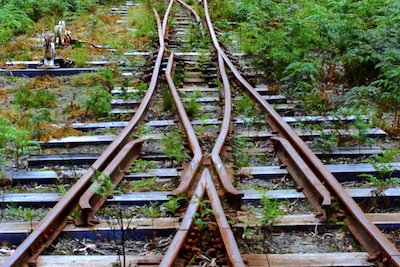
6 |
7 | > We become what we behold. We shape our tools, and thereafter our tools shape us.
8 |
9 | > ― Marshall McLuhan
10 |
11 | [](https://clojars.org/tracks) [](https://travis-ci.org/escherize/tracks)
12 |
13 | ## Usage
14 |
15 | Add the following line to your leiningen dependencies:
16 |
17 | Require tracks in your namespace header:
18 |
19 | (:require [tracks.core :as t :refer [track]])
20 |
21 | ```klipse
22 | (require '[tracks.core :refer-macros [deftrack track]])
23 | (require-macros '[tracks.core :as t])
24 | ```
25 |
26 | ## Rationale
27 |
28 | This is a library dedicated to the concept of *shape*.
29 |
30 | shape n.
31 | - the external form, contours, or outline of something.
32 | - the correct or original form or contours of something.
33 | - an example of something that has a particular form.
34 |
35 | shape v.
36 | - to give definite form, organization, or character to.
37 | - fashion or form.
38 |
39 | It's common to grapple with large maps whose shapes are uncomfortable to reason about.
40 |
41 | `tracks` simplifies transformations and destructuring of Clojure datastructures. Instead of describing how to do a transformation, tracks allows the user to create those transformations by __example__. This makes writing complex code that takes one shape and transforms them to another *dead simple*.
42 |
43 | ## Examples
44 |
45 | ### track/let
46 |
47 | Destructuring complex nested data structures can be a real pain. Tracks makes this easy. Much like `clojure.core/let`, symbols in the track pattern will be bound to the value and available the body. Unlike `clojure.core/let` we supply a binding form of *the same shape* as the data we are interested in.
48 |
49 | ```klipse
50 |
51 | (t/let [{:a {:b [greeting person]}} ;;<- binding form
52 | {:a {:b ["Hello" "World"]}} ;;<- data we want to get at
53 | ]
54 | (str greeting " " person "!"))
55 |
56 | ;;=> "Hello World!"
57 |
58 | (t/let [{:a {:b x} :c {:d y}}
59 | {:a {:b 1} :c {:d 2}}]
60 | (+ x y))
61 |
62 | ;;=> 3
63 |
64 | ```
65 | ### track/track for building functions
66 |
67 | `track` returns a function which takes data of the shape of its first argument.
68 |
69 | Below, the function returned by `track` will take a map with keys `:a` and `:b` and move the value at `:a` to `:b`, and the value at `:b` to `:a`:
70 |
71 | ``` clojure
72 | (track {:a one :b two}
73 | {:a two :b one})
74 |
75 | ;;=> anonymous fn
76 |
77 | (def swap-a-b (track {:a one :b two}
78 | {:a two :b one}))
79 | (swap-a-b {:a 100 :b 3000})
80 |
81 | ;;=> {:a 3000 :b 100}
82 | ```
83 |
84 | `deftrack` does the same thing, but binds it too:
85 |
86 | ``` clojure
87 | (deftrack swap-a-b {:a one :b two} {:a two :b one})
88 | (swap-a-b {:a 100 :b 3000})
89 |
90 | ;;=> {:a 3000 :b 100}
91 | ```
92 |
93 | We can move positions in vectors and deeply nested maps in exactly the same way:
94 |
95 | ```klipse
96 | ((track {:a [zero one]}
97 | {:b [one zero]})
98 | {:a [:zero :one]})
99 |
100 | ;; => {:b [:one :zero]}
101 | ```
102 |
103 | ### Arbitrary nesting levels
104 |
105 | Deep thinking about deepy nested shapes is a bygone era:
106 |
107 | ``` clojure
108 | (deftrack deeptx
109 | {0 zero, 1 one, 2 two, 3 three} ;; <- deeptx takes a map with this shape
110 | {:a zero :b {:c one :d {:e two :f {:g three}}}} ;; <- deeptx then returns one with this shape
111 | )
112 |
113 | (deeptx {0 "first" 1 "second" 2 "third" 3 "fourth"})
114 | ;;=> {:a "first", :b {:c "second", :d {:e "third", :f {:g "fourth"}}}}
115 | ```
116 | ### Complex leaf values
117 |
118 | `track` greatly simplifies rotating values, too:
119 |
120 | Let's simulate a game where there's an active player, and all other players wait in line to become the active one. Once a player has played their turn, they go to the back of the line.
121 |
122 | ```klipse
123 | ;;; Setup the function that moves around players,
124 | ;;; no matter what datastructure the players are
125 | ;;; represented as:
126 |
127 | (deftrack move-players
128 | {:active-player p1 :players [p2 p3 p4]}
129 | {:active-player p2 :players [p3 p4 p1]})
130 | ```
131 | ```klipse
132 | ;;; Here's the datastructure that represents the state of the game.
133 | ;;; Notice that the players are more than scalar values!
134 |
135 | (defonce game (atom {:active-player {:name "A"}
136 | :players [{:name "B"}
137 | {:name "C"}
138 | {:name "D"}]}))
139 | @game
140 | ```
141 | ```klipse
142 | (swap! game move-players)
143 |
144 | @game
145 | ```
146 | ```klipse
147 | (swap! game move-players)
148 | @game
149 | ```
150 | ```klipse
151 | (swap! game move-players)
152 | @game
153 | ```
154 |
155 | ### Multiple endpoints
156 |
157 | Like a train track, sometimes one track can split into many. With `track` the values can be duplicated.
158 |
159 | ``` clojure
160 | (deftrack one-to-many x {:a x :b {:c [x x]}})
161 |
162 | (one-to-many "?")
163 |
164 | ;;=> {:a "?", :b {:c ["?" "?"]}}
165 | ```
166 | ## How it works
167 |
168 | `track` is implemented in terms of `let`
169 |
170 | ``` clojure
171 | (def move-a-key (track {:x one} {:y one}))
172 |
173 | (move-a-key {:x "MoveMe"})
174 |
175 | ;;=> {:y "MoveMe"}
176 |
177 | (move-a-key {:x [:a :b :c]})
178 |
179 | ;;=> {:y [:a :b :c]}
180 | ```
181 |
182 | We see it moves any value from keypath [:x] to keypath [:y].
183 |
184 | The way it does it is by moving `{:x one}` into a `let` like so:
185 |
186 | ``` clojure
187 | ;; vvvvvvvv---- this is the first arg to track
188 | (tracks/let [{:x one} input]
189 | ;; so now one is bound to (get input :x)
190 | ;; vvvvvv---- this is the 2nd arg to track
191 | {:y one})
192 | ```
193 |
194 | ## Want more examples?
195 |
196 | Check the test namespace!
197 |
198 | ## License
199 |
200 | Copyright © 2016 Bryan Maass
201 |
202 | Distributed under the Eclipse Public License either version 1.0 or (at your option) any later version.
203 |
--------------------------------------------------------------------------------
/README.md:
--------------------------------------------------------------------------------
1 | # tracks
2 |
3 | ## Example based coding
4 |
5 | 
6 | [](https://travis-ci.org/escherize/tracks)
7 |
8 | > We become what we behold. We shape our tools, and thereafter our tools shape us.
9 |
10 | > ― Marshall McLuhan
11 |
12 | ## Usage
13 |
14 | Add the following line to your leiningen dependencies:
15 |
16 | [](https://clojars.org/tracks)
17 |
18 | Require tracks in your namespace header:
19 |
20 | (:require [tracks.core :as t :refer [track]])
21 |
22 | ## Rationale
23 |
24 | This is a library to handle _shapes_. What's a shape?
25 |
26 | shape n.
27 | - the correct or original form or contours of something.
28 | - an example of something that has a particular form.
29 |
30 | shape v.
31 | - to give definite form, organization, or character to.
32 |
33 | It's common to grapple with deeply nested arguments whose shapes are difficult to know without running the code. The data we love, tho pure and immutable can be nested and complex. This approach removes the cognitive burden needed to understand our datastructures.
34 |
35 | ## Examples
36 |
37 | #### deftrack example:
38 |
39 | Instead of describing _how to do a transformation_, tracks allows the user to _create those transformations declaratively_. This makes writing code that takes one shape and transforms them to another *dead simple*.
40 |
41 | Let's consider this data as our input. Typically this shape needs to be 'reverse-engineered' by reading and understanding code with `get-in`, destructuring, and other such operations.
42 |
43 | ``` clojure
44 | (def buyer-information-map
45 | {:buyer-info
46 | {:is-guest true
47 | :primary-contact {:name {:first-name "Bob" :last-name "Ross"}
48 | :phone {:complete-number "123123123"}
49 | :email {:email-address "thebobguy@rossinator.com"}}}})
50 | ```
51 |
52 |
53 | Next, Let's create a function that takes this particular _shape_ and returns another representing a notification for a customer.
54 |
55 |
56 | ```clojure
57 | (require '[tracks.core :as t :refer [deftrack]])
58 |
59 | (deftrack notify-buyer
60 | {:buyer-info {:is-guest guest? ;; 1
61 | :primary-contact {:name {:first-name firstname
62 | :last-name lastname}
63 | :phone {:complete-number phone}
64 | :email {:email-address email}}}}
65 | (when guest? ;; 2
66 | {:command :send-notification
67 | :address email
68 | :phone phone
69 | :text (str "Hi, " firstname " " lastname)}))
70 | ;; => #function[user/notify-buyer]
71 |
72 | (notify-buyer buyer-information-map)
73 | ;; => {:command :send-notification
74 | ;; :address "thebobguy@rossinator.com"
75 | ;; :phone "123123123"
76 | ;; :text "Hi, Bob Ross"}
77 | ```
78 |
79 | 1. `deftrack` expects data of this shape
80 | 2. `deftrack` returns this value
81 |
82 | ### What is going on here?
83 |
84 | For every symbol in the binding form to `deftrack` (1 above), `deftrack` generates a program to seamlessly write the get / get-in / assoc-in / assoc / etc. sort of accessing code and allows you to focus on __your data__.
85 |
86 | ## Destructuring
87 |
88 | You may be thinking to yourself: Clojure already has destructuring! That's true, let's compare using `deftrack` against `defn` style destructuring:
89 |
90 | ``` clojure
91 | (deftrack notify-buyer
92 | {:buyer-info {:is-guest guest?
93 | :primary-contact {:name {:first-name firstname
94 | :last-name lastname}
95 | :phone {:complete-number phone}
96 | :email {:email-address email}}}}
97 | (when guest?
98 | {:command :send-notification
99 | :address email
100 | :phone phone
101 | :text (str "Hi, " firstname " " lastname)}))
102 |
103 | (defn notify-buyer-2 [{{guest? :is-guest,
104 | {{firstname :first-name, lastname :last-name} :name,
105 | {phone :complete-number} :phone,
106 | {email :email-address} :email}
107 | :primary-contact}
108 | :buyer-info}]
109 | (when guest?
110 | {:command :send-notification
111 | :address email
112 | :phone phone
113 | :text (str "Hi, " firstname " " lastname)}))
114 | ```
115 |
116 | I think you'd agree which of those is easier to read.
117 |
118 | ### deftrack metadata
119 |
120 | deftrack plays nice with arglists metadata, enabling your editor to explain what sort of shape a function created with `deftrack` takes.
121 |
122 | ``` clojure
123 | (deftrack move-some-keys
124 | {:a a :b b :c c :d {:e e}}
125 | {:a b :b c :c e :d {:e a}})
126 |
127 | (move-some-keys {:a 1 :b 2 :c 3 :d {:e 4}})
128 | ;; => {:a 2, :b 3, :c 4, :d {:e 1}}
129 |
130 | (:arglists (meta #'move-some-keys))
131 | ;; => ([{a :a, b :b, c :c, {e :e} :d}])
132 | ```
133 |
134 | Since we don't like to read deeply destructured arglists, `deftracks` also goes one step further, and includes what shape your function _expects_. (Todo: make this work with editors).
135 |
136 | ``` clojure
137 | (:tracks/expects (meta #'move-some-keys))
138 | ;; => {:a a, :b b, :c c, :d {:e e}}
139 | ```
140 |
141 | #### let example
142 |
143 | For more flexible flowing of data, here's __tracks/let__, which allows for the same data-oriented style but with multiple arguments, etc.
144 |
145 | ``` clojure
146 | (require '[tracks.core :as t :refer [deftrack]])
147 |
148 | ;; Please Notice: you usually don't get to see what some-data looks like! :)
149 | (def some-data
150 | {:more-info {:price-for-this-order 10}
151 | :order-info {:amount-bought-from-my-company 3}})
152 |
153 | ;;in another part of your program:
154 |
155 |
156 | ;; you can use t/let:
157 | (t/let [{:more-info {:price-for-this-order price}
158 | :order-info {:amount-bought-from-my-company quantity}} some-data]
159 | (* price quantity))
160 | ;;=> 30
161 |
162 | ;; or you can use deftrack:
163 | (deftrack calculate-price-for-order
164 | {:more-info {:price-for-this-order price}
165 | :order-info {:amount-bought-from-my-company quantity}}
166 | (* price quantity))
167 |
168 | (calculate-price-for-order some-data)
169 | ;;=> 30
170 | ```
171 |
172 | ### Arbitrary nesting levels
173 |
174 | Deep contemplation about deeply nested shapes is the old way.
175 |
176 | ``` clojure
177 | (deftrack deeptx
178 | {0 zero
179 | 1 one
180 | 2 two
181 | 3 three} ;; <- deeptx takes a map with this shape
182 | {:a zero
183 | :b {:c one
184 | :d {:e two
185 | :f {:g three}}}} ;; <- deeptx then returns one with this shape
186 | )
187 |
188 | (deeptx {0 "first" 1 "second" 2 "third" 3 "fourth"})
189 | ;;=> {:a "first", :b {:c "second", :d {:e "third", :f {:g "fourth"}}}}
190 | ```
191 |
192 | ### Complex leaf values
193 |
194 | Let's simulate a game where there's an active player, and all other players wait in a queue to become the active one. Once a player has played their turn, they naturally go to the back of the queue.
195 |
196 | ```clojure
197 |
198 | ;;; Setup the function that moves around players,
199 | ;;; no matter what datastructure the players are
200 | ;;; represented as:
201 |
202 | (deftrack move-players
203 | {:active-player p1 :players [p2 p3 p4]}
204 | {:active-player p2 :players [p3 p4 p1]})
205 |
206 | ;;; Here's the datastructure that represents the state of the game.
207 | ;;; Notice that the players are more than scalar values!
208 |
209 | (defonce game (atom {:active-player {:name "A"}
210 | :players [{:name "B"}
211 | {:name "C"}
212 | {:name "D"}]}))
213 |
214 | (swap! game move-players)
215 | ;;=> {:active-player {:name "B"}
216 | ;; :players [{:name "C"}
217 | ;; {:name "D"}
218 | ;; {:name "A"}]}
219 |
220 | (swap! game move-players)
221 | ;;=> {:active-player {:name "C"}
222 | ;; :players [{:name "D"}
223 | ;; {:name "A"}
224 | ;; {:name "B"}]}
225 |
226 |
227 | (swap! game move-players)
228 | ;;=> {:active-player {:name "D"}
229 | ;; :players [{:name "A"}
230 | ;; {:name "B"}
231 | ;; {:name "C"}]}
232 |
233 | ```
234 |
235 | ### Multiple endpoints
236 |
237 | Like a train track, sometimes one track can split into many. With `track` the values can be duplicated.
238 |
239 | ``` clojure
240 | (deftrack one-to-many {:clone-me x} {:a x :b {:c [x x]}})
241 |
242 | (one-to-many {:clone-me "?"})
243 |
244 | ;;=> {:a "?", :b {:c ["?" "?"]}}
245 | ```
246 |
247 | ## Want more examples?
248 |
249 | Check the test namespace!
250 |
--------------------------------------------------------------------------------
/LICENSE:
--------------------------------------------------------------------------------
1 | THE ACCOMPANYING PROGRAM IS PROVIDED UNDER THE TERMS OF THIS ECLIPSE PUBLIC
2 | LICENSE ("AGREEMENT"). ANY USE, REPRODUCTION OR DISTRIBUTION OF THE PROGRAM
3 | CONSTITUTES RECIPIENT'S ACCEPTANCE OF THIS AGREEMENT.
4 |
5 | 1. DEFINITIONS
6 |
7 | "Contribution" means:
8 |
9 | a) in the case of the initial Contributor, the initial code and
10 | documentation distributed under this Agreement, and
11 |
12 | b) in the case of each subsequent Contributor:
13 |
14 | i) changes to the Program, and
15 |
16 | ii) additions to the Program;
17 |
18 | where such changes and/or additions to the Program originate from and are
19 | distributed by that particular Contributor. A Contribution 'originates' from
20 | a Contributor if it was added to the Program by such Contributor itself or
21 | anyone acting on such Contributor's behalf. Contributions do not include
22 | additions to the Program which: (i) are separate modules of software
23 | distributed in conjunction with the Program under their own license
24 | agreement, and (ii) are not derivative works of the Program.
25 |
26 | "Contributor" means any person or entity that distributes the Program.
27 |
28 | "Licensed Patents" mean patent claims licensable by a Contributor which are
29 | necessarily infringed by the use or sale of its Contribution alone or when
30 | combined with the Program.
31 |
32 | "Program" means the Contributions distributed in accordance with this
33 | Agreement.
34 |
35 | "Recipient" means anyone who receives the Program under this Agreement,
36 | including all Contributors.
37 |
38 | 2. GRANT OF RIGHTS
39 |
40 | a) Subject to the terms of this Agreement, each Contributor hereby grants
41 | Recipient a non-exclusive, worldwide, royalty-free copyright license to
42 | reproduce, prepare derivative works of, publicly display, publicly perform,
43 | distribute and sublicense the Contribution of such Contributor, if any, and
44 | such derivative works, in source code and object code form.
45 |
46 | b) Subject to the terms of this Agreement, each Contributor hereby grants
47 | Recipient a non-exclusive, worldwide, royalty-free patent license under
48 | Licensed Patents to make, use, sell, offer to sell, import and otherwise
49 | transfer the Contribution of such Contributor, if any, in source code and
50 | object code form. This patent license shall apply to the combination of the
51 | Contribution and the Program if, at the time the Contribution is added by the
52 | Contributor, such addition of the Contribution causes such combination to be
53 | covered by the Licensed Patents. The patent license shall not apply to any
54 | other combinations which include the Contribution. No hardware per se is
55 | licensed hereunder.
56 |
57 | c) Recipient understands that although each Contributor grants the licenses
58 | to its Contributions set forth herein, no assurances are provided by any
59 | Contributor that the Program does not infringe the patent or other
60 | intellectual property rights of any other entity. Each Contributor disclaims
61 | any liability to Recipient for claims brought by any other entity based on
62 | infringement of intellectual property rights or otherwise. As a condition to
63 | exercising the rights and licenses granted hereunder, each Recipient hereby
64 | assumes sole responsibility to secure any other intellectual property rights
65 | needed, if any. For example, if a third party patent license is required to
66 | allow Recipient to distribute the Program, it is Recipient's responsibility
67 | to acquire that license before distributing the Program.
68 |
69 | d) Each Contributor represents that to its knowledge it has sufficient
70 | copyright rights in its Contribution, if any, to grant the copyright license
71 | set forth in this Agreement.
72 |
73 | 3. REQUIREMENTS
74 |
75 | A Contributor may choose to distribute the Program in object code form under
76 | its own license agreement, provided that:
77 |
78 | a) it complies with the terms and conditions of this Agreement; and
79 |
80 | b) its license agreement:
81 |
82 | i) effectively disclaims on behalf of all Contributors all warranties and
83 | conditions, express and implied, including warranties or conditions of title
84 | and non-infringement, and implied warranties or conditions of merchantability
85 | and fitness for a particular purpose;
86 |
87 | ii) effectively excludes on behalf of all Contributors all liability for
88 | damages, including direct, indirect, special, incidental and consequential
89 | damages, such as lost profits;
90 |
91 | iii) states that any provisions which differ from this Agreement are offered
92 | by that Contributor alone and not by any other party; and
93 |
94 | iv) states that source code for the Program is available from such
95 | Contributor, and informs licensees how to obtain it in a reasonable manner on
96 | or through a medium customarily used for software exchange.
97 |
98 | When the Program is made available in source code form:
99 |
100 | a) it must be made available under this Agreement; and
101 |
102 | b) a copy of this Agreement must be included with each copy of the Program.
103 |
104 | Contributors may not remove or alter any copyright notices contained within
105 | the Program.
106 |
107 | Each Contributor must identify itself as the originator of its Contribution,
108 | if any, in a manner that reasonably allows subsequent Recipients to identify
109 | the originator of the Contribution.
110 |
111 | 4. COMMERCIAL DISTRIBUTION
112 |
113 | Commercial distributors of software may accept certain responsibilities with
114 | respect to end users, business partners and the like. While this license is
115 | intended to facilitate the commercial use of the Program, the Contributor who
116 | includes the Program in a commercial product offering should do so in a
117 | manner which does not create potential liability for other Contributors.
118 | Therefore, if a Contributor includes the Program in a commercial product
119 | offering, such Contributor ("Commercial Contributor") hereby agrees to defend
120 | and indemnify every other Contributor ("Indemnified Contributor") against any
121 | losses, damages and costs (collectively "Losses") arising from claims,
122 | lawsuits and other legal actions brought by a third party against the
123 | Indemnified Contributor to the extent caused by the acts or omissions of such
124 | Commercial Contributor in connection with its distribution of the Program in
125 | a commercial product offering. The obligations in this section do not apply
126 | to any claims or Losses relating to any actual or alleged intellectual
127 | property infringement. In order to qualify, an Indemnified Contributor must:
128 | a) promptly notify the Commercial Contributor in writing of such claim, and
129 | b) allow the Commercial Contributor tocontrol, and cooperate with the
130 | Commercial Contributor in, the defense and any related settlement
131 | negotiations. The Indemnified Contributor may participate in any such claim
132 | at its own expense.
133 |
134 | For example, a Contributor might include the Program in a commercial product
135 | offering, Product X. That Contributor is then a Commercial Contributor. If
136 | that Commercial Contributor then makes performance claims, or offers
137 | warranties related to Product X, those performance claims and warranties are
138 | such Commercial Contributor's responsibility alone. Under this section, the
139 | Commercial Contributor would have to defend claims against the other
140 | Contributors related to those performance claims and warranties, and if a
141 | court requires any other Contributor to pay any damages as a result, the
142 | Commercial Contributor must pay those damages.
143 |
144 | 5. NO WARRANTY
145 |
146 | EXCEPT AS EXPRESSLY SET FORTH IN THIS AGREEMENT, THE PROGRAM IS PROVIDED ON
147 | AN "AS IS" BASIS, WITHOUT WARRANTIES OR CONDITIONS OF ANY KIND, EITHER
148 | EXPRESS OR IMPLIED INCLUDING, WITHOUT LIMITATION, ANY WARRANTIES OR
149 | CONDITIONS OF TITLE, NON-INFRINGEMENT, MERCHANTABILITY OR FITNESS FOR A
150 | PARTICULAR PURPOSE. Each Recipient is solely responsible for determining the
151 | appropriateness of using and distributing the Program and assumes all risks
152 | associated with its exercise of rights under this Agreement , including but
153 | not limited to the risks and costs of program errors, compliance with
154 | applicable laws, damage to or loss of data, programs or equipment, and
155 | unavailability or interruption of operations.
156 |
157 | 6. DISCLAIMER OF LIABILITY
158 |
159 | EXCEPT AS EXPRESSLY SET FORTH IN THIS AGREEMENT, NEITHER RECIPIENT NOR ANY
160 | CONTRIBUTORS SHALL HAVE ANY LIABILITY FOR ANY DIRECT, INDIRECT, INCIDENTAL,
161 | SPECIAL, EXEMPLARY, OR CONSEQUENTIAL DAMAGES (INCLUDING WITHOUT LIMITATION
162 | LOST PROFITS), HOWEVER CAUSED AND ON ANY THEORY OF LIABILITY, WHETHER IN
163 | CONTRACT, STRICT LIABILITY, OR TORT (INCLUDING NEGLIGENCE OR OTHERWISE)
164 | ARISING IN ANY WAY OUT OF THE USE OR DISTRIBUTION OF THE PROGRAM OR THE
165 | EXERCISE OF ANY RIGHTS GRANTED HEREUNDER, EVEN IF ADVISED OF THE POSSIBILITY
166 | OF SUCH DAMAGES.
167 |
168 | 7. GENERAL
169 |
170 | If any provision of this Agreement is invalid or unenforceable under
171 | applicable law, it shall not affect the validity or enforceability of the
172 | remainder of the terms of this Agreement, and without further action by the
173 | parties hereto, such provision shall be reformed to the minimum extent
174 | necessary to make such provision valid and enforceable.
175 |
176 | If Recipient institutes patent litigation against any entity (including a
177 | cross-claim or counterclaim in a lawsuit) alleging that the Program itself
178 | (excluding combinations of the Program with other software or hardware)
179 | infringes such Recipient's patent(s), then such Recipient's rights granted
180 | under Section 2(b) shall terminate as of the date such litigation is filed.
181 |
182 | All Recipient's rights under this Agreement shall terminate if it fails to
183 | comply with any of the material terms or conditions of this Agreement and
184 | does not cure such failure in a reasonable period of time after becoming
185 | aware of such noncompliance. If all Recipient's rights under this Agreement
186 | terminate, Recipient agrees to cease use and distribution of the Program as
187 | soon as reasonably practicable. However, Recipient's obligations under this
188 | Agreement and any licenses granted by Recipient relating to the Program shall
189 | continue and survive.
190 |
191 | Everyone is permitted to copy and distribute copies of this Agreement, but in
192 | order to avoid inconsistency the Agreement is copyrighted and may only be
193 | modified in the following manner. The Agreement Steward reserves the right to
194 | publish new versions (including revisions) of this Agreement from time to
195 | time. No one other than the Agreement Steward has the right to modify this
196 | Agreement. The Eclipse Foundation is the initial Agreement Steward. The
197 | Eclipse Foundation may assign the responsibility to serve as the Agreement
198 | Steward to a suitable separate entity. Each new version of the Agreement will
199 | be given a distinguishing version number. The Program (including
200 | Contributions) may always be distributed subject to the version of the
201 | Agreement under which it was received. In addition, after a new version of
202 | the Agreement is published, Contributor may elect to distribute the Program
203 | (including its Contributions) under the new version. Except as expressly
204 | stated in Sections 2(a) and 2(b) above, Recipient receives no rights or
205 | licenses to the intellectual property of any Contributor under this
206 | Agreement, whether expressly, by implication, estoppel or otherwise. All
207 | rights in the Program not expressly granted under this Agreement are
208 | reserved.
209 |
210 | This Agreement is governed by the laws of the State of New York and the
211 | intellectual property laws of the United States of America. No party to this
212 | Agreement will bring a legal action under this Agreement more than one year
213 | after the cause of action arose. Each party waives its rights to a jury trial
214 | in any resulting litigation.
215 |
--------------------------------------------------------------------------------