├── LibXlsxWriterProj
├── LibXlsxWriter
│ ├── Source.cpp
│ ├── LibXlsxWriter.rc
│ ├── LibXlsxWriter.vcxproj.user
│ ├── resource.h
│ ├── dllmain.cpp
│ ├── LibXlsxWriter.vcxproj.filters
│ ├── XlsxWriter.def
│ └── LibXlsxWriter.vcxproj
├── Zlib
│ ├── Zlib.dll
│ ├── Zlib.lib
│ ├── x64
│ │ ├── Zlib.dll
│ │ └── Zlib.lib
│ ├── zconf.h
│ └── zlib.h
└── LibXlsxWriter.sln
├── ExampleExe
├── ExampleExe.sdf
├── ExampleExe
│ ├── stdafx.cpp
│ ├── stdafx.h
│ ├── ExampleExe.vcxproj.filters
│ ├── ExampleExe.cpp
│ └── ExampleExe.vcxproj
└── ExampleExe.sln
├── .gitmodules
├── .gitattributes
├── .gitignore
└── Readme.md
/LibXlsxWriterProj/LibXlsxWriter/Source.cpp:
--------------------------------------------------------------------------------
1 |
--------------------------------------------------------------------------------
/ExampleExe/ExampleExe.sdf:
--------------------------------------------------------------------------------
https://raw.githubusercontent.com/jmcnamara/MSVCLibXlsxWriter/HEAD/ExampleExe/ExampleExe.sdf
--------------------------------------------------------------------------------
/.gitmodules:
--------------------------------------------------------------------------------
1 | [submodule "libxlsxwriter"]
2 | path = libxlsxwriter
3 | url = https://github.com/jmcnamara/libxlsxwriter.git
4 |
--------------------------------------------------------------------------------
/LibXlsxWriterProj/Zlib/Zlib.dll:
--------------------------------------------------------------------------------
https://raw.githubusercontent.com/jmcnamara/MSVCLibXlsxWriter/HEAD/LibXlsxWriterProj/Zlib/Zlib.dll
--------------------------------------------------------------------------------
/LibXlsxWriterProj/Zlib/Zlib.lib:
--------------------------------------------------------------------------------
https://raw.githubusercontent.com/jmcnamara/MSVCLibXlsxWriter/HEAD/LibXlsxWriterProj/Zlib/Zlib.lib
--------------------------------------------------------------------------------
/LibXlsxWriterProj/Zlib/x64/Zlib.dll:
--------------------------------------------------------------------------------
https://raw.githubusercontent.com/jmcnamara/MSVCLibXlsxWriter/HEAD/LibXlsxWriterProj/Zlib/x64/Zlib.dll
--------------------------------------------------------------------------------
/LibXlsxWriterProj/Zlib/x64/Zlib.lib:
--------------------------------------------------------------------------------
https://raw.githubusercontent.com/jmcnamara/MSVCLibXlsxWriter/HEAD/LibXlsxWriterProj/Zlib/x64/Zlib.lib
--------------------------------------------------------------------------------
/LibXlsxWriterProj/LibXlsxWriter/LibXlsxWriter.rc:
--------------------------------------------------------------------------------
https://raw.githubusercontent.com/jmcnamara/MSVCLibXlsxWriter/HEAD/LibXlsxWriterProj/LibXlsxWriter/LibXlsxWriter.rc
--------------------------------------------------------------------------------
/.gitattributes:
--------------------------------------------------------------------------------
1 | *.h eol=crlf
2 | *.cpp eol=crlf
3 | *.rc binary
4 | *.vcproj eol=crlf
5 | *.bat eol=crlf
6 | *.sln eol=crlf
7 | *.ico -text
8 |
9 |
--------------------------------------------------------------------------------
/ExampleExe/ExampleExe/stdafx.cpp:
--------------------------------------------------------------------------------
1 | // stdafx.cpp : source file that includes just the standard includes
2 | // ExampleExe.pch will be the pre-compiled header
3 | // stdafx.obj will contain the pre-compiled type information
4 |
5 | #include "stdafx.h"
6 |
7 |
--------------------------------------------------------------------------------
/LibXlsxWriterProj/LibXlsxWriter/LibXlsxWriter.vcxproj.user:
--------------------------------------------------------------------------------
1 |
2 |
3 |
4 | true
5 |
6 |
7 |
--------------------------------------------------------------------------------
/.gitignore:
--------------------------------------------------------------------------------
1 | LibXlsxWriterProj/LibXlsxWriter.VC.opendb
2 | LibXlsxWriterProj/LibXlsxWriter.sdf
3 | LibXlsxWriterProj/LibXlsxWriter/x64/
4 | LibXlsxWriterProj/x64/
5 | LibXlsxWriterProj/.vs
6 | LibXlsxWriterProj/LibXlsxWriter/LibXlsxWriter.aps
7 | ExampleExe/.vs
8 | ExampleExe/X64
9 | ExampleExe/ExampleExe/X64
10 | .DS_Store
11 | *.bak
12 |
13 |
--------------------------------------------------------------------------------
/LibXlsxWriterProj/LibXlsxWriter/resource.h:
--------------------------------------------------------------------------------
1 | //{{NO_DEPENDENCIES}}
2 | // Microsoft Visual C++ generated include file.
3 | // Used by LibXlsxWriter.rc
4 |
5 | // Next default values for new objects
6 | //
7 | #ifdef APSTUDIO_INVOKED
8 | #ifndef APSTUDIO_READONLY_SYMBOLS
9 | #define _APS_NEXT_RESOURCE_VALUE 101
10 | #define _APS_NEXT_COMMAND_VALUE 40001
11 | #define _APS_NEXT_CONTROL_VALUE 1001
12 | #define _APS_NEXT_SYMED_VALUE 101
13 | #endif
14 | #endif
15 |
--------------------------------------------------------------------------------
/LibXlsxWriterProj/LibXlsxWriter/dllmain.cpp:
--------------------------------------------------------------------------------
1 | #include
2 |
3 | #define WIN32_LEAN_AND_MEAN
4 | #include
5 |
6 | #ifdef _WIN64
7 | #pragma comment(lib, "x64/zlib.lib")
8 | #else
9 | #pragma comment(lib, "zlib.lib")
10 | #endif
11 |
12 | BOOL APIENTRY DllMain( HMODULE hModule,
13 | DWORD ul_reason_for_call,
14 | LPVOID lpReserved
15 | )
16 | {
17 | switch (ul_reason_for_call)
18 | {
19 | case DLL_PROCESS_ATTACH:
20 | case DLL_THREAD_ATTACH:
21 | case DLL_THREAD_DETACH:
22 | case DLL_PROCESS_DETACH:
23 | break;
24 | }
25 | return TRUE;
26 | }
27 |
28 |
--------------------------------------------------------------------------------
/ExampleExe/ExampleExe/stdafx.h:
--------------------------------------------------------------------------------
1 |
2 |
3 | #pragma once
4 |
5 |
6 | #include
7 | #include
8 |
9 |
10 | #ifdef _WIN64
11 | #pragma comment(lib, "..\\..\\LibXlsxWriterProj\\Zlib\\x64\\zlib.lib")
12 | #ifdef _DEBUG
13 | #pragma comment(lib, "..\\..\\LibXlsxWriterProj\\x64\\Debug\\LibXlsxWriter.lib")
14 | #else
15 | #pragma comment(lib, "..\\..\\LibXlsxWriterProj\\x64\\Release\\LibXlsxWriter.lib")
16 | #endif
17 | #else
18 | #pragma comment(lib, "..\\..\\LibXlsxWriterProj\\Zlib\\zlib.lib")
19 | #ifdef _DEBUG
20 | #pragma comment(lib, "..\\..\\LibXlsxWriterProj\\Debug\\LibXlsxWriter.lib")
21 | #else
22 | #pragma comment(lib, "..\\..\\LibXlsxWriterProj\\Release\\LibXlsxWriter.lib")
23 | #endif
24 | #endif
25 |
--------------------------------------------------------------------------------
/ExampleExe/ExampleExe/ExampleExe.vcxproj.filters:
--------------------------------------------------------------------------------
1 |
2 |
3 |
4 |
5 | {4FC737F1-C7A5-4376-A066-2A32D752A2FF}
6 | cpp;c;cc;cxx;def;odl;idl;hpj;bat;asm;asmx
7 |
8 |
9 | {93995380-89BD-4b04-88EB-625FBE52EBFB}
10 | h;hh;hpp;hxx;hm;inl;inc;xsd
11 |
12 |
13 | {67DA6AB6-F800-4c08-8B7A-83BB121AAD01}
14 | rc;ico;cur;bmp;dlg;rc2;rct;bin;rgs;gif;jpg;jpeg;jpe;resx;tiff;tif;png;wav;mfcribbon-ms
15 |
16 |
17 |
18 |
19 |
20 |
21 |
22 | Header Files
23 |
24 |
25 |
26 |
27 | Source Files
28 |
29 |
30 | Source Files
31 |
32 |
33 |
--------------------------------------------------------------------------------
/ExampleExe/ExampleExe.sln:
--------------------------------------------------------------------------------
1 |
2 | Microsoft Visual Studio Solution File, Format Version 12.00
3 | # Visual Studio 14
4 | VisualStudioVersion = 14.0.24720.0
5 | MinimumVisualStudioVersion = 10.0.40219.1
6 | Project("{8BC9CEB8-8B4A-11D0-8D11-00A0C91BC942}") = "ExampleExe", "ExampleExe\ExampleExe.vcxproj", "{82F6470B-2566-4977-8DC3-B3D86F7A477D}"
7 | EndProject
8 | Global
9 | GlobalSection(SolutionConfigurationPlatforms) = preSolution
10 | Debug|x64 = Debug|x64
11 | Debug|x86 = Debug|x86
12 | Release|x64 = Release|x64
13 | Release|x86 = Release|x86
14 | EndGlobalSection
15 | GlobalSection(ProjectConfigurationPlatforms) = postSolution
16 | {82F6470B-2566-4977-8DC3-B3D86F7A477D}.Debug|x64.ActiveCfg = Debug|x64
17 | {82F6470B-2566-4977-8DC3-B3D86F7A477D}.Debug|x64.Build.0 = Debug|x64
18 | {82F6470B-2566-4977-8DC3-B3D86F7A477D}.Debug|x86.ActiveCfg = Debug|Win32
19 | {82F6470B-2566-4977-8DC3-B3D86F7A477D}.Debug|x86.Build.0 = Debug|Win32
20 | {82F6470B-2566-4977-8DC3-B3D86F7A477D}.Release|x64.ActiveCfg = Release|x64
21 | {82F6470B-2566-4977-8DC3-B3D86F7A477D}.Release|x64.Build.0 = Release|x64
22 | {82F6470B-2566-4977-8DC3-B3D86F7A477D}.Release|x86.ActiveCfg = Release|Win32
23 | {82F6470B-2566-4977-8DC3-B3D86F7A477D}.Release|x86.Build.0 = Release|Win32
24 | EndGlobalSection
25 | GlobalSection(SolutionProperties) = preSolution
26 | HideSolutionNode = FALSE
27 | EndGlobalSection
28 | EndGlobal
29 |
--------------------------------------------------------------------------------
/LibXlsxWriterProj/LibXlsxWriter.sln:
--------------------------------------------------------------------------------
1 |
2 | Microsoft Visual Studio Solution File, Format Version 12.00
3 | # Visual Studio 14
4 | VisualStudioVersion = 14.0.23107.0
5 | MinimumVisualStudioVersion = 10.0.40219.1
6 | Project("{8BC9CEB8-8B4A-11D0-8D11-00A0C91BC942}") = "LibXlsxWriter", "LibXlsxWriter\LibXlsxWriter.vcxproj", "{C9C32054-4CD6-4422-915F-81B7C2E63ACD}"
7 | EndProject
8 | Global
9 | GlobalSection(SolutionConfigurationPlatforms) = preSolution
10 | Debug|x64 = Debug|x64
11 | Debug|x86 = Debug|x86
12 | Release|x64 = Release|x64
13 | Release|x86 = Release|x86
14 | EndGlobalSection
15 | GlobalSection(ProjectConfigurationPlatforms) = postSolution
16 | {C9C32054-4CD6-4422-915F-81B7C2E63ACD}.Debug|x64.ActiveCfg = Debug|x64
17 | {C9C32054-4CD6-4422-915F-81B7C2E63ACD}.Debug|x64.Build.0 = Debug|x64
18 | {C9C32054-4CD6-4422-915F-81B7C2E63ACD}.Debug|x86.ActiveCfg = Debug|Win32
19 | {C9C32054-4CD6-4422-915F-81B7C2E63ACD}.Debug|x86.Build.0 = Debug|Win32
20 | {C9C32054-4CD6-4422-915F-81B7C2E63ACD}.Release|x64.ActiveCfg = Release|x64
21 | {C9C32054-4CD6-4422-915F-81B7C2E63ACD}.Release|x64.Build.0 = Release|x64
22 | {C9C32054-4CD6-4422-915F-81B7C2E63ACD}.Release|x86.ActiveCfg = Release|Win32
23 | {C9C32054-4CD6-4422-915F-81B7C2E63ACD}.Release|x86.Build.0 = Release|Win32
24 | EndGlobalSection
25 | GlobalSection(SolutionProperties) = preSolution
26 | HideSolutionNode = FALSE
27 | EndGlobalSection
28 | EndGlobal
29 |
--------------------------------------------------------------------------------
/Readme.md:
--------------------------------------------------------------------------------
1 | **Note**: this method is deprecated in favour of using VCPKG. See the libxlswriter docs: https://libxlsxwriter.github.io/getting_started.html#gsg_vcpkg
2 |
3 |
4 | # MSVCLibXlsxWriter
5 |
6 |
7 | MSVCLibXlsxWriter is a MSVC project to build a Windows DLL for
8 | [libxlsxwriter][lxw_git] a C library for creating Excel XLSX files.
9 |
10 | [lxw_git]: https://github.com/jmcnamara/libxlsxwriter
11 |
12 | 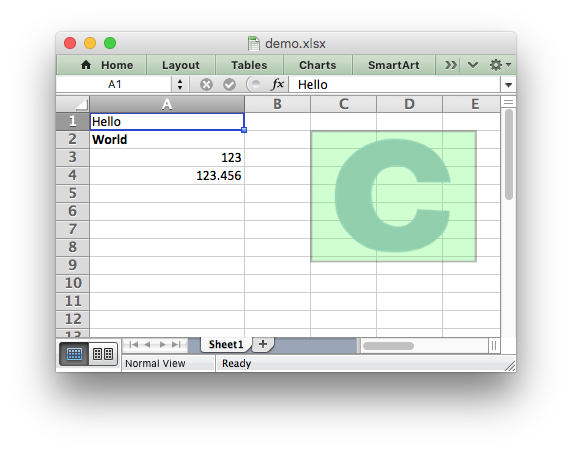
13 |
14 | Libxlsxwriter is a C library that can be used to write text, numbers, formulas
15 | and hyperlinks to multiple worksheets in an Excel 2007+ XLSX file.
16 |
17 | It supports features such as:
18 |
19 | - 100% compatible Excel XLSX files.
20 | - Full Excel formatting.
21 | - Merged cells.
22 | - Defined names.
23 | - Autofilters.
24 | - Charts.
25 | - Worksheet PNG/JPEG images.
26 | - Memory optimization mode for writing large files.
27 | - Source code available on [GitHub](https://github.com/jmcnamara/libxlsxwriter).
28 | - FreeBSD ref license.
29 | - ANSI C.
30 | - Works with GCC 4.x, GCC 5.x, Clang, Xcode, MSVC 2015, ICC and TCC.
31 | - Works on Linux, FreeBSD, OS X, iOS and Windows.
32 | - The only dependency is on `zlib`.
33 |
34 | See the full [libxlsxwriter documentation][lxw_docs] for a getting started
35 | guide, a tutorial, the main API documentation and examples. Or browse the
36 | [source code on GitHub][lxw_git].
37 |
38 | [lxw_docs]: http://libxlsxwriter.github.io
39 |
40 |
41 | ## Building a Windows DLL of libxlsxwriter
42 |
43 | The MSVCLibXlsxWriter repository contains 3 directories:
44 |
45 | - **LibXlsxWriterProj**: A MSVC project to build a `LibXlsxWriter.dll` from
46 | the libxlsxwriter source code. The directory also contains a pre-built
47 | `Zlib.dll` file.
48 |
49 | - **ExampleExe**: A libxlsxwriter sample application built as a console
50 | application that requires the `LibXlsxWriter.dll` and `Zlib.dll` files.
51 |
52 | - **libxlsxwriter**: The libxlsxwriter source code in a git submodule, see
53 | below.
54 |
55 | The `libxlsxwriter` directory is a Git submodule. This means that it isn't
56 | included when you do a standard Git clone of MSVCLibXlsxWriter. In order to
57 | get the submodule as well as the project code you must clone the project
58 | recursively as follows:
59 |
60 | git clone --recursive https://github.com/jmcnamara/MSVCLibXlsxWriter.git
61 |
62 | Or update it explicitly as follows:
63 |
64 | git clone https://github.com/jmcnamara/MSVCLibXlsxWriter.git
65 | cd MSVCLibXlsxWriter/
66 | git submodule init
67 | git submodule update
68 |
69 | This version of MSVCLibXlsxWriter contains libxlsxwriter version 0.3.8.
70 |
71 |
72 |
73 | To build the DLL of the library open the `LibXlsxWriterProj/LibXlsxWriter.sln`
74 | project in MS Visual Studio and build the solution using the "Build -> Build
75 | Solution" menu item.
76 |
77 | In the default configuration this will build an x64 debug LibXlsxWriter `.lib`
78 | and `.dll` in:
79 |
80 | MSVCLibXlsxWriter\LibXlsxWriterProj\x64\Debug
81 |
82 |
83 | ## Building a console application using the LibXlsxWriter.lib
84 |
85 | Ensure that `LibXlsxWriter.lib` was built correctly in the previous steps.
86 |
87 | To build the example executable open the `ExampleExe/ExampleExe.sln` project
88 | in MS Visual Studio and build the solution using the "Build -> Build Solution"
89 | menu item.
90 |
91 | In the default configuration this will build the following x64 exe file:
92 |
93 | MSVCLibXlsxWriter\ExampleExe\x64\Debug\ExampleExe.exe
94 |
95 | To run the application copy the `LibXlsxWriter.dll` and `Zlib.dll` files from
96 | the `MSVCLibXlsxWriter\LibXlsxWriterProj` sub-directories to the same
97 | directory as the executable. You can then run the application by double
98 | clicking on it in File Explorer or by opening a CMD console and running it
99 | from the directory.
100 |
101 | Once the program has run it will create a `chart_column.xlsx` file based on
102 | the default sample application in ExampleExe.cpp. You can run other
103 | libxlsxwriter example programs by copying the code from one of the
104 | `libxlsxwriter\example\*.c` programs.
105 |
--------------------------------------------------------------------------------
/LibXlsxWriterProj/LibXlsxWriter/LibXlsxWriter.vcxproj.filters:
--------------------------------------------------------------------------------
1 |
2 |
3 |
4 |
5 | {93995380-89BD-4b04-88EB-625FBE52EBFB}
6 | h;hh;hpp;hxx;hm;inl;inc;xsd
7 |
8 |
9 | {4FC737F1-C7A5-4376-A066-2A32D752A2FF}
10 | cpp;c;cc;cxx;def;odl;idl;hpj;bat;asm;asmx
11 |
12 |
13 |
14 |
15 | Header Files
16 |
17 |
18 | Header Files
19 |
20 |
21 | Header Files
22 |
23 |
24 | Header Files
25 |
26 |
27 | Header Files
28 |
29 |
30 | Header Files
31 |
32 |
33 | Header Files
34 |
35 |
36 | Header Files
37 |
38 |
39 |
40 |
41 | Source Files
42 |
43 |
44 | Source Files
45 |
46 |
47 | Source Files
48 |
49 |
50 | Source Files
51 |
52 |
53 | Source Files
54 |
55 |
56 | Source Files
57 |
58 |
59 | Source Files
60 |
61 |
62 | Source Files
63 |
64 |
65 | Source Files
66 |
67 |
68 | Source Files
69 |
70 |
71 | Source Files
72 |
73 |
74 | Source Files
75 |
76 |
77 | Source Files
78 |
79 |
80 | Source Files
81 |
82 |
83 | Source Files
84 |
85 |
86 | Source Files
87 |
88 |
89 | Source Files
90 |
91 |
92 | Source Files
93 |
94 |
95 | Source Files
96 |
97 |
98 | Source Files
99 |
100 |
101 | Source Files
102 |
103 |
104 | Source Files
105 |
106 |
107 | Source Files
108 |
109 |
110 | Source Files
111 |
112 |
113 |
114 |
115 | Source Files
116 |
117 |
118 |
119 |
120 |
121 |
--------------------------------------------------------------------------------
/ExampleExe/ExampleExe/ExampleExe.cpp:
--------------------------------------------------------------------------------
1 | // The example below is take from the libxlsxwriter/examples directory. The
2 | // code can be replaced with code from any of the other example programs in
3 | // thatdirectory. The lib linkage is done via the stdafx.h file.
4 |
5 | /*
6 | * An example of creating Excel column charts using the libxlsxwriter library.
7 | *
8 | * Copyright 2014-2016, John McNamara, jmcnamara@cpan.org
9 | *
10 | */
11 |
12 | #include "xlsxwriter.h"
13 |
14 | /*
15 | * Write some data to the worksheet.
16 | */
17 | void write_worksheet_data(lxw_worksheet *worksheet, lxw_format *bold) {
18 |
19 | int row, col;
20 | uint8_t data[6][3] = {
21 | /* Three columns of data. */
22 | {2, 10, 30},
23 | {3, 40, 60},
24 | {4, 50, 70},
25 | {5, 20, 50},
26 | {6, 10, 40},
27 | {7, 50, 30}
28 | };
29 |
30 | worksheet_write_string(worksheet, CELL("A1"), "Number", bold);
31 | worksheet_write_string(worksheet, CELL("B1"), "Batch 1", bold);
32 | worksheet_write_string(worksheet, CELL("C1"), "Batch 2", bold);
33 |
34 | for (row = 0; row < 6; row++)
35 | for (col = 0; col < 3; col++)
36 | worksheet_write_number(worksheet, row + 1, col, data[row][col] , NULL);
37 | }
38 |
39 | /*
40 | * Create a worksheet with examples charts.
41 | */
42 | int main() {
43 |
44 | lxw_workbook *workbook = new_workbook("chart_column.xlsx");
45 | lxw_worksheet *worksheet = workbook_add_worksheet(workbook, NULL);
46 | lxw_chart_series *series;
47 |
48 | /* Add a bold format to use to highlight the header cells. */
49 | lxw_format *bold = workbook_add_format(workbook);
50 | format_set_bold(bold);
51 |
52 | /* Write some data for the chart. */
53 | write_worksheet_data(worksheet, bold);
54 |
55 |
56 | /*
57 | * Create a column chart.
58 | */
59 | lxw_chart *chart = workbook_add_chart(workbook, LXW_CHART_COLUMN);
60 |
61 | /* Add the first series to the chart. */
62 | series = chart_add_series(chart, "=Sheet1!$A$2:$A$7", "=Sheet1!$B$2:$B$7");
63 |
64 | /* Set the name for the series instead of the default "Series 1". */
65 | chart_series_set_name(series, "=Sheet1!$B1$1");
66 |
67 | /* Add a second series but leave the categories and values undefined. They
68 | * can be defined later using the alternative syntax shown below. */
69 | series = chart_add_series(chart, NULL, NULL);
70 |
71 | /* Configure the series using a syntax that is easier to define programmatically. */
72 | chart_series_set_categories(series, "Sheet1", 1, 0, 6, 0); /* "=Sheet1!$A$2:$A$7" */
73 | chart_series_set_values(series, "Sheet1", 1, 2, 6, 2); /* "=Sheet1!$C$2:$C$7" */
74 | chart_series_set_name_range(series, "Sheet1", 0, 2); /* "=Sheet1!$C$1" */
75 |
76 | /* Add a chart title and some axis labels. */
77 | chart_title_set_name(chart, "Results of sample analysis");
78 | chart_axis_set_name(chart->x_axis, "Test number");
79 | chart_axis_set_name(chart->y_axis, "Sample length (mm)");
80 |
81 | /* Set an Excel chart style. */
82 | chart_set_style(chart, 11);
83 |
84 | /* Insert the chart into the worksheet. */
85 | worksheet_insert_chart(worksheet, CELL("E2"), chart);
86 |
87 |
88 | /*
89 | * Create a stacked column chart.
90 | */
91 | chart = workbook_add_chart(workbook, LXW_CHART_COLUMN_STACKED);
92 |
93 | /* Add the first series to the chart. */
94 | series = chart_add_series(chart, "=Sheet1!$A$2:$A$7", "=Sheet1!$B$2:$B$7");
95 |
96 | /* Set the name for the series instead of the default "Series 1". */
97 | chart_series_set_name(series, "=Sheet1!$B1$1");
98 |
99 | /* Add the second series to the chart. */
100 | series = chart_add_series(chart, "=Sheet1!$A$2:$A$7", "=Sheet1!$C$2:$C$7");
101 |
102 | /* Set the name for the series instead of the default "Series 2". */
103 | chart_series_set_name(series, "=Sheet1!$C1$1");
104 |
105 | /* Add a chart title and some axis labels. */
106 | chart_title_set_name(chart, "Results of sample analysis");
107 | chart_axis_set_name(chart->x_axis, "Test number");
108 | chart_axis_set_name(chart->y_axis, "Sample length (mm)");
109 |
110 | /* Set an Excel chart style. */
111 | chart_set_style(chart, 12);
112 |
113 | /* Insert the chart into the worksheet. */
114 | worksheet_insert_chart(worksheet, CELL("E18"), chart);
115 |
116 |
117 | /*
118 | * Create a percent stacked column chart.
119 | */
120 | chart = workbook_add_chart(workbook, LXW_CHART_COLUMN_STACKED_PERCENT);
121 |
122 | /* Add the first series to the chart. */
123 | series = chart_add_series(chart, "=Sheet1!$A$2:$A$7", "=Sheet1!$B$2:$B$7");
124 |
125 | /* Set the name for the series instead of the default "Series 1". */
126 | chart_series_set_name(series, "=Sheet1!$B1$1");
127 |
128 | /* Add the second series to the chart. */
129 | series = chart_add_series(chart, "=Sheet1!$A$2:$A$7", "=Sheet1!$C$2:$C$7");
130 |
131 | /* Set the name for the series instead of the default "Series 2". */
132 | chart_series_set_name(series, "=Sheet1!$C1$1");
133 |
134 | /* Add a chart title and some axis labels. */
135 | chart_title_set_name(chart, "Results of sample analysis");
136 | chart_axis_set_name(chart->x_axis, "Test number");
137 | chart_axis_set_name(chart->y_axis, "Sample length (mm)");
138 |
139 | /* Set an Excel chart style. */
140 | chart_set_style(chart, 13);
141 |
142 | /* Insert the chart into the worksheet. */
143 | worksheet_insert_chart(worksheet, CELL("E34"), chart);
144 |
145 |
146 | return workbook_close(workbook);
147 | }
148 |
--------------------------------------------------------------------------------
/ExampleExe/ExampleExe/ExampleExe.vcxproj:
--------------------------------------------------------------------------------
1 |
2 |
3 |
4 |
5 | Debug
6 | Win32
7 |
8 |
9 | Release
10 | Win32
11 |
12 |
13 | Debug
14 | x64
15 |
16 |
17 | Release
18 | x64
19 |
20 |
21 |
22 | {82F6470B-2566-4977-8DC3-B3D86F7A477D}
23 | Win32Proj
24 | ExampleExe
25 | 8.1
26 |
27 |
28 |
29 | Application
30 | true
31 | v140
32 | Unicode
33 |
34 |
35 | Application
36 | false
37 | v140
38 | true
39 | Unicode
40 |
41 |
42 | Application
43 | true
44 | v140
45 | Unicode
46 |
47 |
48 | Application
49 | false
50 | v140
51 | true
52 | Unicode
53 |
54 |
55 |
56 |
57 |
58 |
59 |
60 |
61 |
62 |
63 |
64 |
65 |
66 |
67 |
68 |
69 |
70 |
71 |
72 |
73 | true
74 |
75 |
76 | true
77 |
78 |
79 | false
80 |
81 |
82 | false
83 |
84 |
85 |
86 |
87 |
88 | Level3
89 | Disabled
90 | WIN32;_DEBUG;_CONSOLE;%(PreprocessorDefinitions)
91 | ..\..\libxlsxwriter\include;%(AdditionalIncludeDirectories)
92 |
93 |
94 | Console
95 | true
96 |
97 |
98 |
99 |
100 |
101 |
102 | Level3
103 | Disabled
104 | _DEBUG;_CONSOLE;%(PreprocessorDefinitions)
105 | ..\..\libxlsxwriter\include;%(AdditionalIncludeDirectories)
106 |
107 |
108 | Console
109 | true
110 |
111 |
112 |
113 |
114 | Level3
115 |
116 |
117 | MaxSpeed
118 | true
119 | true
120 | WIN32;NDEBUG;_CONSOLE;%(PreprocessorDefinitions)
121 |
122 |
123 | Console
124 | true
125 | true
126 | true
127 |
128 |
129 |
130 |
131 | Level3
132 |
133 |
134 | MaxSpeed
135 | true
136 | true
137 | NDEBUG;_CONSOLE;%(PreprocessorDefinitions)
138 |
139 |
140 | Console
141 | true
142 | true
143 | true
144 |
145 |
146 |
147 |
148 |
149 |
150 |
151 |
152 |
153 |
154 |
155 |
156 |
157 |
158 |
159 |
160 |
--------------------------------------------------------------------------------
/LibXlsxWriterProj/LibXlsxWriter/XlsxWriter.def:
--------------------------------------------------------------------------------
1 | EXPORTS
2 | chart_add_series
3 | chart_axis_major_gridlines_set_line
4 | chart_axis_major_gridlines_set_visible
5 | chart_axis_minor_gridlines_set_line
6 | chart_axis_minor_gridlines_set_visible
7 | chart_axis_off
8 | chart_axis_set_crossing
9 | chart_axis_set_crossing_max
10 | chart_axis_set_display_units
11 | chart_axis_set_display_units_visible
12 | chart_axis_set_fill
13 | chart_axis_set_interval_tick
14 | chart_axis_set_interval_unit
15 | chart_axis_set_label_position
16 | chart_axis_set_line
17 | chart_axis_set_log_base
18 | chart_axis_set_major_tick_mark
19 | chart_axis_set_major_unit
20 | chart_axis_set_max
21 | chart_axis_set_min
22 | chart_axis_set_minor_tick_mark
23 | chart_axis_set_minor_unit
24 | chart_axis_set_name
25 | chart_axis_set_name_font
26 | chart_axis_set_name_range
27 | chart_axis_set_num_font
28 | chart_axis_set_num_format
29 | chart_axis_set_pattern
30 | chart_axis_set_position
31 | chart_axis_set_reverse
32 | chart_chartarea_set_fill
33 | chart_chartarea_set_line
34 | chart_chartarea_set_pattern
35 | chart_legend_delete_series
36 | chart_legend_set_font
37 | chart_legend_set_position
38 | chart_plotarea_set_fill
39 | chart_plotarea_set_line
40 | chart_plotarea_set_pattern
41 | chart_series_set_categories
42 | chart_series_set_error_bars
43 | chart_series_set_error_bars_direction
44 | chart_series_set_error_bars_endcap
45 | chart_series_set_error_bars_line
46 | chart_series_set_fill
47 | chart_series_set_invert_if_negative
48 | chart_series_set_labels
49 | chart_series_set_labels_font
50 | chart_series_set_labels_leader_line
51 | chart_series_set_labels_legend
52 | chart_series_set_labels_num_format
53 | chart_series_set_labels_options
54 | chart_series_set_labels_percentage
55 | chart_series_set_labels_position
56 | chart_series_set_labels_separator
57 | chart_series_set_line
58 | chart_series_set_marker_fill
59 | chart_series_set_marker_line
60 | chart_series_set_marker_pattern
61 | chart_series_set_marker_size
62 | chart_series_set_marker_type
63 | chart_series_set_name
64 | chart_series_set_name_range
65 | chart_series_set_pattern
66 | chart_series_set_points
67 | chart_series_set_smooth
68 | chart_series_set_trendline
69 | chart_series_set_trendline_equation
70 | chart_series_set_trendline_forecast
71 | chart_series_set_trendline_intercept
72 | chart_series_set_trendline_line
73 | chart_series_set_trendline_name
74 | chart_series_set_trendline_r_squared
75 | chart_series_set_values
76 | chart_set_drop_lines
77 | chart_set_high_low_lines
78 | chart_set_hole_size
79 | chart_set_rotation
80 | chart_set_series_gap
81 | chart_set_series_overlap
82 | chart_set_style
83 | chart_set_table
84 | chart_set_table_font
85 | chart_set_table_grid
86 | chart_set_up_down_bars
87 | chart_set_up_down_bars_format
88 | chart_show_blanks_as
89 | chart_show_hidden_data
90 | chart_title_off
91 | chart_title_set_name
92 | chart_title_set_name_font
93 | chart_title_set_name_range
94 | format_set_align
95 | format_set_bg_color
96 | format_set_bold
97 | format_set_border
98 | format_set_border_color
99 | format_set_bottom
100 | format_set_bottom_color
101 | format_set_diag_border
102 | format_set_diag_color
103 | format_set_diag_type
104 | format_set_fg_color
105 | format_set_font_charset
106 | format_set_font_color
107 | format_set_font_condense
108 | format_set_font_extend
109 | format_set_font_family
110 | format_set_font_name
111 | format_set_font_outline
112 | format_set_font_scheme
113 | format_set_font_script
114 | format_set_font_shadow
115 | format_set_font_size
116 | format_set_font_strikeout
117 | format_set_hidden
118 | format_set_indent
119 | format_set_italic
120 | format_set_left
121 | format_set_left_color
122 | format_set_num_format
123 | format_set_num_format_index
124 | format_set_pattern
125 | format_set_reading_order
126 | format_set_right
127 | format_set_right_color
128 | format_set_rotation
129 | format_set_shrink
130 | format_set_text_justlast
131 | format_set_text_wrap
132 | format_set_theme
133 | format_set_top
134 | format_set_top_color
135 | format_set_underline
136 | format_set_unlocked
137 | format_set_valign
138 | lxw_add_document_relationship
139 | lxw_add_drawing_object
140 | lxw_add_ms_package_relationship
141 | lxw_add_package_relationship
142 | lxw_add_worksheet_relationship
143 | lxw_app_add_heading_pair
144 | lxw_app_add_part_name
145 | lxw_app_assemble_xml_file
146 | lxw_app_free
147 | lxw_app_new
148 | lxw_basename
149 | lxw_chart_add_data_cache
150 | lxw_chart_assemble_xml_file
151 | lxw_chart_free
152 | lxw_chart_new
153 | lxw_col_to_name
154 | lxw_content_types_assemble_xml_file
155 | lxw_content_types_free
156 | lxw_content_types_new
157 | lxw_core_assemble_xml_file
158 | lxw_core_free
159 | lxw_core_new
160 | lxw_create_package
161 | lxw_ct_add_calc_chain
162 | lxw_ct_add_chart_name
163 | lxw_ct_add_custom_properties
164 | lxw_ct_add_default
165 | lxw_ct_add_drawing_name
166 | lxw_ct_add_override
167 | lxw_ct_add_shared_strings
168 | lxw_ct_add_worksheet_name
169 | lxw_custom_assemble_xml_file
170 | lxw_custom_free
171 | lxw_custom_new
172 | lxw_datetime_to_excel_date
173 | lxw_drawing_assemble_xml_file
174 | lxw_drawing_free
175 | lxw_drawing_new
176 | lxw_escape_control_characters
177 | lxw_escape_data
178 | lxw_format_check_color
179 | lxw_format_free
180 | lxw_format_get_border_key
181 | lxw_format_get_fill_key
182 | lxw_format_get_font_key
183 | lxw_format_get_xf_index
184 | lxw_format_new
185 | lxw_free_drawing_object
186 | lxw_free_relationships
187 | lxw_get_sst_index
188 | lxw_hash_free
189 | lxw_hash_key_exists
190 | lxw_hash_new
191 | lxw_insert_hash_element
192 | lxw_name_to_col
193 | lxw_name_to_col_2
194 | lxw_name_to_row
195 | lxw_name_to_row_2
196 | lxw_new_attribute_dbl
197 | lxw_new_attribute_int
198 | lxw_new_attribute_str
199 | lxw_packager_free
200 | lxw_packager_new
201 | lxw_quote_sheetname
202 | lxw_relationships_assemble_xml_file
203 | lxw_relationships_new
204 | lxw_rowcol_to_cell
205 | lxw_rowcol_to_cell_abs
206 | lxw_rowcol_to_formula_abs
207 | lxw_rowcol_to_range
208 | lxw_rowcol_to_range_abs
209 | lxw_sst_assemble_xml_file
210 | lxw_sst_free
211 | lxw_sst_new
212 | lxw_str_tolower
213 | lxw_strdup
214 | lxw_strerror
215 | lxw_styles_assemble_xml_file
216 | lxw_styles_free
217 | lxw_styles_new
218 | lxw_theme_assemble_xml_file
219 | lxw_theme_free
220 | lxw_theme_new
221 | lxw_tmpfile
222 | lxw_utf8_strlen
223 | lxw_workbook_assemble_xml_file
224 | lxw_workbook_free
225 | lxw_workbook_set_default_xf_indices
226 | lxw_worksheet_assemble_xml_file
227 | lxw_worksheet_find_cell
228 | lxw_worksheet_find_row
229 | lxw_worksheet_free
230 | lxw_worksheet_new
231 | lxw_worksheet_prepare_chart
232 | lxw_worksheet_prepare_image
233 | lxw_worksheet_write_single_row
234 | lxw_xml_data_element
235 | lxw_xml_declaration
236 | lxw_xml_empty_tag
237 | lxw_xml_empty_tag_unencoded
238 | lxw_xml_end_tag
239 | lxw_xml_start_tag
240 | lxw_xml_start_tag_unencoded
241 | new_workbook
242 | new_workbook_opt
243 | workbook_add_chart
244 | workbook_add_format
245 | workbook_add_worksheet
246 | workbook_close
247 | workbook_define_name
248 | workbook_get_worksheet_by_name
249 | workbook_new
250 | workbook_new_opt
251 | workbook_set_custom_property_boolean
252 | workbook_set_custom_property_datetime
253 | workbook_set_custom_property_integer
254 | workbook_set_custom_property_number
255 | workbook_set_custom_property_string
256 | workbook_set_properties
257 | workbook_validate_worksheet_name
258 | worksheet_activate
259 | worksheet_autofilter
260 | worksheet_center_horizontally
261 | worksheet_center_vertically
262 | worksheet_fit_to_pages
263 | worksheet_freeze_panes
264 | worksheet_freeze_panes_opt
265 | worksheet_gridlines
266 | worksheet_hide
267 | worksheet_hide_zero
268 | worksheet_insert_chart
269 | worksheet_insert_chart_opt
270 | worksheet_insert_image
271 | worksheet_insert_image_opt
272 | worksheet_merge_range
273 | worksheet_print_across
274 | worksheet_print_area
275 | worksheet_print_row_col_headers
276 | worksheet_protect
277 | worksheet_repeat_columns
278 | worksheet_repeat_rows
279 | worksheet_right_to_left
280 | worksheet_select
281 | worksheet_set_column
282 | worksheet_set_column_opt
283 | worksheet_set_default_row
284 | worksheet_set_first_sheet
285 | worksheet_set_footer
286 | worksheet_set_footer_opt
287 | worksheet_set_h_pagebreaks
288 | worksheet_set_header
289 | worksheet_set_header_opt
290 | worksheet_set_landscape
291 | worksheet_set_margins
292 | worksheet_set_page_view
293 | worksheet_set_paper
294 | worksheet_set_portrait
295 | worksheet_set_print_scale
296 | worksheet_set_row
297 | worksheet_set_row_opt
298 | worksheet_set_selection
299 | worksheet_set_start_page
300 | worksheet_set_tab_color
301 | worksheet_set_v_pagebreaks
302 | worksheet_set_zoom
303 | worksheet_split_panes
304 | worksheet_split_panes_opt
305 | worksheet_write_array_formula
306 | worksheet_write_array_formula_num
307 | worksheet_write_blank
308 | worksheet_write_boolean
309 | worksheet_write_datetime
310 | worksheet_write_formula
311 | worksheet_write_formula_num
312 | worksheet_write_number
313 | worksheet_write_string
314 | worksheet_write_url
315 | worksheet_write_url_opt
316 |
--------------------------------------------------------------------------------
/LibXlsxWriterProj/LibXlsxWriter/LibXlsxWriter.vcxproj:
--------------------------------------------------------------------------------
1 |
2 |
3 |
4 |
5 | Debug
6 | Win32
7 |
8 |
9 | Release
10 | Win32
11 |
12 |
13 | Debug
14 | x64
15 |
16 |
17 | Release
18 | x64
19 |
20 |
21 |
22 | {C9C32054-4CD6-4422-915F-81B7C2E63ACD}
23 | Win32Proj
24 | LibXlsxWriter
25 | 8.1
26 |
27 |
28 |
29 | DynamicLibrary
30 | true
31 | v140
32 | Unicode
33 | Static
34 |
35 |
36 | DynamicLibrary
37 | false
38 | v140
39 | true
40 | Unicode
41 | Static
42 |
43 |
44 | DynamicLibrary
45 | true
46 | v140
47 | Unicode
48 |
49 |
50 | DynamicLibrary
51 | false
52 | v140
53 | true
54 | Unicode
55 |
56 |
57 |
58 |
59 |
60 |
61 |
62 |
63 |
64 |
65 |
66 |
67 |
68 |
69 |
70 |
71 |
72 |
73 |
74 |
75 | true
76 |
77 |
78 | true
79 |
80 |
81 | false
82 |
83 |
84 | false
85 |
86 |
87 |
88 |
89 |
90 | Level3
91 | Disabled
92 | WIN32;_DEBUG;_WINDOWS;_USRDLL;LIBXLSXWRITER_EXPORTS;%(PreprocessorDefinitions)
93 | ..\..\libxlsxwriter\include;..\Zlib;%(AdditionalIncludeDirectories)
94 | /D_CRT_SECURE_NO_WARNINGS %(AdditionalOptions)
95 |
96 |
97 | Windows
98 | true
99 | ..\Zlib;%(AdditionalLibraryDirectories)
100 | XlsxWriter.def
101 |
102 |
103 |
104 |
105 |
106 |
107 | Level3
108 | Disabled
109 | _DEBUG;_WINDOWS;_USRDLL;LIBXLSXWRITER_EXPORTS;%(PreprocessorDefinitions)
110 | ..\..\libxlsxwriter\include;..\Zlib;%(AdditionalIncludeDirectories)
111 | /D_CRT_SECURE_NO_WARNINGS %(AdditionalOptions)
112 |
113 |
114 | Windows
115 | true
116 | ..\Zlib;%(AdditionalLibraryDirectories)
117 | XlsxWriter.def
118 |
119 |
120 |
121 |
122 | Level3
123 |
124 |
125 | MaxSpeed
126 | true
127 | true
128 | WIN32;NDEBUG;_WINDOWS;_USRDLL;LIBXLSXWRITER_EXPORTS;%(PreprocessorDefinitions)
129 | ..\..\libxlsxwriter\include;..\Zlib;%(AdditionalIncludeDirectories)
130 | /D_CRT_SECURE_NO_WARNINGS %(AdditionalOptions)
131 |
132 |
133 |
134 |
135 | Windows
136 | true
137 | true
138 | true
139 | ..\Zlib;%(AdditionalLibraryDirectories)
140 | XlsxWriter.def
141 |
142 |
143 |
144 |
145 | Level3
146 |
147 |
148 | MaxSpeed
149 | true
150 | true
151 | NDEBUG;_WINDOWS;_USRDLL;LIBXLSXWRITER_EXPORTS;%(PreprocessorDefinitions)
152 | ..\..\libxlsxwriter\include;..\Zlib;%(AdditionalIncludeDirectories)
153 | /D_CRT_SECURE_NO_WARNINGS %(AdditionalOptions)
154 |
155 |
156 | Windows
157 | true
158 | true
159 | true
160 | ..\Zlib;%(AdditionalLibraryDirectories)
161 | XlsxWriter.def
162 |
163 |
164 |
165 |
166 |
167 |
168 |
169 |
170 |
171 |
172 |
173 |
174 |
175 |
176 |
177 |
178 |
179 |
180 |
181 |
182 |
183 |
184 |
185 |
186 |
187 |
188 |
189 |
190 |
191 |
192 |
193 |
194 |
195 |
196 |
197 |
198 | false
199 |
200 |
201 | false
202 |
203 |
204 | false
205 |
206 |
207 | false
208 |
209 |
210 |
211 |
212 |
213 |
214 |
215 |
216 |
217 |
218 |
219 |
220 |
221 |
222 |
--------------------------------------------------------------------------------
/LibXlsxWriterProj/Zlib/zconf.h:
--------------------------------------------------------------------------------
1 | /* zconf.h -- configuration of the zlib compression library
2 | * Copyright (C) 1995-2013 Jean-loup Gailly.
3 | * For conditions of distribution and use, see copyright notice in zlib.h
4 | */
5 |
6 | /* @(#) $Id$ */
7 |
8 | #ifndef ZCONF_H
9 | #define ZCONF_H
10 |
11 | /*
12 | * If you *really* need a unique prefix for all types and library functions,
13 | * compile with -DZ_PREFIX. The "standard" zlib should be compiled without it.
14 | * Even better than compiling with -DZ_PREFIX would be to use configure to set
15 | * this permanently in zconf.h using "./configure --zprefix".
16 | */
17 | #ifdef Z_PREFIX /* may be set to #if 1 by ./configure */
18 | # define Z_PREFIX_SET
19 |
20 | /* all linked symbols */
21 | # define _dist_code z__dist_code
22 | # define _length_code z__length_code
23 | # define _tr_align z__tr_align
24 | # define _tr_flush_bits z__tr_flush_bits
25 | # define _tr_flush_block z__tr_flush_block
26 | # define _tr_init z__tr_init
27 | # define _tr_stored_block z__tr_stored_block
28 | # define _tr_tally z__tr_tally
29 | # define adler32 z_adler32
30 | # define adler32_combine z_adler32_combine
31 | # define adler32_combine64 z_adler32_combine64
32 | # ifndef Z_SOLO
33 | # define compress z_compress
34 | # define compress2 z_compress2
35 | # define compressBound z_compressBound
36 | # endif
37 | # define crc32 z_crc32
38 | # define crc32_combine z_crc32_combine
39 | # define crc32_combine64 z_crc32_combine64
40 | # define deflate z_deflate
41 | # define deflateBound z_deflateBound
42 | # define deflateCopy z_deflateCopy
43 | # define deflateEnd z_deflateEnd
44 | # define deflateInit2_ z_deflateInit2_
45 | # define deflateInit_ z_deflateInit_
46 | # define deflateParams z_deflateParams
47 | # define deflatePending z_deflatePending
48 | # define deflatePrime z_deflatePrime
49 | # define deflateReset z_deflateReset
50 | # define deflateResetKeep z_deflateResetKeep
51 | # define deflateSetDictionary z_deflateSetDictionary
52 | # define deflateSetHeader z_deflateSetHeader
53 | # define deflateTune z_deflateTune
54 | # define deflate_copyright z_deflate_copyright
55 | # define get_crc_table z_get_crc_table
56 | # ifndef Z_SOLO
57 | # define gz_error z_gz_error
58 | # define gz_intmax z_gz_intmax
59 | # define gz_strwinerror z_gz_strwinerror
60 | # define gzbuffer z_gzbuffer
61 | # define gzclearerr z_gzclearerr
62 | # define gzclose z_gzclose
63 | # define gzclose_r z_gzclose_r
64 | # define gzclose_w z_gzclose_w
65 | # define gzdirect z_gzdirect
66 | # define gzdopen z_gzdopen
67 | # define gzeof z_gzeof
68 | # define gzerror z_gzerror
69 | # define gzflush z_gzflush
70 | # define gzgetc z_gzgetc
71 | # define gzgetc_ z_gzgetc_
72 | # define gzgets z_gzgets
73 | # define gzoffset z_gzoffset
74 | # define gzoffset64 z_gzoffset64
75 | # define gzopen z_gzopen
76 | # define gzopen64 z_gzopen64
77 | # ifdef _WIN32
78 | # define gzopen_w z_gzopen_w
79 | # endif
80 | # define gzprintf z_gzprintf
81 | # define gzvprintf z_gzvprintf
82 | # define gzputc z_gzputc
83 | # define gzputs z_gzputs
84 | # define gzread z_gzread
85 | # define gzrewind z_gzrewind
86 | # define gzseek z_gzseek
87 | # define gzseek64 z_gzseek64
88 | # define gzsetparams z_gzsetparams
89 | # define gztell z_gztell
90 | # define gztell64 z_gztell64
91 | # define gzungetc z_gzungetc
92 | # define gzwrite z_gzwrite
93 | # endif
94 | # define inflate z_inflate
95 | # define inflateBack z_inflateBack
96 | # define inflateBackEnd z_inflateBackEnd
97 | # define inflateBackInit_ z_inflateBackInit_
98 | # define inflateCopy z_inflateCopy
99 | # define inflateEnd z_inflateEnd
100 | # define inflateGetHeader z_inflateGetHeader
101 | # define inflateInit2_ z_inflateInit2_
102 | # define inflateInit_ z_inflateInit_
103 | # define inflateMark z_inflateMark
104 | # define inflatePrime z_inflatePrime
105 | # define inflateReset z_inflateReset
106 | # define inflateReset2 z_inflateReset2
107 | # define inflateSetDictionary z_inflateSetDictionary
108 | # define inflateGetDictionary z_inflateGetDictionary
109 | # define inflateSync z_inflateSync
110 | # define inflateSyncPoint z_inflateSyncPoint
111 | # define inflateUndermine z_inflateUndermine
112 | # define inflateResetKeep z_inflateResetKeep
113 | # define inflate_copyright z_inflate_copyright
114 | # define inflate_fast z_inflate_fast
115 | # define inflate_table z_inflate_table
116 | # ifndef Z_SOLO
117 | # define uncompress z_uncompress
118 | # endif
119 | # define zError z_zError
120 | # ifndef Z_SOLO
121 | # define zcalloc z_zcalloc
122 | # define zcfree z_zcfree
123 | # endif
124 | # define zlibCompileFlags z_zlibCompileFlags
125 | # define zlibVersion z_zlibVersion
126 |
127 | /* all zlib typedefs in zlib.h and zconf.h */
128 | # define Byte z_Byte
129 | # define Bytef z_Bytef
130 | # define alloc_func z_alloc_func
131 | # define charf z_charf
132 | # define free_func z_free_func
133 | # ifndef Z_SOLO
134 | # define gzFile z_gzFile
135 | # endif
136 | # define gz_header z_gz_header
137 | # define gz_headerp z_gz_headerp
138 | # define in_func z_in_func
139 | # define intf z_intf
140 | # define out_func z_out_func
141 | # define uInt z_uInt
142 | # define uIntf z_uIntf
143 | # define uLong z_uLong
144 | # define uLongf z_uLongf
145 | # define voidp z_voidp
146 | # define voidpc z_voidpc
147 | # define voidpf z_voidpf
148 |
149 | /* all zlib structs in zlib.h and zconf.h */
150 | # define gz_header_s z_gz_header_s
151 | # define internal_state z_internal_state
152 |
153 | #endif
154 |
155 | #if defined(__MSDOS__) && !defined(MSDOS)
156 | # define MSDOS
157 | #endif
158 | #if (defined(OS_2) || defined(__OS2__)) && !defined(OS2)
159 | # define OS2
160 | #endif
161 | #if defined(_WINDOWS) && !defined(WINDOWS)
162 | # define WINDOWS
163 | #endif
164 | #if defined(_WIN32) || defined(_WIN32_WCE) || defined(__WIN32__)
165 | # ifndef WIN32
166 | # define WIN32
167 | # endif
168 | #endif
169 | #if (defined(MSDOS) || defined(OS2) || defined(WINDOWS)) && !defined(WIN32)
170 | # if !defined(__GNUC__) && !defined(__FLAT__) && !defined(__386__)
171 | # ifndef SYS16BIT
172 | # define SYS16BIT
173 | # endif
174 | # endif
175 | #endif
176 |
177 | /*
178 | * Compile with -DMAXSEG_64K if the alloc function cannot allocate more
179 | * than 64k bytes at a time (needed on systems with 16-bit int).
180 | */
181 | #ifdef SYS16BIT
182 | # define MAXSEG_64K
183 | #endif
184 | #ifdef MSDOS
185 | # define UNALIGNED_OK
186 | #endif
187 |
188 | #ifdef __STDC_VERSION__
189 | # ifndef STDC
190 | # define STDC
191 | # endif
192 | # if __STDC_VERSION__ >= 199901L
193 | # ifndef STDC99
194 | # define STDC99
195 | # endif
196 | # endif
197 | #endif
198 | #if !defined(STDC) && (defined(__STDC__) || defined(__cplusplus))
199 | # define STDC
200 | #endif
201 | #if !defined(STDC) && (defined(__GNUC__) || defined(__BORLANDC__))
202 | # define STDC
203 | #endif
204 | #if !defined(STDC) && (defined(MSDOS) || defined(WINDOWS) || defined(WIN32))
205 | # define STDC
206 | #endif
207 | #if !defined(STDC) && (defined(OS2) || defined(__HOS_AIX__))
208 | # define STDC
209 | #endif
210 |
211 | #if defined(__OS400__) && !defined(STDC) /* iSeries (formerly AS/400). */
212 | # define STDC
213 | #endif
214 |
215 | #ifndef STDC
216 | # ifndef const /* cannot use !defined(STDC) && !defined(const) on Mac */
217 | # define const /* note: need a more gentle solution here */
218 | # endif
219 | #endif
220 |
221 | #if defined(ZLIB_CONST) && !defined(z_const)
222 | # define z_const const
223 | #else
224 | # define z_const
225 | #endif
226 |
227 | /* Some Mac compilers merge all .h files incorrectly: */
228 | #if defined(__MWERKS__)||defined(applec)||defined(THINK_C)||defined(__SC__)
229 | # define NO_DUMMY_DECL
230 | #endif
231 |
232 | /* Maximum value for memLevel in deflateInit2 */
233 | #ifndef MAX_MEM_LEVEL
234 | # ifdef MAXSEG_64K
235 | # define MAX_MEM_LEVEL 8
236 | # else
237 | # define MAX_MEM_LEVEL 9
238 | # endif
239 | #endif
240 |
241 | /* Maximum value for windowBits in deflateInit2 and inflateInit2.
242 | * WARNING: reducing MAX_WBITS makes minigzip unable to extract .gz files
243 | * created by gzip. (Files created by minigzip can still be extracted by
244 | * gzip.)
245 | */
246 | #ifndef MAX_WBITS
247 | # define MAX_WBITS 15 /* 32K LZ77 window */
248 | #endif
249 |
250 | /* The memory requirements for deflate are (in bytes):
251 | (1 << (windowBits+2)) + (1 << (memLevel+9))
252 | that is: 128K for windowBits=15 + 128K for memLevel = 8 (default values)
253 | plus a few kilobytes for small objects. For example, if you want to reduce
254 | the default memory requirements from 256K to 128K, compile with
255 | make CFLAGS="-O -DMAX_WBITS=14 -DMAX_MEM_LEVEL=7"
256 | Of course this will generally degrade compression (there's no free lunch).
257 |
258 | The memory requirements for inflate are (in bytes) 1 << windowBits
259 | that is, 32K for windowBits=15 (default value) plus a few kilobytes
260 | for small objects.
261 | */
262 |
263 | /* Type declarations */
264 |
265 | #ifndef OF /* function prototypes */
266 | # ifdef STDC
267 | # define OF(args) args
268 | # else
269 | # define OF(args) ()
270 | # endif
271 | #endif
272 |
273 | #ifndef Z_ARG /* function prototypes for stdarg */
274 | # if defined(STDC) || defined(Z_HAVE_STDARG_H)
275 | # define Z_ARG(args) args
276 | # else
277 | # define Z_ARG(args) ()
278 | # endif
279 | #endif
280 |
281 | /* The following definitions for FAR are needed only for MSDOS mixed
282 | * model programming (small or medium model with some far allocations).
283 | * This was tested only with MSC; for other MSDOS compilers you may have
284 | * to define NO_MEMCPY in zutil.h. If you don't need the mixed model,
285 | * just define FAR to be empty.
286 | */
287 | #ifdef SYS16BIT
288 | # if defined(M_I86SM) || defined(M_I86MM)
289 | /* MSC small or medium model */
290 | # define SMALL_MEDIUM
291 | # ifdef _MSC_VER
292 | # define FAR _far
293 | # else
294 | # define FAR far
295 | # endif
296 | # endif
297 | # if (defined(__SMALL__) || defined(__MEDIUM__))
298 | /* Turbo C small or medium model */
299 | # define SMALL_MEDIUM
300 | # ifdef __BORLANDC__
301 | # define FAR _far
302 | # else
303 | # define FAR far
304 | # endif
305 | # endif
306 | #endif
307 |
308 | #if defined(WINDOWS) || defined(WIN32)
309 | /* If building or using zlib as a DLL, define ZLIB_DLL.
310 | * This is not mandatory, but it offers a little performance increase.
311 | */
312 | # ifdef ZLIB_DLL
313 | # if defined(WIN32) && (!defined(__BORLANDC__) || (__BORLANDC__ >= 0x500))
314 | # ifdef ZLIB_INTERNAL
315 | # define ZEXTERN extern __declspec(dllexport)
316 | # else
317 | # define ZEXTERN extern __declspec(dllimport)
318 | # endif
319 | # endif
320 | # endif /* ZLIB_DLL */
321 | /* If building or using zlib with the WINAPI/WINAPIV calling convention,
322 | * define ZLIB_WINAPI.
323 | * Caution: the standard ZLIB1.DLL is NOT compiled using ZLIB_WINAPI.
324 | */
325 | # ifdef ZLIB_WINAPI
326 | # ifdef FAR
327 | # undef FAR
328 | # endif
329 | # include
330 | /* No need for _export, use ZLIB.DEF instead. */
331 | /* For complete Windows compatibility, use WINAPI, not __stdcall. */
332 | # define ZEXPORT WINAPI
333 | # ifdef WIN32
334 | # define ZEXPORTVA WINAPIV
335 | # else
336 | # define ZEXPORTVA FAR CDECL
337 | # endif
338 | # endif
339 | #endif
340 |
341 | #if defined (__BEOS__)
342 | # ifdef ZLIB_DLL
343 | # ifdef ZLIB_INTERNAL
344 | # define ZEXPORT __declspec(dllexport)
345 | # define ZEXPORTVA __declspec(dllexport)
346 | # else
347 | # define ZEXPORT __declspec(dllimport)
348 | # define ZEXPORTVA __declspec(dllimport)
349 | # endif
350 | # endif
351 | #endif
352 |
353 | #ifndef ZEXTERN
354 | # define ZEXTERN extern
355 | #endif
356 | #ifndef ZEXPORT
357 | # define ZEXPORT
358 | #endif
359 | #ifndef ZEXPORTVA
360 | # define ZEXPORTVA
361 | #endif
362 |
363 | #ifndef FAR
364 | # define FAR
365 | #endif
366 |
367 | #if !defined(__MACTYPES__)
368 | typedef unsigned char Byte; /* 8 bits */
369 | #endif
370 | typedef unsigned int uInt; /* 16 bits or more */
371 | typedef unsigned long uLong; /* 32 bits or more */
372 |
373 | #ifdef SMALL_MEDIUM
374 | /* Borland C/C++ and some old MSC versions ignore FAR inside typedef */
375 | # define Bytef Byte FAR
376 | #else
377 | typedef Byte FAR Bytef;
378 | #endif
379 | typedef char FAR charf;
380 | typedef int FAR intf;
381 | typedef uInt FAR uIntf;
382 | typedef uLong FAR uLongf;
383 |
384 | #ifdef STDC
385 | typedef void const *voidpc;
386 | typedef void FAR *voidpf;
387 | typedef void *voidp;
388 | #else
389 | typedef Byte const *voidpc;
390 | typedef Byte FAR *voidpf;
391 | typedef Byte *voidp;
392 | #endif
393 |
394 | #if !defined(Z_U4) && !defined(Z_SOLO) && defined(STDC)
395 | # include
396 | # if (UINT_MAX == 0xffffffffUL)
397 | # define Z_U4 unsigned
398 | # elif (ULONG_MAX == 0xffffffffUL)
399 | # define Z_U4 unsigned long
400 | # elif (USHRT_MAX == 0xffffffffUL)
401 | # define Z_U4 unsigned short
402 | # endif
403 | #endif
404 |
405 | #ifdef Z_U4
406 | typedef Z_U4 z_crc_t;
407 | #else
408 | typedef unsigned long z_crc_t;
409 | #endif
410 |
411 | #ifdef HAVE_UNISTD_H /* may be set to #if 1 by ./configure */
412 | # define Z_HAVE_UNISTD_H
413 | #endif
414 |
415 | #ifdef HAVE_STDARG_H /* may be set to #if 1 by ./configure */
416 | # define Z_HAVE_STDARG_H
417 | #endif
418 |
419 | #ifdef STDC
420 | # ifndef Z_SOLO
421 | # include /* for off_t */
422 | # endif
423 | #endif
424 |
425 | #if defined(STDC) || defined(Z_HAVE_STDARG_H)
426 | # ifndef Z_SOLO
427 | # include /* for va_list */
428 | # endif
429 | #endif
430 |
431 | #ifdef _WIN32
432 | # ifndef Z_SOLO
433 | # include /* for wchar_t */
434 | # endif
435 | #endif
436 |
437 | /* a little trick to accommodate both "#define _LARGEFILE64_SOURCE" and
438 | * "#define _LARGEFILE64_SOURCE 1" as requesting 64-bit operations, (even
439 | * though the former does not conform to the LFS document), but considering
440 | * both "#undef _LARGEFILE64_SOURCE" and "#define _LARGEFILE64_SOURCE 0" as
441 | * equivalently requesting no 64-bit operations
442 | */
443 | #if defined(_LARGEFILE64_SOURCE) && -_LARGEFILE64_SOURCE - -1 == 1
444 | # undef _LARGEFILE64_SOURCE
445 | #endif
446 |
447 | #if defined(__WATCOMC__) && !defined(Z_HAVE_UNISTD_H)
448 | # define Z_HAVE_UNISTD_H
449 | #endif
450 | #ifndef Z_SOLO
451 | # if defined(Z_HAVE_UNISTD_H) || defined(_LARGEFILE64_SOURCE)
452 | # include /* for SEEK_*, off_t, and _LFS64_LARGEFILE */
453 | # ifdef VMS
454 | # include /* for off_t */
455 | # endif
456 | # ifndef z_off_t
457 | # define z_off_t off_t
458 | # endif
459 | # endif
460 | #endif
461 |
462 | #if defined(_LFS64_LARGEFILE) && _LFS64_LARGEFILE-0
463 | # define Z_LFS64
464 | #endif
465 |
466 | #if defined(_LARGEFILE64_SOURCE) && defined(Z_LFS64)
467 | # define Z_LARGE64
468 | #endif
469 |
470 | #if defined(_FILE_OFFSET_BITS) && _FILE_OFFSET_BITS-0 == 64 && defined(Z_LFS64)
471 | # define Z_WANT64
472 | #endif
473 |
474 | #if !defined(SEEK_SET) && !defined(Z_SOLO)
475 | # define SEEK_SET 0 /* Seek from beginning of file. */
476 | # define SEEK_CUR 1 /* Seek from current position. */
477 | # define SEEK_END 2 /* Set file pointer to EOF plus "offset" */
478 | #endif
479 |
480 | #ifndef z_off_t
481 | # define z_off_t long
482 | #endif
483 |
484 | #if !defined(_WIN32) && defined(Z_LARGE64)
485 | # define z_off64_t off64_t
486 | #else
487 | # if defined(_WIN32) && !defined(__GNUC__) && !defined(Z_SOLO)
488 | # define z_off64_t __int64
489 | # else
490 | # define z_off64_t z_off_t
491 | # endif
492 | #endif
493 |
494 | /* MVS linker does not support external names larger than 8 bytes */
495 | #if defined(__MVS__)
496 | #pragma map(deflateInit_,"DEIN")
497 | #pragma map(deflateInit2_,"DEIN2")
498 | #pragma map(deflateEnd,"DEEND")
499 | #pragma map(deflateBound,"DEBND")
500 | #pragma map(inflateInit_,"ININ")
501 | #pragma map(inflateInit2_,"ININ2")
502 | #pragma map(inflateEnd,"INEND")
503 | #pragma map(inflateSync,"INSY")
504 | #pragma map(inflateSetDictionary,"INSEDI")
505 | #pragma map(compressBound,"CMBND")
506 | #pragma map(inflate_table,"INTABL")
507 | #pragma map(inflate_fast,"INFA")
508 | #pragma map(inflate_copyright,"INCOPY")
509 | #endif
510 |
511 | #endif /* ZCONF_H */
512 |
--------------------------------------------------------------------------------
/LibXlsxWriterProj/Zlib/zlib.h:
--------------------------------------------------------------------------------
1 | /* zlib.h -- interface of the 'zlib' general purpose compression library
2 | version 1.2.8, April 28th, 2013
3 |
4 | Copyright (C) 1995-2013 Jean-loup Gailly and Mark Adler
5 |
6 | This software is provided 'as-is', without any express or implied
7 | warranty. In no event will the authors be held liable for any damages
8 | arising from the use of this software.
9 |
10 | Permission is granted to anyone to use this software for any purpose,
11 | including commercial applications, and to alter it and redistribute it
12 | freely, subject to the following restrictions:
13 |
14 | 1. The origin of this software must not be misrepresented; you must not
15 | claim that you wrote the original software. If you use this software
16 | in a product, an acknowledgment in the product documentation would be
17 | appreciated but is not required.
18 | 2. Altered source versions must be plainly marked as such, and must not be
19 | misrepresented as being the original software.
20 | 3. This notice may not be removed or altered from any source distribution.
21 |
22 | Jean-loup Gailly Mark Adler
23 | jloup@gzip.org madler@alumni.caltech.edu
24 |
25 |
26 | The data format used by the zlib library is described by RFCs (Request for
27 | Comments) 1950 to 1952 in the files http://tools.ietf.org/html/rfc1950
28 | (zlib format), rfc1951 (deflate format) and rfc1952 (gzip format).
29 | */
30 |
31 | #ifndef ZLIB_H
32 | #define ZLIB_H
33 |
34 | #include "zconf.h"
35 |
36 | #ifdef __cplusplus
37 | extern "C" {
38 | #endif
39 |
40 | #define ZLIB_VERSION "1.2.8"
41 | #define ZLIB_VERNUM 0x1280
42 | #define ZLIB_VER_MAJOR 1
43 | #define ZLIB_VER_MINOR 2
44 | #define ZLIB_VER_REVISION 8
45 | #define ZLIB_VER_SUBREVISION 0
46 |
47 | /*
48 | The 'zlib' compression library provides in-memory compression and
49 | decompression functions, including integrity checks of the uncompressed data.
50 | This version of the library supports only one compression method (deflation)
51 | but other algorithms will be added later and will have the same stream
52 | interface.
53 |
54 | Compression can be done in a single step if the buffers are large enough,
55 | or can be done by repeated calls of the compression function. In the latter
56 | case, the application must provide more input and/or consume the output
57 | (providing more output space) before each call.
58 |
59 | The compressed data format used by default by the in-memory functions is
60 | the zlib format, which is a zlib wrapper documented in RFC 1950, wrapped
61 | around a deflate stream, which is itself documented in RFC 1951.
62 |
63 | The library also supports reading and writing files in gzip (.gz) format
64 | with an interface similar to that of stdio using the functions that start
65 | with "gz". The gzip format is different from the zlib format. gzip is a
66 | gzip wrapper, documented in RFC 1952, wrapped around a deflate stream.
67 |
68 | This library can optionally read and write gzip streams in memory as well.
69 |
70 | The zlib format was designed to be compact and fast for use in memory
71 | and on communications channels. The gzip format was designed for single-
72 | file compression on file systems, has a larger header than zlib to maintain
73 | directory information, and uses a different, slower check method than zlib.
74 |
75 | The library does not install any signal handler. The decoder checks
76 | the consistency of the compressed data, so the library should never crash
77 | even in case of corrupted input.
78 | */
79 |
80 | typedef voidpf (*alloc_func) OF((voidpf opaque, uInt items, uInt size));
81 | typedef void (*free_func) OF((voidpf opaque, voidpf address));
82 |
83 | struct internal_state;
84 |
85 | typedef struct z_stream_s {
86 | z_const Bytef *next_in; /* next input byte */
87 | uInt avail_in; /* number of bytes available at next_in */
88 | uLong total_in; /* total number of input bytes read so far */
89 |
90 | Bytef *next_out; /* next output byte should be put there */
91 | uInt avail_out; /* remaining free space at next_out */
92 | uLong total_out; /* total number of bytes output so far */
93 |
94 | z_const char *msg; /* last error message, NULL if no error */
95 | struct internal_state FAR *state; /* not visible by applications */
96 |
97 | alloc_func zalloc; /* used to allocate the internal state */
98 | free_func zfree; /* used to free the internal state */
99 | voidpf opaque; /* private data object passed to zalloc and zfree */
100 |
101 | int data_type; /* best guess about the data type: binary or text */
102 | uLong adler; /* adler32 value of the uncompressed data */
103 | uLong reserved; /* reserved for future use */
104 | } z_stream;
105 |
106 | typedef z_stream FAR *z_streamp;
107 |
108 | /*
109 | gzip header information passed to and from zlib routines. See RFC 1952
110 | for more details on the meanings of these fields.
111 | */
112 | typedef struct gz_header_s {
113 | int text; /* true if compressed data believed to be text */
114 | uLong time; /* modification time */
115 | int xflags; /* extra flags (not used when writing a gzip file) */
116 | int os; /* operating system */
117 | Bytef *extra; /* pointer to extra field or Z_NULL if none */
118 | uInt extra_len; /* extra field length (valid if extra != Z_NULL) */
119 | uInt extra_max; /* space at extra (only when reading header) */
120 | Bytef *name; /* pointer to zero-terminated file name or Z_NULL */
121 | uInt name_max; /* space at name (only when reading header) */
122 | Bytef *comment; /* pointer to zero-terminated comment or Z_NULL */
123 | uInt comm_max; /* space at comment (only when reading header) */
124 | int hcrc; /* true if there was or will be a header crc */
125 | int done; /* true when done reading gzip header (not used
126 | when writing a gzip file) */
127 | } gz_header;
128 |
129 | typedef gz_header FAR *gz_headerp;
130 |
131 | /*
132 | The application must update next_in and avail_in when avail_in has dropped
133 | to zero. It must update next_out and avail_out when avail_out has dropped
134 | to zero. The application must initialize zalloc, zfree and opaque before
135 | calling the init function. All other fields are set by the compression
136 | library and must not be updated by the application.
137 |
138 | The opaque value provided by the application will be passed as the first
139 | parameter for calls of zalloc and zfree. This can be useful for custom
140 | memory management. The compression library attaches no meaning to the
141 | opaque value.
142 |
143 | zalloc must return Z_NULL if there is not enough memory for the object.
144 | If zlib is used in a multi-threaded application, zalloc and zfree must be
145 | thread safe.
146 |
147 | On 16-bit systems, the functions zalloc and zfree must be able to allocate
148 | exactly 65536 bytes, but will not be required to allocate more than this if
149 | the symbol MAXSEG_64K is defined (see zconf.h). WARNING: On MSDOS, pointers
150 | returned by zalloc for objects of exactly 65536 bytes *must* have their
151 | offset normalized to zero. The default allocation function provided by this
152 | library ensures this (see zutil.c). To reduce memory requirements and avoid
153 | any allocation of 64K objects, at the expense of compression ratio, compile
154 | the library with -DMAX_WBITS=14 (see zconf.h).
155 |
156 | The fields total_in and total_out can be used for statistics or progress
157 | reports. After compression, total_in holds the total size of the
158 | uncompressed data and may be saved for use in the decompressor (particularly
159 | if the decompressor wants to decompress everything in a single step).
160 | */
161 |
162 | /* constants */
163 |
164 | #define Z_NO_FLUSH 0
165 | #define Z_PARTIAL_FLUSH 1
166 | #define Z_SYNC_FLUSH 2
167 | #define Z_FULL_FLUSH 3
168 | #define Z_FINISH 4
169 | #define Z_BLOCK 5
170 | #define Z_TREES 6
171 | /* Allowed flush values; see deflate() and inflate() below for details */
172 |
173 | #define Z_OK 0
174 | #define Z_STREAM_END 1
175 | #define Z_NEED_DICT 2
176 | #define Z_ERRNO (-1)
177 | #define Z_STREAM_ERROR (-2)
178 | #define Z_DATA_ERROR (-3)
179 | #define Z_MEM_ERROR (-4)
180 | #define Z_BUF_ERROR (-5)
181 | #define Z_VERSION_ERROR (-6)
182 | /* Return codes for the compression/decompression functions. Negative values
183 | * are errors, positive values are used for special but normal events.
184 | */
185 |
186 | #define Z_NO_COMPRESSION 0
187 | #define Z_BEST_SPEED 1
188 | #define Z_BEST_COMPRESSION 9
189 | #define Z_DEFAULT_COMPRESSION (-1)
190 | /* compression levels */
191 |
192 | #define Z_FILTERED 1
193 | #define Z_HUFFMAN_ONLY 2
194 | #define Z_RLE 3
195 | #define Z_FIXED 4
196 | #define Z_DEFAULT_STRATEGY 0
197 | /* compression strategy; see deflateInit2() below for details */
198 |
199 | #define Z_BINARY 0
200 | #define Z_TEXT 1
201 | #define Z_ASCII Z_TEXT /* for compatibility with 1.2.2 and earlier */
202 | #define Z_UNKNOWN 2
203 | /* Possible values of the data_type field (though see inflate()) */
204 |
205 | #define Z_DEFLATED 8
206 | /* The deflate compression method (the only one supported in this version) */
207 |
208 | #define Z_NULL 0 /* for initializing zalloc, zfree, opaque */
209 |
210 | #define zlib_version zlibVersion()
211 | /* for compatibility with versions < 1.0.2 */
212 |
213 |
214 | /* basic functions */
215 |
216 | ZEXTERN const char * ZEXPORT zlibVersion OF((void));
217 | /* The application can compare zlibVersion and ZLIB_VERSION for consistency.
218 | If the first character differs, the library code actually used is not
219 | compatible with the zlib.h header file used by the application. This check
220 | is automatically made by deflateInit and inflateInit.
221 | */
222 |
223 | /*
224 | ZEXTERN int ZEXPORT deflateInit OF((z_streamp strm, int level));
225 |
226 | Initializes the internal stream state for compression. The fields
227 | zalloc, zfree and opaque must be initialized before by the caller. If
228 | zalloc and zfree are set to Z_NULL, deflateInit updates them to use default
229 | allocation functions.
230 |
231 | The compression level must be Z_DEFAULT_COMPRESSION, or between 0 and 9:
232 | 1 gives best speed, 9 gives best compression, 0 gives no compression at all
233 | (the input data is simply copied a block at a time). Z_DEFAULT_COMPRESSION
234 | requests a default compromise between speed and compression (currently
235 | equivalent to level 6).
236 |
237 | deflateInit returns Z_OK if success, Z_MEM_ERROR if there was not enough
238 | memory, Z_STREAM_ERROR if level is not a valid compression level, or
239 | Z_VERSION_ERROR if the zlib library version (zlib_version) is incompatible
240 | with the version assumed by the caller (ZLIB_VERSION). msg is set to null
241 | if there is no error message. deflateInit does not perform any compression:
242 | this will be done by deflate().
243 | */
244 |
245 |
246 | ZEXTERN int ZEXPORT deflate OF((z_streamp strm, int flush));
247 | /*
248 | deflate compresses as much data as possible, and stops when the input
249 | buffer becomes empty or the output buffer becomes full. It may introduce
250 | some output latency (reading input without producing any output) except when
251 | forced to flush.
252 |
253 | The detailed semantics are as follows. deflate performs one or both of the
254 | following actions:
255 |
256 | - Compress more input starting at next_in and update next_in and avail_in
257 | accordingly. If not all input can be processed (because there is not
258 | enough room in the output buffer), next_in and avail_in are updated and
259 | processing will resume at this point for the next call of deflate().
260 |
261 | - Provide more output starting at next_out and update next_out and avail_out
262 | accordingly. This action is forced if the parameter flush is non zero.
263 | Forcing flush frequently degrades the compression ratio, so this parameter
264 | should be set only when necessary (in interactive applications). Some
265 | output may be provided even if flush is not set.
266 |
267 | Before the call of deflate(), the application should ensure that at least
268 | one of the actions is possible, by providing more input and/or consuming more
269 | output, and updating avail_in or avail_out accordingly; avail_out should
270 | never be zero before the call. The application can consume the compressed
271 | output when it wants, for example when the output buffer is full (avail_out
272 | == 0), or after each call of deflate(). If deflate returns Z_OK and with
273 | zero avail_out, it must be called again after making room in the output
274 | buffer because there might be more output pending.
275 |
276 | Normally the parameter flush is set to Z_NO_FLUSH, which allows deflate to
277 | decide how much data to accumulate before producing output, in order to
278 | maximize compression.
279 |
280 | If the parameter flush is set to Z_SYNC_FLUSH, all pending output is
281 | flushed to the output buffer and the output is aligned on a byte boundary, so
282 | that the decompressor can get all input data available so far. (In
283 | particular avail_in is zero after the call if enough output space has been
284 | provided before the call.) Flushing may degrade compression for some
285 | compression algorithms and so it should be used only when necessary. This
286 | completes the current deflate block and follows it with an empty stored block
287 | that is three bits plus filler bits to the next byte, followed by four bytes
288 | (00 00 ff ff).
289 |
290 | If flush is set to Z_PARTIAL_FLUSH, all pending output is flushed to the
291 | output buffer, but the output is not aligned to a byte boundary. All of the
292 | input data so far will be available to the decompressor, as for Z_SYNC_FLUSH.
293 | This completes the current deflate block and follows it with an empty fixed
294 | codes block that is 10 bits long. This assures that enough bytes are output
295 | in order for the decompressor to finish the block before the empty fixed code
296 | block.
297 |
298 | If flush is set to Z_BLOCK, a deflate block is completed and emitted, as
299 | for Z_SYNC_FLUSH, but the output is not aligned on a byte boundary, and up to
300 | seven bits of the current block are held to be written as the next byte after
301 | the next deflate block is completed. In this case, the decompressor may not
302 | be provided enough bits at this point in order to complete decompression of
303 | the data provided so far to the compressor. It may need to wait for the next
304 | block to be emitted. This is for advanced applications that need to control
305 | the emission of deflate blocks.
306 |
307 | If flush is set to Z_FULL_FLUSH, all output is flushed as with
308 | Z_SYNC_FLUSH, and the compression state is reset so that decompression can
309 | restart from this point if previous compressed data has been damaged or if
310 | random access is desired. Using Z_FULL_FLUSH too often can seriously degrade
311 | compression.
312 |
313 | If deflate returns with avail_out == 0, this function must be called again
314 | with the same value of the flush parameter and more output space (updated
315 | avail_out), until the flush is complete (deflate returns with non-zero
316 | avail_out). In the case of a Z_FULL_FLUSH or Z_SYNC_FLUSH, make sure that
317 | avail_out is greater than six to avoid repeated flush markers due to
318 | avail_out == 0 on return.
319 |
320 | If the parameter flush is set to Z_FINISH, pending input is processed,
321 | pending output is flushed and deflate returns with Z_STREAM_END if there was
322 | enough output space; if deflate returns with Z_OK, this function must be
323 | called again with Z_FINISH and more output space (updated avail_out) but no
324 | more input data, until it returns with Z_STREAM_END or an error. After
325 | deflate has returned Z_STREAM_END, the only possible operations on the stream
326 | are deflateReset or deflateEnd.
327 |
328 | Z_FINISH can be used immediately after deflateInit if all the compression
329 | is to be done in a single step. In this case, avail_out must be at least the
330 | value returned by deflateBound (see below). Then deflate is guaranteed to
331 | return Z_STREAM_END. If not enough output space is provided, deflate will
332 | not return Z_STREAM_END, and it must be called again as described above.
333 |
334 | deflate() sets strm->adler to the adler32 checksum of all input read
335 | so far (that is, total_in bytes).
336 |
337 | deflate() may update strm->data_type if it can make a good guess about
338 | the input data type (Z_BINARY or Z_TEXT). In doubt, the data is considered
339 | binary. This field is only for information purposes and does not affect the
340 | compression algorithm in any manner.
341 |
342 | deflate() returns Z_OK if some progress has been made (more input
343 | processed or more output produced), Z_STREAM_END if all input has been
344 | consumed and all output has been produced (only when flush is set to
345 | Z_FINISH), Z_STREAM_ERROR if the stream state was inconsistent (for example
346 | if next_in or next_out was Z_NULL), Z_BUF_ERROR if no progress is possible
347 | (for example avail_in or avail_out was zero). Note that Z_BUF_ERROR is not
348 | fatal, and deflate() can be called again with more input and more output
349 | space to continue compressing.
350 | */
351 |
352 |
353 | ZEXTERN int ZEXPORT deflateEnd OF((z_streamp strm));
354 | /*
355 | All dynamically allocated data structures for this stream are freed.
356 | This function discards any unprocessed input and does not flush any pending
357 | output.
358 |
359 | deflateEnd returns Z_OK if success, Z_STREAM_ERROR if the
360 | stream state was inconsistent, Z_DATA_ERROR if the stream was freed
361 | prematurely (some input or output was discarded). In the error case, msg
362 | may be set but then points to a static string (which must not be
363 | deallocated).
364 | */
365 |
366 |
367 | /*
368 | ZEXTERN int ZEXPORT inflateInit OF((z_streamp strm));
369 |
370 | Initializes the internal stream state for decompression. The fields
371 | next_in, avail_in, zalloc, zfree and opaque must be initialized before by
372 | the caller. If next_in is not Z_NULL and avail_in is large enough (the
373 | exact value depends on the compression method), inflateInit determines the
374 | compression method from the zlib header and allocates all data structures
375 | accordingly; otherwise the allocation will be deferred to the first call of
376 | inflate. If zalloc and zfree are set to Z_NULL, inflateInit updates them to
377 | use default allocation functions.
378 |
379 | inflateInit returns Z_OK if success, Z_MEM_ERROR if there was not enough
380 | memory, Z_VERSION_ERROR if the zlib library version is incompatible with the
381 | version assumed by the caller, or Z_STREAM_ERROR if the parameters are
382 | invalid, such as a null pointer to the structure. msg is set to null if
383 | there is no error message. inflateInit does not perform any decompression
384 | apart from possibly reading the zlib header if present: actual decompression
385 | will be done by inflate(). (So next_in and avail_in may be modified, but
386 | next_out and avail_out are unused and unchanged.) The current implementation
387 | of inflateInit() does not process any header information -- that is deferred
388 | until inflate() is called.
389 | */
390 |
391 |
392 | ZEXTERN int ZEXPORT inflate OF((z_streamp strm, int flush));
393 | /*
394 | inflate decompresses as much data as possible, and stops when the input
395 | buffer becomes empty or the output buffer becomes full. It may introduce
396 | some output latency (reading input without producing any output) except when
397 | forced to flush.
398 |
399 | The detailed semantics are as follows. inflate performs one or both of the
400 | following actions:
401 |
402 | - Decompress more input starting at next_in and update next_in and avail_in
403 | accordingly. If not all input can be processed (because there is not
404 | enough room in the output buffer), next_in is updated and processing will
405 | resume at this point for the next call of inflate().
406 |
407 | - Provide more output starting at next_out and update next_out and avail_out
408 | accordingly. inflate() provides as much output as possible, until there is
409 | no more input data or no more space in the output buffer (see below about
410 | the flush parameter).
411 |
412 | Before the call of inflate(), the application should ensure that at least
413 | one of the actions is possible, by providing more input and/or consuming more
414 | output, and updating the next_* and avail_* values accordingly. The
415 | application can consume the uncompressed output when it wants, for example
416 | when the output buffer is full (avail_out == 0), or after each call of
417 | inflate(). If inflate returns Z_OK and with zero avail_out, it must be
418 | called again after making room in the output buffer because there might be
419 | more output pending.
420 |
421 | The flush parameter of inflate() can be Z_NO_FLUSH, Z_SYNC_FLUSH, Z_FINISH,
422 | Z_BLOCK, or Z_TREES. Z_SYNC_FLUSH requests that inflate() flush as much
423 | output as possible to the output buffer. Z_BLOCK requests that inflate()
424 | stop if and when it gets to the next deflate block boundary. When decoding
425 | the zlib or gzip format, this will cause inflate() to return immediately
426 | after the header and before the first block. When doing a raw inflate,
427 | inflate() will go ahead and process the first block, and will return when it
428 | gets to the end of that block, or when it runs out of data.
429 |
430 | The Z_BLOCK option assists in appending to or combining deflate streams.
431 | Also to assist in this, on return inflate() will set strm->data_type to the
432 | number of unused bits in the last byte taken from strm->next_in, plus 64 if
433 | inflate() is currently decoding the last block in the deflate stream, plus
434 | 128 if inflate() returned immediately after decoding an end-of-block code or
435 | decoding the complete header up to just before the first byte of the deflate
436 | stream. The end-of-block will not be indicated until all of the uncompressed
437 | data from that block has been written to strm->next_out. The number of
438 | unused bits may in general be greater than seven, except when bit 7 of
439 | data_type is set, in which case the number of unused bits will be less than
440 | eight. data_type is set as noted here every time inflate() returns for all
441 | flush options, and so can be used to determine the amount of currently
442 | consumed input in bits.
443 |
444 | The Z_TREES option behaves as Z_BLOCK does, but it also returns when the
445 | end of each deflate block header is reached, before any actual data in that
446 | block is decoded. This allows the caller to determine the length of the
447 | deflate block header for later use in random access within a deflate block.
448 | 256 is added to the value of strm->data_type when inflate() returns
449 | immediately after reaching the end of the deflate block header.
450 |
451 | inflate() should normally be called until it returns Z_STREAM_END or an
452 | error. However if all decompression is to be performed in a single step (a
453 | single call of inflate), the parameter flush should be set to Z_FINISH. In
454 | this case all pending input is processed and all pending output is flushed;
455 | avail_out must be large enough to hold all of the uncompressed data for the
456 | operation to complete. (The size of the uncompressed data may have been
457 | saved by the compressor for this purpose.) The use of Z_FINISH is not
458 | required to perform an inflation in one step. However it may be used to
459 | inform inflate that a faster approach can be used for the single inflate()
460 | call. Z_FINISH also informs inflate to not maintain a sliding window if the
461 | stream completes, which reduces inflate's memory footprint. If the stream
462 | does not complete, either because not all of the stream is provided or not
463 | enough output space is provided, then a sliding window will be allocated and
464 | inflate() can be called again to continue the operation as if Z_NO_FLUSH had
465 | been used.
466 |
467 | In this implementation, inflate() always flushes as much output as
468 | possible to the output buffer, and always uses the faster approach on the
469 | first call. So the effects of the flush parameter in this implementation are
470 | on the return value of inflate() as noted below, when inflate() returns early
471 | when Z_BLOCK or Z_TREES is used, and when inflate() avoids the allocation of
472 | memory for a sliding window when Z_FINISH is used.
473 |
474 | If a preset dictionary is needed after this call (see inflateSetDictionary
475 | below), inflate sets strm->adler to the Adler-32 checksum of the dictionary
476 | chosen by the compressor and returns Z_NEED_DICT; otherwise it sets
477 | strm->adler to the Adler-32 checksum of all output produced so far (that is,
478 | total_out bytes) and returns Z_OK, Z_STREAM_END or an error code as described
479 | below. At the end of the stream, inflate() checks that its computed adler32
480 | checksum is equal to that saved by the compressor and returns Z_STREAM_END
481 | only if the checksum is correct.
482 |
483 | inflate() can decompress and check either zlib-wrapped or gzip-wrapped
484 | deflate data. The header type is detected automatically, if requested when
485 | initializing with inflateInit2(). Any information contained in the gzip
486 | header is not retained, so applications that need that information should
487 | instead use raw inflate, see inflateInit2() below, or inflateBack() and
488 | perform their own processing of the gzip header and trailer. When processing
489 | gzip-wrapped deflate data, strm->adler32 is set to the CRC-32 of the output
490 | producted so far. The CRC-32 is checked against the gzip trailer.
491 |
492 | inflate() returns Z_OK if some progress has been made (more input processed
493 | or more output produced), Z_STREAM_END if the end of the compressed data has
494 | been reached and all uncompressed output has been produced, Z_NEED_DICT if a
495 | preset dictionary is needed at this point, Z_DATA_ERROR if the input data was
496 | corrupted (input stream not conforming to the zlib format or incorrect check
497 | value), Z_STREAM_ERROR if the stream structure was inconsistent (for example
498 | next_in or next_out was Z_NULL), Z_MEM_ERROR if there was not enough memory,
499 | Z_BUF_ERROR if no progress is possible or if there was not enough room in the
500 | output buffer when Z_FINISH is used. Note that Z_BUF_ERROR is not fatal, and
501 | inflate() can be called again with more input and more output space to
502 | continue decompressing. If Z_DATA_ERROR is returned, the application may
503 | then call inflateSync() to look for a good compression block if a partial
504 | recovery of the data is desired.
505 | */
506 |
507 |
508 | ZEXTERN int ZEXPORT inflateEnd OF((z_streamp strm));
509 | /*
510 | All dynamically allocated data structures for this stream are freed.
511 | This function discards any unprocessed input and does not flush any pending
512 | output.
513 |
514 | inflateEnd returns Z_OK if success, Z_STREAM_ERROR if the stream state
515 | was inconsistent. In the error case, msg may be set but then points to a
516 | static string (which must not be deallocated).
517 | */
518 |
519 |
520 | /* Advanced functions */
521 |
522 | /*
523 | The following functions are needed only in some special applications.
524 | */
525 |
526 | /*
527 | ZEXTERN int ZEXPORT deflateInit2 OF((z_streamp strm,
528 | int level,
529 | int method,
530 | int windowBits,
531 | int memLevel,
532 | int strategy));
533 |
534 | This is another version of deflateInit with more compression options. The
535 | fields next_in, zalloc, zfree and opaque must be initialized before by the
536 | caller.
537 |
538 | The method parameter is the compression method. It must be Z_DEFLATED in
539 | this version of the library.
540 |
541 | The windowBits parameter is the base two logarithm of the window size
542 | (the size of the history buffer). It should be in the range 8..15 for this
543 | version of the library. Larger values of this parameter result in better
544 | compression at the expense of memory usage. The default value is 15 if
545 | deflateInit is used instead.
546 |
547 | windowBits can also be -8..-15 for raw deflate. In this case, -windowBits
548 | determines the window size. deflate() will then generate raw deflate data
549 | with no zlib header or trailer, and will not compute an adler32 check value.
550 |
551 | windowBits can also be greater than 15 for optional gzip encoding. Add
552 | 16 to windowBits to write a simple gzip header and trailer around the
553 | compressed data instead of a zlib wrapper. The gzip header will have no
554 | file name, no extra data, no comment, no modification time (set to zero), no
555 | header crc, and the operating system will be set to 255 (unknown). If a
556 | gzip stream is being written, strm->adler is a crc32 instead of an adler32.
557 |
558 | The memLevel parameter specifies how much memory should be allocated
559 | for the internal compression state. memLevel=1 uses minimum memory but is
560 | slow and reduces compression ratio; memLevel=9 uses maximum memory for
561 | optimal speed. The default value is 8. See zconf.h for total memory usage
562 | as a function of windowBits and memLevel.
563 |
564 | The strategy parameter is used to tune the compression algorithm. Use the
565 | value Z_DEFAULT_STRATEGY for normal data, Z_FILTERED for data produced by a
566 | filter (or predictor), Z_HUFFMAN_ONLY to force Huffman encoding only (no
567 | string match), or Z_RLE to limit match distances to one (run-length
568 | encoding). Filtered data consists mostly of small values with a somewhat
569 | random distribution. In this case, the compression algorithm is tuned to
570 | compress them better. The effect of Z_FILTERED is to force more Huffman
571 | coding and less string matching; it is somewhat intermediate between
572 | Z_DEFAULT_STRATEGY and Z_HUFFMAN_ONLY. Z_RLE is designed to be almost as
573 | fast as Z_HUFFMAN_ONLY, but give better compression for PNG image data. The
574 | strategy parameter only affects the compression ratio but not the
575 | correctness of the compressed output even if it is not set appropriately.
576 | Z_FIXED prevents the use of dynamic Huffman codes, allowing for a simpler
577 | decoder for special applications.
578 |
579 | deflateInit2 returns Z_OK if success, Z_MEM_ERROR if there was not enough
580 | memory, Z_STREAM_ERROR if any parameter is invalid (such as an invalid
581 | method), or Z_VERSION_ERROR if the zlib library version (zlib_version) is
582 | incompatible with the version assumed by the caller (ZLIB_VERSION). msg is
583 | set to null if there is no error message. deflateInit2 does not perform any
584 | compression: this will be done by deflate().
585 | */
586 |
587 | ZEXTERN int ZEXPORT deflateSetDictionary OF((z_streamp strm,
588 | const Bytef *dictionary,
589 | uInt dictLength));
590 | /*
591 | Initializes the compression dictionary from the given byte sequence
592 | without producing any compressed output. When using the zlib format, this
593 | function must be called immediately after deflateInit, deflateInit2 or
594 | deflateReset, and before any call of deflate. When doing raw deflate, this
595 | function must be called either before any call of deflate, or immediately
596 | after the completion of a deflate block, i.e. after all input has been
597 | consumed and all output has been delivered when using any of the flush
598 | options Z_BLOCK, Z_PARTIAL_FLUSH, Z_SYNC_FLUSH, or Z_FULL_FLUSH. The
599 | compressor and decompressor must use exactly the same dictionary (see
600 | inflateSetDictionary).
601 |
602 | The dictionary should consist of strings (byte sequences) that are likely
603 | to be encountered later in the data to be compressed, with the most commonly
604 | used strings preferably put towards the end of the dictionary. Using a
605 | dictionary is most useful when the data to be compressed is short and can be
606 | predicted with good accuracy; the data can then be compressed better than
607 | with the default empty dictionary.
608 |
609 | Depending on the size of the compression data structures selected by
610 | deflateInit or deflateInit2, a part of the dictionary may in effect be
611 | discarded, for example if the dictionary is larger than the window size
612 | provided in deflateInit or deflateInit2. Thus the strings most likely to be
613 | useful should be put at the end of the dictionary, not at the front. In
614 | addition, the current implementation of deflate will use at most the window
615 | size minus 262 bytes of the provided dictionary.
616 |
617 | Upon return of this function, strm->adler is set to the adler32 value
618 | of the dictionary; the decompressor may later use this value to determine
619 | which dictionary has been used by the compressor. (The adler32 value
620 | applies to the whole dictionary even if only a subset of the dictionary is
621 | actually used by the compressor.) If a raw deflate was requested, then the
622 | adler32 value is not computed and strm->adler is not set.
623 |
624 | deflateSetDictionary returns Z_OK if success, or Z_STREAM_ERROR if a
625 | parameter is invalid (e.g. dictionary being Z_NULL) or the stream state is
626 | inconsistent (for example if deflate has already been called for this stream
627 | or if not at a block boundary for raw deflate). deflateSetDictionary does
628 | not perform any compression: this will be done by deflate().
629 | */
630 |
631 | ZEXTERN int ZEXPORT deflateCopy OF((z_streamp dest,
632 | z_streamp source));
633 | /*
634 | Sets the destination stream as a complete copy of the source stream.
635 |
636 | This function can be useful when several compression strategies will be
637 | tried, for example when there are several ways of pre-processing the input
638 | data with a filter. The streams that will be discarded should then be freed
639 | by calling deflateEnd. Note that deflateCopy duplicates the internal
640 | compression state which can be quite large, so this strategy is slow and can
641 | consume lots of memory.
642 |
643 | deflateCopy returns Z_OK if success, Z_MEM_ERROR if there was not
644 | enough memory, Z_STREAM_ERROR if the source stream state was inconsistent
645 | (such as zalloc being Z_NULL). msg is left unchanged in both source and
646 | destination.
647 | */
648 |
649 | ZEXTERN int ZEXPORT deflateReset OF((z_streamp strm));
650 | /*
651 | This function is equivalent to deflateEnd followed by deflateInit,
652 | but does not free and reallocate all the internal compression state. The
653 | stream will keep the same compression level and any other attributes that
654 | may have been set by deflateInit2.
655 |
656 | deflateReset returns Z_OK if success, or Z_STREAM_ERROR if the source
657 | stream state was inconsistent (such as zalloc or state being Z_NULL).
658 | */
659 |
660 | ZEXTERN int ZEXPORT deflateParams OF((z_streamp strm,
661 | int level,
662 | int strategy));
663 | /*
664 | Dynamically update the compression level and compression strategy. The
665 | interpretation of level and strategy is as in deflateInit2. This can be
666 | used to switch between compression and straight copy of the input data, or
667 | to switch to a different kind of input data requiring a different strategy.
668 | If the compression level is changed, the input available so far is
669 | compressed with the old level (and may be flushed); the new level will take
670 | effect only at the next call of deflate().
671 |
672 | Before the call of deflateParams, the stream state must be set as for
673 | a call of deflate(), since the currently available input may have to be
674 | compressed and flushed. In particular, strm->avail_out must be non-zero.
675 |
676 | deflateParams returns Z_OK if success, Z_STREAM_ERROR if the source
677 | stream state was inconsistent or if a parameter was invalid, Z_BUF_ERROR if
678 | strm->avail_out was zero.
679 | */
680 |
681 | ZEXTERN int ZEXPORT deflateTune OF((z_streamp strm,
682 | int good_length,
683 | int max_lazy,
684 | int nice_length,
685 | int max_chain));
686 | /*
687 | Fine tune deflate's internal compression parameters. This should only be
688 | used by someone who understands the algorithm used by zlib's deflate for
689 | searching for the best matching string, and even then only by the most
690 | fanatic optimizer trying to squeeze out the last compressed bit for their
691 | specific input data. Read the deflate.c source code for the meaning of the
692 | max_lazy, good_length, nice_length, and max_chain parameters.
693 |
694 | deflateTune() can be called after deflateInit() or deflateInit2(), and
695 | returns Z_OK on success, or Z_STREAM_ERROR for an invalid deflate stream.
696 | */
697 |
698 | ZEXTERN uLong ZEXPORT deflateBound OF((z_streamp strm,
699 | uLong sourceLen));
700 | /*
701 | deflateBound() returns an upper bound on the compressed size after
702 | deflation of sourceLen bytes. It must be called after deflateInit() or
703 | deflateInit2(), and after deflateSetHeader(), if used. This would be used
704 | to allocate an output buffer for deflation in a single pass, and so would be
705 | called before deflate(). If that first deflate() call is provided the
706 | sourceLen input bytes, an output buffer allocated to the size returned by
707 | deflateBound(), and the flush value Z_FINISH, then deflate() is guaranteed
708 | to return Z_STREAM_END. Note that it is possible for the compressed size to
709 | be larger than the value returned by deflateBound() if flush options other
710 | than Z_FINISH or Z_NO_FLUSH are used.
711 | */
712 |
713 | ZEXTERN int ZEXPORT deflatePending OF((z_streamp strm,
714 | unsigned *pending,
715 | int *bits));
716 | /*
717 | deflatePending() returns the number of bytes and bits of output that have
718 | been generated, but not yet provided in the available output. The bytes not
719 | provided would be due to the available output space having being consumed.
720 | The number of bits of output not provided are between 0 and 7, where they
721 | await more bits to join them in order to fill out a full byte. If pending
722 | or bits are Z_NULL, then those values are not set.
723 |
724 | deflatePending returns Z_OK if success, or Z_STREAM_ERROR if the source
725 | stream state was inconsistent.
726 | */
727 |
728 | ZEXTERN int ZEXPORT deflatePrime OF((z_streamp strm,
729 | int bits,
730 | int value));
731 | /*
732 | deflatePrime() inserts bits in the deflate output stream. The intent
733 | is that this function is used to start off the deflate output with the bits
734 | leftover from a previous deflate stream when appending to it. As such, this
735 | function can only be used for raw deflate, and must be used before the first
736 | deflate() call after a deflateInit2() or deflateReset(). bits must be less
737 | than or equal to 16, and that many of the least significant bits of value
738 | will be inserted in the output.
739 |
740 | deflatePrime returns Z_OK if success, Z_BUF_ERROR if there was not enough
741 | room in the internal buffer to insert the bits, or Z_STREAM_ERROR if the
742 | source stream state was inconsistent.
743 | */
744 |
745 | ZEXTERN int ZEXPORT deflateSetHeader OF((z_streamp strm,
746 | gz_headerp head));
747 | /*
748 | deflateSetHeader() provides gzip header information for when a gzip
749 | stream is requested by deflateInit2(). deflateSetHeader() may be called
750 | after deflateInit2() or deflateReset() and before the first call of
751 | deflate(). The text, time, os, extra field, name, and comment information
752 | in the provided gz_header structure are written to the gzip header (xflag is
753 | ignored -- the extra flags are set according to the compression level). The
754 | caller must assure that, if not Z_NULL, name and comment are terminated with
755 | a zero byte, and that if extra is not Z_NULL, that extra_len bytes are
756 | available there. If hcrc is true, a gzip header crc is included. Note that
757 | the current versions of the command-line version of gzip (up through version
758 | 1.3.x) do not support header crc's, and will report that it is a "multi-part
759 | gzip file" and give up.
760 |
761 | If deflateSetHeader is not used, the default gzip header has text false,
762 | the time set to zero, and os set to 255, with no extra, name, or comment
763 | fields. The gzip header is returned to the default state by deflateReset().
764 |
765 | deflateSetHeader returns Z_OK if success, or Z_STREAM_ERROR if the source
766 | stream state was inconsistent.
767 | */
768 |
769 | /*
770 | ZEXTERN int ZEXPORT inflateInit2 OF((z_streamp strm,
771 | int windowBits));
772 |
773 | This is another version of inflateInit with an extra parameter. The
774 | fields next_in, avail_in, zalloc, zfree and opaque must be initialized
775 | before by the caller.
776 |
777 | The windowBits parameter is the base two logarithm of the maximum window
778 | size (the size of the history buffer). It should be in the range 8..15 for
779 | this version of the library. The default value is 15 if inflateInit is used
780 | instead. windowBits must be greater than or equal to the windowBits value
781 | provided to deflateInit2() while compressing, or it must be equal to 15 if
782 | deflateInit2() was not used. If a compressed stream with a larger window
783 | size is given as input, inflate() will return with the error code
784 | Z_DATA_ERROR instead of trying to allocate a larger window.
785 |
786 | windowBits can also be zero to request that inflate use the window size in
787 | the zlib header of the compressed stream.
788 |
789 | windowBits can also be -8..-15 for raw inflate. In this case, -windowBits
790 | determines the window size. inflate() will then process raw deflate data,
791 | not looking for a zlib or gzip header, not generating a check value, and not
792 | looking for any check values for comparison at the end of the stream. This
793 | is for use with other formats that use the deflate compressed data format
794 | such as zip. Those formats provide their own check values. If a custom
795 | format is developed using the raw deflate format for compressed data, it is
796 | recommended that a check value such as an adler32 or a crc32 be applied to
797 | the uncompressed data as is done in the zlib, gzip, and zip formats. For
798 | most applications, the zlib format should be used as is. Note that comments
799 | above on the use in deflateInit2() applies to the magnitude of windowBits.
800 |
801 | windowBits can also be greater than 15 for optional gzip decoding. Add
802 | 32 to windowBits to enable zlib and gzip decoding with automatic header
803 | detection, or add 16 to decode only the gzip format (the zlib format will
804 | return a Z_DATA_ERROR). If a gzip stream is being decoded, strm->adler is a
805 | crc32 instead of an adler32.
806 |
807 | inflateInit2 returns Z_OK if success, Z_MEM_ERROR if there was not enough
808 | memory, Z_VERSION_ERROR if the zlib library version is incompatible with the
809 | version assumed by the caller, or Z_STREAM_ERROR if the parameters are
810 | invalid, such as a null pointer to the structure. msg is set to null if
811 | there is no error message. inflateInit2 does not perform any decompression
812 | apart from possibly reading the zlib header if present: actual decompression
813 | will be done by inflate(). (So next_in and avail_in may be modified, but
814 | next_out and avail_out are unused and unchanged.) The current implementation
815 | of inflateInit2() does not process any header information -- that is
816 | deferred until inflate() is called.
817 | */
818 |
819 | ZEXTERN int ZEXPORT inflateSetDictionary OF((z_streamp strm,
820 | const Bytef *dictionary,
821 | uInt dictLength));
822 | /*
823 | Initializes the decompression dictionary from the given uncompressed byte
824 | sequence. This function must be called immediately after a call of inflate,
825 | if that call returned Z_NEED_DICT. The dictionary chosen by the compressor
826 | can be determined from the adler32 value returned by that call of inflate.
827 | The compressor and decompressor must use exactly the same dictionary (see
828 | deflateSetDictionary). For raw inflate, this function can be called at any
829 | time to set the dictionary. If the provided dictionary is smaller than the
830 | window and there is already data in the window, then the provided dictionary
831 | will amend what's there. The application must insure that the dictionary
832 | that was used for compression is provided.
833 |
834 | inflateSetDictionary returns Z_OK if success, Z_STREAM_ERROR if a
835 | parameter is invalid (e.g. dictionary being Z_NULL) or the stream state is
836 | inconsistent, Z_DATA_ERROR if the given dictionary doesn't match the
837 | expected one (incorrect adler32 value). inflateSetDictionary does not
838 | perform any decompression: this will be done by subsequent calls of
839 | inflate().
840 | */
841 |
842 | ZEXTERN int ZEXPORT inflateGetDictionary OF((z_streamp strm,
843 | Bytef *dictionary,
844 | uInt *dictLength));
845 | /*
846 | Returns the sliding dictionary being maintained by inflate. dictLength is
847 | set to the number of bytes in the dictionary, and that many bytes are copied
848 | to dictionary. dictionary must have enough space, where 32768 bytes is
849 | always enough. If inflateGetDictionary() is called with dictionary equal to
850 | Z_NULL, then only the dictionary length is returned, and nothing is copied.
851 | Similary, if dictLength is Z_NULL, then it is not set.
852 |
853 | inflateGetDictionary returns Z_OK on success, or Z_STREAM_ERROR if the
854 | stream state is inconsistent.
855 | */
856 |
857 | ZEXTERN int ZEXPORT inflateSync OF((z_streamp strm));
858 | /*
859 | Skips invalid compressed data until a possible full flush point (see above
860 | for the description of deflate with Z_FULL_FLUSH) can be found, or until all
861 | available input is skipped. No output is provided.
862 |
863 | inflateSync searches for a 00 00 FF FF pattern in the compressed data.
864 | All full flush points have this pattern, but not all occurrences of this
865 | pattern are full flush points.
866 |
867 | inflateSync returns Z_OK if a possible full flush point has been found,
868 | Z_BUF_ERROR if no more input was provided, Z_DATA_ERROR if no flush point
869 | has been found, or Z_STREAM_ERROR if the stream structure was inconsistent.
870 | In the success case, the application may save the current current value of
871 | total_in which indicates where valid compressed data was found. In the
872 | error case, the application may repeatedly call inflateSync, providing more
873 | input each time, until success or end of the input data.
874 | */
875 |
876 | ZEXTERN int ZEXPORT inflateCopy OF((z_streamp dest,
877 | z_streamp source));
878 | /*
879 | Sets the destination stream as a complete copy of the source stream.
880 |
881 | This function can be useful when randomly accessing a large stream. The
882 | first pass through the stream can periodically record the inflate state,
883 | allowing restarting inflate at those points when randomly accessing the
884 | stream.
885 |
886 | inflateCopy returns Z_OK if success, Z_MEM_ERROR if there was not
887 | enough memory, Z_STREAM_ERROR if the source stream state was inconsistent
888 | (such as zalloc being Z_NULL). msg is left unchanged in both source and
889 | destination.
890 | */
891 |
892 | ZEXTERN int ZEXPORT inflateReset OF((z_streamp strm));
893 | /*
894 | This function is equivalent to inflateEnd followed by inflateInit,
895 | but does not free and reallocate all the internal decompression state. The
896 | stream will keep attributes that may have been set by inflateInit2.
897 |
898 | inflateReset returns Z_OK if success, or Z_STREAM_ERROR if the source
899 | stream state was inconsistent (such as zalloc or state being Z_NULL).
900 | */
901 |
902 | ZEXTERN int ZEXPORT inflateReset2 OF((z_streamp strm,
903 | int windowBits));
904 | /*
905 | This function is the same as inflateReset, but it also permits changing
906 | the wrap and window size requests. The windowBits parameter is interpreted
907 | the same as it is for inflateInit2.
908 |
909 | inflateReset2 returns Z_OK if success, or Z_STREAM_ERROR if the source
910 | stream state was inconsistent (such as zalloc or state being Z_NULL), or if
911 | the windowBits parameter is invalid.
912 | */
913 |
914 | ZEXTERN int ZEXPORT inflatePrime OF((z_streamp strm,
915 | int bits,
916 | int value));
917 | /*
918 | This function inserts bits in the inflate input stream. The intent is
919 | that this function is used to start inflating at a bit position in the
920 | middle of a byte. The provided bits will be used before any bytes are used
921 | from next_in. This function should only be used with raw inflate, and
922 | should be used before the first inflate() call after inflateInit2() or
923 | inflateReset(). bits must be less than or equal to 16, and that many of the
924 | least significant bits of value will be inserted in the input.
925 |
926 | If bits is negative, then the input stream bit buffer is emptied. Then
927 | inflatePrime() can be called again to put bits in the buffer. This is used
928 | to clear out bits leftover after feeding inflate a block description prior
929 | to feeding inflate codes.
930 |
931 | inflatePrime returns Z_OK if success, or Z_STREAM_ERROR if the source
932 | stream state was inconsistent.
933 | */
934 |
935 | ZEXTERN long ZEXPORT inflateMark OF((z_streamp strm));
936 | /*
937 | This function returns two values, one in the lower 16 bits of the return
938 | value, and the other in the remaining upper bits, obtained by shifting the
939 | return value down 16 bits. If the upper value is -1 and the lower value is
940 | zero, then inflate() is currently decoding information outside of a block.
941 | If the upper value is -1 and the lower value is non-zero, then inflate is in
942 | the middle of a stored block, with the lower value equaling the number of
943 | bytes from the input remaining to copy. If the upper value is not -1, then
944 | it is the number of bits back from the current bit position in the input of
945 | the code (literal or length/distance pair) currently being processed. In
946 | that case the lower value is the number of bytes already emitted for that
947 | code.
948 |
949 | A code is being processed if inflate is waiting for more input to complete
950 | decoding of the code, or if it has completed decoding but is waiting for
951 | more output space to write the literal or match data.
952 |
953 | inflateMark() is used to mark locations in the input data for random
954 | access, which may be at bit positions, and to note those cases where the
955 | output of a code may span boundaries of random access blocks. The current
956 | location in the input stream can be determined from avail_in and data_type
957 | as noted in the description for the Z_BLOCK flush parameter for inflate.
958 |
959 | inflateMark returns the value noted above or -1 << 16 if the provided
960 | source stream state was inconsistent.
961 | */
962 |
963 | ZEXTERN int ZEXPORT inflateGetHeader OF((z_streamp strm,
964 | gz_headerp head));
965 | /*
966 | inflateGetHeader() requests that gzip header information be stored in the
967 | provided gz_header structure. inflateGetHeader() may be called after
968 | inflateInit2() or inflateReset(), and before the first call of inflate().
969 | As inflate() processes the gzip stream, head->done is zero until the header
970 | is completed, at which time head->done is set to one. If a zlib stream is
971 | being decoded, then head->done is set to -1 to indicate that there will be
972 | no gzip header information forthcoming. Note that Z_BLOCK or Z_TREES can be
973 | used to force inflate() to return immediately after header processing is
974 | complete and before any actual data is decompressed.
975 |
976 | The text, time, xflags, and os fields are filled in with the gzip header
977 | contents. hcrc is set to true if there is a header CRC. (The header CRC
978 | was valid if done is set to one.) If extra is not Z_NULL, then extra_max
979 | contains the maximum number of bytes to write to extra. Once done is true,
980 | extra_len contains the actual extra field length, and extra contains the
981 | extra field, or that field truncated if extra_max is less than extra_len.
982 | If name is not Z_NULL, then up to name_max characters are written there,
983 | terminated with a zero unless the length is greater than name_max. If
984 | comment is not Z_NULL, then up to comm_max characters are written there,
985 | terminated with a zero unless the length is greater than comm_max. When any
986 | of extra, name, or comment are not Z_NULL and the respective field is not
987 | present in the header, then that field is set to Z_NULL to signal its
988 | absence. This allows the use of deflateSetHeader() with the returned
989 | structure to duplicate the header. However if those fields are set to
990 | allocated memory, then the application will need to save those pointers
991 | elsewhere so that they can be eventually freed.
992 |
993 | If inflateGetHeader is not used, then the header information is simply
994 | discarded. The header is always checked for validity, including the header
995 | CRC if present. inflateReset() will reset the process to discard the header
996 | information. The application would need to call inflateGetHeader() again to
997 | retrieve the header from the next gzip stream.
998 |
999 | inflateGetHeader returns Z_OK if success, or Z_STREAM_ERROR if the source
1000 | stream state was inconsistent.
1001 | */
1002 |
1003 | /*
1004 | ZEXTERN int ZEXPORT inflateBackInit OF((z_streamp strm, int windowBits,
1005 | unsigned char FAR *window));
1006 |
1007 | Initialize the internal stream state for decompression using inflateBack()
1008 | calls. The fields zalloc, zfree and opaque in strm must be initialized
1009 | before the call. If zalloc and zfree are Z_NULL, then the default library-
1010 | derived memory allocation routines are used. windowBits is the base two
1011 | logarithm of the window size, in the range 8..15. window is a caller
1012 | supplied buffer of that size. Except for special applications where it is
1013 | assured that deflate was used with small window sizes, windowBits must be 15
1014 | and a 32K byte window must be supplied to be able to decompress general
1015 | deflate streams.
1016 |
1017 | See inflateBack() for the usage of these routines.
1018 |
1019 | inflateBackInit will return Z_OK on success, Z_STREAM_ERROR if any of
1020 | the parameters are invalid, Z_MEM_ERROR if the internal state could not be
1021 | allocated, or Z_VERSION_ERROR if the version of the library does not match
1022 | the version of the header file.
1023 | */
1024 |
1025 | typedef unsigned (*in_func) OF((void FAR *,
1026 | z_const unsigned char FAR * FAR *));
1027 | typedef int (*out_func) OF((void FAR *, unsigned char FAR *, unsigned));
1028 |
1029 | ZEXTERN int ZEXPORT inflateBack OF((z_streamp strm,
1030 | in_func in, void FAR *in_desc,
1031 | out_func out, void FAR *out_desc));
1032 | /*
1033 | inflateBack() does a raw inflate with a single call using a call-back
1034 | interface for input and output. This is potentially more efficient than
1035 | inflate() for file i/o applications, in that it avoids copying between the
1036 | output and the sliding window by simply making the window itself the output
1037 | buffer. inflate() can be faster on modern CPUs when used with large
1038 | buffers. inflateBack() trusts the application to not change the output
1039 | buffer passed by the output function, at least until inflateBack() returns.
1040 |
1041 | inflateBackInit() must be called first to allocate the internal state
1042 | and to initialize the state with the user-provided window buffer.
1043 | inflateBack() may then be used multiple times to inflate a complete, raw
1044 | deflate stream with each call. inflateBackEnd() is then called to free the
1045 | allocated state.
1046 |
1047 | A raw deflate stream is one with no zlib or gzip header or trailer.
1048 | This routine would normally be used in a utility that reads zip or gzip
1049 | files and writes out uncompressed files. The utility would decode the
1050 | header and process the trailer on its own, hence this routine expects only
1051 | the raw deflate stream to decompress. This is different from the normal
1052 | behavior of inflate(), which expects either a zlib or gzip header and
1053 | trailer around the deflate stream.
1054 |
1055 | inflateBack() uses two subroutines supplied by the caller that are then
1056 | called by inflateBack() for input and output. inflateBack() calls those
1057 | routines until it reads a complete deflate stream and writes out all of the
1058 | uncompressed data, or until it encounters an error. The function's
1059 | parameters and return types are defined above in the in_func and out_func
1060 | typedefs. inflateBack() will call in(in_desc, &buf) which should return the
1061 | number of bytes of provided input, and a pointer to that input in buf. If
1062 | there is no input available, in() must return zero--buf is ignored in that
1063 | case--and inflateBack() will return a buffer error. inflateBack() will call
1064 | out(out_desc, buf, len) to write the uncompressed data buf[0..len-1]. out()
1065 | should return zero on success, or non-zero on failure. If out() returns
1066 | non-zero, inflateBack() will return with an error. Neither in() nor out()
1067 | are permitted to change the contents of the window provided to
1068 | inflateBackInit(), which is also the buffer that out() uses to write from.
1069 | The length written by out() will be at most the window size. Any non-zero
1070 | amount of input may be provided by in().
1071 |
1072 | For convenience, inflateBack() can be provided input on the first call by
1073 | setting strm->next_in and strm->avail_in. If that input is exhausted, then
1074 | in() will be called. Therefore strm->next_in must be initialized before
1075 | calling inflateBack(). If strm->next_in is Z_NULL, then in() will be called
1076 | immediately for input. If strm->next_in is not Z_NULL, then strm->avail_in
1077 | must also be initialized, and then if strm->avail_in is not zero, input will
1078 | initially be taken from strm->next_in[0 .. strm->avail_in - 1].
1079 |
1080 | The in_desc and out_desc parameters of inflateBack() is passed as the
1081 | first parameter of in() and out() respectively when they are called. These
1082 | descriptors can be optionally used to pass any information that the caller-
1083 | supplied in() and out() functions need to do their job.
1084 |
1085 | On return, inflateBack() will set strm->next_in and strm->avail_in to
1086 | pass back any unused input that was provided by the last in() call. The
1087 | return values of inflateBack() can be Z_STREAM_END on success, Z_BUF_ERROR
1088 | if in() or out() returned an error, Z_DATA_ERROR if there was a format error
1089 | in the deflate stream (in which case strm->msg is set to indicate the nature
1090 | of the error), or Z_STREAM_ERROR if the stream was not properly initialized.
1091 | In the case of Z_BUF_ERROR, an input or output error can be distinguished
1092 | using strm->next_in which will be Z_NULL only if in() returned an error. If
1093 | strm->next_in is not Z_NULL, then the Z_BUF_ERROR was due to out() returning
1094 | non-zero. (in() will always be called before out(), so strm->next_in is
1095 | assured to be defined if out() returns non-zero.) Note that inflateBack()
1096 | cannot return Z_OK.
1097 | */
1098 |
1099 | ZEXTERN int ZEXPORT inflateBackEnd OF((z_streamp strm));
1100 | /*
1101 | All memory allocated by inflateBackInit() is freed.
1102 |
1103 | inflateBackEnd() returns Z_OK on success, or Z_STREAM_ERROR if the stream
1104 | state was inconsistent.
1105 | */
1106 |
1107 | ZEXTERN uLong ZEXPORT zlibCompileFlags OF((void));
1108 | /* Return flags indicating compile-time options.
1109 |
1110 | Type sizes, two bits each, 00 = 16 bits, 01 = 32, 10 = 64, 11 = other:
1111 | 1.0: size of uInt
1112 | 3.2: size of uLong
1113 | 5.4: size of voidpf (pointer)
1114 | 7.6: size of z_off_t
1115 |
1116 | Compiler, assembler, and debug options:
1117 | 8: DEBUG
1118 | 9: ASMV or ASMINF -- use ASM code
1119 | 10: ZLIB_WINAPI -- exported functions use the WINAPI calling convention
1120 | 11: 0 (reserved)
1121 |
1122 | One-time table building (smaller code, but not thread-safe if true):
1123 | 12: BUILDFIXED -- build static block decoding tables when needed
1124 | 13: DYNAMIC_CRC_TABLE -- build CRC calculation tables when needed
1125 | 14,15: 0 (reserved)
1126 |
1127 | Library content (indicates missing functionality):
1128 | 16: NO_GZCOMPRESS -- gz* functions cannot compress (to avoid linking
1129 | deflate code when not needed)
1130 | 17: NO_GZIP -- deflate can't write gzip streams, and inflate can't detect
1131 | and decode gzip streams (to avoid linking crc code)
1132 | 18-19: 0 (reserved)
1133 |
1134 | Operation variations (changes in library functionality):
1135 | 20: PKZIP_BUG_WORKAROUND -- slightly more permissive inflate
1136 | 21: FASTEST -- deflate algorithm with only one, lowest compression level
1137 | 22,23: 0 (reserved)
1138 |
1139 | The sprintf variant used by gzprintf (zero is best):
1140 | 24: 0 = vs*, 1 = s* -- 1 means limited to 20 arguments after the format
1141 | 25: 0 = *nprintf, 1 = *printf -- 1 means gzprintf() not secure!
1142 | 26: 0 = returns value, 1 = void -- 1 means inferred string length returned
1143 |
1144 | Remainder:
1145 | 27-31: 0 (reserved)
1146 | */
1147 |
1148 | #ifndef Z_SOLO
1149 |
1150 | /* utility functions */
1151 |
1152 | /*
1153 | The following utility functions are implemented on top of the basic
1154 | stream-oriented functions. To simplify the interface, some default options
1155 | are assumed (compression level and memory usage, standard memory allocation
1156 | functions). The source code of these utility functions can be modified if
1157 | you need special options.
1158 | */
1159 |
1160 | ZEXTERN int ZEXPORT compress OF((Bytef *dest, uLongf *destLen,
1161 | const Bytef *source, uLong sourceLen));
1162 | /*
1163 | Compresses the source buffer into the destination buffer. sourceLen is
1164 | the byte length of the source buffer. Upon entry, destLen is the total size
1165 | of the destination buffer, which must be at least the value returned by
1166 | compressBound(sourceLen). Upon exit, destLen is the actual size of the
1167 | compressed buffer.
1168 |
1169 | compress returns Z_OK if success, Z_MEM_ERROR if there was not
1170 | enough memory, Z_BUF_ERROR if there was not enough room in the output
1171 | buffer.
1172 | */
1173 |
1174 | ZEXTERN int ZEXPORT compress2 OF((Bytef *dest, uLongf *destLen,
1175 | const Bytef *source, uLong sourceLen,
1176 | int level));
1177 | /*
1178 | Compresses the source buffer into the destination buffer. The level
1179 | parameter has the same meaning as in deflateInit. sourceLen is the byte
1180 | length of the source buffer. Upon entry, destLen is the total size of the
1181 | destination buffer, which must be at least the value returned by
1182 | compressBound(sourceLen). Upon exit, destLen is the actual size of the
1183 | compressed buffer.
1184 |
1185 | compress2 returns Z_OK if success, Z_MEM_ERROR if there was not enough
1186 | memory, Z_BUF_ERROR if there was not enough room in the output buffer,
1187 | Z_STREAM_ERROR if the level parameter is invalid.
1188 | */
1189 |
1190 | ZEXTERN uLong ZEXPORT compressBound OF((uLong sourceLen));
1191 | /*
1192 | compressBound() returns an upper bound on the compressed size after
1193 | compress() or compress2() on sourceLen bytes. It would be used before a
1194 | compress() or compress2() call to allocate the destination buffer.
1195 | */
1196 |
1197 | ZEXTERN int ZEXPORT uncompress OF((Bytef *dest, uLongf *destLen,
1198 | const Bytef *source, uLong sourceLen));
1199 | /*
1200 | Decompresses the source buffer into the destination buffer. sourceLen is
1201 | the byte length of the source buffer. Upon entry, destLen is the total size
1202 | of the destination buffer, which must be large enough to hold the entire
1203 | uncompressed data. (The size of the uncompressed data must have been saved
1204 | previously by the compressor and transmitted to the decompressor by some
1205 | mechanism outside the scope of this compression library.) Upon exit, destLen
1206 | is the actual size of the uncompressed buffer.
1207 |
1208 | uncompress returns Z_OK if success, Z_MEM_ERROR if there was not
1209 | enough memory, Z_BUF_ERROR if there was not enough room in the output
1210 | buffer, or Z_DATA_ERROR if the input data was corrupted or incomplete. In
1211 | the case where there is not enough room, uncompress() will fill the output
1212 | buffer with the uncompressed data up to that point.
1213 | */
1214 |
1215 | /* gzip file access functions */
1216 |
1217 | /*
1218 | This library supports reading and writing files in gzip (.gz) format with
1219 | an interface similar to that of stdio, using the functions that start with
1220 | "gz". The gzip format is different from the zlib format. gzip is a gzip
1221 | wrapper, documented in RFC 1952, wrapped around a deflate stream.
1222 | */
1223 |
1224 | typedef struct gzFile_s *gzFile; /* semi-opaque gzip file descriptor */
1225 |
1226 | /*
1227 | ZEXTERN gzFile ZEXPORT gzopen OF((const char *path, const char *mode));
1228 |
1229 | Opens a gzip (.gz) file for reading or writing. The mode parameter is as
1230 | in fopen ("rb" or "wb") but can also include a compression level ("wb9") or
1231 | a strategy: 'f' for filtered data as in "wb6f", 'h' for Huffman-only
1232 | compression as in "wb1h", 'R' for run-length encoding as in "wb1R", or 'F'
1233 | for fixed code compression as in "wb9F". (See the description of
1234 | deflateInit2 for more information about the strategy parameter.) 'T' will
1235 | request transparent writing or appending with no compression and not using
1236 | the gzip format.
1237 |
1238 | "a" can be used instead of "w" to request that the gzip stream that will
1239 | be written be appended to the file. "+" will result in an error, since
1240 | reading and writing to the same gzip file is not supported. The addition of
1241 | "x" when writing will create the file exclusively, which fails if the file
1242 | already exists. On systems that support it, the addition of "e" when
1243 | reading or writing will set the flag to close the file on an execve() call.
1244 |
1245 | These functions, as well as gzip, will read and decode a sequence of gzip
1246 | streams in a file. The append function of gzopen() can be used to create
1247 | such a file. (Also see gzflush() for another way to do this.) When
1248 | appending, gzopen does not test whether the file begins with a gzip stream,
1249 | nor does it look for the end of the gzip streams to begin appending. gzopen
1250 | will simply append a gzip stream to the existing file.
1251 |
1252 | gzopen can be used to read a file which is not in gzip format; in this
1253 | case gzread will directly read from the file without decompression. When
1254 | reading, this will be detected automatically by looking for the magic two-
1255 | byte gzip header.
1256 |
1257 | gzopen returns NULL if the file could not be opened, if there was
1258 | insufficient memory to allocate the gzFile state, or if an invalid mode was
1259 | specified (an 'r', 'w', or 'a' was not provided, or '+' was provided).
1260 | errno can be checked to determine if the reason gzopen failed was that the
1261 | file could not be opened.
1262 | */
1263 |
1264 | ZEXTERN gzFile ZEXPORT gzdopen OF((int fd, const char *mode));
1265 | /*
1266 | gzdopen associates a gzFile with the file descriptor fd. File descriptors
1267 | are obtained from calls like open, dup, creat, pipe or fileno (if the file
1268 | has been previously opened with fopen). The mode parameter is as in gzopen.
1269 |
1270 | The next call of gzclose on the returned gzFile will also close the file
1271 | descriptor fd, just like fclose(fdopen(fd, mode)) closes the file descriptor
1272 | fd. If you want to keep fd open, use fd = dup(fd_keep); gz = gzdopen(fd,
1273 | mode);. The duplicated descriptor should be saved to avoid a leak, since
1274 | gzdopen does not close fd if it fails. If you are using fileno() to get the
1275 | file descriptor from a FILE *, then you will have to use dup() to avoid
1276 | double-close()ing the file descriptor. Both gzclose() and fclose() will
1277 | close the associated file descriptor, so they need to have different file
1278 | descriptors.
1279 |
1280 | gzdopen returns NULL if there was insufficient memory to allocate the
1281 | gzFile state, if an invalid mode was specified (an 'r', 'w', or 'a' was not
1282 | provided, or '+' was provided), or if fd is -1. The file descriptor is not
1283 | used until the next gz* read, write, seek, or close operation, so gzdopen
1284 | will not detect if fd is invalid (unless fd is -1).
1285 | */
1286 |
1287 | ZEXTERN int ZEXPORT gzbuffer OF((gzFile file, unsigned size));
1288 | /*
1289 | Set the internal buffer size used by this library's functions. The
1290 | default buffer size is 8192 bytes. This function must be called after
1291 | gzopen() or gzdopen(), and before any other calls that read or write the
1292 | file. The buffer memory allocation is always deferred to the first read or
1293 | write. Two buffers are allocated, either both of the specified size when
1294 | writing, or one of the specified size and the other twice that size when
1295 | reading. A larger buffer size of, for example, 64K or 128K bytes will
1296 | noticeably increase the speed of decompression (reading).
1297 |
1298 | The new buffer size also affects the maximum length for gzprintf().
1299 |
1300 | gzbuffer() returns 0 on success, or -1 on failure, such as being called
1301 | too late.
1302 | */
1303 |
1304 | ZEXTERN int ZEXPORT gzsetparams OF((gzFile file, int level, int strategy));
1305 | /*
1306 | Dynamically update the compression level or strategy. See the description
1307 | of deflateInit2 for the meaning of these parameters.
1308 |
1309 | gzsetparams returns Z_OK if success, or Z_STREAM_ERROR if the file was not
1310 | opened for writing.
1311 | */
1312 |
1313 | ZEXTERN int ZEXPORT gzread OF((gzFile file, voidp buf, unsigned len));
1314 | /*
1315 | Reads the given number of uncompressed bytes from the compressed file. If
1316 | the input file is not in gzip format, gzread copies the given number of
1317 | bytes into the buffer directly from the file.
1318 |
1319 | After reaching the end of a gzip stream in the input, gzread will continue
1320 | to read, looking for another gzip stream. Any number of gzip streams may be
1321 | concatenated in the input file, and will all be decompressed by gzread().
1322 | If something other than a gzip stream is encountered after a gzip stream,
1323 | that remaining trailing garbage is ignored (and no error is returned).
1324 |
1325 | gzread can be used to read a gzip file that is being concurrently written.
1326 | Upon reaching the end of the input, gzread will return with the available
1327 | data. If the error code returned by gzerror is Z_OK or Z_BUF_ERROR, then
1328 | gzclearerr can be used to clear the end of file indicator in order to permit
1329 | gzread to be tried again. Z_OK indicates that a gzip stream was completed
1330 | on the last gzread. Z_BUF_ERROR indicates that the input file ended in the
1331 | middle of a gzip stream. Note that gzread does not return -1 in the event
1332 | of an incomplete gzip stream. This error is deferred until gzclose(), which
1333 | will return Z_BUF_ERROR if the last gzread ended in the middle of a gzip
1334 | stream. Alternatively, gzerror can be used before gzclose to detect this
1335 | case.
1336 |
1337 | gzread returns the number of uncompressed bytes actually read, less than
1338 | len for end of file, or -1 for error.
1339 | */
1340 |
1341 | ZEXTERN int ZEXPORT gzwrite OF((gzFile file,
1342 | voidpc buf, unsigned len));
1343 | /*
1344 | Writes the given number of uncompressed bytes into the compressed file.
1345 | gzwrite returns the number of uncompressed bytes written or 0 in case of
1346 | error.
1347 | */
1348 |
1349 | ZEXTERN int ZEXPORTVA gzprintf Z_ARG((gzFile file, const char *format, ...));
1350 | /*
1351 | Converts, formats, and writes the arguments to the compressed file under
1352 | control of the format string, as in fprintf. gzprintf returns the number of
1353 | uncompressed bytes actually written, or 0 in case of error. The number of
1354 | uncompressed bytes written is limited to 8191, or one less than the buffer
1355 | size given to gzbuffer(). The caller should assure that this limit is not
1356 | exceeded. If it is exceeded, then gzprintf() will return an error (0) with
1357 | nothing written. In this case, there may also be a buffer overflow with
1358 | unpredictable consequences, which is possible only if zlib was compiled with
1359 | the insecure functions sprintf() or vsprintf() because the secure snprintf()
1360 | or vsnprintf() functions were not available. This can be determined using
1361 | zlibCompileFlags().
1362 | */
1363 |
1364 | ZEXTERN int ZEXPORT gzputs OF((gzFile file, const char *s));
1365 | /*
1366 | Writes the given null-terminated string to the compressed file, excluding
1367 | the terminating null character.
1368 |
1369 | gzputs returns the number of characters written, or -1 in case of error.
1370 | */
1371 |
1372 | ZEXTERN char * ZEXPORT gzgets OF((gzFile file, char *buf, int len));
1373 | /*
1374 | Reads bytes from the compressed file until len-1 characters are read, or a
1375 | newline character is read and transferred to buf, or an end-of-file
1376 | condition is encountered. If any characters are read or if len == 1, the
1377 | string is terminated with a null character. If no characters are read due
1378 | to an end-of-file or len < 1, then the buffer is left untouched.
1379 |
1380 | gzgets returns buf which is a null-terminated string, or it returns NULL
1381 | for end-of-file or in case of error. If there was an error, the contents at
1382 | buf are indeterminate.
1383 | */
1384 |
1385 | ZEXTERN int ZEXPORT gzputc OF((gzFile file, int c));
1386 | /*
1387 | Writes c, converted to an unsigned char, into the compressed file. gzputc
1388 | returns the value that was written, or -1 in case of error.
1389 | */
1390 |
1391 | ZEXTERN int ZEXPORT gzgetc OF((gzFile file));
1392 | /*
1393 | Reads one byte from the compressed file. gzgetc returns this byte or -1
1394 | in case of end of file or error. This is implemented as a macro for speed.
1395 | As such, it does not do all of the checking the other functions do. I.e.
1396 | it does not check to see if file is NULL, nor whether the structure file
1397 | points to has been clobbered or not.
1398 | */
1399 |
1400 | ZEXTERN int ZEXPORT gzungetc OF((int c, gzFile file));
1401 | /*
1402 | Push one character back onto the stream to be read as the first character
1403 | on the next read. At least one character of push-back is allowed.
1404 | gzungetc() returns the character pushed, or -1 on failure. gzungetc() will
1405 | fail if c is -1, and may fail if a character has been pushed but not read
1406 | yet. If gzungetc is used immediately after gzopen or gzdopen, at least the
1407 | output buffer size of pushed characters is allowed. (See gzbuffer above.)
1408 | The pushed character will be discarded if the stream is repositioned with
1409 | gzseek() or gzrewind().
1410 | */
1411 |
1412 | ZEXTERN int ZEXPORT gzflush OF((gzFile file, int flush));
1413 | /*
1414 | Flushes all pending output into the compressed file. The parameter flush
1415 | is as in the deflate() function. The return value is the zlib error number
1416 | (see function gzerror below). gzflush is only permitted when writing.
1417 |
1418 | If the flush parameter is Z_FINISH, the remaining data is written and the
1419 | gzip stream is completed in the output. If gzwrite() is called again, a new
1420 | gzip stream will be started in the output. gzread() is able to read such
1421 | concatented gzip streams.
1422 |
1423 | gzflush should be called only when strictly necessary because it will
1424 | degrade compression if called too often.
1425 | */
1426 |
1427 | /*
1428 | ZEXTERN z_off_t ZEXPORT gzseek OF((gzFile file,
1429 | z_off_t offset, int whence));
1430 |
1431 | Sets the starting position for the next gzread or gzwrite on the given
1432 | compressed file. The offset represents a number of bytes in the
1433 | uncompressed data stream. The whence parameter is defined as in lseek(2);
1434 | the value SEEK_END is not supported.
1435 |
1436 | If the file is opened for reading, this function is emulated but can be
1437 | extremely slow. If the file is opened for writing, only forward seeks are
1438 | supported; gzseek then compresses a sequence of zeroes up to the new
1439 | starting position.
1440 |
1441 | gzseek returns the resulting offset location as measured in bytes from
1442 | the beginning of the uncompressed stream, or -1 in case of error, in
1443 | particular if the file is opened for writing and the new starting position
1444 | would be before the current position.
1445 | */
1446 |
1447 | ZEXTERN int ZEXPORT gzrewind OF((gzFile file));
1448 | /*
1449 | Rewinds the given file. This function is supported only for reading.
1450 |
1451 | gzrewind(file) is equivalent to (int)gzseek(file, 0L, SEEK_SET)
1452 | */
1453 |
1454 | /*
1455 | ZEXTERN z_off_t ZEXPORT gztell OF((gzFile file));
1456 |
1457 | Returns the starting position for the next gzread or gzwrite on the given
1458 | compressed file. This position represents a number of bytes in the
1459 | uncompressed data stream, and is zero when starting, even if appending or
1460 | reading a gzip stream from the middle of a file using gzdopen().
1461 |
1462 | gztell(file) is equivalent to gzseek(file, 0L, SEEK_CUR)
1463 | */
1464 |
1465 | /*
1466 | ZEXTERN z_off_t ZEXPORT gzoffset OF((gzFile file));
1467 |
1468 | Returns the current offset in the file being read or written. This offset
1469 | includes the count of bytes that precede the gzip stream, for example when
1470 | appending or when using gzdopen() for reading. When reading, the offset
1471 | does not include as yet unused buffered input. This information can be used
1472 | for a progress indicator. On error, gzoffset() returns -1.
1473 | */
1474 |
1475 | ZEXTERN int ZEXPORT gzeof OF((gzFile file));
1476 | /*
1477 | Returns true (1) if the end-of-file indicator has been set while reading,
1478 | false (0) otherwise. Note that the end-of-file indicator is set only if the
1479 | read tried to go past the end of the input, but came up short. Therefore,
1480 | just like feof(), gzeof() may return false even if there is no more data to
1481 | read, in the event that the last read request was for the exact number of
1482 | bytes remaining in the input file. This will happen if the input file size
1483 | is an exact multiple of the buffer size.
1484 |
1485 | If gzeof() returns true, then the read functions will return no more data,
1486 | unless the end-of-file indicator is reset by gzclearerr() and the input file
1487 | has grown since the previous end of file was detected.
1488 | */
1489 |
1490 | ZEXTERN int ZEXPORT gzdirect OF((gzFile file));
1491 | /*
1492 | Returns true (1) if file is being copied directly while reading, or false
1493 | (0) if file is a gzip stream being decompressed.
1494 |
1495 | If the input file is empty, gzdirect() will return true, since the input
1496 | does not contain a gzip stream.
1497 |
1498 | If gzdirect() is used immediately after gzopen() or gzdopen() it will
1499 | cause buffers to be allocated to allow reading the file to determine if it
1500 | is a gzip file. Therefore if gzbuffer() is used, it should be called before
1501 | gzdirect().
1502 |
1503 | When writing, gzdirect() returns true (1) if transparent writing was
1504 | requested ("wT" for the gzopen() mode), or false (0) otherwise. (Note:
1505 | gzdirect() is not needed when writing. Transparent writing must be
1506 | explicitly requested, so the application already knows the answer. When
1507 | linking statically, using gzdirect() will include all of the zlib code for
1508 | gzip file reading and decompression, which may not be desired.)
1509 | */
1510 |
1511 | ZEXTERN int ZEXPORT gzclose OF((gzFile file));
1512 | /*
1513 | Flushes all pending output if necessary, closes the compressed file and
1514 | deallocates the (de)compression state. Note that once file is closed, you
1515 | cannot call gzerror with file, since its structures have been deallocated.
1516 | gzclose must not be called more than once on the same file, just as free
1517 | must not be called more than once on the same allocation.
1518 |
1519 | gzclose will return Z_STREAM_ERROR if file is not valid, Z_ERRNO on a
1520 | file operation error, Z_MEM_ERROR if out of memory, Z_BUF_ERROR if the
1521 | last read ended in the middle of a gzip stream, or Z_OK on success.
1522 | */
1523 |
1524 | ZEXTERN int ZEXPORT gzclose_r OF((gzFile file));
1525 | ZEXTERN int ZEXPORT gzclose_w OF((gzFile file));
1526 | /*
1527 | Same as gzclose(), but gzclose_r() is only for use when reading, and
1528 | gzclose_w() is only for use when writing or appending. The advantage to
1529 | using these instead of gzclose() is that they avoid linking in zlib
1530 | compression or decompression code that is not used when only reading or only
1531 | writing respectively. If gzclose() is used, then both compression and
1532 | decompression code will be included the application when linking to a static
1533 | zlib library.
1534 | */
1535 |
1536 | ZEXTERN const char * ZEXPORT gzerror OF((gzFile file, int *errnum));
1537 | /*
1538 | Returns the error message for the last error which occurred on the given
1539 | compressed file. errnum is set to zlib error number. If an error occurred
1540 | in the file system and not in the compression library, errnum is set to
1541 | Z_ERRNO and the application may consult errno to get the exact error code.
1542 |
1543 | The application must not modify the returned string. Future calls to
1544 | this function may invalidate the previously returned string. If file is
1545 | closed, then the string previously returned by gzerror will no longer be
1546 | available.
1547 |
1548 | gzerror() should be used to distinguish errors from end-of-file for those
1549 | functions above that do not distinguish those cases in their return values.
1550 | */
1551 |
1552 | ZEXTERN void ZEXPORT gzclearerr OF((gzFile file));
1553 | /*
1554 | Clears the error and end-of-file flags for file. This is analogous to the
1555 | clearerr() function in stdio. This is useful for continuing to read a gzip
1556 | file that is being written concurrently.
1557 | */
1558 |
1559 | #endif /* !Z_SOLO */
1560 |
1561 | /* checksum functions */
1562 |
1563 | /*
1564 | These functions are not related to compression but are exported
1565 | anyway because they might be useful in applications using the compression
1566 | library.
1567 | */
1568 |
1569 | ZEXTERN uLong ZEXPORT adler32 OF((uLong adler, const Bytef *buf, uInt len));
1570 | /*
1571 | Update a running Adler-32 checksum with the bytes buf[0..len-1] and
1572 | return the updated checksum. If buf is Z_NULL, this function returns the
1573 | required initial value for the checksum.
1574 |
1575 | An Adler-32 checksum is almost as reliable as a CRC32 but can be computed
1576 | much faster.
1577 |
1578 | Usage example:
1579 |
1580 | uLong adler = adler32(0L, Z_NULL, 0);
1581 |
1582 | while (read_buffer(buffer, length) != EOF) {
1583 | adler = adler32(adler, buffer, length);
1584 | }
1585 | if (adler != original_adler) error();
1586 | */
1587 |
1588 | /*
1589 | ZEXTERN uLong ZEXPORT adler32_combine OF((uLong adler1, uLong adler2,
1590 | z_off_t len2));
1591 |
1592 | Combine two Adler-32 checksums into one. For two sequences of bytes, seq1
1593 | and seq2 with lengths len1 and len2, Adler-32 checksums were calculated for
1594 | each, adler1 and adler2. adler32_combine() returns the Adler-32 checksum of
1595 | seq1 and seq2 concatenated, requiring only adler1, adler2, and len2. Note
1596 | that the z_off_t type (like off_t) is a signed integer. If len2 is
1597 | negative, the result has no meaning or utility.
1598 | */
1599 |
1600 | ZEXTERN uLong ZEXPORT crc32 OF((uLong crc, const Bytef *buf, uInt len));
1601 | /*
1602 | Update a running CRC-32 with the bytes buf[0..len-1] and return the
1603 | updated CRC-32. If buf is Z_NULL, this function returns the required
1604 | initial value for the crc. Pre- and post-conditioning (one's complement) is
1605 | performed within this function so it shouldn't be done by the application.
1606 |
1607 | Usage example:
1608 |
1609 | uLong crc = crc32(0L, Z_NULL, 0);
1610 |
1611 | while (read_buffer(buffer, length) != EOF) {
1612 | crc = crc32(crc, buffer, length);
1613 | }
1614 | if (crc != original_crc) error();
1615 | */
1616 |
1617 | /*
1618 | ZEXTERN uLong ZEXPORT crc32_combine OF((uLong crc1, uLong crc2, z_off_t len2));
1619 |
1620 | Combine two CRC-32 check values into one. For two sequences of bytes,
1621 | seq1 and seq2 with lengths len1 and len2, CRC-32 check values were
1622 | calculated for each, crc1 and crc2. crc32_combine() returns the CRC-32
1623 | check value of seq1 and seq2 concatenated, requiring only crc1, crc2, and
1624 | len2.
1625 | */
1626 |
1627 |
1628 | /* various hacks, don't look :) */
1629 |
1630 | /* deflateInit and inflateInit are macros to allow checking the zlib version
1631 | * and the compiler's view of z_stream:
1632 | */
1633 | ZEXTERN int ZEXPORT deflateInit_ OF((z_streamp strm, int level,
1634 | const char *version, int stream_size));
1635 | ZEXTERN int ZEXPORT inflateInit_ OF((z_streamp strm,
1636 | const char *version, int stream_size));
1637 | ZEXTERN int ZEXPORT deflateInit2_ OF((z_streamp strm, int level, int method,
1638 | int windowBits, int memLevel,
1639 | int strategy, const char *version,
1640 | int stream_size));
1641 | ZEXTERN int ZEXPORT inflateInit2_ OF((z_streamp strm, int windowBits,
1642 | const char *version, int stream_size));
1643 | ZEXTERN int ZEXPORT inflateBackInit_ OF((z_streamp strm, int windowBits,
1644 | unsigned char FAR *window,
1645 | const char *version,
1646 | int stream_size));
1647 | #define deflateInit(strm, level) \
1648 | deflateInit_((strm), (level), ZLIB_VERSION, (int)sizeof(z_stream))
1649 | #define inflateInit(strm) \
1650 | inflateInit_((strm), ZLIB_VERSION, (int)sizeof(z_stream))
1651 | #define deflateInit2(strm, level, method, windowBits, memLevel, strategy) \
1652 | deflateInit2_((strm),(level),(method),(windowBits),(memLevel),\
1653 | (strategy), ZLIB_VERSION, (int)sizeof(z_stream))
1654 | #define inflateInit2(strm, windowBits) \
1655 | inflateInit2_((strm), (windowBits), ZLIB_VERSION, \
1656 | (int)sizeof(z_stream))
1657 | #define inflateBackInit(strm, windowBits, window) \
1658 | inflateBackInit_((strm), (windowBits), (window), \
1659 | ZLIB_VERSION, (int)sizeof(z_stream))
1660 |
1661 | #ifndef Z_SOLO
1662 |
1663 | /* gzgetc() macro and its supporting function and exposed data structure. Note
1664 | * that the real internal state is much larger than the exposed structure.
1665 | * This abbreviated structure exposes just enough for the gzgetc() macro. The
1666 | * user should not mess with these exposed elements, since their names or
1667 | * behavior could change in the future, perhaps even capriciously. They can
1668 | * only be used by the gzgetc() macro. You have been warned.
1669 | */
1670 | struct gzFile_s {
1671 | unsigned have;
1672 | unsigned char *next;
1673 | z_off64_t pos;
1674 | };
1675 | ZEXTERN int ZEXPORT gzgetc_ OF((gzFile file)); /* backward compatibility */
1676 | #ifdef Z_PREFIX_SET
1677 | # undef z_gzgetc
1678 | # define z_gzgetc(g) \
1679 | ((g)->have ? ((g)->have--, (g)->pos++, *((g)->next)++) : gzgetc(g))
1680 | #else
1681 | # define gzgetc(g) \
1682 | ((g)->have ? ((g)->have--, (g)->pos++, *((g)->next)++) : gzgetc(g))
1683 | #endif
1684 |
1685 | /* provide 64-bit offset functions if _LARGEFILE64_SOURCE defined, and/or
1686 | * change the regular functions to 64 bits if _FILE_OFFSET_BITS is 64 (if
1687 | * both are true, the application gets the *64 functions, and the regular
1688 | * functions are changed to 64 bits) -- in case these are set on systems
1689 | * without large file support, _LFS64_LARGEFILE must also be true
1690 | */
1691 | #ifdef Z_LARGE64
1692 | ZEXTERN gzFile ZEXPORT gzopen64 OF((const char *, const char *));
1693 | ZEXTERN z_off64_t ZEXPORT gzseek64 OF((gzFile, z_off64_t, int));
1694 | ZEXTERN z_off64_t ZEXPORT gztell64 OF((gzFile));
1695 | ZEXTERN z_off64_t ZEXPORT gzoffset64 OF((gzFile));
1696 | ZEXTERN uLong ZEXPORT adler32_combine64 OF((uLong, uLong, z_off64_t));
1697 | ZEXTERN uLong ZEXPORT crc32_combine64 OF((uLong, uLong, z_off64_t));
1698 | #endif
1699 |
1700 | #if !defined(ZLIB_INTERNAL) && defined(Z_WANT64)
1701 | # ifdef Z_PREFIX_SET
1702 | # define z_gzopen z_gzopen64
1703 | # define z_gzseek z_gzseek64
1704 | # define z_gztell z_gztell64
1705 | # define z_gzoffset z_gzoffset64
1706 | # define z_adler32_combine z_adler32_combine64
1707 | # define z_crc32_combine z_crc32_combine64
1708 | # else
1709 | # define gzopen gzopen64
1710 | # define gzseek gzseek64
1711 | # define gztell gztell64
1712 | # define gzoffset gzoffset64
1713 | # define adler32_combine adler32_combine64
1714 | # define crc32_combine crc32_combine64
1715 | # endif
1716 | # ifndef Z_LARGE64
1717 | ZEXTERN gzFile ZEXPORT gzopen64 OF((const char *, const char *));
1718 | ZEXTERN z_off_t ZEXPORT gzseek64 OF((gzFile, z_off_t, int));
1719 | ZEXTERN z_off_t ZEXPORT gztell64 OF((gzFile));
1720 | ZEXTERN z_off_t ZEXPORT gzoffset64 OF((gzFile));
1721 | ZEXTERN uLong ZEXPORT adler32_combine64 OF((uLong, uLong, z_off_t));
1722 | ZEXTERN uLong ZEXPORT crc32_combine64 OF((uLong, uLong, z_off_t));
1723 | # endif
1724 | #else
1725 | ZEXTERN gzFile ZEXPORT gzopen OF((const char *, const char *));
1726 | ZEXTERN z_off_t ZEXPORT gzseek OF((gzFile, z_off_t, int));
1727 | ZEXTERN z_off_t ZEXPORT gztell OF((gzFile));
1728 | ZEXTERN z_off_t ZEXPORT gzoffset OF((gzFile));
1729 | ZEXTERN uLong ZEXPORT adler32_combine OF((uLong, uLong, z_off_t));
1730 | ZEXTERN uLong ZEXPORT crc32_combine OF((uLong, uLong, z_off_t));
1731 | #endif
1732 |
1733 | #else /* Z_SOLO */
1734 |
1735 | ZEXTERN uLong ZEXPORT adler32_combine OF((uLong, uLong, z_off_t));
1736 | ZEXTERN uLong ZEXPORT crc32_combine OF((uLong, uLong, z_off_t));
1737 |
1738 | #endif /* !Z_SOLO */
1739 |
1740 | /* hack for buggy compilers */
1741 | #if !defined(ZUTIL_H) && !defined(NO_DUMMY_DECL)
1742 | struct internal_state {int dummy;};
1743 | #endif
1744 |
1745 | /* undocumented functions */
1746 | ZEXTERN const char * ZEXPORT zError OF((int));
1747 | ZEXTERN int ZEXPORT inflateSyncPoint OF((z_streamp));
1748 | ZEXTERN const z_crc_t FAR * ZEXPORT get_crc_table OF((void));
1749 | ZEXTERN int ZEXPORT inflateUndermine OF((z_streamp, int));
1750 | ZEXTERN int ZEXPORT inflateResetKeep OF((z_streamp));
1751 | ZEXTERN int ZEXPORT deflateResetKeep OF((z_streamp));
1752 | #if defined(_WIN32) && !defined(Z_SOLO)
1753 | ZEXTERN gzFile ZEXPORT gzopen_w OF((const wchar_t *path,
1754 | const char *mode));
1755 | #endif
1756 | #if defined(STDC) || defined(Z_HAVE_STDARG_H)
1757 | # ifndef Z_SOLO
1758 | ZEXTERN int ZEXPORTVA gzvprintf Z_ARG((gzFile file,
1759 | const char *format,
1760 | va_list va));
1761 | # endif
1762 | #endif
1763 |
1764 | #ifdef __cplusplus
1765 | }
1766 | #endif
1767 |
1768 | #endif /* ZLIB_H */
1769 |
--------------------------------------------------------------------------------