├── .nojekyll
├── CNAME
├── .gitignore
├── favicon.png
├── _sidebar.md
├── _navbar.md
├── package.json
├── README.md
├── index.html
├── zh-hk
└── README.md
├── de-de
└── README.md
├── zh-cn
└── README.md
├── es-es
└── README.md
├── yor-ng
└── README.md
├── pt-br
└── README.md
└── en-us
└── README.md
/.nojekyll:
--------------------------------------------------------------------------------
1 |
--------------------------------------------------------------------------------
/CNAME:
--------------------------------------------------------------------------------
1 | docs.kcc.io
--------------------------------------------------------------------------------
/.gitignore:
--------------------------------------------------------------------------------
1 | node_modules
2 | .idea
--------------------------------------------------------------------------------
/favicon.png:
--------------------------------------------------------------------------------
https://raw.githubusercontent.com/kcc-community/kcc-docs/HEAD/favicon.png
--------------------------------------------------------------------------------
/_sidebar.md:
--------------------------------------------------------------------------------
1 | - [:us: :uk: English](en-us/)
2 | - [:cn: 简体中文](zh-cn/)
3 | - [:hong_kong: 繁體中文](zh-hk/)
4 | - [:de: Deutsch](de-de/)
5 | - [:es: Español](es-es/)
6 | - [:ng: Yoruba](yor-ng/)
7 | - [:portugal: Português](pt-br/)
--------------------------------------------------------------------------------
/_navbar.md:
--------------------------------------------------------------------------------
1 | - Translations
2 | - [:uk: English](en-us/)
3 | - [:cn: 简体中文](zh-cn/)
4 | - [:hong_kong: 繁體中文](zh-hk/)
5 | - [:de: Deutsch](de-de/)
6 | - [:es: Español](es-es/)
7 | - [:ng: Yoruba](yor-ng/)
8 | - [:portugal: Português](pt-br/)
9 |
--------------------------------------------------------------------------------
/package.json:
--------------------------------------------------------------------------------
1 | {
2 | "name": "kcc-docs",
3 | "version": "1.0.0",
4 | "description": "docs for kcc",
5 | "repository": {
6 | "type": "git",
7 | "url": "git+https://github.com/kcc-community/kcc-docs.git"
8 | },
9 | "keywords": [
10 | "kcc",
11 | "docs"
12 | ],
13 | "author": "leandre",
14 | "license": "ISC",
15 | "bugs": {
16 | "url": "https://github.com/kcc-community/kcc-docs/issues"
17 | },
18 | "homepage": "https://github.com/kcc-community/kcc-docs#readme",
19 | "dependencies": {
20 | "docsify-cli": "^4.4.4"
21 | }
22 | }
23 |
--------------------------------------------------------------------------------
/README.md:
--------------------------------------------------------------------------------
1 | # Docs for KCC
2 |
3 | [Read docs online](https://docs.kcc.io)
4 |
5 | Read docs locally
6 | ```
7 | npm i docsify-cli
8 | docsify serve .
9 | ```
10 |
11 | ## Communities
12 |
13 | ### Media
14 | - [[Twitter] https://twitter.com/KCCOfficialTW](https://twitter.com/KCCOfficialTW)
15 | - [[Medium] https://kccofficial.medium.com](https://kccofficial.medium.com)
16 |
17 | ### User Groups
18 | - [[Telegram] KCC Official English Community](https://t.me/KCCOfficialEnglishCommunity)
19 | - [[Discord] Official KCC-Community](https://discord.gg/H5ucJydSyd) (Prefer Developers)
20 |
21 | ### Official Emails
22 | - [kcc-tech@kcc.network](mailto:kcc-tech@kcc.network)
23 | - [kcc-business@kcc.network](mailto:kcc-business@kcc.network)
24 |
--------------------------------------------------------------------------------
/index.html:
--------------------------------------------------------------------------------
1 |
2 |
3 |
4 |
5 |
6 | KCC Documents
7 |
8 |
9 |
10 |
11 |
12 |
13 |
14 |
15 |
16 |
27 |
28 |
29 |
30 |
31 |
32 |
--------------------------------------------------------------------------------
/zh-hk/README.md:
--------------------------------------------------------------------------------
1 | # KCC
2 |
3 | ## 社區鏈簡介
4 | KCC是由KCS和KuCoin的社區粉絲構建的,基於以太坊源代碼開發的,高性能和去中心化的公鏈,**目的是為了解決當前公鏈出現的性能底下,成本過高等問題,從而為社區用戶提供更快速的體驗能力,可以使用區塊鏈使用**。
5 |
6 | KCC具有如下特性:
7 | - 完全兼容以太坊和ERC20智能合約,遷移成本極低
8 | - 以KCS作為鏈的gas費,交易成本極低
9 | - 每3秒出一個塊,交易確認更快,鏈性能提高
10 | - PoSA 授權算法,效率高,安全穩定
11 |
12 | ## 使命
13 |
14 | 促進價值在全球流通流通
15 |
16 | ## 風險提示
17 |
18 | - KCC官方不會發布任何Swap項目,因為所有項目都是由社區開發的,所以KCC對這些項目造成的問題不承擔任何責任。此外,KCC不為相關項目提供客戶服務;
19 | - 在任何加密貨幣,Defi相關領域有任何操作前,請先DYOR(Do your own research);
20 | - 所有用戶及開發者都可以免費參與KCC的測試環境與後續階段,不存在收費場景;
21 | - 大家務必區分好測試環境和主網環境,測試環境所產生的資產不具備任何價值,謹防假幣詐騙;
22 | - KCC將通過官方社交平台發布授權、推介等合作,開發者和用戶謹慎核對,以免引發損失;
23 | - 請認准官方網址,避免出現私鑰被釣魚等情況。
24 |
25 | ## 免責聲明
26 | 尊敬的用戶(以下稱“您”):
27 |
28 | KCC(以下簡稱“KCC”或“我們”)是一個去中心化公鏈,全球開發者都可以在KCC上部署應用,所有用戶可以在KCC上可以讀取、發送和交易。由於去中心化的特性,我們特向您提醒第三方DAPP風險如下:
29 | - 您在任何平台、錢包、第三方Dapp有任何操作前,請首先DYOR(Do your own research);
30 | - 無論您通過任何交易平台、錢包參與或使用KCC上的DAPP,均為您個人的自由選擇行為,我們並不向您推薦使用;
31 | - 我們不對任何第三方DAPP負有審核責任,也不對其服務所涉及的技術及信息的有效性、準確性、正確性、可靠性、質量、穩定、完整和及時性作出任何承諾和保證;
32 | - 您自行承擔使用第三方DAPP服務產生的全部責任;
33 | - 第三方DAPP服務等是否符合您所在管轄區的法律法規或相關政策要求,請您自行判斷與評估,我們不提供任何評估意見,但請您務必嚴格遵守您所在管轄地的法律;
34 | - 您因使用第三方DAPP而涉及的包括但不限於合法問題、合同責任問題、經濟損失問題等,均由您與第三方DAPP自行解決,我們不對此承擔責任;
35 | - KCC不會與任何第三方DAPP共享您的個人信息,除非獲得您的明確同意。在獲得您明確同意後而因第三方DAPP 獲取您個人信息產生的一切法律責任、糾紛,仍由您自行承擔並與第三方DAPP自行解決。
36 | - KCC無權向您提供任何第三方DAPP開發者的個人信息,除非獲得對方的同意或相關部門的要求,我們會盡力協助但無法保證能有效及時獲取對方信息。
37 | 最後,我們再次提醒您:我們不推薦、建議、引導您使用任何第三方DAPP服務。
38 |
39 | # 網絡參數
40 | 社區用戶可以使用任何以太坊的錢包,並配置KCC鏈的網絡參數,如 [metamask](https://metamask.io/), [myetherwallet](https://www.myetherwallet.com/), [imtoken](https://token.im/), [TokenPocket](https://www.tokenpocket.pro/) 等。
41 |
42 | ## 主網
43 | ```
44 | 網絡名稱: KCC-MAINNET
45 | 鏈ID: 321
46 | 符號: KCS
47 | RPC地址: https://rpc-mainnet.kcc.network
48 | 瀏覽器地址: https://explorer.kcc.io/cn
49 | WebSocket RPC地址: wss://rpc-ws-mainnet.kcc.network
50 | ```
51 |
52 | ## 測試網
53 | ```
54 | 網絡名稱: KCC-TESTNET
55 | 鏈ID: 322
56 | 符號: KCS
57 | RPC地址: https://rpc-testnet.kcc.network
58 | 瀏覽器地址: https://scan-testnet.kcc.network
59 | WebSocket RPC地址: wss://rpc-ws-testnet.kcc.network
60 |
61 | 水龍頭: https://faucet-testnet.kcc.network (僅測試用,無價值)
62 | ```
63 | # 開發者
64 |
65 | ## 運行節點
66 | ### 二進製文件
67 | 直接訪問[https://github.com/kcc-community/kcc/releases](https://github.com/kcc-community/kcc/releases)下載最新版本的二進製文件。
68 |
69 | ### Docker
70 | 也可以使用 [https://hub.docker.com/r/kucoincommunitychain/kcc](https://hub.docker.com/r/kucoincommunitychain/kcc) 進行快速部署和測試。 ([關於如何使用Docker?](https://docs.docker.com/get-started/))
71 |
72 | ### 編譯
73 | #### 編譯要求
74 | - Linux or Mac
75 | - golang >= 1.13
76 | - git
77 |
78 | golang安裝和配置請參考 [https://golang.org/doc/install](https://golang.org/doc/install)
79 |
80 | #### 編譯步驟
81 | ```
82 | git clone -b kcc --single-branch https://github.com/kcc-community/kcc.git
83 | cd kcc
84 | make geth
85 | ```
86 | #### 啟動
87 | 啟動參數配置和以太坊類似,可以通過`./build/bin/geth --help`查看所有的參數配置,可以通過`geth --testnet`加入測試網。
88 |
89 | ### 部署
90 |
91 | #### 推薦配置
92 | ```
93 | 4核
94 | 8G內存
95 | 200G並且可擴容的SSD
96 | 公網IP並開啟TCP/UDP:30303端口
97 | ```
98 |
99 | #### 啟動命令
100 | ```
101 | ./geth #主網
102 | ./geth --testnet #測試網
103 |
104 | 部分常用參數示例:
105 | /data/kcc/geth \
106 | --datadir /data/.kcc/testnet \ #自定義數據目錄
107 | --testnet \ #測試網
108 | --http \ #開啟http rpc
109 | --http.addr 0.0.0.0 \ #http rpc監聽地址
110 | --http.vhosts * \ #vhosts
111 | --http.corsdomain * \ #http corsdomain
112 | --ws \ #開啟ws rpc
113 | --ws.addr 0.0.0.0 \ #ws rpc監聽地址
114 | --syncmode full \ #同步模式
115 | --gcmode archive #gc模式
116 | ```
117 |
118 | 可以使用`nohup`,`supervisor`,`systemd`等,使`geth`在後台常駐運行。
119 |
120 | 參考文檔:
121 |
122 | - [supervisor](http://supervisord.org/)
123 | - [systemd](https://wiki.debian.org/systemd)
124 |
125 | ## SDKs
126 |
127 | 可以使用以下的SDK和KCC的RPC API進行交互。
128 |
129 | - [Js: web3.js](https://github.com/ChainSafe/web3.js) Ethereum JavaScript API
130 | - [Java: web3j](https://github.com/web3j/web3j) Web3 Java Ethereum Ðapp API
131 | - [PHP: web3.php](https://github.com/sc0Vu/web3.php) A php interface for interacting with the Ethereum blockchain and ecosystem.
132 | - [Python: Web3.py](https://github.com/ethereum/web3.py) A Python library for interacting with Ethereum, inspired by web3.js.
133 | - [Golang: go-ethereum](https://github.com/ethereum/go-ethereum)
134 |
135 | ## 工具
136 | - [合約開發語言:solidity](https://docs.soliditylang.org/en/latest/)
137 | - [合約開發工具:remix](https://remix.ethereum.org/)
138 | - [合約開發套件: truffle](https://www.trufflesuite.com/docs/truffle/overview)
139 | - [合約開發套件: hardhat](https://hardhat.org/)
140 | - [水龍頭: faucet](https://faucet-testnet.kcc.network)
141 | - [瀏覽器: explorer](https://explorer.kcc.io)
142 |
143 | ## 跨鏈橋
144 | - [KCC-Bridge](https://www.kcc.io/bridge/transfer/)
145 | - [AnySwap](https://anyswap.exchange/bridge)
146 |
147 | ## 共識
148 | KCC採用PoSA共識機制,具有成本低、性能高、出塊穩的特點,支持最多29個驗證人節點;
149 |
150 | PoSA結合了PoS和PoA,想要成為驗證人,需要先創建節點並提交提案,等待其他活躍的驗證人進行投票,半數以上通過之後,則有資格成為驗證人。任意地址均可對有資格成為驗證人的地址進行質押,當驗證人的質押量排名進入前29位之後,且驗證人質押了至少5000KCS作為保證金,則會在下一個epoch成為活躍驗證人。
151 |
152 | 所有的活躍驗證人按照預定規則排序,輪流進行出塊。如果有驗證人在自己的出塊輪次沒能及時出塊,則在過去n/2(n為活躍驗證人的數量)個塊內,沒有參與過出塊操作的活躍驗證人,隨機進行出塊。最少n/2+1個活躍驗證人正常工作,即可保證區塊鏈的正常運行。
153 |
154 | 正常產塊時,區塊的難度值為2,未按照預定順序進行產塊時,區塊的難度值為1。當區塊鏈發生分叉時,區塊鏈按照累計最大難度選擇對應分叉。
155 |
156 | ### 內置合約
157 | KCC在genesis文件中內置了PoSA共識相關的合約,
158 | 合約源代碼fork自heco,可在[https://github.com/kcc-community/kcc-genesis-contracts](https://github.com/kcc-community/kcc-genesis-contracts)查看。
159 |
160 | 目前驗證人的管理,均由系統合約完成,目前的系統合約有:
161 | - proposal 負責管理驗證人的准入資格,管理驗證人提案和投票;
162 | - validators 負責對驗證人進行排名管理、質押和解質押操作、分發區塊獎勵等;
163 | - punish 負責對不正常工作的活躍驗證人進行懲罰操作;
164 | - (自 Ishikari 硬分叉之後)ReserverPool 負責暫存交易手續費和額外的鼓勵金;
165 |
166 | 區塊鏈調用系統合約:
167 |
168 | - (自 Ishikari 硬分叉之後)每個塊結束的時候,會調用validators合約,將區塊中所有交易的手續費首先轉到 ReservePool,隨後從 ReservePool 中取出預設數量個 KCS 分給驗證人和他們的質押用戶;
169 | - 每個塊結束的時候,會調用validators合約,將區塊中所有交易的手續費分發給active validator;
170 | - 發現validator沒有正常工作的時候,會調用punish合約,對validator進行懲罰;
171 | - 每個epoch結束的時候,會調用validators合約,根據排名,更新active validator;
172 |
173 | ### 質押
174 | 用戶可以調用validator合約的`voke`方法,對任意節點進行質押,每個validator的最小質押量是 1 KCS。
175 |
176 | ### 解質押
177 | 如果用戶想取回質押的KCS,需要先調用validators合約的`revokeVote`方法進行解質押,然後在86400個塊之後(3天),再調用validators合約的`withdraw`方法才能把質押的KCS取回到可用餘額。
178 |
179 | ### 懲罰
180 | 如果驗證人沒有按照預定規則進行出塊,就會在這個塊結束時,自動調用punish合約,對驗證人進行計數。每當累積次數達到24的倍數時,罰沒驗證人的幾乎所有收入。當計數達到600次時,將驗證人移除出活躍驗證人列表,同時取消驗證人資格。
181 |
182 | # 社區治理
183 |
184 | ## 建議&問題&討論
185 |
186 | 我們歡迎社區的任何建議、問題和討論,並建立了通用的Github渠道:
187 |
188 | [建議和問題](https://github.com/kcc-community/any-advice-issue/issues)
189 |
190 | [討論](https://github.com/kcc-community/any-advice-issue/discussions)
191 |
192 | 關於某一個具體項目的問題,請移步到具體的項目中開啟`issue`。
193 |
194 |
195 | ## KIPs
196 | KCC Improvement Proposals
197 |
198 | KIP是KCC改進提議的縮寫,任何社區用戶都可以在這裡發起有關KCC及相關應用的提議,
199 | 參與討論並執行。
200 |
201 | 提議地址:[https://github.com/kcc-community/KIPs](https://github.com/kcc-community/KIPs)
202 |
203 | # FAQ
204 | 1.KCC的共識機制是什麼?
205 |
206 | >KCC採用PoSA共識機制,具有成本低、性能高、出塊穩的特點,支持最多29個驗證人節點;
207 |
208 | 2.如何成為KCC驗證人節點
209 |
210 | >想要成為驗證人,需要先創建節點並提交提案,等待其他活躍的驗證人進行投票,半數以上通過之後,則有資格成為驗證人。任意地址均可對有資格成為驗證人的地址進行質押,當驗證人的質押量排名進入前29位,且驗證人質押了至少5000KCS作為保證金,則會在下一個epoch成為活躍驗證人。
211 |
212 |
213 | 3.KCC是否支持EVM?
214 |
215 | >KCC完全支持以太坊EVM,對以太坊開發者完全友好。
216 |
217 | 4.KCC使用什麼sdk?
218 |
219 | >KCC高度兼容 Ethereum,因此使用 Ethereum 的 sdk,例如 web3js, web3j 等。
220 |
221 | 5.我想在KCC測試網進行一些操作與測試,去哪可以獲得測試代幣?
222 |
223 | >可以訪問我們的測試網水龍頭:https://faucet-testnet.kcc.network.
224 |
225 | 6.如何對合約節點進行質押?
226 |
227 | >用戶可以調用validator合約的`voke`方法,對任意節點進行質押,每個validator的最小質押量是1KCS。
228 |
229 | 7.如何進行解質押?
230 |
231 | >如果用戶想取回質押的KCS,需要先調用validators合約的`revokeVote`方法進行解質押,然後在86400個塊之後(3天),再調用validators合約的`withdraw`方法才能把質押的KCS取回到可用餘額。
232 |
233 | 8.使用METAMASK卡頓(包括但不限於轉賬卡頓、延遲,數據顯示等問題)
234 |
235 | >使用插件的 expand view(擴展視圖)模式全屏展示更穩定;
236 | >選擇“加速”,將gaslimt和gasPrice調高。
237 |
238 | 9.如何使用KCC Bridge進行資產跨鏈?
239 |
240 | >可以參考我們的視頻教程:https://www.youtube.com/watch?v=kZdX1V2Tgnc
241 |
242 | >更多教程歡迎訂閱我們的Youtube頻道:https://www.youtube.com/channel/UCZhWm40SuAApnLqqq3F9o1w
243 |
244 | 10.如果我們將Tether發送到不支持KCC的地址時使用的是ERC20而不是KCC會發生什麼?代幣會在一段時間後返還到原錢包地址嗎?
245 |
246 | >如果目標地址是您的個人地址,則操作非常簡單。把錢包網絡改成KCC,導入你的地址和你的KCC-USDT合約地址,就可以看到USDT餘額了。
247 |
248 | >如果您的目標地址是交易所或中心化錢包,您需要聯繫他們的客戶支持,讓他們支持 KCC 或將其退款到您的原始地址。
249 |
250 | >因此,我們建議我們的用戶清楚他們為什麼要進行代幣轉移,因為區塊鏈具有不可變性,這意味著任何轉移一旦發送就無法回滾,所以我們建議您先用較小的金額進行嘗試。
251 |
252 | ## 如何配置 MetaMask 錢包
253 |
254 | 使用 Chrome 瀏覽器打開 MetaMask [安裝地址](https://chrome.google.com/webstore/detail/metamask/nkbihfbeogaeaoehlefnkodbefgpgknn?hl=zh-CN)
255 |
256 | 根據頁面提示創建以太坊錢包,**備份好私鑰及助記詞**;
257 |
258 | 切換到 KCC 主網
259 |
260 | (1) 打開 MetaMask,可以看到錢包被默認設置成【以太坊主網】。
261 |
262 |
263 |
264 |
265 |
266 | 點擊【以太坊主網】,在下拉菜單中點擊【自定義 RPC】
267 |
268 |
269 |
270 |
271 |
272 |
273 | (2) 切換到 KCC 主網請在表單中填入下列數據:
274 |
275 | 網絡名稱:KCC-MAINNET
276 |
277 | RPC URL:https://rpc-mainnet.kcc.network
278 |
279 | ChainID: 321
280 |
281 | 符號:KCS
282 |
283 | 瀏覽器鏈接:https://explorer.kcc.io/cn
284 |
285 |
286 |
287 |
288 | 成功
289 |
290 |
291 |
292 | ## 如何處理MetaMask卡住的交易?
293 | [[視頻]How to Unstuck Stuck Transactions on MetaMask (KCC)](https://youtu.be/0xkkRmajIJI)
294 |
295 | ## 如何在MetaMask添加KCC上的資產?
296 | [[視頻]How to add a custom token to your MetaMask wallet (KCC)](https://youtu.be/tb7xSLur6EU)
297 |
298 |
299 |
300 |
--------------------------------------------------------------------------------
/de-de/README.md:
--------------------------------------------------------------------------------
1 | # KCC
2 |
3 | ## Einführung
4 |
5 | KCC ist eine dezentralisierte high-performance Blockchain, Gebaut von Fans von KCS und KuCoin.
6 |
7 | Entwickelt auf der Basis von "go-ethereum" mit dem Hintergedanken der Community eine "High-Speed" Blockchain Erfahrung mit niedrigen Gebühren zu bieten.
8 |
9 | KCC wird folgende Eigenschaften bieten:
10 | - Voll kompatibel mit Ethereum und ERC-20 Smart Contracts und extrem niedrigen migrations Gebühren.
11 | - Der KuCoin Token (KCS) ist der native haupt Coin für die KCC und wird unter anderem für Gas Gebühren genutzt.
12 | - Ein Block wird alle 3 Sekunden berechnet was eine höhere TPS (Transactions per Second) und Chain performance ermöglicht.
13 | - Die Basis der KCC ist der "Proof of Staked Authority" (PoSA) Konsensusalgorithmus mit hoher Effizienz, Sicherheit und Stabilität.
14 |
15 | ## Mission
16 |
17 | Mission: Beschleunigung der Wertübertragung um die ganze Welt ohne Grenzen.
18 |
19 | # Netzwerk Parameter
20 |
21 | Community Mitglieder können jede Ethereum compatible Wallet mit dem KCC Netzwerk Parametern konfigurieren wie z.B. [metamask](https://metamask.io/), [myetherwallet](https://www.myetherwallet.com/), [imtoken](https://token.im/), [TokenPocket](https://www.tokenpocket.pro/) etc.
22 |
23 | ## Mainnet
24 | ```
25 | Chain Name: KCC-MAINNET
26 | Chain ID: 321
27 | Symbol: KCS
28 | RPC URL: https://rpc-mainnet.kcc.network
29 | Explorer URL: https://explorer.kcc.io/de
30 | WebSocket RPC URL: wss://rpc-ws-mainnet.kcc.network
31 | ```
32 |
33 | ## Testnet
34 | ```
35 | Chain Name: KCC-testnet
36 | Chain ID: 322
37 | Symbol: KCS
38 | RPC URL: https://rpc-testnet.kcc.network
39 | Explorer URL: https://scan-testnet.kcc.network
40 | WebSocket RPC URL: wss://rpc-ws-testnet.kcc.network
41 |
42 | Faucet URL: https://faucet-testnet.kcc.network (Zu testzwecken ohne einen Wert)
43 | ```
44 |
45 | # Developer Dokumentation
46 |
47 | ## Kompilierung
48 | ### Vorraussetzungen
49 | - Linux oder Mac
50 | - golang >= 1.13
51 | - git
52 |
53 | [Wie downloadet und installiert man golang?](https://golang.org/doc/install)
54 |
55 | ### Schritte
56 | ```
57 | git clone -b kcc --single-branch https://github.com/kcc-community/kcc.git
58 | cd kcc
59 | make geth
60 | ```
61 | ### Ausführen
62 |
63 | Die Commandline Flags sind ähnlich wie beim originalen "go-ethereum", um alle verfügbaren Flags zu sehen nutze bitte `./build/bin/geth --help`.
64 | Um zum Beispiel dem Testnet beizutreten nutze einfach `./build/bin/geth --testnet`.
65 |
66 | ## Docker
67 |
68 | Auch bieten wir ein Docker Image [https://hub.docker.com/r/kucoincommunitychain/kcc](https://hub.docker.com/r/kucoincommunitychain/kcc) um ein schnelles Deployment zu ermöglichen.
69 |
70 | [Wie nutze ich Docker?](https://docs.docker.com/get-started/)
71 |
72 | ## Deployment
73 |
74 | ### Vorraussetzungen
75 | ```
76 | 4 core cpu
77 | 8g memory
78 | scalable SSD disk
79 | public ip with TCP/UDP:30303 open
80 | ```
81 |
82 | ### Start command
83 | ```
84 | ./build/bin/geth #Mainnet
85 | ./build/bin/geth --testnet #Testnet
86 |
87 | useful options:
88 | /data/kcc/geth \
89 | --datadir /data/.kcc/testnet \ #your data dir
90 | --testnet \ #Testnet
91 | --http \ #http rpc
92 | --ws \ #ws rpc
93 | --http.vhosts * \ #vhosts
94 | --rpccorsdomain * \ #http corsdomain
95 | --http.addr 0.0.0.0 \ #http rpc bind address
96 | --ws.addr 0.0.0.0 \ #ws rpc bind address
97 | --syncmode full \ #syncmode
98 | --gcmode archive #gcmode
99 | ```
100 |
101 | Um den Node (`geth`) im Hintergrund laufen zu lassen, kannst du `nohup`,`supervisor`,`systemd` nutzen.
102 |
103 | - [supervisor](http://supervisord.org/)
104 | - [systemd](https://wiki.debian.org/systemd)
105 |
106 | ## SDKs
107 |
108 | Um mit dem KCC Node (RPC oder Websocket) zu interagieren kannst du eine der folgenden SDKs nutzen.
109 |
110 | - [Js: web3.js](https://github.com/kcc-community/web3.js) Ethereum JavaScript API
111 | - [Java: web3j](https://github.com/web3j/web3j) Web3 Java Ethereum Ðapp API
112 | - [PHP: web3.php](https://github.com/sc0Vu/web3.php) A php interface for interacting with the Ethereum blockchain and ecosystem.
113 | - [Python: Web3.py](https://github.com/ethereum/web3.py) A Python library for interacting with Ethereum, inspired by web3.js.
114 | - [Golang: go-ethereum](https://github.com/ethereum/go-ethereum)
115 |
116 | ## Konsensusalgorithmus
117 |
118 | Die KCC nutzt den PoSA Konsensusalgorithmus welcher es ermöglicht niedrige Transaktiosgebühren, Transaktionswartezeiten sowie eine hohe Transaktionsparallelität zu ermöglichen und unterstützt damit bis zu maximal 29 Validatoren.
119 |
120 | PoSA ist eine Kombination auf PoA und PoS. Um ein Validator zu werden musst du ein "proposal/Anfrage" dafür einreichen und dann warten bis aktive Validatoren über deine Anfrage abgestimmt haben. Nachdem mehr als die hälfte der aktiven Validatoren abgestimmt haben ist es dir erlaubt Validator zu werden. Jeglicher Adresse kann seine KCS einer anderen Addresse "staken" welche qualifiziert ist ein Validator zu werden. Nachdem das Staking Volumen des jeweiligen Nodes die Top 29 Staking Addressen erreicht wird ein aktiver Validator im nächsten Epoch solange er die Position in den Top 29 hält.
121 |
122 | Alle aktiven Validatoren werden dazu angehalten anhand vordefinierter Regeln Blöcke zu "minen/berrechnen". Wenn ein Validator bei der berrechung eines Blocks dran ist, versagt, wird der Validator der nicht involviert war in den letzten "n/2" (n ist die Nummer of aktiven Validatoren) Blöcken wird zufallsbasiert einen "block-out" durchführen. Es müssen mindestens "n/2+1" aktive Validatoren sicher arbeiten um die Operationssicherheit der Blockchain zu gewährleisten.
123 |
124 | Die schwierigkeit eines Block ist 2 wenn der Block automatisch generiert ist, und 1 wenn der Block nicht durch eine vordefinierte Order generiert worden ist. Wenn ein fork der Blockchain erscheint, wählt die Blockchain den zugehörigen Frok entsprechend der kumulierten maximalen Schwierigkeit.
125 |
126 |
127 | ### System Contracts
128 |
129 | KCC hat 3 integrierte System Contracts für den PoSA in der Geniss Datei.
130 |
131 | Der Source Code dieser 3 Contracts sind von "Heco" gefroked und sind auf unserem Github Repository zu finden: [https://github.com/kcc-community/kcc-genesis-contracts](https://github.com/kcc-community/kcc-genesis-contracts)。
132 |
133 | Die Verwaltung der aktuellen Validatoren obliegt den System Contracts.
134 |
135 | - Verantwortlich für Zugriffsrechte auf Validatoren und verwaltung von Validator Anträgen sowie Votes/Stimmen.
136 | - Verantwortlich für Rang Management von Validatoren swoie Staking und Unstaking Operationen und die verteilung der Block Rewards etc.
137 | - Verantwortlich für Bestrafung aktiver Validatoren welche nicht zuverlässlich arbeiten.
138 |
139 | Blockchain System Contract aufrufe:
140 |
141 | - Am Ende jeden Blocks wird der Validator Contract aufgerufen und die errechneten Gebühren für alle Transaktionen innerhalb des Blocks werden auf alle aktiven Validatoren verteilt.
142 | - Der Bestrafungs Contract wird dann aufgerufen wenn ein Validator nicht zuverlässlich arbeitet.
143 | - Am Ende jeden Epochs wird der Validator Contract aufgerufen um die aktiven Validatoren liste anhand des Rankings zu updaten.
144 |
145 | ### stake
146 |
147 | Du kannst die `vote` Methode im `validator` Contract aufrufen um für egal welchen Validator zu staken, das minimum das für einen Validator gestaked werden muss beträgt 1 KCS.
148 |
149 | ### unstake
150 |
151 | Wenn du dein KCS unstaken möchtest dann musst du die `revoke` Methode im `validator` Contract aufrufen und für mindestens 86400 Blöcke (4 Tage) warten um danach die Methode `withdraw` im `validator` Contract aufrufen zu können um deine KCS zu erhalten.
152 |
153 | ### punish
154 |
155 | Wannimmer ein Validator gefunden wird der nicht zuverlässlich einen Block verarbeitet wie vorgeschrieben, wird der Bestrafungs Contract automatisch aufgerufen. Am Ende des jeweiligen Block wird dieser Aufruf gezählt, sollten die gezählten Aufrufe "24" erreichen so wird dem Validator sein gesammtes Einkommen entzogen, sollte die Anzahl auf 600 steigen wird der aktive Validator aus der Gruppe der aktiven Validatoren entfernt und ist als dieser disqualifiziert.
156 |
157 | # Governance
158 |
159 | ## Advice, Issue & Discussion
160 |
161 | Jegliche Tipps, Anregungen und Diskussionen sind Willkommen.
162 |
163 | [Hinterlasse einen Tipp/Anmerkung oder Fehler/Problem](https://github.com/kcc-community/any-advice-issue/issues)
164 |
165 | [Starte eine Diskussion](https://github.com/kcc-community/any-advice-issue/discussions)
166 |
167 | Wenn du ein Problem mit einem speziellen Projekt hast dann verschiebe dieses `issue` in das jeweilige spezial Projekt.
168 |
169 | ## KIPs
170 |
171 | KCC Verbesserungsvorschläge
172 |
173 | KCC Verbesserungsvorschläge (KIPs) beschreiben den Standard für die KCC Plattform inkludiert Chain, Dex and dApps.
174 |
175 | Der Idee hinter diesem Prozess ist es alle änderungen an der KCC so transparent und demokratisch wie möglich zu gestalten.
176 |
177 | URL:[https://github.com/kcc-community/KIPs](https://github.com/kcc-community/KIPs)
178 |
179 |
180 | # FAQ
181 | ## MetaMask
182 |
183 | Nutze den Chrome Browser und öffne MetaMask [extension site](https://chrome.google.com/webstore/detail/metamask/nkbihfbeogaeaoehlefnkodbefgpgknn?hl=zh-CN)
184 |
185 | Folge den Anweisungem um deine ETH Wallet zu erzeugen und **Backuppe deinen Private Key und/oder deine Memonic**
186 |
187 | Konfiguriere MetaMask für das KCC Mainnet
188 |
189 | (1) Öffne MetaMask. Im oberen Bereich siehst du das standard Netzwerk 【Ethereum mainnet】。
190 |
191 |
192 |
193 | Klicke auf【Ethereum mainnet】danach klicke auf【custom RPC】im Dropdown Menü.
194 |
195 |
196 |
197 | (2) Fülle die Felder in folgender reihenfolge aus um das KCC Mainnet hinzuzufügen:
198 | Network Name:KCC-MAINNET
199 |
200 | New RPC URL:https://rpc-mainnet.kcc.network
201 |
202 | Chain ID: 321
203 |
204 | Currency Symbol (optional):KCS
205 |
206 | Block Explorer URL (optional):https://explorer.kcc.io/en
207 |
208 |
209 |
210 | Fertig
211 |
212 |
213 |
--------------------------------------------------------------------------------
/zh-cn/README.md:
--------------------------------------------------------------------------------
1 | # KCC
2 |
3 | ## 社区链简介
4 | KCC是由KCS和KuCoin的社区粉丝构建的,基于以太坊源代码开发的,高性能和去中心化的公链,**目的是为解决目前公链出现的诸如性能底下,成本过高等问题,从而提供给社区用户更加高速便捷并且低成本的区块链使用体验**。
5 |
6 | KCC具有如下特性:
7 | - 完全兼容以太坊和ERC20智能合约,迁移成本极低
8 | - 以KCS作为链的gas费,交易成本极低
9 | - 每3秒出一个块,交易确认更快,链性能更高
10 | - Proof of Staked Authority(PoSA)共识算法,效率高,安全稳定
11 |
12 | ## 使命
13 |
14 | 促进价值在全球自由流动。
15 |
16 | ## 风险提示
17 |
18 | - KCC官方不会发布任何Swap项目,因为所有项目都是由社区开发的,所以KCC对这些项目造成的问题不承担任何责任。此外,KCC不为相关项目提供客户服务;
19 | - 在任何加密货币,Defi相关领域有任何操作前,请首先DYOR(Do your own research);
20 | - 所有用户及开发者都可以免费参与KCC的测试环境与后续阶段,不存在收费场景;
21 | - 大家务必区分好测试环境和主网环境,测试环境所产生的资产不具备任何价值,谨防假币诈骗;
22 | - KCC将通过官方社交平台公布授权、推介等合作,开发者和用户谨慎核对,以免造成损失;
23 | - 请认准官方网址,避免出现私钥被钓鱼等情况。
24 |
25 | ## 免责声明
26 | 尊敬的用户(以下称“您”):
27 |
28 | KCC(以下简称“KCC”或“我们”)是一个去中心化公链,全球开发者都可以在KCC上部署应用,所有用户可以在KCC上可以读取、发送和交易。由于去中心化的特性,我们特向您提醒第三方DAPP风险如下:
29 | - 您在任何平台、钱包、第三方Dapp有任何操作前,请首先DYOR(Do your own research);
30 | - 无论您通过任何交易平台、钱包参与或使用KCC上的DAPP,均为您个人的自由选择行为,我们并不向您推荐使用;
31 | - 我们不对任何第三方DAPP负有审核责任,也不对其服务所涉及的技术及信息的有效性、准确性、正确性、可靠性、质量、稳定、完整和及时性作出任何承诺和保证;
32 | - 您自行承担使用第三方DAPP服务产生的全部责任;
33 | - 第三方DAPP服务等是否符合您所在管辖区的法律法规或相关政策要求,请您自行判断与评估,我们不提供任何评估意见,但请您务必严格遵守您所在管辖地的法律;
34 | - 您因使用第三方DAPP而涉及的包括但不限于合法问题、合同责任问题、经济损失问题等,均由您与第三方DAPP自行解决,我们不对此承担责任;
35 | - KCC不会与任何第三方DAPP共享您的个人信息,除非获得您的明确同意。在获得您明确同意后而因第三方DAPP 获取您个人信息产生的一切法律责任、纠纷,仍由您自行承担并与第三方DAPP自行解决。
36 | - KCC无权向您提供任何第三方DAPP开发者的个人信息,除非获得对方的同意或相关部门的要求,我们会尽力协助但无法保证能有效及时获取对方信息。
37 | 最后,我们再次提醒您:我们不推荐、建议、引导您使用任何第三方DAPP服务。
38 |
39 | # 网络参数
40 | 社区用户可以使用任何以太坊的钱包,并配置KCC链的网络参数,如 [metamask](https://metamask.io/), [myetherwallet](https://www.myetherwallet.com/), [imtoken](https://token.im/), [TokenPocket](https://www.tokenpocket.pro/) 等。
41 |
42 | ## 主网
43 | ```
44 | 网络名称: KCC-MAINNET
45 | 链ID: 321
46 | 符号: KCS
47 | RPC地址: https://rpc-mainnet.kcc.network
48 | 浏览器地址: https://explorer.kcc.io/cn
49 | WebSocket RPC地址: wss://rpc-ws-mainnet.kcc.network
50 | ```
51 |
52 | *主网和测试网公开节点的访问限频策略为300/10s.*
53 |
54 | *开发者也可以使用 [https://scan.kcc.io](https://scan.kcc.io) 浏览器*
55 |
56 | ## 测试网
57 | ```
58 | 网络名称: KCC-TESTNET
59 | 链ID: 322
60 | 符号: KCS
61 | RPC地址: https://rpc-testnet.kcc.network
62 | 浏览器地址: https://scan-testnet.kcc.network
63 | WebSocket RPC地址: wss://rpc-ws-testnet.kcc.network
64 |
65 | 水龙头: https://faucet-testnet.kcc.network (仅测试用,无价值)
66 | ```
67 | # 开发者
68 |
69 | ## 运行节点
70 | ### 二进制文件
71 | 直接访问[https://github.com/kcc-community/kcc/releases](https://github.com/kcc-community/kcc/releases)下载最新版本的二进制文件。
72 |
73 | ### Docker
74 | 也可以使用 [https://hub.docker.com/r/kucoincommunitychain/kcc](https://hub.docker.com/r/kucoincommunitychain/kcc) 进行快速部署和测试。([关于如何使用Docker?](https://docs.docker.com/get-started/))
75 |
76 | ### 编译
77 | #### 编译要求
78 | - Linux or Mac
79 | - golang >= 1.13
80 | - git
81 |
82 | golang安装和配置请参考 [https://golang.org/doc/install](https://golang.org/doc/install)
83 |
84 | #### 编译步骤
85 | ```
86 | git clone -b kcc --single-branch https://github.com/kcc-community/kcc.git
87 | cd kcc
88 | make geth
89 | ```
90 | #### 启动
91 | 启动参数配置和以太坊类似,可以通过`./build/bin/geth --help`查看所有的参数配置,可以通过`geth --testnet`加入测试网。
92 |
93 | ### 部署
94 |
95 | #### 推荐配置
96 | ```
97 | 4核
98 | 8G内存
99 | 200G并且可扩容的SSD
100 | 公网IP并开启TCP/UDP:30303端口
101 | ```
102 |
103 | #### 启动命令
104 | ```
105 | ./geth #主网
106 | ./geth --testnet #测试网
107 |
108 | 部分常用参数示例:
109 | /data/kcc/geth \
110 | --datadir /data/.kcc/testnet \ #自定义数据目录
111 | --testnet \ #测试网
112 | --http \ #开启http rpc
113 | --http.addr 0.0.0.0 \ #http rpc监听地址
114 | --http.vhosts * \ #vhosts
115 | --http.corsdomain * \ #http corsdomain
116 | --ws \ #开启ws rpc
117 | --ws.addr 0.0.0.0 \ #ws rpc监听地址
118 | --syncmode full \ #同步模式
119 | --gcmode archive #gc模式
120 | ```
121 |
122 | 可以使用`nohup`,`supervisor`,`systemd`等,使`geth`在后台常驻运行。
123 |
124 | 参考文档:
125 |
126 | - [supervisor](http://supervisord.org/)
127 | - [systemd](https://wiki.debian.org/systemd)
128 |
129 | ## SDKs
130 |
131 | 可以使用以下的SDK和KCC的RPC API进行交互。
132 |
133 | - [Js: web3.js](https://github.com/ChainSafe/web3.js) Ethereum JavaScript API
134 | - [Java: web3j](https://github.com/web3j/web3j) Web3 Java Ethereum Ðapp API
135 | - [PHP: web3.php](https://github.com/sc0Vu/web3.php) A php interface for interacting with the Ethereum blockchain and ecosystem.
136 | - [Python: Web3.py](https://github.com/ethereum/web3.py) A Python library for interacting with Ethereum, inspired by web3.js.
137 | - [Golang: go-ethereum](https://github.com/ethereum/go-ethereum)
138 |
139 | ## 工具
140 | - [合约开发语言:solidity](https://docs.soliditylang.org/en/latest/)
141 | - [合约开发工具:remix](https://remix.ethereum.org/)
142 | - [合约开发套件: truffle](https://www.trufflesuite.com/docs/truffle/overview)
143 | - [合约开发套件: hardhat](https://hardhat.org/)
144 | - [水龙头: faucet](https://faucet-testnet.kcc.network)
145 | - [浏览器: explorer](https://explorer.kcc.io)
146 |
147 | ## 跨链桥
148 | - [KCC-Bridge](https://www.kcc.io/bridge/transfer/)
149 | - [AnySwap](https://anyswap.exchange/bridge)
150 |
151 | ## 共识
152 | KCC采用PoSA共识机制,具有成本低、性能高、出块稳的特点,支持最多29个验证人节点;
153 |
154 | PoSA结合了PoS和PoA,想要成为验证人,需要先创建节点并提交提案,等待其他活跃的验证人进行投票,半数以上通过之后,则有资格成为验证人。任意地址均可对有资格成为验证人的地址进行质押,当验证人的质押量排名进入前29位之后,且验证人质押了至少5000个KCS作为保证金,则会在下一个epoch成为活跃验证人。
155 |
156 | 所有的活跃验证人按照预定规则排序,轮流进行出块。如果有验证人在自己的出块轮次没能及时出块,则在过去n/2(n为活跃验证人的数量)个块内,没有参与过出块操作的活跃验证人,随机进行出块。最少n/2+1个活跃验证人正常工作,即可保证区块链的正常运行。
157 |
158 | 正常产块时,区块的难度值为2,未按照预定顺序进行产块时,区块的难度值为1。当区块链发生分叉时,区块链按照累计最大难度选择对应分叉。
159 |
160 | ### 内置合约
161 | KCC在genesis文件中内置了PoSA共识相关的合约,
162 | 合约源代码fork自heco,可在[https://github.com/kcc-community/kcc-genesis-contracts](https://github.com/kcc-community/kcc-genesis-contracts)查看。
163 |
164 | 目前验证人的管理,均由系统合约完成,目前的系统合约有:
165 | - proposal 负责管理验证人的准入资格,管理验证人提案和投票;
166 | - validators 负责对验证人进行排名管理、质押和解质押操作、分发区块奖励等;
167 | - punish 负责对不正常工作的活跃验证人进行惩罚操作;
168 | - (自 Ishikari 硬分叉之后)ReserverPool 负责暂存交易手续费和额外的鼓励金;
169 |
170 | 区块链调用系统合约:
171 | - (自 Ishikari 硬分叉之后)每个块结束的时候,会调用validators合约,将区块中所有交易的手续费首先转到 ReservePool,随后从 ReservePool 中取出预设数量个 KCS 分给验证人和他们的质押用户;
172 | - 发现validator没有正常工作的时候,会调用punish合约,对validator进行惩罚;
173 | - 每个epoch结束的时候,会调用validators合约,根据排名,更新active validator;
174 |
175 | ### 质押
176 |
177 | 用户可以调用validators合约的`vote`方法,对任意节点进行质押,每个validator的最小质押量是1KCS。
178 |
179 | ### 解质押
180 | 如果用户想取回质押的KCS,需要先调用validators合约的`revokeVote`方法进行解质押,然后在86400个块之后(3天),再调用validators合约的`withdraw`方法才能把质押的KCS取回到可用余额。
181 |
182 | ### 惩罚
183 | 如果验证人没有按照预定规则进行出块,就会在这个块结束时,自动调用punish合约,对验证人进行计数。每当累积次数达到24的倍数时,罚没验证人的几乎所有收入。当计数达到600次时,将验证人移除出活跃验证人列表,同时取消验证人资格。
184 |
185 | ## TheGraph
186 | Graph Node是一个使用GraphQL在以太坊和IPFS上快速构建去中心化应用(dApps)的协议。
187 |
188 | KCC社区开发团队开放的Graph节点为:
189 | ```
190 | https://thegraph.kcc.network/deploy/
191 | https://thegraph.kcc.network/ipfs/
192 | https://thegraph.kcc.network/subgraphs/name/
193 | ```
194 |
195 | 示例:
196 | ```
197 | "auth": "graph auth https://thegraph.kcc.network/deploy/ your-token"
198 | "create": "graph create your-name --node https://thegraph.kcc.network/deploy/"
199 | "deploy": "graph deploy your-name --ipfs https://thegraph.kcc.network/ipfs/ --node https://thegraph.kcc.network/deploy/"
200 | "explorer": "https://thegraph.kcc.network/subgraphs/name/your-name"
201 | ```
202 |
203 | **如果需要使用服务,请填写[申请表单](https://forms.office.com/r/AtpAskVPk7)**
204 |
205 | **由于性能问题,我们建议你按照[TheGraph官方文档](https://thegraph.com/docs/)进行私有化部署,并部署自己的全节点。**
206 |
207 |
208 | # 社区治理
209 |
210 | ## 建议&问题&讨论
211 |
212 | 我们欢迎社区的任何建议、问题和讨论,并建立了通用的Github渠道:
213 |
214 | [建议和问题](https://github.com/kcc-community/any-advice-issue/issues)
215 |
216 | [讨论](https://github.com/kcc-community/any-advice-issue/discussions)
217 |
218 | 关于某一个具体项目的问题,请移步到具体的项目中开启`issue`。
219 |
220 |
221 | ## KIPs
222 | KCC Improvement Proposals
223 |
224 | KIP是KCC改进提议的缩写,任何社区用户都可以在这里发起有关KCC及相关应用的提议,
225 | 参与讨论并执行。
226 |
227 | 提议地址:[https://github.com/kcc-community/KIPs](https://github.com/kcc-community/KIPs)
228 |
229 |
230 | # KCC Staking
231 |
232 | ## FAQ
233 |
234 | 1.如何通过质押参与KCC节点选举?
235 |
236 | >通过抵押您的KCS,您可以参与Kucoin社区链(KCC)节点验证者选举的投票,并获得奖励。
237 |
238 | >抵押KCS对于确保网络安全至关重要。验证者可以将KCS抵押给自己,他们也可以从KCS投票中获得委托。
239 |
240 | >你可以通过质押KCS来为验证人投票,1个KCS代表1票,如果你赎回投票就可以取回KCS。
241 |
242 |
243 | 2.如何查看/提取我的质押奖励?
244 |
245 | >1,点击 "我的投票 "来查看你的奖励概况
246 | 2,你可以查看每个验证者的奖励,并点击 "Claim "来获取收益。
247 |
248 |
249 | 3.如何退出我的质押?
250 |
251 | >1,点击 "我的投票",查看你的质押投票情况
252 | >2,点击 "Redeem",停止质押投票
253 | >3,你可以在3天的解绑期后提取,在解绑期内,你所投的KCS将不会得到任何奖励。
254 |
255 |
256 | 4.如何成为候选人?
257 |
258 | >方式1,您可以联系KCC官方社区申请成为验证者候选人。
259 | >方式2,即将上线验证者候选人申请功能,届时您可以在首页点击“申请成为验证者”递交请求。
260 |
261 |
262 | 5.参与质押需要多少钱?
263 |
264 | >你可以通过质押KCS来为验证人投票,1个KCS代表1票,每1票仅可投给一个候选人。
265 |
266 |
267 | 6.如何查看活跃的验证者?
268 |
269 | >请在“Staking”页面中查看。
270 |
271 |
272 | 7.申请赎回后我何时能收到质押的KCS?
273 |
274 | >你可以在3天的解绑期后提取,在解绑期内,你所投的KCS将不会得到任何奖励。请点击“我的投票”页面查看。
275 |
276 |
277 | 8.手续费率是多少?
278 |
279 | >每个验证者候选人会设置不同的手续费率,请在“Staking” 页面中查看。
280 |
281 |
282 | 9.什么是“被监禁”状态?
283 |
284 | >验证者 "被监禁",这是对其不良行为的惩罚,监禁是一个惩罚性功能,由验证者的不良行为触发。
285 |
286 | >验证人将受到惩罚,例如掉线、无法与网络通信、以及其他不良行为。
287 |
288 |
289 | 10.不活跃或被监禁的验证者是否会获得任何奖励?
290 |
291 | >不能收到奖励。
292 |
293 |
294 | 11.如果我选择的节点候选人处于“不活跃或被监禁”状态,我可以收到质押奖励吗?
295 |
296 | >不能收到奖励,但是您质押的KCS不受影响,可以赎回。
297 |
298 |
299 | # FAQ
300 | 1.KCC的共识机制是什么?
301 |
302 | >KCC采用PoSA共识机制,具有成本低、性能高、出块稳的特点,支持最多29个验证人节点;
303 |
304 | 2.如何成为KCC验证人节点
305 |
306 | >想要成为验证人,需要先创建节点并提交提案,等待其他活跃的验证人进行投票,半数以上通过之后,则有资格成为验证人。任意地址均可对有资格成为验证人的地址进行质押,当验证人的质押量排名进入前29位,且验证人质押了至少5000KCS作为保证金,则会在下一个epoch成为活跃验证人。
307 |
308 | 3.KCC是否支持EVM?
309 |
310 | >KCC完全支持以太坊EVM,对以太坊开发者完全友好。
311 |
312 | 4.KCC使用什么sdk?
313 |
314 | >KCC高度兼容 Ethereum,因此使用 Ethereum 的 sdk,例如 web3js, web3j 等。
315 |
316 | 5.我想在KCC测试网进行一些操作与测试,去哪可以获得测试代币?
317 |
318 | >可以访问我们的测试网水龙头:https://faucet-testnet.kcc.network.
319 |
320 | 6.如何对合约节点进行质押?
321 |
322 | >用户可以调用validator合约的vote方法,对任意节点进行质押,每个validator的最小质押量是1KCS。
323 |
324 | 7.如何进行解质押?
325 |
326 | >如果用户想取回质押的KCS,需要先调用validators合约的revokeVote方法进行解质押,然后在86400个块之后(3天),再调用validators合约的withdraw方法才能把质押的KCS取回到可用余额。
327 |
328 | 8.使用METAMASK卡顿(包括但不限于转账卡顿、延迟,数据显示等问题)
329 |
330 | >使用插件的 expand view(扩展视图)模式全屏展示更稳定;
331 | >选择“加速”,将gaslimt和gasPrice调高。
332 |
333 | 9.如何使用KCC Bridge进行资产跨链?
334 |
335 | >可以参考我们的视频教程:https://www.youtube.com/watch?v=kZdX1V2Tgnc
336 |
337 | >更多教程欢迎订阅我们的Youtube频道:https://www.youtube.com/channel/UCZhWm40SuAApnLqqq3F9o1w
338 |
339 | 10.如果我们将Tether发送到不支持KCC的地址时使用的是ERC20而不是KCC会发生什么?代币会在一段时间后返还到原钱包地址吗?
340 |
341 | >如果目标地址是您的个人地址,则操作非常简单。 把钱包网络改成KCC,导入你的地址和你的KCC-USDT合约地址,就可以看到USDT余额了。
342 |
343 | >如果您的目标地址是交易所或中心化钱包,您需要联系他们的客户支持,让他们支持 KCC 或将其退款到您的原始地址。
344 |
345 | >因此,我们建议我们的用户清楚他们为什么要进行代币转移,因为区块链具有不可变性,这意味着任何转移一旦发送就无法回滚,所以我们建议您先用较小的金额进行尝试。
346 |
347 | ## 如何配置 MetaMask 钱包
348 |
349 | 使用 Chrome 浏览器打开 MetaMask [安装地址](https://chrome.google.com/webstore/detail/metamask/nkbihfbeogaeaoehlefnkodbefgpgknn?hl=zh-CN)
350 |
351 | 根据页面提示创建以太坊钱包,**备份好私钥及助记词**;
352 |
353 | 切换到 KCC 主网
354 |
355 | (1) 打开 MetaMask,可以看到钱包被默认设置成【以太坊主网】。
356 |
357 |
358 |
359 |
360 |
361 | 点击【以太坊主网】,在下拉菜单中点击【自定义 RPC】
362 |
363 |
364 |
365 |
366 |
367 |
368 | (2) 切换到 KCC 主网请在表单中填入下列数据:
369 |
370 | 网络名称:KCC-MAINNET
371 |
372 | RPC URL:https://rpc-mainnet.kcc.network
373 |
374 | ChainID: 321
375 |
376 | 符号:KCS
377 |
378 | 浏览器链接:https://explorer.kcc.io/cn
379 |
380 |
381 |
382 |
383 | 成功
384 |
385 |
386 |
387 | ## 如何处理MetaMask卡住的交易?
388 | [[视频]How to Unstuck Stuck Transactions on MetaMask (KCC)](https://youtu.be/0xkkRmajIJI)
389 |
390 | ## 如何在MetaMask添加KCC上的资产?
391 | [[视频]How to add a custom token to your MetaMask wallet (KCC)](https://youtu.be/tb7xSLur6EU)
392 |
393 |
394 |
395 |
--------------------------------------------------------------------------------
/es-es/README.md:
--------------------------------------------------------------------------------
1 | # KCC
2 |
3 | ## Introducción
4 | KCC es una cadena pública descentralizada y de alto rendimiento construida por fanáticos de KCS y KuCoin.
5 |
6 | Desarrollado en base a go-ethereum con el propósito de proporcionar a los usuarios de la comunidad una mayor velocidad,
7 | experiencia de usuario de blockchain conveniente y de bajo costo.
8 |
9 | KCC tendrá las siguientes características:
10 | - Totalmente compatible con contratos inteligentes Ethereum y ERC-20, con costos de migración extremadamente bajos;
11 | - KuCoin Token (KCS) servirá como el único combustible central y token nativo para KCC y se puede utilizar en escenarios como el pago de tarifas de gas;
12 | - Un bloque cada 3 segundos da como resultado una confirmación de transacción más rápida y un mayor rendimiento de la cadena;
13 | - Algoritmo de consenso Proof of Staked Authority (PoSA), alta eficiencia, seguridad y estabilidad.
14 |
15 | ## Misión
16 |
17 | Misión: Acelerar el flujo de valor en todo el mundo sin fronteras.
18 |
19 | ## Declaración de riesgo
20 |
21 | - Antes de cualquier operación en los campos relacionados con la criptomoneda o DeFi, primero haga su propia investigación.
22 | - Todos los usuarios y desarrolladores pueden construir la dApp en KCC testnet y luego en la mainnet de forma gratuita.
23 | - Distinga el entorno de prueba (testnet) del entorno de red principal (mainnet). Los activos generados en el entorno de prueba no tienen valor, así que tenga cuidado con el fraude de criptomonedas.
24 | - KCC anunciará la autorización, promoción y otra cooperación a través de su red social oficial, por favor verifique la información oficial y evite los sitios de phishing.
25 | - Asegúrese de visitar el sitio web oficial para evitar la pérdida de la clave privada.
26 |
27 | ## Descargos de responsabilidad
28 | Estimado usuario (en lo sucesivo, "usted"):
29 |
30 | KCC (en lo sucesivo, "KCC" o "nosotros") es una cadena pública descentralizada. Los desarrolladores de todo el mundo pueden implementar aplicaciones en KCC, todos los usuarios pueden leer, enviar e intercambiar en KCC. Debido a las características de la descentralización, le recordamos que los riesgos de las DAPP de terceros son los siguientes:
31 |
32 | - Antes de operar en cualquier plataforma, billetera o DAPP de terceros, primero haga su propia investigación;
33 | - Ya sea que participe o use DAPP en KCC a través de cualquier plataforma de negociación o billetera, es su propio comportamiento y no se lo recomendamos;
34 | - No somos responsables de auditar ningún DAPP de terceros, ni asumimos ningún compromiso y garantía sobre la validez, exactitud, corrección, confiabilidad, calidad, estabilidad, integridad y oportunidad de la tecnología e información involucrada en sus servicios;
35 | - Debe asumir todas las responsabilidades derivadas de su uso de cualquier servicio de DAPP de terceros por su cuenta;
36 | - Ya sea que los servicios de DAPP de terceros cumplan con las leyes, regulaciones o políticas relevantes de su jurisdicción, haga su propio juicio y evaluación. No proporcionamos ninguna evaluación, asegúrese de cumplir estrictamente con las leyes de su jurisdicción;
37 | - Usted y el DAPP de terceros asumirán las responsabilidades de cualquier problema relacionado con el uso del DAPP de terceros, incluidos, entre otros, problemas legales, problemas de responsabilidad contractual, pérdidas económicas, etc., KCC no será responsable de ellos;
38 | - A menos que nos autorice a hacerlo, KCC no compartirá su información personal con ningún DAPP de terceros. Si nos autoriza a compartir la información, todas las responsabilidades legales y disputas que surjan del acceso del tercero DAPP a su información personal serán asumidas por usted y la DAPP de terceros.
39 | - KCC no tiene derecho a proporcionarle la información personal de ningún desarrollador de DAPP de terceros a menos que estén de acuerdo en hacerlo. Ayudaremos en este problema, sin embargo, no podemos garantizar que se pueda obtener la información.
40 |
41 | Finalmente, debemos reiterar que no recomendamos ni le pedimos que utilice ningún servicio DAPP de terceros.
42 |
43 | # Parámetros de red
44 | Los usuarios de la comunidad pueden usar cualquier billetera compatible con Ethereum para configurar con parámetros de red KCC, como [metamask](https://metamask.io/), [myetherwallet](https://www.myetherwallet.com/), [imtoken](https://token.im/), [TokenPocket](https://www.tokenpocket.pro/) etc.
45 |
46 | ## Mainnet
47 | ```
48 | Chain Name: KCC-MAINNET
49 | Chain ID: 321
50 | Symbol: KCS
51 | RPC URL: https://rpc-mainnet.kcc.network
52 | Explorer URL: https://explorer.kcc.io/en
53 | WebSocket RPC URL: wss://rpc-ws-mainnet.kcc.network
54 | ```
55 |
56 | ## Testnet
57 | ```
58 | Chain Name: KCC-TESTNET
59 | Chain ID: 322
60 | Symbol: KCS
61 | RPC URL: https://rpc-testnet.kcc.network
62 | Explorer URL: https://scan-testnet.kcc.network
63 | WebSocket RPC URL: wss://rpc-ws-testnet.kcc.network
64 |
65 | Faucet URL: https://faucet-testnet.kcc.network (for test only, no value)
66 | ```
67 |
68 | # Documentación para desarrolladores
69 |
70 | ## Compilacion
71 | ### Requisitos
72 | - Linux o Mac
73 | - golang >= 1.13
74 | - git
75 |
76 | [cómo descargar e instalar golang](https://golang.org/doc/install)
77 |
78 | ### Pasos
79 | ```
80 | git clone -b kcc --single-branch https://github.com/kcc-community/kcc.git
81 | cd kcc
82 | make geth
83 | ```
84 | ### Ejecutando
85 | Los parametros de la línea de comando son similares a go-ethereum, puede usar `./build/bin/geth --help` para todas las opciones de la línea de comandos,
86 | como `./build/bin/geth --testnet` para unirse a Testnet. Precaución: utilice la versión "geth" específica que se encuentra en `./build/bin/geth`.
87 |
88 | ## Docker
89 |
90 | Puedes usar [https://hub.docker.com/r/kucoincommunitychain/kcc](https://hub.docker.com/r/kucoincommunitychain/kcc) para implementar y probar rápidamente.
91 |
92 | [¿Cómo utilizar Docker?](https://docs.docker.com/get-started/)
93 |
94 | ## Despliegue
95 |
96 | ### Requisitos
97 | ```
98 | 4 core cpu
99 | 8g memory
100 | scalable SSD disk
101 | public ip with TCP/UDP:30303 open
102 | ```
103 |
104 | ### Comando de Inicio
105 | ```
106 | ./build/bin/geth #Mainnet
107 | ./build/bin/geth --testnet #Testnet
108 |
109 | useful options:
110 | /data/kcc/geth \
111 | --datadir /data/.kcc/testnet \ #your data dir
112 | --testnet \ #Testnet
113 | --http \ #http rpc
114 | --ws \ #ws rpc
115 | --http.vhosts '*' \ #vhosts
116 | --rpccorsdomain '*' \ #http corsdomain
117 | --http.addr 0.0.0.0 \ #http rpc bind address
118 | --ws.addr 0.0.0.0 \ #ws rpc bind address
119 | --syncmode full \ #syncmode
120 | --gcmode archive #gcmode
121 | ```
122 |
123 | Puedes usar `nohup`,`supervisor`,`systemd` para ejecutar y administrar `geth` en segundo plano.
124 |
125 | - [supervisor](http://supervisord.org/)
126 | - [systemd](https://wiki.debian.org/systemd)
127 |
128 | ## SDKs
129 | Puede utilizar los siguientes SDK para interactuar con el nodo rpc de KCC.
130 |
131 | - [Js: web3.js](https://github.com/kcc-community/web3.js) Ethereum JavaScript API
132 | - [Java: web3j](https://github.com/web3j/web3j) Web3 Java Ethereum Ðapp API
133 | - [PHP: web3.php](https://github.com/sc0Vu/web3.php) A php interface for interacting with the Ethereum blockchain and ecosystem.
134 | - [Python: Web3.py](https://github.com/ethereum/web3.py) A Python library for interacting with Ethereum, inspired by web3.js.
135 | - [Golang: go-ethereum](https://github.com/ethereum/go-ethereum)
136 |
137 | ## Consenso
138 | KCC presenta un mecanismo de consenso PoSA, que presenta bajos costos de transacción, bajo retraso en la transacción, alta concurrencia de transacciones y admite hasta 29 validadores.
139 |
140 | PoSA es una combinación de PoA y PoS. Para convertirse en un validador, primero debe enviar una propuesta y esperar a que otros validadores activos la voten. Después de que más de la mitad de ellos hayan votado, será elegible para convertirse en validador. Cualquier dirección puede hace stake a una dirección que califique para convertirse en un validador, y después de que el volumen de stake del validador se ubique entre los 29 primeros, se convertirá en un validador activo en la próxima época.
141 |
142 | Todos los validadores activos se ordenan de acuerdo con reglas predefinidas y se turnan para extraer bloques. Si un validador no puede extraer un bloque a tiempo durante su propia ronda, los validadores activos que no han estado involucrados en el pasado n / 2 (n es el número de validadores activos) bloques realizarán el bloqueo al azar. Al menos n / 2 + 1 validadores activos funcionan correctamente para garantizar el correcto funcionamiento de la cadena de bloques.
143 |
144 | El valor de dificultad de un bloque es 2 cuando el bloque se genera normalmente y 1 cuando el bloque no se genera en un orden predefinido. Cuando se produce una bifurcación de la cadena de bloques, la cadena de bloques selecciona la bifurcación correspondiente de acuerdo con la dificultad máxima acumulada.
145 |
146 | ### Contratos de Sistema
147 | KCC ha realizado 3 contratos integrados para PoSA en el archivo de génesis.
148 |
149 | El código fuente de esos contratos se bifurcaron desde Heco, puede ubicarlos aquí: [https://github.com/kcc-community/kcc-genesis-contracts](https://github.com/kcc-community/kcc-genesis-contracts)。
150 |
151 | La gestión de los validadores actuales se realiza mediante los contratos del sistema.
152 |
153 | - Responsable de Propuesta Responsable de gestionar el acceso a los validadores y gestionar las propuestas y votaciones de los validadores.
154 | - Responsables de validadores de la gestión de ranking de validadores, operaciones de staking y unstaking, distribución de recompensas en bloque, etc.
155 | - Responsable de Sanciones de sancionar operaciones contra validadores activos que no estén funcionando correctamente.
156 |
157 | Contratos del sistema de llamadas blockchain:
158 |
159 | - Al final de cada bloque, se llama al contrato de Validadores y las tarifas de todas las transacciones en el bloque se distribuyen a los validadores activos.
160 | - El contrato Sanciones está llamado a castigar al validador cuando el validador no está funcionando correctamente.
161 | - Al final de cada época, se llama al contrato de Validadores para actualizar los validadores activos, en función del ranking.
162 |
163 | ### stake
164 | Puede llamar al método de `vote` en el contrato del validador para hacer stake por cualquier validador, la cantidad mínima de stake para cada validador es 1KCS.
165 |
166 | ### unstake
167 | Si desea hacer "unstake" de sus KCS, debe llamar al método `revokeVote` en el contrato del "validador",
168 | y esperar 86400 bloques (3 días), luego llame al método `withdraw` en el contrato del `validador` para que la cantidad esté disponible.
169 |
170 | ### Sanción
171 | Siempre que se encuentra que un validador no extrae un bloque como estaba predefinido, el contrato de Sanción se llama automáticamente al final de este bloque y se cuenta el validador. Cuando el recuento llega a 24, se castigan todos los ingresos del validador. Cuando el recuento llega a 600, el validador se elimina de la lista de validadores activos y el validador queda descalificado.
172 |
173 | # Governanza
174 |
175 | ## Asesoramiento, problemas y debates
176 |
177 | Cualquier consejo, problema y discusión son bienvenidos.
178 |
179 | [Deja un consejo o un problema](https://github.com/kcc-community/any-advice-issue/issues)
180 |
181 | [Iniciar una discusión](https://github.com/kcc-community/any-advice-issue/discussions)
182 |
183 | Si tiene un problema en un proyecto especial, vaya a la página "problema" del proyecto especial.
184 |
185 |
186 | ## KIPs
187 | Propuestas de mejora de KCC
188 |
189 | Las propuestas de mejora de KCC (KIP) describen los estándares para la plataforma KCC, incluidos Chain, DEX y dApps.
190 |
191 | El propósito de este proceso es garantizar que los cambios en KCC sean transparentes y estén bien gobernados.
192 |
193 | URL:[https://github.com/kcc-community/KIPs](https://github.com/kcc-community/KIPs)
194 |
195 | # FAQ
196 | 1. ¿Cuál es el mecanismo de consenso de KCC?
197 |
198 | > KCC adopta el mecanismo de consenso PoSA, con bajo costo, alto rendimiento y generación de bloques estable, que admite hasta 29 nodos de validación;
199 |
200 | 2.¿Cómo convertirse en un nodo validador de KCC?
201 |
202 | > Para convertirse en un validador, debe crear un nodo y enviar una propuesta, y esperar a que otros validadores activos voten. Después de recibir más de la mitad de los votos, es elegible para convertirse en validador. Cualquier dirección puede hacer stake a la dirección que es elegible para convertirse en validador. Después de que la cantidad apostada del validador se ubique entre los 29 primeros, el validador se convertirá en uno activo en la próxima época.
203 |
204 | 3. ¿KCC es compatible con EVM?
205 |
206 | > KCC es totalmente compatible con EVM y es completamente amigable con los desarrolladores de Ethereum.
207 |
208 | 4. ¿Qué SDK utiliza KCC?
209 |
210 | > KCC es altamente compatible con Ethereum, por lo que adoptamos el sdk de Ethereum como web3js, web3j, etc.
211 |
212 | 5. Quiero realizar algunas operaciones y pruebas en la testnet de KCC. ¿Dónde puedo conseguir tokens de prueba?
213 |
214 | > Puede visitar nuestro grifo de testnet: https://faucet-testnet.kcc.network.
215 |
216 | 6.¿Cómo hacer stake en los nodos contractuales?
217 |
218 | > Los usuarios pueden llamar al método de stake del contrato del validador para hacer stake a cualquier nodo. La cantidad mínima de stake para cada validador es 1 KCS.
219 |
220 | 7.¿Cómo desbloquear la cantidad de stake?
221 |
222 | > Si los usuarios quieren recuperar el KCS en stake, deben llamar al método unstake del contrato de validadores para desbloquear la cantidad de stake. Después de que se generen 86,400 bloques (3 días), llame al método de retiro del contrato de validación para recuperar el KCS en stake.
223 |
224 | 8. Quedarse atascado al usar MetaMask (que incluye, entre otros, transferencias atascadas o demoras, problemas de visualización de datos, etc.)
225 |
226 | > Utilice la vista de expansión del complemento para mostrar en pantalla completa, que puede ser más estable o elija "Acelerar" para aumentar el gaslimit y el gasPrice.
227 |
228 | ## Cómo configurar MetaMask Wallet
229 |
230 | Utilice el navegador Chrome abra MetaMask [extension site](https://chrome.google.com/webstore/detail/metamask/nkbihfbeogaeaoehlefnkodbefgpgknn?hl=zh-CN)
231 |
232 | Siga la introducción, cree su billetera ETH, ** aga una copia de seguridad de su clave privada o mnemotécnica** ;
233 |
234 | Configure KCC Mainnet
235 |
236 | (1) Abra MetaMask, puede ver la configuración predeterminada de 【Ethereum mainnet】。
237 |
238 |
239 |
240 |
241 | haga clic en 【Ethereum mainnet】, haga clic en 【RPC personalizado】 en el menú desplegable
242 |
243 |
244 |
245 |
246 | (2) Complete ese valor de configuración para cambiar a la red de KCC:
247 |
248 | Network Name:KCC-MAINNET
249 |
250 | New RPC URL:https://rpc-mainnet.kcc.network
251 |
252 | Chain ID: 321
253 |
254 | Currency Symbol (optional):KCS
255 |
256 | Block Explorer URL (optional):https://explorer.kcc.io/en
257 |
258 |
259 |
260 |
261 |
262 |
263 | Hecho
264 |
265 |
266 |
--------------------------------------------------------------------------------
/yor-ng/README.md:
--------------------------------------------------------------------------------
1 | # KCC
2 |
3 | ## Ifihan
4 | KCC jẹ iṣẹ ṣiṣe to ga ati chaini gbogbo eniyan ti ko ni oludari ti a ṣe nipasẹ KCS ati awọn olufẹ KuCoin.
5 |
6 | Aa se lori go-ethereum nitori lati pese awọn ara adugbo pelu bulokuchaini to yara julọ, irọrun ati owo kekere fun iriri awon eniyan.
7 |
8 | KCC yoo ni awọn ohun wọnyi:
9 | - Ni ibamu ni kikun pẹlu Ethereum ati awọn adehun to jafafa ti ERC-20, pẹlu owo ijira ti o kere;
10 | - KCS yoo je ohun elo ati tokeni abinibi fun KCC ati pe a le loo ni sisanwo gassi;
11 | - Àkọsílẹ ni gbogbo iṣẹju -aaya meta jeki idunadura yara ati ki ise chaini ga;
12 | - Ẹri ti Alaṣẹ ti a tojupamo Proof of Staked Authority (PoSA) algorithm ipohunpo, ise to ga, aabo to peye ati iduroṣinṣin.
13 |
14 | ## Ise
15 |
16 | Iṣẹ: Lati jeki iyara de ba awon ohun iwulo kakiri agbaye laisi won aala.
17 |
18 | ## Gbólóhùn ewu
19 |
20 | - KCC ko ni fowosi ise pasipaaro nitoripe gbogbo ise ni o je kiko lati owo awon ara agbegbe. Nitorinaa, KCC oni lodidi fun ini lara ti awon ise yi muwa. Ati pelu, KCC ko sise bi asoju ise onibara fun awon aksanse ise wonyi.
21 | - Ṣaaju ki o to towobo awọn iṣẹ eyikeyi ni awọn aaye ti o batan mo owo afefe tabi DeFi, jọwọ kọkọ ṣe iwadii tirẹ finifini.
22 | - Gbogbo eniyan ati awọn olupilẹṣẹ lo le kọ dAppu ni testneti KCC lẹhin ti wan le gbe si mainneti lofe.
23 | - Jọwọ da agbegbe testneti mo yato si ti agbegbe mainneti. Awọn ohun ini to wa lori testneti ko ni iye, nitorina jowo soora fun jibiti owo afefe.
24 | - KCC yoo kede aṣẹ, igbega ati ifowosowopo nipase awon netiwoki awujo tire ti a fi onte lu, jọwọ sayewo alaye ti a fi onte lu ki o si yago fun awon ebu ayelujara.
25 | - Jọwọ ri daju pe owa ni ayelujara ti a fi onte lu lati yago fun pipadanu kokoro ikoko re.
26 |
27 | ## Awọn Ikojale
28 | Olumulo mi owon (ti a tọka si nibi pe “iwọ”):
29 |
30 | KCC (eyiti a tọka si nibi pe “KCC” tabi “awa”) jẹ chaini ti ko ni oludari ti gbogbo eniyan. Awọn Difelopa kakiri agbaye le ko awọn ohun elo ranṣẹ sori KCC, gbogbo awọn olumulo le ka, ranṣẹ ati ṣowo lori KCC. Nitori awọn ohun ti aisi oludari, a nfi eyi ran yin leti awọn eewu ti DAPPu ẹni-kẹta jẹ nitele:
31 |
32 | - Ṣaaju ki o to ṣiṣẹ lori eyikeyi pepe, apamọwọafefe tabi DAPPu ẹni-kẹta, jọwọ koko ṣe iwadii re;
33 | - Boya o kopa ni tabi lo DAPPu lori KCC nipasẹ eyikeyi pẹpẹ iṣowo eyikeyi tabi apamọwọafefe, o jẹ isesi rẹ ati pe a ko sope ko lo;
34 | - A ko ṣe iduro fun ayewo eyikeyi DAPPu ẹni-kẹta, tabi ṣe a ṣe adehun ati idaniloju eyikeyi lori ijẹrisi, isedeede, otitọ, igbẹkẹle, didara, pipe, iduroṣinṣin ati isise lasiko ti imọ-ẹrọ ati alaye ti o wa ninu awọn iṣẹ rẹ;
35 | - O yẹ ki o foriru gbogbo awọn ojuse ti o ba wa lati lilo eyikeyi awọn iṣẹ DAPPu ẹnikẹta funrararẹ;
36 | - Boya awọn iṣẹ DAPPu ẹnikẹta pade faramo ofin, awọn ilana tabi awọn ilana ti o yẹ ti agbegbe re, jọwọ ṣe idajọ ati agbeyewo tirẹ. A ko pese agbeyewo eyikeyi, jọwọ rii daju pe o faramọ awọn ofin ti agbegbe rẹ;
37 | - Iwọ ati DAPPu ẹni-kẹta yoo gba awọn ojuse ti eyikeyi awọn wahala ti o jọmọ lilo DAPPu ẹni-kẹta, pẹlu ṣugbọn kii ṣe opin si awọn ọran ofin, awọn ọran gbese adehun, awọn adanu ọrọ aje, ati bẹbẹ lọ., KCC kii yoo ṣe iduro fun wọn;
38 | - Ayafi to ba fun wa laṣẹ lati ṣe bẹ, KCC kii yoo pin alaye tiẹ pẹlu eyikeyi DAPPu ẹni-kẹta. To ba fun wa laṣẹ lati pin alaye naa, gbogbo awọn gbese ofin ati awọn ariyanjiyan nipase wiwole DAPPu ẹni-kẹta si alaye tiẹ ni yoo gba nipasẹ iwọ ati DAPPu ẹni-kẹta.
39 | - KCC ko lẹtọ lati fun ọ ni alaye awon difelopa DAPPu ẹni-kẹta ayafi ti wọn ba gba lati ṣe bẹ. A yoo ṣe iranlọwọ ninu ọro yii sugbon a ko le fowosoya pe o le gba alaye naa.
40 |
41 | Ni ipari, a nilo lati ran e leti pe a ko ṣeduro tabi ran e lati lo eyikeyi iṣẹ DAPPu ẹni-kẹta.
42 |
43 | # Paramita Nẹtiwọọki
44 | Awọn olumulo agbegbe le lo eyikeyi apamọwọafefe to nibaramu pelu Ethereum lati se atunto pẹlu awọn paramita nẹtiwọọki KCC, bii [metamask](https://metamask.io/), [myetherwallet](https://www.myetherwallet.com/), [imtoken](https://token.im/), [TokenPocket](https://www.tokenpocket.pro/) abbl.
45 |
46 | ## Mainneti
47 | ```
48 | Oruko Chaini: KCC-MAINNET
49 | Idanimo Chaini: 321
50 | Aami: KCS
51 | RPC Ayelujara: https://rpc-mainnet.kcc.network
52 | Oluwakiri Ayelujara: https://explorer.kcc.io/en
53 | WebSocket RPC Ayelujara: wss://rpc-ws-mainnet.kcc.network
54 | ```
55 |
56 | ## Testnet
57 | ```
58 | Oruko Chaini: KCC-TESTNET
59 | Idanimo Chaini: 322
60 | Aami: KCS
61 | RPC Ayelujara: https://rpc-testnet.kcc.network
62 | Oluwakiri Ayelujara: https://scan-testnet.kcc.network
63 | WebSocket RPC AyelujaraL: wss://rpc-ws-testnet.kcc.network
64 |
65 | Osooro Ayelujara: https://faucet-testnet.kcc.network (fun ayewo lasan ni, ko ni iye)
66 | ```
67 |
68 | # Difelopa
69 |
70 | ## Nodu
71 | ### Faili alakomeji
72 | O le losi taara si [https://github.com/kcc-community/kcc/releases](https://github.com/kcc-community/kcc/releases) lati ṣe igbasilẹ ẹya tuntun faili alakomeji。
73 |
74 | ### Docker
75 | Tabi o le lo si [https://hub.docker.com/r/kucoincommunitychain/kcc](https://hub.docker.com/r/kucoincommunitychain/kcc) si imuṣiṣẹ to yara ati idanwo。([Bii o ṣe le lo Docker?](https://docs.docker.com/get-started/))
76 |
77 | ### Akojọpọ
78 | #### Awọn nkan pataaki
79 | - Linux tabi Mac
80 | - golang >= 1.13
81 | - git
82 |
83 | [bi o ṣe le ṣe igbasilẹ ati fifi golang sori ẹrọ](https://golang.org/doc/install)
84 |
85 | #### Awọn igbesẹ
86 | ```
87 | git clone -b kcc --single-branch https://github.com/kcc-community/kcc.git
88 | cd kcc
89 | make geth
90 | ```
91 | #### Nṣiṣẹ
92 | Awọn asia laini aṣẹ jẹ iru ti go-ethereum, o le lo `./build/bin/geth --help` fun gbogbo awọn aṣayan laini aṣẹ, bi `./build/bin/geth --testnet` lati kpa ninu Testneti. Sọra: Lo ẹya "geth" pato to wa ni `./build/bin/geth`.
93 |
94 | ## Docker
95 |
96 | O le lo [https://hub.docker.com/r/kucoincommunitychain/kcc](https://hub.docker.com/r/kucoincommunitychain/kcc) lati yara mu ṣiṣẹ ati danwo.
97 |
98 | [Base le lo Docker?](https://docs.docker.com/get-started/)
99 |
100 | ## Sise lo
101 |
102 | ### Awon nkan pataaki
103 | ```
104 | 4 core cpu
105 | 8g memory
106 | 200G and scalable SSD
107 | public ip with TCP/UDP:30303 open
108 | ```
109 |
110 | #### Ase ibeere
111 | ```
112 | ./geth #Mainneti
113 | ./geth --testnet #Testneti
114 |
115 | awon asayan to wulo:
116 | /data/kcc/geth \
117 | --datadir /data/.kcc/testnet \ #your data dir
118 | --testnet \ #Testnet
119 | --http \ #http rpc
120 | --http.addr 0.0.0.0 \ #http rpc bind address
121 | --http.vhosts * \ #vhosts
122 | --http.corsdomain * \ #http corsdomain
123 | --ws \ #ws rpc
124 | --ws.addr 0.0.0.0 \ #ws rpc bind address
125 | --syncmode full \ #syncmode
126 | --gcmode archive #gcmode
127 | ```
128 |
129 | O si le lo `nohup`,`supervisor`,`systemd` lati se ise ati sakoso `geth` labele.
130 |
131 | - [alamojuto](http://supervisord.org/)
132 | - [systemd](https://wiki.debian.org/systemd)
133 |
134 | ## SDKs
135 | O le lo awọn SDK wọnyi lati ba nodu KCC rpc soro.
136 |
137 | - [Js: web3.js](https://github.com/ChainSafe/web3.js) Ethereum JavaScript API
138 | - [Java: web3j](https://github.com/web3j/web3j) Web3 Java Ethereum Ðappu API
139 | - [PHP: web3.php](https://github.com/sc0Vu/web3.php) Atokun php lati ba bulookuchaini Ethereum soro ati awon ayika re.
140 | - [Python: Web3.py](https://github.com/ethereum/web3.py) Ibi ipamo Python lati ba Ehereum soro, nipasẹ atileyin web3.js.
141 | - [Golang: go-ethereum](https://github.com/ethereum/go-ethereum)
142 |
143 | ## Awon Irinse
144 | - [Solidity](https://docs.soliditylang.org/en/latest/)
145 | - [Remix](https://remix.ethereum.org/)
146 | - [Truffle](https://www.trufflesuite.com/docs/truffle/overview)
147 | - [Hardhat](https://hardhat.org/)
148 | - [Faucet](https://faucet-testnet.kcc.network)
149 | - [Explorer](https://explorer.kcc.io)
150 |
151 | ## Afara
152 | - [KCC-Bridge](https://www.kcc.io/bridge/transfer/)
153 | - [AnySwap](https://anyswap.exchange/bridge)
154 |
155 | ## Iṣọkan
156 | KCC gbe ilana iṣọkan PoSA jade, eyiti o ṣe ẹya awọn owo isowo kekere, idaduro isowo kekere, iṣọkan idunadura giga, ati atilẹyin fun awọn afọwọsi mokandinlogbon.
157 |
158 | PoSA jẹ apapọ PoA ati PoS. Lati di alafọwọsi, o nilo lati koko fi igbero silẹ ki o si duro de awọn alafowosi miiran lati dibo lori rẹ. Lẹhin ti die le ninu idaji wọn ba ti dibo, iwọ yoo ni ẹtọ lati di alafọwọsi. Eyikeyi adirẹsi ni anfani lati sokowo pelu adirẹsi miiran to peye lati di alafọwọsi, ati lẹhin awọn ipo awon onisowo ipamo alafowosi na bawa ni mokandinlogbon to siwaju, yio je alafowosi to laapon ni epochi to n bo.
159 |
160 | Gbogbo awọn alafowosi to laapon ni a paṣẹ fun ni ibamu si awọn ofin ti a ti yan tẹlẹ ki o yipada si awọn bulọọki mi. Ti alafowosi ba kuna lati maini bulooki kan lasiko, awon alafowosi to laapon ti won ko kopa tele n/2 (n je iye awon alafowsi to laapon) awon bulooki ma se ifilole aileto. O kere ju n/2+1 awọn alafọwọsi to lapon n ṣiṣẹ daradara lati ri daju pe ise bulookichaini n lo daradara.
161 |
162 | Iye iṣoro ti bulọki jẹ meji nigbati a ba se bulooki naa ni ilana ti o to ati ookan nigbati a ba se bulooki na na ilana ti ko to. Nigbati eka ti bulookichaini ba waye, bulookichaini yio yan eka ti o bamu ni isoro akopo to poju.
163 |
164 | ### Awọn Adehun Eto
165 | KCC ti ṣe awọn adehun meta ti a ṣe sinu adehun fun PoSA ninu faili ipilẹṣẹ.
166 |
167 | Koodu orisun ti awọn adehun wọn yẹn wa lati eka Heco, o le wa wọn nibi: https://github.com/kcc-community/kcc-genesis-contracts。
168 |
169 | Isakoso ti awọn alafawosi lọwọlọwọ je sise nipasẹ awọn adehun eto.
170 |
171 | - Igbero to wa fun ṣiṣakoso iraye si awọn alafọwọsi ati ṣiṣakoso awọn igbero alafọwọsi ati awọn ibo.
172 | - Awọn alafowosi to wa fun iṣakoso ati ipo awọn alafọwọsi, fifi isowopamo ati yiyo isowo, pinpin awọn ere bulọki, abbl.
173 | - Ijiya to wa fun ijiya awon isowo to lodi si awon alafowosi to laapon ti won ko sise daradara.
174 |
175 | Awọn adehun eto ipe Bulookichaini :
176 |
177 | - Ni ipari ti bulọki kọọkan, a pe adehun awọn alafọwọsi ati pe owo gbogbo owo ninu bulooki naa ni a o pin fun gbogbo alafowosi to laapon.
178 | - Adehun ijiya naa ni a o pe lati fi iya jẹ alafowosi nigbati alafowosi naa ko ba sise daradara.
179 | - Ni ipari epochi kọọkan, a o pe adehun alafowosi lati se imudojuwon awon alafowosi to laapon, gegebi opo naa.
180 |
181 | ### isowopamo
182 | O le pe ọna `stake` ninu adehun `validator` fisowopamo fun eyikeyi alafowsi, iye to keere ju fun ifowopamo fun alafowosi kookan ni mejilelogbonKCS.
183 |
184 | ### yo isowo
185 | Ti o ba fẹ `unstake` KCS rẹ, o nilo lati pe ọna `unstake` ninu adehun `validator`,
186 | ki o si duro fun bulooki 86400(ojo meta), ki o to pe ona `withdrawStaking` ninu adehun `validator` lati je ki iye yen wan fun lilo.
187 |
188 | ### ijiya
189 | Nigbakugba ti a ba ri alafowosi ti ko maini bulooki be ase pese, adehun ijiya ni adase yio je pipe nipari bulooki naa ati pe alafowosi naa yio je kika. Nigbati onka ba de merinlelogun, gbogbo owo -towọle ti alafọwọsi ni iya yio je. Nigbati onka naa ba de mejidinladota, a o yọ alafowosi na kuro ninu ninu atokọ ti awọn alafowosi ti n ṣiṣẹ, ati pe alafọwọsi naa ti di alaimọ.
190 |
191 | # Isejoba
192 |
193 | ## Imọran, Isoro & Ijiroro
194 |
195 | Eyikeyi imọran, awọn isoro ati ijiroro jẹ itẹwọgba.
196 |
197 | [Fi imọran silẹ tabi isoro](https://github.com/kcc-community/any-advice-issue/issues)
198 |
199 | [Bẹerẹ ijiroro](https://github.com/kcc-community/any-advice-issue/discussions)
200 |
201 | Ti o ba ni isoro lori iṣẹ akanṣe pataki, jọwọ gbe lọ si oju-iwe `issue` ti iṣẹ akanṣe Pataki yii.
202 |
203 |
204 | ## KIPs
205 | Awọn igbero Ilọsiwaju KCC
206 |
207 | Awọn igbero Ilọsiwaju KCC (KIPs) ṣe apejuwe bose ye ki nkan wa fun pẹpẹ KCC, pẹlu chaini, DEX, ati awon dAppu.
208 |
209 | Idi fun ilana yii ni lati rii daju awọn iyipada si KCC jẹ titan ati iṣakoso to dara.
210 |
211 | AYELUJARA:[https://github.com/kcc-community/KIPs](https://github.com/kcc-community/KIPs)
212 |
213 | # Awọn Ibeere Nigbogbo igba
214 | 1.Kini ọna iṣọkan ti KCC?
215 |
216 | >KCC nlo ilana iṣọkan ti PoSA, ti o ni ifihan owo kekere, iṣẹ giga ati bulooki sise to duroṣinṣin, ni atilẹyin nodu awọn alafowosi mokandinlogbon;
217 |
218 | 2.Bo se le di nodu alafowosi KCC?
219 |
220 | >Lati di alafowosi, o nilo lati ṣẹda nodu ati ki o fi igbero silẹ, ki o duro ki awọn alafowosi miiran lati dibo. Lẹhin ti o ba gba ibo die le ni idaji alafowosi, iwo naa yio leto lati di alafowosi. Adirẹsi eyikeyi le fiisowopamo si adirẹsi ti o yẹ lati di alafọwọsi. Lẹhin ti ipo isowopamo ba ti wa ni mokandinlogbon akoko, alafowosi naa yi kopa ninu epochi ti o n bo.
221 |
222 | 3.Ṣe KCC ṣe atilẹyin fun EVM?
223 |
224 | >KCC ṣe atilẹyin ni daada fun EVM ati pe o jẹ ọrẹ fun awon difelopa Ethereum.
225 |
226 | 4.Kini SDK ti KCC n lo?
227 |
228 | >KCC wa ni ibaramu gan pupo pẹlu Ethereum, nitorinaa a n lo sdk ti Ethereum bii web3js, web3j, abbl.
229 |
230 | 5.Mo fẹ ṣe awọn iṣẹ ati awọn idanwo lori testneti KCC. Nibo ni mo ti le gba awọn tokini idanwo?
231 |
232 | >O le lo si faucet testneti wa: https://faucet-testnet.kcc.network.
233 |
234 | 6.Bi a se le fi awon adehun nodu pamo?
235 |
236 | >Awọn eyan le pe ọna atifiowopamo ti adehun alafọwọsi lati fi owo pamo si eyikeyi nodu. Iye ti o kere julọ fun alafowosi kọọkan ni mejilelogbon KCS.
237 |
238 | 7.Bi a se le yo owo ta fipamo?
239 |
240 | >Ti awọn eyan ba fẹ yo KCS ti a fipamo, wọn nilo lati pe ọna atiyo ti adehun awon alafowosi si yiyo iye ta fipamo. Lẹyin ti bulooki 86,400 bati w ani sise (ojo meta), pe ọna yiyọ kuro ti adehun awọn alafọwọsi lati gba KCS ti a fipamo pada.
241 |
242 | 8.Ona di nigba lilo MetaMask (pẹlu ṣugbọn ki ṣe opin si didi ifiranse tabi idaduro, iṣoro ti ifihan alaye, abbl.)
243 |
244 | >Lo puloogi inu lati ṣafihan ni iboju to kun, eyiti o le duroṣinṣin diẹ tabi yan “Kiakia” lati fikun gaslimt ati gasPrice.
245 |
246 | 9.Bi o ṣe le lo afara KCC fun iyipada ohun-ini irekọja?
247 |
248 | >O le lo wo fidio ikẹkọ wa:https://www.youtube.com/watch?v=kZdX1V2Tgnc
249 |
250 | >Fun awọn olukọni diẹ sii, jọwọ ṣe alabapin si ikanni Youtube wa:https://www.youtube.com/channel/UCZhWm40SuAApnLqqq3F9o1w
251 |
252 | 10.Kini yio ṣẹlẹ ti a ba lo KCC dipo ERC20 nigbato a ba fi Tether ranse si adirẹsi ti ko ṣe atilẹyin KCC? Ṣe o ma pada sẹhin lẹhin akoko die?
253 |
254 | > Ti adiresi naa ba naa jẹ adirẹsi ti ara ẹni rẹ, isẹ naa rọrun pupọ. Yi nẹtiwọọki apamọwọafefe re pada si KCC, ki o si gbe adirẹsi rẹ wole ati adirẹsi adehun KCC-USDT rẹ, lẹhinna o le rii iye USDT re toku.
255 |
256 | >Ti adiresi naa ba jẹ ti paṣipaaro tabi apamọwọafefe ti ijoba, o nilo lati kan si atilẹyin onibara wọn lati jẹ ki wọn ṣe atilẹyin KCC tabi da wọn pada si adirẹsi rẹ.
257 |
258 | >Nitorinaa, a daba pe ki awọn eyan wa mo idi to fi fe firanse nitoripe awon ohun elo bulookichaini kose pare, eyi tunmo si pe ifiranse eyikeyi kose yi pada ti aba ti fi ranse, ati pe a n ma ro awon eyan ki won koko fi iye die ranse ko fi wo bo selo.
259 |
260 |
261 | ## Bi o ṣe le seto Apamọwọ MetaMask
262 |
263 | Lo ẹrọ aṣawakiri Chrome ṣi MetaMask [extension site](https://chrome.google.com/webstore/detail/metamask/nkbihfbeogaeaoehlefnkodbefgpgknn?hl=zh-CN)
264 |
265 | Tẹle agbekale naa, ṣẹda apamọwọ ETH rẹ,**toju kokoro ikọkọ rẹ tabi mnemonic**;
266 |
267 | Ṣe atunto Mainneti KCC
268 |
269 | (1) Ṣi MetaMask, o le wo atunto to bawa【Ethereum mainneti】。
270 |
271 |
272 |
273 |
274 | te【Ethereum mainneti】,te【asa RPC】lori akojọ aṣayan to si sile
275 |
276 |
277 |
278 |
279 | (2) Fọwọsi iye iṣeto naa lati yipada si Mainneti KCC:
280 |
281 | Orukọ Nẹtiwọọki:KCC-MAINNET
282 |
283 | Ayelujara RPC tuntun:https://rpc-mainnet.kcc.network
284 |
285 | Idanimọ Chaini: 321
286 |
287 | Aami Owo (ki se dandan):KCS
288 |
289 | Oluwakiri Ayelujara Bulooki (ki se dandan):https://explorer.kcc.io/en
290 |
291 |
292 |
293 |
294 |
295 |
296 | Oti Se
297 |
298 |
299 |
300 | ## Bii o ṣe le Mu Awọn Isowo to di la lori MetaMask?
301 | [[Fidio]Bii o ṣe le Mu Awọn Iṣowo to di la lori MetaMask (KCC)](https://youtu.be/0xkkRmajIJI)
302 |
303 | ## Bii o ṣe le fi tokini miiran si apamọwọ MetaMask rẹ?
304 | [[Fidio] Bii o ṣe le fi tokini miiran si apamọwọ MetaMask rẹ (KCC)](https://youtu.be/tb7xSLur6EU)
305 |
--------------------------------------------------------------------------------
/pt-br/README.md:
--------------------------------------------------------------------------------
1 | # KCC
2 |
3 | ## Introdução
4 | KCC é uma cadeia pública descentralizada e de alto desempenho construída pelas comunidades de fãs da KCS e KuCoin.
5 |
6 | Desenvolvido com base no go-ethereum com o objetivo de fornecer aos usuários da comunidade uma velocidade mais alta,
7 | experiência de usuário blockchain conveniente e de baixo custo.
8 |
9 | O KCC terá as seguintes características:
10 | - Totalmente compatível com contratos inteligentes Ethereum e ERC-20, com custos de migração extremamente baixos;
11 | - KCS servirá como o único combustível principal e token nativo para KCC e pode ser usado em cenários como pagamento de taxa de gás;
12 | - Um bloqueio a cada 3 segundos resulta em confirmação de transação mais rápida e maior desempenho da cadeia;
13 | - Algoritmo de consenso Proof of Staked Authority (PoSA), alta eficiência, segurança e estabilidade.
14 |
15 | ## Missão
16 |
17 | Missão: Acelerar o fluxo de valor ao redor do mundo sem fronteiras.
18 |
19 | ## Declaração de risco
20 |
21 | - O KCC oficialmente não lançará nenhum projeto Swap porque todos os projetos são desenvolvidos pela comunidade. Portanto, o KCC não se responsabiliza por qualquer inconveniente causado por esses projetos. Além disso, o KCC não serve como atendimento ao cliente para projetos relevantes.
22 | - Antes de qualquer operação nos campos relacionados à criptomoeda ou DeFi, primeiro faça sua própria pesquisa.
23 | - Todos os usuários e desenvolvedores podem construir o dApp na rede de teste KCC e depois na rede principal no acompanhamento gratuitamente.
24 | - Por favor, diferencie o ambiente de teste (o testnet) do ambiente de rede principal (o mainnet). Os ativos gerados no ambiente de teste não têm valor, portanto, tome cuidado com a fraude de criptomoedas.
25 | - A KCC anunciará autorização, promoção e outras cooperações através de sua rede social oficial, por favor, verifique as informações oficiais e evite sites de phishing.
26 | - Certifique-se de estar visitando o site oficial para evitar a perda da chave privada.
27 |
28 | ## Isenções de responsabilidade
29 | Caro usuário (doravante referido como "você"):
30 |
31 | A KCC (doravante denominada "KCC" ou "nós") é uma cadeia pública descentralizada. Desenvolvedores de todo o mundo podem implantar aplicativos no KCC, todos os usuários podem ler, enviar e negociar no KCC. Devido às características da descentralização, lembramos que os riscos do DAPP de terceiros são os seguintes:
32 |
33 | - Antes de operar em qualquer plataforma, carteira ou DAPP de terceiros, faça sua própria pesquisa primeiro;
34 | - Se você participa ou usa DAPP no KCC por meio de qualquer plataforma de negociação ou carteira, é seu próprio comportamento e não o recomendamos a você;
35 | - Não nos responsabilizamos por auditar qualquer DAPP de terceiros, nem assumimos qualquer compromisso e garantia sobre a validade, exatidão, exatidão, confiabilidade, qualidade, estabilidade, integridade e pontualidade da tecnologia e informações envolvidas em seus serviços;
36 | - Você deve arcar com todas as responsabilidades decorrentes do uso de quaisquer serviços DAPP de terceiros por conta própria;
37 | - Se os serviços DAPP de terceiros atendem às leis, regulamentos ou políticas relevantes de sua jurisdição, faça seu próprio julgamento e avaliação. Nós não fornecemos qualquer avaliação, por favor, certifique-se de cumprir rigorosamente as leis de sua jurisdição;
38 | - Você e o DAPP de terceiros devem assumir as responsabilidades de quaisquer questões relacionadas ao uso do DAPP de terceiros, incluindo, mas não limitado a, questões legais, questões de responsabilidade contratual, perdas econômicas, etc., a KCC não será responsável por eles;
39 | - A menos que você nos autorize a fazê-lo, a KCC não compartilhará suas informações pessoais com nenhum DAPP de terceiros. Se você nos autorizar a compartilhar as informações, todas as responsabilidades legais e disputas decorrentes do acesso do DAPP de terceiros às suas informações pessoais serão assumidas por você e pelo DAPP de terceiros.
40 | - A KCC não tem o direito de fornecer informações pessoais de quaisquer desenvolvedores de DAPP de terceiros, a menos que eles concordem em fazê-lo. Ajudaremos nessa questão, mas não podemos garantir que as informações possam ser obtidas.
41 |
42 | Por fim, precisamos reiterar que não recomendamos ou solicitamos que você use nenhum serviço DAPP de terceiros.
43 |
44 | # Parâmetros de rede
45 | Os usuários da comunidade podem usar qualquer carteira compatível com Ethereum para configurar com parâmetros de rede KCC, como [metamask](https://metamask.io/), [myetherwallet](https://www.myetherwallet.com/), [imtoken]( https://token.im/), [TokenPocket](https://www.tokenpocket.pro/) etc.
46 |
47 | ## Rede principal
48 | ```
49 | Nome da cadeia: KCC-MAINNET
50 | ID da cadeia: 321
51 | Símbolo: KCS
52 | URL RPC: https://rpc-mainnet.kcc.network
53 | URL do explorador: https://explorer.kcc.io/en
54 | URL de RPC do WebSocket: wss://rpc-ws-mainnet.kcc.network
55 | ```
56 |
57 | *O limite de taxa do endpoint na Testnet e Mainnet é 300/10s*
58 |
59 | *Os usuários também podem usar [https://scan.kcc.io](https://scan.kcc.io) como Block Explorer.*
60 |
61 | ## Rede de teste
62 | ```
63 | Nome da cadeia: KCC-TESTNET
64 | ID da cadeia: 322
65 | Símbolo: KCS
66 | URL RPC: https://rpc-testnet.kcc.network
67 | URL do Explorer: https://scan-testnet.kcc.network
68 | URL de RPC do WebSocket: wss://rpc-ws-testnet.kcc.network
69 |
70 | URL da torneira: https://faucet-testnet.kcc.network (apenas para teste, sem valor)
71 | ```
72 |
73 | # Desenvolvedor
74 |
75 | ## Nó
76 | ### Arquivo binário
77 | Você pode visitar diretamente [https://github.com/kcc-community/kcc/releases](https://github.com/kcc-community/kcc/releases) para baixar a versão mais recente do arquivo binário?
78 |
79 | ### Docker
80 | Ou você pode visitar [https://hub.docker.com/r/kucoincommunitychain/kcc](https://hub.docker.com/r/kucoincommunitychain/kcc) para implantação e teste rápidos?([How to use Docker ?](https://docs.docker.com/get-started/))
81 |
82 | ### Compilação
83 | #### Requisitos
84 | - Linux ou Mac
85 | - golang >= 1,13
86 | - git
87 |
88 | [como baixar e instalar golang](https://golang.org/doc/install)
89 |
90 | #### Degraus
91 | ```
92 | git clone -b kcc --single-branch https://github.com/kcc-community/kcc.git
93 | cd kcc
94 | fazer geth
95 | ```
96 | #### Correndo
97 | Os sinalizadores de linha de comando são semelhantes ao go-ethereum, você pode usar `./build/bin/geth --help` para todas as opções de linha de comando,
98 | como `./build/bin/geth --testnet` para entrar na Testnet. Cuidado: Use a versão "geth" específica localizada em `./build/bin/geth`.
99 |
100 | ## Docker
101 |
102 | Você pode usar [https://hub.docker.com/r/kucoincommunitychain/kcc](https://hub.docker.com/r/kucoincommunitychain/kcc) para implantar e testar rapidamente.
103 |
104 | [Como usar o Docker?](https://docs.docker.com/get-started/)
105 |
106 | ## Implantar
107 |
108 | ### Requisitos
109 | ```
110 | CPU de 4 núcleos
111 | 8g de memória
112 | SSD de 200G e escalável
113 | IP público com TCP/UDP:30303 aberto
114 | ```
115 |
116 | #### Comando de partida
117 | ```
118 | ./geth #Mainnet
119 | ./geth --testnet #Testnet
120 |
121 | opções úteis:
122 | /data/kcc/get\
123 | --datadir /data/.kcc/testnet \ #seu diretório de dados
124 | --testnet \ #Testnet
125 | --http\#http rpc
126 | --http.addr 0.0.0.0 \ #http rpc endereço de ligação
127 | --http.vhosts * \ #vhosts
128 | --http.corsdomain * \ #http corsdomain
129 | --ws \ #ws rpc
130 | --ws.addr 0.0.0.0 \ #ws rpc endereço de ligação
131 | --syncmode completo \ #syncmode
132 | --gcmode arquivo #gcmode
133 | ```
134 |
135 | Você pode usar `nohup`,`supervisor`,`systemd` para executar e gerenciar `geth` em segundo plano.
136 |
137 | - [supervisor](http://supervisord.org/)
138 | - [systemd](https://wiki.debian.org/systemd)
139 |
140 | ## SDK
141 | Você pode usar os seguintes SDKs para interagir com o rpc do nó KCC.
142 |
143 | - [Js: web3.js](https://github.com/ChainSafe/web3.js) API JavaScript Ethereum
144 | - [Java: web3j](https://github.com/web3j/web3j) Web3 Java Ethereum Ðapp API
145 | - [PHP: web3.php](https://github.com/sc0Vu/web3.php) Uma interface php para interagir com o blockchain e ecossistema Ethereum.
146 | - [Python: Web3.py](https://github.com/ethereum/web3.py) Uma biblioteca Python para interagir com o Ethereum, inspirada no web3.js.
147 | - [Golang: go-ethereum](https://github.com/ethereum/go-ethereum)
148 |
149 | ## Ferramentas
150 | - [Solidity](https://docs.soliditylang.org/en/latest/)
151 | - [Remix](https://remix.ethereum.org/)
152 | - [Truffle](https://www.trufflesuite.com/docs/trufa/overview)
153 | - [Hardhat](https://hardhat.org/)
154 | - [Faucet](https://faucet-testnet.kcc.network)
155 | - [Explorer](https://explorer.kcc.io)
156 |
157 | ## Ponte
158 | - [KCC-Bridge](https://www.kcc.io/bridge/transfer/)
159 | - [AnySwap](https://anyswap.exchange/bridge)
160 | ## Consenso
161 | KCC introduz um mecanismo de consenso PoSA, que apresenta baixos custos de transação, baixo atraso de transação,
162 | alta simultaneidade de transações e suporta até 29 validadores.
163 |
164 | PoSA é uma combinação de PoA e PoS. Para se tornar um validador, você precisa primeiro enviar uma proposta e esperar que outros validadores ativos votem nela. Após mais da metade deles votarem, você estará apto a se tornar um validador. Qualquer endereço pode apostar em um endereço que se qualifique para se tornar um validador e, depois que o volume de staking do validador estiver entre os 29 primeiros, ele se tornará um validador ativo na próxima época.
165 |
166 | Todos os validadores ativos são ordenados de acordo com regras predefinidas e se revezam nos blocos de minas. Se um validador falhar em minerar um bloco a tempo durante sua própria rodada, os validadores ativos que não estiveram envolvidos nos últimos n/2 blocos (n é o número de validadores ativos) realizarão o bloqueio aleatoriamente. Pelo menos n/2+1 validadores ativos funcionam corretamente para garantir o bom funcionamento do blockchain.
167 |
168 | O valor de dificuldade de um bloco é 2 quando o bloco é gerado normalmente e 1 quando o bloco não é gerado em uma ordem pré-definida. Quando ocorre um fork do blockchain, o blockchain seleciona o fork correspondente de acordo com a dificuldade máxima acumulada.
169 |
170 | ### Contratos do Sistema
171 | A KCC fez 3 contratos integrados para PoSA no arquivo genesis.
172 |
173 | O código-fonte desses contratos é bifurcado do Heco, você pode localizá-los aqui: [https://github.com/kcc-community/kcc-genesis-contracts](https://github.com/kcc-community/kcc -genesis-contratos)?
174 |
175 | A gestão dos validadores atuais é toda feita pelos contratos do sistema.
176 |
177 | - Proposta Responsável por gerenciar o acesso aos validadores e gerenciar as propostas e votos dos validadores.
178 | - Validadores Responsável pela gestão do ranking de validadores, operações de staking e untaking, distribuição de recompensas em bloco, etc.
179 | - Punir Responsável por punir operações contra validadores ativos que não estejam funcionando corretamente.
180 |
181 | Contratos do sistema de chamadas Blockchain:
182 |
183 | - Ao final de cada bloco, o contrato de Validadores é chamado e as taxas de todas as transações do bloco são distribuídas aos validadores ativos.
184 | - O contrato Punir é chamado para punir o validador quando o validador não estiver funcionando corretamente.
185 | - Ao final de cada época, o contrato de Validadores é chamado para atualizar os validadores ativos, com base no ranking.
186 |
187 | ### estaca
188 | Você pode chamar o método `stake` no contrato `validator` para apostar para qualquer validador, o valor mínimo de aposta para cada validador é 1KCS.
189 |
190 | ### desmarcar
191 | Se você quiser `unstake` seu KCS, você precisa chamar o método `unstake` no contrato `validator`,
192 | e aguarde 86.400 blocos (3 dias), então chame o método `withdrawStaking` no contrato `validator` para disponibilizar o valor.
193 |
194 | ### punir
195 | Sempre que um validador não minerar um bloco como pré-definido, o contrato Punish é automaticamente chamado ao final deste bloco e o validador é contabilizado. Quando a contagem chega a 24, todos os rendimentos do validador são punidos. Quando a contagem atinge 600, o validador é removido da lista de validadores ativos e o validador é desclassificado.
196 |
197 | ## O gráfico
198 | O Graph Node é um protocolo para criar aplicativos descentralizados (dApps) rapidamente no Ethereum e IPFS usando o GraphQL.
199 |
200 | O nó Graph aberto pela equipe de desenvolvimento da comunidade KCC são:
201 | ```
202 | https://thegraph.kcc.network/deploy/
203 | https://thegraph.kcc.network/ipfs/
204 | https://thegraph.kcc.network/subgraphs/name/
205 | ```
206 |
207 | Exemplo:
208 | ```
209 | "auth": "autenticação do gráfico https://thegraph.kcc.network/deploy/ your-token"
210 | "create": "graph create your-name --node https://thegraph.kcc.network/deploy/"
211 | "deploy": "graph deploy your-name --ipfs https://thegraph.kcc.network/ipfs/ --node https://thegraph.kcc.network/deploy/"
212 | "explorer": "https://thegraph.kcc.network/subgraphs/name/your-name"
213 | ```
214 |
215 | **Se precisar usar o serviço, preencha o [formulário de inscrição](https://forms.office.com/r/DQawaDHtnF)**
216 |
217 | **Devido a problemas de desempenho, recomendamos que você siga [The Graph the Official document](https://thegraph.com/docs/) e faça a implantação da privatização e implante seu próprio nó.**
218 |
219 |
220 | # Governança
221 |
222 | ## Conselhos, questões e discussões
223 |
224 | Qualquer conselho, questões e discussão são bem-vindos.
225 |
226 | [Deixe um conselho ou um problema](https://github.com/kcc-community/any-advice-issue/issues)
227 |
228 | [Iniciar uma discussão](https://github.com/kcc-community/any-advice-issue/discussions)
229 |
230 | Se você tiver um problema em um projeto especial, vá para a página "problema" no projeto especial.
231 |
232 |
233 | ## KIP
234 | Propostas de melhoria do KCC
235 |
236 | As propostas de melhoria KCC (KIPs) descrevem os padrões para a plataforma KCC, incluindo Chain, DEX e dApps.
237 |
238 | O objetivo deste processo é garantir que as mudanças no KCC sejam transparentes e bem governadas.
239 |
240 | URL:[https://github.com/kcc-community/KIPs](https://github.com/kcc-community/KIPs)
241 |
242 | # PERGUNTAS FREQUENTES
243 | 1. Qual é o mecanismo de consenso do KCC?
244 |
245 | >KCC adota o mecanismo de consenso PoSA, apresentando baixo custo, alto desempenho e geração de blocos estável, suportando até 29 validadores;
246 | 2.Como se tornar um nó validador KCC?
247 |
248 | >Para se tornar um validador, você precisa criar um nó e enviar uma proposta, e aguardar a votação de outros validadores ativos. Depois de receber mais da metade dos votos, você é elegível para se tornar um validador. Qualquer endereço pode apostar no endereço que é elegível para se tornar um validador. Depois que o valor apostado do validador estiver entre os 29 primeiros, o validador se tornará ativo na próxima época.
249 |
250 | 3. O KCC suporta EVM?
251 |
252 | >KCC suporta totalmente EVM e é totalmente amigável para desenvolvedores de Ethereum.
253 |
254 | 4.Qual SDK o KCC usa?
255 |
256 | > O KCC é altamente compatível com o Ethereum, então adotamos o SDK do Ethereum, como web3js, web3j, etc.
257 |
258 | 5.Quero realizar algumas operações e testes na rede de teste KCC. Onde posso obter tokens de teste?
259 |
260 | >Você pode visitar nossa torneira testnet: https://faucet-testnet.kcc.network.
261 |
262 | 6.Como apostar nós de contrato?
263 |
264 | >Os usuários podem chamar o método stake do contrato do validador para fazer o stake de qualquer nó. O valor mínimo apostado para cada validador é de 1 KCS.
265 |
266 | 7.Como desbloquear o valor apostado?
267 |
268 | >Se os usuários quiserem recuperar o KCS apostado, eles precisam chamar o método untake do contrato dos validadores para desbloquear o valor apostado. Após a geração de 86.400 blocos (3 dias), chame o método retiroStaking do contrato dos validadores para recuperar o KCS apostado.
269 |
270 | 8. Ficar preso ao usar o MetaMask (incluindo, mas não limitado a transferência travada ou atrasada, problema de exibição de dados, etc.)
271 |
272 | >Use a visualização de expansão do plug-in para exibir em tela cheia, que pode ser mais estável ou escolha "Acelerar" para aumentar o gaslimt e o gasPrice.
273 |
274 | 9. Como usar a ponte KCC para o serviço de conversão de ativos de cadeia cruzada?
275 |
276 | > Você pode consultar nosso tutorial em vídeo: https://www.youtube.com/watch?v=kZdX1V2Tgnc
277 |
278 | >Para mais tutoriais, assine nosso canal do Youtube: https://www.youtube.com/channel/UCZhWm40SuAApnLqqq3F9o1w
279 |
280 | 10. O que acontece se usarmos KCC em vez de ERC20 ao enviar Tether para um endereço que não suporta KCC? Ele se recupera depois de um certo período de tempo?
281 |
282 | > Se o endereço de destino for o seu endereço pessoal, a operação é bastante simples. Altere a rede da carteira para KCC e importe seu endereço e seu endereço de contrato KCC-USDT, então você poderá ver o saldo do USDT.
283 |
284 | >Se o seu endereço de destino for uma bolsa ou uma carteira centralizada, você precisa entrar em contato com o suporte ao cliente para permitir que eles suportem o KCC ou reembolsá-los para seu endereço original.
285 |
286 | > Portanto, sugerimos que nossos usuários sejam claros sobre o motivo pelo qual farão a transferência, já que o blockchain possui imutabilidade, o que significa que qualquer transferência não pode ser revertida uma vez enviada, e sempre recomendamos primeiro tentar com uma quantidade menor.
287 |
288 |
289 | ## Como configurar a carteira MetaMask
290 |
291 | Use o navegador Chrome para abrir o MetaMask [site de extensão](https://chrome.google.com/webstore/detail/metamask/nkbihfbeogaeaoehlefnkodbefgpgknn?hl=zh-CN)
292 |
293 | Siga a introdução, crie sua carteira ETH,**faça backup de sua chave privada ou mnemônico**;
294 |
295 | Configurar rede principal KCC
296 |
297 | (1) Abra o MetaMask,você pode ver a configuração padrão da?Ethereum mainnet?
298 |
299 |
300 |
301 |
302 | clique em?Ethereum mainnet?,clique em?Custom RPC?no menu suspenso
303 |
304 |
305 |
306 |
307 | (2) Preencha esse valor de configuração para mudar para o KCC Mainnet:
308 |
309 | Nome da rede: KCC-MAINNET
310 |
311 | Nova URL RPC: https://rpc-mainnet.kcc.network
312 |
313 | ID da cadeia: 321
314 |
315 | Símbolo de moeda (opcional): KCS
316 |
317 | URL do Explorador de Blocos (opcional): https://explorer.kcc.io/en
318 |
319 |
320 |
321 |
322 |
323 |
324 | Feito
325 |
326 |
327 |
328 | ## Como desbloquear transações travadas no MetaMask?
329 | [[Vídeo]Como desbloquear transações bloqueadas no MetaMask (KCC)](https://youtu.be/0xkkRmajIJI)
330 |
331 | ## Como adicionar um token personalizado à sua carteira MetaMask?
332 | [[Vídeo]Como adicionar um token personalizado à sua carteira MetaMask (KCC)](https://youtu.be/tb7xSLur6EU)
333 |
334 |
335 |
--------------------------------------------------------------------------------
/en-us/README.md:
--------------------------------------------------------------------------------
1 | # KCC
2 |
3 | ## Introduction
4 | KCC is a high-performance and decentralized public chain built by KCS’ and KuCoin’s fan communities.
5 |
6 | Developed based on go-ethereum with the purpose of providing community users with a higher-speed,
7 | convenient and low-cost blockchain user experience.
8 |
9 | KCC will have the following characteristics:
10 | - Fully compatible with Ethereum and ERC-20 smart contracts, with extremely low migration costs;
11 | - KCS will serve as the only core fuel and native token for KCC and can be used in scenarios such as gas fee payment;
12 | - A block every 3 seconds results in faster transaction confirmation and higher chain performance;
13 | - Proof of Staked Authority (PoSA) consensus algorithm, high efficiency, security and stability.
14 |
15 | ## Mission
16 |
17 | Mission: To accelerate the flow of value around the world without boundaries.
18 |
19 | ## Risk statement
20 |
21 | - KCC officially will not release any Swap project because all projects are developed by the community.So KCC is not responsible for any inconvenience caused by these projects. Also, KCC does not serve as customer service for relevant projects.
22 | - Before any operations in the fields related to cryptocurrency or DeFi, please first do your own research.
23 | - All users and developers can build the dApp in KCC testnet then the mainnet in the follow-up for free.
24 | - Please distinguish the test environment (the testnet) from the main network environment (the mainnet). The assets generated in the test environment do not have value, so please be careful against the cryptocurrency fraud.
25 | - KCC will announce authorization, promotion and other cooperation through its official social network, please kindly check the official information and avoid phishing sites.
26 | - Please make sure that you are visiting the official website to avoid the loss of private key.
27 |
28 | ## Disclaimers
29 | Dear user (hereinafter referred to as "you"):
30 |
31 | KCC (hereinafter referred to as "KCC" or "we") is a decentralized public chain. Developers around the world can deploy applications on KCC, all users can read, send and trade on KCC. Due to the characteristics of decentralization, we hereby remind you the risks of the third-party DAPP are as follows:
32 |
33 | - Before you operate on any platform, wallet or third-party DAPP, please do your own research first;
34 | - Whether you participate in or use DAPP on KCC through any trading platform or wallet, it is your own behavior and we do not recommend it to you;
35 | - We are not responsible for auditing any third-party DAPP, nor do we make any commitment and guarantee on the validity, accuracy, correctness, reliability, quality, stability, integrity and timeliness of the technology and information involved in its services;
36 | - You should bear all the responsibilities arising from your use of any third-party DAPP services on your own;
37 | - Whether the third-party DAPP services meet the laws, regulations or relevant policies of your jurisdiction, please make your own judgment and evaluation. We do not provide any evaluation, please make sure that you strictly abide by the laws of your jurisdiction;
38 | - You and the third-party DAPP shall assume the responsibilities of any issues related to the usage of the third-party DAPP, including but not limited to legal issues, contractual liability issues, economic losses, etc., KCC will not be responsible for them;
39 | - Unless you authorize us to do so, KCC will not share your personal information with any third-party DAPP. If you authorize us to share the information, all legal liabilities and disputes arising from the access by the third-party DAPP to your personal information shall be assumed by you and the third-party DAPP.
40 | - KCC has no right to provide you with the personal information of any third-party DAPP developers unless they agree to do so. We will assist in this issue however we cannot guarantee that the information can be obtained.
41 |
42 | Finally, we need to reiterate that we do not recommend or ask you to use any third-party DAPP service.
43 |
44 | # Network Params
45 | Community users can use any Ethereum compatible wallet to configure with KCC network params, like [metamask](https://metamask.io/), [myetherwallet](https://www.myetherwallet.com/), [imtoken](https://token.im/), [TokenPocket](https://www.tokenpocket.pro/) etc.
46 |
47 | ## Mainnet
48 | ```
49 | Chain Name: KCC-MAINNET
50 | Chain ID: 321
51 | Symbol: KCS
52 | RPC URL: https://rpc-mainnet.kcc.network
53 | Explorer URL: https://explorer.kcc.io/en
54 | WebSocket RPC URL: wss://rpc-ws-mainnet.kcc.network
55 | ```
56 |
57 | *The rate limit of the endpoint on Testnet and Mainnet is 300/10s*
58 |
59 | *Users can use also [https://scan.kcc.io](https://scan.kcc.io) as Block Explorer.*
60 |
61 | ## Testnet
62 | ```
63 | Chain Name: KCC-TESTNET
64 | Chain ID: 322
65 | Symbol: KCS
66 | RPC URL: https://rpc-testnet.kcc.network
67 | Explorer URL: https://scan-testnet.kcc.network
68 | WebSocket RPC URL: wss://rpc-ws-testnet.kcc.network
69 |
70 | Faucet URL: https://faucet-testnet.kcc.network (for test only, no value)
71 | ```
72 |
73 | # Developer
74 |
75 | ## Node
76 | ### Binary file
77 | You can directly visit[https://github.com/kcc-community/kcc/releases](https://github.com/kcc-community/kcc/releases) to download the latest version of the binary file。
78 |
79 | ### Docker
80 | Or you can visit [https://hub.docker.com/r/kucoincommunitychain/kcc](https://hub.docker.com/r/kucoincommunitychain/kcc) to rapid deployment and testing。([How to use Docker?](https://docs.docker.com/get-started/))
81 |
82 | ### Compilation
83 | #### Requirements
84 | - Linux or Mac
85 | - golang >= 1.13
86 | - git
87 |
88 | [how to download and install golang](https://golang.org/doc/install)
89 |
90 | #### Steps
91 | ```
92 | git clone -b kcc --single-branch https://github.com/kcc-community/kcc.git
93 | cd kcc
94 | make geth
95 | ```
96 | #### Running
97 | The command line flags are similar to go-ethereum, you can use `./build/bin/geth --help` for all command line options,
98 | like `./build/bin/geth --testnet` to join the Testnet. Caution: Use the specific "geth" version located at `./build/bin/geth`.
99 |
100 | ## Docker
101 |
102 | You can use [https://hub.docker.com/r/kucoincommunitychain/kcc](https://hub.docker.com/r/kucoincommunitychain/kcc) to fast deploy and test.
103 |
104 | [How to use Docker?](https://docs.docker.com/get-started/)
105 |
106 | ## Deploy
107 |
108 | ### Requirements
109 | ```
110 | 4 core cpu
111 | 8g memory
112 | 200G and scalable SSD
113 | public ip with TCP/UDP:30303 open
114 | ```
115 |
116 | #### Start command
117 | ```
118 | ./geth #Mainnet
119 | ./geth --testnet #Testnet
120 |
121 | useful options:
122 | /data/kcc/geth \
123 | --datadir /data/.kcc/testnet \ #your data dir
124 | --testnet \ #Testnet
125 | --http \ #http rpc
126 | --http.addr 0.0.0.0 \ #http rpc bind address
127 | --http.vhosts * \ #vhosts
128 | --http.corsdomain * \ #http corsdomain
129 | --ws \ #ws rpc
130 | --ws.addr 0.0.0.0 \ #ws rpc bind address
131 | --syncmode full \ #syncmode
132 | --gcmode archive #gcmode
133 | ```
134 |
135 | You can use `nohup`,`supervisor`,`systemd` to run and manage `geth` in the background.
136 |
137 | - [supervisor](http://supervisord.org/)
138 | - [systemd](https://wiki.debian.org/systemd)
139 |
140 | ## SDKs
141 | You can use the following SDKs to interact with KCC node rpc.
142 |
143 | - [Js: web3.js](https://github.com/ChainSafe/web3.js) Ethereum JavaScript API
144 | - [Java: web3j](https://github.com/web3j/web3j) Web3 Java Ethereum Ðapp API
145 | - [PHP: web3.php](https://github.com/sc0Vu/web3.php) A php interface for interacting with the Ethereum blockchain and ecosystem.
146 | - [Python: Web3.py](https://github.com/ethereum/web3.py) A Python library for interacting with Ethereum, inspired by web3.js.
147 | - [Golang: go-ethereum](https://github.com/ethereum/go-ethereum)
148 |
149 | ## Tools
150 | - [Solidity](https://docs.soliditylang.org/en/latest/)
151 | - [Remix](https://remix.ethereum.org/)
152 | - [Truffle](https://www.trufflesuite.com/docs/truffle/overview)
153 | - [Hardhat](https://hardhat.org/)
154 | - [Faucet](https://faucet-testnet.kcc.network)
155 | - [Explorer](https://explorer.kcc.io)
156 |
157 | ## Bridge
158 | - [KCC-Bridge](https://www.kcc.io/bridge/transfer/)
159 | - [AnySwap](https://anyswap.exchange/bridge)
160 |
161 | ## Consensus
162 | KCC introduces a PoSA consensus mechanism, which features low transaction costs, low transaction delay,
163 | high transaction concurrency, and supports up to 29 validators.
164 |
165 | PoSA is a combination of PoA and PoS. To become a validator, you need to submit a proposal first and wait for other active validators to vote on it. After more than half of them voted, you will be eligible to become a validator. Any address can stake to an address that qualifies to become a validator. After the validator's staked volume ranks in the top 29 and the validator staked at least 5000 KCS to himself, it will become an active validator in the next epoch.
166 |
167 | All active validators are ordered according to predefined rules and take turns to mine blocks. If a validator fails to mine a block on time during their own round, the active validators who have not been involved in the past n/2 (n is the number of active validators) blocks will randomly perform the block-out. At least n/2+1 active validators work properly to ensure the proper operation of the blockchain.
168 |
169 | The difficulty value of a block is 2 when the block is generated normally and 1 when the block is not generated in a predefined order. When a fork of the blockchain occurs, the blockchain selects the corresponding fork according to the cumulative maximum difficulty.
170 |
171 | ### System Contracts
172 | KCC has made 3 built-in contracts for PoSA in the genesis file.
173 |
174 | The source code of those contracts are forked from Heco, you can locate them here: [https://github.com/kcc-community/kcc-genesis-contracts](https://github.com/kcc-community/kcc-genesis-contracts)。
175 |
176 | The management of the current validators are all done by the system contracts.
177 |
178 | - Proposal Responsible for managing access to validators and managing validator proposals and votes.
179 | - Validators Responsible for ranking management of validators, staking and unstaking operations, distribution of block rewards, etc.
180 | - Punish Responsible for punishing operations against active validators who are not working properly.
181 | - (Since Ishikari Hardfork) The ReservePool is responsible for temporarily saving gas fees and bonus rewards.
182 |
183 | Blockchain call system contracts:
184 |
185 | - (Since Ishikari Hardfork) At the end of each block, the Validators contract is called, the fees for all transactions in the block are first sent to the ReservePool, and a fixed amount of KCS will be taken out from the ReservePool and distributed to all the validators and their stakers.
186 | - The Punish contract is called to punish the validator when the validator is not working properly.
187 | - At the end of each epoch, the Validators contract is called to update active validators, based on the ranking.
188 |
189 | ### stake
190 | You can call the `vote` method in the `validators` contract to stake for any validator, the minimum staking amount for each validator is 1KCS.
191 |
192 | ### unstake
193 | If you want to `unstake` your KCS, you need to call the `revokeVote` method in the `validators` contract,
194 | and wait for 86400 blocks(3 days), then call the `withdraw` method in the `validators` contract to make the amount available.
195 |
196 | ### punish
197 | Whenever a validator is found not to mine a block as predefined, the Punish contract is automatically called at the end of this block and the validator is counted. When the count reaches every multiple of 24, almost all income of the validator is punished. When the count reaches 600, the validator is removed from the list of active validators, and the validator is disqualified.
198 |
199 | ## TheGraph
200 | Graph Node is a protocol for building decentralized applications (dApps) quickly on Ethereum and IPFS using GraphQL.
201 |
202 | The Graph node opened by the KCC community development team are:
203 | ```
204 | https://thegraph.kcc.network/deploy/
205 | https://thegraph.kcc.network/ipfs/
206 | https://thegraph.kcc.network/subgraphs/name/
207 | ```
208 |
209 | Example:
210 | ```
211 | "auth": "graph auth https://thegraph.kcc.network/deploy/ your-token"
212 | "create": "graph create your-name --node https://thegraph.kcc.network/deploy/"
213 | "deploy": "graph deploy your-name --ipfs https://thegraph.kcc.network/ipfs/ --node https://thegraph.kcc.network/deploy/"
214 | "explorer": "https://thegraph.kcc.network/subgraphs/name/your-name"
215 | ```
216 |
217 | **If you need to use the service, please fill in the [Application form](https://forms.office.com/r/AtpAskVPk7)**
218 |
219 | **Due to performance issues, we recommend you follow [The Graph the official document](https://thegraph.com/docs/) and do the privatisation deployment, and deploy your own node.**
220 |
221 | ## KCC Oracle
222 |
223 | ### About KCC Oracle
224 |
225 | A blockchain oracle is a bridge between the blockchain and the real world. These oracles allow real world data enters blockchain.
226 |
227 | This data could be anything from price information to weather reports. Oracles can also be bi-directional, used to "send" data out to the real world.
228 |
229 | With a sharp rise of various DeFi applications, a stable and reliable decentralized oracle service is key to premium DeFi projects. Hence the arrival of KCC Oracle, which addresses the needs of KCC-based smart contracts to access external data.
230 |
231 | Please read through them carefully and understand the underlying risks before using the Oracle.
232 |
233 | ### Reliability takes the priority
234 |
235 | **Data Sources**
236 |
237 | KCC oracle sources price data from multiple major cex , dex and oracle to decentralized finance (DeFi) applications.
238 |
239 | **Data Signing**
240 |
241 | KCC oracle has 2 role: transmitter and signer. The signer is responsible for signing the data and the transmitter is responsible for transmitting the signed data up the chain. The aim is to make data tamper-proof and to improve the security and reliability of different role addresses.
242 |
243 | **Data Publishing**
244 |
245 | The signed price data are published to the blockchain by our multi-nodes architecture. The publish frequency is adjustable according to the price volatility, ensuring the consumer is always able to get accurate price data in a timely manner.
246 |
247 | **Data Monitoring**
248 |
249 | The data on the KCC oracle is kept up to date with an independent monitoring service that works 24 hours a day, 7 days a week. It fetches prices from different data sources and compares them to published blockchain data. And the KCC Oracle support team will intervene if a significant deviation gets detected.
250 |
251 | ### API Reference
252 |
253 | An aggregator is the contract that receives periodic data updates from the oracle network. Aggregators store aggregated data on-chain so that consumers can retrieve it and and act upon it within the same transaction.
254 |
255 | When you use data feeds, retrieve the feeds through the `AggregatorV3Interface` and the proxy address.
256 |
257 | You can see the code for the `AggregatorV3Interface` [contract](https://github.com/kcc-community/kcc-oracle/blob/main/contracts/interfaces/AggregatorV3Interface.sol) on GitHub.
258 |
259 | Aggregators receive updates from the oracle network only when the **Deviation Threshold** or **Heartbeat Threshold** triggers an update during an aggregation round.
260 |
261 | - Deviation Threshold: A new aggregation round starts when a node identifies that the off-chain values deviate by more than the defined deviation threshold from the on-chain value.
262 | - Heartbeat Threshold: A new aggregation round starts after a specified amount of time from the last update.
263 |
264 | #### Functions
265 |
266 | | Name | Description |
267 | |-----------------|-----------------------------------------------------------------------|
268 | | decimals | The number of decimals in the response |
269 | | description | The description of the aggregator that the proxy points to |
270 | | getRoundData | Get data from a specific round |
271 | | latestRoundData | Get data from the latest round |
272 | | version | The version representing the type of aggregator the proxy points to |
273 |
274 | ##### decimals
275 |
276 | Get the number of decimals present in the response value
277 |
278 | ```solidity
279 | function decimals() external view returns (uint8);
280 | ```
281 | **Return values**
282 | - `RETURN`: The number of decimals
283 |
284 | ##### description
285 |
286 | Get the description of the underlying aggregator that the proxy points to
287 |
288 | ```solidity
289 | function description() external view returns (string memory);
290 | ```
291 | **Return values**
292 | - `RETURN`: The description of the underlying aggregator
293 |
294 | ##### getRoundData
295 |
296 | Get data about a specific round, using the roundId
297 |
298 | ```solidity
299 | function getRoundData(uint80 _roundId)
300 | external
301 | view
302 | returns (
303 | uint80 roundId,
304 | int256 answer,
305 | uint256 startedAt,
306 | uint256 updatedAt,
307 | uint80 answeredInRound
308 | );
309 | ```
310 |
311 | **Parameters**
312 |
313 | - _roundId: The round ID
314 | **Return values**
315 |
316 | - roundId: The round ID
317 | - answer: The answer for this round
318 | - startedAt: Timestamp of when the round started
319 | - updatedAt: Timestamp of when the round was updated
320 | - answeredInRound: The round ID in which the answer was computed
321 |
322 | ##### latestRoundData
323 | Get the price from the latest round
324 |
325 | ```solidity
326 | function latestRoundData() external view
327 | returns (
328 | uint80 roundId,
329 | int256 answer,
330 | uint256 startedAt,
331 | uint256 updatedAt,
332 | uint80 answeredInRound
333 | )
334 | ```
335 | **Return values**
336 |
337 | - roundId: The round ID
338 | - answer: The price
339 | - startedAt: Timestamp of when the round started
340 | - updatedAt: Timestamp of when the round was updated
341 | - answeredInRound: The round ID of the round in which the answer was computed
342 |
343 | ##### version
344 |
345 | The version representing the type of aggregator the proxy points to
346 |
347 | ```solidity
348 | function version() external view returns (uint256)
349 | ```
350 | **Return values**
351 | - `RETURN`: The version number
352 |
353 | ### Contract addresses
354 |
355 | We deployed the contracts on KCC Mainnet and Testnet. See the addresses below
356 |
357 | #### KCC Mainnet Feed addresses
358 |
359 |
360 | | Pair (Base/Quote) | Decimals | Deviation | Heartbeat | Data Feed Contract (Proxy Address) |
361 | |-------------------|----------|-----------|-----------|---------------------------------------------------------------------------------------------------------------------------------------|
362 | | BTC/USD | 8 | 0.2% | 20m | [0xFAce3f85602A8dc013217b61a97a9AFE7B2F276F](https://scan.kcc.io/address/0xFAce3f85602A8dc013217b61a97a9AFE7B2F276F/read-contract) |
363 | | ETH/USD | 8 | 0.2% | 20m | [0x72E10386eBE0E3175f62BF3Edfc9A64aC3c5918a](https://scan.kcc.io/address/0x72E10386eBE0E3175f62BF3Edfc9A64aC3c5918a/read-contract) |
364 | | KCS/USD | 8 | 0.2% | 20m | [0xAFC9c849b1a784955908d91EE43A3203fBC1f950](https://scan.kcc.io/address/0xAFC9c849b1a784955908d91EE43A3203fBC1f950/read-contract) |
365 | | SKCS/USD | 8 | 0.2% | 20m | [0xdB4b34b3Fc38D828DFE5D9D34CcF0f5f15c09684](https://scan.kcc.io/address/0xdB4b34b3Fc38D828DFE5D9D34CcF0f5f15c09684/read-contract) |
366 | | MJT/USD | 8 | 0.2% | 20m | [0x5eF7D0B6C63c9F0b0b056416B2dBA95cC02473a3](https://scan.kcc.io/address/0x5eF7D0B6C63c9F0b0b056416B2dBA95cC02473a3/read-contract) |
367 | | USDT/USD | 8 | 0.1% | 30m | [0x001c1a168ba2a36D01a99542740C375c51615161](https://scan.kcc.io/address/0x001c1a168ba2a36D01a99542740C375c51615161/read-contract) |
368 | | USDC/USD | 8 | 0.1% | 30m | [0x1A165db46d431804B0082eb5BEbc307ffb97e31b](https://scan.kcc.io/address/0x1A165db46d431804B0082eb5BEbc307ffb97e31b/read-contract) |
369 |
370 | #### KCC Testnet Feed addresses
371 |
372 |
373 | | Pair (Base/Quote) | Decimals | Deviation | Heartbeat | Data Feed Contract (Proxy Address) |
374 | |-------------------|----------|-----------|-----------|--------------------------------------------------------------------------------------------------------------------------------------------------|
375 | | BTC/USD | 8 | 0.2% | 20m | [0xBb3423a913a9a69aD7Dba09B62abdFDE4643BAe4](https://scan-testnet.kcc.network/address/0xBb3423a913a9a69aD7Dba09B62abdFDE4643BAe4/read-contract) |
376 | | ETH/USD | 8 | 0.2% | 20m | [0x22337a9a305E081c0C801dd7B7b8eCF4966660bB](https://scan-testnet.kcc.network/address/0x22337a9a305E081c0C801dd7B7b8eCF4966660bB/read-contract) |
377 | | KCS/USD | 8 | 0.2% | 20m | [0xae3DB39196012a7bF6D38737192F260cdFE1E7Ec](https://scan-testnet.kcc.network/address/0xae3DB39196012a7bF6D38737192F260cdFE1E7Ec/read-contract) |
378 | | SKCS/USD | 8 | 0.2% | 20m | [0xAAf1A426D4b5D57c55E67f6eCc2918c698D94359](https://scan-testnet.kcc.network/address/0xAAf1A426D4b5D57c55E67f6eCc2918c698D94359/read-contract) |
379 | | MJT/USD | 8 | 0.2% | 20m | [0x11Eb72402ABA2031dAc555F158e23614009b1b6f](https://scan-testnet.kcc.network/address/0x11Eb72402ABA2031dAc555F158e23614009b1b6f/read-contract) |
380 | | USDT/USD | 8 | 0.1% | 30m | [0x2bE470B8BD3CF5655dcC666CDe37E3E4D6cf3168](https://scan-testnet.kcc.network/address/0x2bE470B8BD3CF5655dcC666CDe37E3E4D6cf3168/read-contract) |
381 | | USDC/USD | 8 | 0.1% | 30m | [0x91b66dAd926FaC824da9390D1aF6f68db391A5c0](https://scan-testnet.kcc.network/address/0x91b66dAd926FaC824da9390D1aF6f68db391A5c0/read-contract) |
382 |
383 | # Governance
384 |
385 | ## Advice, Issue & Discussion
386 |
387 | Any advice, issues and discussion are welcome.
388 |
389 | [Leave advice or an issue](https://github.com/kcc-community/any-advice-issue/issues)
390 |
391 | [Start a discussion](https://github.com/kcc-community/any-advice-issue/discussions)
392 |
393 | If you have an issue on a special project, please move to the `issue` page in the special project.
394 |
395 |
396 | ## KIPs
397 | KCC Improvement Proposals
398 |
399 | KCC Improvement Proposals (KIPs) describe the standards for the KCC platform, including Chain, DEX, and dApps.
400 |
401 | The purpose of this process is to ensure changes to KCC are transparent and well governed.
402 |
403 | URL:[https://github.com/kcc-community/KIPs](https://github.com/kcc-community/KIPs)
404 |
405 |
406 | # KCC Staking
407 |
408 | ## FAQ
409 |
410 | 1.How to participate in KCC node validator with staking?
411 |
412 | >By staking your KCS, you participate in the node selection voting process of Kucoin Community Chain(KCC) validators and earn rewards
413 | Staking KCS is critical for securing the network. Validators can stake KCS to themselves, and they can also receive delegations from KCS voting.
414 | You can vote for validators by staking KCS, 1 KCS represents 1 vote, you can get the KCS back if you redeem the voting.
415 |
416 |
417 | 2.How to check/withdraw my staking rewards?
418 |
419 | >1.Click on "My Vote" to see your rewards overview
420 | >2.You can check the rewards of each validator and click “Claim” to get it
421 |
422 |
423 | 3.How to redeem my staking?
424 |
425 | >1.Click on "My Vote" to see your staking overview
426 | >2.Click "Redeem" to stop staking
427 | >3.You can withdraw it after 3days unbinding period, during the unbinding period, your staked KCS will not receive any rewards.
428 |
429 |
430 | 4.How to be a validator?
431 |
432 | >1.Please contact any KCC official community to send your request.
433 | >2.The validator application functions will be coming soon, please click "Audit for validator" on the homepage at that time.
434 |
435 |
436 | 5.How much does it cost to stake?
437 |
438 | >You can vote for candidates by staking KCS, 1 KCS represents 1 vote and can only vote for one candidate.
439 |
440 |
441 | 6.How can I check the active validators?
442 |
443 | >Please check it on the “Staking” page.
444 |
445 |
446 | 7.When can I receive my KCS after redemption?
447 |
448 | >1.You can withdraw it after 3 days unbinding period, during the unbinding period, your staked KCS will not receive any rewards.
449 | >Please click on "My Vote" to check it.
450 |
451 |
452 | 8.What is the commission rate?
453 |
454 | >Each validator will set a different commission rate, please check it on the “Staking” page.
455 |
456 |
457 | 9.What is “In Jail”?
458 |
459 | >Validators can suffer from “Jailed”, a punishment for their bad behaviors, jailed is a punitive function that is triggered by a validator's bad actions.
460 | >Validators will be punished such as, going offline, being unable to communicate with the network, and other bad behaviors.
461 |
462 |
463 | 10.Does an inactive or jailed validator receive any rewards?
464 |
465 | >No, they will not.
466 |
467 |
468 | 11.Can I receive my staking rewards if my chosen validator is inactive or jailed?
469 |
470 | >You can't receive rewards but your staked KCS will not be impacted.
471 |
472 |
473 | # FAQ
474 | 1.What is the consensus mechanism of KCC?
475 |
476 | >KCC adopts the PoSA consensus mechanism, featuring with low cost, high performance and stable block generation, supporting up to 29 validator nodes;
477 |
478 | 2.How to become a KCC validator node?
479 |
480 | >To become a validator, you need to create a node and submit a proposal, and wait for other active validators to vote. After receiving more than half of the votes, you are eligible to become a validator. Any address can stake the address that is eligible to become a validator. After the validator's staked volume ranks in the top 29 and the validator staked at least 5000 KCS to himself, it will become an active validator in the next epoch.
481 |
482 | 3.Does KCC support EVM?
483 |
484 | >KCC fully supports EVM and is completely friendly to Ethereum developers.
485 |
486 | 4.What SDK does KCC use?
487 |
488 | >KCC is highly compatible with Ethereum, so we adopt the sdk of Ethereum such as web3js, web3j, etc.
489 |
490 | 5.I want to carry out some operations and tests on the KCC testnet. Where can I get test tokens?
491 |
492 | >You can visit our testnet faucet: https://faucet-testnet.kcc.network.
493 |
494 | 6.How to stake contract nodes?
495 |
496 | >Users can call the `vote` method of the validator contract to stake any node. The minimum staked amount for each validator is 1 KCS.
497 |
498 | 7.How to unlock the staked amount?
499 |
500 | >If users want to retrieve the staked KCS, they need to call the `revokeVote` method of the validators contract to unlock the staked amount. After 86,400 blocks were generated (3 days), call the `withdraw` method of the validators contract to get the staked KCS back.
501 |
502 | 8.Get stuck when using MetaMask (including but not limited to transfer stuck or delay, problem of data display, etc.)
503 |
504 | >Use the plug-in expand view to display at full screen, which can be more stable or choose "Accelerate" to increase gaslimt and gasPrice.
505 |
506 | 9.How to use KCC bridge for cross-chain asset conversion service?
507 |
508 | >You can refer to our video tutorial:https://www.youtube.com/watch?v=kZdX1V2Tgnc
509 |
510 | >For more tutorials, please subscribe to our Youtube channel:https://www.youtube.com/channel/UCZhWm40SuAApnLqqq3F9o1w
511 |
512 | 10.What happens if we used KCC instead of ERC20 when sending Tether to an address that doesn't support KCC? Does it bounce back after a certain amount of time?
513 |
514 | > If the target address is your personal address, the operation is quite simple. Change the wallet network to KCC, and import your address and your KCC-USDT contract address, then you can see the USDT balance.
515 |
516 | >If your target address is an exchange or a centralized wallet, you need to contact their customer support to either let them support KCC or refund them to your original address.
517 |
518 | >Therefore, we suggest our users to be clear about why they will make the transfer since blockchain features immutability, meaning that any transfer cannot be rolled back once sent, and we always recommend first giving a try with a smaller amount.
519 |
520 |
521 | ## How to configure MetaMask Wallet
522 |
523 | Use Chrome browser open MetaMask [extension site](https://chrome.google.com/webstore/detail/metamask/nkbihfbeogaeaoehlefnkodbefgpgknn?hl=zh-CN)
524 |
525 | Follow the intro, create your ETH wallet,**backup your private key or mnemonic**;
526 |
527 | Config KCC Mainnet
528 |
529 | (1) Open MetaMask,you can see the default config of【Ethereum mainnet】
530 |
531 |
532 |
533 |
534 | click【Ethereum mainnet】,click【custom RPC】on the drop menu
535 |
536 |
537 |
538 |
539 | (2) Fill that config value in order change to the KCC Mainnet:
540 |
541 | Network Name:KCC-MAINNET
542 |
543 | New RPC URL:https://rpc-mainnet.kcc.network
544 |
545 | Chain ID: 321
546 |
547 | Currency Symbol (optional):KCS
548 |
549 | Block Explorer URL (optional):https://explorer.kcc.io/en
550 |
551 |
552 |
553 |
554 |
555 |
556 | Done
557 |
558 |
559 |
560 | ## How to Unstuck Stuck Transactions on MetaMask?
561 | [[Video]How to Unstuck Stuck Transactions on MetaMask (KCC)](https://youtu.be/0xkkRmajIJI)
562 |
563 | ## How to add a custom token to your MetaMask wallet?
564 | [[Video]How to add a custom token to your MetaMask wallet (KCC)](https://youtu.be/tb7xSLur6EU)
565 |
--------------------------------------------------------------------------------
 263 |
264 |
265 |
266 | 點擊【以太坊主網】,在下拉菜單中點擊【自定義 RPC】
267 |
268 |
269 |
263 |
264 |
265 |
266 | 點擊【以太坊主網】,在下拉菜單中點擊【自定義 RPC】
267 |
268 |
269 |  270 |
271 |
272 |
273 | (2) 切換到 KCC 主網請在表單中填入下列數據:
274 |
275 | 網絡名稱:KCC-MAINNET
276 |
277 | RPC URL:https://rpc-mainnet.kcc.network
278 |
279 | ChainID: 321
280 |
281 | 符號:KCS
282 |
283 | 瀏覽器鏈接:https://explorer.kcc.io/cn
284 |
285 |
270 |
271 |
272 |
273 | (2) 切換到 KCC 主網請在表單中填入下列數據:
274 |
275 | 網絡名稱:KCC-MAINNET
276 |
277 | RPC URL:https://rpc-mainnet.kcc.network
278 |
279 | ChainID: 321
280 |
281 | 符號:KCS
282 |
283 | 瀏覽器鏈接:https://explorer.kcc.io/cn
284 |
285 | 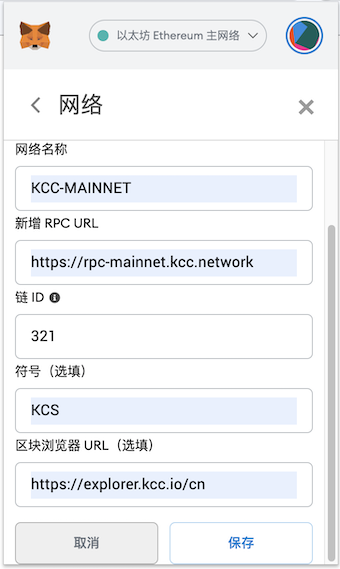 286 |
287 |
288 | 成功
289 |
290 |
286 |
287 |
288 | 成功
289 |
290 | 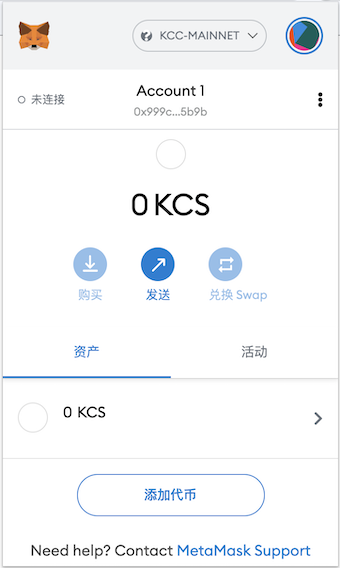 291 |
292 | ## 如何處理MetaMask卡住的交易?
293 | [[視頻]How to Unstuck Stuck Transactions on MetaMask (KCC)](https://youtu.be/0xkkRmajIJI)
294 |
295 | ## 如何在MetaMask添加KCC上的資產?
296 | [[視頻]How to add a custom token to your MetaMask wallet (KCC)](https://youtu.be/tb7xSLur6EU)
297 |
298 |
299 |
300 |
--------------------------------------------------------------------------------
/de-de/README.md:
--------------------------------------------------------------------------------
1 | # KCC
2 |
3 | ## Einführung
4 |
5 | KCC ist eine dezentralisierte high-performance Blockchain, Gebaut von Fans von KCS und KuCoin.
6 |
7 | Entwickelt auf der Basis von "go-ethereum" mit dem Hintergedanken der Community eine "High-Speed" Blockchain Erfahrung mit niedrigen Gebühren zu bieten.
8 |
9 | KCC wird folgende Eigenschaften bieten:
10 | - Voll kompatibel mit Ethereum und ERC-20 Smart Contracts und extrem niedrigen migrations Gebühren.
11 | - Der KuCoin Token (KCS) ist der native haupt Coin für die KCC und wird unter anderem für Gas Gebühren genutzt.
12 | - Ein Block wird alle 3 Sekunden berechnet was eine höhere TPS (Transactions per Second) und Chain performance ermöglicht.
13 | - Die Basis der KCC ist der "Proof of Staked Authority" (PoSA) Konsensusalgorithmus mit hoher Effizienz, Sicherheit und Stabilität.
14 |
15 | ## Mission
16 |
17 | Mission: Beschleunigung der Wertübertragung um die ganze Welt ohne Grenzen.
18 |
19 | # Netzwerk Parameter
20 |
21 | Community Mitglieder können jede Ethereum compatible Wallet mit dem KCC Netzwerk Parametern konfigurieren wie z.B. [metamask](https://metamask.io/), [myetherwallet](https://www.myetherwallet.com/), [imtoken](https://token.im/), [TokenPocket](https://www.tokenpocket.pro/) etc.
22 |
23 | ## Mainnet
24 | ```
25 | Chain Name: KCC-MAINNET
26 | Chain ID: 321
27 | Symbol: KCS
28 | RPC URL: https://rpc-mainnet.kcc.network
29 | Explorer URL: https://explorer.kcc.io/de
30 | WebSocket RPC URL: wss://rpc-ws-mainnet.kcc.network
31 | ```
32 |
33 | ## Testnet
34 | ```
35 | Chain Name: KCC-testnet
36 | Chain ID: 322
37 | Symbol: KCS
38 | RPC URL: https://rpc-testnet.kcc.network
39 | Explorer URL: https://scan-testnet.kcc.network
40 | WebSocket RPC URL: wss://rpc-ws-testnet.kcc.network
41 |
42 | Faucet URL: https://faucet-testnet.kcc.network (Zu testzwecken ohne einen Wert)
43 | ```
44 |
45 | # Developer Dokumentation
46 |
47 | ## Kompilierung
48 | ### Vorraussetzungen
49 | - Linux oder Mac
50 | - golang >= 1.13
51 | - git
52 |
53 | [Wie downloadet und installiert man golang?](https://golang.org/doc/install)
54 |
55 | ### Schritte
56 | ```
57 | git clone -b kcc --single-branch https://github.com/kcc-community/kcc.git
58 | cd kcc
59 | make geth
60 | ```
61 | ### Ausführen
62 |
63 | Die Commandline Flags sind ähnlich wie beim originalen "go-ethereum", um alle verfügbaren Flags zu sehen nutze bitte `./build/bin/geth --help`.
64 | Um zum Beispiel dem Testnet beizutreten nutze einfach `./build/bin/geth --testnet`.
65 |
66 | ## Docker
67 |
68 | Auch bieten wir ein Docker Image [https://hub.docker.com/r/kucoincommunitychain/kcc](https://hub.docker.com/r/kucoincommunitychain/kcc) um ein schnelles Deployment zu ermöglichen.
69 |
70 | [Wie nutze ich Docker?](https://docs.docker.com/get-started/)
71 |
72 | ## Deployment
73 |
74 | ### Vorraussetzungen
75 | ```
76 | 4 core cpu
77 | 8g memory
78 | scalable SSD disk
79 | public ip with TCP/UDP:30303 open
80 | ```
81 |
82 | ### Start command
83 | ```
84 | ./build/bin/geth #Mainnet
85 | ./build/bin/geth --testnet #Testnet
86 |
87 | useful options:
88 | /data/kcc/geth \
89 | --datadir /data/.kcc/testnet \ #your data dir
90 | --testnet \ #Testnet
91 | --http \ #http rpc
92 | --ws \ #ws rpc
93 | --http.vhosts * \ #vhosts
94 | --rpccorsdomain * \ #http corsdomain
95 | --http.addr 0.0.0.0 \ #http rpc bind address
96 | --ws.addr 0.0.0.0 \ #ws rpc bind address
97 | --syncmode full \ #syncmode
98 | --gcmode archive #gcmode
99 | ```
100 |
101 | Um den Node (`geth`) im Hintergrund laufen zu lassen, kannst du `nohup`,`supervisor`,`systemd` nutzen.
102 |
103 | - [supervisor](http://supervisord.org/)
104 | - [systemd](https://wiki.debian.org/systemd)
105 |
106 | ## SDKs
107 |
108 | Um mit dem KCC Node (RPC oder Websocket) zu interagieren kannst du eine der folgenden SDKs nutzen.
109 |
110 | - [Js: web3.js](https://github.com/kcc-community/web3.js) Ethereum JavaScript API
111 | - [Java: web3j](https://github.com/web3j/web3j) Web3 Java Ethereum Ðapp API
112 | - [PHP: web3.php](https://github.com/sc0Vu/web3.php) A php interface for interacting with the Ethereum blockchain and ecosystem.
113 | - [Python: Web3.py](https://github.com/ethereum/web3.py) A Python library for interacting with Ethereum, inspired by web3.js.
114 | - [Golang: go-ethereum](https://github.com/ethereum/go-ethereum)
115 |
116 | ## Konsensusalgorithmus
117 |
118 | Die KCC nutzt den PoSA Konsensusalgorithmus welcher es ermöglicht niedrige Transaktiosgebühren, Transaktionswartezeiten sowie eine hohe Transaktionsparallelität zu ermöglichen und unterstützt damit bis zu maximal 29 Validatoren.
119 |
120 | PoSA ist eine Kombination auf PoA und PoS. Um ein Validator zu werden musst du ein "proposal/Anfrage" dafür einreichen und dann warten bis aktive Validatoren über deine Anfrage abgestimmt haben. Nachdem mehr als die hälfte der aktiven Validatoren abgestimmt haben ist es dir erlaubt Validator zu werden. Jeglicher Adresse kann seine KCS einer anderen Addresse "staken" welche qualifiziert ist ein Validator zu werden. Nachdem das Staking Volumen des jeweiligen Nodes die Top 29 Staking Addressen erreicht wird ein aktiver Validator im nächsten Epoch solange er die Position in den Top 29 hält.
121 |
122 | Alle aktiven Validatoren werden dazu angehalten anhand vordefinierter Regeln Blöcke zu "minen/berrechnen". Wenn ein Validator bei der berrechung eines Blocks dran ist, versagt, wird der Validator der nicht involviert war in den letzten "n/2" (n ist die Nummer of aktiven Validatoren) Blöcken wird zufallsbasiert einen "block-out" durchführen. Es müssen mindestens "n/2+1" aktive Validatoren sicher arbeiten um die Operationssicherheit der Blockchain zu gewährleisten.
123 |
124 | Die schwierigkeit eines Block ist 2 wenn der Block automatisch generiert ist, und 1 wenn der Block nicht durch eine vordefinierte Order generiert worden ist. Wenn ein fork der Blockchain erscheint, wählt die Blockchain den zugehörigen Frok entsprechend der kumulierten maximalen Schwierigkeit.
125 |
126 |
127 | ### System Contracts
128 |
129 | KCC hat 3 integrierte System Contracts für den PoSA in der Geniss Datei.
130 |
131 | Der Source Code dieser 3 Contracts sind von "Heco" gefroked und sind auf unserem Github Repository zu finden: [https://github.com/kcc-community/kcc-genesis-contracts](https://github.com/kcc-community/kcc-genesis-contracts)。
132 |
133 | Die Verwaltung der aktuellen Validatoren obliegt den System Contracts.
134 |
135 | - Verantwortlich für Zugriffsrechte auf Validatoren und verwaltung von Validator Anträgen sowie Votes/Stimmen.
136 | - Verantwortlich für Rang Management von Validatoren swoie Staking und Unstaking Operationen und die verteilung der Block Rewards etc.
137 | - Verantwortlich für Bestrafung aktiver Validatoren welche nicht zuverlässlich arbeiten.
138 |
139 | Blockchain System Contract aufrufe:
140 |
141 | - Am Ende jeden Blocks wird der Validator Contract aufgerufen und die errechneten Gebühren für alle Transaktionen innerhalb des Blocks werden auf alle aktiven Validatoren verteilt.
142 | - Der Bestrafungs Contract wird dann aufgerufen wenn ein Validator nicht zuverlässlich arbeitet.
143 | - Am Ende jeden Epochs wird der Validator Contract aufgerufen um die aktiven Validatoren liste anhand des Rankings zu updaten.
144 |
145 | ### stake
146 |
147 | Du kannst die `vote` Methode im `validator` Contract aufrufen um für egal welchen Validator zu staken, das minimum das für einen Validator gestaked werden muss beträgt 1 KCS.
148 |
149 | ### unstake
150 |
151 | Wenn du dein KCS unstaken möchtest dann musst du die `revoke` Methode im `validator` Contract aufrufen und für mindestens 86400 Blöcke (4 Tage) warten um danach die Methode `withdraw` im `validator` Contract aufrufen zu können um deine KCS zu erhalten.
152 |
153 | ### punish
154 |
155 | Wannimmer ein Validator gefunden wird der nicht zuverlässlich einen Block verarbeitet wie vorgeschrieben, wird der Bestrafungs Contract automatisch aufgerufen. Am Ende des jeweiligen Block wird dieser Aufruf gezählt, sollten die gezählten Aufrufe "24" erreichen so wird dem Validator sein gesammtes Einkommen entzogen, sollte die Anzahl auf 600 steigen wird der aktive Validator aus der Gruppe der aktiven Validatoren entfernt und ist als dieser disqualifiziert.
156 |
157 | # Governance
158 |
159 | ## Advice, Issue & Discussion
160 |
161 | Jegliche Tipps, Anregungen und Diskussionen sind Willkommen.
162 |
163 | [Hinterlasse einen Tipp/Anmerkung oder Fehler/Problem](https://github.com/kcc-community/any-advice-issue/issues)
164 |
165 | [Starte eine Diskussion](https://github.com/kcc-community/any-advice-issue/discussions)
166 |
167 | Wenn du ein Problem mit einem speziellen Projekt hast dann verschiebe dieses `issue` in das jeweilige spezial Projekt.
168 |
169 | ## KIPs
170 |
171 | KCC Verbesserungsvorschläge
172 |
173 | KCC Verbesserungsvorschläge (KIPs) beschreiben den Standard für die KCC Plattform inkludiert Chain, Dex and dApps.
174 |
175 | Der Idee hinter diesem Prozess ist es alle änderungen an der KCC so transparent und demokratisch wie möglich zu gestalten.
176 |
177 | URL:[https://github.com/kcc-community/KIPs](https://github.com/kcc-community/KIPs)
178 |
179 |
180 | # FAQ
181 | ## MetaMask
182 |
183 | Nutze den Chrome Browser und öffne MetaMask [extension site](https://chrome.google.com/webstore/detail/metamask/nkbihfbeogaeaoehlefnkodbefgpgknn?hl=zh-CN)
184 |
185 | Folge den Anweisungem um deine ETH Wallet zu erzeugen und **Backuppe deinen Private Key und/oder deine Memonic**
186 |
187 | Konfiguriere MetaMask für das KCC Mainnet
188 |
189 | (1) Öffne MetaMask. Im oberen Bereich siehst du das standard Netzwerk 【Ethereum mainnet】。
190 |
191 |
291 |
292 | ## 如何處理MetaMask卡住的交易?
293 | [[視頻]How to Unstuck Stuck Transactions on MetaMask (KCC)](https://youtu.be/0xkkRmajIJI)
294 |
295 | ## 如何在MetaMask添加KCC上的資產?
296 | [[視頻]How to add a custom token to your MetaMask wallet (KCC)](https://youtu.be/tb7xSLur6EU)
297 |
298 |
299 |
300 |
--------------------------------------------------------------------------------
/de-de/README.md:
--------------------------------------------------------------------------------
1 | # KCC
2 |
3 | ## Einführung
4 |
5 | KCC ist eine dezentralisierte high-performance Blockchain, Gebaut von Fans von KCS und KuCoin.
6 |
7 | Entwickelt auf der Basis von "go-ethereum" mit dem Hintergedanken der Community eine "High-Speed" Blockchain Erfahrung mit niedrigen Gebühren zu bieten.
8 |
9 | KCC wird folgende Eigenschaften bieten:
10 | - Voll kompatibel mit Ethereum und ERC-20 Smart Contracts und extrem niedrigen migrations Gebühren.
11 | - Der KuCoin Token (KCS) ist der native haupt Coin für die KCC und wird unter anderem für Gas Gebühren genutzt.
12 | - Ein Block wird alle 3 Sekunden berechnet was eine höhere TPS (Transactions per Second) und Chain performance ermöglicht.
13 | - Die Basis der KCC ist der "Proof of Staked Authority" (PoSA) Konsensusalgorithmus mit hoher Effizienz, Sicherheit und Stabilität.
14 |
15 | ## Mission
16 |
17 | Mission: Beschleunigung der Wertübertragung um die ganze Welt ohne Grenzen.
18 |
19 | # Netzwerk Parameter
20 |
21 | Community Mitglieder können jede Ethereum compatible Wallet mit dem KCC Netzwerk Parametern konfigurieren wie z.B. [metamask](https://metamask.io/), [myetherwallet](https://www.myetherwallet.com/), [imtoken](https://token.im/), [TokenPocket](https://www.tokenpocket.pro/) etc.
22 |
23 | ## Mainnet
24 | ```
25 | Chain Name: KCC-MAINNET
26 | Chain ID: 321
27 | Symbol: KCS
28 | RPC URL: https://rpc-mainnet.kcc.network
29 | Explorer URL: https://explorer.kcc.io/de
30 | WebSocket RPC URL: wss://rpc-ws-mainnet.kcc.network
31 | ```
32 |
33 | ## Testnet
34 | ```
35 | Chain Name: KCC-testnet
36 | Chain ID: 322
37 | Symbol: KCS
38 | RPC URL: https://rpc-testnet.kcc.network
39 | Explorer URL: https://scan-testnet.kcc.network
40 | WebSocket RPC URL: wss://rpc-ws-testnet.kcc.network
41 |
42 | Faucet URL: https://faucet-testnet.kcc.network (Zu testzwecken ohne einen Wert)
43 | ```
44 |
45 | # Developer Dokumentation
46 |
47 | ## Kompilierung
48 | ### Vorraussetzungen
49 | - Linux oder Mac
50 | - golang >= 1.13
51 | - git
52 |
53 | [Wie downloadet und installiert man golang?](https://golang.org/doc/install)
54 |
55 | ### Schritte
56 | ```
57 | git clone -b kcc --single-branch https://github.com/kcc-community/kcc.git
58 | cd kcc
59 | make geth
60 | ```
61 | ### Ausführen
62 |
63 | Die Commandline Flags sind ähnlich wie beim originalen "go-ethereum", um alle verfügbaren Flags zu sehen nutze bitte `./build/bin/geth --help`.
64 | Um zum Beispiel dem Testnet beizutreten nutze einfach `./build/bin/geth --testnet`.
65 |
66 | ## Docker
67 |
68 | Auch bieten wir ein Docker Image [https://hub.docker.com/r/kucoincommunitychain/kcc](https://hub.docker.com/r/kucoincommunitychain/kcc) um ein schnelles Deployment zu ermöglichen.
69 |
70 | [Wie nutze ich Docker?](https://docs.docker.com/get-started/)
71 |
72 | ## Deployment
73 |
74 | ### Vorraussetzungen
75 | ```
76 | 4 core cpu
77 | 8g memory
78 | scalable SSD disk
79 | public ip with TCP/UDP:30303 open
80 | ```
81 |
82 | ### Start command
83 | ```
84 | ./build/bin/geth #Mainnet
85 | ./build/bin/geth --testnet #Testnet
86 |
87 | useful options:
88 | /data/kcc/geth \
89 | --datadir /data/.kcc/testnet \ #your data dir
90 | --testnet \ #Testnet
91 | --http \ #http rpc
92 | --ws \ #ws rpc
93 | --http.vhosts * \ #vhosts
94 | --rpccorsdomain * \ #http corsdomain
95 | --http.addr 0.0.0.0 \ #http rpc bind address
96 | --ws.addr 0.0.0.0 \ #ws rpc bind address
97 | --syncmode full \ #syncmode
98 | --gcmode archive #gcmode
99 | ```
100 |
101 | Um den Node (`geth`) im Hintergrund laufen zu lassen, kannst du `nohup`,`supervisor`,`systemd` nutzen.
102 |
103 | - [supervisor](http://supervisord.org/)
104 | - [systemd](https://wiki.debian.org/systemd)
105 |
106 | ## SDKs
107 |
108 | Um mit dem KCC Node (RPC oder Websocket) zu interagieren kannst du eine der folgenden SDKs nutzen.
109 |
110 | - [Js: web3.js](https://github.com/kcc-community/web3.js) Ethereum JavaScript API
111 | - [Java: web3j](https://github.com/web3j/web3j) Web3 Java Ethereum Ðapp API
112 | - [PHP: web3.php](https://github.com/sc0Vu/web3.php) A php interface for interacting with the Ethereum blockchain and ecosystem.
113 | - [Python: Web3.py](https://github.com/ethereum/web3.py) A Python library for interacting with Ethereum, inspired by web3.js.
114 | - [Golang: go-ethereum](https://github.com/ethereum/go-ethereum)
115 |
116 | ## Konsensusalgorithmus
117 |
118 | Die KCC nutzt den PoSA Konsensusalgorithmus welcher es ermöglicht niedrige Transaktiosgebühren, Transaktionswartezeiten sowie eine hohe Transaktionsparallelität zu ermöglichen und unterstützt damit bis zu maximal 29 Validatoren.
119 |
120 | PoSA ist eine Kombination auf PoA und PoS. Um ein Validator zu werden musst du ein "proposal/Anfrage" dafür einreichen und dann warten bis aktive Validatoren über deine Anfrage abgestimmt haben. Nachdem mehr als die hälfte der aktiven Validatoren abgestimmt haben ist es dir erlaubt Validator zu werden. Jeglicher Adresse kann seine KCS einer anderen Addresse "staken" welche qualifiziert ist ein Validator zu werden. Nachdem das Staking Volumen des jeweiligen Nodes die Top 29 Staking Addressen erreicht wird ein aktiver Validator im nächsten Epoch solange er die Position in den Top 29 hält.
121 |
122 | Alle aktiven Validatoren werden dazu angehalten anhand vordefinierter Regeln Blöcke zu "minen/berrechnen". Wenn ein Validator bei der berrechung eines Blocks dran ist, versagt, wird der Validator der nicht involviert war in den letzten "n/2" (n ist die Nummer of aktiven Validatoren) Blöcken wird zufallsbasiert einen "block-out" durchführen. Es müssen mindestens "n/2+1" aktive Validatoren sicher arbeiten um die Operationssicherheit der Blockchain zu gewährleisten.
123 |
124 | Die schwierigkeit eines Block ist 2 wenn der Block automatisch generiert ist, und 1 wenn der Block nicht durch eine vordefinierte Order generiert worden ist. Wenn ein fork der Blockchain erscheint, wählt die Blockchain den zugehörigen Frok entsprechend der kumulierten maximalen Schwierigkeit.
125 |
126 |
127 | ### System Contracts
128 |
129 | KCC hat 3 integrierte System Contracts für den PoSA in der Geniss Datei.
130 |
131 | Der Source Code dieser 3 Contracts sind von "Heco" gefroked und sind auf unserem Github Repository zu finden: [https://github.com/kcc-community/kcc-genesis-contracts](https://github.com/kcc-community/kcc-genesis-contracts)。
132 |
133 | Die Verwaltung der aktuellen Validatoren obliegt den System Contracts.
134 |
135 | - Verantwortlich für Zugriffsrechte auf Validatoren und verwaltung von Validator Anträgen sowie Votes/Stimmen.
136 | - Verantwortlich für Rang Management von Validatoren swoie Staking und Unstaking Operationen und die verteilung der Block Rewards etc.
137 | - Verantwortlich für Bestrafung aktiver Validatoren welche nicht zuverlässlich arbeiten.
138 |
139 | Blockchain System Contract aufrufe:
140 |
141 | - Am Ende jeden Blocks wird der Validator Contract aufgerufen und die errechneten Gebühren für alle Transaktionen innerhalb des Blocks werden auf alle aktiven Validatoren verteilt.
142 | - Der Bestrafungs Contract wird dann aufgerufen wenn ein Validator nicht zuverlässlich arbeitet.
143 | - Am Ende jeden Epochs wird der Validator Contract aufgerufen um die aktiven Validatoren liste anhand des Rankings zu updaten.
144 |
145 | ### stake
146 |
147 | Du kannst die `vote` Methode im `validator` Contract aufrufen um für egal welchen Validator zu staken, das minimum das für einen Validator gestaked werden muss beträgt 1 KCS.
148 |
149 | ### unstake
150 |
151 | Wenn du dein KCS unstaken möchtest dann musst du die `revoke` Methode im `validator` Contract aufrufen und für mindestens 86400 Blöcke (4 Tage) warten um danach die Methode `withdraw` im `validator` Contract aufrufen zu können um deine KCS zu erhalten.
152 |
153 | ### punish
154 |
155 | Wannimmer ein Validator gefunden wird der nicht zuverlässlich einen Block verarbeitet wie vorgeschrieben, wird der Bestrafungs Contract automatisch aufgerufen. Am Ende des jeweiligen Block wird dieser Aufruf gezählt, sollten die gezählten Aufrufe "24" erreichen so wird dem Validator sein gesammtes Einkommen entzogen, sollte die Anzahl auf 600 steigen wird der aktive Validator aus der Gruppe der aktiven Validatoren entfernt und ist als dieser disqualifiziert.
156 |
157 | # Governance
158 |
159 | ## Advice, Issue & Discussion
160 |
161 | Jegliche Tipps, Anregungen und Diskussionen sind Willkommen.
162 |
163 | [Hinterlasse einen Tipp/Anmerkung oder Fehler/Problem](https://github.com/kcc-community/any-advice-issue/issues)
164 |
165 | [Starte eine Diskussion](https://github.com/kcc-community/any-advice-issue/discussions)
166 |
167 | Wenn du ein Problem mit einem speziellen Projekt hast dann verschiebe dieses `issue` in das jeweilige spezial Projekt.
168 |
169 | ## KIPs
170 |
171 | KCC Verbesserungsvorschläge
172 |
173 | KCC Verbesserungsvorschläge (KIPs) beschreiben den Standard für die KCC Plattform inkludiert Chain, Dex and dApps.
174 |
175 | Der Idee hinter diesem Prozess ist es alle änderungen an der KCC so transparent und demokratisch wie möglich zu gestalten.
176 |
177 | URL:[https://github.com/kcc-community/KIPs](https://github.com/kcc-community/KIPs)
178 |
179 |
180 | # FAQ
181 | ## MetaMask
182 |
183 | Nutze den Chrome Browser und öffne MetaMask [extension site](https://chrome.google.com/webstore/detail/metamask/nkbihfbeogaeaoehlefnkodbefgpgknn?hl=zh-CN)
184 |
185 | Folge den Anweisungem um deine ETH Wallet zu erzeugen und **Backuppe deinen Private Key und/oder deine Memonic**
186 |
187 | Konfiguriere MetaMask für das KCC Mainnet
188 |
189 | (1) Öffne MetaMask. Im oberen Bereich siehst du das standard Netzwerk 【Ethereum mainnet】。
190 |
191 |  192 |
193 | Klicke auf【Ethereum mainnet】danach klicke auf【custom RPC】im Dropdown Menü.
194 |
195 |
192 |
193 | Klicke auf【Ethereum mainnet】danach klicke auf【custom RPC】im Dropdown Menü.
194 |
195 |  196 |
197 | (2) Fülle die Felder in folgender reihenfolge aus um das KCC Mainnet hinzuzufügen:
198 | Network Name:KCC-MAINNET
199 |
200 | New RPC URL:https://rpc-mainnet.kcc.network
201 |
202 | Chain ID: 321
203 |
204 | Currency Symbol (optional):KCS
205 |
206 | Block Explorer URL (optional):https://explorer.kcc.io/en
207 |
208 |
196 |
197 | (2) Fülle die Felder in folgender reihenfolge aus um das KCC Mainnet hinzuzufügen:
198 | Network Name:KCC-MAINNET
199 |
200 | New RPC URL:https://rpc-mainnet.kcc.network
201 |
202 | Chain ID: 321
203 |
204 | Currency Symbol (optional):KCS
205 |
206 | Block Explorer URL (optional):https://explorer.kcc.io/en
207 |
208 |  209 |
210 | Fertig
211 |
212 |
209 |
210 | Fertig
211 |
212 |  213 |
--------------------------------------------------------------------------------
/zh-cn/README.md:
--------------------------------------------------------------------------------
1 | # KCC
2 |
3 | ## 社区链简介
4 | KCC是由KCS和KuCoin的社区粉丝构建的,基于以太坊源代码开发的,高性能和去中心化的公链,**目的是为解决目前公链出现的诸如性能底下,成本过高等问题,从而提供给社区用户更加高速便捷并且低成本的区块链使用体验**。
5 |
6 | KCC具有如下特性:
7 | - 完全兼容以太坊和ERC20智能合约,迁移成本极低
8 | - 以KCS作为链的gas费,交易成本极低
9 | - 每3秒出一个块,交易确认更快,链性能更高
10 | - Proof of Staked Authority(PoSA)共识算法,效率高,安全稳定
11 |
12 | ## 使命
13 |
14 | 促进价值在全球自由流动。
15 |
16 | ## 风险提示
17 |
18 | - KCC官方不会发布任何Swap项目,因为所有项目都是由社区开发的,所以KCC对这些项目造成的问题不承担任何责任。此外,KCC不为相关项目提供客户服务;
19 | - 在任何加密货币,Defi相关领域有任何操作前,请首先DYOR(Do your own research);
20 | - 所有用户及开发者都可以免费参与KCC的测试环境与后续阶段,不存在收费场景;
21 | - 大家务必区分好测试环境和主网环境,测试环境所产生的资产不具备任何价值,谨防假币诈骗;
22 | - KCC将通过官方社交平台公布授权、推介等合作,开发者和用户谨慎核对,以免造成损失;
23 | - 请认准官方网址,避免出现私钥被钓鱼等情况。
24 |
25 | ## 免责声明
26 | 尊敬的用户(以下称“您”):
27 |
28 | KCC(以下简称“KCC”或“我们”)是一个去中心化公链,全球开发者都可以在KCC上部署应用,所有用户可以在KCC上可以读取、发送和交易。由于去中心化的特性,我们特向您提醒第三方DAPP风险如下:
29 | - 您在任何平台、钱包、第三方Dapp有任何操作前,请首先DYOR(Do your own research);
30 | - 无论您通过任何交易平台、钱包参与或使用KCC上的DAPP,均为您个人的自由选择行为,我们并不向您推荐使用;
31 | - 我们不对任何第三方DAPP负有审核责任,也不对其服务所涉及的技术及信息的有效性、准确性、正确性、可靠性、质量、稳定、完整和及时性作出任何承诺和保证;
32 | - 您自行承担使用第三方DAPP服务产生的全部责任;
33 | - 第三方DAPP服务等是否符合您所在管辖区的法律法规或相关政策要求,请您自行判断与评估,我们不提供任何评估意见,但请您务必严格遵守您所在管辖地的法律;
34 | - 您因使用第三方DAPP而涉及的包括但不限于合法问题、合同责任问题、经济损失问题等,均由您与第三方DAPP自行解决,我们不对此承担责任;
35 | - KCC不会与任何第三方DAPP共享您的个人信息,除非获得您的明确同意。在获得您明确同意后而因第三方DAPP 获取您个人信息产生的一切法律责任、纠纷,仍由您自行承担并与第三方DAPP自行解决。
36 | - KCC无权向您提供任何第三方DAPP开发者的个人信息,除非获得对方的同意或相关部门的要求,我们会尽力协助但无法保证能有效及时获取对方信息。
37 | 最后,我们再次提醒您:我们不推荐、建议、引导您使用任何第三方DAPP服务。
38 |
39 | # 网络参数
40 | 社区用户可以使用任何以太坊的钱包,并配置KCC链的网络参数,如 [metamask](https://metamask.io/), [myetherwallet](https://www.myetherwallet.com/), [imtoken](https://token.im/), [TokenPocket](https://www.tokenpocket.pro/) 等。
41 |
42 | ## 主网
43 | ```
44 | 网络名称: KCC-MAINNET
45 | 链ID: 321
46 | 符号: KCS
47 | RPC地址: https://rpc-mainnet.kcc.network
48 | 浏览器地址: https://explorer.kcc.io/cn
49 | WebSocket RPC地址: wss://rpc-ws-mainnet.kcc.network
50 | ```
51 |
52 | *主网和测试网公开节点的访问限频策略为300/10s.*
53 |
54 | *开发者也可以使用 [https://scan.kcc.io](https://scan.kcc.io) 浏览器*
55 |
56 | ## 测试网
57 | ```
58 | 网络名称: KCC-TESTNET
59 | 链ID: 322
60 | 符号: KCS
61 | RPC地址: https://rpc-testnet.kcc.network
62 | 浏览器地址: https://scan-testnet.kcc.network
63 | WebSocket RPC地址: wss://rpc-ws-testnet.kcc.network
64 |
65 | 水龙头: https://faucet-testnet.kcc.network (仅测试用,无价值)
66 | ```
67 | # 开发者
68 |
69 | ## 运行节点
70 | ### 二进制文件
71 | 直接访问[https://github.com/kcc-community/kcc/releases](https://github.com/kcc-community/kcc/releases)下载最新版本的二进制文件。
72 |
73 | ### Docker
74 | 也可以使用 [https://hub.docker.com/r/kucoincommunitychain/kcc](https://hub.docker.com/r/kucoincommunitychain/kcc) 进行快速部署和测试。([关于如何使用Docker?](https://docs.docker.com/get-started/))
75 |
76 | ### 编译
77 | #### 编译要求
78 | - Linux or Mac
79 | - golang >= 1.13
80 | - git
81 |
82 | golang安装和配置请参考 [https://golang.org/doc/install](https://golang.org/doc/install)
83 |
84 | #### 编译步骤
85 | ```
86 | git clone -b kcc --single-branch https://github.com/kcc-community/kcc.git
87 | cd kcc
88 | make geth
89 | ```
90 | #### 启动
91 | 启动参数配置和以太坊类似,可以通过`./build/bin/geth --help`查看所有的参数配置,可以通过`geth --testnet`加入测试网。
92 |
93 | ### 部署
94 |
95 | #### 推荐配置
96 | ```
97 | 4核
98 | 8G内存
99 | 200G并且可扩容的SSD
100 | 公网IP并开启TCP/UDP:30303端口
101 | ```
102 |
103 | #### 启动命令
104 | ```
105 | ./geth #主网
106 | ./geth --testnet #测试网
107 |
108 | 部分常用参数示例:
109 | /data/kcc/geth \
110 | --datadir /data/.kcc/testnet \ #自定义数据目录
111 | --testnet \ #测试网
112 | --http \ #开启http rpc
113 | --http.addr 0.0.0.0 \ #http rpc监听地址
114 | --http.vhosts * \ #vhosts
115 | --http.corsdomain * \ #http corsdomain
116 | --ws \ #开启ws rpc
117 | --ws.addr 0.0.0.0 \ #ws rpc监听地址
118 | --syncmode full \ #同步模式
119 | --gcmode archive #gc模式
120 | ```
121 |
122 | 可以使用`nohup`,`supervisor`,`systemd`等,使`geth`在后台常驻运行。
123 |
124 | 参考文档:
125 |
126 | - [supervisor](http://supervisord.org/)
127 | - [systemd](https://wiki.debian.org/systemd)
128 |
129 | ## SDKs
130 |
131 | 可以使用以下的SDK和KCC的RPC API进行交互。
132 |
133 | - [Js: web3.js](https://github.com/ChainSafe/web3.js) Ethereum JavaScript API
134 | - [Java: web3j](https://github.com/web3j/web3j) Web3 Java Ethereum Ðapp API
135 | - [PHP: web3.php](https://github.com/sc0Vu/web3.php) A php interface for interacting with the Ethereum blockchain and ecosystem.
136 | - [Python: Web3.py](https://github.com/ethereum/web3.py) A Python library for interacting with Ethereum, inspired by web3.js.
137 | - [Golang: go-ethereum](https://github.com/ethereum/go-ethereum)
138 |
139 | ## 工具
140 | - [合约开发语言:solidity](https://docs.soliditylang.org/en/latest/)
141 | - [合约开发工具:remix](https://remix.ethereum.org/)
142 | - [合约开发套件: truffle](https://www.trufflesuite.com/docs/truffle/overview)
143 | - [合约开发套件: hardhat](https://hardhat.org/)
144 | - [水龙头: faucet](https://faucet-testnet.kcc.network)
145 | - [浏览器: explorer](https://explorer.kcc.io)
146 |
147 | ## 跨链桥
148 | - [KCC-Bridge](https://www.kcc.io/bridge/transfer/)
149 | - [AnySwap](https://anyswap.exchange/bridge)
150 |
151 | ## 共识
152 | KCC采用PoSA共识机制,具有成本低、性能高、出块稳的特点,支持最多29个验证人节点;
153 |
154 | PoSA结合了PoS和PoA,想要成为验证人,需要先创建节点并提交提案,等待其他活跃的验证人进行投票,半数以上通过之后,则有资格成为验证人。任意地址均可对有资格成为验证人的地址进行质押,当验证人的质押量排名进入前29位之后,且验证人质押了至少5000个KCS作为保证金,则会在下一个epoch成为活跃验证人。
155 |
156 | 所有的活跃验证人按照预定规则排序,轮流进行出块。如果有验证人在自己的出块轮次没能及时出块,则在过去n/2(n为活跃验证人的数量)个块内,没有参与过出块操作的活跃验证人,随机进行出块。最少n/2+1个活跃验证人正常工作,即可保证区块链的正常运行。
157 |
158 | 正常产块时,区块的难度值为2,未按照预定顺序进行产块时,区块的难度值为1。当区块链发生分叉时,区块链按照累计最大难度选择对应分叉。
159 |
160 | ### 内置合约
161 | KCC在genesis文件中内置了PoSA共识相关的合约,
162 | 合约源代码fork自heco,可在[https://github.com/kcc-community/kcc-genesis-contracts](https://github.com/kcc-community/kcc-genesis-contracts)查看。
163 |
164 | 目前验证人的管理,均由系统合约完成,目前的系统合约有:
165 | - proposal 负责管理验证人的准入资格,管理验证人提案和投票;
166 | - validators 负责对验证人进行排名管理、质押和解质押操作、分发区块奖励等;
167 | - punish 负责对不正常工作的活跃验证人进行惩罚操作;
168 | - (自 Ishikari 硬分叉之后)ReserverPool 负责暂存交易手续费和额外的鼓励金;
169 |
170 | 区块链调用系统合约:
171 | - (自 Ishikari 硬分叉之后)每个块结束的时候,会调用validators合约,将区块中所有交易的手续费首先转到 ReservePool,随后从 ReservePool 中取出预设数量个 KCS 分给验证人和他们的质押用户;
172 | - 发现validator没有正常工作的时候,会调用punish合约,对validator进行惩罚;
173 | - 每个epoch结束的时候,会调用validators合约,根据排名,更新active validator;
174 |
175 | ### 质押
176 |
177 | 用户可以调用validators合约的`vote`方法,对任意节点进行质押,每个validator的最小质押量是1KCS。
178 |
179 | ### 解质押
180 | 如果用户想取回质押的KCS,需要先调用validators合约的`revokeVote`方法进行解质押,然后在86400个块之后(3天),再调用validators合约的`withdraw`方法才能把质押的KCS取回到可用余额。
181 |
182 | ### 惩罚
183 | 如果验证人没有按照预定规则进行出块,就会在这个块结束时,自动调用punish合约,对验证人进行计数。每当累积次数达到24的倍数时,罚没验证人的几乎所有收入。当计数达到600次时,将验证人移除出活跃验证人列表,同时取消验证人资格。
184 |
185 | ## TheGraph
186 | Graph Node是一个使用GraphQL在以太坊和IPFS上快速构建去中心化应用(dApps)的协议。
187 |
188 | KCC社区开发团队开放的Graph节点为:
189 | ```
190 | https://thegraph.kcc.network/deploy/
191 | https://thegraph.kcc.network/ipfs/
192 | https://thegraph.kcc.network/subgraphs/name/
193 | ```
194 |
195 | 示例:
196 | ```
197 | "auth": "graph auth https://thegraph.kcc.network/deploy/ your-token"
198 | "create": "graph create your-name --node https://thegraph.kcc.network/deploy/"
199 | "deploy": "graph deploy your-name --ipfs https://thegraph.kcc.network/ipfs/ --node https://thegraph.kcc.network/deploy/"
200 | "explorer": "https://thegraph.kcc.network/subgraphs/name/your-name"
201 | ```
202 |
203 | **如果需要使用服务,请填写[申请表单](https://forms.office.com/r/AtpAskVPk7)**
204 |
205 | **由于性能问题,我们建议你按照[TheGraph官方文档](https://thegraph.com/docs/)进行私有化部署,并部署自己的全节点。**
206 |
207 |
208 | # 社区治理
209 |
210 | ## 建议&问题&讨论
211 |
212 | 我们欢迎社区的任何建议、问题和讨论,并建立了通用的Github渠道:
213 |
214 | [建议和问题](https://github.com/kcc-community/any-advice-issue/issues)
215 |
216 | [讨论](https://github.com/kcc-community/any-advice-issue/discussions)
217 |
218 | 关于某一个具体项目的问题,请移步到具体的项目中开启`issue`。
219 |
220 |
221 | ## KIPs
222 | KCC Improvement Proposals
223 |
224 | KIP是KCC改进提议的缩写,任何社区用户都可以在这里发起有关KCC及相关应用的提议,
225 | 参与讨论并执行。
226 |
227 | 提议地址:[https://github.com/kcc-community/KIPs](https://github.com/kcc-community/KIPs)
228 |
229 |
230 | # KCC Staking
231 |
232 | ## FAQ
233 |
234 | 1.如何通过质押参与KCC节点选举?
235 |
236 | >通过抵押您的KCS,您可以参与Kucoin社区链(KCC)节点验证者选举的投票,并获得奖励。
237 |
238 | >抵押KCS对于确保网络安全至关重要。验证者可以将KCS抵押给自己,他们也可以从KCS投票中获得委托。
239 |
240 | >你可以通过质押KCS来为验证人投票,1个KCS代表1票,如果你赎回投票就可以取回KCS。
241 |
242 |
243 | 2.如何查看/提取我的质押奖励?
244 |
245 | >1,点击 "我的投票 "来查看你的奖励概况
246 | 2,你可以查看每个验证者的奖励,并点击 "Claim "来获取收益。
247 |
248 |
249 | 3.如何退出我的质押?
250 |
251 | >1,点击 "我的投票",查看你的质押投票情况
252 | >2,点击 "Redeem",停止质押投票
253 | >3,你可以在3天的解绑期后提取,在解绑期内,你所投的KCS将不会得到任何奖励。
254 |
255 |
256 | 4.如何成为候选人?
257 |
258 | >方式1,您可以联系KCC官方社区申请成为验证者候选人。
259 | >方式2,即将上线验证者候选人申请功能,届时您可以在首页点击“申请成为验证者”递交请求。
260 |
261 |
262 | 5.参与质押需要多少钱?
263 |
264 | >你可以通过质押KCS来为验证人投票,1个KCS代表1票,每1票仅可投给一个候选人。
265 |
266 |
267 | 6.如何查看活跃的验证者?
268 |
269 | >请在“Staking”页面中查看。
270 |
271 |
272 | 7.申请赎回后我何时能收到质押的KCS?
273 |
274 | >你可以在3天的解绑期后提取,在解绑期内,你所投的KCS将不会得到任何奖励。请点击“我的投票”页面查看。
275 |
276 |
277 | 8.手续费率是多少?
278 |
279 | >每个验证者候选人会设置不同的手续费率,请在“Staking” 页面中查看。
280 |
281 |
282 | 9.什么是“被监禁”状态?
283 |
284 | >验证者 "被监禁",这是对其不良行为的惩罚,监禁是一个惩罚性功能,由验证者的不良行为触发。
285 |
286 | >验证人将受到惩罚,例如掉线、无法与网络通信、以及其他不良行为。
287 |
288 |
289 | 10.不活跃或被监禁的验证者是否会获得任何奖励?
290 |
291 | >不能收到奖励。
292 |
293 |
294 | 11.如果我选择的节点候选人处于“不活跃或被监禁”状态,我可以收到质押奖励吗?
295 |
296 | >不能收到奖励,但是您质押的KCS不受影响,可以赎回。
297 |
298 |
299 | # FAQ
300 | 1.KCC的共识机制是什么?
301 |
302 | >KCC采用PoSA共识机制,具有成本低、性能高、出块稳的特点,支持最多29个验证人节点;
303 |
304 | 2.如何成为KCC验证人节点
305 |
306 | >想要成为验证人,需要先创建节点并提交提案,等待其他活跃的验证人进行投票,半数以上通过之后,则有资格成为验证人。任意地址均可对有资格成为验证人的地址进行质押,当验证人的质押量排名进入前29位,且验证人质押了至少5000KCS作为保证金,则会在下一个epoch成为活跃验证人。
307 |
308 | 3.KCC是否支持EVM?
309 |
310 | >KCC完全支持以太坊EVM,对以太坊开发者完全友好。
311 |
312 | 4.KCC使用什么sdk?
313 |
314 | >KCC高度兼容 Ethereum,因此使用 Ethereum 的 sdk,例如 web3js, web3j 等。
315 |
316 | 5.我想在KCC测试网进行一些操作与测试,去哪可以获得测试代币?
317 |
318 | >可以访问我们的测试网水龙头:https://faucet-testnet.kcc.network.
319 |
320 | 6.如何对合约节点进行质押?
321 |
322 | >用户可以调用validator合约的vote方法,对任意节点进行质押,每个validator的最小质押量是1KCS。
323 |
324 | 7.如何进行解质押?
325 |
326 | >如果用户想取回质押的KCS,需要先调用validators合约的revokeVote方法进行解质押,然后在86400个块之后(3天),再调用validators合约的withdraw方法才能把质押的KCS取回到可用余额。
327 |
328 | 8.使用METAMASK卡顿(包括但不限于转账卡顿、延迟,数据显示等问题)
329 |
330 | >使用插件的 expand view(扩展视图)模式全屏展示更稳定;
331 | >选择“加速”,将gaslimt和gasPrice调高。
332 |
333 | 9.如何使用KCC Bridge进行资产跨链?
334 |
335 | >可以参考我们的视频教程:https://www.youtube.com/watch?v=kZdX1V2Tgnc
336 |
337 | >更多教程欢迎订阅我们的Youtube频道:https://www.youtube.com/channel/UCZhWm40SuAApnLqqq3F9o1w
338 |
339 | 10.如果我们将Tether发送到不支持KCC的地址时使用的是ERC20而不是KCC会发生什么?代币会在一段时间后返还到原钱包地址吗?
340 |
341 | >如果目标地址是您的个人地址,则操作非常简单。 把钱包网络改成KCC,导入你的地址和你的KCC-USDT合约地址,就可以看到USDT余额了。
342 |
343 | >如果您的目标地址是交易所或中心化钱包,您需要联系他们的客户支持,让他们支持 KCC 或将其退款到您的原始地址。
344 |
345 | >因此,我们建议我们的用户清楚他们为什么要进行代币转移,因为区块链具有不可变性,这意味着任何转移一旦发送就无法回滚,所以我们建议您先用较小的金额进行尝试。
346 |
347 | ## 如何配置 MetaMask 钱包
348 |
349 | 使用 Chrome 浏览器打开 MetaMask [安装地址](https://chrome.google.com/webstore/detail/metamask/nkbihfbeogaeaoehlefnkodbefgpgknn?hl=zh-CN)
350 |
351 | 根据页面提示创建以太坊钱包,**备份好私钥及助记词**;
352 |
353 | 切换到 KCC 主网
354 |
355 | (1) 打开 MetaMask,可以看到钱包被默认设置成【以太坊主网】。
356 |
357 |
213 |
--------------------------------------------------------------------------------
/zh-cn/README.md:
--------------------------------------------------------------------------------
1 | # KCC
2 |
3 | ## 社区链简介
4 | KCC是由KCS和KuCoin的社区粉丝构建的,基于以太坊源代码开发的,高性能和去中心化的公链,**目的是为解决目前公链出现的诸如性能底下,成本过高等问题,从而提供给社区用户更加高速便捷并且低成本的区块链使用体验**。
5 |
6 | KCC具有如下特性:
7 | - 完全兼容以太坊和ERC20智能合约,迁移成本极低
8 | - 以KCS作为链的gas费,交易成本极低
9 | - 每3秒出一个块,交易确认更快,链性能更高
10 | - Proof of Staked Authority(PoSA)共识算法,效率高,安全稳定
11 |
12 | ## 使命
13 |
14 | 促进价值在全球自由流动。
15 |
16 | ## 风险提示
17 |
18 | - KCC官方不会发布任何Swap项目,因为所有项目都是由社区开发的,所以KCC对这些项目造成的问题不承担任何责任。此外,KCC不为相关项目提供客户服务;
19 | - 在任何加密货币,Defi相关领域有任何操作前,请首先DYOR(Do your own research);
20 | - 所有用户及开发者都可以免费参与KCC的测试环境与后续阶段,不存在收费场景;
21 | - 大家务必区分好测试环境和主网环境,测试环境所产生的资产不具备任何价值,谨防假币诈骗;
22 | - KCC将通过官方社交平台公布授权、推介等合作,开发者和用户谨慎核对,以免造成损失;
23 | - 请认准官方网址,避免出现私钥被钓鱼等情况。
24 |
25 | ## 免责声明
26 | 尊敬的用户(以下称“您”):
27 |
28 | KCC(以下简称“KCC”或“我们”)是一个去中心化公链,全球开发者都可以在KCC上部署应用,所有用户可以在KCC上可以读取、发送和交易。由于去中心化的特性,我们特向您提醒第三方DAPP风险如下:
29 | - 您在任何平台、钱包、第三方Dapp有任何操作前,请首先DYOR(Do your own research);
30 | - 无论您通过任何交易平台、钱包参与或使用KCC上的DAPP,均为您个人的自由选择行为,我们并不向您推荐使用;
31 | - 我们不对任何第三方DAPP负有审核责任,也不对其服务所涉及的技术及信息的有效性、准确性、正确性、可靠性、质量、稳定、完整和及时性作出任何承诺和保证;
32 | - 您自行承担使用第三方DAPP服务产生的全部责任;
33 | - 第三方DAPP服务等是否符合您所在管辖区的法律法规或相关政策要求,请您自行判断与评估,我们不提供任何评估意见,但请您务必严格遵守您所在管辖地的法律;
34 | - 您因使用第三方DAPP而涉及的包括但不限于合法问题、合同责任问题、经济损失问题等,均由您与第三方DAPP自行解决,我们不对此承担责任;
35 | - KCC不会与任何第三方DAPP共享您的个人信息,除非获得您的明确同意。在获得您明确同意后而因第三方DAPP 获取您个人信息产生的一切法律责任、纠纷,仍由您自行承担并与第三方DAPP自行解决。
36 | - KCC无权向您提供任何第三方DAPP开发者的个人信息,除非获得对方的同意或相关部门的要求,我们会尽力协助但无法保证能有效及时获取对方信息。
37 | 最后,我们再次提醒您:我们不推荐、建议、引导您使用任何第三方DAPP服务。
38 |
39 | # 网络参数
40 | 社区用户可以使用任何以太坊的钱包,并配置KCC链的网络参数,如 [metamask](https://metamask.io/), [myetherwallet](https://www.myetherwallet.com/), [imtoken](https://token.im/), [TokenPocket](https://www.tokenpocket.pro/) 等。
41 |
42 | ## 主网
43 | ```
44 | 网络名称: KCC-MAINNET
45 | 链ID: 321
46 | 符号: KCS
47 | RPC地址: https://rpc-mainnet.kcc.network
48 | 浏览器地址: https://explorer.kcc.io/cn
49 | WebSocket RPC地址: wss://rpc-ws-mainnet.kcc.network
50 | ```
51 |
52 | *主网和测试网公开节点的访问限频策略为300/10s.*
53 |
54 | *开发者也可以使用 [https://scan.kcc.io](https://scan.kcc.io) 浏览器*
55 |
56 | ## 测试网
57 | ```
58 | 网络名称: KCC-TESTNET
59 | 链ID: 322
60 | 符号: KCS
61 | RPC地址: https://rpc-testnet.kcc.network
62 | 浏览器地址: https://scan-testnet.kcc.network
63 | WebSocket RPC地址: wss://rpc-ws-testnet.kcc.network
64 |
65 | 水龙头: https://faucet-testnet.kcc.network (仅测试用,无价值)
66 | ```
67 | # 开发者
68 |
69 | ## 运行节点
70 | ### 二进制文件
71 | 直接访问[https://github.com/kcc-community/kcc/releases](https://github.com/kcc-community/kcc/releases)下载最新版本的二进制文件。
72 |
73 | ### Docker
74 | 也可以使用 [https://hub.docker.com/r/kucoincommunitychain/kcc](https://hub.docker.com/r/kucoincommunitychain/kcc) 进行快速部署和测试。([关于如何使用Docker?](https://docs.docker.com/get-started/))
75 |
76 | ### 编译
77 | #### 编译要求
78 | - Linux or Mac
79 | - golang >= 1.13
80 | - git
81 |
82 | golang安装和配置请参考 [https://golang.org/doc/install](https://golang.org/doc/install)
83 |
84 | #### 编译步骤
85 | ```
86 | git clone -b kcc --single-branch https://github.com/kcc-community/kcc.git
87 | cd kcc
88 | make geth
89 | ```
90 | #### 启动
91 | 启动参数配置和以太坊类似,可以通过`./build/bin/geth --help`查看所有的参数配置,可以通过`geth --testnet`加入测试网。
92 |
93 | ### 部署
94 |
95 | #### 推荐配置
96 | ```
97 | 4核
98 | 8G内存
99 | 200G并且可扩容的SSD
100 | 公网IP并开启TCP/UDP:30303端口
101 | ```
102 |
103 | #### 启动命令
104 | ```
105 | ./geth #主网
106 | ./geth --testnet #测试网
107 |
108 | 部分常用参数示例:
109 | /data/kcc/geth \
110 | --datadir /data/.kcc/testnet \ #自定义数据目录
111 | --testnet \ #测试网
112 | --http \ #开启http rpc
113 | --http.addr 0.0.0.0 \ #http rpc监听地址
114 | --http.vhosts * \ #vhosts
115 | --http.corsdomain * \ #http corsdomain
116 | --ws \ #开启ws rpc
117 | --ws.addr 0.0.0.0 \ #ws rpc监听地址
118 | --syncmode full \ #同步模式
119 | --gcmode archive #gc模式
120 | ```
121 |
122 | 可以使用`nohup`,`supervisor`,`systemd`等,使`geth`在后台常驻运行。
123 |
124 | 参考文档:
125 |
126 | - [supervisor](http://supervisord.org/)
127 | - [systemd](https://wiki.debian.org/systemd)
128 |
129 | ## SDKs
130 |
131 | 可以使用以下的SDK和KCC的RPC API进行交互。
132 |
133 | - [Js: web3.js](https://github.com/ChainSafe/web3.js) Ethereum JavaScript API
134 | - [Java: web3j](https://github.com/web3j/web3j) Web3 Java Ethereum Ðapp API
135 | - [PHP: web3.php](https://github.com/sc0Vu/web3.php) A php interface for interacting with the Ethereum blockchain and ecosystem.
136 | - [Python: Web3.py](https://github.com/ethereum/web3.py) A Python library for interacting with Ethereum, inspired by web3.js.
137 | - [Golang: go-ethereum](https://github.com/ethereum/go-ethereum)
138 |
139 | ## 工具
140 | - [合约开发语言:solidity](https://docs.soliditylang.org/en/latest/)
141 | - [合约开发工具:remix](https://remix.ethereum.org/)
142 | - [合约开发套件: truffle](https://www.trufflesuite.com/docs/truffle/overview)
143 | - [合约开发套件: hardhat](https://hardhat.org/)
144 | - [水龙头: faucet](https://faucet-testnet.kcc.network)
145 | - [浏览器: explorer](https://explorer.kcc.io)
146 |
147 | ## 跨链桥
148 | - [KCC-Bridge](https://www.kcc.io/bridge/transfer/)
149 | - [AnySwap](https://anyswap.exchange/bridge)
150 |
151 | ## 共识
152 | KCC采用PoSA共识机制,具有成本低、性能高、出块稳的特点,支持最多29个验证人节点;
153 |
154 | PoSA结合了PoS和PoA,想要成为验证人,需要先创建节点并提交提案,等待其他活跃的验证人进行投票,半数以上通过之后,则有资格成为验证人。任意地址均可对有资格成为验证人的地址进行质押,当验证人的质押量排名进入前29位之后,且验证人质押了至少5000个KCS作为保证金,则会在下一个epoch成为活跃验证人。
155 |
156 | 所有的活跃验证人按照预定规则排序,轮流进行出块。如果有验证人在自己的出块轮次没能及时出块,则在过去n/2(n为活跃验证人的数量)个块内,没有参与过出块操作的活跃验证人,随机进行出块。最少n/2+1个活跃验证人正常工作,即可保证区块链的正常运行。
157 |
158 | 正常产块时,区块的难度值为2,未按照预定顺序进行产块时,区块的难度值为1。当区块链发生分叉时,区块链按照累计最大难度选择对应分叉。
159 |
160 | ### 内置合约
161 | KCC在genesis文件中内置了PoSA共识相关的合约,
162 | 合约源代码fork自heco,可在[https://github.com/kcc-community/kcc-genesis-contracts](https://github.com/kcc-community/kcc-genesis-contracts)查看。
163 |
164 | 目前验证人的管理,均由系统合约完成,目前的系统合约有:
165 | - proposal 负责管理验证人的准入资格,管理验证人提案和投票;
166 | - validators 负责对验证人进行排名管理、质押和解质押操作、分发区块奖励等;
167 | - punish 负责对不正常工作的活跃验证人进行惩罚操作;
168 | - (自 Ishikari 硬分叉之后)ReserverPool 负责暂存交易手续费和额外的鼓励金;
169 |
170 | 区块链调用系统合约:
171 | - (自 Ishikari 硬分叉之后)每个块结束的时候,会调用validators合约,将区块中所有交易的手续费首先转到 ReservePool,随后从 ReservePool 中取出预设数量个 KCS 分给验证人和他们的质押用户;
172 | - 发现validator没有正常工作的时候,会调用punish合约,对validator进行惩罚;
173 | - 每个epoch结束的时候,会调用validators合约,根据排名,更新active validator;
174 |
175 | ### 质押
176 |
177 | 用户可以调用validators合约的`vote`方法,对任意节点进行质押,每个validator的最小质押量是1KCS。
178 |
179 | ### 解质押
180 | 如果用户想取回质押的KCS,需要先调用validators合约的`revokeVote`方法进行解质押,然后在86400个块之后(3天),再调用validators合约的`withdraw`方法才能把质押的KCS取回到可用余额。
181 |
182 | ### 惩罚
183 | 如果验证人没有按照预定规则进行出块,就会在这个块结束时,自动调用punish合约,对验证人进行计数。每当累积次数达到24的倍数时,罚没验证人的几乎所有收入。当计数达到600次时,将验证人移除出活跃验证人列表,同时取消验证人资格。
184 |
185 | ## TheGraph
186 | Graph Node是一个使用GraphQL在以太坊和IPFS上快速构建去中心化应用(dApps)的协议。
187 |
188 | KCC社区开发团队开放的Graph节点为:
189 | ```
190 | https://thegraph.kcc.network/deploy/
191 | https://thegraph.kcc.network/ipfs/
192 | https://thegraph.kcc.network/subgraphs/name/
193 | ```
194 |
195 | 示例:
196 | ```
197 | "auth": "graph auth https://thegraph.kcc.network/deploy/ your-token"
198 | "create": "graph create your-name --node https://thegraph.kcc.network/deploy/"
199 | "deploy": "graph deploy your-name --ipfs https://thegraph.kcc.network/ipfs/ --node https://thegraph.kcc.network/deploy/"
200 | "explorer": "https://thegraph.kcc.network/subgraphs/name/your-name"
201 | ```
202 |
203 | **如果需要使用服务,请填写[申请表单](https://forms.office.com/r/AtpAskVPk7)**
204 |
205 | **由于性能问题,我们建议你按照[TheGraph官方文档](https://thegraph.com/docs/)进行私有化部署,并部署自己的全节点。**
206 |
207 |
208 | # 社区治理
209 |
210 | ## 建议&问题&讨论
211 |
212 | 我们欢迎社区的任何建议、问题和讨论,并建立了通用的Github渠道:
213 |
214 | [建议和问题](https://github.com/kcc-community/any-advice-issue/issues)
215 |
216 | [讨论](https://github.com/kcc-community/any-advice-issue/discussions)
217 |
218 | 关于某一个具体项目的问题,请移步到具体的项目中开启`issue`。
219 |
220 |
221 | ## KIPs
222 | KCC Improvement Proposals
223 |
224 | KIP是KCC改进提议的缩写,任何社区用户都可以在这里发起有关KCC及相关应用的提议,
225 | 参与讨论并执行。
226 |
227 | 提议地址:[https://github.com/kcc-community/KIPs](https://github.com/kcc-community/KIPs)
228 |
229 |
230 | # KCC Staking
231 |
232 | ## FAQ
233 |
234 | 1.如何通过质押参与KCC节点选举?
235 |
236 | >通过抵押您的KCS,您可以参与Kucoin社区链(KCC)节点验证者选举的投票,并获得奖励。
237 |
238 | >抵押KCS对于确保网络安全至关重要。验证者可以将KCS抵押给自己,他们也可以从KCS投票中获得委托。
239 |
240 | >你可以通过质押KCS来为验证人投票,1个KCS代表1票,如果你赎回投票就可以取回KCS。
241 |
242 |
243 | 2.如何查看/提取我的质押奖励?
244 |
245 | >1,点击 "我的投票 "来查看你的奖励概况
246 | 2,你可以查看每个验证者的奖励,并点击 "Claim "来获取收益。
247 |
248 |
249 | 3.如何退出我的质押?
250 |
251 | >1,点击 "我的投票",查看你的质押投票情况
252 | >2,点击 "Redeem",停止质押投票
253 | >3,你可以在3天的解绑期后提取,在解绑期内,你所投的KCS将不会得到任何奖励。
254 |
255 |
256 | 4.如何成为候选人?
257 |
258 | >方式1,您可以联系KCC官方社区申请成为验证者候选人。
259 | >方式2,即将上线验证者候选人申请功能,届时您可以在首页点击“申请成为验证者”递交请求。
260 |
261 |
262 | 5.参与质押需要多少钱?
263 |
264 | >你可以通过质押KCS来为验证人投票,1个KCS代表1票,每1票仅可投给一个候选人。
265 |
266 |
267 | 6.如何查看活跃的验证者?
268 |
269 | >请在“Staking”页面中查看。
270 |
271 |
272 | 7.申请赎回后我何时能收到质押的KCS?
273 |
274 | >你可以在3天的解绑期后提取,在解绑期内,你所投的KCS将不会得到任何奖励。请点击“我的投票”页面查看。
275 |
276 |
277 | 8.手续费率是多少?
278 |
279 | >每个验证者候选人会设置不同的手续费率,请在“Staking” 页面中查看。
280 |
281 |
282 | 9.什么是“被监禁”状态?
283 |
284 | >验证者 "被监禁",这是对其不良行为的惩罚,监禁是一个惩罚性功能,由验证者的不良行为触发。
285 |
286 | >验证人将受到惩罚,例如掉线、无法与网络通信、以及其他不良行为。
287 |
288 |
289 | 10.不活跃或被监禁的验证者是否会获得任何奖励?
290 |
291 | >不能收到奖励。
292 |
293 |
294 | 11.如果我选择的节点候选人处于“不活跃或被监禁”状态,我可以收到质押奖励吗?
295 |
296 | >不能收到奖励,但是您质押的KCS不受影响,可以赎回。
297 |
298 |
299 | # FAQ
300 | 1.KCC的共识机制是什么?
301 |
302 | >KCC采用PoSA共识机制,具有成本低、性能高、出块稳的特点,支持最多29个验证人节点;
303 |
304 | 2.如何成为KCC验证人节点
305 |
306 | >想要成为验证人,需要先创建节点并提交提案,等待其他活跃的验证人进行投票,半数以上通过之后,则有资格成为验证人。任意地址均可对有资格成为验证人的地址进行质押,当验证人的质押量排名进入前29位,且验证人质押了至少5000KCS作为保证金,则会在下一个epoch成为活跃验证人。
307 |
308 | 3.KCC是否支持EVM?
309 |
310 | >KCC完全支持以太坊EVM,对以太坊开发者完全友好。
311 |
312 | 4.KCC使用什么sdk?
313 |
314 | >KCC高度兼容 Ethereum,因此使用 Ethereum 的 sdk,例如 web3js, web3j 等。
315 |
316 | 5.我想在KCC测试网进行一些操作与测试,去哪可以获得测试代币?
317 |
318 | >可以访问我们的测试网水龙头:https://faucet-testnet.kcc.network.
319 |
320 | 6.如何对合约节点进行质押?
321 |
322 | >用户可以调用validator合约的vote方法,对任意节点进行质押,每个validator的最小质押量是1KCS。
323 |
324 | 7.如何进行解质押?
325 |
326 | >如果用户想取回质押的KCS,需要先调用validators合约的revokeVote方法进行解质押,然后在86400个块之后(3天),再调用validators合约的withdraw方法才能把质押的KCS取回到可用余额。
327 |
328 | 8.使用METAMASK卡顿(包括但不限于转账卡顿、延迟,数据显示等问题)
329 |
330 | >使用插件的 expand view(扩展视图)模式全屏展示更稳定;
331 | >选择“加速”,将gaslimt和gasPrice调高。
332 |
333 | 9.如何使用KCC Bridge进行资产跨链?
334 |
335 | >可以参考我们的视频教程:https://www.youtube.com/watch?v=kZdX1V2Tgnc
336 |
337 | >更多教程欢迎订阅我们的Youtube频道:https://www.youtube.com/channel/UCZhWm40SuAApnLqqq3F9o1w
338 |
339 | 10.如果我们将Tether发送到不支持KCC的地址时使用的是ERC20而不是KCC会发生什么?代币会在一段时间后返还到原钱包地址吗?
340 |
341 | >如果目标地址是您的个人地址,则操作非常简单。 把钱包网络改成KCC,导入你的地址和你的KCC-USDT合约地址,就可以看到USDT余额了。
342 |
343 | >如果您的目标地址是交易所或中心化钱包,您需要联系他们的客户支持,让他们支持 KCC 或将其退款到您的原始地址。
344 |
345 | >因此,我们建议我们的用户清楚他们为什么要进行代币转移,因为区块链具有不可变性,这意味着任何转移一旦发送就无法回滚,所以我们建议您先用较小的金额进行尝试。
346 |
347 | ## 如何配置 MetaMask 钱包
348 |
349 | 使用 Chrome 浏览器打开 MetaMask [安装地址](https://chrome.google.com/webstore/detail/metamask/nkbihfbeogaeaoehlefnkodbefgpgknn?hl=zh-CN)
350 |
351 | 根据页面提示创建以太坊钱包,**备份好私钥及助记词**;
352 |
353 | 切换到 KCC 主网
354 |
355 | (1) 打开 MetaMask,可以看到钱包被默认设置成【以太坊主网】。
356 |
357 |