├── .gitignore
├── src
└── main
│ ├── resources
│ └── package.xml
│ └── java
│ └── io
│ └── openmessaging
│ ├── MessageQueue.java
│ ├── FixedLengthDramManager.java
│ ├── LocalTest.java
│ ├── Context.java
│ ├── OffsetAndLen.java
│ ├── ArrayMap.java
│ ├── Constants.java
│ ├── DefaultMessageQueueImplBak.java
│ ├── NativeMemoryByteBuffer.java
│ ├── DefaultMessageQueueImpl.java
│ ├── GroupTopicManager.java
│ ├── Util.java
│ ├── ThreadGroupManager.java
│ ├── AepManager.java
│ ├── AepBenchmark.java
│ └── Main.java
├── pom.xml
├── RACE_README.md
└── README.md
/.gitignore:
--------------------------------------------------------------------------------
1 | .DS_Store
2 | .idea/
3 | *.jar
4 | *.iml
5 | target/
6 |
--------------------------------------------------------------------------------
/src/main/resources/package.xml:
--------------------------------------------------------------------------------
1 |
5 | package
6 |
7 | dir
8 |
9 | true
10 |
11 |
12 | src/main/resources
13 | conf
14 | false
15 |
16 |
17 |
18 |
19 | lib
20 | runtime
21 |
22 |
23 |
--------------------------------------------------------------------------------
/src/main/java/io/openmessaging/MessageQueue.java:
--------------------------------------------------------------------------------
1 | package io.openmessaging;
2 |
3 | import java.nio.ByteBuffer;
4 | import java.util.Map;
5 |
6 |
7 | public abstract class MessageQueue {
8 | /**
9 | * 写入一条信息;
10 | * 返回的long值为offset,用于从这个topic+queueId中读取这条数据
11 | * offset要求topic+queueId维度内严格递增,即第一条消息offset必须是0,第二条必须是1,第三条必须是2,第一万条必须是9999。
12 | * @param topic topic的值,总共有100个topic
13 | * @param queueId topic下队列的id,每个topic下不超过10000个
14 | * @param data 信息的内容,评测时会随机产生
15 | */
16 | public abstract long append(String topic, int queueId, ByteBuffer data);
17 |
18 | /**
19 | * 读取某个范围内的信息;
20 | * 返回值中的key为消息在Map中的偏移,从0开始,value为对应的写入data。读到结尾处没有新数据了,要求返回null。
21 | * @param topic topic的值
22 | * @param queueId topic下队列的id
23 | * @param offset 写入消息时返回的offset
24 | * @param fetchNum 读取消息个数,不超过100
25 | */
26 | public abstract Map getRange(String topic, int queueId, long offset, int fetchNum);
27 | }
28 |
--------------------------------------------------------------------------------
/src/main/java/io/openmessaging/FixedLengthDramManager.java:
--------------------------------------------------------------------------------
1 | package io.openmessaging;
2 |
3 | import java.nio.ByteBuffer;
4 |
5 | /**
6 | * @author jingfeng.xjf
7 | * @date 2021/9/29
8 | *
9 | * 定长的 dram 缓存,理论上可以复用,但这个版本没有复用
10 | */
11 | public class FixedLengthDramManager {
12 |
13 | private final ByteBuffer buffer;
14 |
15 | public FixedLengthDramManager(int buffer) {
16 | this.buffer = ByteBuffer.allocate(buffer);
17 | }
18 |
19 | public int write(ByteBuffer data) {
20 | int offset = -1;
21 | if (
22 | data.remaining() <= Constants.THREAD_COLD_READ_THRESHOLD_SIZE &&
23 | data.remaining() <= this.buffer.remaining()) {
24 | offset = this.buffer.position();
25 | buffer.put(data);
26 | data.flip();
27 | }
28 |
29 | return offset;
30 | }
31 |
32 | public ByteBuffer read(int position, int len) {
33 | ByteBuffer duplicate = this.buffer.duplicate();
34 | duplicate.position(position);
35 | duplicate.limit(position + len);
36 | return duplicate.slice();
37 | }
38 |
39 | }
40 |
--------------------------------------------------------------------------------
/src/main/java/io/openmessaging/LocalTest.java:
--------------------------------------------------------------------------------
1 | package io.openmessaging;
2 |
3 | import java.nio.ByteBuffer;
4 | import java.util.Map;
5 |
6 | /**
7 | * @author jingfeng.xjf
8 | * @date 2021/9/10
9 | */
10 | public class LocalTest {
11 |
12 | public static void main(String[] args) {
13 | MessageQueue messageQueue = new DefaultMessageQueueImpl();
14 | ByteBuffer v1 = ByteBuffer.allocate(4);
15 | v1.putInt(1); v1.flip();
16 | ByteBuffer v2 = ByteBuffer.allocate(4);
17 | v2.putInt(2); v2.flip();
18 | ByteBuffer v3 = ByteBuffer.allocate(4);
19 | v3.putInt(3); v3.flip();
20 | ByteBuffer v4 = ByteBuffer.allocate(4);
21 | v4.putInt(4); v4.flip();
22 | messageQueue.append("topic1",1,v1);
23 | messageQueue.append("topic1",1,v2);
24 | messageQueue.append("topic1",1,v3);
25 | messageQueue.append("topic1",1,v4);
26 |
27 | Map vals = messageQueue.getRange("topic1", 1, 0, 4);
28 | System.out.println(vals.get(0).getInt());
29 | System.out.println(vals.get(1).getInt());
30 | System.out.println(vals.get(2).getInt());
31 | System.out.println(vals.get(3).getInt());
32 | }
33 |
34 | }
35 |
--------------------------------------------------------------------------------
/src/main/java/io/openmessaging/Context.java:
--------------------------------------------------------------------------------
1 | package io.openmessaging;
2 |
3 | import java.util.concurrent.atomic.AtomicLong;
4 |
5 | /**
6 | * @author jingfeng.xjf
7 | * @date 2021/9/22
8 | *
9 | * 本赛题大多数操作都是 thread-bound 类的,利用 Context 来管理上下文
10 | */
11 | public class Context {
12 |
13 | /**
14 | * 用于统计各个介质命中率的计数器
15 | */
16 | public static AtomicLong heapDram = new AtomicLong(0);
17 | public static AtomicLong ssd = new AtomicLong(0);
18 | public static AtomicLong aep = new AtomicLong(0);
19 | public static AtomicLong directDram = new AtomicLong(0);
20 |
21 | /**
22 | * 将所有线程分成 10 组
23 | */
24 | public static ThreadGroupManager[] threadGroupManagers = new ThreadGroupManager[Constants.GROUPS];
25 |
26 | /**
27 | * topic 级别的操作封装
28 | */
29 | public static GroupTopicManager[] groupTopicManagers = new GroupTopicManager[Constants.TOPIC_NUM];
30 |
31 |
32 | public static AepManager[] aepManagers = new AepManager[Constants.PERF_THREAD_NUM];
33 | public static FixedLengthDramManager[] fixedLengthDramManagers = new FixedLengthDramManager[Constants.PERF_THREAD_NUM];
34 |
35 | public static ThreadLocal threadGroupManager = new ThreadLocal<>();
36 | public static ThreadLocal threadAepManager = ThreadLocal.withInitial(() -> aepManagers[(int) Thread.currentThread().getId() % Constants.PERF_THREAD_NUM]);
37 | public static ThreadLocal threadFixedLengthDramManager = ThreadLocal.withInitial(() -> fixedLengthDramManagers[(int) Thread.currentThread().getId() % Constants.PERF_THREAD_NUM]);
38 |
39 | }
40 |
--------------------------------------------------------------------------------
/src/main/java/io/openmessaging/OffsetAndLen.java:
--------------------------------------------------------------------------------
1 | package io.openmessaging;
2 |
3 | /**
4 | * @author jingfeng.xjf
5 | * @date 2021/9/10
6 | *
7 | * 多级索引
8 | */
9 | public class OffsetAndLen {
10 |
11 | private int length;
12 |
13 | private long ssdOffset;
14 |
15 | private long aepOffset;
16 |
17 | private long aepWriteBufferOffset;
18 |
19 | private int coldReadOffset;
20 |
21 | public OffsetAndLen() {
22 | }
23 |
24 | public OffsetAndLen(long ssdOffset, int length) {
25 | this.ssdOffset = ssdOffset;
26 | this.length = length;
27 | this.aepOffset = -1;
28 | this.coldReadOffset = -1;
29 | this.aepWriteBufferOffset = -1;
30 | }
31 |
32 | public long getSsdOffset() {
33 | return ssdOffset;
34 | }
35 |
36 | public void setSsdOffset(long ssdOffset) {
37 | this.ssdOffset = ssdOffset;
38 | }
39 |
40 | public int getLength() {
41 | return length;
42 | }
43 |
44 | public void setLength(int length) {
45 | this.length = length;
46 | }
47 |
48 | public long getAepOffset() {
49 | return aepOffset;
50 | }
51 |
52 | public void setAepOffset(long aepOffset) {
53 | this.aepOffset = aepOffset;
54 | }
55 |
56 | public int getColdReadOffset() {
57 | return coldReadOffset;
58 | }
59 |
60 | public void setColdReadOffset(int coldReadOffset) {
61 | this.coldReadOffset = coldReadOffset;
62 | }
63 |
64 | public long getAepWriteBufferOffset() {
65 | return aepWriteBufferOffset;
66 | }
67 |
68 | public void setAepWriteBufferOffset(long aepWriteBufferOffset) {
69 | this.aepWriteBufferOffset = aepWriteBufferOffset;
70 | }
71 | }
72 |
--------------------------------------------------------------------------------
/src/main/java/io/openmessaging/ArrayMap.java:
--------------------------------------------------------------------------------
1 | package io.openmessaging;
2 |
3 | import java.nio.ByteBuffer;
4 | import java.util.Collection;
5 | import java.util.Map;
6 | import java.util.Set;
7 |
8 | /**
9 | * @author jingfeng.xjf
10 | * @date 2021/9/16
11 | *
12 | * HashMap 的数组实现版本
13 | */
14 | public class ArrayMap implements Map {
15 |
16 | private int capacity;
17 | private int size;
18 | private ByteBuffer[] byteBuffer;
19 |
20 | public ArrayMap() {
21 | }
22 |
23 | public ArrayMap(int capacity) {
24 | this.capacity = capacity;
25 | this.byteBuffer = new ByteBuffer[capacity];
26 | }
27 |
28 | @Override
29 | public int size() {
30 | return this.size;
31 | }
32 |
33 | @Override
34 | public boolean isEmpty() {
35 | return this.size == 0;
36 | }
37 |
38 | @Override
39 | public boolean containsKey(Object key) {
40 | return (Integer)key < this.size;
41 | }
42 |
43 | @Override
44 | public boolean containsValue(Object value) {
45 | throw new UnsupportedOperationException();
46 | }
47 |
48 | @Override
49 | public ByteBuffer get(Object key) {
50 | int index = (Integer)key;
51 | if (index < size) {
52 | return byteBuffer[index];
53 | }
54 | return null;
55 | }
56 |
57 | @Override
58 | public synchronized ByteBuffer put(Integer key, ByteBuffer value) {
59 | byteBuffer[key] = value;
60 | size++;
61 | return value;
62 | }
63 |
64 | @Override
65 | public ByteBuffer remove(Object key) {
66 | throw new UnsupportedOperationException();
67 | }
68 |
69 | @Override
70 | public void putAll(Map m) {
71 | throw new UnsupportedOperationException();
72 | }
73 |
74 | @Override
75 | public void clear() {
76 | this.size = 0;
77 | }
78 |
79 | @Override
80 | public Set keySet() {
81 | throw new UnsupportedOperationException();
82 | }
83 |
84 | @Override
85 | public Collection values() {
86 | throw new UnsupportedOperationException();
87 | }
88 |
89 | @Override
90 | public Set> entrySet() {
91 | throw new UnsupportedOperationException();
92 | }
93 | }
94 |
--------------------------------------------------------------------------------
/src/main/java/io/openmessaging/Constants.java:
--------------------------------------------------------------------------------
1 | package io.openmessaging;
2 |
3 | /**
4 | * @author jingfeng.xjf
5 | * @date 2021/9/10
6 | */
7 | public class Constants {
8 |
9 | public static final String ESSD_BASE_PATH = "/essd";
10 | public static final String AEP_BASE_PATH = "/pmem";
11 |
12 | /**
13 | * topicId + queueId + offset + length
14 | */
15 | public static final int IDX_GROUP_BLOCK_SIZE = 1 + 2 + 2;
16 |
17 | /**
18 | * 每个data的大小为100B-17KiB
19 | */
20 | public static final int MAX_ONE_DATA_SIZE = 17 * 1024;
21 |
22 | /**
23 | * 评测程序会创建10~50个线程,实际性能评测会有 40 个线程,正确性评测少于 40
24 | */
25 | public static final int GROUPS = 4;
26 |
27 | /**
28 | * 性能评测的线程数
29 | */
30 | public static final int PERF_THREAD_NUM = 40;
31 |
32 | /**
33 | * 线程组聚合的消息数
34 | */
35 | public static final int NUMS_PERHAPS_IN_GROUP = 40 / GROUPS + 1;
36 |
37 | /**
38 | * 每个线程随机若干个topic(topic总数<=100)
39 | */
40 | public static final int TOPIC_NUM = 100;
41 |
42 | /**
43 | * 每个topic有N个queueId(1 <= N <= 5,000)
44 | */
45 | public static final int QUEUE_NUM = 5000;
46 |
47 | /**
48 | * getRange fetch num,题面是 100,实际最大是 30,节约内存
49 | */
50 | public static final int MAX_FETCH_NUM = 30;
51 |
52 | /**
53 | * 控制正确性检测的开关,用于调试
54 | */
55 | public static final boolean INTERRUPT_INCORRECT_PHASE = false;
56 |
57 | /**
58 | * 每个线程分配的 aep 滑动窗口缓存,用于热读
59 | */
60 | public static final long THREAD_AEP_HOT_CACHE_WINDOW_SIZE = 1598 * 1024 * 1024;
61 |
62 | /**
63 | * AEP 预分配的大小
64 | */
65 | public static final long THREAD_AEP_HOT_CACHE_PRE_ALLOCATE_SIZE = 1536 * 1024 * 1024;
66 |
67 | /**
68 | * 每个线程分配的 dram 写缓冲,用于缓存最热的数据
69 | * 50.6 * 1024
70 | */
71 | public static final int THREAD_AEP_WRITE_BUFFER_SIZE = 51814 * 1024;
72 |
73 | /**
74 | * 每个线程分配的 dram 冷读缓存,定长
75 | */
76 | public static final int THREAD_COLD_READ_BUFFER_SIZE = 80 * 1024 * 1024;
77 |
78 | /**
79 | * 判断冷数据是否应该缓存的阈值
80 | */
81 | public static final int THREAD_COLD_READ_THRESHOLD_SIZE = 8 * 1024;
82 |
83 | /**
84 | * 每个线程推测的数据量
85 | */
86 | public static final int THREAD_MSG_NUM = 385000;
87 |
88 | /**
89 | * ssd 预分配的文件大小
90 | */
91 | public static final long THREAD_GROUP_PRE_ALLOCATE_FILE_SIZE = 33L * 1024 * 1024 * 1024;
92 |
93 | public static int _4kb = 4 * 1024;
94 |
95 | }
96 |
--------------------------------------------------------------------------------
/pom.xml:
--------------------------------------------------------------------------------
1 |
2 |
5 | 4.0.0
6 |
7 | io.openmessaging
8 | race2021
9 | 1.0-SNAPSHOT
10 |
11 |
12 |
13 | org.slf4j
14 | slf4j-log4j12
15 | provided
16 | 1.7.6
17 |
18 |
19 | com.intel.pmem
20 | llpl
21 | 1.2.0-release
22 | provided
23 | jar
24 |
25 |
26 |
27 |
28 |
29 |
30 | maven-compiler-plugin
31 | org.apache.maven.plugins
32 | 2.3.2
33 |
34 | 1.8
35 | 1.8
36 | utf-8
37 |
38 |
39 |
40 | org.apache.maven.plugins
41 | maven-assembly-plugin
42 | 2.2.1
43 |
44 | mq-sample
45 | false
46 | false
47 |
48 | jar-with-dependencies
49 |
50 |
51 |
52 |
53 | make-assembly
54 | package
55 |
56 | single
57 |
58 |
59 |
60 |
61 |
62 |
63 |
64 |
--------------------------------------------------------------------------------
/src/main/java/io/openmessaging/DefaultMessageQueueImplBak.java:
--------------------------------------------------------------------------------
1 | package io.openmessaging;
2 |
3 | import java.nio.ByteBuffer;
4 | import java.util.HashMap;
5 | import java.util.Map;
6 | import java.util.concurrent.ConcurrentHashMap;
7 |
8 | /**
9 | * 这是一个简单的基于内存的实现,以方便选手理解题意;
10 | * 实际提交时,请维持包名和类名不变,把方法实现修改为自己的内容;
11 | */
12 | public class DefaultMessageQueueImplBak extends MessageQueue {
13 | // index >
14 | ConcurrentHashMap> appendOffset = new ConcurrentHashMap<>();
15 | // data >>
16 | ConcurrentHashMap>> appendData = new ConcurrentHashMap<>();
17 |
18 | // getOrPutDefault 若指定key不存在,则插入defaultValue并返回
19 | private V getOrPutDefault(Map map, K key, V defaultValue){
20 | V retObj = map.get(key);
21 | if(retObj != null){
22 | return retObj;
23 | }
24 | map.put(key, defaultValue);
25 | return defaultValue;
26 | }
27 |
28 | @Override
29 | public long append(String topic, int queueId, ByteBuffer data){
30 | // 获取该 topic-queueId 下的最大位点 offset
31 | Map topicOffset = getOrPutDefault(appendOffset, topic, new HashMap<>());
32 | long offset = topicOffset.getOrDefault(queueId, 0L);
33 | // 更新最大位点
34 | topicOffset.put(queueId, offset+1);
35 |
36 | Map> map1 = getOrPutDefault(appendData, topic, new HashMap<>());
37 | Map map2 = getOrPutDefault(map1, queueId, new HashMap<>());
38 | // 保存 data 中的数据
39 | ByteBuffer buf = ByteBuffer.allocate(data.remaining());
40 | buf.put(data);
41 | map2.put(offset, buf);
42 | return offset;
43 | }
44 |
45 | @Override
46 | public Map getRange(String topic, int queueId, long offset, int fetchNum) {
47 | Map ret = new HashMap<>();
48 | for(int i = 0; i < fetchNum; i++){
49 | Map> map1 = appendData.get(topic);
50 | if(map1 == null){
51 | break;
52 | }
53 | Map m2 = map1.get(queueId);
54 | if(m2 == null){
55 | break;
56 | }
57 | ByteBuffer buf = m2.get(offset+i);
58 | if(buf != null){
59 | // 返回前确保 ByteBuffer 的 remain 区域为完整答案
60 | buf.position(0);
61 | buf.limit(buf.capacity());
62 | ret.put(i,buf);
63 | }
64 | }
65 | return ret;
66 | }
67 | }
68 |
--------------------------------------------------------------------------------
/src/main/java/io/openmessaging/NativeMemoryByteBuffer.java:
--------------------------------------------------------------------------------
1 | package io.openmessaging;
2 |
3 | import java.nio.ByteBuffer;
4 |
5 | import sun.nio.ch.DirectBuffer;
6 |
7 | /**
8 | * @author jingfeng.xjf
9 | * @date 2021/10/11
10 | *
11 | * Unsafe 封装的 ByteBuffer,可以用于替代 DirectByteBuffer
12 | */
13 | public class NativeMemoryByteBuffer {
14 |
15 | private final ByteBuffer directBuffer;
16 | private final long address;
17 | private final int capacity;
18 | private int position;
19 | private int limit;
20 |
21 | public NativeMemoryByteBuffer(int capacity) {
22 | this.capacity = capacity;
23 | this.directBuffer = ByteBuffer.allocateDirect(capacity);
24 | this.address = ((DirectBuffer)directBuffer).address();
25 | this.position = 0;
26 | this.limit = capacity;
27 | }
28 |
29 | public int remaining() {
30 | return limit - position;
31 | }
32 |
33 | /**
34 | * 注意不会修改 heapBuffer 的 position 和 limit
35 | *
36 | * @param heapBuffer
37 | */
38 | public void put(ByteBuffer heapBuffer) {
39 | int remaining = heapBuffer.remaining();
40 | Util.unsafe.copyMemory(heapBuffer.array(), 16, null, address + position, remaining);
41 | position += remaining;
42 | }
43 |
44 | public void copyTo(ByteBuffer heapBuffer) {
45 | Util.unsafe.copyMemory(null, address + position, heapBuffer.array(), 16, limit);
46 | }
47 |
48 | public void put(byte b) {
49 | Util.unsafe.putByte(address + position, b);
50 | position++;
51 | }
52 |
53 | public void putShort(short b) {
54 | Util.unsafe.putShort(address + position, b);
55 | position += 2;
56 | }
57 |
58 | public byte get() {
59 | byte b = Util.unsafe.getByte(address + position);
60 | position++;
61 | return b;
62 | }
63 |
64 | public short getShort() {
65 | short s = Util.unsafe.getShort(address + position);
66 | position += 2;
67 | return s;
68 | }
69 |
70 | public ByteBuffer slice() {
71 | directBuffer.limit(limit);
72 | directBuffer.position(position);
73 | return directBuffer.slice();
74 | }
75 |
76 | public ByteBuffer duplicate() {
77 | return directBuffer;
78 | }
79 |
80 | public int position() {
81 | return position;
82 | }
83 |
84 | public void position(int position) {
85 | this.position = position;
86 | }
87 |
88 | public void limit(int limit) {
89 | this.limit = limit;
90 | }
91 |
92 | public void flip() {
93 | limit = position;
94 | position = 0;
95 | }
96 |
97 | public void clear() {
98 | position = 0;
99 | limit = capacity;
100 | }
101 |
102 | }
103 |
--------------------------------------------------------------------------------
/RACE_README.md:
--------------------------------------------------------------------------------
1 | >写在前面:
2 | > 1.在开始coding前请仔细阅读以下内容
3 |
4 | ## 1. 赛题描述
5 | Apache RocketMQ作为的一款分布式的消息中间件,历年双十一承载了万亿级的消息流转,为业务方提供高性能低延迟的稳定可靠的消息服务。其中,实时读取写入数据和读取历史数据都是业务常见的存储访问场景,而且会在同一时刻同时出现,因此针对这个混合读写场景进行优化,可以极大的提升存储系统的稳定性。同时英特尔® 傲腾™ 持久内存作为一款与众不同的独立存储设备,可以缩小传统内存与存储之间的差距,有望给RocketMQ的性能再次飞跃提供一个支点。
6 | ## 2 题目内容
7 | 实现一个单机存储引擎,提供以下接口来模拟消息的存储场景:
8 |
9 | 写接口
10 |
11 | - long append(String topic, int queueId, ByteBuffer data)
12 | - 写不定长的消息至某个 topic 下的某个队列,要求返回的offset必须有序
13 |
14 | 例子:按如下顺序写消息
15 |
16 | {"topic":a,"queueId":1001, "data":2021}
17 | {"topic":b,"queueId":1001, "data":2021}
18 | {"topic":a,"queueId":1000, "data":2021}
19 | {"topic":b,"queueId":1001, "data":2021}
20 |
21 | 返回结果如下:
22 |
23 | 0
24 | 0
25 | 0
26 | 1
27 |
28 | 读接口
29 |
30 | -Map getRange(String topic, int queueId, long offset, int fetchNum)
31 | -返回的 Map 中 offset 为消息在 Map 中的顺序偏移,从0开始
32 |
33 | 例子:
34 |
35 | getRange(a, 1000, 1, 2)
36 | Map{}
37 |
38 | getRange(b, 1001, 0, 2)
39 | Map{"0": "2021", "1": "2021"}
40 |
41 | getRange(b, 1001, 1, 2)
42 | Map{"0": "2021"}
43 |
44 | 评测环境中提供128G的傲腾持久内存,鼓励选手用其提高性能。
45 |
46 | ## 3 语言限定
47 | JAVA
48 |
49 |
50 | ## 4. 程序目标
51 |
52 | 仔细阅读demo项目中的MessageStore,DefaultMessageStoreImpl两个类。
53 |
54 | 你的coding目标是实现DefaultMessageStoreImpl
55 |
56 | 注:
57 | 日志请直接打印在控制台标准输出。评测程序会把控制台标准输出的内容搜集出来,供用户排错,但是请不要密集打印日志,单次评测,最多不能超过100M,超过会截断
58 |
59 | ## 5. 测试环境描述
60 |
61 | 1、 4核8G规格ECS,配置400G的ESSD PL1云盘(吞吐可达到350MiB/s),配置126G傲腾™持久内存。
62 |
63 | 2、 限制Java语言级别到Java 8。
64 |
65 | 3、 允许使用 llpl 库,预置到环境中,选手以provided方式引入。
66 |
67 | 4、 允许使用 log4j2 日志库,预置到环境中,选手以provided方式引入。
68 |
69 | 5、 不允许使用JNI和其它三方库。
70 |
71 | ## 6. 性能评测
72 | 评测程序会创建20~40个线程,每个线程随机若干个topic(topic总数<=100),每个topic有N个queueId(1 <= N <= 10,000),持续调用append接口进行写入;评测保证线程之间数据量大小相近(topic之间不保证),每个data的大小为100B-17KiB区间随机(伪随机数程度的随机),数据几乎不可压缩,需要写入总共150GiB的数据量。
73 |
74 | 保持刚才的写入压力,随机挑选50%的队列从当前最大点位开始读取,剩下的队列均从最小点位开始读取(即从头开始),再写入总共100GiB后停止全部写入,读取持续到没有数据,然后停止。
75 |
76 | 评测考察维度包括整个过程的耗时。超时为1800秒,超过则强制退出。
77 |
78 | 最终排行开始时会更换评测数据。
79 |
80 | ## 7. 正确性评测
81 | 写入若干条数据。
82 |
83 | **重启ESC,并清空傲腾盘上的数据**。
84 |
85 | 再读出来,必须严格等于之前写入的数据。
86 |
87 | ## 8. 排名和评测规则
88 | 通过正确性评测的前提下,按照性能评测耗时,由耗时少到耗时多来排名。
89 |
90 | 我们会对排名靠前的代码进行review,如果发现大量拷贝别人的代码,将酌情扣减名次。
91 |
92 | 所有消息都应该进行按实际发送的信息进行存储,不可以压缩,不能伪造。
93 |
94 | 程序不能针对数据规律进行针对性优化, 所有优化必须符合随机数据的通用性。
95 |
96 | 如果发现有作弊行为,比如hack评测程序,绕过了必须的评测逻辑,则程序无效,且取消参赛资格。
97 |
98 | ## 9. 参赛方法
99 | 在阿里天池找到"云原生编程挑战赛",并报名参加。
100 |
101 | 在code.aliyun.com注册一个账号,新建一个仓库,将大赛官方账号cloudnative-contest 添加为项目成员,权限为Reporter 。
102 |
103 | fork或者拷贝mqrace2021仓库的代码到自己的仓库,并实现自己的逻辑;注意实现的代码必须放在指定package下,否则不会被包括在评测中。
104 |
105 | 在天池提交成绩的入口,提交自己的仓库git地址,等待评测结果。
106 |
107 | 及时保存日志文件,日志文件只保存1天。
--------------------------------------------------------------------------------
/src/main/java/io/openmessaging/DefaultMessageQueueImpl.java:
--------------------------------------------------------------------------------
1 | package io.openmessaging;
2 |
3 | import java.nio.ByteBuffer;
4 | import java.util.Date;
5 | import java.util.Map;
6 | import java.util.concurrent.Executors;
7 | import java.util.concurrent.ScheduledExecutorService;
8 | import java.util.concurrent.TimeUnit;
9 | import java.util.concurrent.atomic.AtomicInteger;
10 | import java.util.concurrent.locks.Condition;
11 | import java.util.concurrent.locks.Lock;
12 | import java.util.concurrent.locks.ReentrantLock;
13 |
14 | /**
15 | * 程序的主入口
16 | */
17 | public class DefaultMessageQueueImpl extends MessageQueue {
18 |
19 | private final Lock lock = new ReentrantLock();
20 | private final Condition condition = lock.newCondition();
21 |
22 | private final ThreadLocal firstAppend = ThreadLocal.withInitial(() -> true);
23 |
24 | private final AtomicInteger threadNum = new AtomicInteger(0);
25 |
26 | private final AtomicInteger messageNum = new AtomicInteger(0);
27 |
28 | public DefaultMessageQueueImpl() {
29 |
30 | Util.printParams();
31 |
32 | for (int i = 0; i < Constants.TOPIC_NUM; i++) {
33 | Context.groupTopicManagers[i] = new GroupTopicManager(i);
34 | }
35 |
36 | for (int i = 0; i < Constants.PERF_THREAD_NUM; i++) {
37 | Context.aepManagers[i] = new AepManager("hot_" + i,
38 | Constants.THREAD_AEP_WRITE_BUFFER_SIZE,
39 | Constants.THREAD_AEP_HOT_CACHE_WINDOW_SIZE);
40 | Context.fixedLengthDramManagers[i] = new FixedLengthDramManager(
41 | Constants.THREAD_COLD_READ_BUFFER_SIZE);
42 | }
43 |
44 | for (int i = 0; i < Constants.GROUPS; i++) {
45 | Context.threadGroupManagers[i] = new ThreadGroupManager(i);
46 | }
47 |
48 | ScheduledExecutorService scheduledExecutorService = Executors.newSingleThreadScheduledExecutor();
49 | scheduledExecutorService.scheduleAtFixedRate(Util::analysisMemory, 60, 10, TimeUnit.SECONDS);
50 |
51 | // 统计命中率
52 | Runtime.getRuntime().addShutdownHook(new Thread(this::analysisHitCache));
53 |
54 | // 防止程序卡死
55 | scheduledExecutorService.schedule(() -> {
56 | System.out.println("timeout killed");
57 | System.exit(0);
58 | }, 445, TimeUnit.SECONDS);
59 |
60 | }
61 |
62 | @Override
63 | public long append(String topic, int queueId, ByteBuffer data) {
64 | // messageNum.incrementAndGet();
65 | // 统计线程总数
66 | if (firstAppend.get()) {
67 | initThread();
68 | }
69 | int topicNo = Util.parseInt(topic);
70 |
71 | // 获取该 topic-queueId 下的最大位点 offset
72 | return Context.threadGroupManager.get().append(topicNo, queueId, data);
73 | }
74 |
75 | @Override
76 | public Map getRange(String topic, int queueId, long offset, int fetchNum) {
77 | int topicNo = Util.parseInt(topic);
78 | return Context.groupTopicManagers[topicNo].getRange(queueId, (int)offset, fetchNum);
79 | }
80 |
81 | private void initThread() {
82 | lock.lock();
83 | try {
84 | if (threadNum.incrementAndGet() != Constants.PERF_THREAD_NUM) {
85 | try {
86 | boolean await = condition.await(3, TimeUnit.SECONDS);
87 | if (!await && Constants.INTERRUPT_INCORRECT_PHASE) {
88 | throw new RuntimeException("INTERRUPT_INCORRECT_PHASE");
89 | }
90 | } catch (InterruptedException ignored) {
91 | }
92 | } else {
93 | condition.signalAll();
94 | }
95 | } finally {
96 | lock.unlock();
97 | }
98 | int groupNum;
99 | if (threadNum.get() == Constants.PERF_THREAD_NUM) {
100 | groupNum = Constants.GROUPS;
101 | } else {
102 | groupNum = threadNum.get();
103 | }
104 | firstAppend.set(false);
105 | int bucketNo = (int)(Thread.currentThread().getId() % groupNum);
106 | Context.threadGroupManager.set(Context.threadGroupManagers[bucketNo]);
107 | Context.threadGroupManagers[bucketNo].setTotal(threadNum.get() / groupNum);
108 |
109 | }
110 |
111 | private void analysisHitCache() {
112 | long totalSize = 0;
113 | System.out.println(new Date() + " totalNum: " + messageNum.get() + " " + Util.byte2M(totalSize) + "M");
114 | System.out.println("=== message num: "
115 | + Context.heapDram.get() + " "
116 | + Context.ssd.get() + " "
117 | + Context.aep.get() + " "
118 | + Context.directDram.get()
119 | );
120 | }
121 |
122 | }
--------------------------------------------------------------------------------
/src/main/java/io/openmessaging/GroupTopicManager.java:
--------------------------------------------------------------------------------
1 | package io.openmessaging;
2 |
3 | import java.nio.ByteBuffer;
4 | import java.nio.channels.FileChannel;
5 | import java.util.ArrayList;
6 | import java.util.List;
7 | import java.util.Map;
8 | import java.util.concurrent.Semaphore;
9 | import java.util.concurrent.TimeUnit;
10 |
11 | /**
12 | * @author jingfeng.xjf
13 | * @date 2021/9/15
14 | *
15 | * topic 管理器
16 | * 一个 ThreadGroupManager 逻辑管理 m 个线程
17 | * 一个线程持有 n 个 GroupTopicManager
18 | * 一个 GroupTopicManager 一定只对应一个 ThreadGroupManager
19 | */
20 | public class GroupTopicManager {
21 |
22 | static ThreadLocal mapCache = ThreadLocal.withInitial(
23 | () -> new ArrayMap(Constants.MAX_FETCH_NUM));
24 | static ThreadLocal> retBuffers = ThreadLocal.withInitial(() -> {
25 | List buffers = new ArrayList<>();
26 | for (int i = 0; i < Constants.MAX_FETCH_NUM; i++) {
27 | buffers.add(ByteBuffer.allocateDirect(Constants.MAX_ONE_DATA_SIZE));
28 | }
29 | return buffers;
30 | });
31 | /**
32 | * 1 热读队列
33 | * 0 未知
34 | * -1 冷读队列
35 | */
36 | // public int[] queueCategory;
37 |
38 | public int topicNo;
39 | private final List[] queue2index2Offset;
40 | private FileChannel dataFileChannel;
41 | private final Semaphore[] semaphores;
42 |
43 | public GroupTopicManager(int topicNo) {
44 | this.topicNo = topicNo;
45 | // this.queueCategory = new int[Constants.QUEUE_NUM];
46 | queue2index2Offset = new ArrayList[Constants.QUEUE_NUM];
47 | for (int i = 0; i < Constants.QUEUE_NUM; i++) {
48 | queue2index2Offset[i] = new ArrayList<>();
49 | }
50 | semaphores = new Semaphore[Constants.MAX_FETCH_NUM];
51 | for (int i = 0; i < Constants.MAX_FETCH_NUM; i++) {
52 | semaphores[i] = new Semaphore(0);
53 | }
54 | }
55 |
56 | public long append(int queueId, long ssdPosition, long aepPosition, long writeBufferPosition, int coldCachePosition,
57 | int len, FileChannel dataFileChannel) {
58 | try {
59 | // 保存索引
60 | List index2Offset = queue2index2Offset[queueId];
61 | long curOffset = index2Offset.size();
62 | OffsetAndLen offsetAndLen = Context.threadAepManager.get().offerOffsetAndLen();
63 | offsetAndLen.setSsdOffset(ssdPosition);
64 | offsetAndLen.setAepOffset(aepPosition);
65 | offsetAndLen.setColdReadOffset(coldCachePosition);
66 | offsetAndLen.setAepWriteBufferOffset(writeBufferPosition);
67 | offsetAndLen.setLength(len);
68 | index2Offset.add(offsetAndLen);
69 | if (this.dataFileChannel == null) {
70 | this.dataFileChannel = dataFileChannel;
71 | }
72 | return curOffset;
73 | } catch (Exception e) {
74 | throw new RuntimeException(e);
75 | }
76 | }
77 |
78 | public Map getRange(int queueId, int offset, int fetchNum) {
79 | // if (queueCategory[queueId] == 0) {
80 | // queueCategory[queueId] = offset == 0 ? -1 : 1;
81 | // }
82 | try {
83 | ArrayMap ret = mapCache.get();
84 | ret.clear();
85 | AepManager aepManager = Context.threadAepManager.get();
86 |
87 | List offsetAndLens = queue2index2Offset[queueId];
88 | if (offsetAndLens == null) {
89 | return ret;
90 | }
91 |
92 | int size = offsetAndLens.size();
93 |
94 | for (int i = 0; i < fetchNum && i + offset < size; i++) {
95 | ByteBuffer retBuffer = retBuffers.get().get(i);
96 | retBuffer.clear();
97 | OffsetAndLen offsetAndLen = offsetAndLens.get(i + offset);
98 | retBuffer.limit(offsetAndLen.getLength());
99 | aepManager.read(offsetAndLen, i, retBuffer, ret, this.dataFileChannel, semaphores[i]);
100 | }
101 | for (int i = 0; i < fetchNum && i + offset < size; i++) {
102 | semaphores[i].tryAcquire(1, 3, TimeUnit.SECONDS);
103 | }
104 | return ret;
105 | } catch (Exception e) {
106 | e.printStackTrace();
107 | throw new RuntimeException(e);
108 | }
109 | }
110 |
111 | public void addIndex(int queueId, OffsetAndLen offsetAndLen, FileChannel dataFileChannel) {
112 | if (this.dataFileChannel == null) {
113 | this.dataFileChannel = dataFileChannel;
114 | }
115 | List offsetAndLens = queue2index2Offset[queueId];
116 | offsetAndLens.add(offsetAndLen);
117 | }
118 | }
119 |
--------------------------------------------------------------------------------
/src/main/java/io/openmessaging/Util.java:
--------------------------------------------------------------------------------
1 | package io.openmessaging;
2 |
3 | import java.io.IOException;
4 | import java.lang.management.BufferPoolMXBean;
5 | import java.lang.management.ManagementFactory;
6 | import java.lang.reflect.Field;
7 | import java.nio.ByteBuffer;
8 | import java.nio.channels.FileChannel;
9 |
10 | import sun.misc.JavaNioAccess;
11 | import sun.misc.SharedSecrets;
12 | import sun.misc.Unsafe;
13 | import sun.misc.VM;
14 |
15 | /**
16 | * @author jingfeng.xjf
17 | * @date 2021/9/17
18 | */
19 | public class Util {
20 |
21 | public static int parseInt(String input) {
22 | switch (input.length()) {
23 | case 7: {
24 | return (input.charAt(5) - '0') * 10 + (input.charAt(6) - '0');
25 | }
26 | case 6: {
27 | return input.charAt(5) - '0';
28 | }
29 |
30 | }
31 | throw new RuntimeException("unknown topic " + input);
32 | }
33 |
34 | public static final Unsafe unsafe = getUnsafe();
35 |
36 | private static sun.misc.Unsafe getUnsafe() {
37 | try {
38 | Field field = Unsafe.class.getDeclaredField("theUnsafe");
39 | field.setAccessible(true);
40 | return (Unsafe)field.get(null);
41 | } catch (Exception e) {
42 | throw new RuntimeException(e);
43 | }
44 | }
45 |
46 | public static BufferPoolMXBean getDirectBufferPoolMBean() {
47 | return ManagementFactory.getPlatformMXBeans(BufferPoolMXBean.class)
48 | .stream()
49 | .filter(e -> e.getName().equals("direct"))
50 | .findFirst().get();
51 | }
52 |
53 | public static void preAllocateFile(FileChannel fileChannel, long threadGroupPerhapsFileSize) {
54 | int bufferSize = 4 * 1024;
55 | ByteBuffer byteBuffer = ByteBuffer.allocateDirect(bufferSize);
56 | for (int i = 0; i < bufferSize; i++) {
57 | byteBuffer.put((byte)-1);
58 | }
59 | byteBuffer.flip();
60 | long loopTimes = threadGroupPerhapsFileSize / bufferSize;
61 | for (long i = 0; i < loopTimes; i++) {
62 | try {
63 | fileChannel.write(byteBuffer);
64 | } catch (IOException e) {
65 | e.printStackTrace();
66 | }
67 | byteBuffer.flip();
68 | }
69 | try {
70 | fileChannel.force(true);
71 | fileChannel.position(0);
72 | } catch (IOException e) {
73 | e.printStackTrace();
74 | }
75 | }
76 |
77 | public JavaNioAccess.BufferPool getNioBufferPool() {
78 | return SharedSecrets.getJavaNioAccess().getDirectBufferPool();
79 | }
80 |
81 | /**
82 | * -XX:MaxDirectMemorySize=60M
83 | */
84 | public void testGetMaxDirectMemory() {
85 | System.out.println(Runtime.getRuntime().maxMemory() / 1024.0 / 1024.0);
86 | System.out.println(VM.maxDirectMemory() / 1024.0 / 1024.0);
87 | System.out.println(getDirectBufferPoolMBean().getTotalCapacity() / 1024.0 / 1024.0);
88 | System.out.println(getNioBufferPool().getTotalCapacity() / 1024.0 / 1024.0);
89 | }
90 |
91 | public static void analysisMemory() {
92 | System.out.printf("totalMemory: %sM freeMemory: %sM usedMemory: %sM directMemoryUsed: %sM\n",
93 | byte2M(Runtime.getRuntime().totalMemory()), byte2M(Runtime.getRuntime().freeMemory()),
94 | byte2M(Runtime.getRuntime().totalMemory() - Runtime.getRuntime().freeMemory()),
95 | byte2M(Util.getDirectBufferPoolMBean().getMemoryUsed()));
96 | }
97 |
98 | public static void analysisMemoryOnce() {
99 | System.out.printf("==specialPrint totalMemory: %sM freeMemory: %sM usedMemory: %sM directMemoryUsed: %sM\n",
100 | byte2M(Runtime.getRuntime().totalMemory()), byte2M(Runtime.getRuntime().freeMemory()),
101 | byte2M(Runtime.getRuntime().totalMemory() - Runtime.getRuntime().freeMemory()),
102 | byte2M(Util.getDirectBufferPoolMBean().getMemoryUsed()));
103 | }
104 |
105 | public static void printParams() {
106 | System.out.println("Constants.GROUPS=" + Constants.GROUPS);
107 | System.out.println(
108 | "Constants.THREAD_COLD_READ_BUFFER_SIZE=" + Util.byte2M(Constants.THREAD_COLD_READ_BUFFER_SIZE) + "M");
109 | System.out.println("Constants.THREAD_AEP_SIZE=" + Util.byte2M(Constants.THREAD_AEP_HOT_CACHE_WINDOW_SIZE) + "M");
110 | System.out.println(
111 | "Constants.THREAD_HOT_WRITE_BUFFER_SIZE=" + Util.byte2M(Constants.THREAD_AEP_WRITE_BUFFER_SIZE) + "M");
112 | System.out.println(
113 | "Constants.THREAD_COLD_READ_THRESHOLD_SIZE=" + Util.byte2KB(Constants.THREAD_COLD_READ_THRESHOLD_SIZE) + "KB");
114 | }
115 |
116 | public static long byte2M(long x) {
117 | return x / 1024 / 1024;
118 | }
119 |
120 | public static long byte2KB(long x) {
121 | return x / 1024;
122 | }
123 |
124 | }
125 |
--------------------------------------------------------------------------------
/src/main/java/io/openmessaging/ThreadGroupManager.java:
--------------------------------------------------------------------------------
1 | package io.openmessaging;
2 |
3 | import java.io.File;
4 | import java.nio.ByteBuffer;
5 | import java.nio.channels.FileChannel;
6 | import java.nio.file.StandardOpenOption;
7 | import java.util.Date;
8 | import java.util.concurrent.TimeUnit;
9 | import java.util.concurrent.locks.Condition;
10 | import java.util.concurrent.locks.Lock;
11 | import java.util.concurrent.locks.ReentrantLock;
12 |
13 | /**
14 | * @author jingfeng.xjf
15 | * @date 2021/9/15
16 | *
17 | * 聚合多个线程数据写入的管理器
18 | *
19 | * 核心思想:将 40 个线程分成 4 组,每组 10 个线程,聚合写入之后,等待最后一个线程一同 force,同时返回
20 | */
21 | public class ThreadGroupManager {
22 |
23 | private final Lock lock;
24 | private final Condition condition;
25 |
26 | private final NativeMemoryByteBuffer writeBuffer;
27 | public FileChannel fileChannel;
28 | private volatile int count = 0;
29 | private volatile int total = 0;
30 |
31 | public ThreadGroupManager(int groupNo) {
32 | this.lock = new ReentrantLock();
33 | this.condition = this.lock.newCondition();
34 | this.writeBuffer = new NativeMemoryByteBuffer(Constants.MAX_ONE_DATA_SIZE * Constants.NUMS_PERHAPS_IN_GROUP);
35 | try {
36 | String dataFilePath = Constants.ESSD_BASE_PATH + "/" + groupNo;
37 | File dataFile = new File(dataFilePath);
38 | if (!dataFile.exists()) {
39 | dataFile.createNewFile();
40 | }
41 | this.fileChannel = FileChannel.open(dataFile.toPath(), StandardOpenOption.READ,
42 | StandardOpenOption.WRITE);
43 |
44 | // recover
45 | if (this.fileChannel.size() > 0) {
46 | ByteBuffer idxWriteBuffer = ByteBuffer.allocate(Constants.IDX_GROUP_BLOCK_SIZE);
47 | long offset = 0;
48 | while (offset < this.fileChannel.size()) {
49 | idxWriteBuffer.clear();
50 | fileChannel.read(idxWriteBuffer, offset);
51 | idxWriteBuffer.flip();
52 | int topicId = idxWriteBuffer.get();
53 | if (topicId < 0 || topicId > 100) {
54 | break;
55 | }
56 | // 注意如果使用 unsafe,这里需要 reverse
57 | int queueId = Short.reverseBytes(idxWriteBuffer.getShort());
58 | if (queueId < 0 || queueId > 5000) {
59 | break;
60 | }
61 | int len = Short.reverseBytes(idxWriteBuffer.getShort());
62 | if (len <= 0 || len > Constants.MAX_ONE_DATA_SIZE) {
63 | break;
64 | }
65 | Context.groupTopicManagers[topicId].addIndex(queueId,
66 | new OffsetAndLen(offset + Constants.IDX_GROUP_BLOCK_SIZE, len),
67 | this.fileChannel);
68 | offset += Constants.IDX_GROUP_BLOCK_SIZE + len;
69 | }
70 | } else {
71 | if (groupNo < 4) {
72 | Util.preAllocateFile(this.fileChannel, Constants.THREAD_GROUP_PRE_ALLOCATE_FILE_SIZE);
73 | }
74 | }
75 | } catch (Exception e) {
76 | e.printStackTrace();
77 | }
78 | }
79 |
80 | public void setTotal(int total) {
81 | this.total = total;
82 | }
83 |
84 | public long append(int topicNo, int queueId, ByteBuffer data) {
85 | AepManager aepManager = Context.threadAepManager.get();
86 | FixedLengthDramManager fixedLengthDramManager = Context.threadFixedLengthDramManager.get();
87 |
88 | int len = data.remaining();
89 |
90 | long aepPosition = -1;
91 | long writeBufferPosition = -1;
92 |
93 | // 优先使用 DRAM 缓存
94 | int coldCachePosition = fixedLengthDramManager.write(data);
95 | if (coldCachePosition == -1) {
96 | // 使用 AEP 缓存
97 | aepPosition = aepManager.write(data);
98 | writeBufferPosition = aepManager.getWriteBufferPosition() - len;
99 | }
100 |
101 | long ssdPosition = -1;
102 |
103 | lock.lock();
104 | try {
105 | count++;
106 | ssdPosition = fileChannel.position() + writeBuffer.position() + Constants.IDX_GROUP_BLOCK_SIZE;
107 |
108 | writeBuffer.put((byte)topicNo);
109 | writeBuffer.putShort((short)queueId);
110 | writeBuffer.putShort((short)len);
111 | writeBuffer.put(data);
112 |
113 | if (count != total) {
114 | condition.await(10, TimeUnit.SECONDS);
115 | } else {
116 | // 最后一个线程触发 force 刷盘
117 | force();
118 | count = 0;
119 | // 通知其他线程放行
120 | condition.signalAll();
121 | }
122 | } catch (Exception e) {
123 | e.printStackTrace();
124 | } finally {
125 | lock.unlock();
126 | }
127 | // 需要返回 queue 的长度
128 | return Context.groupTopicManagers[topicNo].append(queueId, ssdPosition, aepPosition, writeBufferPosition,
129 | coldCachePosition, len, fileChannel);
130 | }
131 |
132 | private void force() {
133 | // 4kb 对齐
134 | if (total > 5) {
135 | int position = writeBuffer.position();
136 | int mod = position % Constants._4kb;
137 | if (mod != 0) {
138 | writeBuffer.position(position + Constants._4kb - mod);
139 | }
140 | }
141 |
142 | writeBuffer.flip();
143 | try {
144 | fileChannel.write(writeBuffer.slice());
145 | fileChannel.force(false);
146 | } catch (Exception e) {
147 | e.printStackTrace();
148 | }
149 | writeBuffer.clear();
150 | }
151 |
152 | }
153 |
--------------------------------------------------------------------------------
/src/main/java/io/openmessaging/AepManager.java:
--------------------------------------------------------------------------------
1 | package io.openmessaging;
2 |
3 | import java.io.File;
4 | import java.io.IOException;
5 | import java.nio.ByteBuffer;
6 | import java.nio.channels.FileChannel;
7 | import java.nio.file.StandardOpenOption;
8 | import java.util.concurrent.ExecutorService;
9 | import java.util.concurrent.Executors;
10 | import java.util.concurrent.Semaphore;
11 |
12 | /**
13 | * @author jingfeng.xjf
14 | * @date 2021/9/22
15 | *
16 | * AEP 管理器,
17 | * AepManager 核心思想:使用滑动窗口的思想进行缓存管理
18 | * writeBuffer 有两层作用:
19 | * 1. 作为 AEP 聚合刷盘的写入缓冲
20 | * 2. 作为热数据的 dram 缓存
21 | */
22 | public class AepManager {
23 |
24 | private final FileChannel fileChannel;
25 | /**
26 | * AEP 写入缓冲 & DRAM 热读缓存 的大小
27 | */
28 | private final int writeBufferSize;
29 | /**
30 | * AEP 写入缓冲 & DRAM 热读缓存
31 | */
32 | private final NativeMemoryByteBuffer writeBuffer;
33 | /**
34 | * AEP 滑动窗口的大小
35 | */
36 | private final long windowSize;
37 | /**
38 | * 提前将 Runtime 需要用到的索引对象分配好
39 | */
40 | private final OffsetAndLen[] offsetAndLens;
41 | private int offsetAndLenIndex = 0;
42 | /**
43 | * getRange 阶段,ssd 可以并发读
44 | */
45 | private final ExecutorService ssdReadExecutorService;
46 | /**
47 | * AEP 的逻辑长度
48 | */
49 | public long globalPosition;
50 | /**
51 | * DRAM 热读缓存的逻辑长度
52 | */
53 | public long writeBufferPosition;
54 |
55 |
56 | public AepManager(String id, int writeBufferSize, long aepWindowSize) {
57 | try {
58 | this.offsetAndLens = new OffsetAndLen[Constants.THREAD_MSG_NUM];
59 | for (int i = 0; i < Constants.THREAD_MSG_NUM; i++) {
60 | this.offsetAndLens[i] = new OffsetAndLen();
61 | }
62 | this.windowSize = aepWindowSize;
63 | this.globalPosition = 0;
64 | this.writeBufferPosition = 0;
65 | this.writeBufferSize = writeBufferSize;
66 | this.writeBuffer = new NativeMemoryByteBuffer(writeBufferSize);
67 | String path = Constants.AEP_BASE_PATH + "/" + id;
68 | File file = new File(path);
69 | if (!file.exists()) {
70 | file.createNewFile();
71 | }
72 | this.fileChannel = FileChannel.open(file.toPath(), StandardOpenOption.READ,
73 | StandardOpenOption.WRITE);
74 |
75 | // 预分配
76 | Util.preAllocateFile(this.fileChannel, Constants.THREAD_AEP_HOT_CACHE_PRE_ALLOCATE_SIZE);
77 |
78 | ssdReadExecutorService = Executors.newFixedThreadPool(8);
79 | } catch (Exception e) {
80 | throw new RuntimeException(e);
81 | }
82 | }
83 |
84 | public long write(ByteBuffer data) {
85 | try {
86 | // 待写入数据的大小
87 | int len = data.remaining();
88 | // 文件的物理写指针
89 | long windowPosition = this.globalPosition % this.windowSize;
90 | // 内存的写指针
91 | long bufferWritePosition = this.writeBuffer.position();
92 | // 写缓存
93 | if (len <= this.writeBuffer.remaining()) {
94 | // 考虑缓存块在 aep 上折行的问题
95 | if (windowPosition + bufferWritePosition + len <= this.windowSize) {
96 | // 大多数情况下,直接写入缓存,返回逻辑位移=文件逻辑写指针+内存写地址
97 | this.writeBuffer.put(data);
98 | this.writeBufferPosition += len;
99 | return globalPosition + bufferWritePosition;
100 | } else {
101 | // 少数情况下,需要考虑缓存块写入之后要换行的问题,需要先把已有的缓存落盘,换一行写。返回逻辑位移=文件逻辑写指针(因为内存块偏移肯定是0)
102 | this.writeBufferPosition += this.writeBuffer.remaining() + len;
103 |
104 | this.writeBuffer.flip();
105 | this.fileChannel.write(this.writeBuffer.slice(), windowPosition);
106 | this.globalPosition += this.windowSize - windowPosition;
107 | this.writeBuffer.clear();
108 | this.writeBuffer.put(data);
109 | return globalPosition;
110 | }
111 | } else { // 缓存不够写入了,先把缓存落盘,再写入缓存
112 | this.writeBufferPosition += this.writeBuffer.remaining() + len;
113 | // 缓存块落盘
114 | this.writeBuffer.flip();
115 | int size = this.fileChannel.write(this.writeBuffer.slice(), windowPosition);
116 | this.globalPosition += size;
117 | this.writeBuffer.clear();
118 |
119 | this.writeBuffer.put(data);
120 | windowPosition = this.globalPosition % this.windowSize;
121 | if (windowPosition + len <= this.windowSize) {
122 | // 多数情况,新的缓存块没有折行 返回逻辑位移=文件逻辑写指针(因为内存块刚落盘过,肯定是0)
123 | return this.globalPosition;
124 | } else {
125 | // 少数情况,新的缓存块刚写入第一个数据,就超过了该行的剩余大小,需要折行,修改逻辑位移即可
126 | this.globalPosition += this.windowSize - windowPosition;
127 | return this.globalPosition;
128 | }
129 | }
130 | } catch (Exception e) {
131 | throw new RuntimeException(e);
132 | }
133 | }
134 |
135 | /**
136 | * 不方便同时返回 aepPosition 和 writeBufferPosition,单独提供该方法作为一个折中
137 | */
138 | public long getWriteBufferPosition() {
139 | return writeBufferPosition;
140 | }
141 |
142 | public ByteBuffer readWriteBuffer(long position, int len) {
143 | int bufferPosition = (int) (position % this.writeBufferSize);
144 | ByteBuffer duplicate = this.writeBuffer.duplicate();
145 | duplicate.limit(bufferPosition + len);
146 | duplicate.position(bufferPosition);
147 | return duplicate.slice();
148 | }
149 |
150 | public OffsetAndLen offerOffsetAndLen() {
151 | return this.offsetAndLens[offsetAndLenIndex++];
152 | }
153 |
154 | public void read(OffsetAndLen offsetAndLen, int i, ByteBuffer reUseBuffer, ArrayMap ret,
155 | FileChannel dataFileChannel, Semaphore semaphore) throws Exception {
156 |
157 | // aep write cache
158 | long bufferStartPosition = Math.max(0, this.writeBufferPosition - this.writeBufferSize);
159 | if (offsetAndLen.getAepWriteBufferOffset() >= bufferStartPosition) {
160 | ByteBuffer duplicate = this.readWriteBuffer(offsetAndLen.getAepWriteBufferOffset(),
161 | offsetAndLen.getLength());
162 | ret.put(i, duplicate);
163 | semaphore.release(1);
164 | // Context.directDram.incrementAndGet();
165 | return;
166 | }
167 |
168 | // cold read cache
169 | if (offsetAndLen.getColdReadOffset() != -1) {
170 | FixedLengthDramManager fixedLengthDramManager = Context.threadFixedLengthDramManager.get();
171 | ByteBuffer coldCache = fixedLengthDramManager.read(offsetAndLen.getColdReadOffset(),
172 | offsetAndLen.getLength());
173 | ret.put(i, coldCache);
174 | semaphore.release(1);
175 | // Context.heapDram.incrementAndGet();
176 | return;
177 | }
178 |
179 | // aep
180 | long aepStartPosition = Math.max(0, this.globalPosition - this.windowSize);
181 | if (offsetAndLen.getAepOffset() >= aepStartPosition) {
182 | long physicalPosition = offsetAndLen.getAepOffset() % this.windowSize;
183 | ssdReadExecutorService.execute(() -> {
184 | try {
185 | this.fileChannel.read(reUseBuffer, physicalPosition);
186 | } catch (IOException e) {
187 | e.printStackTrace();
188 | }
189 | reUseBuffer.flip();
190 | ret.put(i, reUseBuffer);
191 | semaphore.release(1);
192 | });
193 | // Context.aep.incrementAndGet();
194 | return;
195 | }
196 |
197 | // 未命中,降级到 ssd 读
198 | ssdReadExecutorService.execute(() -> {
199 | try {
200 | dataFileChannel.read(reUseBuffer, offsetAndLen.getSsdOffset());
201 | } catch (IOException e) {
202 | e.printStackTrace();
203 | }
204 | reUseBuffer.flip();
205 | ret.put(i, reUseBuffer);
206 | semaphore.release(1);
207 | });
208 | // Context.ssd.incrementAndGet();
209 | }
210 |
211 | }
212 |
--------------------------------------------------------------------------------
/README.md:
--------------------------------------------------------------------------------
1 | ## 前言
2 |
3 | 人总是这样,年少时,怨恨自己年少,年迈时,怨恨自己年迈,就连参加一场比赛,都会纠结,工作太忙怎么办,周末休息怎么办,成年人的任性往往就在那一瞬间,我只是单纯地想经历一场酣畅的性能挑战赛。所以,云原生挑战赛,我来了,Kirito 带着他的公众号来了。
4 |
5 | 读完寥寥数百多字的赛题描述,四分之一炷香之后一个灵感出现在脑海中,本以为这个灵感是开篇,没想到却是终章。临近结束,测试出了缓存命中率更高的方案,但评测已经没有了日志,在茫茫的方案之中,我错过了最大的那一颗麦穗,但在一个月不长不短的竞赛中,我挑选到了一颗不错的麦穗,从此只有眼前路,没有身后身,最终侥幸跑出了内部赛第一的成绩。
6 |
7 | 
8 |
9 | 传统存储引擎类型的比赛,主要是围绕着两种存储介质:SSD 和 DRAM,不知道这俩有没有熬过七年之痒,Intel 就已经引入了第三类存储介质:AEP(PMem 的一种实现)。AEP 的出现,让原本各司其职的 SSD 和 DRAM 关系变得若即若离起来,它既可以当做 DRAM 用,也可以当做 SSD 用。蕴含在赛题中的”冷热存储“这一关键词,为后续风起云涌的赛程埋下了伏笔,同时给了 AEP 一个名分。
10 |
11 | AEP 这种存储介质不是第一次出现在我眼前,在 ADB 比赛中就遇到过它,此次比赛开始时,脑子里面对它仅存的印象便是"快"。这个快是以 SSD 为参照物,无论是读还是写,都高出传统 SSD 1~n 个数量级。但更多的认知,只能用 SSD 来类比,AEP 特性的理解和使用方法,无疑是这次的决胜点之一。
12 |
13 | 曾经的我喜欢问,现在的我喜欢试。一副键盘,一个深夜,我窥探到了 AEP 的奥秘,多线程读写必不可少,读取速度和写入速度近似 DRAM,但细究之下写比读慢,从整体吞吐来看,DRAM 的读写性能略优于 AEP,但 DRAM 和 AEP 的读写都比 SSD 快得多的多。我的麦穗也有了初步的模样:第一优先级是降低 SSD 命中率,在此基础上,提高 DRAM 命中率,AEP 起到平衡的效果,初期不用特别顾忌 AEP 和 DRAM 的命中比例。
14 |
15 | ## 参赛历程
16 |
17 | 万事开头难,中间难,后段也难。
18 |
19 | 和参加比赛的大多数人一样,我成功卡在了第一步:出分。AEP 先别用了,缓存方案也暂且搁置,不愧是 RocketMQ 团队出的题目,队列众多,那就先用 RocketMQ 的经典方案,“一阶段多线程绑定分区文件,顺序追加写,索引好办,内存和文件各存一份;二阶段随机读”,说干就干,两个小时后,果然得到了“正确性检测失败”的提示。把时间轴拉到去年,相比之下今年的参赛队伍并没有降低很多,但出分的队伍明显下降,大多数人是卡在了正确性检测这一关。咨询出题人,得知这一次的正确性检测是实实在在的”掉电“,PageCache 是指望不上了,只能派 `FileChannel#force()` 出场,成功获得了第一份成绩:1200s,一份几乎快超时的成绩。
20 |
21 | > 使用 force 解决掉电数据不丢失可以参考我赛程初段写的文章:https://www.cnkirito.moe/filechannel_force/
22 |
23 | 优化成功的喜悦片刻消散,初次出分的悸动至死不渝。那种感觉就像一觉醒来,发现今天是周六,可以睡到中午,甚至后面还有一个周日一样放肆。有了 baseline,下面便可以开始着手优化了,刚起头儿,有的是功夫,有的是希望。
24 |
25 | 掉电的限制,使得 SSD 的写入方案十分受限,每一条数据都要 force,使得 pageCache 近似无效,pageCache 从来没有受过这样的委屈,我走还不行吗?
26 |
27 | 随着赛程持续推进,也就推进了一天吧,我开始着手优化合并写入方案。传统方案中,聚合写入往往使用 DRAM 作为写入缓冲,聚合同一线程内前后几条消息,以减少写入放大问题,也有诸如 MongoDB 之流,会选择合并同一批次多个线程之间的数据,按照题意,多个线程合并写入,一起 force 已然是题目的唯一解。团结就是力量,经过测试,n 个线程聚合在一起 force,一起返回,可以显著降低 force 的总次数,缓解写入放大问题,有效地提升了分数。n 多少合适呢?理论分析,n 过大,实际 IO 线程就会变少;n 过小,force 次数多,解决调参问题,最合适的是机器学习,其次是 benchmark,经过多轮 benchmark,4 组 x 10 线程最为合适,4 个 IO 线程正好 = CPU core,这非常的合理。
28 |
29 | 合并写入后,效果显著,成绩来到了 700~800s。如果没有 AEP,这个比赛也就到头了,AEP 的加入,像草一样,一切都卷了起来。
30 |
31 | 赛程中段,有朋友在微信交流群中问我,AEP 你有用起来吗?每个人都会经历这个阶段:看见一座山,就想知道山后面是什么。我很想告诉他,可能翻过去山后面,你会发觉没有什么特别。回头看,会觉得这一边更好。但我知道他不会听,以他的性格,自己不试过,又怎么会甘心?我的 trick 无足轻重,他最终还是使用了 AEP,感受到了蒸汽火车到高铁那般速度的提升。总数据 125G,AEP 容量 60G,即使固定存储最后的 60G 数据,也可以确保热读部分的数据全部命中 AEP,SSD 会因为你的刻意保持距离而感到失落,你的分数不会。
32 |
33 | 即便是这样不经任何设计的 AEP 缓存方案,得益于 AEP 的读写速度和较大的容量加持,也可以获得 600s+ 的分数。
34 |
35 | 分数这个东西,总是比昨天高一点,比明天低一点,但要想维持这样的分数增长,需要持续付出极大的努力。600s 显然不足以支撑进入决赛,AEP 缓存固定的数据也显得有点呆,就像你意外获得了一块金刚石,不经雕琢,则无法成为耀眼夺目的钻石。必须优化 AEP 的使用方案!因为有热数据的存在,写入的一部分数据会在较短的一段时间内被消费,缓存方案也需要联动起来,写入-> 消费 -> 写入 -> 消费,大脑中飞速地模拟、推测评测程序的流程,操作系统、计算机网络的概念被一遍遍检索,最终锁定在了一个耳熟能详的概念:TCP 滑动窗口。AEP 保存最热的 60G 数据,使得热读全部命中,根据测试,发现冷读也会很快变成热读,在思路和方案连接的那一刻,代码流程也直接显现了出来,三又二分之一小时后,我提交了这份 AEP 滑动窗口的方案,没有什么比一次 Acccept 更爽的事了,一边赞叹自己的编码能力,一边自负地停止了优化,成绩停留在了 504s。
36 |
37 | 十月八号零点八分,钟楼敲响后的八分钟,我手握着一杯水,打开了排行榜,看到不少 500+ 的分数,懊恼、恐慌、焦虑一下子涌上了心头,水也越饮越寒。我本有七天时间,优化我的方案,但我没有;我在等一个奇迹,期待大家忘掉这场比赛,放弃优化,让排行榜锁定在十月一号那一天,但它没有。我将这份烦恼倾诉给妻子,换来了她的安慰,在她心目中,我永远是最棒的。我内心忐忑地依附道,那当然...在之后的晚上,世上少了一个 WOT 的玩家,多了一个埋头在 IDEA 中追求极致性能的码农。
38 |
39 | 在很长的一段时间里,我一直在追求降低 SSD 的命中率,每降低一点,我的分数总能够提升几秒。不知道从哪一天起,我看到排行榜中出现了一些 450s 的成绩,起初这并没有引起的我的警觉,因为 hack 可以很容易达到 300s,我一开始预估的极限成绩,不过也就是 470s,对,这一定是 hack,心里一遍遍地默念着。但,万一不是呢?
40 |
41 | 太想伸手摘取星星的人,常常忘记脚下的鲜花。我开始翻阅赛题描述,以寻找是否有遗漏的信息;一遍遍 review 自己的代码,调整代码结构,优化代码细节;检索自己过往的博文,以寻找可能擦肩而过的优化点。往后的几个晚上,我做的是同一个梦,梦里面重复播放着自己曾经的优化经验:4kb 对齐、文件预分配、缓存行填充...忽然间想起,自己总结的优化经验还没有完全尝试过。这次比赛是从第一次写入开始计时的,选手们可以在构造函数中恣意地预先分配一些数据,例如对象提前 new 好,内存提前 allocate,减少 runtime 时期的耗时,而这其中最有用的优化,当属 SSD 文件的预分配和 4kb 填充了。在 append 之前,事先把文件用 0 填充,得到总长度略大于 125G 的空白文件,在写入时,不足 4kb 的部分使用 4kb 填充,即使多写了一部分数据,速度还是能够提升,换算成实际的写入速度,可以达到 310M/s,而在此之前,force 的存在使得写入瓶颈始终卡在 275M/s。宁可一思进,莫在一思留,方案调通后,成绩锁定在了 440s。
42 |
43 | 内部赛结束前的两周,我又萌生了一个大胆的想法,考虑到 getRange 命中 SSD 时,系统采用的是抽样检测,那是不是意味着,用 mmap 读取就变成了一种懒加载呢?这个思路虽然在实际生产中不太通用,但在赛场上,那可以一把利器,这把利器斩下了 412s 的分数,也割伤了自己,评委不让用!我的天,我浪费了宝贵的两周,浪费在了一个无法通过的方案上。天知道评测是在抽样检测,我只是认为 mmap 读会更快呀 :)
44 |
45 | 不知道从什么时候开始,在什么东西上面都有个日期,秋刀鱼会过期,肉罐头会过期,比赛也在 10.26 号这天迎来了结束。未竟的优化,设想的思路,没能完成方案改造的遗憾都在这一刻失去了意义。我已经很久没有打过比赛了,也很久没有这样为一个方案绞尽脑汁了,这场比赛就这样任性地画上了一个句号。
46 |
47 | ## 最终方案
48 |
49 | ### SSD 写入方案
50 |
51 | 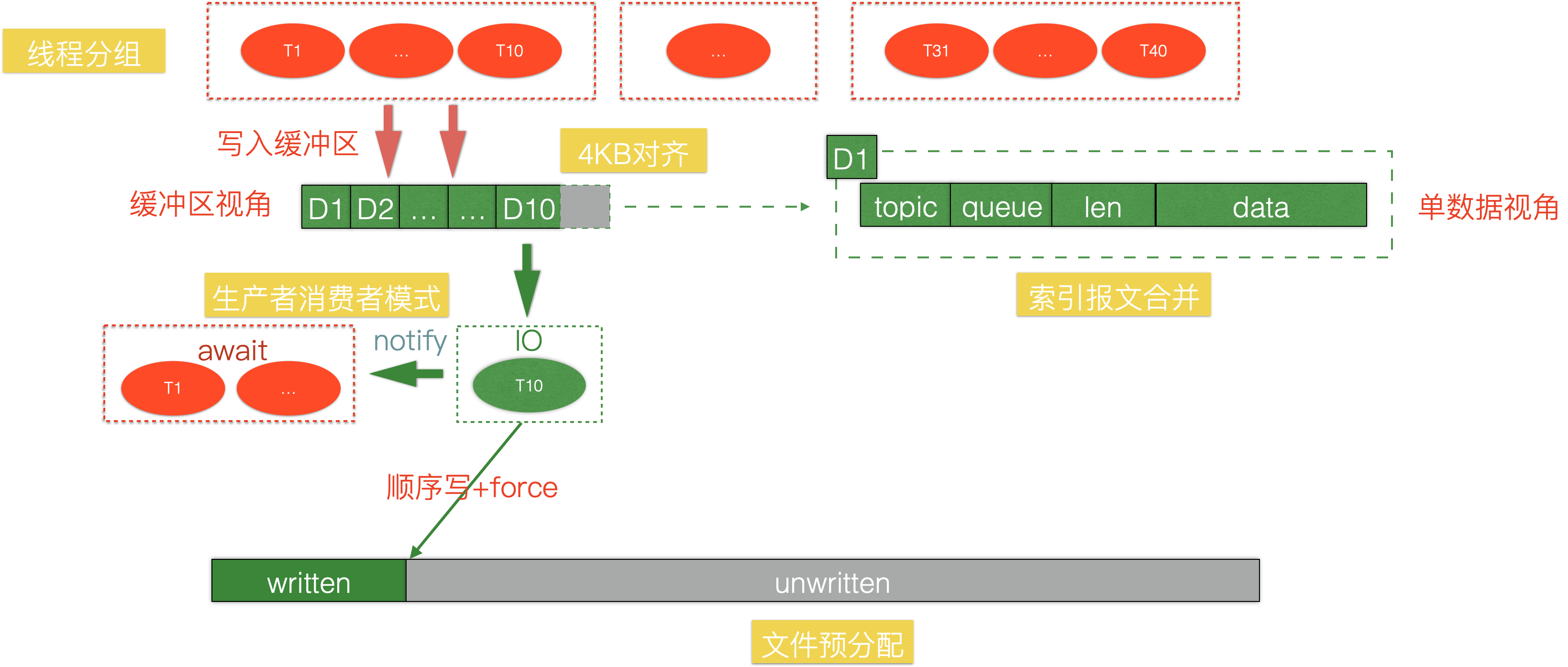
52 |
53 | 缓存架构是制胜点,SSD 的写入方案则是基本面,相信绝大多数前排的选手,都采用了上述的架构。性能评测阶段固定有 40 个线程,我将线程分为了 4 组,每组 10 个线程,进行 IO 合并。为什么是 4组在参赛历程中也介绍过,尊重 benchmark 的结果。1~9 号线程写入缓冲区完毕之后就 await 进入阻塞态,留下 10 号线程进行 IO,刷盘之后,notify 其他线程返回结果,如此往复,是一个非常经典的生产者消费者模式。
54 |
55 | 由于这次比赛,recover 阶段是不计入得分的,为了降低 force 的开销,我选择将索引的持久化和数据存在一起,这样避免了单独维护索引文件。在我的方案中,索引需要维护 topic,queue,length 三个信息,只需要定长的 5 个字节,和 100b~17Kb 的数据相比,微不足道,合并之后收益是很明显的。
56 |
57 | 选择使用 JUC 提供的 Lock + Condition 实现 wait/notify,一则是自己比较习惯这么控制并发,二则是复用其中一个 append 线程做刷盘的 IO 线程,相比其他并发方案的线程切换,要少一点。事实上,这次比赛中,CPU 是非常富余的,不会成为瓶颈,该模式的优势并没有完全发挥出来。
58 |
59 | 4kb 对齐是 SSD 经典的优化技巧,尽管并不是每一次性能挑战赛它都能排上用场,但请务必不要忘记尝试它。它对于人们的启发是使用 4kb 整数倍的写入缓冲聚合数据,整体刷盘,从而避免读写放大问题。此次比赛稍显特殊,由于赛题数据的随机分布特性,10 个线程聚合后的数据,往往不是 4KB 的整数倍,但这不妨碍我们做填充,看似多写入了一部分无意义的数据,但实际上会使得写入速度得到提升,尤其是在 force 情况下。
60 |
61 | 我曾和 @chender 交流过 4KB 填充这个话题,尝试分析出背后的原因,这里的结论不一定百分之百正确。4KB 是 SSD 的最小读写单元,这涉及硬件的操作,如果不填充,考虑以下执行流程,写入 9KB,force,写入 9 Kb,force,如果不做填充,相当于 force 了 9+3+3+9+3=27 kb,中间交叉的 3 kb,在 force 时会被重复计算,而填充过后,一定是 force 了 9+3+9+3=24 kb,整体 force 量降低。还有一个可能的依据是,没有填充的情况下,其实一定程度破坏了顺序写,写入实际写入了 12kb,但第二次写入并没有从 12kb 开始写入,而是从 9kb 写入。总之在 benchmark 下,4kb 对齐确实带来了 15s+ 的收益。
62 |
63 | 写入阶段还有一个致胜的优化,文件预分配。在 C 里面,有 fallocate,而 Java 并没有对应的 JNI 调用,不过可以取巧,利用 append 开始计分这个评测特性,在 SSD 上先使用字节 0 填充整个文件。在预分配过后,使用 force 也可以获得跟不使用 force 一样的写入速度,几乎打满了 320M/s 的 IO 速度。这个优化点,我在之前的博客中也分享过,不知道有没有其他选手看到并利用了起来,如果漏掉了这个优化,真的有点可惜,因为它足足可以让方案快 50s 左右。
64 |
65 | ### 缓存架构
66 |
67 | 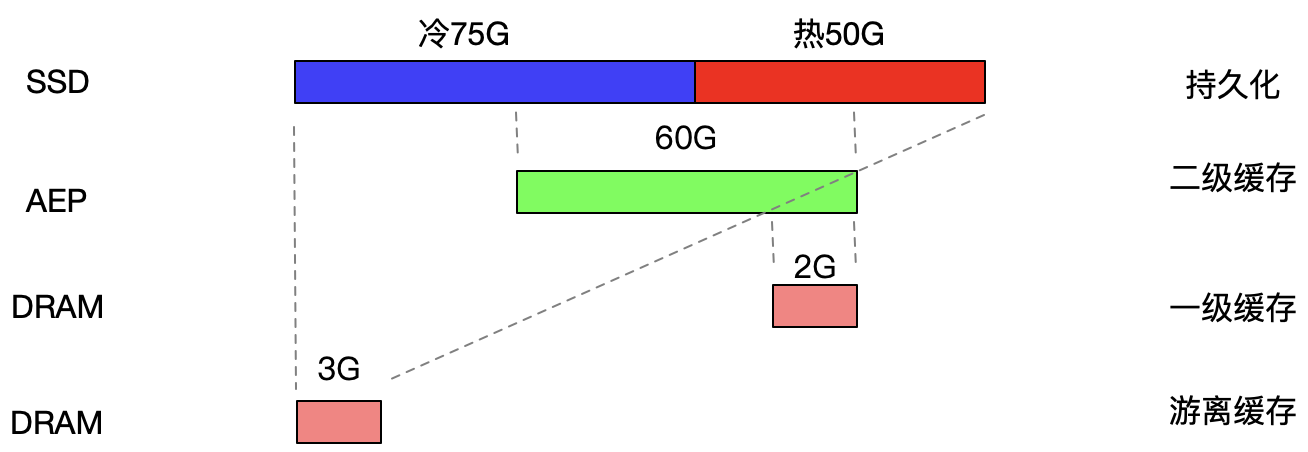
68 |
69 | 上图是全局缓存架构,整体方案的思路是多级缓存,采用滑动窗口的思想,AEP 永远缓存最新的 60G 数据,以确保热数据一定不会命中 SSD。同时,堆外的 2G DRAM 与 AEP 息息相关,这部分 DRAM 有两个作用,其一是作为 AEP 的写入缓冲,规避 AEP 写入放大的问题,其二是作为热数据的 DRAM 缓存,最热的一部分数据,可以保证直接命中 DRAM,规避 AEP 的访问。另外富余的 3G 的堆内内存,可以用于缓存由于滑动而导致被覆盖的数据,这部分 DRAM 同时配备引用计数,从而达到复用的效果。
70 |
71 | 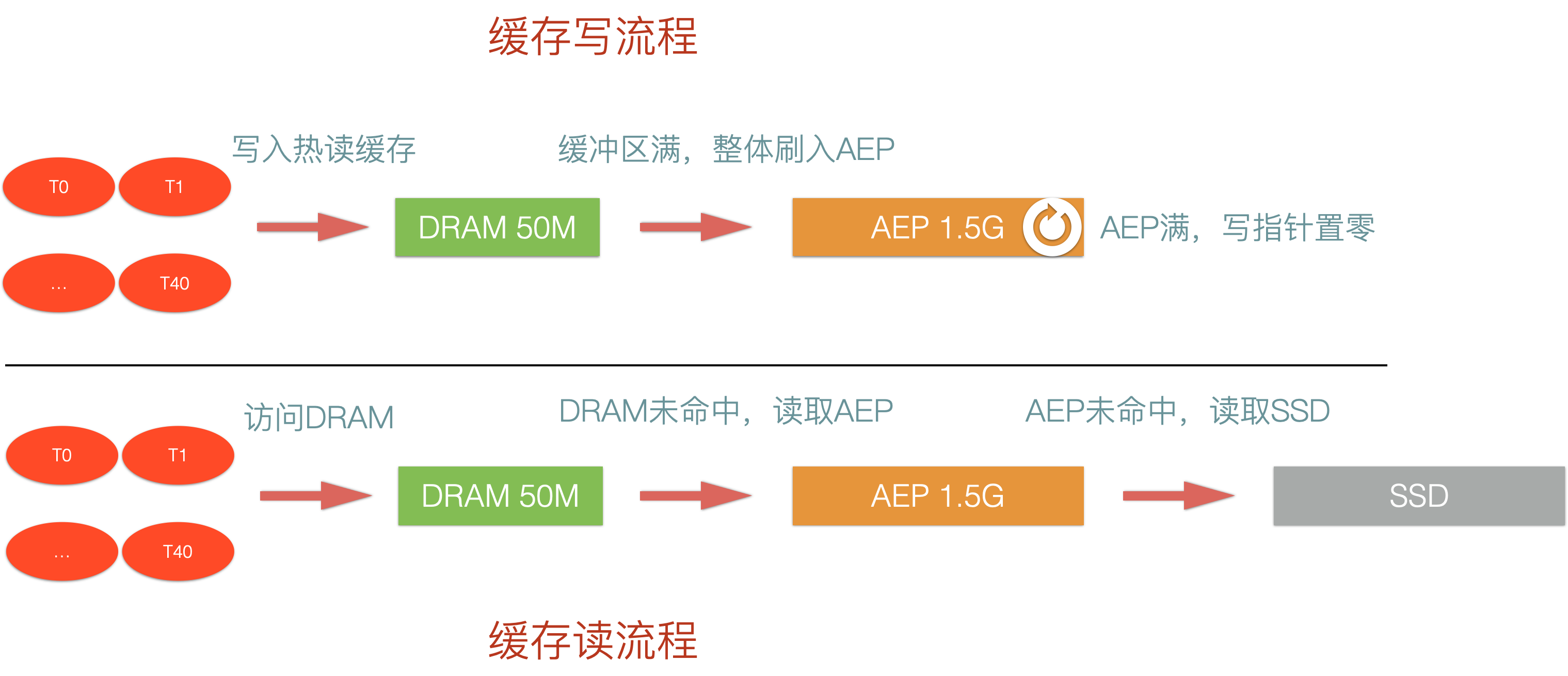
72 |
73 | 在具体实现中,我将 60G 平均分配给 40 个线程,每个线程持有 1.5G 的 AEP 可用缓存,50M 的 DRAM 缓存。可以发现,在我的方案中,SSD 写入方案和 AEP 是不同的,SSD 由于 force 的限制,采用了线程合并写入,而 AEP 本身就是可以丢失的缓存,所以不需要进行合并,每个线程维护自身的 AEP 和 DRAM 缓存即可。
74 |
75 | 每个线程除了配备 1.5G 的AEP,还分配了 50M 的 DRAM。这部分 DRAM 永远被优先写入,同样的,也会优先被读取,前提是命中了的话。50M 显然不是一个特别大的空间,所以在其充满时,将 50M 数据整体刷入 AEP 中,使用 ByteBuffer 作为 DRAM 的 manager,还可以利用其逻辑 clear 的操作,使得 DRAM 和 AEP 一样变成了一个 RingBuffer。这部分设计算是我方案中比较巧妙的一点。
76 |
77 | 当然,你永远可以相信 SSD,它是最后一道兜底逻辑,无论缓存设计的多么糟糕,保证最后能够命中 SSD 才能出分,所有人都清楚这一点。
78 |
79 | AEP 滑动窗口的实现其实并不复杂,详见文末的代码,我就不过多介绍了。
80 |
81 | ## 程序优化
82 |
83 | ### 预分配文件
84 |
85 | ```java
86 | public static void preAllocateFile(FileChannel fileChannel, long threadGroupPerhapsFileSize) {
87 | int bufferSize = 4 * 1024;
88 | ByteBuffer byteBuffer = ByteBuffer.allocateDirect(bufferSize);
89 | for (int i = 0; i < bufferSize; i++) {
90 | byteBuffer.put((byte)0);
91 | }
92 | byteBuffer.flip();
93 | long loopTimes = threadGroupPerhapsFileSize / bufferSize;
94 | for (long i = 0; i < loopTimes; i++) {
95 | try {
96 | fileChannel.write(byteBuffer);
97 | } catch (IOException e) {
98 | e.printStackTrace();
99 | }
100 | byteBuffer.flip();
101 | }
102 | try {
103 | fileChannel.force(true);
104 | fileChannel.position(0);
105 | } catch (IOException e) {
106 | e.printStackTrace();
107 | }
108 | }
109 | ```
110 |
111 | 简单实用的一个优化技巧,属于发现就可以很快实现的一个优化,但可能不容易发现。
112 |
113 | ### 4KB 对齐
114 |
115 | ```java
116 | private void force() {
117 | // 4kb 对齐
118 | int position = writeBuffer.position();
119 | int mod = position % Constants._4kb;
120 | if (mod != 0) {
121 | writeBuffer.position(position + Constants._4kb - mod);
122 | }
123 |
124 | writeBuffer.flip();
125 | fileChannel.write(writeBuffer);
126 | fileChannel.force(false);
127 | writeBuffer.clear();
128 | }
129 | ```
130 |
131 | 同上
132 |
133 | ### Unsafe
134 |
135 | 其实感觉用了 Unsafe 也没有多少提升,因为后期抖动太大了,但最优成绩的确是用 Unsafe 跑出来的,还是罗列出来,万一下次有用呢?详见代码实现 `io.openmessaging.NativeMemoryByteBuffer`。
136 |
137 | 推荐阅读:《[聊聊Unsafe的一些使用技巧](https://www.cnkirito.moe/unsafe/)》
138 |
139 | ### ArrayMap
140 |
141 | 可以使用数组重写一遍 Map,反正此次比赛调用到的 Map 的 API 也不多,换成数组实现之后,可以降低 HashMap 的 overheap,再优秀的实现,在数组面前也会变得黯淡无光,仅限于比赛。
142 |
143 | 详见代码实现 `io.openmessaging.ArrayMap`。
144 |
145 | ### 预初始化
146 |
147 | 充分利用 append 之前的耗时不计入总分这一特性。除了将文件提前分配出来之外,Runtime 需要 new 的对象、DRAM 空间等,都提前在构造函数中完成,蚊子腿也是肉,分数总是这么一点点抠出来的。
148 |
149 | ### 并发 getRange
150 |
151 | 读取阶段 fetchNum 最大为 100,串行访问的话,如果是命中缓存还好,要是 100 次 SSD 的 IO 都是串行,那可就太糟糕了。经过测试,仅当命中 SSD 时并发访问,和不区分内存、AEP、SSD 命中,均并发访问,效果差不多,但无论如何,并发 getRange 总是比串行好的。
152 |
153 | ### ThreadLocal 复用
154 |
155 | 性能挑战赛中务必要 check 的一个环节,便是在运行时有没有动态 new 对象,有没有动态 allocate 内存,出现这些可是大忌,建议全部用 ThreadLocal 缓存。这次的赛题中有很多关键性的数字,100 个 Topic、40 个线程,稍加不留意,可能把线程级别的一些操作,错当成 Topic 级别来设计,例如分配的写入缓冲也好,getRange 阶段复用的读取缓冲也好,都应该设计成线程级别的数据。ThreadLocal 第一是方便管理线程级别的资源,第二是因为线程相对于 Topic 是要少的,需要搞清楚,哪些资源是线程级别的,哪些是 Topic 级别的,避免资源浪费。
156 |
157 | ### 合并写入
158 |
159 | 详见源码`io.openmessaging.ThreadGroupManager#append`
160 |
161 | ### AEP 滑动窗口
162 |
163 | 详见源码`io.openmessaging.AepManager`
164 |
165 | ## 总结与反思
166 |
167 | 一言以蔽之,滑动窗口缓存是我整个方案的核心,虽然这个方案经过细节的优化,让我取得了内部赛第一的成绩,但开篇我也提到过,它并不是缓存命中率最高的方案,在这个方案中,第一个明显的问题便是,堆外 DRAM 和 AEP 可能缓存了同一批数据,实际上,DRAM 和 AEP 缓存不重叠的方案肯定会有更高的缓存命中率;第二个问题,也是问题一连带的问题,在该方案中,堆内的 DRAM 无法被很高效地利用起来,所以我在本文中,只是稍带提了一下堆内的设计,没有详细介绍引用技术的逻辑。
168 |
169 | 我在赛程后半段,也尝试设计过 DRAM 和 AEP 不重叠并且动态分配回收的方案,缓存利用率的确会更高,但这意味着我要放弃滑动窗口方案中所有的细节调优!业余时间搞比赛,实在是精力时间有限,最终选择了放弃。
170 |
171 | 这像极了项目开发的技术债,如果你选择忍受,你可以得到一个尚可使用的系统,但你知道,重构之后,它可以更好;当然你也可以选择重构,死着皮,连着肉。
172 |
173 | 重赏之下,必有卷夫。内部赛还好,外部赛实在是卷,每次这种性能挑战赛,打到最后都是拼了命的抠细节,你被别人卷到了,就很累,你想到了优化点,卷到了别人,就很爽,这也太真实了。
174 |
175 | 最后说说收获,这次比赛,让我对 AEP 这个新概念有了比较深的理解,对存储设计、文件 IO 也有了更深的体会。这类比赛偶尔打打还是挺有意思的,一方面写项目代码容易疲乏,二是写出这么一个小的工程,还是挺有成就感的一件事。如果有下一场,也欢迎读者们一起来卷。
176 |
177 | ## 源码
178 |
179 | https://github.com/lexburner/aliyun-cloudnative-race-mq-2021.git
--------------------------------------------------------------------------------
/src/main/java/io/openmessaging/AepBenchmark.java:
--------------------------------------------------------------------------------
1 | package io.openmessaging;
2 |
3 | import java.io.File;
4 | import java.io.IOException;
5 | import java.io.RandomAccessFile;
6 | import java.nio.ByteBuffer;
7 | import java.nio.channels.FileChannel;
8 | import java.nio.file.StandardOpenOption;
9 | import java.util.concurrent.CountDownLatch;
10 |
11 | /**
12 | * @author jingfeng.xjf
13 | * @date 2021/9/18
14 | */
15 | public class AepBenchmark {
16 |
17 | public void testAepWriteIops()
18 | throws Exception {
19 | int threadNum = 40;
20 | String workDir = "/pmem";
21 | long totalSize = 125L * 1024 * 1024 * 1024;
22 | int bufferSize = 100 * 1024 * 1024;
23 |
24 | CountDownLatch countDownLatch = new CountDownLatch(threadNum);
25 | long start = System.currentTimeMillis();
26 | for (int i = 0; i < threadNum; i++) {
27 | final int threadNo = i;
28 | new Thread(() -> {
29 | try {
30 | File file = new File(workDir + "/daofeng_" + threadNo);
31 | RandomAccessFile rw = new RandomAccessFile(file, "rw");
32 | FileChannel fileChannel = rw.getChannel();
33 | ByteBuffer byteBuffer = ByteBuffer.allocate(bufferSize);
34 | for (int j = 0; j < bufferSize; j++) {
35 | byteBuffer.put((byte)1);
36 | }
37 | long loopTime = totalSize / bufferSize / threadNum;
38 | long maxFileLength = 60L * 1024 * 1024 * 1024 / 40 - 1024 * 1024;
39 | long position = 0;
40 | for (int t = 0; t < loopTime; t++) {
41 | byteBuffer.flip();
42 | fileChannel.write(byteBuffer, position % maxFileLength);
43 | position += bufferSize;
44 | }
45 | countDownLatch.countDown();
46 | } catch (Exception e) {
47 | e.printStackTrace();
48 | }
49 | }).start();
50 | }
51 | countDownLatch.await();
52 | System.out.println(
53 | "threadNum " + threadNum + " write " + totalSize + " bufferSize " + bufferSize + " cost " + (
54 | System.currentTimeMillis()
55 | - start) + " ms");
56 | }
57 |
58 | public void testRead2() throws Exception {
59 | int bufferSize = 200 * 1024 * 1024;
60 | File file = new File("/essd");
61 | FileChannel fileChannel = new RandomAccessFile(file, "rw").getChannel();
62 | ByteBuffer byteBuffer = ByteBuffer.allocate(bufferSize);
63 | fileChannel.read(byteBuffer);
64 | }
65 |
66 | public void testRead3() throws Exception {
67 | File file = new File("/essd");
68 | FileChannel fileChannel = new RandomAccessFile(file, "rw").getChannel();
69 | ByteBuffer byteBuffer = ByteBuffer.allocate(50 * 1024 * 1024);
70 |
71 | ByteBuffer directByteBuffer = ByteBuffer.allocateDirect(4 * 1024);
72 | for (int i = 0; i < 12800; i++) {
73 | directByteBuffer.clear();
74 | fileChannel.read(directByteBuffer, i * 4 * 1024);
75 | directByteBuffer.flip();
76 | byteBuffer.put(directByteBuffer);
77 | }
78 | }
79 |
80 | public void testAepReadIops()
81 | throws Exception {
82 | int threadNum = 40;
83 | String workDir = "/pmem";
84 | long totalSize = 125L * 1024 * 1024 * 1024;
85 | int bufferSize = 13 * 1024;
86 |
87 | CountDownLatch countDownLatch = new CountDownLatch(threadNum);
88 | long start = System.currentTimeMillis();
89 | for (int i = 0; i < threadNum; i++) {
90 | final int threadNo = i;
91 | new Thread(() -> {
92 | try {
93 | File file = new File(workDir + "/daofeng_" + threadNo);
94 | RandomAccessFile rw = new RandomAccessFile(file, "rw");
95 | FileChannel fileChannel = rw.getChannel();
96 | ByteBuffer byteBuffer = ByteBuffer.allocate(bufferSize);
97 | long loopTime = totalSize / bufferSize / threadNum;
98 | long maxFileLength = 60L * 1024 * 1024 * 1024 / 40 - 1024 * 1024 * 2;
99 | long position = 0;
100 | for (int t = 0; t < loopTime; t++) {
101 | byteBuffer.clear();
102 | fileChannel.read(byteBuffer, position % maxFileLength);
103 | position += bufferSize;
104 | }
105 | countDownLatch.countDown();
106 | } catch (Exception e) {
107 | e.printStackTrace();
108 | }
109 | }).start();
110 | }
111 | countDownLatch.await();
112 | System.out.println(
113 | "threadNum " + threadNum + " read " + totalSize + " bufferSize " + bufferSize + " cost " + (
114 | System.currentTimeMillis()
115 | - start) + " ms");
116 | }
117 |
118 | public void testWrite(String workDir, long totalSize, final int threadNum, final int bufferSize,
119 | final int testRound)
120 | throws Exception {
121 | CountDownLatch countDownLatch = new CountDownLatch(threadNum);
122 | long start = System.currentTimeMillis();
123 | for (int i = 0; i < threadNum; i++) {
124 | final int threadNo = i;
125 | new Thread(() -> {
126 | try {
127 | File file = new File(workDir + "/" + testRound + "_" + threadNo);
128 | RandomAccessFile rw = new RandomAccessFile(file, "rw");
129 | FileChannel fileChannel = rw.getChannel();
130 | ByteBuffer byteBuffer = ByteBuffer.allocate(bufferSize);
131 | for (int j = 0; j < bufferSize; j++) {
132 | byteBuffer.put((byte)1);
133 | }
134 | long loopTime = totalSize / bufferSize / threadNum;
135 | for (int t = 0; t < loopTime; t++) {
136 | byteBuffer.flip();
137 | fileChannel.write(byteBuffer);
138 | }
139 | countDownLatch.countDown();
140 | } catch (Exception e) {
141 | e.printStackTrace();
142 | }
143 | }).start();
144 | }
145 | countDownLatch.await();
146 | System.out.println(
147 | "threadNum " + threadNum + " write " + totalSize + " bufferSize " + bufferSize + " cost " + (
148 | System.currentTimeMillis()
149 | - start) + " ms");
150 |
151 | }
152 |
153 | public void testWriteEssd() throws Exception {
154 | CountDownLatch countDownLatch = new CountDownLatch(40);
155 |
156 | FileChannel[] fileChannels = new FileChannel[40];
157 | for (int i = 0; i < 40; i++) {
158 | String dataFilePath = "/essd/" + i;
159 | File dataFile = new File(dataFilePath);
160 | dataFile.createNewFile();
161 | fileChannels[i] = FileChannel.open(dataFile.toPath(), StandardOpenOption.READ,
162 | StandardOpenOption.WRITE);
163 | }
164 |
165 | long start = System.currentTimeMillis();
166 | for (int i = 0; i < 40; i++) {
167 | final int threadNo = i;
168 | new Thread(() -> {
169 | ByteBuffer buffer = ByteBuffer.allocateDirect(4 * 1024);
170 | for (int j = 0; j < 4 * 1024; j++) {
171 | buffer.put((byte)1);
172 | }
173 | buffer.flip();
174 |
175 | for (int t = 0; t < 384 * 1024; t++) {
176 | try {
177 | fileChannels[threadNo].write(buffer);
178 | buffer.flip();
179 | } catch (IOException e) {
180 | e.printStackTrace();
181 | }
182 | }
183 | countDownLatch.countDown();
184 | }).start();
185 | }
186 | countDownLatch.await();
187 | System.out.println("ssd write 40 * 384 * 4 * 1024 * 1024 cost " + (System.currentTimeMillis() - start) + " ms");
188 | }
189 |
190 | public void testWriteAep() throws Exception {
191 | CountDownLatch countDownLatch = new CountDownLatch(40);
192 |
193 | FileChannel[] fileChannels = new FileChannel[40];
194 | for (int i = 0; i < 40; i++) {
195 | String dataFilePath = "/pmem/" + i;
196 | File dataFile = new File(dataFilePath);
197 | dataFile.createNewFile();
198 | fileChannels[i] = FileChannel.open(dataFile.toPath(), StandardOpenOption.READ,
199 | StandardOpenOption.WRITE);
200 | }
201 |
202 | long start = System.currentTimeMillis();
203 | for (int i = 0; i < 40; i++) {
204 | final int threadNo = i;
205 | new Thread(() -> {
206 | ByteBuffer buffer = ByteBuffer.allocateDirect(4 * 1024);
207 | for (int j = 0; j < 4 * 1024; j++) {
208 | buffer.put((byte)1);
209 | }
210 | buffer.flip();
211 |
212 | for (int t = 0; t < 384 * 1024; t++) {
213 | try {
214 | fileChannels[threadNo].write(buffer);
215 | buffer.flip();
216 | } catch (IOException e) {
217 | e.printStackTrace();
218 | }
219 | }
220 | countDownLatch.countDown();
221 | }).start();
222 | }
223 | countDownLatch.await();
224 | System.out.println("aep write 40 * 384 * 4 * 1024 * 1024 cost " + (System.currentTimeMillis() - start) + " ms");
225 | }
226 |
227 | public void testWriteDram(ByteBuffer[] byteBuffers) throws InterruptedException {
228 | CountDownLatch countDownLatch = new CountDownLatch(40);
229 | long start = System.currentTimeMillis();
230 | for (int i = 0; i < 40; i++) {
231 | final int threadNo = i;
232 | new Thread(() -> {
233 | ByteBuffer buffer = byteBuffers[threadNo];
234 | for (int t = 0; t < 24; t++) {
235 | buffer.clear();
236 | for (int j = 0; j < 64 * 1024 * 1024; j++) {
237 | buffer.put((byte)1);
238 | }
239 | }
240 | countDownLatch.countDown();
241 | }).start();
242 | }
243 | countDownLatch.await();
244 | System.out.println("dram write 40 * 24 * 64 * 1024 * 1024 cost " + (System.currentTimeMillis() - start) + " ms");
245 | }
246 |
247 | public void test() {
248 | AepBenchmark aepBenchmark = new AepBenchmark();
249 | ByteBuffer[] byteBuffers = new ByteBuffer[40];
250 | for (int i = 0; i < 40; i++) {
251 | byteBuffers[i] = ByteBuffer.allocate(64 * 1024 * 1024);
252 | }
253 | try {
254 | long start = System.currentTimeMillis();
255 | CountDownLatch countDownLatch = new CountDownLatch(3);
256 | new Thread(() -> {
257 | try {
258 | aepBenchmark.testWriteAep();
259 | } catch (Exception e) {
260 | e.printStackTrace();
261 | }
262 | countDownLatch.countDown();
263 | }).start();
264 |
265 | new Thread(() -> {
266 | try {
267 | aepBenchmark.testWriteEssd();
268 | } catch (Exception e) {
269 | e.printStackTrace();
270 | }
271 | countDownLatch.countDown();
272 | }).start();
273 |
274 | new Thread(() -> {
275 | try {
276 | aepBenchmark.testWriteDram(byteBuffers);
277 | } catch (Exception e) {
278 | e.printStackTrace();
279 | }
280 | countDownLatch.countDown();
281 | }).start();
282 |
283 | countDownLatch.await();
284 | System.out.println("=== total cost: " + (System.currentTimeMillis() - start) + " ms");
285 |
286 | } catch (Exception e) {
287 | e.printStackTrace();
288 | }
289 | System.exit(0);
290 | }
291 |
292 | public static void main(String[] args) throws Exception {
293 |
294 | }
295 |
296 | }
297 |
--------------------------------------------------------------------------------
/src/main/java/io/openmessaging/Main.java:
--------------------------------------------------------------------------------
1 | package io.openmessaging;
2 |
3 | import java.io.File;
4 | import java.io.IOException;
5 | import java.io.RandomAccessFile;
6 | import java.lang.reflect.Field;
7 | import java.nio.ByteBuffer;
8 | import java.nio.MappedByteBuffer;
9 | import java.nio.channels.FileChannel;
10 | import java.nio.channels.FileChannel.MapMode;
11 | import java.nio.file.StandardOpenOption;
12 | import java.util.ArrayList;
13 | import java.util.List;
14 | import java.util.concurrent.ConcurrentLinkedDeque;
15 | import java.util.concurrent.CountDownLatch;
16 | import java.util.concurrent.Semaphore;
17 | import java.util.concurrent.ThreadLocalRandom;
18 | import java.util.concurrent.TimeUnit;
19 | import java.util.concurrent.locks.Condition;
20 | import java.util.concurrent.locks.Lock;
21 | import java.util.concurrent.locks.ReentrantLock;
22 |
23 | import sun.misc.VM;
24 | import sun.nio.ch.DirectBuffer;
25 |
26 | /**
27 | * @author jingfeng.xjf
28 | * @date 2021/9/15
29 | */
30 | public class Main {
31 |
32 | public static void main(String[] args) throws Exception {
33 | testMmap();
34 | }
35 |
36 | public static void testMmap() throws Exception {
37 | File file = new File("/Users/xujingfeng/test.txt");
38 | file.createNewFile();
39 | FileChannel ch = new RandomAccessFile(file, "rw").getChannel();
40 | MappedByteBuffer map = ch.map(MapMode.READ_WRITE, 0, 1L * 1024);
41 | System.out.println(map instanceof DirectBuffer);
42 | }
43 |
44 | public static void testCLQ() {
45 | ConcurrentLinkedDeque clq = new ConcurrentLinkedDeque<>();
46 | clq.offer(1);
47 | clq.offer(2);
48 | clq.offer(3);
49 | clq.offer(4);
50 | System.out.println(clq.poll());
51 | System.out.println(clq.poll());
52 | System.out.println(clq.poll());
53 | System.out.println(clq.poll());
54 | System.out.println(clq.poll());
55 |
56 | }
57 |
58 | public static void testFill4kb(int position) {
59 | int ret = position;
60 | int mod = position % Constants._4kb;
61 | if (mod != 0) {
62 | ret = position + Constants._4kb - mod;
63 | }
64 | System.out.println(ret);
65 | }
66 |
67 | private static void test9() {
68 | ByteBuffer byteBuffer = ByteBuffer.allocateDirect(2);
69 | byteBuffer.put((byte)-1);
70 | byteBuffer.put((byte)-1);
71 | byteBuffer.flip();
72 | System.out.println(byteBuffer.getShort());
73 | byteBuffer.flip();
74 | System.out.println(Short.reverseBytes(byteBuffer.getShort()));
75 | }
76 |
77 | private static void testSemaphore() throws InterruptedException {
78 | Semaphore semaphore = new Semaphore(0);
79 | new Thread(() -> {
80 | try {
81 | Thread.sleep(3000);
82 | } catch (InterruptedException e) {
83 | e.printStackTrace();
84 | }
85 | semaphore.release(1);
86 | }).start();
87 | new Thread(() -> {
88 | try {
89 | Thread.sleep(6000);
90 | } catch (InterruptedException e) {
91 | e.printStackTrace();
92 | }
93 | semaphore.release(1);
94 | }).start();
95 | semaphore.acquire();
96 | System.out.println("====1");
97 | semaphore.acquire();
98 | System.out.println("====2");
99 | }
100 |
101 | private static void fillSsdFile(long threadGroupPerhapsFileSize) throws Exception {
102 | File file = new File("/Users/xujingfeng/test2.data");
103 | FileChannel fileChannel = new RandomAccessFile(file, "rw").getChannel();
104 | ByteBuffer byteBuffer = ByteBuffer.allocateDirect(4 * 1024);
105 | for (int i = 0; i < 1024; i++) {
106 | byteBuffer.putInt(0);
107 | }
108 | byteBuffer.flip();
109 | long loopTimes = threadGroupPerhapsFileSize / (4 * 1024);
110 | for (long i = 0; i < loopTimes; i++) {
111 | fileChannel.write(byteBuffer);
112 | byteBuffer.flip();
113 | }
114 | }
115 |
116 | public static void modifyMemory() throws Exception {
117 | Object bits = Util.unsafe.allocateInstance(Class.forName("java.nio.Bits"));
118 | Field maxMemory = bits.getClass().getDeclaredField("maxMemory");
119 | maxMemory.setAccessible(true);
120 | maxMemory.set(bits, 8L * 1024 * 1024 * 1024);
121 | }
122 |
123 | public static void allocateMemory2() {
124 | long address = Util.unsafe.allocateMemory(2);
125 | System.out.println(Util.unsafe.getByte(address));
126 | System.out.println(Util.unsafe.getByte(address + 1));
127 | System.out.println(Util.unsafe.getByte(address + 444));
128 | }
129 |
130 | public static void allocateMemory() throws NoSuchFieldException, IllegalAccessException {
131 | Field directMemoryField = VM.class.getDeclaredField("directMemory");
132 | directMemoryField.setAccessible(true);
133 | directMemoryField.set(new VM(), 80 * 1024 * 1024);
134 | ByteBuffer byteBuffer = ByteBuffer.allocateDirect(50 * 1024 * 1024);
135 | }
136 |
137 | public static void testUnsafe3() throws ClassNotFoundException, InstantiationException, IllegalAccessException {
138 | Object o = Util.unsafe.allocateInstance(Class.forName("moe.cnkirito.TestProtect"));
139 | Object o1 = Class.forName("moe.cnkirito.TestProtect").newInstance();
140 | }
141 |
142 | // 测试 unsafe allocate 是堆外还是堆内内存
143 |
144 | public static void testUnsafe2() {
145 | ByteBuffer directBuffer = ByteBuffer.allocateDirect(4 * 4);
146 | long directBufferAddress = ((DirectBuffer)directBuffer).address();
147 | Util.unsafe.putShort(directBufferAddress, (short)1);
148 | System.out.println(Util.unsafe.getShort(directBufferAddress));
149 | directBuffer.position(0);
150 | directBuffer.limit(16);
151 | System.out.println(Short.reverseBytes(directBuffer.getShort()));
152 | }
153 |
154 | static void putIntB(long a, int x) {
155 | Util.unsafe.putByte(a, int3(x));
156 | Util.unsafe.putByte(a + 1, int2(x));
157 | Util.unsafe.putByte(a + 2, int1(x));
158 | Util.unsafe.putByte(a + 3, int0(x));
159 | }
160 |
161 | static void putIntL(long a, int x) {
162 | Util.unsafe.putByte(a, int0(x));
163 | Util.unsafe.putByte(a + 1, int1(x));
164 | Util.unsafe.putByte(a + 2, int2(x));
165 | Util.unsafe.putByte(a + 3, int3(x));
166 | }
167 |
168 | private static byte int3(int x) {return (byte)(x >> 24);}
169 |
170 | private static byte int2(int x) {return (byte)(x >> 16);}
171 |
172 | private static byte int1(int x) {return (byte)(x >> 8);}
173 |
174 | private static byte int0(int x) {return (byte)(x);}
175 |
176 | public static void testUnsafe1() {
177 | ByteBuffer directBuffer = ByteBuffer.allocateDirect(4 * 4);
178 | ByteBuffer heapBuffer = ByteBuffer.allocate(4 * 4);
179 | heapBuffer.putInt(1);
180 | heapBuffer.putInt(2);
181 | heapBuffer.putInt(3);
182 | heapBuffer.putInt(4);
183 | long directBufferAddress = ((DirectBuffer)directBuffer).address();
184 | Util.unsafe.copyMemory(heapBuffer.array(), 16, null, directBufferAddress, 16);
185 | directBuffer.position(0);
186 | directBuffer.limit(16);
187 | System.out.println(directBuffer.getInt());
188 | System.out.println(directBuffer.getInt());
189 | System.out.println(directBuffer.getInt());
190 | System.out.println(directBuffer.getInt());
191 | }
192 |
193 | public static void testThreadLocalRandom() {
194 | int total = 100;
195 | int trueTime = 0;
196 | for (int i = 0; i < total; i++) {
197 | if (ThreadLocalRandom.current().nextBoolean()) {
198 | trueTime++;
199 | }
200 | }
201 | System.out.println(trueTime);
202 | }
203 |
204 | public void testSignalAll() {
205 | Main main = new Main();
206 | for (int i = 0; i < 40; i++) {
207 | final int n = i;
208 | new Thread(() -> {
209 | try {
210 | if (n == 39) {
211 | Thread.sleep(3000);
212 | }
213 | main.initThread();
214 | } catch (InterruptedException e) {
215 | e.printStackTrace();
216 | }
217 | }).start();
218 | }
219 | }
220 |
221 | Lock lock = new ReentrantLock();
222 | Condition condition = lock.newCondition();
223 | int count = 0;
224 |
225 | public void initThread() throws InterruptedException {
226 | lock.lock();
227 | try {
228 | count++;
229 | if (count != 40) {
230 | boolean await = condition.await(10000, TimeUnit.SECONDS);
231 | if (await) {
232 | System.out.printf("%s is notified\n", Thread.currentThread().getName());
233 | }
234 | } else {
235 | condition.signalAll();
236 | }
237 | } finally {
238 | lock.unlock();
239 | }
240 | }
241 |
242 | public static void testXms() throws InterruptedException {
243 | System.out.println(
244 | Runtime.getRuntime().totalMemory() / 1024 / 1024 + " " + Runtime.getRuntime().freeMemory() / 1024 / 1024);
245 | List byteBuffers = new ArrayList<>();
246 | for (int i = 0; i < 9; i++) {
247 | byteBuffers.add(ByteBuffer.allocate(10 * 1024 * 1024));
248 | Thread.sleep(1000);
249 | System.out.println(Runtime.getRuntime().totalMemory() / 1024 / 1024 + " "
250 | + Runtime.getRuntime().freeMemory() / 1024 / 1024);
251 | }
252 | Thread.sleep(Integer.MAX_VALUE);
253 | }
254 |
255 | public static void test8() {
256 | ByteBuffer buffer = ByteBuffer.allocate(12);
257 | System.out.println(buffer.capacity());
258 | buffer.putInt(1);
259 | buffer.putInt(1);
260 | buffer.putInt(1);
261 | System.out.println(buffer.capacity());
262 | buffer.flip();
263 | System.out.println(buffer.capacity());
264 |
265 | }
266 |
267 | public static void test7() throws InterruptedException {
268 | new Thread(() -> {
269 | try {
270 | Thread.sleep(5000);
271 | } catch (InterruptedException e) {}
272 |
273 | System.exit(0);
274 | }).start();
275 |
276 | new CountDownLatch(1).await();
277 | }
278 |
279 | public static void test6() {
280 | ByteBuffer data = ByteBuffer.allocate(4);
281 |
282 | ByteBuffer buffer = ByteBuffer.allocate(12);
283 | buffer.putInt(1);
284 | buffer.putInt(2);
285 | buffer.putInt(3);
286 |
287 | System.out.println(buffer.position());
288 |
289 | ByteBuffer duplicate = buffer.duplicate();
290 | duplicate.position(4);
291 | duplicate.limit(duplicate.position() + data.limit());
292 |
293 | data.put(duplicate);
294 | data.flip();
295 |
296 | System.out.println(data.getInt());
297 | System.out.println(buffer.position());
298 | }
299 |
300 | public static void test5() {
301 | ByteBuffer data = ByteBuffer.allocate(4);
302 | data.putInt(2);
303 | data.flip();
304 | System.out.println(data.remaining());
305 |
306 | ByteBuffer buffer = ByteBuffer.allocate(12);
307 |
308 | buffer.put(data);
309 |
310 | System.out.println(buffer.capacity());
311 | System.out.println(buffer.position());
312 | System.out.println(buffer.remaining());
313 | System.out.println(buffer.hasRemaining());
314 | }
315 |
316 | public static void test4() throws IOException {
317 | File file = new File("/pmem/testFile");
318 | file.createNewFile();
319 | FileChannel fileChannel = FileChannel.open(file.toPath(), StandardOpenOption.READ,
320 | StandardOpenOption.WRITE);
321 | ByteBuffer buffer = ByteBuffer.allocate(4);
322 | buffer.putInt(1);
323 | buffer.flip();
324 | int write = fileChannel.write(buffer, 4);
325 | System.out.println(write);
326 |
327 | }
328 |
329 | public static void test3() {
330 | System.out.println(Byte.MAX_VALUE);
331 | System.out.println(Short.MAX_VALUE);
332 | System.out.println(Integer.MAX_VALUE);
333 | byte a = 99;
334 | int b = a;
335 | System.out.println(b);
336 | }
337 |
338 | public static void test2() {
339 | int[] nums = new int[10];
340 | for (int i = 10; i < 50; i++) {
341 | nums[i % 10]++;
342 | }
343 | for (int num : nums) {
344 | System.out.println(num);
345 | }
346 | }
347 |
348 | public void test1() throws InterruptedException {
349 | Lock lock = new ReentrantLock();
350 | Condition condition = lock.newCondition();
351 |
352 | new Thread(() -> {
353 | lock.lock();
354 | try {
355 | boolean await = condition.await(1, TimeUnit.SECONDS);
356 | System.out.println(await);
357 | } catch (InterruptedException e) {
358 | e.printStackTrace();
359 | } finally {
360 | lock.unlock();
361 | }
362 | }).start();
363 |
364 | Thread.sleep(500);
365 | lock.lock();
366 | try {
367 | condition.signalAll();
368 | } catch (Exception e) {
369 | e.printStackTrace();
370 | } finally {
371 | lock.unlock();
372 | }
373 | }
374 |
375 | }
376 |
--------------------------------------------------------------------------------