├── README-zh.md
├── README.md
├── .gitignore
├── project_test_script.py
├── datasets_prepare.py
├── dataloader.py
├── net_model.py
└── LICENSE
/README-zh.md:
--------------------------------------------------------------------------------
1 | # DeHaze_MSCNN
2 | Single Image Dehazing via Multi-scale Convolutional Neural Networks论文去雾代码
3 |
4 | - [English Version](https://github.com/raven-dehaze-work/MSCNN_Keras/blob/master/README.md)
5 | - [Chinese Version](https://github.com/raven-dehaze-work/MSCNN_Keras/blob/master/README-zh.md)
6 |
7 |
8 | ### 1. 网络结构
9 |
10 | 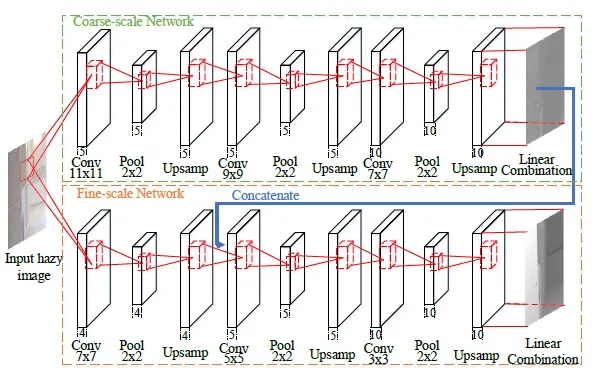
11 |
12 | ## 2. 去雾算法去雾步骤
13 |
14 | 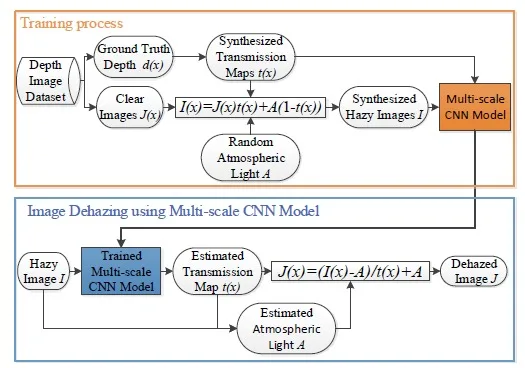
15 |
16 | ### 3. 其他去雾算法
17 |
18 | 1. [DCP去雾Matlab实现](https://github.com/raven-dehaze-work/DCP-Dehaze)
19 | 2. [DeblurGanToDehaze](https://github.com/raven-dehaze-work/DeblurGanToDehaze)
20 | 3. [MSCNN去雾Keras实现](https://github.com/raven-dehaze-work/MSCNN_Keras)
21 | 4. [MSCNN去雾TensorFlow实现](https://github.com/dishank-b/MSCNN-Dehazing-Tensorflow)
22 | 5. [Dehaze-GAN TensorFlow实现](https://github.com/raven-dehaze-work/Dehaze-GAN)
23 |
24 |
25 |
26 | 对应博文:https://www.ravenxrz.ink/archives/summary-3-paper-reproduction-2-mscnn-defogging-1.html
--------------------------------------------------------------------------------
/README.md:
--------------------------------------------------------------------------------
1 | # DeHaze_MSCNN
2 | The implemention code of Single Image Dehazing via Multi-scale Convolutional Neural Networks .
3 |
4 | - [English Version](https://github.com/raven-dehaze-work/MSCNN_Keras/blob/master/README.md)
5 | - [Chinese Version](https://github.com/raven-dehaze-work/MSCNN_Keras/blob/master/README-zh.md)
6 |
7 | ### 1. Network structure
8 |
9 | 
10 |
11 | ## 2. Main steps of the proposed single-image dehazing algorithm
12 |
13 | 
14 |
15 | ### 3. Other defogging algorithms
16 |
17 | 1. [DCP去雾Matlab实现](https://github.com/raven-dehaze-work/DCP-Dehaze)
18 | 2. [DeblurGanToDehaze](https://github.com/raven-dehaze-work/DeblurGanToDehaze)
19 | 3. [MSCNN去雾Keras实现](https://github.com/raven-dehaze-work/MSCNN_Keras)
20 | 4. [MSCNN去雾TensorFlow实现](https://github.com/dishank-b/MSCNN-Dehazing-Tensorflow)
21 | 5. [Dehaze-GAN TensorFlow实现](https://github.com/raven-dehaze-work/Dehaze-GAN)
22 |
23 | Corresponding blog post:https://www.ravenxrz.ink/archives/summary-3-paper-reproduction-2-mscnn-defogging-1.html
24 |
--------------------------------------------------------------------------------
/.gitignore:
--------------------------------------------------------------------------------
1 | # Byte-compiled / optimized / DLL files
2 | __pycache__/
3 | *.py[cod]
4 | *$py.class
5 |
6 | # C extensions
7 | *.so
8 |
9 | # Distribution / packaging
10 | .Python
11 | build/
12 | develop-eggs/
13 | dist/
14 | downloads/
15 | eggs/
16 | .eggs/
17 | lib/
18 | lib64/
19 | parts/
20 | sdist/
21 | var/
22 | wheels/
23 | *.egg-info/
24 | .installed.cfg
25 | *.egg
26 | MANIFEST
27 |
28 | # PyInstaller
29 | # Usually these files are written by a python script from a template
30 | # before PyInstaller builds the exe, so as to inject date/other infos into it.
31 | *.manifest
32 | *.spec
33 |
34 | # Installer logs
35 | pip-log.txt
36 | pip-delete-this-directory.txt
37 |
38 | # Unit test / coverage reports
39 | htmlcov/
40 | .tox/
41 | .coverage
42 | .coverage.*
43 | .cache
44 | nosetests.xml
45 | coverage.xml
46 | *.cover
47 | .hypothesis/
48 | .pytest_cache/
49 |
50 | # Translations
51 | *.mo
52 | *.pot
53 |
54 | # Django stuff:
55 | *.log
56 | local_settings.py
57 | db.sqlite3
58 |
59 | # Flask stuff:
60 | instance/
61 | .webassets-cache
62 |
63 | # Scrapy stuff:
64 | .scrapy
65 |
66 | # Sphinx documentation
67 | docs/_build/
68 |
69 | # PyBuilder
70 | target/
71 |
72 | # Jupyter Notebook
73 | .ipynb_checkpoints
74 |
75 | # pyenv
76 | .python-version
77 |
78 | # celery beat schedule file
79 | celerybeat-schedule
80 |
81 | # SageMath parsed files
82 | *.sage.py
83 |
84 | # Environments
85 | .env
86 | .venv
87 | env/
88 | venv/
89 | ENV/
90 | env.bak/
91 | venv.bak/
92 |
93 | # Spyder project settings
94 | .spyderproject
95 | .spyproject
96 |
97 | # Rope project settings
98 | .ropeproject
99 |
100 | # mkdocs documentation
101 | /site
102 |
103 | # mypy
104 | .mypy_cache/
105 |
106 | # user define
107 | .idea
108 | test.py
109 | datasets/
110 | dehazed_result/
111 | reside_datasets/
112 | model_save - 副本/
113 |
--------------------------------------------------------------------------------
/project_test_script.py:
--------------------------------------------------------------------------------
1 | """
2 | 辅助脚本,用于测试一些编程中的功能,不重要
3 | """
4 |
5 | from random import choice
6 | import glob
7 | import os
8 | import numpy as np
9 |
10 |
11 | img_dir = r'D:\Projects\PythonProjects\MSCNN_Keras\train_datasets_img'
12 | npy_dir = r'D:\Projects\PythonProjects\MSCNN_Keras\train_datasets_npy'
13 |
14 | # 读取clear目录下的所有文件名
15 | clear_file_names = glob.glob(os.path.join(img_dir,'clear/*'))
16 | # 去除所有后缀
17 | clear_file_names = list(map(lambda x:os.path.splitext(
18 | os.path.basename(x)
19 | )[0],clear_file_names))
20 |
21 | # 循环去除多余文件
22 | for file_name in clear_file_names:
23 | # 寻找trans匹配对
24 | trans_file_names = glob.glob(os.path.join(img_dir,'trans',file_name+"_*"))
25 | # 随机选择一个要剩下的
26 | trans_remained_file = choice(trans_file_names)
27 |
28 | # 删除其余所有不需要的
29 | for file in trans_file_names:
30 | if trans_remained_file != file:
31 | print(file)
32 | os.remove(file)
33 |
34 | # 删除haze file
35 | remained_prefix = os.path.splitext(os.path.basename(trans_remained_file))[0]
36 | # 寻找haze匹配对
37 | haze_file_names = glob.glob(os.path.join(img_dir,'haze',file_name+"_*"))
38 | # 用remained_prefix 去匹配 寻找到的haze_file匹配对,所有不匹配的全部删除
39 | for file in haze_file_names:
40 | if not remained_prefix + "_" in file:
41 | print(file)
42 | os.remove(file)
43 |
44 | # 删除npy对应的文件
45 | # 删除haze
46 | npy_haze_file_names = glob.glob(os.path.join(npy_dir,'haze',file_name+"_*"))
47 | # 删除所有不需要的
48 | for file in npy_haze_file_names:
49 | if not remained_prefix+"_" in file:
50 | print(file)
51 | os.remove(file)
52 |
53 | # 删除trans
54 | npy_trans_file_names = glob.glob(os.path.join(npy_dir, 'trans', file_name + "_*"))
55 | # 删除所有不需要的
56 | for file in npy_trans_file_names:
57 | if not remained_prefix+"." in file:
58 | print(file)
59 | os.remove(file)
--------------------------------------------------------------------------------
/datasets_prepare.py:
--------------------------------------------------------------------------------
1 | """
2 | 数据集准备脚本,实现功能
3 | 1. 从ITS文件夹中读取相应数据集
4 | 2. 将所有图片转为320*240的大小并存为npy文件
5 | """
6 | import glob
7 | import numpy as np
8 | import os
9 | from PIL import Image
10 |
11 |
12 | # 定义目录参数
13 | # 原始数据集合
14 | clear_img_dir = r'D:\Projects\Dehaze\数据集合\ITS\clear'
15 | hazy_img_dir = r'D:\Projects\Dehaze\数据集合\ITS\hazy'
16 | trans_img_dir = r'D:\Projects\Dehaze\数据集合\ITS\trans'
17 |
18 | # 将原始图片放缩后存放的图片目录
19 | clear_scaled_dir = r'D:\Projects\PythonProjects\MSCNN_Keras\train_datasets_img\clear'
20 | hazy_scaled_dir = r'D:\Projects\PythonProjects\MSCNN_Keras\train_datasets_img\haze'
21 | trans_scaled_dir = r'D:\Projects\PythonProjects\MSCNN_Keras\train_datasets_img\trans'
22 |
23 | # 将原始图片放缩后的npy文件存放目录
24 | clear_npy_dir = r'D:\Projects\PythonProjects\MSCNN_Keras\train_datasets_npy\clear'
25 | hazy_npy_dir = r'D:\Projects\PythonProjects\MSCNN_Keras\train_datasets_npy\haze'
26 | trans_npy_dir = r'D:\Projects\PythonProjects\MSCNN_Keras\train_datasets_npy\trans'
27 |
28 | # 定义缩放后的图片大小
29 | scaled_img_width = 320
30 | scaled_img_height = 240
31 |
32 |
33 | def convert_img2npy(img_dir, npy_dir,save_scaled=False,scaled_dir=None):
34 | """
35 | 将图片缩放并转换为npy文件,方便后续训练使用 仅转换.png后缀
36 | :param img_dir: 图片目录
37 | :param npy_dir: 保存的npy文件目录
38 | :param save_scaled: 是否需要保存缩放后的图片
39 | :param scaled_dir: 缩放后保存的目录
40 | :return:
41 | """
42 | imgs_path = glob.glob(os.path.join(img_dir, "*.png"))
43 |
44 | for filepath in imgs_path:
45 | file_name = os.path.basename(filepath)
46 | print('convert %s' % file_name)
47 |
48 | # 打开图片
49 | img = Image.open(filepath)
50 | img = img.resize((scaled_img_width, scaled_img_height))
51 |
52 | # 是否保存sacled的图片
53 | if save_scaled and scaled_dir:
54 | img.save(os.path.join(scaled_dir, file_name))
55 |
56 | # 转为npy
57 | img_np = np.array(img)
58 | # 保存
59 | np.save(os.path.join(npy_dir, file_name.replace("png", "npy")), img_np)
60 |
61 |
62 | if __name__ == '__main__':
63 | convert_img2npy(clear_img_dir,clear_npy_dir,True,clear_scaled_dir)
64 | convert_img2npy(hazy_img_dir,hazy_npy_dir,True,hazy_scaled_dir)
65 | convert_img2npy(trans_img_dir,trans_npy_dir,True,trans_scaled_dir)
66 |
--------------------------------------------------------------------------------
/dataloader.py:
--------------------------------------------------------------------------------
1 | """
2 | 数据加载脚本,用于辅助训练
3 | """
4 | import os
5 | import glob
6 | import numpy as np
7 |
8 |
9 | class DataLoader:
10 | """
11 | 数据加载类
12 | """
13 |
14 | def __init__(self, batch_size=100) -> None:
15 | super().__init__()
16 | # 加载各数据生成器
17 |
18 | self.train_generator = self._build_data_generator(batch_size)
19 | self.train_size = len(
20 | glob.glob(os.path.join(r'D:\Projects\PythonProjects\MSCNN_Keras\train_datasets_npy\haze', '*')))
21 | self.test_size = len(
22 | glob.glob(os.path.join(r'D:\Projects\PythonProjects\MSCNN_Keras\test_datasets_npy\haze', '*')))
23 |
24 | def _build_data_generator(self, batch_size):
25 | # 加载所有文件名
26 | haze_file_names = glob.glob(
27 | os.path.join(r'D:\Projects\PythonProjects\MSCNN_Keras\train_datasets_npy\haze', '*'))
28 | trans_file_names = glob.glob(
29 | os.path.join(r'D:\Projects\PythonProjects\MSCNN_Keras\train_datasets_npy\trans', '*'))
30 |
31 | # 因为读入的haze 和 trans 文件目前还不是匹配的pair,所以做一下匹配处理
32 | pairs_num = len(haze_file_names)
33 | pairs = {'haze': ['' for i in range(pairs_num)],
34 | 'trans': ['' for i in range(pairs_num)]}
35 |
36 | # 匹配
37 | for idx, file_name in enumerate(trans_file_names):
38 | pairs['trans'][idx] = file_name
39 | prefix = os.path.splitext(
40 | os.path.basename(file_name)
41 | )[0]
42 | for haze_file_name in haze_file_names:
43 | if prefix + "_" in haze_file_name:
44 | pairs['haze'][idx] = haze_file_name
45 | haze_file_names.remove(haze_file_name)
46 | break
47 |
48 | x_datas = np.zeros((batch_size, 240, 320, 3))
49 | y_datas = np.zeros((batch_size, 240, 320, 1))
50 | pairs['haze'] = np.array(pairs['haze'])
51 | pairs['trans'] = np.array(pairs['trans'])
52 | # 产生生成器
53 | while True:
54 | # 随机扰乱
55 | permutated_indexes = np.random.permutation(pairs_num)
56 | if (pairs_num < batch_size):
57 | # 所有数据量不足以提供一个batch_size
58 | x_paths = pairs['haze'][permutated_indexes]
59 | y_paths = pairs['trans'][permutated_indexes]
60 | for idx in range(pairs_num):
61 | x_datas[idx] = np.load(x_paths[idx])
62 | y_datas[idx] = np.load(y_paths[idx])
63 | yield x_datas, y_datas
64 | else:
65 | # 数量能够提供
66 | for index in range(pairs_num // batch_size):
67 | batch_indexes = permutated_indexes[index * batch_size:(index + 1) * batch_size]
68 |
69 | # batch_pairs仅仅是些文件路径
70 | x_paths = pairs['haze'][batch_indexes]
71 | y_paths = pairs['trans'][batch_indexes]
72 |
73 | # 现在要把这些文件路径对应的npy文件读取成npy arr
74 | for idx in range(batch_size):
75 | x_datas[idx] = np.load(x_paths[idx])
76 | y_datas[idx] = np.load(y_paths[idx]).reshape((240,320,1))
77 |
78 | yield x_datas, y_datas
79 |
80 | def load_test_datasets(self, size):
81 | """
82 | 加载测试数据集合。
83 | :param size 加载多少张测试图片,测试图片包括 haze图和trans图(后者用于对比)
84 | :return: haze,trans 元祖
85 | """
86 | choose_idx = np.random.randint(0, self.test_size, size)
87 | trans_paths = glob.glob(os.path.join(r'D:\Projects\PythonProjects\MSCNN_Keras\test_datasets_npy\trans', '*'))
88 | haze_paths = glob.glob(os.path.join(r'D:\Projects\PythonProjects\MSCNN_Keras\test_datasets_npy\haze', '*'))
89 | trans = np.zeros((size, 240, 320, 1))
90 | haze = np.zeros((size, 240, 320, 3))
91 |
92 | for idx in range(size):
93 | trans[idx] = np.load(trans_paths[choose_idx[idx]]).reshape((240,320,1))
94 | haze[idx] = np.load(haze_paths[choose_idx[idx]])
95 | return haze, trans
96 | if __name__ == '__main__':
97 | DataLoader()
--------------------------------------------------------------------------------
/net_model.py:
--------------------------------------------------------------------------------
1 | """
2 | 网络模型搭建
3 | """
4 | import os
5 | from keras import backend as K
6 | import tensorflow as tf
7 | from keras.engine.topology import Layer
8 | from keras.models import Model
9 | from keras.layers import Conv2D, MaxPooling2D, UpSampling2D, Input, BatchNormalization
10 | from keras.layers.merge import concatenate
11 |
12 |
13 | def build_net_model():
14 | """
15 | 建立paper中的MSCNN
16 | :return: corseModel和fineModel的元祖
17 | """
18 | img_height = 240
19 | img_width = 320
20 | channel = 3
21 |
22 | # 通用输入
23 | input_img = Input((img_height, img_width, channel))
24 | coarseNet = _build_coarseNet(input_img)
25 | fineNet = _build_fineNet(input_img, coarseNet)
26 |
27 | # 建立coarse Model和fine Model
28 | coarseModel = Model(inputs=input_img, outputs=coarseNet)
29 | fineModel = Model(inputs=input_img, outputs=fineNet)
30 |
31 | # summary
32 | coarseModel.summary()
33 | fineModel.summary()
34 |
35 | return (coarseModel, fineModel)
36 |
37 |
38 | def _build_coarseNet(input_img):
39 | """
40 | 建立coarseNet
41 | :param input_img: 输入图片的tensor
42 | :return: coarseNet
43 | """
44 | conv1 = Conv2D(5, (11, 11), padding='same', activation='relu', name='coarseNet/conv1')(input_img)
45 | pool1 = MaxPooling2D((2, 2), name='coarseNet/pool1')(conv1)
46 | upsample1 = UpSampling2D((2, 2), name='coarseNet/upsample1')(pool1)
47 | normalize1 = BatchNormalization(axis=3, name='coarseNet/bn1')(upsample1)
48 | # dropout1 = Dropout(0.5, name='coarseNet/dropout1')(normalize1)
49 |
50 | conv2 = Conv2D(5, (9, 9), padding='same', activation='relu', name='coarseNet/conv2')(normalize1)
51 | pool2 = MaxPooling2D((2, 2), name='coarseNet/pool2')(conv2)
52 | upsample2 = UpSampling2D((2, 2), name='coarseNet/upsample2')(pool2)
53 | normalize2 = BatchNormalization(axis=3, name='coarseNet/bn2')(upsample2)
54 | # dropout2 = Dropout(0.5, name='coarseNet/dropout2')(normalize2)
55 |
56 | conv3 = Conv2D(10, (7, 7), padding='same', activation='relu', name='coarseNet/conv3')(normalize2)
57 | pool3 = MaxPooling2D((2, 2), name='coarseNet/pool3')(conv3)
58 | upsample3 = UpSampling2D((2, 2), name='coarseNet/upsample3')(pool3)
59 | # dropout3 = Dropout(0.5, name='coarseNet/dropout3')(upsample3)
60 |
61 | linear = LinearCombine(1, name='coarseNet/linear_combine')(upsample3)
62 | return linear
63 |
64 |
65 | def _build_fineNet(input_img, coarseNet):
66 | """
67 | 建立fineNet
68 | :param input_img: 输入图片的tensor
69 | :param coarseNet: coarseNet的Tensor
70 | :return: fineNet
71 | """
72 | # paper中的fine net 卷积kernel为4. 但经查看作者提供的源代码,第一层设置的6
73 | conv1 = Conv2D(6, (7, 7), padding='same', activation='relu', name='fineNet/conv1')(input_img)
74 | pool1 = MaxPooling2D((2, 2), name='fineNet/pool1')(conv1)
75 | upsample1 = UpSampling2D((2, 2), name='fineNet/upsample1')(pool1)
76 |
77 | # 级联coarseNet
78 | concat = concatenate([upsample1, coarseNet], axis=3, name='concat')
79 | normalize1 = BatchNormalization(axis=3, name='fineNet/bn1')(concat)
80 | # dropout1 = Dropout(0.5, name='fineNet/dropout1')(normalize1)
81 |
82 | conv2 = Conv2D(5, (5, 5), padding='same', activation='relu',name='fineNet/conv2')(normalize1)
83 | pool2 = MaxPooling2D((2, 2), name='fineNet/pool2')(conv2)
84 | upsample2 = UpSampling2D((2, 2), name='fineNet/upsample2')(pool2)
85 | normalize2 = BatchNormalization(axis=3, name='fineNet/bn2')(upsample2)
86 | # dropout2 = Dropout(0.5, name='fineNet/dropout2')(normalize2)
87 |
88 | conv3 = Conv2D(10, (3, 3), padding='same', activation='relu',name='fineNet/conv3')(normalize2)
89 | pool3 = MaxPooling2D((2, 2), name='fineNet/pool3')(conv3)
90 | upsample3 = UpSampling2D((2, 2), name='fineNet/upsample3')(pool3)
91 | # dropout3 = Dropout(0.5, name='fineNet/dropout3')(upsample3)
92 |
93 | linear = LinearCombine(1, name='fineNet/linear_combine')(upsample3)
94 | return linear
95 |
96 |
97 | class LinearCombine(Layer):
98 | """
99 | paper 中的线性结合层
100 | """
101 |
102 | def __init__(self, output_dim, **kwargs):
103 | self.output_dim = output_dim
104 | super(LinearCombine, self).__init__(**kwargs)
105 |
106 | def build(self, input_shape):
107 | self.kernel = self.add_weight(name='kernel',
108 | trainable=True,
109 | shape=(input_shape[3],),
110 | initializer='uniform')
111 | self.biases = self.add_weight(name='bias',
112 | trainable=True,
113 | shape=(self.output_dim,),
114 | initializer='normal')
115 | super(LinearCombine, self).build(input_shape) # Be sure to call this at the end
116 |
117 | def call(self, inputs, **kwargs):
118 | out = K.bias_add(
119 | K.sum(tf.multiply(inputs, self.kernel), axis=3),
120 | self.biases
121 | )
122 | out = K.expand_dims(out, axis=3)
123 | return K.sigmoid(out)
124 |
125 | def compute_output_shape(self, input_shape):
126 | return (input_shape[0], input_shape[1], input_shape[2], self.output_dim)
127 |
--------------------------------------------------------------------------------
/LICENSE:
--------------------------------------------------------------------------------
1 | GNU GENERAL PUBLIC LICENSE
2 | Version 3, 29 June 2007
3 |
4 | Copyright (C) 2007 Free Software Foundation, Inc.
5 | Everyone is permitted to copy and distribute verbatim copies
6 | of this license document, but changing it is not allowed.
7 |
8 | Preamble
9 |
10 | The GNU General Public License is a free, copyleft license for
11 | software and other kinds of works.
12 |
13 | The licenses for most software and other practical works are designed
14 | to take away your freedom to share and change the works. By contrast,
15 | the GNU General Public License is intended to guarantee your freedom to
16 | share and change all versions of a program--to make sure it remains free
17 | software for all its users. We, the Free Software Foundation, use the
18 | GNU General Public License for most of our software; it applies also to
19 | any other work released this way by its authors. You can apply it to
20 | your programs, too.
21 |
22 | When we speak of free software, we are referring to freedom, not
23 | price. Our General Public Licenses are designed to make sure that you
24 | have the freedom to distribute copies of free software (and charge for
25 | them if you wish), that you receive source code or can get it if you
26 | want it, that you can change the software or use pieces of it in new
27 | free programs, and that you know you can do these things.
28 |
29 | To protect your rights, we need to prevent others from denying you
30 | these rights or asking you to surrender the rights. Therefore, you have
31 | certain responsibilities if you distribute copies of the software, or if
32 | you modify it: responsibilities to respect the freedom of others.
33 |
34 | For example, if you distribute copies of such a program, whether
35 | gratis or for a fee, you must pass on to the recipients the same
36 | freedoms that you received. You must make sure that they, too, receive
37 | or can get the source code. And you must show them these terms so they
38 | know their rights.
39 |
40 | Developers that use the GNU GPL protect your rights with two steps:
41 | (1) assert copyright on the software, and (2) offer you this License
42 | giving you legal permission to copy, distribute and/or modify it.
43 |
44 | For the developers' and authors' protection, the GPL clearly explains
45 | that there is no warranty for this free software. For both users' and
46 | authors' sake, the GPL requires that modified versions be marked as
47 | changed, so that their problems will not be attributed erroneously to
48 | authors of previous versions.
49 |
50 | Some devices are designed to deny users access to install or run
51 | modified versions of the software inside them, although the manufacturer
52 | can do so. This is fundamentally incompatible with the aim of
53 | protecting users' freedom to change the software. The systematic
54 | pattern of such abuse occurs in the area of products for individuals to
55 | use, which is precisely where it is most unacceptable. Therefore, we
56 | have designed this version of the GPL to prohibit the practice for those
57 | products. If such problems arise substantially in other domains, we
58 | stand ready to extend this provision to those domains in future versions
59 | of the GPL, as needed to protect the freedom of users.
60 |
61 | Finally, every program is threatened constantly by software patents.
62 | States should not allow patents to restrict development and use of
63 | software on general-purpose computers, but in those that do, we wish to
64 | avoid the special danger that patents applied to a free program could
65 | make it effectively proprietary. To prevent this, the GPL assures that
66 | patents cannot be used to render the program non-free.
67 |
68 | The precise terms and conditions for copying, distribution and
69 | modification follow.
70 |
71 | TERMS AND CONDITIONS
72 |
73 | 0. Definitions.
74 |
75 | "This License" refers to version 3 of the GNU General Public License.
76 |
77 | "Copyright" also means copyright-like laws that apply to other kinds of
78 | works, such as semiconductor masks.
79 |
80 | "The Program" refers to any copyrightable work licensed under this
81 | License. Each licensee is addressed as "you". "Licensees" and
82 | "recipients" may be individuals or organizations.
83 |
84 | To "modify" a work means to copy from or adapt all or part of the work
85 | in a fashion requiring copyright permission, other than the making of an
86 | exact copy. The resulting work is called a "modified version" of the
87 | earlier work or a work "based on" the earlier work.
88 |
89 | A "covered work" means either the unmodified Program or a work based
90 | on the Program.
91 |
92 | To "propagate" a work means to do anything with it that, without
93 | permission, would make you directly or secondarily liable for
94 | infringement under applicable copyright law, except executing it on a
95 | computer or modifying a private copy. Propagation includes copying,
96 | distribution (with or without modification), making available to the
97 | public, and in some countries other activities as well.
98 |
99 | To "convey" a work means any kind of propagation that enables other
100 | parties to make or receive copies. Mere interaction with a user through
101 | a computer network, with no transfer of a copy, is not conveying.
102 |
103 | An interactive user interface displays "Appropriate Legal Notices"
104 | to the extent that it includes a convenient and prominently visible
105 | feature that (1) displays an appropriate copyright notice, and (2)
106 | tells the user that there is no warranty for the work (except to the
107 | extent that warranties are provided), that licensees may convey the
108 | work under this License, and how to view a copy of this License. If
109 | the interface presents a list of user commands or options, such as a
110 | menu, a prominent item in the list meets this criterion.
111 |
112 | 1. Source Code.
113 |
114 | The "source code" for a work means the preferred form of the work
115 | for making modifications to it. "Object code" means any non-source
116 | form of a work.
117 |
118 | A "Standard Interface" means an interface that either is an official
119 | standard defined by a recognized standards body, or, in the case of
120 | interfaces specified for a particular programming language, one that
121 | is widely used among developers working in that language.
122 |
123 | The "System Libraries" of an executable work include anything, other
124 | than the work as a whole, that (a) is included in the normal form of
125 | packaging a Major Component, but which is not part of that Major
126 | Component, and (b) serves only to enable use of the work with that
127 | Major Component, or to implement a Standard Interface for which an
128 | implementation is available to the public in source code form. A
129 | "Major Component", in this context, means a major essential component
130 | (kernel, window system, and so on) of the specific operating system
131 | (if any) on which the executable work runs, or a compiler used to
132 | produce the work, or an object code interpreter used to run it.
133 |
134 | The "Corresponding Source" for a work in object code form means all
135 | the source code needed to generate, install, and (for an executable
136 | work) run the object code and to modify the work, including scripts to
137 | control those activities. However, it does not include the work's
138 | System Libraries, or general-purpose tools or generally available free
139 | programs which are used unmodified in performing those activities but
140 | which are not part of the work. For example, Corresponding Source
141 | includes interface definition files associated with source files for
142 | the work, and the source code for shared libraries and dynamically
143 | linked subprograms that the work is specifically designed to require,
144 | such as by intimate data communication or control flow between those
145 | subprograms and other parts of the work.
146 |
147 | The Corresponding Source need not include anything that users
148 | can regenerate automatically from other parts of the Corresponding
149 | Source.
150 |
151 | The Corresponding Source for a work in source code form is that
152 | same work.
153 |
154 | 2. Basic Permissions.
155 |
156 | All rights granted under this License are granted for the term of
157 | copyright on the Program, and are irrevocable provided the stated
158 | conditions are met. This License explicitly affirms your unlimited
159 | permission to run the unmodified Program. The output from running a
160 | covered work is covered by this License only if the output, given its
161 | content, constitutes a covered work. This License acknowledges your
162 | rights of fair use or other equivalent, as provided by copyright law.
163 |
164 | You may make, run and propagate covered works that you do not
165 | convey, without conditions so long as your license otherwise remains
166 | in force. You may convey covered works to others for the sole purpose
167 | of having them make modifications exclusively for you, or provide you
168 | with facilities for running those works, provided that you comply with
169 | the terms of this License in conveying all material for which you do
170 | not control copyright. Those thus making or running the covered works
171 | for you must do so exclusively on your behalf, under your direction
172 | and control, on terms that prohibit them from making any copies of
173 | your copyrighted material outside their relationship with you.
174 |
175 | Conveying under any other circumstances is permitted solely under
176 | the conditions stated below. Sublicensing is not allowed; section 10
177 | makes it unnecessary.
178 |
179 | 3. Protecting Users' Legal Rights From Anti-Circumvention Law.
180 |
181 | No covered work shall be deemed part of an effective technological
182 | measure under any applicable law fulfilling obligations under article
183 | 11 of the WIPO copyright treaty adopted on 20 December 1996, or
184 | similar laws prohibiting or restricting circumvention of such
185 | measures.
186 |
187 | When you convey a covered work, you waive any legal power to forbid
188 | circumvention of technological measures to the extent such circumvention
189 | is effected by exercising rights under this License with respect to
190 | the covered work, and you disclaim any intention to limit operation or
191 | modification of the work as a means of enforcing, against the work's
192 | users, your or third parties' legal rights to forbid circumvention of
193 | technological measures.
194 |
195 | 4. Conveying Verbatim Copies.
196 |
197 | You may convey verbatim copies of the Program's source code as you
198 | receive it, in any medium, provided that you conspicuously and
199 | appropriately publish on each copy an appropriate copyright notice;
200 | keep intact all notices stating that this License and any
201 | non-permissive terms added in accord with section 7 apply to the code;
202 | keep intact all notices of the absence of any warranty; and give all
203 | recipients a copy of this License along with the Program.
204 |
205 | You may charge any price or no price for each copy that you convey,
206 | and you may offer support or warranty protection for a fee.
207 |
208 | 5. Conveying Modified Source Versions.
209 |
210 | You may convey a work based on the Program, or the modifications to
211 | produce it from the Program, in the form of source code under the
212 | terms of section 4, provided that you also meet all of these conditions:
213 |
214 | a) The work must carry prominent notices stating that you modified
215 | it, and giving a relevant date.
216 |
217 | b) The work must carry prominent notices stating that it is
218 | released under this License and any conditions added under section
219 | 7. This requirement modifies the requirement in section 4 to
220 | "keep intact all notices".
221 |
222 | c) You must license the entire work, as a whole, under this
223 | License to anyone who comes into possession of a copy. This
224 | License will therefore apply, along with any applicable section 7
225 | additional terms, to the whole of the work, and all its parts,
226 | regardless of how they are packaged. This License gives no
227 | permission to license the work in any other way, but it does not
228 | invalidate such permission if you have separately received it.
229 |
230 | d) If the work has interactive user interfaces, each must display
231 | Appropriate Legal Notices; however, if the Program has interactive
232 | interfaces that do not display Appropriate Legal Notices, your
233 | work need not make them do so.
234 |
235 | A compilation of a covered work with other separate and independent
236 | works, which are not by their nature extensions of the covered work,
237 | and which are not combined with it such as to form a larger program,
238 | in or on a volume of a storage or distribution medium, is called an
239 | "aggregate" if the compilation and its resulting copyright are not
240 | used to limit the access or legal rights of the compilation's users
241 | beyond what the individual works permit. Inclusion of a covered work
242 | in an aggregate does not cause this License to apply to the other
243 | parts of the aggregate.
244 |
245 | 6. Conveying Non-Source Forms.
246 |
247 | You may convey a covered work in object code form under the terms
248 | of sections 4 and 5, provided that you also convey the
249 | machine-readable Corresponding Source under the terms of this License,
250 | in one of these ways:
251 |
252 | a) Convey the object code in, or embodied in, a physical product
253 | (including a physical distribution medium), accompanied by the
254 | Corresponding Source fixed on a durable physical medium
255 | customarily used for software interchange.
256 |
257 | b) Convey the object code in, or embodied in, a physical product
258 | (including a physical distribution medium), accompanied by a
259 | written offer, valid for at least three years and valid for as
260 | long as you offer spare parts or customer support for that product
261 | model, to give anyone who possesses the object code either (1) a
262 | copy of the Corresponding Source for all the software in the
263 | product that is covered by this License, on a durable physical
264 | medium customarily used for software interchange, for a price no
265 | more than your reasonable cost of physically performing this
266 | conveying of source, or (2) access to copy the
267 | Corresponding Source from a network server at no charge.
268 |
269 | c) Convey individual copies of the object code with a copy of the
270 | written offer to provide the Corresponding Source. This
271 | alternative is allowed only occasionally and noncommercially, and
272 | only if you received the object code with such an offer, in accord
273 | with subsection 6b.
274 |
275 | d) Convey the object code by offering access from a designated
276 | place (gratis or for a charge), and offer equivalent access to the
277 | Corresponding Source in the same way through the same place at no
278 | further charge. You need not require recipients to copy the
279 | Corresponding Source along with the object code. If the place to
280 | copy the object code is a network server, the Corresponding Source
281 | may be on a different server (operated by you or a third party)
282 | that supports equivalent copying facilities, provided you maintain
283 | clear directions next to the object code saying where to find the
284 | Corresponding Source. Regardless of what server hosts the
285 | Corresponding Source, you remain obligated to ensure that it is
286 | available for as long as needed to satisfy these requirements.
287 |
288 | e) Convey the object code using peer-to-peer transmission, provided
289 | you inform other peers where the object code and Corresponding
290 | Source of the work are being offered to the general public at no
291 | charge under subsection 6d.
292 |
293 | A separable portion of the object code, whose source code is excluded
294 | from the Corresponding Source as a System Library, need not be
295 | included in conveying the object code work.
296 |
297 | A "User Product" is either (1) a "consumer product", which means any
298 | tangible personal property which is normally used for personal, family,
299 | or household purposes, or (2) anything designed or sold for incorporation
300 | into a dwelling. In determining whether a product is a consumer product,
301 | doubtful cases shall be resolved in favor of coverage. For a particular
302 | product received by a particular user, "normally used" refers to a
303 | typical or common use of that class of product, regardless of the status
304 | of the particular user or of the way in which the particular user
305 | actually uses, or expects or is expected to use, the product. A product
306 | is a consumer product regardless of whether the product has substantial
307 | commercial, industrial or non-consumer uses, unless such uses represent
308 | the only significant mode of use of the product.
309 |
310 | "Installation Information" for a User Product means any methods,
311 | procedures, authorization keys, or other information required to install
312 | and execute modified versions of a covered work in that User Product from
313 | a modified version of its Corresponding Source. The information must
314 | suffice to ensure that the continued functioning of the modified object
315 | code is in no case prevented or interfered with solely because
316 | modification has been made.
317 |
318 | If you convey an object code work under this section in, or with, or
319 | specifically for use in, a User Product, and the conveying occurs as
320 | part of a transaction in which the right of possession and use of the
321 | User Product is transferred to the recipient in perpetuity or for a
322 | fixed term (regardless of how the transaction is characterized), the
323 | Corresponding Source conveyed under this section must be accompanied
324 | by the Installation Information. But this requirement does not apply
325 | if neither you nor any third party retains the ability to install
326 | modified object code on the User Product (for example, the work has
327 | been installed in ROM).
328 |
329 | The requirement to provide Installation Information does not include a
330 | requirement to continue to provide support service, warranty, or updates
331 | for a work that has been modified or installed by the recipient, or for
332 | the User Product in which it has been modified or installed. Access to a
333 | network may be denied when the modification itself materially and
334 | adversely affects the operation of the network or violates the rules and
335 | protocols for communication across the network.
336 |
337 | Corresponding Source conveyed, and Installation Information provided,
338 | in accord with this section must be in a format that is publicly
339 | documented (and with an implementation available to the public in
340 | source code form), and must require no special password or key for
341 | unpacking, reading or copying.
342 |
343 | 7. Additional Terms.
344 |
345 | "Additional permissions" are terms that supplement the terms of this
346 | License by making exceptions from one or more of its conditions.
347 | Additional permissions that are applicable to the entire Program shall
348 | be treated as though they were included in this License, to the extent
349 | that they are valid under applicable law. If additional permissions
350 | apply only to part of the Program, that part may be used separately
351 | under those permissions, but the entire Program remains governed by
352 | this License without regard to the additional permissions.
353 |
354 | When you convey a copy of a covered work, you may at your option
355 | remove any additional permissions from that copy, or from any part of
356 | it. (Additional permissions may be written to require their own
357 | removal in certain cases when you modify the work.) You may place
358 | additional permissions on material, added by you to a covered work,
359 | for which you have or can give appropriate copyright permission.
360 |
361 | Notwithstanding any other provision of this License, for material you
362 | add to a covered work, you may (if authorized by the copyright holders of
363 | that material) supplement the terms of this License with terms:
364 |
365 | a) Disclaiming warranty or limiting liability differently from the
366 | terms of sections 15 and 16 of this License; or
367 |
368 | b) Requiring preservation of specified reasonable legal notices or
369 | author attributions in that material or in the Appropriate Legal
370 | Notices displayed by works containing it; or
371 |
372 | c) Prohibiting misrepresentation of the origin of that material, or
373 | requiring that modified versions of such material be marked in
374 | reasonable ways as different from the original version; or
375 |
376 | d) Limiting the use for publicity purposes of names of licensors or
377 | authors of the material; or
378 |
379 | e) Declining to grant rights under trademark law for use of some
380 | trade names, trademarks, or service marks; or
381 |
382 | f) Requiring indemnification of licensors and authors of that
383 | material by anyone who conveys the material (or modified versions of
384 | it) with contractual assumptions of liability to the recipient, for
385 | any liability that these contractual assumptions directly impose on
386 | those licensors and authors.
387 |
388 | All other non-permissive additional terms are considered "further
389 | restrictions" within the meaning of section 10. If the Program as you
390 | received it, or any part of it, contains a notice stating that it is
391 | governed by this License along with a term that is a further
392 | restriction, you may remove that term. If a license document contains
393 | a further restriction but permits relicensing or conveying under this
394 | License, you may add to a covered work material governed by the terms
395 | of that license document, provided that the further restriction does
396 | not survive such relicensing or conveying.
397 |
398 | If you add terms to a covered work in accord with this section, you
399 | must place, in the relevant source files, a statement of the
400 | additional terms that apply to those files, or a notice indicating
401 | where to find the applicable terms.
402 |
403 | Additional terms, permissive or non-permissive, may be stated in the
404 | form of a separately written license, or stated as exceptions;
405 | the above requirements apply either way.
406 |
407 | 8. Termination.
408 |
409 | You may not propagate or modify a covered work except as expressly
410 | provided under this License. Any attempt otherwise to propagate or
411 | modify it is void, and will automatically terminate your rights under
412 | this License (including any patent licenses granted under the third
413 | paragraph of section 11).
414 |
415 | However, if you cease all violation of this License, then your
416 | license from a particular copyright holder is reinstated (a)
417 | provisionally, unless and until the copyright holder explicitly and
418 | finally terminates your license, and (b) permanently, if the copyright
419 | holder fails to notify you of the violation by some reasonable means
420 | prior to 60 days after the cessation.
421 |
422 | Moreover, your license from a particular copyright holder is
423 | reinstated permanently if the copyright holder notifies you of the
424 | violation by some reasonable means, this is the first time you have
425 | received notice of violation of this License (for any work) from that
426 | copyright holder, and you cure the violation prior to 30 days after
427 | your receipt of the notice.
428 |
429 | Termination of your rights under this section does not terminate the
430 | licenses of parties who have received copies or rights from you under
431 | this License. If your rights have been terminated and not permanently
432 | reinstated, you do not qualify to receive new licenses for the same
433 | material under section 10.
434 |
435 | 9. Acceptance Not Required for Having Copies.
436 |
437 | You are not required to accept this License in order to receive or
438 | run a copy of the Program. Ancillary propagation of a covered work
439 | occurring solely as a consequence of using peer-to-peer transmission
440 | to receive a copy likewise does not require acceptance. However,
441 | nothing other than this License grants you permission to propagate or
442 | modify any covered work. These actions infringe copyright if you do
443 | not accept this License. Therefore, by modifying or propagating a
444 | covered work, you indicate your acceptance of this License to do so.
445 |
446 | 10. Automatic Licensing of Downstream Recipients.
447 |
448 | Each time you convey a covered work, the recipient automatically
449 | receives a license from the original licensors, to run, modify and
450 | propagate that work, subject to this License. You are not responsible
451 | for enforcing compliance by third parties with this License.
452 |
453 | An "entity transaction" is a transaction transferring control of an
454 | organization, or substantially all assets of one, or subdividing an
455 | organization, or merging organizations. If propagation of a covered
456 | work results from an entity transaction, each party to that
457 | transaction who receives a copy of the work also receives whatever
458 | licenses to the work the party's predecessor in interest had or could
459 | give under the previous paragraph, plus a right to possession of the
460 | Corresponding Source of the work from the predecessor in interest, if
461 | the predecessor has it or can get it with reasonable efforts.
462 |
463 | You may not impose any further restrictions on the exercise of the
464 | rights granted or affirmed under this License. For example, you may
465 | not impose a license fee, royalty, or other charge for exercise of
466 | rights granted under this License, and you may not initiate litigation
467 | (including a cross-claim or counterclaim in a lawsuit) alleging that
468 | any patent claim is infringed by making, using, selling, offering for
469 | sale, or importing the Program or any portion of it.
470 |
471 | 11. Patents.
472 |
473 | A "contributor" is a copyright holder who authorizes use under this
474 | License of the Program or a work on which the Program is based. The
475 | work thus licensed is called the contributor's "contributor version".
476 |
477 | A contributor's "essential patent claims" are all patent claims
478 | owned or controlled by the contributor, whether already acquired or
479 | hereafter acquired, that would be infringed by some manner, permitted
480 | by this License, of making, using, or selling its contributor version,
481 | but do not include claims that would be infringed only as a
482 | consequence of further modification of the contributor version. For
483 | purposes of this definition, "control" includes the right to grant
484 | patent sublicenses in a manner consistent with the requirements of
485 | this License.
486 |
487 | Each contributor grants you a non-exclusive, worldwide, royalty-free
488 | patent license under the contributor's essential patent claims, to
489 | make, use, sell, offer for sale, import and otherwise run, modify and
490 | propagate the contents of its contributor version.
491 |
492 | In the following three paragraphs, a "patent license" is any express
493 | agreement or commitment, however denominated, not to enforce a patent
494 | (such as an express permission to practice a patent or covenant not to
495 | sue for patent infringement). To "grant" such a patent license to a
496 | party means to make such an agreement or commitment not to enforce a
497 | patent against the party.
498 |
499 | If you convey a covered work, knowingly relying on a patent license,
500 | and the Corresponding Source of the work is not available for anyone
501 | to copy, free of charge and under the terms of this License, through a
502 | publicly available network server or other readily accessible means,
503 | then you must either (1) cause the Corresponding Source to be so
504 | available, or (2) arrange to deprive yourself of the benefit of the
505 | patent license for this particular work, or (3) arrange, in a manner
506 | consistent with the requirements of this License, to extend the patent
507 | license to downstream recipients. "Knowingly relying" means you have
508 | actual knowledge that, but for the patent license, your conveying the
509 | covered work in a country, or your recipient's use of the covered work
510 | in a country, would infringe one or more identifiable patents in that
511 | country that you have reason to believe are valid.
512 |
513 | If, pursuant to or in connection with a single transaction or
514 | arrangement, you convey, or propagate by procuring conveyance of, a
515 | covered work, and grant a patent license to some of the parties
516 | receiving the covered work authorizing them to use, propagate, modify
517 | or convey a specific copy of the covered work, then the patent license
518 | you grant is automatically extended to all recipients of the covered
519 | work and works based on it.
520 |
521 | A patent license is "discriminatory" if it does not include within
522 | the scope of its coverage, prohibits the exercise of, or is
523 | conditioned on the non-exercise of one or more of the rights that are
524 | specifically granted under this License. You may not convey a covered
525 | work if you are a party to an arrangement with a third party that is
526 | in the business of distributing software, under which you make payment
527 | to the third party based on the extent of your activity of conveying
528 | the work, and under which the third party grants, to any of the
529 | parties who would receive the covered work from you, a discriminatory
530 | patent license (a) in connection with copies of the covered work
531 | conveyed by you (or copies made from those copies), or (b) primarily
532 | for and in connection with specific products or compilations that
533 | contain the covered work, unless you entered into that arrangement,
534 | or that patent license was granted, prior to 28 March 2007.
535 |
536 | Nothing in this License shall be construed as excluding or limiting
537 | any implied license or other defenses to infringement that may
538 | otherwise be available to you under applicable patent law.
539 |
540 | 12. No Surrender of Others' Freedom.
541 |
542 | If conditions are imposed on you (whether by court order, agreement or
543 | otherwise) that contradict the conditions of this License, they do not
544 | excuse you from the conditions of this License. If you cannot convey a
545 | covered work so as to satisfy simultaneously your obligations under this
546 | License and any other pertinent obligations, then as a consequence you may
547 | not convey it at all. For example, if you agree to terms that obligate you
548 | to collect a royalty for further conveying from those to whom you convey
549 | the Program, the only way you could satisfy both those terms and this
550 | License would be to refrain entirely from conveying the Program.
551 |
552 | 13. Use with the GNU Affero General Public License.
553 |
554 | Notwithstanding any other provision of this License, you have
555 | permission to link or combine any covered work with a work licensed
556 | under version 3 of the GNU Affero General Public License into a single
557 | combined work, and to convey the resulting work. The terms of this
558 | License will continue to apply to the part which is the covered work,
559 | but the special requirements of the GNU Affero General Public License,
560 | section 13, concerning interaction through a network will apply to the
561 | combination as such.
562 |
563 | 14. Revised Versions of this License.
564 |
565 | The Free Software Foundation may publish revised and/or new versions of
566 | the GNU General Public License from time to time. Such new versions will
567 | be similar in spirit to the present version, but may differ in detail to
568 | address new problems or concerns.
569 |
570 | Each version is given a distinguishing version number. If the
571 | Program specifies that a certain numbered version of the GNU General
572 | Public License "or any later version" applies to it, you have the
573 | option of following the terms and conditions either of that numbered
574 | version or of any later version published by the Free Software
575 | Foundation. If the Program does not specify a version number of the
576 | GNU General Public License, you may choose any version ever published
577 | by the Free Software Foundation.
578 |
579 | If the Program specifies that a proxy can decide which future
580 | versions of the GNU General Public License can be used, that proxy's
581 | public statement of acceptance of a version permanently authorizes you
582 | to choose that version for the Program.
583 |
584 | Later license versions may give you additional or different
585 | permissions. However, no additional obligations are imposed on any
586 | author or copyright holder as a result of your choosing to follow a
587 | later version.
588 |
589 | 15. Disclaimer of Warranty.
590 |
591 | THERE IS NO WARRANTY FOR THE PROGRAM, TO THE EXTENT PERMITTED BY
592 | APPLICABLE LAW. EXCEPT WHEN OTHERWISE STATED IN WRITING THE COPYRIGHT
593 | HOLDERS AND/OR OTHER PARTIES PROVIDE THE PROGRAM "AS IS" WITHOUT WARRANTY
594 | OF ANY KIND, EITHER EXPRESSED OR IMPLIED, INCLUDING, BUT NOT LIMITED TO,
595 | THE IMPLIED WARRANTIES OF MERCHANTABILITY AND FITNESS FOR A PARTICULAR
596 | PURPOSE. THE ENTIRE RISK AS TO THE QUALITY AND PERFORMANCE OF THE PROGRAM
597 | IS WITH YOU. SHOULD THE PROGRAM PROVE DEFECTIVE, YOU ASSUME THE COST OF
598 | ALL NECESSARY SERVICING, REPAIR OR CORRECTION.
599 |
600 | 16. Limitation of Liability.
601 |
602 | IN NO EVENT UNLESS REQUIRED BY APPLICABLE LAW OR AGREED TO IN WRITING
603 | WILL ANY COPYRIGHT HOLDER, OR ANY OTHER PARTY WHO MODIFIES AND/OR CONVEYS
604 | THE PROGRAM AS PERMITTED ABOVE, BE LIABLE TO YOU FOR DAMAGES, INCLUDING ANY
605 | GENERAL, SPECIAL, INCIDENTAL OR CONSEQUENTIAL DAMAGES ARISING OUT OF THE
606 | USE OR INABILITY TO USE THE PROGRAM (INCLUDING BUT NOT LIMITED TO LOSS OF
607 | DATA OR DATA BEING RENDERED INACCURATE OR LOSSES SUSTAINED BY YOU OR THIRD
608 | PARTIES OR A FAILURE OF THE PROGRAM TO OPERATE WITH ANY OTHER PROGRAMS),
609 | EVEN IF SUCH HOLDER OR OTHER PARTY HAS BEEN ADVISED OF THE POSSIBILITY OF
610 | SUCH DAMAGES.
611 |
612 | 17. Interpretation of Sections 15 and 16.
613 |
614 | If the disclaimer of warranty and limitation of liability provided
615 | above cannot be given local legal effect according to their terms,
616 | reviewing courts shall apply local law that most closely approximates
617 | an absolute waiver of all civil liability in connection with the
618 | Program, unless a warranty or assumption of liability accompanies a
619 | copy of the Program in return for a fee.
620 |
621 | END OF TERMS AND CONDITIONS
622 |
623 | How to Apply These Terms to Your New Programs
624 |
625 | If you develop a new program, and you want it to be of the greatest
626 | possible use to the public, the best way to achieve this is to make it
627 | free software which everyone can redistribute and change under these terms.
628 |
629 | To do so, attach the following notices to the program. It is safest
630 | to attach them to the start of each source file to most effectively
631 | state the exclusion of warranty; and each file should have at least
632 | the "copyright" line and a pointer to where the full notice is found.
633 |
634 |
635 | Copyright (C)
636 |
637 | This program is free software: you can redistribute it and/or modify
638 | it under the terms of the GNU General Public License as published by
639 | the Free Software Foundation, either version 3 of the License, or
640 | (at your option) any later version.
641 |
642 | This program is distributed in the hope that it will be useful,
643 | but WITHOUT ANY WARRANTY; without even the implied warranty of
644 | MERCHANTABILITY or FITNESS FOR A PARTICULAR PURPOSE. See the
645 | GNU General Public License for more details.
646 |
647 | You should have received a copy of the GNU General Public License
648 | along with this program. If not, see .
649 |
650 | Also add information on how to contact you by electronic and paper mail.
651 |
652 | If the program does terminal interaction, make it output a short
653 | notice like this when it starts in an interactive mode:
654 |
655 | Copyright (C)
656 | This program comes with ABSOLUTELY NO WARRANTY; for details type `show w'.
657 | This is free software, and you are welcome to redistribute it
658 | under certain conditions; type `show c' for details.
659 |
660 | The hypothetical commands `show w' and `show c' should show the appropriate
661 | parts of the General Public License. Of course, your program's commands
662 | might be different; for a GUI interface, you would use an "about box".
663 |
664 | You should also get your employer (if you work as a programmer) or school,
665 | if any, to sign a "copyright disclaimer" for the program, if necessary.
666 | For more information on this, and how to apply and follow the GNU GPL, see
667 | .
668 |
669 | The GNU General Public License does not permit incorporating your program
670 | into proprietary programs. If your program is a subroutine library, you
671 | may consider it more useful to permit linking proprietary applications with
672 | the library. If this is what you want to do, use the GNU Lesser General
673 | Public License instead of this License. But first, please read
674 | .
675 |
--------------------------------------------------------------------------------