├── 11-14_Terman ├── Terman_ISQ.pdf └── README.md ├── 10-24_Turner ├── Turner(2013).pdf └── README.md ├── 10-17_Evans ├── Evans—Advance_Through_Surprise.pdf └── README.md ├── 10-10_Big Data In Medicine ├── Greene & Lea (2019).pdf ├── Greene—Automated Clinic (Draft).pdf └── README.md ├── 10-31_West&Bergstrom ├── frankfurt__harry_-_on_bullshit.pdf └── README.md ├── 11-7_King └── README.md └── README.md /11-14_Terman/Terman_ISQ.pdf: -------------------------------------------------------------------------------- https://raw.githubusercontent.com/uchicago-computation-workshop/Fall2019/HEAD/11-14_Terman/Terman_ISQ.pdf -------------------------------------------------------------------------------- /10-24_Turner/Turner(2013).pdf: -------------------------------------------------------------------------------- https://raw.githubusercontent.com/uchicago-computation-workshop/Fall2019/HEAD/10-24_Turner/Turner(2013).pdf -------------------------------------------------------------------------------- /10-17_Evans/Evans—Advance_Through_Surprise.pdf: -------------------------------------------------------------------------------- https://raw.githubusercontent.com/uchicago-computation-workshop/Fall2019/HEAD/10-17_Evans/Evans—Advance_Through_Surprise.pdf -------------------------------------------------------------------------------- /10-10_Big Data In Medicine/Greene & Lea (2019).pdf: -------------------------------------------------------------------------------- https://raw.githubusercontent.com/uchicago-computation-workshop/Fall2019/HEAD/10-10_Big Data In Medicine/Greene & Lea (2019).pdf -------------------------------------------------------------------------------- /10-31_West&Bergstrom/frankfurt__harry_-_on_bullshit.pdf: -------------------------------------------------------------------------------- https://raw.githubusercontent.com/uchicago-computation-workshop/Fall2019/HEAD/10-31_West&Bergstrom/frankfurt__harry_-_on_bullshit.pdf -------------------------------------------------------------------------------- /10-10_Big Data In Medicine/Greene—Automated Clinic (Draft).pdf: -------------------------------------------------------------------------------- https://raw.githubusercontent.com/uchicago-computation-workshop/Fall2019/HEAD/10-10_Big Data In Medicine/Greene—Automated Clinic (Draft).pdf -------------------------------------------------------------------------------- /10-17_Evans/README.md: -------------------------------------------------------------------------------- 1 | ### The Computational Social Science Workshop Presents 2 | 3 | # James Evans 4 | ### University of Chicago 5 | 6 | 7 | The [Computation Workshop](https://macss.uchicago.edu/content/computation-workshop) at the University of Chicago cordially invites you to attend this week's talk: 8 | 9 | ## Science and Technology Advance through Surprise 10 | 11 | **Summary:** Breakthrough discoveries and inventions involve unexpected combinations of *contents* including problems, methods, and natural entities, and also diverse *contexts* such as journals, subfields, and conferences. Drawing on data from tens of millions of research papers, patents, and researchers, we construct models that predict more than 95% of next year's content and context combinations with embeddings constructed from high-dimensional stochastic block models, where the improbability of new combinations itself predicts up to half of the likelihood that they will gain outsized citations and major awards. Most of these breakthroughs occur when problems from one field are unexpectedly solved by researchers from a distant other. These findings demonstrate the critical role of surprise in advance, and enable evaluation of scientific institutions ranging from education and peer review to awards in supporting it. 12 | 13 | ### Thursday, 10/17 14 | ### 11-12:20 PM 15 | ### Henry Hinds Laboratory 101 16 | ### 5734 S Ellis Ave 17 | 18 | *Note: no food will be provided this week * 19 | 20 | [**James Evans**](https://macss.uchicago.edu/directory/james-evans) is a Professor of Sociology, Faculty Director of the MACSS Program, a Fellow at the Computation Institute and the Director of the [Knowledge Lab](http://knowledgelab.org), at the University of Chicago. His research focuses on the collective system of thinking and knowing, ranging from the distribution of attention and intuition, the origin of ideas and shared habits of reasoning to processes of agreement (and dispute), accumulation of certainty (and doubt), and the texture/novelty, ambiguity, topology/of human understanding. 21 | 22 | --- 23 | 24 | This week's reading: 25 | - [Evans (draft). Science and Technology Advance through Surprise](https://github.com/uchicago-computation-workshop/Fall2019/blob/master/10-17_Evans/Evans%E2%80%94Advance_Through_Surprise.pdf). This is a **rough draft**, please do not distribute. 26 | 27 | -------------------------------------------------------------------------------- /11-14_Terman/README.md: -------------------------------------------------------------------------------- 1 | 2 | ### The Computational Social Science Workshop Presents 3 | # Rochelle Terman 4 | ### University of Chicago 5 | 6 | 7 | The [Computation Workshop](https://macss.uchicago.edu/content/computation-workshop) at the University of Chicago cordially invites you to attend this week's event: 8 | 9 | # Islamophobia and Media Portrayals of Muslim Women: A Computational Text Analysis of US News Coverage 10 | 11 | 12 | **Thursday, 11/14**
13 | **11-12:20 PM**
14 | **Stevanovich Center for Financial Mathematics 112**
15 | **5727 S. University Ave.**
16 | 17 | *A light lunch will follow the talk* 18 |
19 | 20 | **Summary:** 21 | 22 | This article examines portrayals of Muslim women in US news media. I test two hypotheses derived from theories of gendered orientalism. First, US news coverage of women abroad is driven by confirmation bias. Journalists are more likely to report on women living in Muslim and Middle Eastern countries if their rights are violated but report on women in other societies when their rights are respected. Second, stories about Muslim women emphasize the theme of women’s rights violations and gender inequality, even for countries with relatively good records of women’s rights. Stories about non-Muslim women, on the other hand, emphasize other topics. I test these hypotheses on data from thirty-five years of New York Times and Washington Post reporting using a structural topic model along with statistical analysis. The results suggest that US news media propagate the perception that Muslims are distinctly sexist. This, in turn, may shape public attitudes toward Muslims, as well as influence policies that involve Muslims at home and abroad. 23 | 24 | 25 | [**Rochelle Terman**](http://rochelleterman.com/) is a Provost’s Postdoctoral Fellow in the Department of Political Science at the University of Chicago, where she’ll begin as Assistant Professor in Fall 2020. Her research examines international norms, gender and advocacy, with a focus on the Muslim world. She is currently working on a book project that examines resistance and defiance towards international norms. The manuscript is based on her dissertation, which won the 2017 Merze Tate (formerly Helen Dwight Reid) Award for the best dissertation in international relations, law, and politics from the American Political Science Association. 26 | 27 | --- 28 | 29 | This week's reading: 30 | 31 | - [Terman, R. (2017). Islamophobia and media portrayals of Muslim women: A computational text analysis of US news coverage. *International Studies Quarterly*, 61(3), 489-502.](https://github.com/uchicago-computation-workshop/Fall2019/blob/master/11-14_Terman/Terman_ISQ.pdf) 32 | 33 | 34 | 35 | 36 | 37 | 38 | -------------------------------------------------------------------------------- /10-24_Turner/README.md: -------------------------------------------------------------------------------- 1 | ### The Computational Social Science Workshop Presents 2 | 3 | # Machine Politics: A Roundtable 4 | ### Featuring Fred Turner (Stanford University), Adrian Johns and Joel Isaac (University of Chicago) 5 | 6 | 7 | The [Computation Workshop](https://macss.uchicago.edu/content/computation-workshop) at the University of Chicago cordially invites you to attend this week's event: 8 | 9 | ### Thursday, 10/24 10 | ### 11-12:20 PM 11 | ### Stevanovich Center for Financial Mathematics 112 12 | ### 5727 S. University Ave. 13 | 14 | [**Fred Turner**](https://fredturner.stanford.edu/) is the Harry and Norman Chandler Professor of Communication at Stanford University. He is the author of three books: *The Democratic Surround: Multimedia and American Liberalism from World War II to the Psychedelic Sixties* (University of Chicago Press, 2013); *From Counterculture to Cyberculture: Stewart Brand, the Whole Earth Network, and the Rise of Digital Utopianism* (University of Chicago Press, 2006); and *Echoes of Combat: The Vietnam War in American Memory* (Anchor/Doubleday, 1996; 2nd ed., University of Minnesota Press, 2001). Before coming to Stanford, he taught Communication at Harvard's John F. Kennedy School of Government and MIT's Sloan School of Management. He also worked for ten years as a journalist. He has written for newspapers and magazines ranging from the Boston Globe Sunday Magazine to Harper's. 15 | 16 | [**Adrian Johns**](https://history.uchicago.edu/directory/adrian-johns) is the Allan Grant Maclear Professor of History and chair of the Conceptual and Historical Studies of Science at the University of Chicago. He is the author of *Death of a Pirate: British Radio and the Making of the Information Age* (Norton, 2010), *Piracy: The Intellectual Property Wars from Gutenberg to Gates* (Chicago, 2009), and *The Nature of the Book: Print and Knowledge in the Making* (Chicago, 1998), as well as dozens of papers in the histories of science, the book, media, and information. 17 | 18 | [**Joel Isaac**](https://socialthought.uchicago.edu/directory/joel-isaac) is a Professor of Social Thought at the University of Chicago. He is a historian of modern social and political thought an focuses in particular on American and British traditions of social thought. He is the author of *Working Knowledge: Making the Human Sciences from Parsons to Kuhn* (Cambridge, MA: Harvard University Press, 2012), which examines how theories of knowledge drove important changes in the human sciences during the twentieth century. He is currently writing a book about the relations between economics and social thought from the late nineteenth century to the present. 19 | 20 | --- 21 | 22 | This week's reading: 23 | - [Turner(2019). Machine Politics: The rise of the internet and a new age of authoritarianism. Harper's magazine](https://harpers.org/archive/2019/01/machine-politics-facebook-political-polarization/) 24 | - [Turner(2013). Where Did All The Fascists Come From?. In *The Democratic Surround*](https://github.com/uchicago-computation-workshop/Fall2019/blob/master/10-24_Turner/Turner%282013%29.pdf). 25 | 26 | 27 | 28 | -------------------------------------------------------------------------------- /10-31_West&Bergstrom/README.md: -------------------------------------------------------------------------------- 1 | 2 | ### The Computational Social Science Workshop Presents 3 | # Jevin West and Carl Bergstrom 4 | ### University of Washington 5 | 6 | 7 | The [Computation Workshop](https://macss.uchicago.edu/content/computation-workshop) at the University of Chicago cordially invites you to attend this week's event: 8 | 9 | # Calling Bullshit 10 | 11 | **Thursday, 10/31**
12 | **11-12:20 PM**
13 | **Stevanovich Center for Financial Mathematics 112**
14 | **5727 S. University Ave.**
15 | 16 | *A light lunch will follow the talk* 17 |
18 | 19 | **Summary:** The world is awash in bullshit. Politicians are unconstrained by facts. Science is conducted by press release. Higher education rewards bullshit over analytic thought. Startup culture elevates bullshit to high art. Advertisers wink conspiratorially and invite us to join them in seeing through all the bullshit — and take advantage of our lowered guard to bombard us with bullshit of the second order. The majority of administrative activity, whether in private business or the public sphere, seems to be little more than a sophisticated exercise in the combinatorial reassembly of bullshit. 20 | 21 | 22 | [**Jevin West**](https://jevinwest.org/) is an Associate Professor in the Information School at the University of Washington. He co-founded the DataLab and direct the Center for an Informed Public. He studied the *Science of Science* and worries about the spread of misinformation. His laboratory consists of millions of scholarly papers and the billions of links that connect these papers. He develops *knowledge discovery tools* to both study and facilitate science. In particular, he is interested in the origin of scholarly disciplines and how sociological and economic factors drive and slow the evolution of science. 23 | 24 | [**Carl Bergstrom**](https://www.biology.washington.edu/people/profile/carl-bergstrom) is a Professor of Computational Biology and Behavior at the University of Washington. The unifying theme running throughout his work is the concept of information. Within biology, he studies how communication evolves and how the process of evolution encodes information in genomes. In the philosophy and sociology of science, he studies how norms and institutions influence scholars’ research strategies and, in turn, our scientific understanding of the world. Within informatics, he studies how citations and other traces of scholarly activity can be used to better navigate the overwhelming volume of scholarly literature. Lately he's become concerned with the spread of disinformation on social networks, and interested in figuring out what we can do about it. 25 | 26 | --- 27 | 28 | This week's reading: 29 | 30 | - [Frankfurt, Harry. *On Bullshit* (Raritan Quarterly Review, 1986 & Princeton University Press, 2005)](https://github.com/uchicago-computation-workshop/Fall2019/blob/master/10-31_West&Bergstrom/frankfurt__harry_-_on_bullshit.pdf) 31 | - [Calling Bullshit: Data Reasoning in a Digital World](https://callingbullshit.org/) 32 | - [Visualization: Misleading axes on graphs](https://callingbullshit.org/tools/tools_misleading_axes.html) 33 | - [Visualization: The Principle of Proportional Ink](https://callingbullshit.org/tools/tools_proportional_ink.html) 34 | - [Case Study: Machine learning about sexual orientation?](https://callingbullshit.org/case_studies/case_study_ml_sexual_orientation.html) 35 | 36 | 37 | 38 | 39 | -------------------------------------------------------------------------------- /10-10_Big Data In Medicine/README.md: -------------------------------------------------------------------------------- 1 | ### The Computational Social Science Workshop Presents 2 | 3 | # Big Data in Medicine Panel 4 | ### featuring Jeremy Greene (Johns Hopkins), Andrey Rzhetsky and James Evans (University of Chicago) 5 | 6 | 7 | The [Computation Workshop](https://macss.uchicago.edu/content/computation-workshop) at the University of Chicago cordially invites you to attend a unique workshop on the topic of Big Data in Medicine, including renowned historian of medicine Jeremy Greene and a distinguished University of Chicago faculty panel. Please note the unusual time for this week's event. 8 | 9 | 10 | ### Thursday, 10/10 11 | ### 4-5:20 PM 12 | ### Stevanovich Center for Financial Mathematics 112 13 | ### 5727 S. University Ave. 14 | 15 | *A light reception will follow the event.* 16 | 17 | [**Jeremy Greene**](https://www.hopkinshistoryofmedicine.org/content/jeremy-greene) is the Director of the [Department of the History of Medicine](http://www.hopkinshistoryofmedicine.org/) and the Professor of Medicine and the History of Medicine at Johns Hopkins University. He is interested in the history of disease, and his research explores the ways in which medical technologies come to influence our understandings of what it means to be sick or healthy, normal or abnormal. His most recent book, *Generic: The Unbranding of Modern Medicine*, narrates the history of generic drugs as a means of exploring problems of similarity and difference in modern medicine. His current project, *The Electronic Patient* examines how changing expectations of instantaneous communications through electric, electronic, and digital media transformed the nature of medical practice and medical knowledge. 18 | 19 | [**Andrey Rzhetsky**](https://www.knowledgelab.org/people/detail/andrey_rzhetsky/) is a Professor in the Department of Medicine and the Department of Human Genetics, as well as a Senior Fellow at the Computation Institute and Institute for Genomics and Systems Biology, at the University of Chicago. His research is focused on computational analysis of complex human phenotypes in context of changes and perturbations of underlying molecular networks. The input data for these studies is supplied by large-scale mining of free text, computation over clinical records, and high-throughput systems biology experiments. 20 | 21 | 22 | [**James Evans**](https://macss.uchicago.edu/directory/james-evans) is a Professor of Sociology, Faculty Director of the MACSS Program, a Fellow at the Computation Institute and the Director of the [Knowledge Lab](http://knowledgelab.org), at the University of Chicago. His research focuses on the collective system of thinking and knowing, ranging from the distribution of attention and intuition, the origin of ideas and shared habits of reasoning to processes of agreement (and dispute), accumulation of certainty (and doubt), and the texture?novelty, ambiguity, topology?of human understanding. 23 | 24 | --- 25 | 26 | This week's articles: 27 | - [Greene & Lea (2019). Digital Futures Past. *The New England Journal of Medicine*](https://github.com/uchicago-computation-workshop/Fall2019/blob/master/10-10_Big%20Data%20In%20Medicine/Greene%20%26%20Lea%20(2019).pdf). 28 | - [Greene. "The Automated Clinic"](https://github.com/uchicago-computation-workshop/Fall2019/blob/master/10-10_Big%20Data%20In%20Medicine/Greene%E2%80%94Automated%20Clinic%20(Draft).pdf). This is a **rough draft**, please do not distribute. 29 | 30 | -------------------------------------------------------------------------------- /11-7_King/README.md: -------------------------------------------------------------------------------- 1 | 2 | ### The Computational Social Science Workshop Presents 3 | # Gary King 4 | ### Harvard University 5 | 6 | 7 | The [Computation Workshop](https://macss.uchicago.edu/content/computation-workshop) at the University of Chicago cordially invites you to attend this week's event: 8 | 9 | # How to Measure Legislative District Compactness If You Only Know it When You See it 10 | 11 | **Thursday, 11/07**
12 | **11-12:20 PM**
13 | **Stevanovich Center for Financial Mathematics 112**
14 | **5727 S. University Ave.**
15 | 16 | *A light lunch will follow the talk* 17 |
18 | 19 | **Summary:** 20 | 21 | To deter gerrymandering, many state constitutions require legislative districts to be "compact." Yet, the law offers few precise definitions other than "you know it when you see it," which effectively implies a common understanding of the concept. In contrast, academics have shown that compactness has multiple dimensions and have generated many conflicting measures. We hypothesize that both are correct -- that compactness is complex and multidimensional, but a common understanding exists across people. We develop a survey to elicit this understanding, with high reliability (in data where the standard paired comparisons approach fails). We create a statistical model that predicts, with high accuracy, solely from the geometric features of the district, compactness evaluations by judges and public officials responsible for redistricting, among others. We also offer compactness data from our validated measure for 20,160 state legislative and congressional districts, as well as software to compute this measure from any district. 22 | 23 | 24 | [**Gary King**](https://gking.harvard.edu/biocv) is the Albert J. Weatherhead III University Professor at Harvard University -- one of 25 with Harvard's most distinguished faculty title -- and Director of the [Institute for Quantitative Social Science](http://iq.harvard.edu/). 25 | 26 | King develops and applies empirical methods in many areas of social science, focusing on innovations that span the range from statistical theory, across qualitative and quantitative methodology, to practical application. He has reverse engineered Chinese censorship and fabrication of social media posts, improved Social Security Trust Fund forecasts, and developed empirical methods and software widely used in academia, government, and private industry for automated text analysis, rare events, missing data, measurement error, causal inference, interpreting statistical results, and for forecasting elections, mortality rates, and international conflict. 27 | 28 | King's ongoing international [Dataverse project](https://dataverse.org/about) supports the data sharing movement across fields. He is also an experienced entrepreneur. He is co-founder and an inventor of the various original technologies for which he has received 12 patents. 29 | 30 | --- 31 | 32 | This week's reading: 33 | 34 | - [Aaron Kaufman, Gary King, and Mayya Komisarchik. Forthcoming. “How to Measure Legislative District Compactness If You Only Know it When You See It.” *American Journal of Political Science*](https://gking.harvard.edu/publications/how-measure-legislative-district-compactness-if-you-only-know-it-when-you-see-it) 35 | - [Jonathan N. Katz, Gary King, and Elizabeth Rosenblatt. Forthcoming. “Theoretical Foundations and Empirical Evaluations of Partisan Fairness in District-Based Democracies.” *American Political Science Review*](https://gking.harvard.edu/symmetry) 36 | 37 | 38 | 39 | 40 | -------------------------------------------------------------------------------- /README.md: -------------------------------------------------------------------------------- 1 | 2 | ## Fall 2019 3 | 4 | ### Thursdays, 11:00am-12:20pm 5 |
6 | 7 | ### October 3rd - [Mixer with CSS Faculty](https://github.com/uchicago-computation-workshop/fall2019mixer) 8 | 9 |
10 | 11 |
12 | 13 | ### October 10th - [Big Data in Medicine](https://github.com/uchicago-computation-workshop/Fall2019/tree/master/10-10_Big%20Data%20In%20Medicine) 14 | 15 |
16 | 17 | A panel of distinguished University of Chicago faculty chaired by [Jeremy Greene](https://www.hopkinshistoryofmedicine.org/content/jeremy-greene), a renowned historian of medicine (John Hopkins School of Medicine) 18 | 19 | **4:00-5:20 PM | Stevanovich Center for Financial Mathematics 112 20 |
21 | 22 | ### October 17th - [James Evans](https://github.com/uchicago-computation-workshop/Fall2019/tree/master/10-17_Evans) 23 |
24 | Professor of Sociology, Director of the Knowledge Lab, Faculty Director of the Masters Program in Computational Social Science, and External Professor at the Santa Fe Institutee, University of Chicago 25 |
26 | 27 | ### October 24th - [Machine Politics: A Roundtable](https://github.com/uchicago-computation-workshop/Fall2019/tree/master/10-24_Turner) 28 |
29 | Featuring Fred Turner (Stanford University), Adrian Johns and Joel Isaac (University of Chicago) 30 |
31 | 32 | 33 | ### October 31st - [Jevin West \& Carl Bergstrom](https://github.com/uchicago-computation-workshop/Fall2019/tree/master/10-31_West%26Bergstrom) 34 |

35 | 36 | **Jevin West** is an Associate Professor of Information Science and director of the DataLab and Center for an Informed Public at the University of Washington 37 | 38 | **Carl Bergstrom** is a Professor Computational Biology and Behavior at the University of Washington 39 | 40 | 41 | ### November 7th - [Gary King](https://github.com/uchicago-computation-workshop/Fall2019/tree/master/11-07_King) 42 |
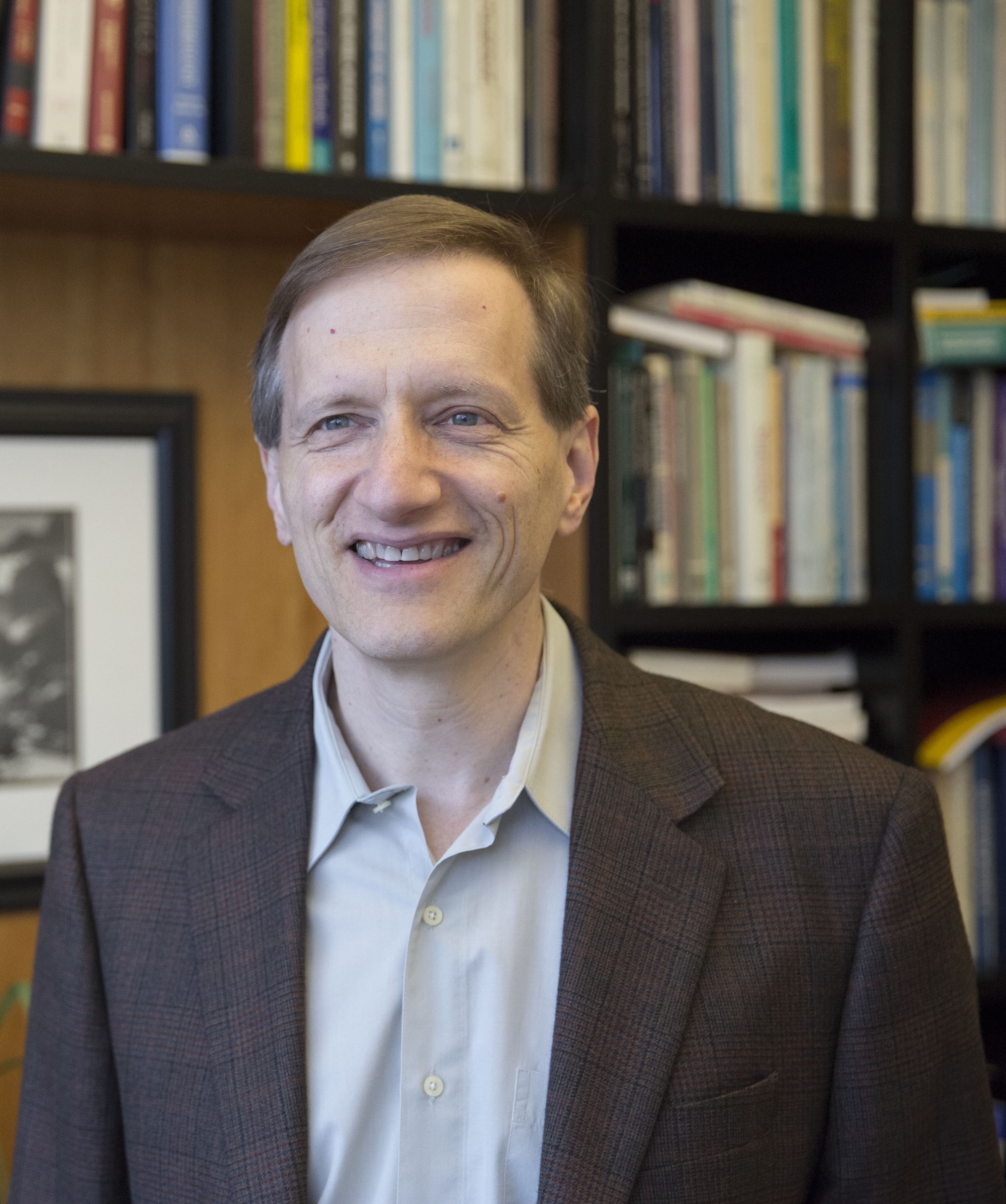
43 | 44 | Albert J. Weatherhead III University Professor at Harvard University, based in the Department of Government, as well as the Director of the Institute for Quantitative Social Science. 45 |
46 | 47 | ### November 14th - [Rochelle Terman](https://github.com/uchicago-computation-workshop/Fall2019/tree/master/11-14_Terman) 48 |
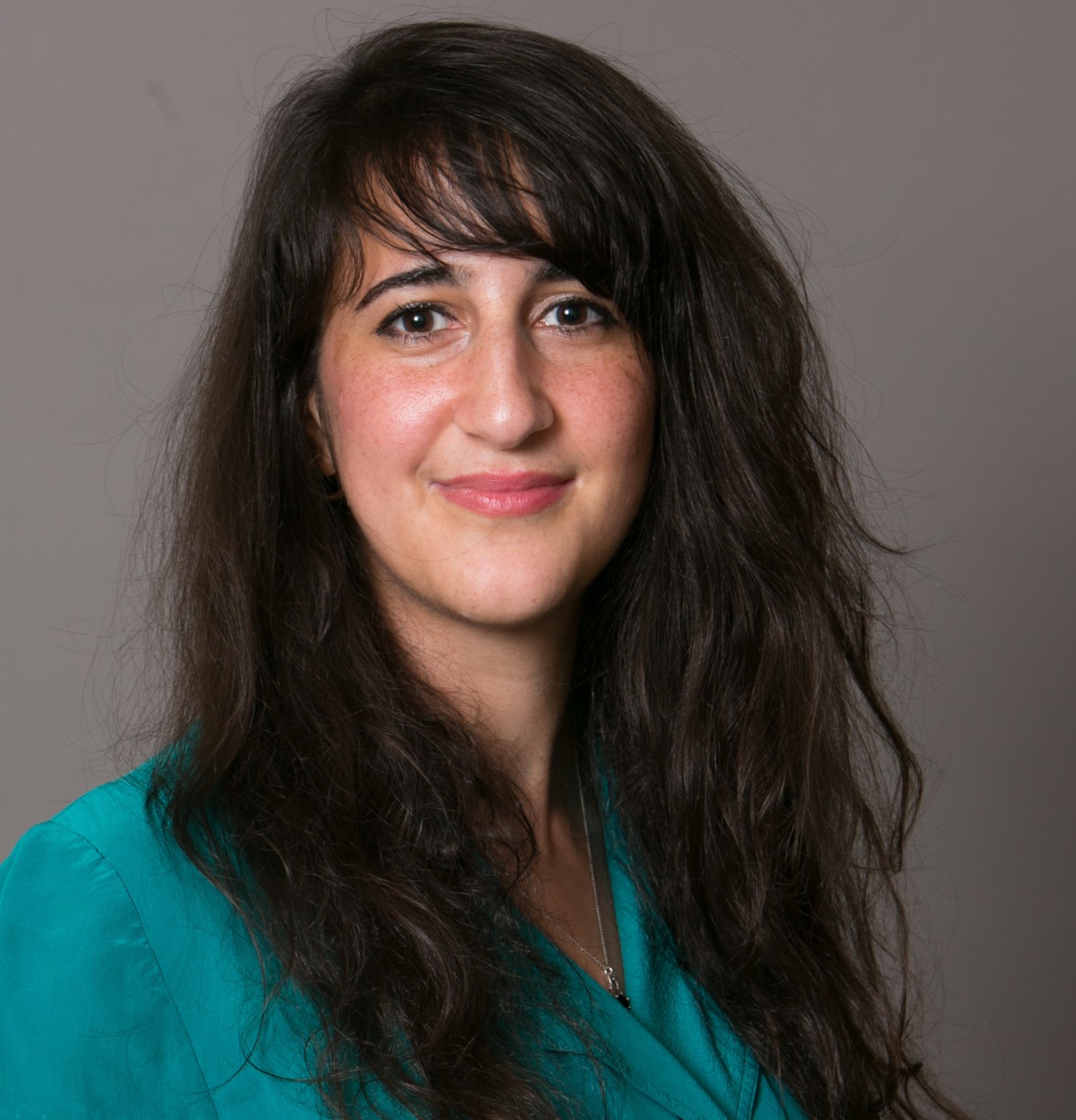
49 |
50 | Provost’s Postdoctoral Fellow in the Department of Political Science at the University of Chicago 51 | 52 | ### November 21st - CANCELLED 53 | --------------------------------------------------------------------------------